This reminded me of an important Lawrence Livermore project that was funded by the Minerals Management Service in 1995. The study considered seismic hazard criteria for offshore platforms on the California OCS. My colleague Dr. Charles Smith, a structural engineer, had an important role in this research. Charles had been instrumental in the establishment of an earthquake measurement network in the Pacific Region. The measurement system at Platform Grace in the Santa Barbara Channel successfully recorded 5 earthquakes and the structural responses at multiple locations on the platform.
Lawrence Livermore and the other national laboratories have many outstanding scientists and engineers. The national labs do excellent work, although their studies are a bit pricey 😉
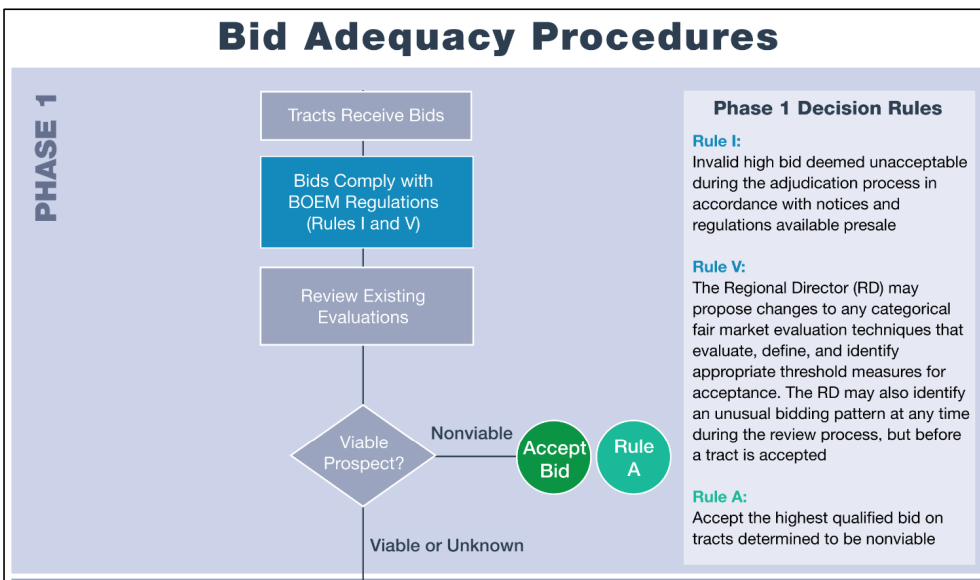
BOEM’s new procedures, which have been published for public comment, seem reasonable. However, it would be helpful to learn more about the testing of the new methodology. (See the quote below). Further, would the rejected Sale 257 bid have been accepted? What was the LBCI for that tract? Would any accepted Sale 257 bids have been rejected? Would the outcome of other sales have been affected?
After a 2-year comprehensive technical review of the delayed valuation methodology, BOEM intends to replace the delayed valuation methodology with a statistical lower bound confidence interval (LBCI) at a 90 percent confidence level as a decision criterion for accepting or rejecting qualified high bids on tracts offered in OCS oil and gas lease sales. Following extensive testing of the alternative approaches using both historical and current lease sale tract data and existing BOEM cash flow simulation models, BOEM determined that the LBCI approach would be the most appropriate substitute for the delayed valuation methodology. The LBCI is a statistical concept that captures the lower bound of a range of values encompassing the true unknown mean of the risked present worth of the resources at the time of the lease sale. The LBCI incorporates the uncertainty of parameters unique to the valuation of each OCS oil and gas lease sale tract. These parameters may include, but are not limited to, subsurface characterization of reservoir properties, cost and timing of the development, and projected revenues. Unlike the delayed valuation methodology, the LBCI approach would not require that BOEM estimate the time delay period between the current OCS oil and gas lease sale and the projected next lease sale. As such, BOEM finds the LBCI to be a better approach going forward.
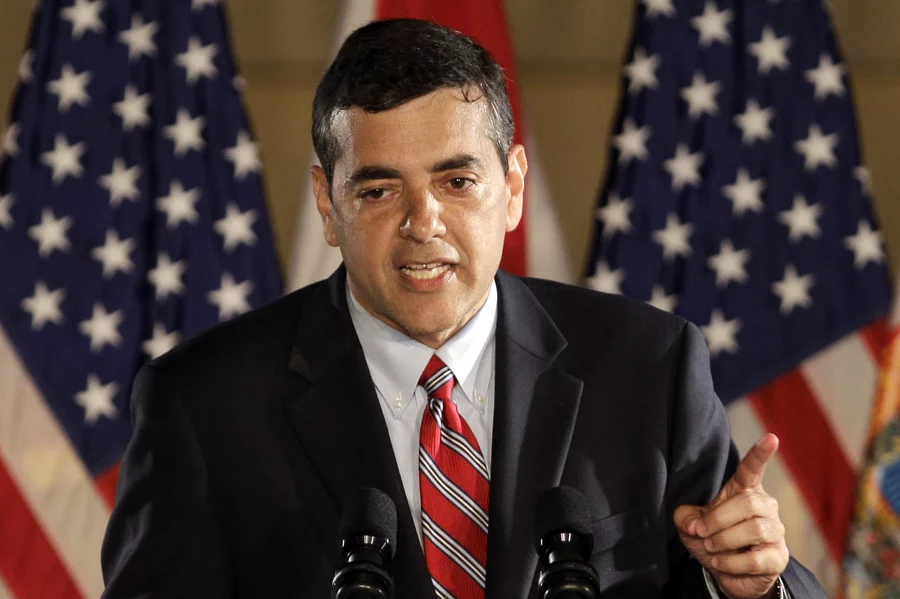
“Former U.S. Rep. David Rivera, a well-connected Florida Republican, has been arrested on federal charges that include failing to register as a foreign agent. The case centers on Rivera’s signing of a $50 million contract with Venezuela’s government in early 2017, and his subsequent attempts to thaw Venezuela’s icy relationship with the U.S.”
Perhaps Mr Rivera’s conduct at a 2012 hearing on Cuban offshore drilling was a hint of things to come. Mr. Rivera inappropriately pressed BSEE, represented by Lars Herbst, to find ways to “bleed” Repsol should there be an incident while they were drilling in Cuban waters.
“So, we need to figure out what we can do to inflict maximum pain, maximum punishment, to bleed Repsol of whatever resources they may have if there is a potential for a spill that will affect the U.S. coast. So, I hope you will look into that and verify that for us.”
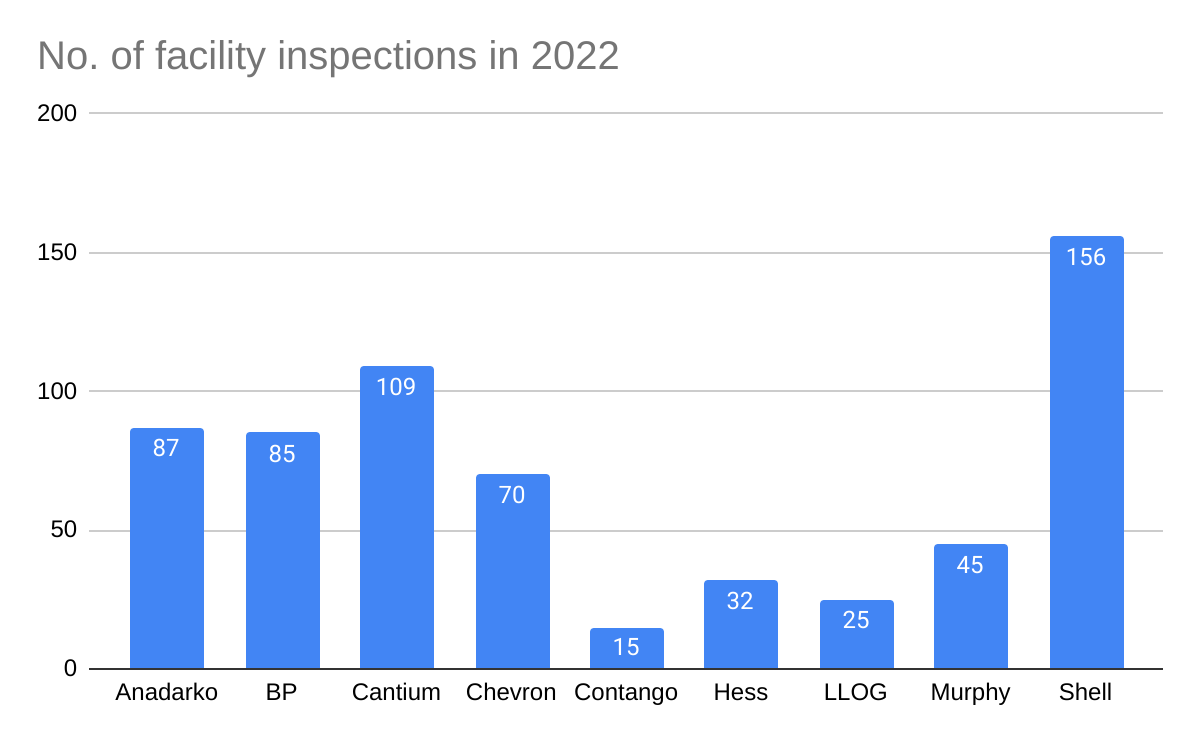
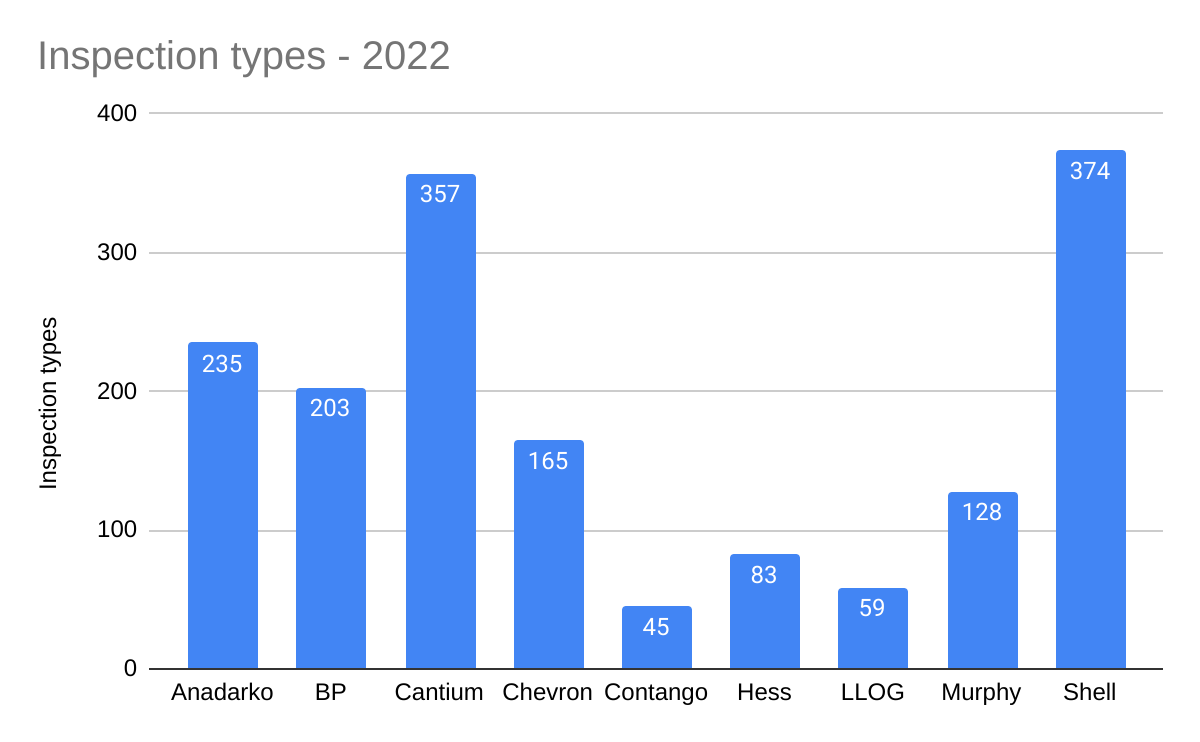
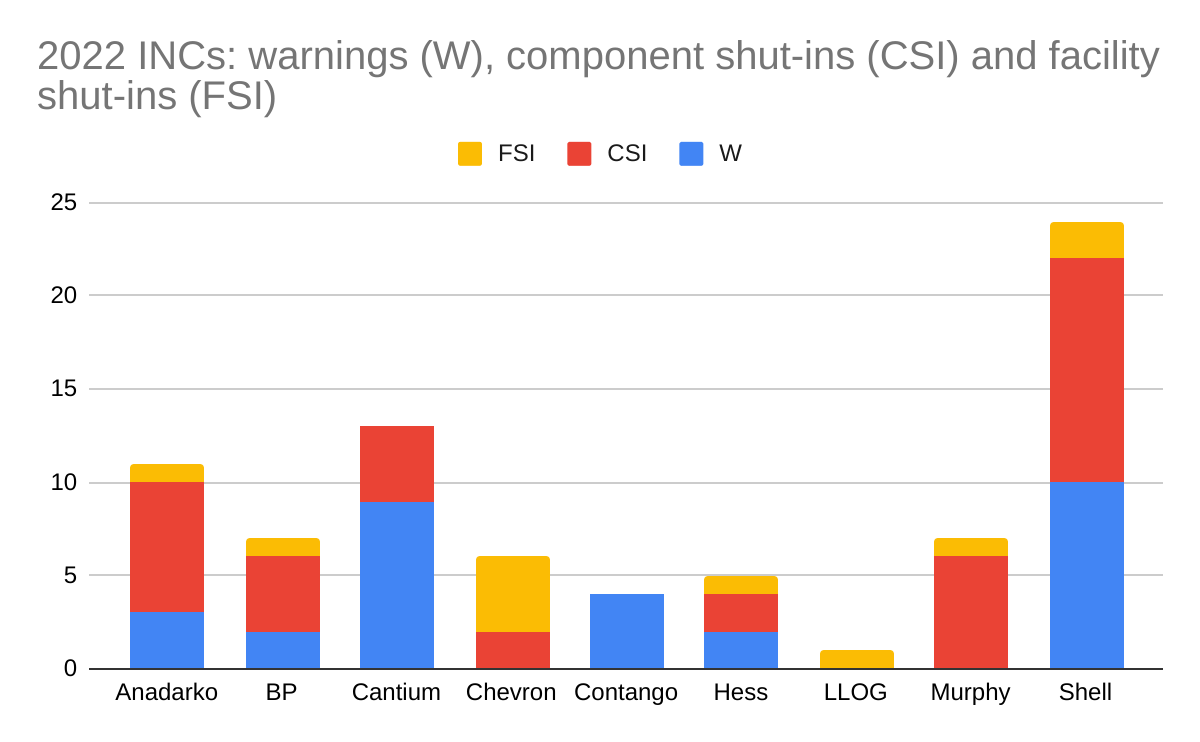
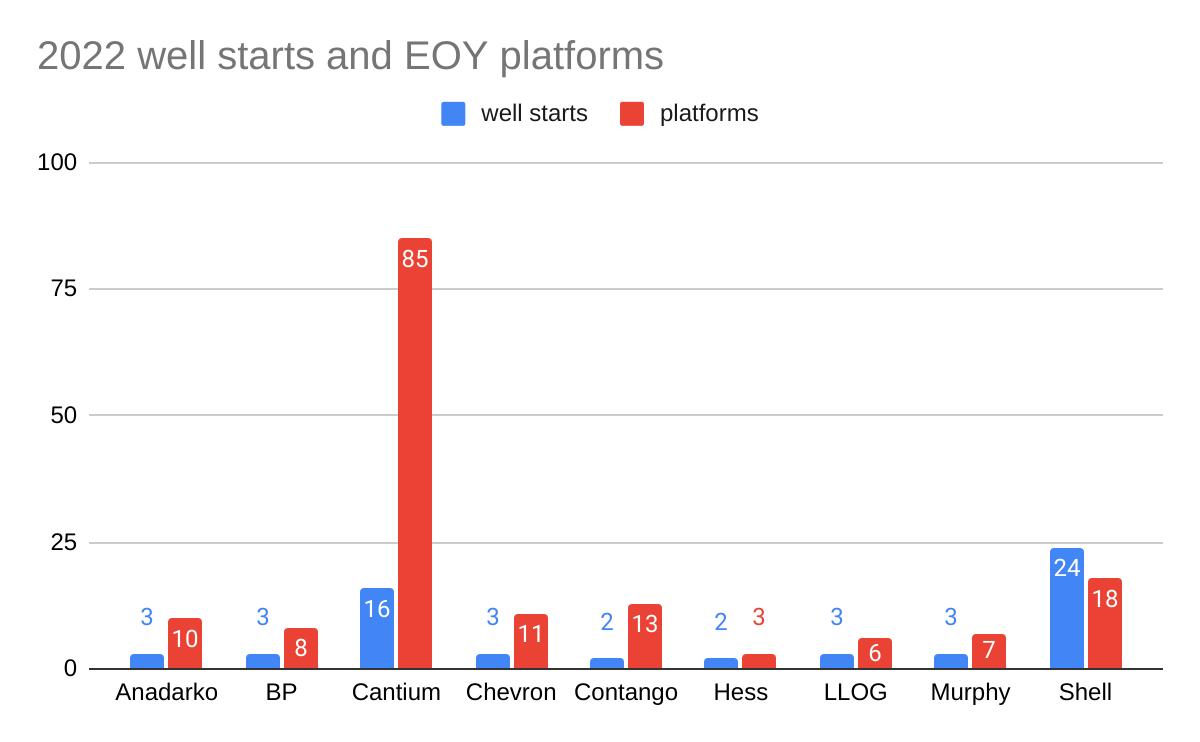
The Honor Roll companies for 2022 (listed alphabetically) are Anadarko (Oxy), bp, Cantium, Chevron, Contango, Hess, LLOG, Murphy, and Shell.
Our criteria:
Must average <0.3 incidents of noncompliance (INCs) per facility-inspection.
Must average <0.1 INCs per inspection-type. (Note that each facility-inspection may include multiple types of inspections (e.g. production, pipeline, pollution, Coast Guard, site security, etc). On average, each facility-inspection included 3.25 types of inspections in 2022. Here is a list of the types of inspections that may be performed.)
Must operate at least 3 production platforms and have drilled at least one well (i.e. you need operational activity to demonstrate compliance and safety achievement).
May not have a disqualifying event (e.g. fatal or life-threatening incident, significant fire, major oil spill). Due to the extreme lag in updates to BSEE’s incident tables, investigation and news reports are used to make this determination.
Pacific and Alaska operations will be considered separately.
Liz is an experienced attorney and leader in clean energy, climate change, and environmental law and policy. A member of the Biden-Harris administration since January 20, 2021, Liz has served as Senior Counselor to Secretary Haaland with an emphasis on water policy and climate change resilience. In this role, Liz also served as Chair of the Indian Water Rights Working Group, which manages, negotiates and implements settlements of water rights claims.
Prior to joining the Administration, Liz was Deputy Director of the non-partisan State Energy & Environmental Impact Center at NYU School of Law, which supports state Attorneys General addressing clean energy, climate, and environmental initiatives of regional and national importance. President Biden is the third President under which Liz has served at Interior, having worked for both the Clinton and Obama administrations. Under Secretaries Ken Salazar and Sally Jewell, Liz served as Interior’s Associate Deputy Secretary as well as Principal Deputy Assistant Secretary in the Office of Policy, Management and Budget. She was a key architect of the Obama Administration’s work to create a new offshore wind industry and leasing program.
Congratulations to Ms. Klein on being appointed to lead the Bureau of Ocean Energy Management. In addition to her commendable support for offshore wind energy, I trust that she appreciates the national importance of the OCS oil and gas program and the need for regular lease sales.
The 3 offshore workers were employees of Island Operating Co., a production contractor. The pilot worked for Rotorcraft Leasing Company, the owner of the Bell 406 helicopter that crashed. The platform is owned by Walter Oil and Gas, the operating company.
A preliminary FAA report confirms that the helicopter crashed onto the helideck during takeoff, breaking apart and falling into the Gulf.
4 passengers had been dropped off at the platform before the fatal takeoff. Presumably there were witnesses to the incident.
According to the FAA report, the platform was located at West Delta Block 106. Per the BOEM platform data base, the platform was installed in 1994, is in 252′ of water, and is continuously manned.
Per the BSEE INC data base, the platform had not been cited for any violations since 2016.
Lacy Scarborough, wife of victim David Scarborough, is pregnant. Tragically, the couple lost their first child in an accidental drowning in March. David was heading home for the holidays after completing his 2 week shift on the platform. He had worked offshore for 8 years. Per Lacy, David’s last message was that he was taking off and would be home soon.
The only other victim who has been identified is Tim Graham of Quitman, Mississippi.
I trust that the NTSB will conduct a timely and thorough investigation, and hope they consider offshore helideck oversight, both in terms of industry programs and government regulation. The most recent Coast Guard – BSEE MOA for fixed platforms added to helideck regulatory uncertainty by assigning decks and fuel handling to BSEE and railings and perimeter netting to the Coast Guard. This is the antithesis of holistic, systems-based regulation.
The comment (pasted below) by the trade associations asserts that BSEE ignored the requirements of the National Technology Transfer and Advancement Act (NTTAA).
Reaction:
BSEE and its predecessors (MMS and the Conservation Div. of USGS) have been incorporating industry standards since 1969, 27 years prior to the enactment of the NTTAA (1996).
The keystone of the BOP regulations, API Standard 53, is cited in 250.730, the very section of the rule that is under discussion. Seven other industry standards are cited in that section of the rule. Does this imply ignoring the NTTAA?
Regulators cannot cede their authority to standards development organizations. If a standard is outdated or deficient, the regulator must address the issues of concern.
Deviations between provisions in the regulations and API Standard 53 are expected and specifically provided for in 250.730 as follows: “If there is a conflict between API Standard 53 and the requirements of this subpart, you must follow the requirements of this subpart.“
For years, the production safety system regulations specified different leakage rates for surface and subsurface safety valves than those allowed in the API standards. An MMS research project addressed and helped resolve these differences.
While essential to safety and regulatory programs, standards are not a panacea; nor is the standards development process without weaknesses. One need only consider the case of the delayed cementing (zonal isolation) standard to appreciate both the importance of standards and the potential weaknesses in the development process.
I recommend we Nationalize the Oil and gas industry. I think the government is the right entity at this time to seize all the assets and infrastructure of the cartels. The resources mostly on public lands and water, belong to the USA anyway. It is time we transition more rapidly to renewables to break the leverage of the cartels on governments, and people, to stop wars and profiteering.
People are paying high prices and cartels like API, Exxon, Sinclair are making record profits from American’s purses. All the while escaping the costs of oil spills and leaks, and denying responsibility for climate change disasters and their costs.
Diverse input on proposed regulations is healthy and desirable. However, comments should not be posted at Regulations.gov unless (1) the commenter is identified and (2) the comments include at least one sentence about the regulation being proposed.






 Bud's Offshore Energy (BOE)
This Well Control Rule comment, endorsed by 7 trade associations, hit a nerve. Here’s why.
Posted in drilling, Offshore Energy - General, Regulation, well control incidents, tagged BSEE, NTTAA, standards, standards vs. regulations, trade association comments, Well Control Rule on November 30, 2022| Leave a Comment »
The comment (pasted below) by the trade associations asserts that BSEE ignored the requirements of the National Technology Transfer and Advancement Act (NTTAA).
Reaction:
Read Full Post »