Timeframe for government and industry actions following the 2005 hurricane season.
Optimally, the regulator establishes clear objectives for the operating companies and a schedule for achieving those objectives. This approach was demonstrated with great success following the 2005 hurricane season (Katrina and Rita) when numerous mooring system and other stationkeeping issues were identified.
Minerals Management Service Director Johnnie Burton sent a letter (attachment 1) to industry leaders calling for a face-to-face meeting with Department of the Interior Secretary Gale Norton. The Secretary outlined her concerns and informed offshore operators that there would be no drilling from moored mobile drilling units or jackup rigs during the next hurricane season until the issues identified during Hurricanes Katrina and Rita were addressed.
The collaborative effort that followed was a resounding success (2nd attachment). In addition to addressing station keeping concerns, a comprehensive list of hurricane issues was developed. Industry and government then worked together to assess mitigations and develop new standards and procedures. The essential MODU standards were completed before the 2006 hurricane season, and all of the related concerns were effectively addressed prior to the 2009 hurricane season. Had the government elected to promulgate regulations to address all of these issues, much of this work would have never been completed.
The Secretary of the Interior is the most important energy production position in the US govt, particularly for the offshore sector.
In recent years energy policy has been increasingly influenced (if not directed) by White House staff, most notably the White House Climate Office. Given that Burgum will also lead the new created National Energy Council, direction from White House staffers or other departments should not be an issue.
Burgum should work effectively with Dept. of Energy appointee Chris Wright, an engineer who understands energy production.
There is no apparent Republican dissent, so Burgum should have no problem being confirmed.
All of the offshore policy forecasts in the post-election post still stand.
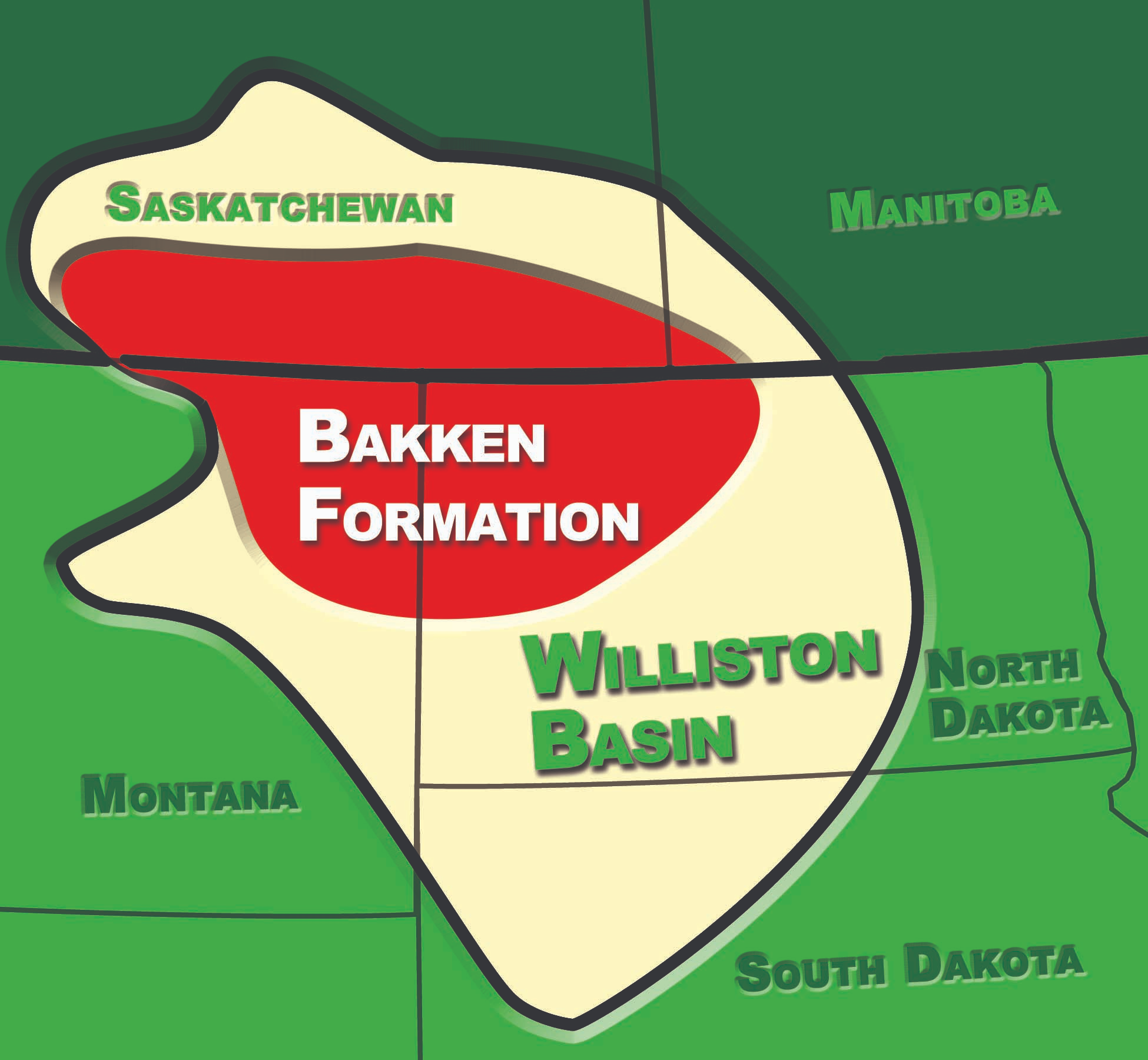
Burgum is currently the Governor of North Dakota. Some energy production stats for the state:
ND ranks 4th if the OCS, for which Bergum will soon be responsible, is included. The OCS ranked 2nd in oil production, behind only TX, despite seemingly being managed to fail.
Wind: In 2023, wind was the second-largest electricity generating source in ND behind coal. At the beginning of 2024, ND had about 4,000 megawatts of installed wind power generating capacity.
What about carbon sequestration (disposal)?
As Governor, Burgum supported CCS projects that could be lucrative for North Dakota.
As Interior Secretary and Energy Czar, he will have to consider the high Federal subsidy costs, efficacy, and net environmental benefits.
Companies looking to benefit from publicly financed CCS projects will lobby hard for Federal support. Budget hawks and most environmental activists will be strongly opposed. It will be interesting to see who prevails.
Exxon CEO Darren Woods’ is concerned that US withdrawal from the Paris climate agreement would threaten carbon capture and sequestration (CCS), the foundation for which is government mandates and generous taxpayer subsidies.
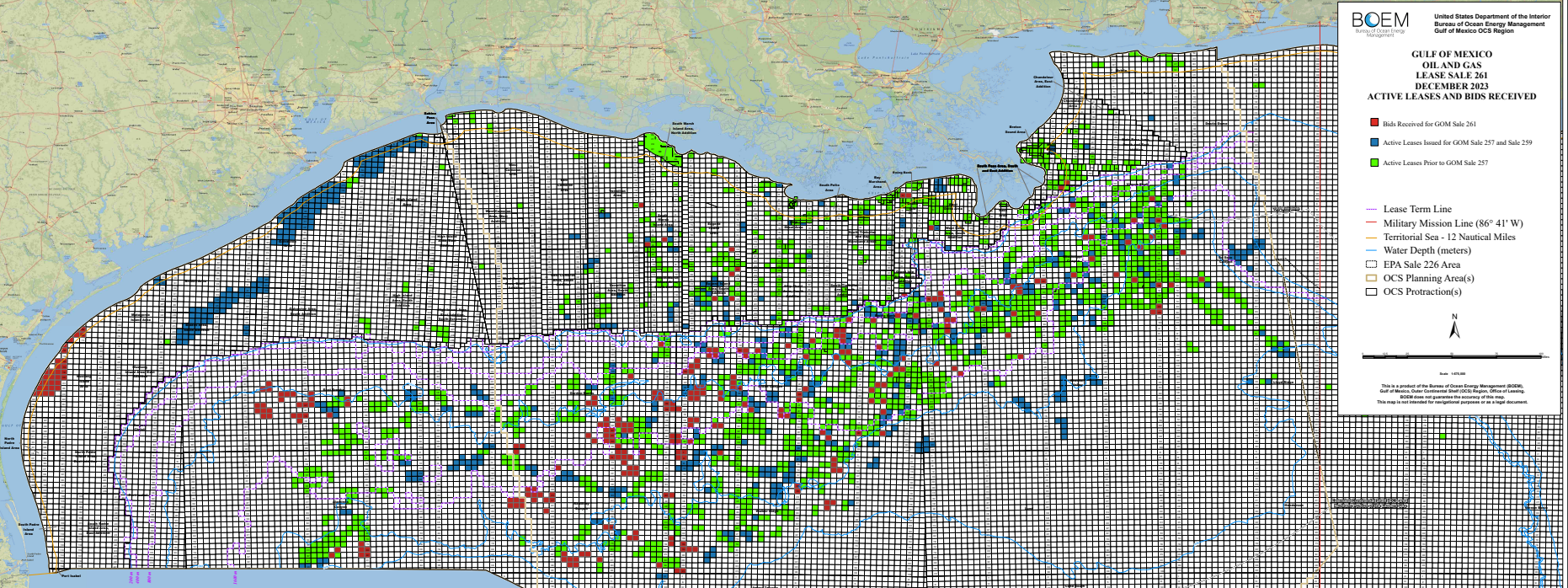
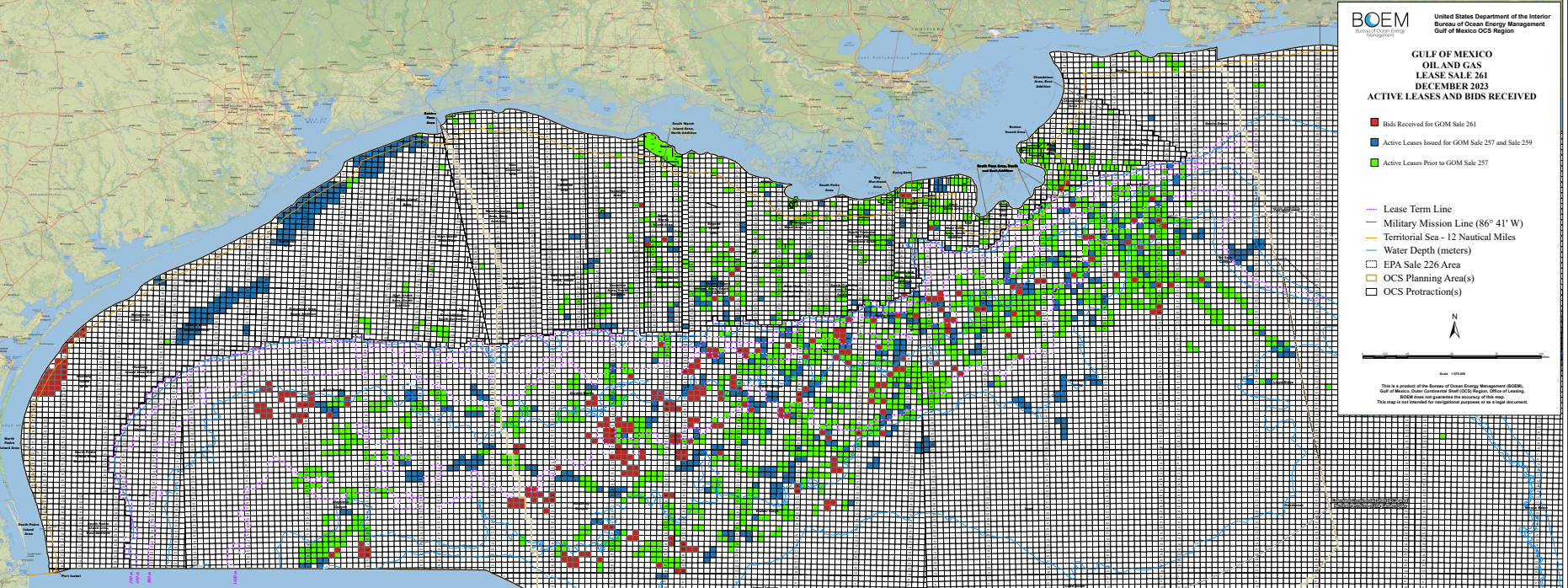
Exxon sought an edge over CCS competitors by improperly acquiring 163 OCS oil and gas leases (map below) for carbon disposal purposes. Conversion of these leases is not authorized, which means they will expire at the end of their primary (5 year) term absent legislative or regulatory action.
The only solid support for CCS is from companies hoping to benefit from subsidies and charges to industries and individual energy consumers. It’s time to end the Federal government’s CCS programs.
199 oil and gas leases were wrongfully acquired at Sales 257, 259, and 261 with the intent of developing these leases for carbon disposal purposes. Repsol was the sole bidder at Sale 261 for 36 nearshore Texas tracts in the Mustang Island and Matagorda Island areas (red blocks at the western end of the map above). Exxon acquired 163 nearshore Texas tracts (blue in map above) at Sales 257 (94) and 259 (69).
LM/GE Vernova turbine blade plant. Photo credited by the New Bedford Light to Jean-Philippe Thibault/Journal Gaspésie Nouvelles.
On Oct. 24, Radio Gaspesie reported serious data falsification allegations related to the manufacturing GE Vernova turbine blades at their Gaspé, Quebec facility. GE Vernova’s delay in commenting on those charges is surprising given their economic and legal implications in both Canada and the US.
GE Vernova has informed the New Bedford Light that they have taken corrective actions at their blade facility in Gaspé after an extensive internal review of their blade manufacturing and quality assurance program. However, they have yet to comment on the data falsification allegations.
Actions speak louder than words, and the Light reports that GE Vernova laid off nine managers and suspended 11 unionized floor workers at the Gaspé factory. A representative for the union informed the Light that the production manager has been dismissed and the general manager has resigned.
Neither Vineyard Wind nor BSEE, the Federal safety regulator for the Vineyard Wind project, has commented on the matter. BSEE’s investigation of the blade failure is still pending and has seemingly gotten more complicated as a result of the manufacturing issues.
In addition to legal proceedings in Quebec, GE Vernova and Vineyard Wind are subject to possible civil and criminal penalties in the US. Civil penalties, which are administered by BSEE, seem likely given the extensive pollution from turbine blade fragments.
Criminal penalties, which are possible if the data falsification charges are proven true, are imposed by the Dept. of Justice. The applicable criminal penalties statute is pasted below.
Any person who knowingly and willfully (1) violates any provision of this subchapter, any term of a lease, license, or permit issued pursuant to this subchapter, or any regulation or order issued under the authority of this subchapter designed to protect health, safety, or the environment or conserve natural resources, (2) makes any false statement, representation, or certification in any application, record, report, or other document filed or required to be maintained under this subchapter, (3) falsifies, tampers with, or renders inaccurate any monitoring device or method of record required to be maintained under this subchapter, or (4) reveals any data or information required to be kept confidential by this subchapter shall, upon conviction, be punished by a fine of not more than $100,000, or by imprisonment for not more than ten years, or both. Each day that a violation under clause (1) of this subsection continues, or each day that any monitoring device or data recorder remains inoperative or inaccurate because of any activity described in clause (3) of this subsection, shall constitute a separate violation.
The Santa Barbara County Planning Commission has approved the transfer of the onshore pipeline from Exxon to Sable Offshore. Although the Environmental Defense Center (EDC) is appealing that decision to the Board of Supervisors, the Board’s vote will likely be a 2-2 tie. Supervisor Hartmann’s property is close to the pipeline and she has recused herself from votes on the matter. A 2-2 vote would be a win for Sable, because a tie vote means the planning commission decision stands.
As an investment, Sable is a “pure California permitting play,” which means the risks are high. The company’s chances for success are almost entirely dependent on receiving the necessary approvals from State and local agencies.
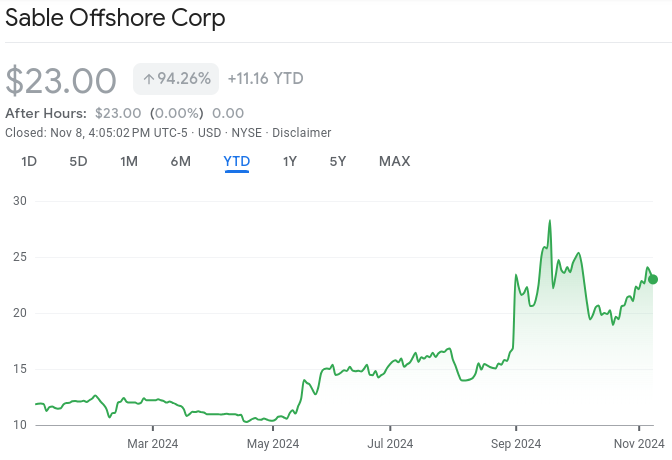
Sable’s share price soared to $23.43 on 9/3 after the company reached agreement with Santa Barbara on the installation of required pipeline valves. The price bounced further to $28.30 on 9/19 before falling sharply to $19.43 on 10/9 after being cited for failing to get California Coastal Commission approval to install the required valves. The price rebounded to $24 following the County Planning Commission’s approval of the transfer from Exxon to Sable before settling at $23 on Friday, the date of the EDC appeal.
Expect the financial and psychological roller coaster ride to continue.
See the translated excerpts below from a Radio Gaspesie report. This is a massive scandal if true.
“Yesterday, the vice-president of global operations at GE Vernova reportedly addressed all employees at the Gaspé plant to provide an update on the situation.
The investigation, led by GE Vernova’s lawyers, reportedly revealed that employees were asked by senior company executives to falsify quality control data. Data associated with a well-made blade was then associated with poorly made blades. Our sources indicate that this is a widespread practice in the industry.
The senior management of the Gaspé plant also allegedly implemented a points system that encouraged employees to skip verification steps, thus prioritizing production quantity over quality.
Our sources say the points system allegedly involved tight management oversight that bordered on intimidation of employees.
The oversized 107m blades that were produced in Gaspé for the construction of marine parks are said to be affected. The integrity of the entire production of the longest blades in America is currently being called into question.“
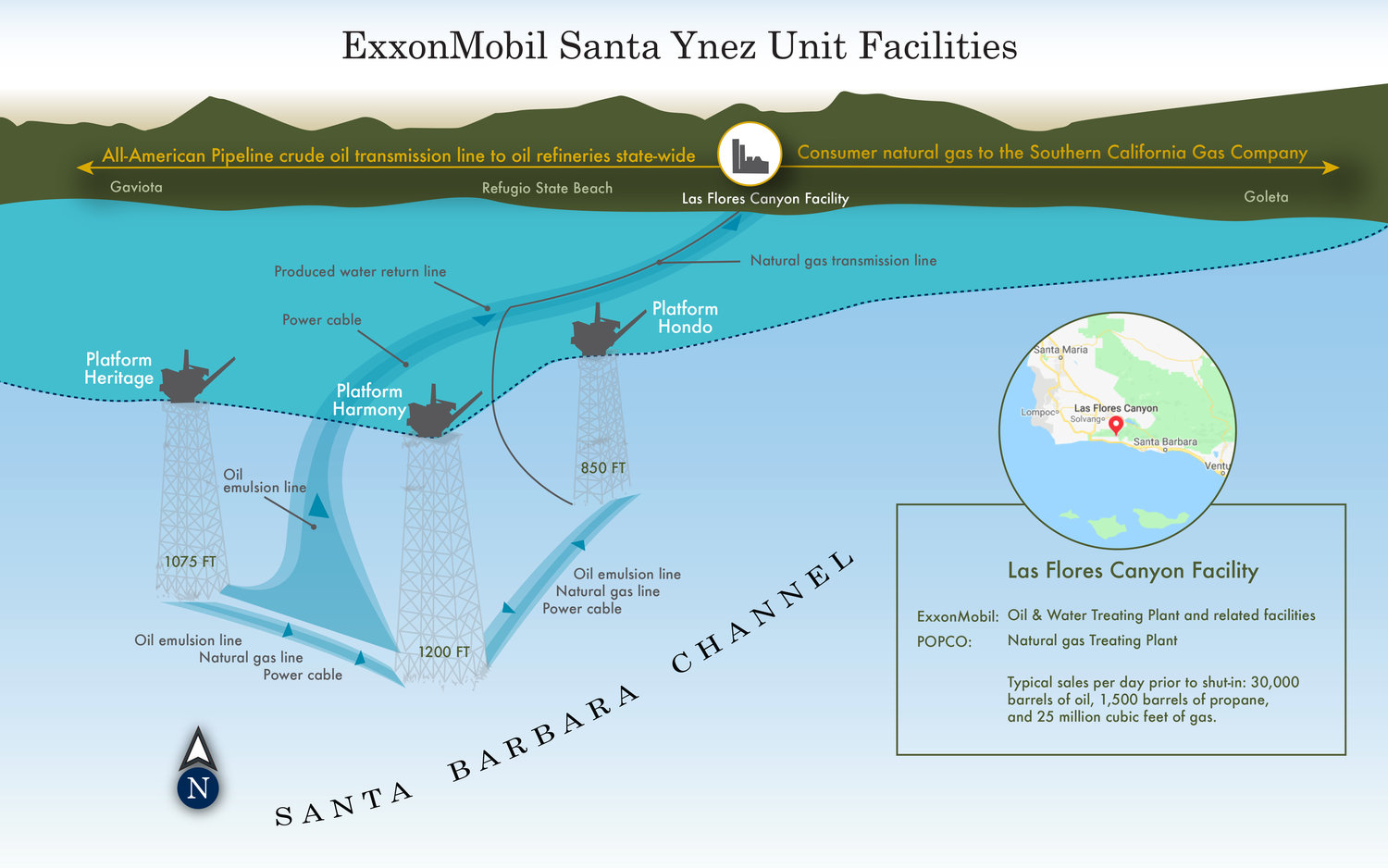
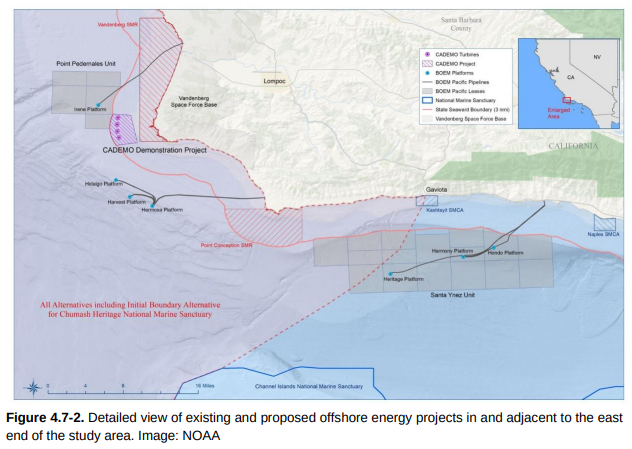
Almost 40 years ago, four large oil and gas platforms were installed in the beautiful offshore area that was part of our Santa Maria District (Pacific Region of the Minerals Management Service). Those platforms are now within the boundaries of the Chumash Heritage National Marine Sanctuary (see map above).
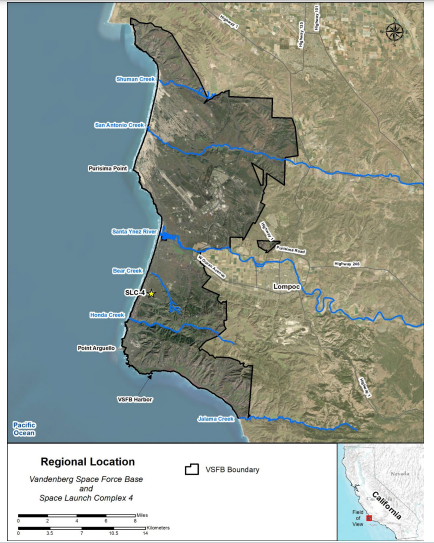
We watched those platforms being installed, inspected the drilling and production operations, and performed a myriad of other duties including the curtailment of offshore operations prior to launches from Vandenberg AFB. Those Vandenberg launches weren’t always perfect as this link clearly demonstrates. Even knowing that, it was still a bit unnerving when missiles were recovered during post-abandonment site clearance trawls.
All four of those Santa Maria District platforms are now on terminated OCS leases. All were installed by companies that are now part of Chevron Corp. (Chevron, Texaco, and Unocal). They are currently maintained by Freeport-McMoRan Oil & Gas, with Chevron retaining financial responsibility for decommissioning.
Platform
Install yr.
installed by
water depth (ft)
Est. removal weight (short tons)
wells drilled
Harvest
1985
Texaco
675
35,150
19
Hermosa
1985
Chevron
603
30,868
13
Hidalgo
1986
Chevron
430
23,384
14
Irene
1985
Unocal
242
8,762
26
BSEE reports that the 46 wells on Harvest, Hermosa, and Hidalgo have been plugged and tested, and that the well conductors have been removed. No information has been posted on the status of the wells at Platform Irene, but presumably they are (or will soon be) plugged in accordance with BSEE regulations.
Will the inclusion of these platforms in the Chumash Marine Sanctuary further complicate the already difficult decommissioning process? Decommissioning specialist John Smith thinks it may:
“In addition to the BOEM and BSEE approval process, Chevron and FMC are going to be dealing with the NOAA permitting regime for Sanctuaries. Those permitting and environmental compliance requirements are extensive. NOAA’s NEPA documentation for West Coast marine sanctuaries will also need to be amended to include the Chumash.”
So the “Mission Impossible” that is California OCS decommissioning now has yet another complex regulatory element.
“Even though most of the SYU facilities are outside the Sanctuary, the proximity of the operations to the Sanctuary is problematic. The Chumash are now going to be a co-manager of the Sanctuary, adding another player in the process. Sable is going to obtain multiple Federal, State and local permits to restart SYU, and law suits are likely at every stage of the process.”
Per a related post, the full SpaceX lawsuit is attached. It’s mostly exhibits, so don’t be intimidated by the length.
This excerpt summarizes the case nicely:
“Rarely has a government agency made so clear that it was exceeding its authorized mandate to punish a company for the political views and statements of its largest shareholder and CEO. Second, the Commission is trying to unlawfully regulate space launch programs—which are critical to national security and other national policy objectives—at Vandenberg Space Force Base (the Base), a federal enclave and the world’s second busiest spaceport.”
Even Gov. Newsome sides with SpaceX saying “I’m with Elon.”
Will this case teach the Commission some humility? Probably not, but we shall see.
199 oil and gas leases were wrongfully acquired at Sales 257, 259, and 261 with the intent of developing these leases for carbon disposal purposes. Repsol was the sole bidder at Sale 261 for 36 nearshore Texas tracts in the Mustang Island and Matagorda Island areas (red blocks at the western end of the map above). Exxon acquired 163 nearshore Texas tracts (blue in map above) at Sales 257 (94) and 259 (69).
Despite false starts by Exxon and Repsol (see above summary), no carbon sequestration (disposal) leases may be issued or developed until implementing regulations have been promulgated. In that regard, no news is good news for those who are less than enamored with CO2 disposal in the Gulf of Mexico.
The implementing regulations will be controversial. Most operating companies prioritize GoM production over GoM disposal. Most environmental organizations are strongly opposed to CO2 disposal schemes that sustain fossil fuel production and benefit fossil fuel producers. Taxpayers are leery of subsidizing these projects and absorbing increased costs for energy and consumer goods.
The Administration is, of course, well aware of this opposition and will not be publishing implementing regulations prior to the election. The next Administration, regardless of the election outcome, will no doubt take a hard look at these issues before proposing regulations.
The few oil and gas producers that are rather cynically hoping to cash in on CO2 disposal in the GoM will therefore have to wait, perhaps for a long time.
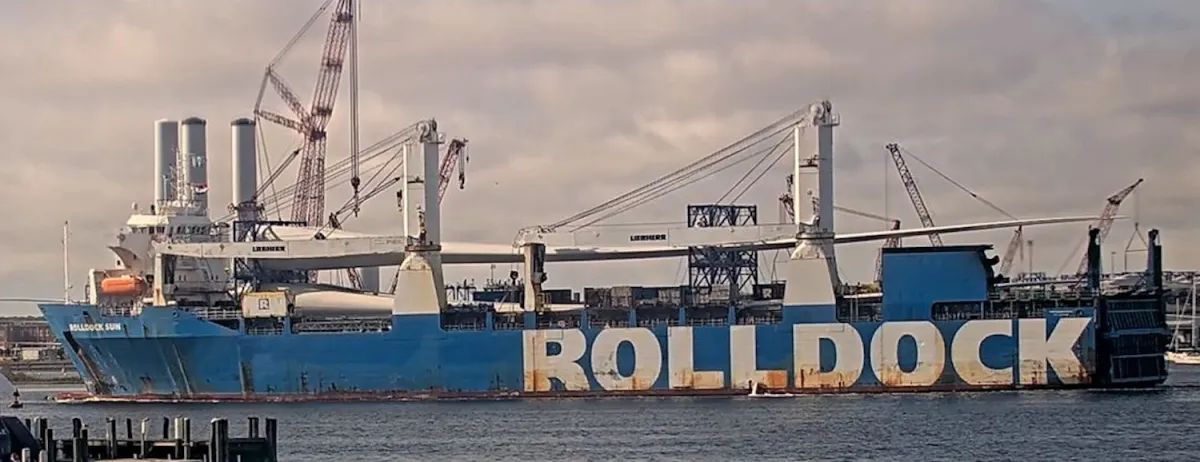
New Bedford Light: The Rolldock Sun leaves New Bedford on Friday with two blades visible. Credit: Courtesy of West Island Weather
Per the New Bedford Light, the turbine blade delivery vessel Rolldock Sun was seen on Friday carrying at least two blades out of New Bedford. It was not headed for the Vineyard Wind site. According to vessel tracking websites, the Rolldock Sun was en route to the Port of Cherbourg, where GE Vernova has a blade manufacturing facility.
The most likely explanation for returning the blades to Cherbourg is that defects were detected or suspected. The blade that failed, reportedly as a result of a manufacturing issue, is probably not the only one that was defective.
The New Bedford Light asked GE Vernova, Vineyard Wind, and the Federal regulator BSEE why the blades were being transported to Cherbourg. They received the following responses (my comments in parentheses):
GE Vernova: “No comment on this matter.” (This is the worst possible response. In the absence of information, people are left to speculate. If there was no problem with the blades, why wouldn’t GE simply provide an explanation? Their non-response simply reinforces suspicions that the blades were defective. If that is the case, why not take credit for procedures that identified the suspect defects, albeit belatedly?
Vineyard Wind:“The weekend has gotten in the way of the information flow,” and they would share information should they hear anything. Another request for information was not answered as of noon Monday. (Not exactly confidence inspiring from the company whose blade failure littered beaches and the offshore environment. They are deservedly being watched, and need to be more transparent and responsive.)
BSEE:A BSEE spokesperson did not answer questions and said by email that the agency has no new information. (Disappointing, but not surprising.)