Feeds:
Posts
Comments

Archive for the ‘Offshore Energy – General’ Category

BOEM published their Sale 257 Decision Matrix on Friday (2/24/2023), and my previous speculation regarding the rejected Sale 257 high bid has proven to be partially incorrect. The rejected high bid was submitted by BP and Talos and was for Green Canyon Block 777. BOEM’s analytics assigned a Mean of the Range-of-Value (MROV) of $4.4 million to that tract, which tied for the highest MROV for any tract receiving a bid. The BP/Talos bid was $1.8 million or just 40% of BOEM’s MROV. BOEM’s tract evaluation is interesting given that the other bid on this wildcat tract (by Chevron, $1.185 million) was considerably lower than the rejected BP/Talos bid.

The Sale 257 bid that I thought might have been rejected was for lease G37261. This lease was never issued per the lease inquiry data base and the final bid recap. BHP’s bid of $3.6 million for that tract (Green Canyon Block 79) was more than 5 times BOEM’s MROV of $576,000, and was accepted per the decision matrix. Why was the lease never issued?

Both Green Canyon 79 and 777 should again be for sale in legislatively mandated Sale 259, which will be held in just a few weeks on March 29, 2023, just 2 days prior to the deadline. It will be interesting to see what the bidding on those tracts looks like.

Meanwhile, Exxon and BOEM are still mum about the 94 Sale 257 oil and gas leases that Exxon acquired for carbon sequestration purposes. Note the large patches of blue just offshore Texas on the map above. These leases were all valued by BOEM at only $144,000 each, which is equivalent to the minimum bid of $25/acre. This valuation reflects the absence of perceived value for oil and gas production purposes. Exxon bid $158,400 for each tract, $27.50/acre or 10% higher than the minimum bid. Given that (1) the Notice of Sale only provided for lease acquisition for oil and gas exploration and production purposes, and (2) it was common knowledge that these tracts were acquired for carbon sequestration, should these bids have been rejected?
Read Full Post »

An international regulatory colleague brought this puzzling RigZone article to my attention. Quotes:

“From one perspective, one can look at the overall absence of risk – from this perspective, we can easily say that either the United Kingdom’s North Sea or Canada’s Nova Scotian continental shelf is the safest region for offshore oil and gas operations right now,” Robak told Rigzone.

“Canada’s offshore industry accounts for approximately one million barrels per day, and its geographic location along the Nova Scotian continental shelf has been a benefit in that there is little to no risk to its continued operation on a day-to-day basis,” Robak said.

Comments:

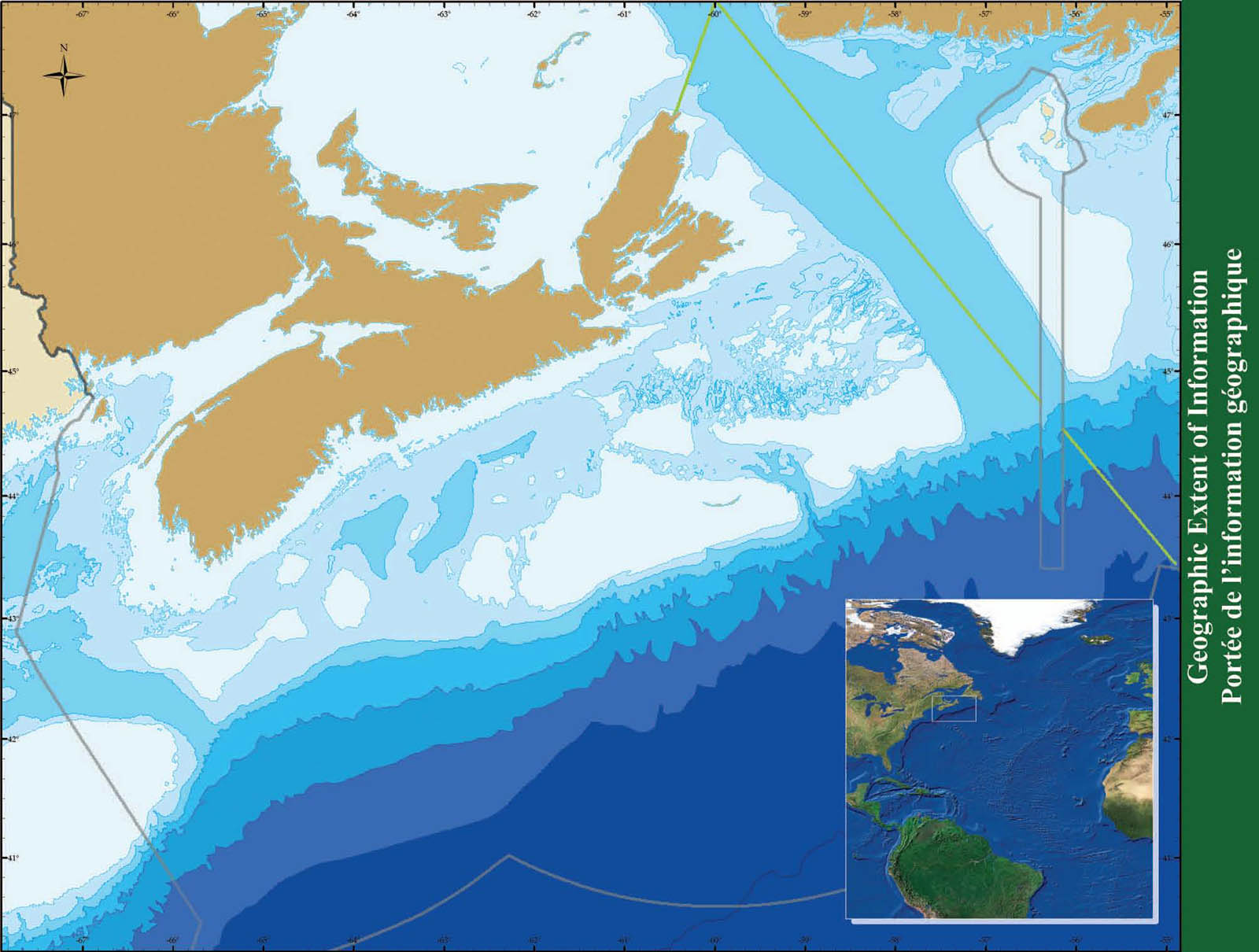
Scotian shelf

Read Full Post »

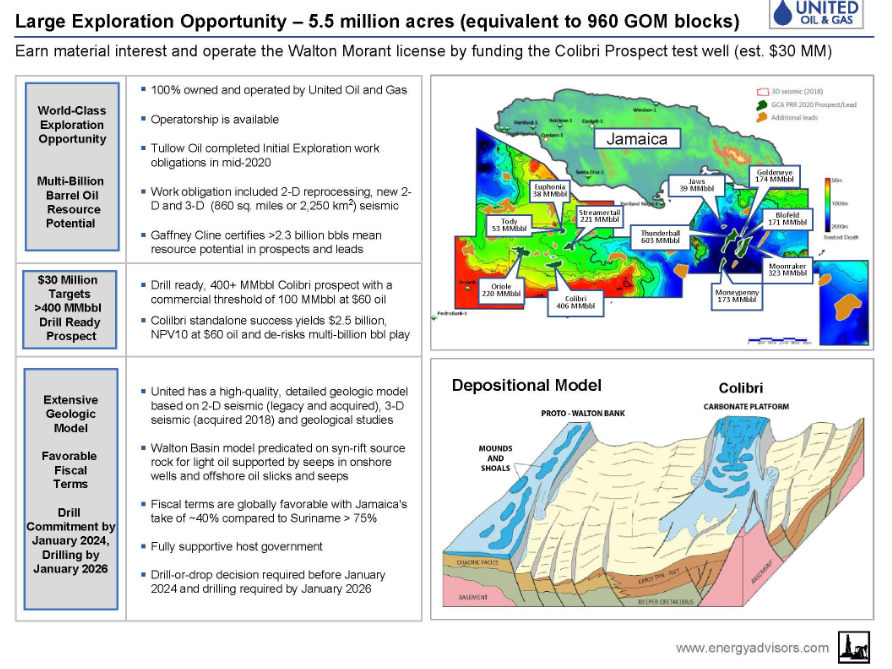
Did you miss the boat on Guyana?😉 This may be a good opportunity. The risk-reward ratio looks pretty favorable.

Per the Energy Advisors Group:

  • Gaffney, Cline & Associates have audited the drill-ready target prospect with mean resources of 400 MMbbls
  • Standalone success on hitting the mean target is expected to achieve NPV10 of $2.5 billion at $60 oil
  • The test well cost is estimated to be $30 million and provides exposure to own a material interest in the entire license
  • The initial target is a carbonate platform and shows strong evidence of reservoir trap and intact seal, Cretaceous kitchen source and live oil seeps
  • Recent advanced seismic relative dispersion technical work provides further evidence of reservoir porosity and permeability, the presence of a seal, and additional reservoir potential
  • The License, formerly owned by Tullow, is well-supported by the Jamaican government with attractive fiscal terms

Read Full Post »

Good read.

Read Full Post »

While it’s highly unlikely that wind turbine siting activities are responsible for the alarming number of whale deaths, some of the vociferous wind industry defenders would have been among the first to point the finger at oil and gas operations if there were any in the US Atlantic.

Some quotes from a recent USA Today article followed by BOE comments:

It’s just a cynical disinformation campaign,” said Greenpeace’s oceans director John Hocevar. “It doesn’t seem to worry them that it’s not based in any kind of evidence.” (Comment: World class chutzpah on the part of Greenpeace, the master of disinformation.)

Gib Brogan, a campaign director with Oceana, an international ocean advocacy group, said those opposed to wind power are using a spate of whale deaths in the area as an opportunity. (Comment: Does Oceana suddenly find this type of opportunism to be shocking?)

Groups opposed to clean energy projects spread baseless misinformation that has been debunked by scientists and experts,” said JC Sandberg, chief advocacy officer with the American Clean Power Association, a renewable energy trade group. (Comments: Use of the term “clean energy” is clever advocacy that serves to discredit other forms of energy. All energy sources have pros and cons, environmentally and otherwise. Wind and solar have significant visual, space preemption, navigation, wildlife risk, and intermittency issues, and are heavily dependent on subsidies and mandates. When all issues are considered, one could argue, as we have, that offshore gas, particularly nonassociated gas, is perhaps the environmentally preferred energy alternative.)

Read Full Post »

MSC Danit and Beijing were ID’d by Sky Truth as likely dragging anchors over the damaged Beta Unit pipeline

Per the LA Times, companies linked to the cargo ships accused of dragging anchors over Amplify Energy’s pipeline have agreed to pay $45 million to settle lawsuits. The ships were identified by Sky Truth (see above image) shortly after the spill (October 1, 2021).

Meanwhile, Amplify is suing the vessel owners for damaging the pipeline and failing to notify the authorities after the damage occurred. Amplify would seem to have a good case given that inspection reports indicate that the pipeline was in good shape prior to the anchor damage and that the Beta Unit platforms had a good safety and compliance record.

Finally, when will we see the investigation report for this spill? It has now been nearly 17 months since the incident.

Read Full Post »

Shell Vito

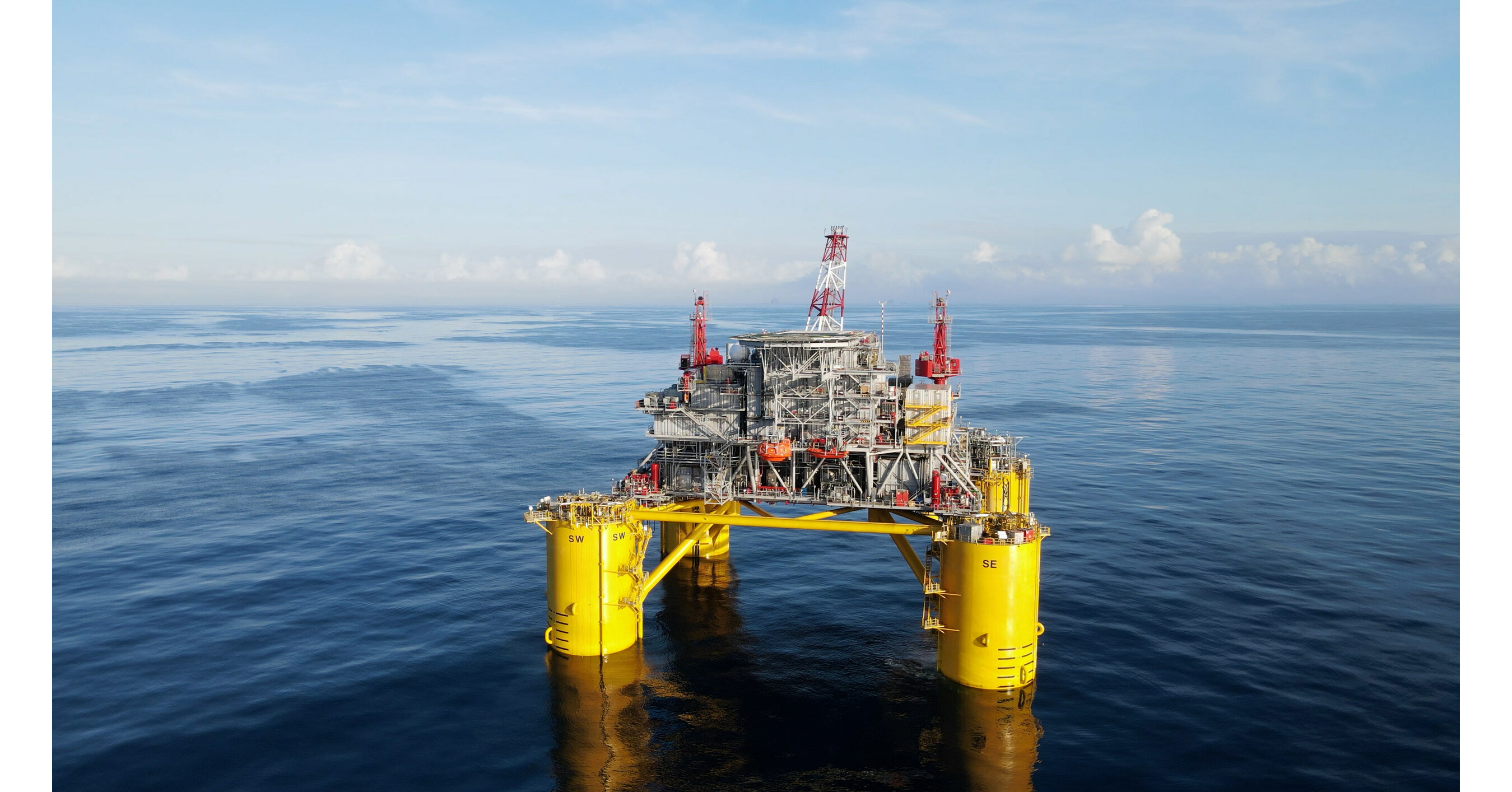
Last year, BOE featured 5 deepwater platforms that were under construction: Shell’s Vito and Whale, Murphy’s King’s Quay, bp’s Argos, and Chevron’s Anchor. These floating production units are noteworthy for their lighter, smaller designs. King’s Quay was the first to produce, beginning last April. The spotlight is now on Vito which began producing today. Vito’s peak production should reach 100,000 boe. The other 3 platforms are expected to begin production this year or next.

Read Full Post »

From a Hersh interview with Fabian Scheidler of the Berliner Zeitung:

  • 8 “bombs” were placed near the island of Bornholm in the Baltic Sea, six of which exploded in a rather flat area. The explosives destroyed three of the four Nord Stream 1 and 2 gas pipelines. (This explains why one of the four pipelines wasn’t damaged. Presumably, concerns about the unexploded ordinance have been addressed by Sweden.)
  • Norway identified a relatively shallow area (80m water depth) near Bornholm.
  • It only took a few hours to place the explosives
  • No one in Congress was informed of the plan
  • In response to criticism about his reliance on unidentified sources, Hersh said that many of his articles were dependent on such sources. If his sources were named, they would be fired or worse.

Below is a very good Jeffrey Sachs interview (new) with appropriate pushback from the host Freddie Sayers. Nothing really new, but both Sachs and Sayers are informed and articulate. Worth viewing.

Read Full Post »

41 years ago today, 84 men lost their lives on the Ocean Ranger. BOE’s 40th anniversary posts can be viewed here and here. The excellent 40th anniversary tribute video is embedded below. Remember these heroes.

Read Full Post »

The Nord Stream sabotage likely released more methane than the complete lifecycle of a GoM lease sale (upstream and downstream). Also, the Nord Stream explosions may have released more methane than is emitted by all US offshore producers in an entire year. Here are the numbers:

Source of MethaneCH4 emissions (1000s of tons)
Nord Stream (probable range)100-400
Nord Stream (maximum)500
Nord Stream – first 48 hrs (CAMS est)175
all US offshore production in 2020 (EPA)193
all US on- and offshore exploration in 2020 (EPA)12
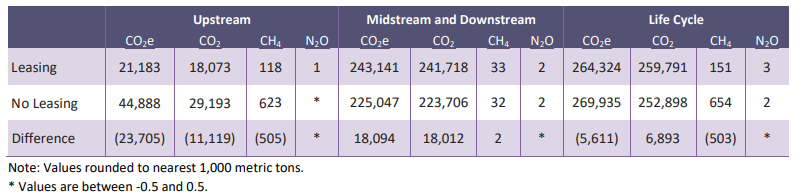
lifecycle upstream emissions from a typical GoM lease sale (BOEM)118
lifecycle up- and downstream emissions from a typical GoM sale (BOEM)151

Finally, remember that offshore oil and gas leasing results in a net reduction in GHG emissions.

The No Leasing scenario results in roughly double the CO2e emissions for upstream activities compared to those of the Leasing scenario, given that, collectively, the substitute energy sources have higher GHG emissions per unit of production (also known as “GHG intensity”) compared to the forgone domestically produced OCS oil and natural gas of the Leasing scenario.

BOEM

Even when mid- and downstream emissions are included, leasing is preferable to no leasing. See the table below from the BOEM report:

Bottom line: we need more energy leasing and less military aggression!

Read Full Post »

« Newer Posts - Older Posts »