As reported in January, United Oil and Gas received a 2 year extension from the Government of Jamaica on their Walker Morant License. Below is a United video produced for prospective partners.
While the investment risk is undeniable, the reward potential is high.
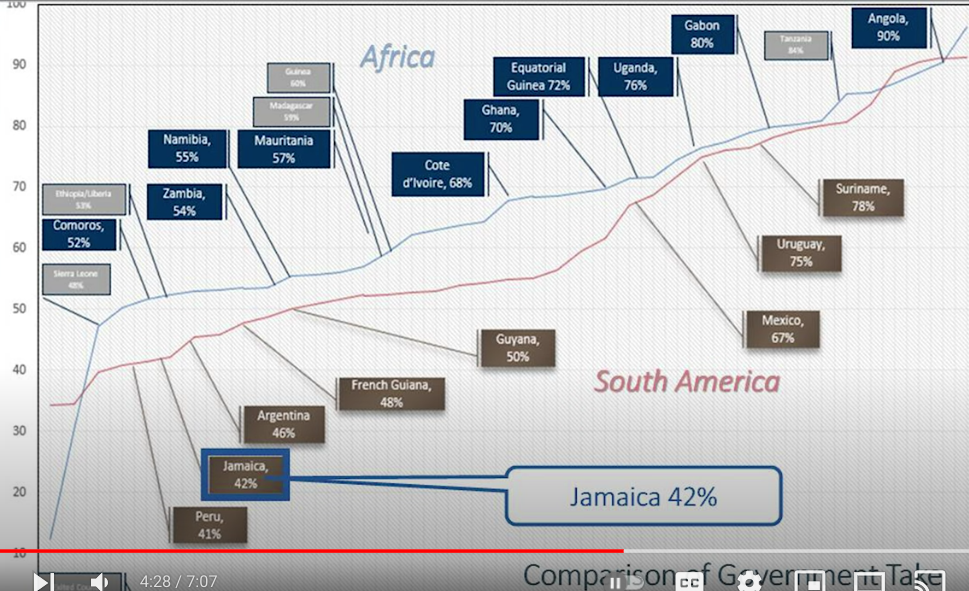
Below is an interesting slide from the United presentation that compares the government’s take of production revenues for various African and S. American nations.
The Adjusted Delayed Value (ADV), which takes into account the effects of delaying bonuses and future royalty payments, ranged from 1.3 to 9.2 times the high bids.
Perhaps the closest calls were Chevron’s two Walker Ridge bids which had ADV to bid ratios of only 1.3 to 1.4.
The main concern going forward is the absence of a consistent, predictable leasing schedule for the 3.7% of the OCSthat may be considered for leasing. BOEM’s new methodology, which will be applied at the next lease sale (whenever that might be), does not require the bureau to estimate the delay period between the sale being evaluated and the projected next lease sale. Given that the new 5 year plan calls for a maximum of 3 lease sales, the gap between sales has become a much more significant factor just as the new guidance is being implemented.
The new 5 year “leasing plan” is intended to restrain OCS production in deference to “net zero” pathways. This strategy discourages interest from exploration and production companies. US offshore leases, which are by far the world’s smallest, are even less attractive when you don’t know if and when you will be able to acquire the nearby tracts that may be needed for economical deepwater development. This is not the way to obtain fair market value for public resources.
Block
No. of bids
High Bid ($)
MROV($) ADV($)
High Bidder
MROV/bid ADV/bid
MC 711
1
584,700
6,600,000 2,400,000
bp
11.3 4.1
MC 896
1
641,628
6,100,000 1,600,000
Shell
9.5 2.5
GC 182
1
800,085
3,900,000 2,600,000
Anadarko
4.9 3.2
GC 183
1
800,085
9,100,000 6,000,000
Anadarko
11.4 7.5
GC 226
1
800,085
2,100,000 1,600,000
Anadarko
2.6 2.0
GC 227
2
974,628
13,000,000 9,000,000
Shell
13.3 9.2
GC 345
1
1,095,615
13,000,000 5,300,000
Murphy
11.9 4.8
GC 346
1
845,815
5,100,000 2,000,000
Murphy
6.4 2.4
GC 549
1
800,085
15,000,000 6,900,000
Anadarko
18.7 8.6
AT 237
1
909,899
8,300,000 3,000,000
Equinor
9.1 3.3
WR 285
1
859,837
6,200,000 1,200,000
Chevron
7.2 1.4
WR 329
1
595,837
4,400,000 770,000
Chevron
5.7 1.3
MROV=Mean of the Range-of-Value ADV=Adjusted Delayed Value, which takes into account delaying bonuses and royalties
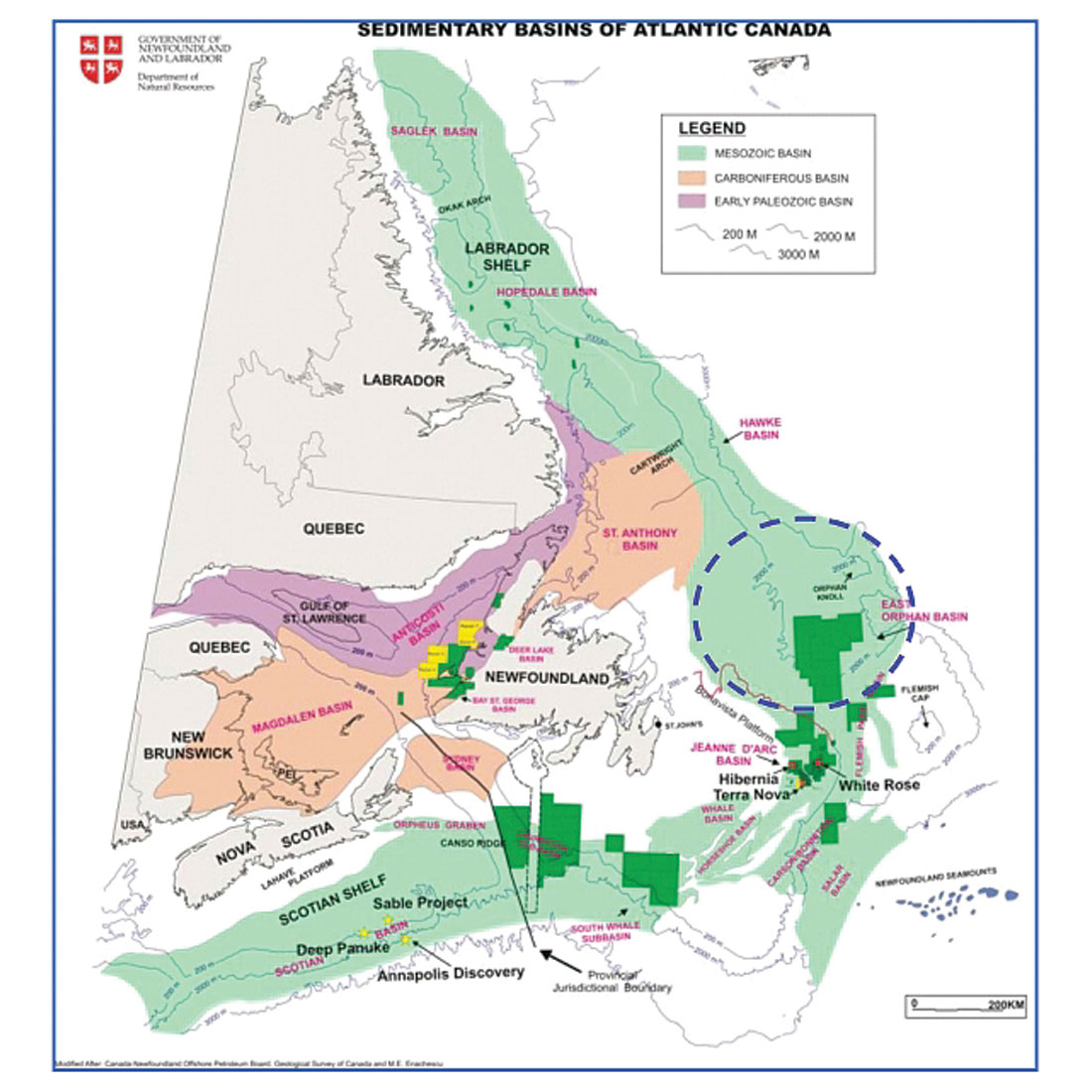
The DrillMAX is en route from Guyana to drill the Persephone wildcat well 500 km NE of Newfoundland in the highly prospective Orphan basin (3000 m water depth). This looks like the farthest from shore any well has been drilled in the Atlantic. The late spring date is prudent.This is definitely a well to watch because of the resource potential and difficult operating conditions.
Decommissioning specialist John Smith has summarized the major provisions of BOEM’s decommissioning financial assurance rule for OCS oil and gas operations. He has highlighted his comments in red.
I had the pleasure of working with Jason Mathews when he was a young MMS engineer. He truly cared about our safety mission and has taken that commitment to the next level at BSEE. Jason shared this important, heartfelt message on the anniversary of the Macondo blowout.
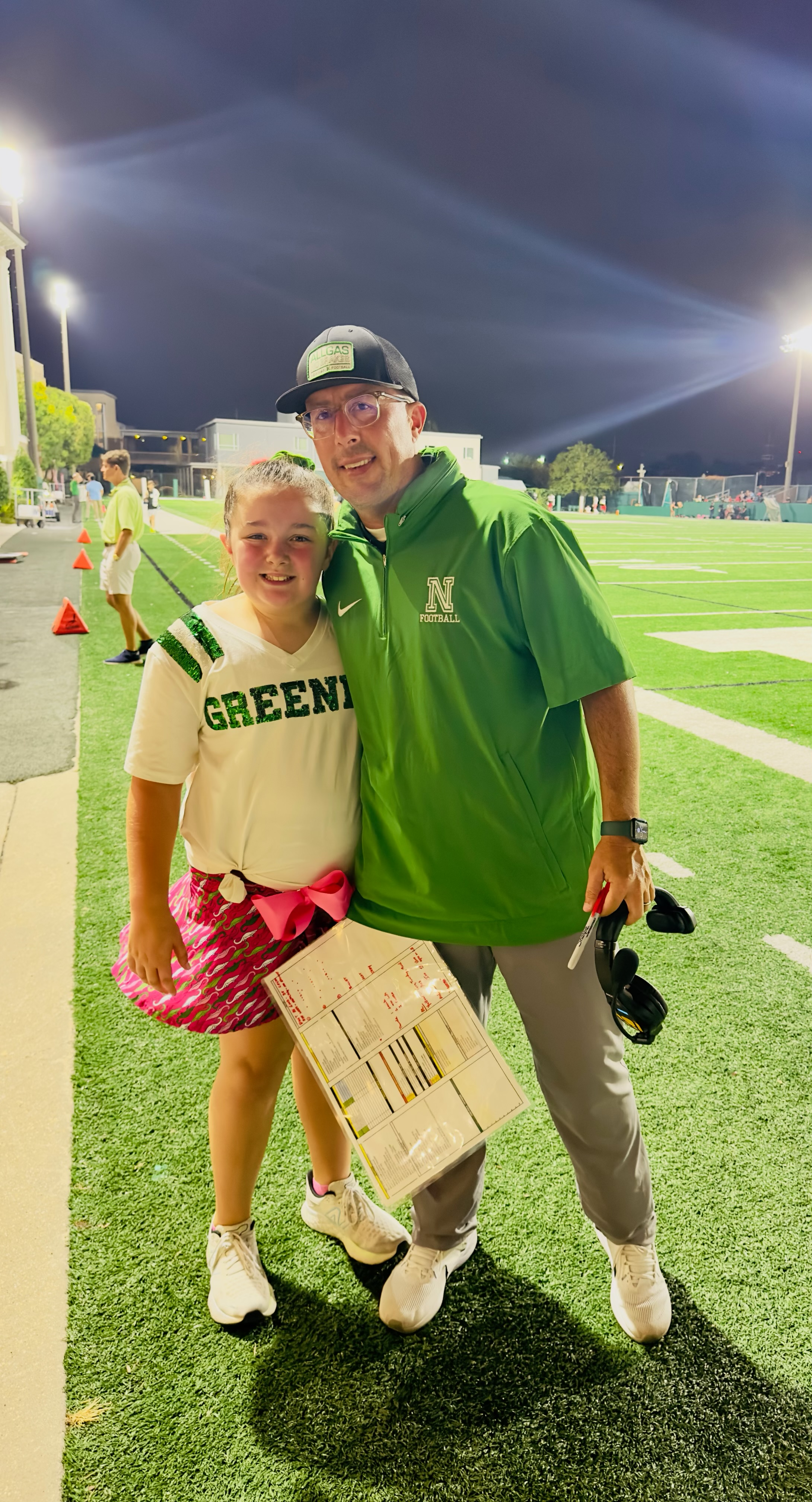
One of the greatest gifts I ever received in life is having a little girl and having the opportunity to go home every evening and spending time with her at cheer, softball, doing homework, etc. I have a great deal of respect for the men and women who work offshore and put their lives on hold for 14-28 days to deliver much needed OCS production to meet US demand. Undoubtedly, they are better / tougher people than me.
Over the last year, my team has seen multiple incidents that had a high potential severity that could have led to a fatal / serious injury or major incident in the GOM. Although we can sit and debate the causal factors for hours, one that jumps to the top of the discussion is the Human Factor – Complacency. Of all the things a leader should fear, complacency heads the list. There is no doubt success breeds complacency, and complacency breeds failure.
To this day, I am still shook by the mindset and complacency of many onboard the Deepwater Horizon prior to the incident. During testimony in the public hearings, John Guide, the BP well team leader for the Horizon, believed that the rig crew had become “too comfortable” because of its good track record for drilling difficult wells. Ross Skidmore, a BP contractor on the rig on April 20, testified that the crew became complacent after completing drilling because “when you get to that point, everybody goes to the mindset that weʹre through, this job is done.” To me, the complacency on the Deepwater Horizon could be attributable to the crew not having access to all of the well data (OptiCem reports – cement job risk) available to BP personnel onshore and the well site leaders on the rig. Our investigation concluded, the overall complacency of the Deepwater Horizon crew was a possible contributing cause of the kick detection failure.
As regulators, we have special roles in the GOM as it relates to safety:
Driving the avoidance of complacency and risk-free mindsets of the offshore employees
Understanding we can’t be selfish – Our success is not our individual personal growth / gains, but it is being unwavering in your promotion of offshore safety to ensure all offshore employees return home to their families safely
Holding each other (internally) and industry (externally) accountable when necessary
In order to achieve greatness offshore, we ,as a regulator, have to believe we can, and never sit still until we achieve it.
Everyone on this email has a very critical function and role. Never underestimate the value of what you do, have the proper mindset, and avoid complacency.
Do whatever it takes to ensure the people offshore are gifted the same gift we receive every day – going home to our families.
All In –
Jason P. Mathews, Petroleum Engineer, Field Operations – OSM
Friday Night LIghts: Coach Mathews and his daughter
PSA Norway, now Havtil, has long been a pacesetter in analyzing offshore incident and performance data, and publishing timely, comprehensive assessments. Their key findings for 2023 are pasted below (emphasis added):
Hydrocarbon leaks: four on the NCS in 2023 – the lowest figure since the RNNP survey began. None of them are considered particularly serious.
Well control incidents: 11 in 2023. The level is stable, with the figure unchanged from 2022, and all had a low potential.
Structural damage: three incidents were reported in 2023, a halving from the year before.
Total major accident indicator: the annual value is the lowest ever, and the average for the past three years declined. No particularly serious incidents occurred in 2023.
Personal injuries: no accidents resulting in fatalities occurred in the petroleum sector during 2023, while 25 serious personal injuries were reported. The serious injury frequency rose to 0.6 per million hours worked (back to the 2021 level), and lay within the expected range based on the 10 previous years.
Questionnaire survey: responses to this biennial poll showed an improvement from 2021 in most of the indices for the HSE climate and the psychosocial working environment. Furthermore, some challenges are seen with regard to language and parallel operations leading to hazardous conditions.
Havtil informs me that the complete “Trends in Risk Level (RNNP)” report for 2023 will be available in English later this month. A link to the report will be posted on this blog.
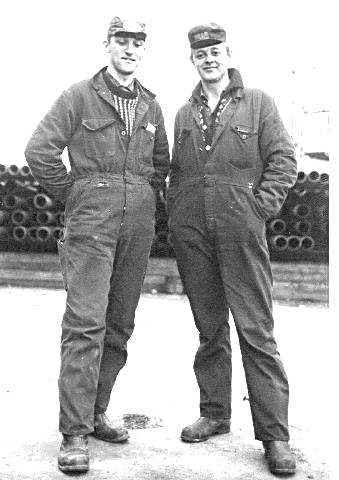
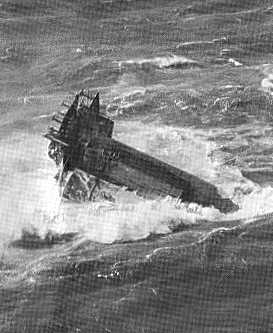
On a related note, JL Daeschler has brought The Norwegian Oil Pioneer Club’s website to my attention. Those interested in the history of North Sea exploration and production should take a look! A couple of pictures from the site are pasted below.
Svein and Axel, North Sea pioneers, 1966Sinking of the Ocean Prince, 1968
Proved reserves should not be a basis for reducing supplemental assurance. The uncertainty associated with reserve estimates and decommissioning costs can easily negate the assumed buffer in BOEM’s 3 to 1 reserves to decommissioning costs ratio. That approach failed completely at the Carpinteria Field in the Santa Barbara Channel (Platforms Hogan and Houchin). See other points on this issue.
Given that the reverse chronological order process for determining predecessor liability was dropped from consideration last April, there is no defined procedure for issuing decommissioning orders to prior owners. The absence of such a procedure increases the likelihood of confusion, inequity, and challenges, particularly when orders are first issued to companies that owned the leases decades ago, in some cases prior to the establishment of transferor liability in the 1997 MMS “bonding rule.”
BOEM’s concern (below) about investment in US offshore exploration and production is interesting given that their 5 year leasing plan strongly implies otherwise.
BOEM’s goal for its financial assurance program continues to be the protection of the American taxpayers from exposure to financial loss associated with OCS development, while ensuring that the financial assurance program does not detrimentally affect offshore investment or position American offshore exploration and production at a competitive disadvantage
I’m just guessing here, but my sense is that BOEM was pressured to finalize this rule in a timely manner (<10 months is timely for such a complex rule) and was thus reluctant to make any significant changes to the proposal published last summer. A public workshop during the comment period would have been a good idea to facilitate informed discussion on the important issues addressed in this rule. Such workshops were once commonplace for major rules.
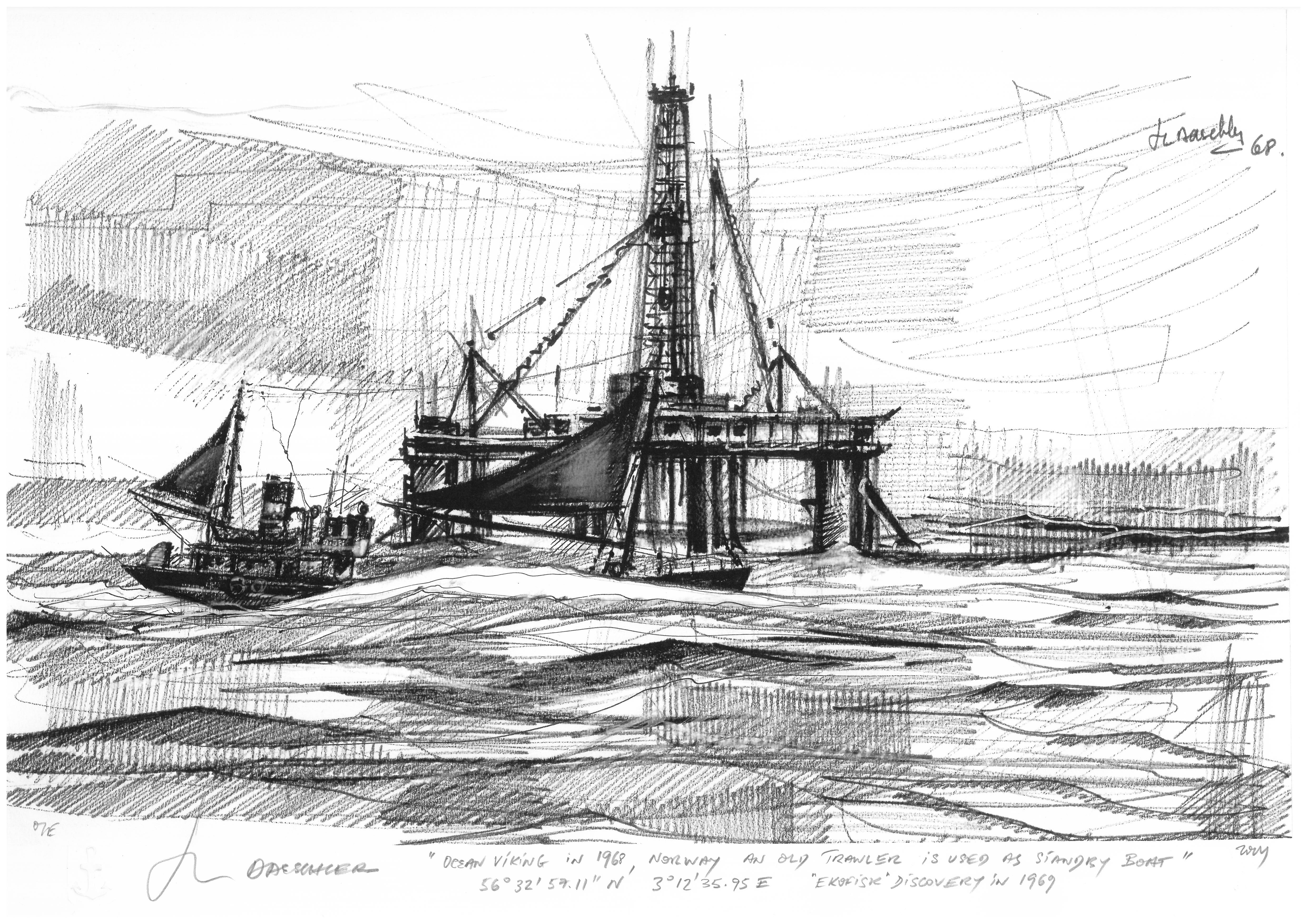
JL Daeschler is a pioneering subsea engineer and artist extraordinaire who is a native of France (Brittany) and lives in Scotland. He has shared 2 more of his exceptional drawings. (Click on the images to enlarge.)
This is a drawing of the Ocean Viking (Odeco) in the Norwegian North Sea in 1968. The rig was built in Oslo as a sister ship to the Ocean Traveler, which was already working at the same location. The Ekofisk field was discovered later in 1969. The mast-type derrick could be lowered for long ocean tow or bridge clearance. It would have been difficult to evacuate a 100 + personnel to the standby vessel, a decommissioned trawler. Things have changed so much in 56 years!Inclined jack up legs with rack and pinion drive ( Marathon Le Tourneau), Gulf of Mexico
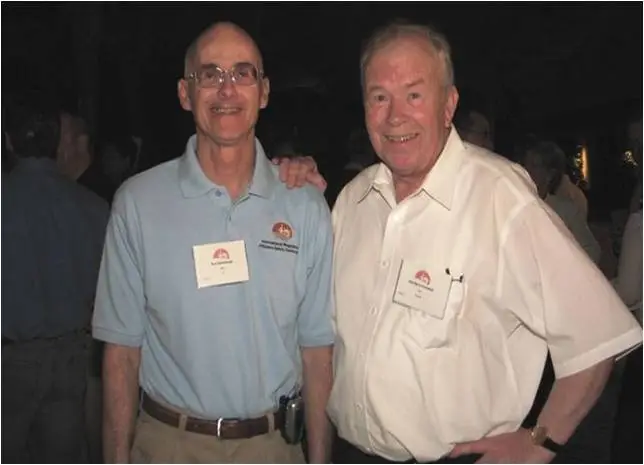
Bud and Odd (2008 photo)L to R: Jan de Jong (Inspector General, State Supervision of Mines, the Netherlands), Max Ruelokke (CEO, Canada – Newfoundland and Labrador Offshore Petroleum Board), and Odd FInnestad
Yesterday, I learned that Odd Bjerre Finnestad passed away on Christmas Eve, 2021. Odd was an international safety leader, a founder of the International Regulators’ Forum (IRF), and a driving force behind the IRF book, “A legacy of safety.”
In 2003, the US Minerals Management Service honored Odd, two other Norwegians, Magne Ognedal and Gunnar Berge, and Taf Powell from the UK, with International Leadership Awards for their outstanding leadership in facilitating the exchange of information among offshore regulatory agencies, encouraging cooperation on offshore safety and pollution prevention issues, coordinating participation in the development of international standards, cooperating on safety audits and research projects, compiling incident data, exchanging training information and discussing materials and equipment issues.
Odd was also an important contributor to this blog during the difficult times following the Montara and Macondo blowouts in 2009 and 2010.
Pasted below is the English language version of the excellent obituary that appeared in the Stavanger Aftenblad. RIP Odd; your impressive contributions to offshore safety are greatly appreciated.
Memorial: Odd Bjerre Finnestad died on Christmas Eve 2021, aged 79. Odd was employed by the Norwegian Petroleum Directorate (OD) in 1980, later the Petroleum Safety Authority (Ptil) when resource and safety management was divided into two agencies in 2004. He worked there until his retirement in 2013.
Born in the maritime city of Stavanger, he chose a maritime career. As a young naval officer, he met his Anna Dorothy in Londonderry in Northern Ireland. They married in 1967, and our thoughts go out to her and the rest of the family today. His maritime education and experience led Odd to a scholarship position at the Norwegian Institute of Maritime Research and a research program focusing on personal safety at sea. This was an important experience as head of the Section for Worker Protection and the Working Environment in NPD.
Even though most of the Working Environment Act had been applied to permanent installations on the Norwegian continental shelf as early as 1977, demands for employee participation and tripartite cooperation met resistance in parts of the industry.
Odd took on the big challenges with great commitment. On the drilling deck there was still something of the cowboy culture, where safety and the working environment had poor conditions. Several of the residential quarters appeared to be barrack-like accommodation and little had yet been arranged for women in the new industry.
He was concerned that the professional environment should have professional diversity, and that the work should be anchored in research and development. At a time when the share of women offshore was minimal, he was a driving force behind realizing the film project “Norwegian continental shelf – also for women”.
The major accidents with the Bravo blowout in 1977 and the Alexander L Kielland disaster in 1980 had documented the risks in the business in the worst possible way. With these as a backdrop, he participated in the work to develop a new supervision scheme with subsequent information work. This laid the foundation for a three-year engagement at the International Labor Organization (ILO) in Geneva from 1989, where he worked on a global study on various inspection regimes related to the working environment.
For the rest of his professional life, Odd was closely linked to international cooperation at government level. The most important arena was the International Regulators ́ Forum (IRF) where the Ptil director represented the Norwegian authorities. The forum meets annually, but much of the work takes place through ongoing contact between the participating countries. This is where Odd’s ability to see connections and make strategic contacts came in handy. He actively contributed to the IRF developing a culture for rapid and effective exchange of information on risk levels, regulations and supervision.
Odd monitored all channels almost around the clock, in order to convey news of interest. Often before these were picked up by the world press. He thereby also became an important contributor to Ptil’s information environment.
It is a pioneer in Ptil’s role as watchdog and promoter of safety and the working environment in the petroleum industry who has now passed away. We will remember Odd as a committed colleague and friend.



 Bud's Offshore Energy (BOE)