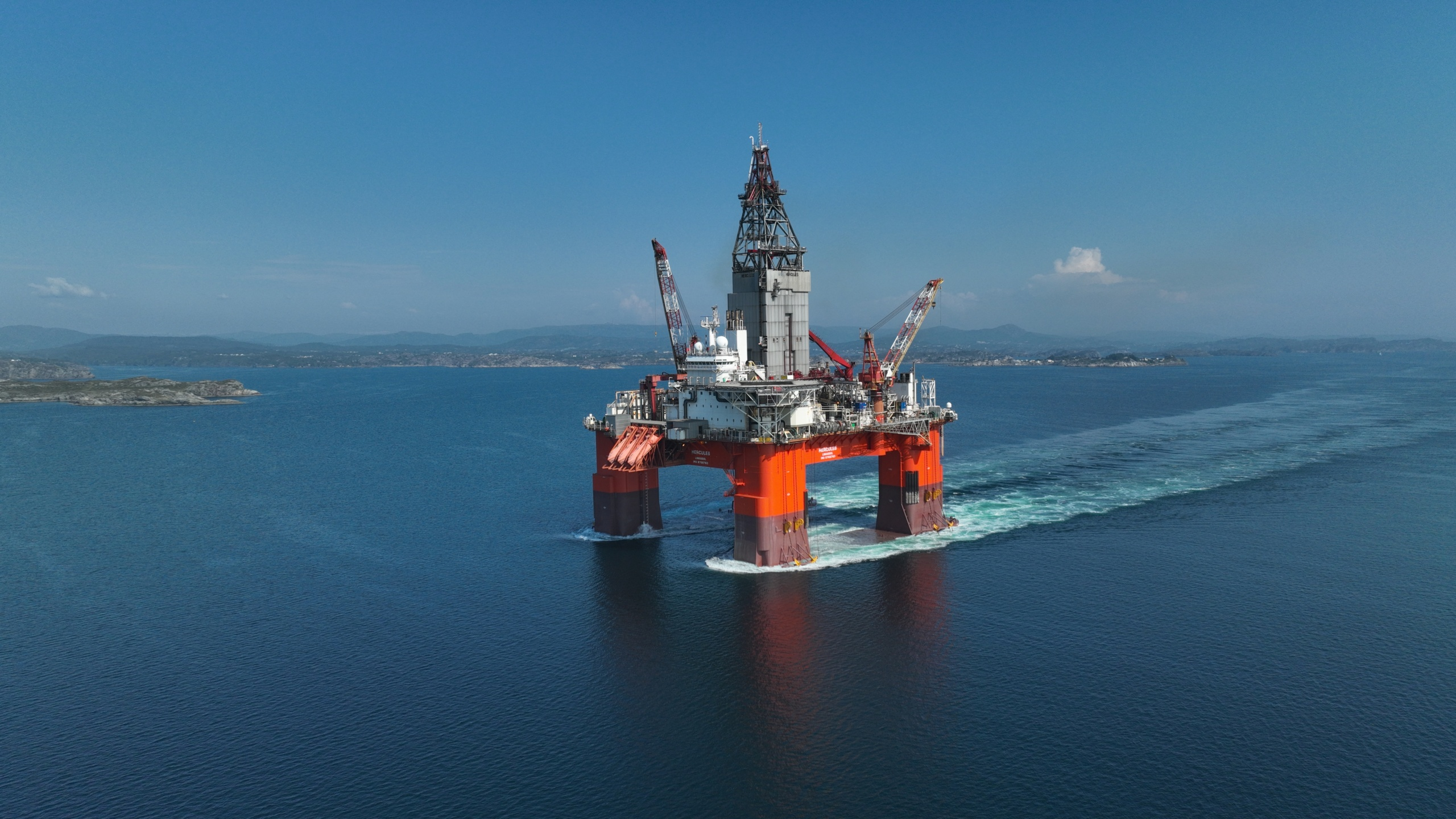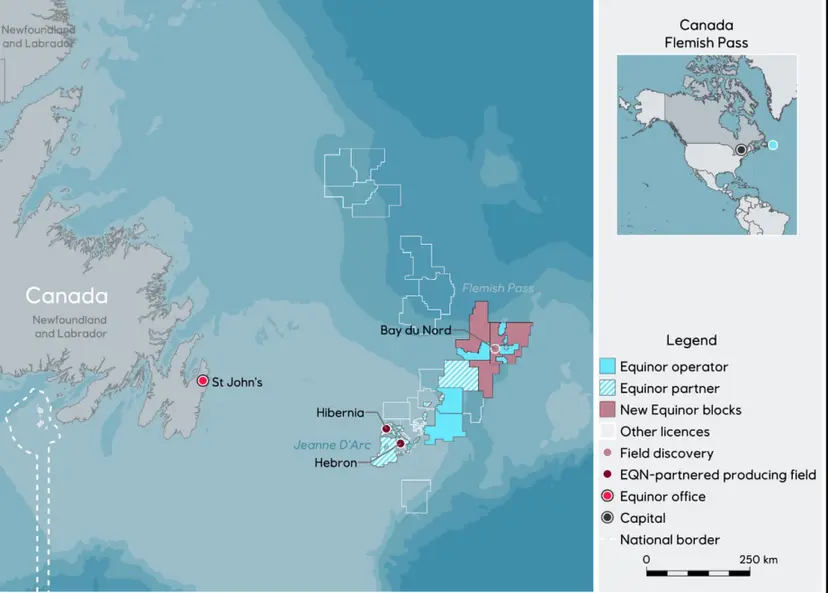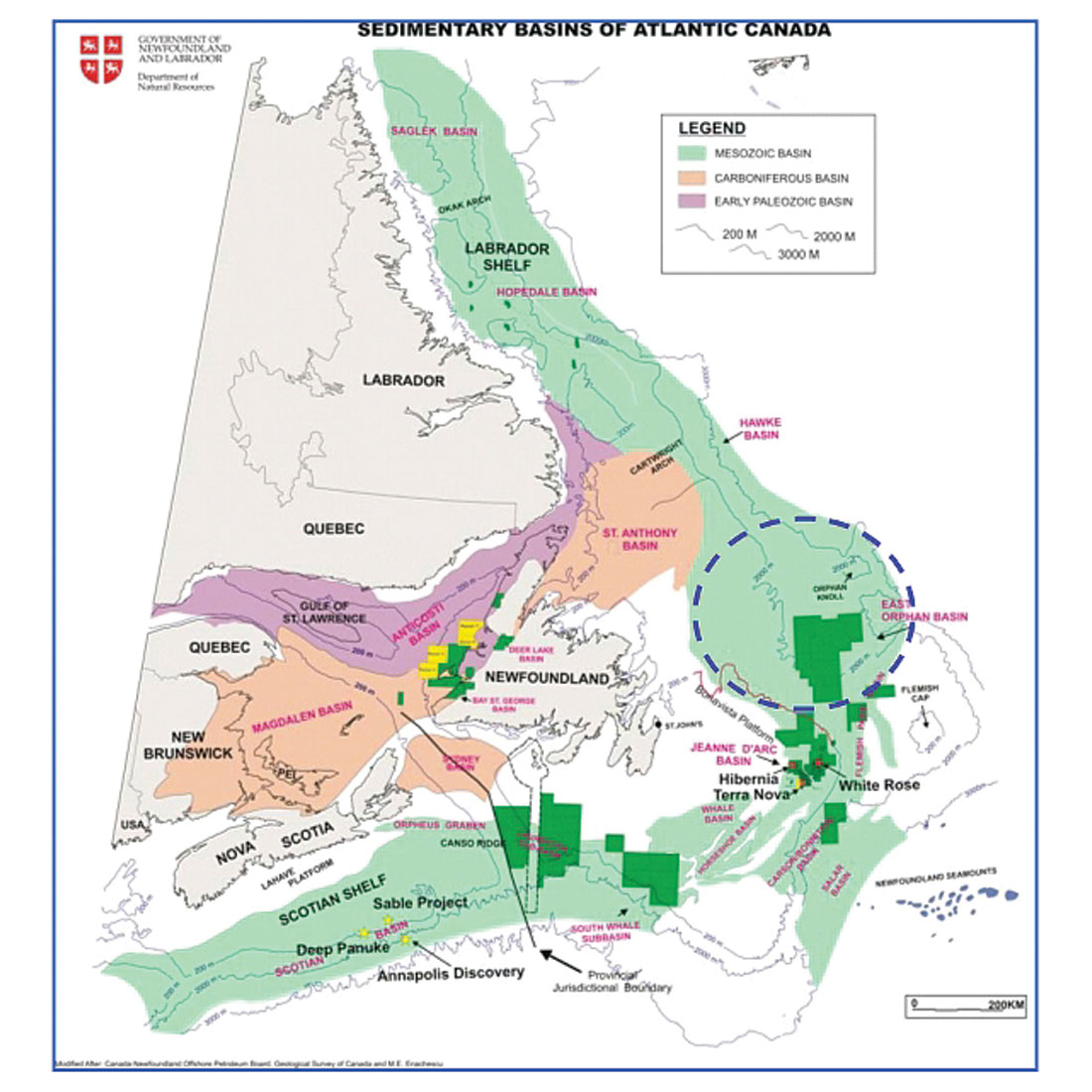
The DrillMAX has exited Bulls Bay and is en route to the Orphan Basin, where Exxon will drill a high potential exploratory well. As of this morning at ~1000 GMT, the drillship was headed north at 7.7 kts (see map).

Posted in Canada, drilling, Offshore Energy - General, tagged exploratory drilling, Exxon, Orphan basin, Stena Drillmax on May 18, 2024| Leave a Comment »

The DrillMAX has exited Bulls Bay and is en route to the Orphan Basin, where Exxon will drill a high potential exploratory well. As of this morning at ~1000 GMT, the drillship was headed north at 7.7 kts (see map).

Posted in drilling, Norway, Offshore Energy - General, tagged 17th of May, Constitution Day, Gratulerer med Dagen, JL Daeschler, Noble Innovator, Norway on May 17, 2024| Leave a Comment »

On Constitution Day, best wishes to our Norwegian friends!
This JL Daeschler photo was taken in Stavanger harbor in 2003. JL’s wife Debra, a Petrodata Marine editor, is pictured in the foreground. The rig in the background is the Maersk (now Noble) Innovator, a large jackup capable of operating in water depths to 492 ft. The legs are 674 ft (Washington Monument = 555 ft).

Posted in California, decommissioning, Offshore Energy - General, Regulation, tagged BOEM, California, costs, decommissioning, John B Smith on May 16, 2024| Leave a Comment »
In the attached supplement to his comments on BOEM’s financial assurance rule for offshore oil and gas facilities, decommissioning specialist John Smith raises concerns about reliance on cost data submitted by operators. John contrasts operator estimates for platforms in California state waters with estimates provided by independent consultants.
As summarized below and explained in the attachment, the more realistic independent estimates were 2-3 times higher than the operators’ “high end” estimates.

Posted in decommissioning, energy policy, hurricanes, Offshore Energy - General, Offshore Wind, tagged BOEM, Cape May County, decommissioning, financial assurance, streamlining rule, wind standards, wind turbines on May 13, 2024| Leave a Comment »

BOEM’s “Rule to Streamline and Modernize Offshore Renewable Energy Development” is intended to “make offshore renewable energy development more efficient, [and] save billions of dollars. Unfortunately, the savings associated with relaxed decommissioning financial assurance requirements translates to increased risk for customers and taxpayers.
BOEM signaled their intentions on offshore wind (OSW) decommissioning three years ago when they granted a precedent setting financial assurance waiver to Vineyard Wind. Despite compelling concerns raised by commenters, the “streamlining” regulations have codified this decision.

Cape May County, New Jersey, was among the commenters objecting to BOEM’s departure from the prudent “pay as you build” financial assurance requirement. The County commented as follows (full comment letter attached):
“[e]nergy-utility projects are in essence traditional public-private partnerships where technical and financial risks are transferred to the private sector in exchange for the opportunity to generate revenues and profit. Under the proposed rule, the Federal government is instead transferring risks associated with decommissioning to the consumer rather than to the private sector.”
Cape May added:
“[w]hile BOEM believes that if a developer becomes insolvent during commercial activity that a solvent entity would assume or purchase control, the County believes this is a risky assumption as the most likely reason for default is that a constructed wind farm developer is unable to meet its contractual obligations set forth under a Power Purchase Agreement (PPA) because its energy production revenues are not in excess of its operating costs. A change of hands would not remove these circumstances or make the project profitable.”
Cape May and others also commented on the threat of premature decommissioning as a result of storm damage. In response, BOEM asserts that these risks have been addressed in the latest standard for North American offshore wind turbines (Offshore Compliance Recommended Practices: 2022 Edition (OCRP-1-2022)). However, design standards, particularly those for offshore facilities, are not static. The recommended practice for OSW is likely to change multiple times in the coming years as storm, operating, and turbine performance data are updated and analyzed. The design standard for Gulf of Mexico platforms has been repeatedly refined and improved and is now in its 22nd edition.
In their response to public comments on the decommissioning risks, BOEM repeatedly asserts that they can adjust the amount and timing of required financial assurance as they monitor a lessee’s financial health. Unfortunately, a company’s finances can change quickly and BOEM’s options will be limited when it does. Increasing the financial burden on a struggling company that is providing power to a regional power grid will not be a simple proposition.
Strong comments from Cape May County:
Posted in Offshore Energy - General, Regulation, Uncategorized, tagged BSEE Safety Alert, Safety Alert 483, scam alert on May 10, 2024| Leave a Comment »
BSEE has a very good Safety Alert program that merits close attention. However, this amusing entry doesn’t qualify. Perhaps this alert was issued in response to a government-wide anti-scamming directive.
Safety Alert No. 483 (plus a few comments in parentheses):
Scam Alert: Suspicious Requests for Payment
The Bureau of Safety and Environmental Enforcement (BSEE) is issuing this Safety Alert to inform users about possible scams requesting payment of fines for violations. Be aware the documents you receive may appear to be printed on official government letterhead and could be used to justify requests for payments or loans. BSEE does require payment of fines for certain violations, but BSEE will never:
Posted in Canada, drilling, Offshore Energy - General, tagged Bay Bulls, exploratory drilling, Exxon, Orphan basin, Stena Drillmax on May 9, 2024| Leave a Comment »

According to rig locator data, the DrillMAX is moored in Bay Bulls, Newfoundland in preparation for transit to the site of Exxon’s high potential exploratory well in the Orphan Basin.

Posted in accidents, Offshore Energy - General, UK, well control incidents, tagged API standards, BOPE, continuous improvement, JL Daeschler, North Sea, Richard Krahl, well control, workover on May 9, 2024| Leave a Comment »
JL Daeschler, pioneering subsea engineer and BOE contributor, recounted a frightening incident in 1976, a year after UK North Sea production began:
We found ourselves in a drastic situation. While working on a subsea well, the wireline retrievable tubing safety valve got tangled up in the tree area. We had an open well situation and couldn’t cut the wire in the subsea tree. Further, the weather was bad, and keeping on location was difficult. The riser hydraulic release was faulty, so there was an imminent high risk of a “jammed ” subsea tree, bent/damaged riser, and uncontrollable well flow.
We got through this, but recognized that improved well control capabilities were needed during workover operations. Management decided that any future workover operations on a subsea tree/well would require a small diameter workover BOP with shearing capability immediately above the Xmas tree. A year later, we had the hybrid kit pictured below (with JL). Note that the guide funnels are slim to run on guide lines and not overshoot the guide base posts.

JL’s story reminds us once again that safety achievement is dependent on continuous improvement driven by experience, research, and technological advances.
When I was a young engineer with the US Geological Survey, the OCS safety regulator at the time, my boss and mentor Richard Krahl (known as “Mr. OCS” for his commitment to offshore safety) slammed😀 a copy of the first edition of API RP 14C (Analysis, Design, Installation, and Testing of Safety Systems for Offshore Production Facilities) on my desk and told me to read it carefully. That pioneering process safety document has grown with the offshore industry and is now in its 8th edition.
Similarly, API RP 2A-WSD (Planning, Designing, and Constructing Fixed Offshore Platforms— Working Stress Design) is now in its 22nd edition and API STD 53 (Well Control Equipment Systems for Drilling Wells) is in its 5th edition. There are countless other examples of the progression in safety equipment and practices.
As individuals, companies, agencies, and collectively as an industry, there can be no standing still. Nothing is routine and the challenges continue to grow: deeper wells, more complex geology, higher temperature and pressure, deeper water, harsher environments, remote locations, new security risks, and more. We get better or we get worse, and the latter is not an option. Onward!
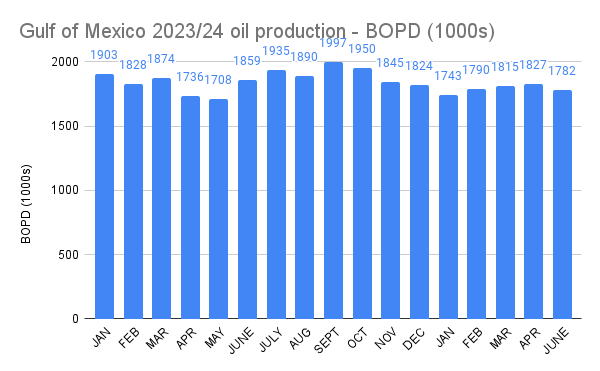
Posted in conferences, energy policy, Gulf of Mexico, Offshore Energy - General, tagged Chevron Anchor, deepwater is back, deepwater oil production, Jason Aldean, Namibia, OTC on May 7, 2024| Leave a Comment »
It’s OTC week and optimism abounds. “We are so back!”

So as not to kill the buzz, I won’t mention the 5 Year (no)Leasing Plan and other troubling US matters, at least for one day.
Posted in Gulf of Mexico, Guyana, Offshore Energy - General, oil spill response, well control incidents, tagged blowout, capping stack, Guyana, LSU, macondo, Mayank Tyagi, top kill on May 6, 2024| 1 Comment »
The government’s decision to require that a capping stack be located in Guyana is prudent. Although the need for a capping stack is dependent on multiple barrier failures and is thus extremely low, the environmental and economic consequences of a prolonged well blowout warrant timely access to this tertiary well control option.
A capping stack must be properly maintained and deployable without delay. In that regard, BSEE has a good program for testing Gulf of Mexico capping stack readiness. Capping stack drills are an important post-Macondo addition to the unannounced oil spill response program that dates back to 1981.
The capping stack designed during the Macondo blowout shut-in the well on 15 July 2010. The decision process that allowed the well to remain shut-in was a bit perplexing, and we had a bizarre situation where the Federal Incident Commander threatened to require the resumption of the blowout. The same well integrity concerns had prematurely ended the “top kill” operation on 28 May, allowing the well to flow unnecessarily into the Gulf for an additional 48 days (5/28-7/15). (See this important paper by LSU Petroleum Engineering professor Dr. Mayank Tyagi et al: Analysis of Well Containment and Control Attempts in the Aftermath of the Deepwater Blowout in MC252)

Posted in Guyana, Offshore Energy - General, tagged Chevron, CNOOC, Exxon, Hess, Q1 oil production, Stabroek on May 3, 2024| Leave a Comment »
Chevron wants in, Exxon and China want bigger pieces, and Venezuela claims it all.
Exxon CEO Darren Woods sums it up:“I believe Guyana will go down as one of the most successful deepwater developments in the history of the industry.”
Nice production growth and this is just the beginning: