The announcement was during an interview this morning (4/4/2025) with Lawrence Jones on Fox News, and is consistent with expectations and the current 5 year leasing plan.
Archive for the ‘Gulf of Mexico’ Category
Interior Secretary Burgum directs BOEM to hold first Gulf of America oil and gas lease sale by end of year
Posted in energy policy, Gulf of Mexico, Offshore Energy - General, tagged 2025, Doug Burgum, energy policy, Fox News, Gulf of America, oil and gas lease sale on April 4, 2025| Leave a Comment »
2024 Gulf of America compliance data and the Cox bankruptcy
Posted in Gulf of Mexico, Offshore Energy - General, Regulation, tagged 2024 inspection data, Cox bankruptcy, INCs, OCS compliance data, safety performance, W&T offshore on April 2, 2025| Leave a Comment »
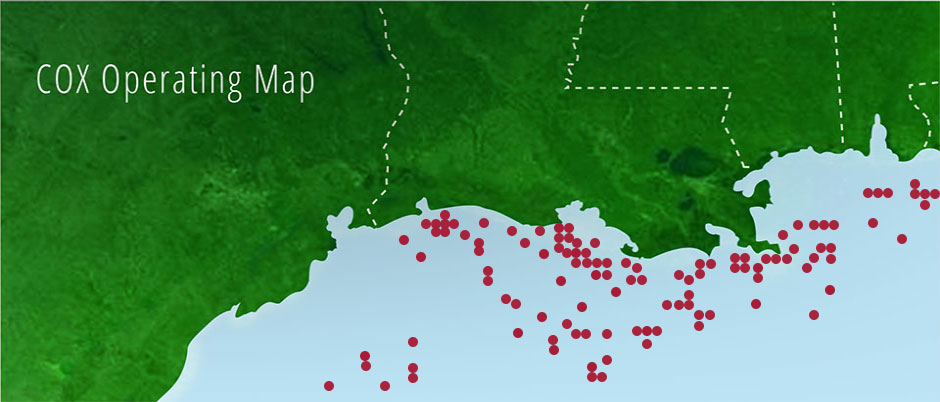
Cox Operating LLC and affiliates were once again the violations leaders in 2024 accounting for 50% (479/957) of the warnings, 12% (47/398) of the component shut-ins, and 7.3% (8/109) of the facility shut-ins.
All but 3 of the Cox enforcement actions were during the first half of the year. This is presumably because of the termination of Cox operations and the ongoing divestiture of their assets.
According to BOEM’s platform data base, Cox (43) and affiliates Energy XXI (3) and EPL (0) now operate only 46 platforms. This is a big decline from Sept. 2024 and June 2023 when the Cox companies operated 243 and 435 platforms respectively. All of the remaining Cox platforms are non-producing and are on relinquished or terminated leases.
The curtailment of Cox operations is no doubt an important factor in the sharp decline in Gulf of America violations in the second half of 2024. Per the data below, total GoA wide violations declined by 58% (1031 vs. 433) in the second half of 2024 as Cox violations essentially disappeared:
| Gulf of America inspection data | warnings | component shut-ins | facility shut-ins | facility inspections |
| first half 2024 | 725 | 243 | 63 | 1586 |
| 2nd half 2024 | 232 | 155 | 46 | 1546 |
| reduction | 493 (68%) | 88 (36%) | 17 (27%) | 40 (2.5%) |
| Cox companies inspection data | warnings | component shut-ins | facility shut-ins | facility inspections |
| first half 2024 | 478 | 46 | 7 | 404 |
| 2nd half 2024 | 1 | 1 | 1 | 174 |
Some Cox assets have been acquired by W&T and Natural Resources Worldwide. BOEM records indicate that 8 record title assignments and 3 operating rights assignments from Cox to W&T were approved in the first half of 2024. W&T currently operates 116 platforms, but it’s unclear how many are former Cox facilities.
The acquisition of Cox properties does not appear to have significantly affected W&T 2024 inspection results, which were respectable:
| W&T insp. data | warnings | component shut-ins | facility shut-ins | facility inspections |
| first half 2024 | 12 | 31 | 0 | 83 |
| 2nd half 2024 | 17 | 14 | 2 | 105 |
Additional record title and operating rights assignments to Natural Resources Worldwide (NRW) were approved in 2025, but NRW does not appear to be operating any platforms.
Ironically, NRW was cited for 1 warning and 1 facility shut-in without a single inspection. Presumably, these violations were the result of administrative issues.
Online data are insufficient to account for the 435 platforms that were on the Cox ledger in June 2023 or determine the remaining decommissioning liabilities. Per the platform database, no Cox, Energy XXI, or EPL platforms were removed in 2023, 2024, or 2025.
On a more positive note, most GoA operators had good safety and compliance records in 2024. One major producer had a historically significant record. More on that to follow.
Gulf of America production in January 2025 was consistent with the 2024 average
Posted in energy policy, Gulf of Mexico, Offshore Energy - General, Regulation, tagged Gulf of America, January 2025, offshore leasing, oil production, safety regulation on April 1, 2025| Leave a Comment »
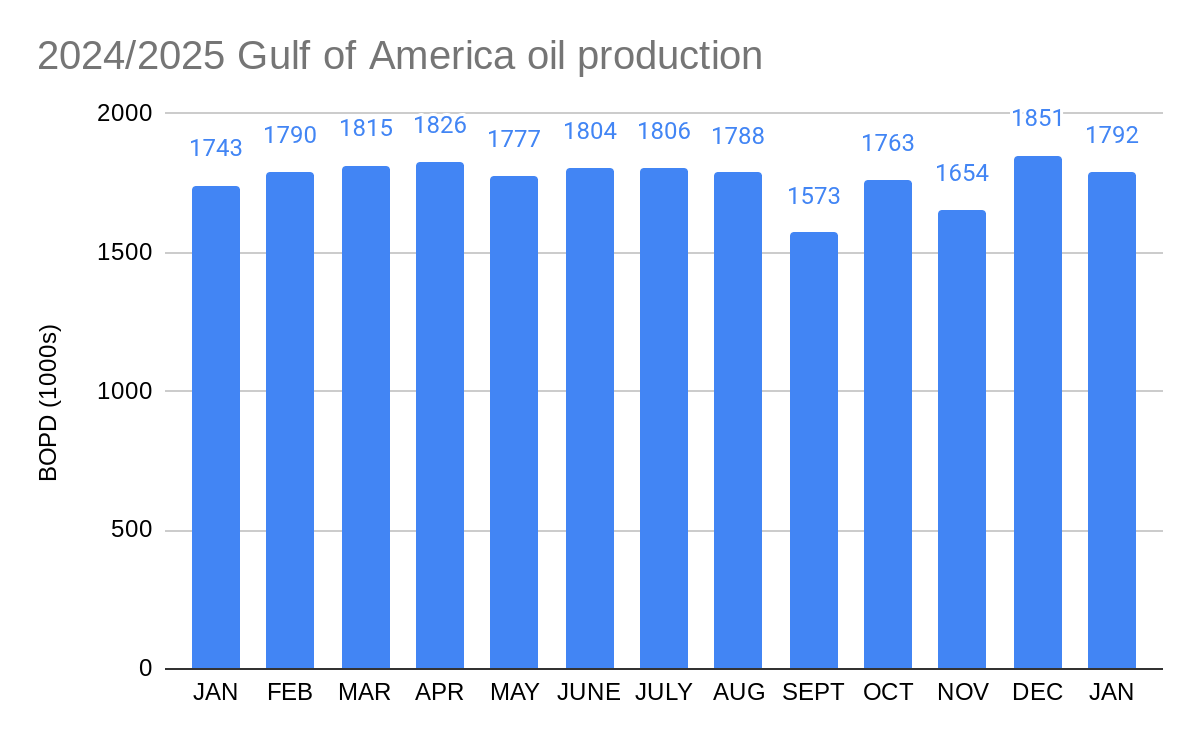
Sustaining or preferably increasing production rates will be dependent on a reliable schedule of lease offerings and a consistent regulatory regime based on best safety management principles and continuous improvement in technology, practices, and culture. Poorly considered operating restrictions imposed by activist judges are a major risk to both safety and production.
How do you invalidate a lease sale mandated by Congress?
Posted in energy policy, Gulf of Mexico, Offshore Energy - General, tagged climate change, greenhouse gases, Gulf of America, Inflation Reduction Act, Lease Sale 259, leasing mandate, Rice's whale, US District Court for DC on March 31, 2025| Leave a Comment »
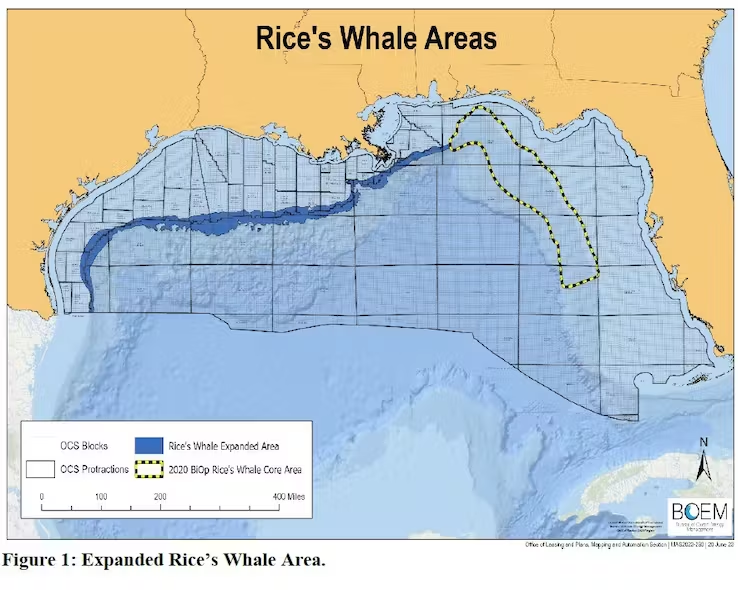
OCS Lease Sale 259 was mandated by Congress, and was held on March 29, 2023, two days before the deadline established in the Inflation Reduction Act. Ah, but compliance with environmental law, which is of course subject to interpretation, was still required.
So the formula for eNGOs in such cases is to sue on NEPA grounds in a friendly Federal court. In the case of Sale 259, the plaintiffs asserted that BOEM’s climate change and Rice’s whale analyses were inadequate.
With regard to climate change, the reality is that incremental Gulf of America production will have virtually no effect on petroleum consumption and global GHG emissions. Increased GoA production will actually have a slight positive effect on worldwide GHG emissions given the relatively lower carbon intensity for deepwater Gulf production.
With regard to the Rice’s whale, Darren Ireland’s analysis is compelling:
“Based on the limited data available on the use and occurrence of Rice’s whale in the central and northwestern GOMx (one acoustic study (Soldevilla et al. 2022b), one confirmed sighting (NMFS 2018a) and a few unconfirmed sightings (Rosel et al. 2021)), there is insufficient scientific evidence to determine that essential features for Rice’s whale conservation are indeed present in the central and northwestern GOMx. In fact, data on the life-history requirements of Rice’s whale even in the core habitat are still lacking and need further investigation.“
Unsurprisingly, Judge Amit P. Mehta of the US District Court for the District of Columbia, has ruled that BOEM’s environmental assessments on climate change and the Rice’s whale were deficient, and has ordered the parties and intervenors to jointly submit a proposed briefing schedule by April 3, 2025. “The court will also order additional briefing on remedy” (e.g. onerous operating restrictions).
In case you haven’t suffered enough, the judge’s full opinion is attached.
First ever Congressional nullification of an OCS oil and gas regulation
Posted in energy policy, Gulf of Mexico, Offshore Energy - General, Regulation, tagged BOEM, Congressional Review Act, Joint Resolution, Marine Archaeological Resources, Regulation, Sen. Kennedy on March 20, 2025| Leave a Comment »

Exercising authority granted in the Congressional Review Act (Chapter 8 of Title 5 of the United States Code), Congress passed Joint Resolution 11 nullifying the Bureau of Ocean Energy Management rule titled “Protection of Marine Archaeological Resources” (Sept. 3, 2024).
Nullification of a final rule is not common. Since its Enactment in 1996, the CRA has been used to overturn only 20 rules. This is the first time an OCS energy rule has been nullified.
Enactment of a CRA resolution of disapproval is unlikely in most circumstances, because a President would be expected to veto a joint resolution disapproving a rule issued by the President’s own Administration.
There are also time limitations for nullifying a rule. The joint resolution must be introduced during a 60-days- of-continuous-session period beginning when the rule has been published in the Federal Register and been received by Congress. However, if within 60 session days after a rule is submitted, Congress adjourns its session, the periods to introduce and act on a disapproval resolution reoccur in their entirety in the next session of Congress.
It’s also noteworthy that a CRA resolution cannot be filibustered if the Senate acts on the resolution during a 60-days-of-Senate-session period beginning when the rule has been received by Congress.
Most of the 20 nullifications involved rules finalized at the end of a previous administration that were nullified at the beginning of a new administration with a majority in both chambers of Congress. That is the case for the Marine Archaeology Rule, which was published at the end of the Biden administration and nullified at the beginning of the Trump administration. .
The nullified OCS rule required operators to submit an archaeological report identifying potential archaeological resources with any exploration or development plan. The rule modified regulations that only required such a report only when a BOEM regional director had reason to believe that an archaeological resource may be present in the lease area.
Archaeological survey requirements have been somewhat contentious since they were introduced in the 1970s. There were concerns about decisions to require the protection of speculative, low probability sites that could significantly alter operating plans.
A reasonable balance and an apparent consensus was achieved by limiting the report requirements to areas where studies and other information indicated the potential for such resources. BOEM’s new rule tightened the requirement considerably, which led to opposition and ultimately nullification.
Resolution Timeline
| 2/4/2025 | Senate | Resolution Introduced by Sen. Kennedy |
| 2/25/2025 | Senate | Passed by Yea-Nay Vote 54 – 44 |
| 3/6/2025 | House | Passed by Yea-Nay vote: 221 – 202, 1 Present |
| 3/13/2025 | President | signed |
Mars vs. Mars
Posted in drilling, Gulf of Mexico, Offshore Energy - General, Uncategorized, tagged deepwater development, deepwater drilling, Gulf of America, planet Mars, Shell Mars, space vs. offshore, SpaceX on March 11, 2025| Leave a Comment »
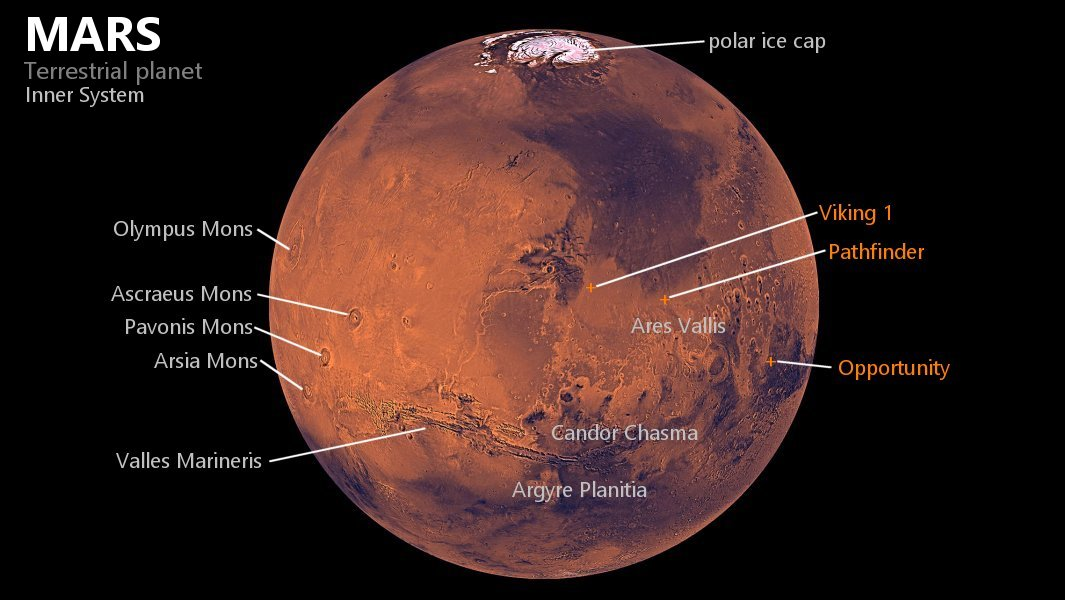

In light of the recent NASA/SpaceX advances in rocketry, a manned mission to Mars seems inevitable, perhaps within the next 5 years. See the SpaceX Mars landing video below.
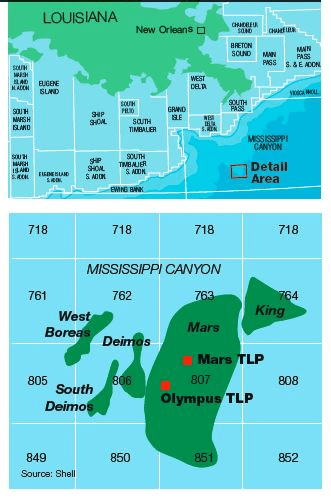
While the space program generates more media buzz given the sci-fi appeal, the achievements of the offshore oil and gas industry are similarly impressive. The Gulf of America has its own Mars, a massive deepwater project that has been ongoing and expanding for 30 years, and may ultimately produce more than 1 billion barrels of oil equivalent (boe).
Like a mission to Mars, the successful development of deepwater oil and gas resources is a technical marvel that requires:
- Identifying prospects deep beneath the seafloor using advanced subsurface imaging capabilities.
- Drilling exploratory wells from floating rigs, using advanced stationkeeping systems that maintain a precise location on the water surface.
- Drilling deep beneath the seafloor while transmitting real-time geologic, temperature, and pressure data to the rig and distant onshore locations.
- Ensuring well integrity by installing and cementing multiple strings of protective casing.
- Processing production at buoyant surface facilities designed to withstand worst case storm conditions.
- Connecting clusters of subsea wells to a host surface facility that may be many miles away.
- Increasing ultimate recovery with reservoir engineering studies and advanced well completion practices.
Life on the planet Mars will be dependent on technology developed for the offshore Mars and other deepwater projects.
Unsafe grating and offshore safety
Posted in accidents, Gulf of Mexico, Offshore Energy - General, Regulation, tagged BSEE, falls, Gulf of America, near miss, offshore safety, Safety Alert, unsafe grating on March 10, 2025| Leave a Comment »
Historically, falls are the most common cause of offshore injuries and fatalities, and hazardous grating is a leading contributing factor to these incidents.
BSEE’s risk-based inspection and safety alert programs have effectively drawn attention to grating risks. Attached is a recent alert describing a grating incident that could have been fatal.

A worker installing a pump in a skid above unsafe grating was kneeling on scaffolding boards. The tip of his boot was on the corroded grating when it suddenly gave way. The worker was able to grab a nearby section of piping to support himself. The 36″ x 36″ piece of grating collapsed and fell into the water.
Gulf production jumps 200,000 bopd following name change 😀
Posted in energy policy, Gulf of Mexico, Offshore Energy - General, tagged December 2024, Gulf of America, large increase, new deepwater platforms, oil production on February 28, 2025| Leave a Comment »
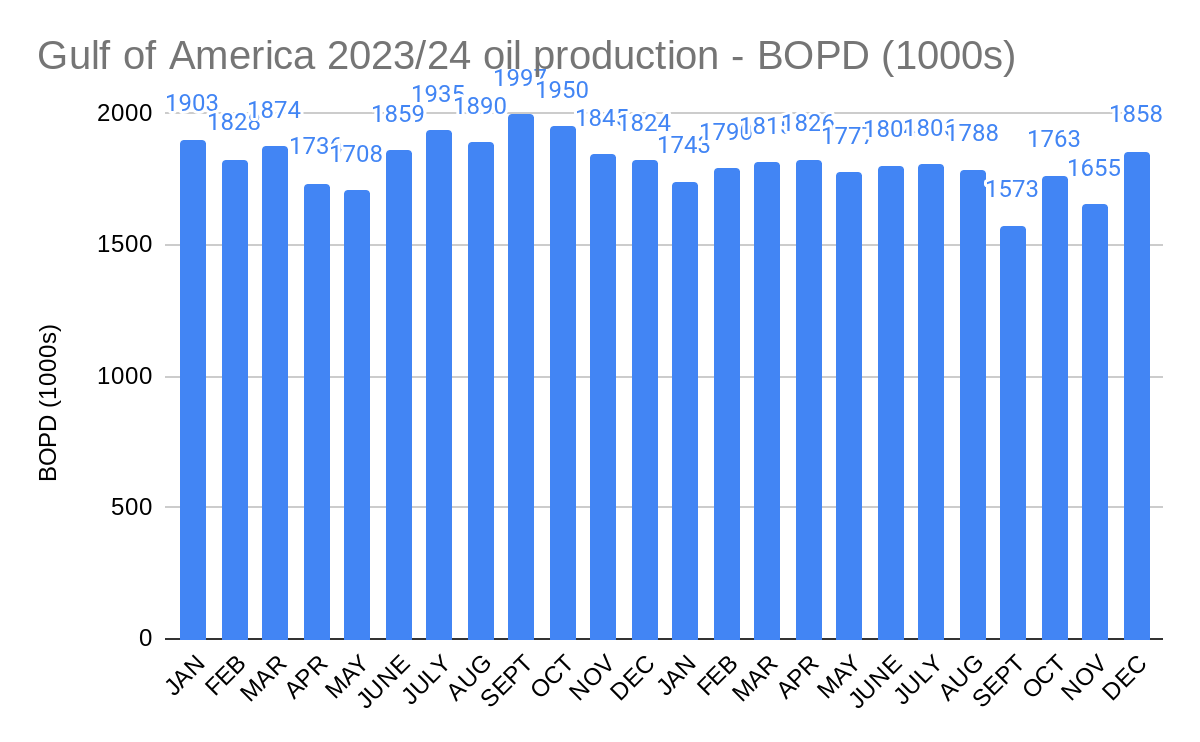
Actually, the latest data are for December 2024, so that was before the name change. It’s a nice story nonetheless, very patriotic.😉
Most likely, the jump in production is related to increased output from the new deepwater facilities we have been following.
“Back to the Future” for BP!
Posted in energy policy, Gulf of Mexico, Offshore Energy - General, tagged Argos, beyond petroleum, bp, Gulf of America production, increase oil and gas investments on February 28, 2025| Leave a Comment »
BP has announced it will cut its renewable energy investments and instead focus on increasing oil and gas production.
The energy giant revealed the shift in strategy on Wednesday following pressure from some investors unhappy its profits and share price have been lower than its rivals.
BP said it would increase its investments in oil and gas by about 20% to $10bn (£7.9bn) a year, while decreasing previously planned funding for renewables by more than $5bn (£3.9bn).

It’s more than okay to be an oil and gas producer – no need to apologize or pretend to be something else. Oil and gas are, and will continue to be, essential to economies worldwide. Companies should focus on safely and cleanly achieving production objectives.
If a company thinks other types of energy investments make good business sense, they should engage in those activities. However, they should not do so to curry favor with anti-oil factions who can never be placated. Attempts to do so will only weaken your company.
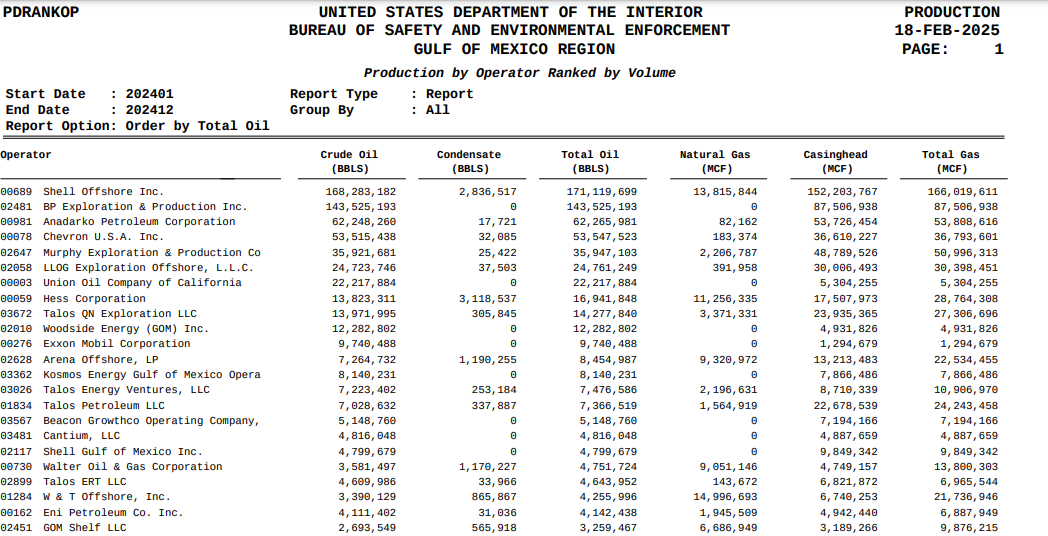
BP is doing well in the Gulf of America – no. 2 producer in 2024.
BOEM rescinds controversial Rice’s Whale requirements
Posted in Gulf of Mexico, Offshore Energy - General, Offshore Wind, tagged biological opinion, BOEM, court order, deadline, NTL, rescinded, Rice's whale on February 27, 2025| Leave a Comment »
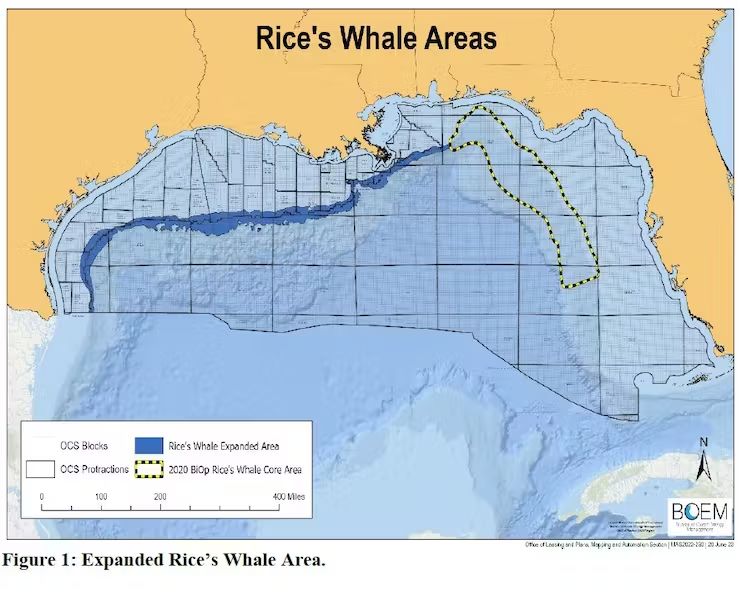
Although Rice’s Whale lease stipulations were deleted from Sale 261 leases by court order, similar NTL restrictions remained in effect for all oil and gas operations in the Gulf of America. Those NTL restrictions, some of which may be excessive and premature, have now been rescinded.
A previous post compared the Rice’s Whale restrictions applicable to Gulf oil and gas operations with the less onerous Right Whale restrictions for the Atlantic wind industry.
Of course, this is not the end of the Rice’s Whale dispute. A Federal judge in Maryland has ordered the National Marine Fisheries Service’s (NMFS) to prepare a new biological opinion that better protects the Rice’s whale. The deadline for the new biological opinion was extended to May 21, 2025. After that date, no new Gulf leases may be issued and no new operating plans may be approved pending a new biological opinion that is acceptable to the Court.
Stay tuned.
 Bud's Offshore Energy (BOE)