Feeds:
Posts
Comments

Archive for the ‘Gulf of Mexico’ Category

Data from EIA

More than half of GoM oil production was shut-in for 13 days in September and several hundred thousand BOPD were shut-in for the rest of the month. The result was a 42% reduction in production from pre-Ida (July) levels.

All production has now been restored so the December EIA figures should give us a good read on stablized post-Ida production.

Read Full Post »

Observations and comments on the offshore findings and recommendations in the Dept. of the Interior’s report:

  • From an offshore perspective, this report is more moderate than expected. No major complaints.
  • The report was issued the Friday after Thanksgiving. Was there a desire to minimize attention?
  • The report does not include a recommendation on raising royalty rates. DOI will continue to study such actions (prudent decision).
  • BSEE estimates current liability for “orphaned infrastructure” at only $65 million. They must be using a very narrow definition of orphaned infrastructure.
  • “Financial assurance coverage should be strengthened.” (Few would argue with that statement.)
  • “BSEE and BOEM will carefully consider comments on the 2020 proposed financial assurance rule.” (Deja vu? Expect a long, slow process.)
  • BOEM will establish a “fitness to operate standard.” Comments: (1) This is an old concept that has proven to be difficult to execute. Hold companies accountable, make them demonstrate financial assurance, and don’t pander to bad actors (see the case of Hogan and Houchin) (2) Why is BOEM establishing this standard and not BSEE, the safety bureau? (The division of responsibilities between BOEM and BSEE has created serious overlap, inefficiency, and confusion and needs to be addressed.)
  • “BOEM should consider advancing alternatives to the practice of area-wide leasing.” Tract selection makes sense in frontier areas with little operational history. It would have been perfect for the Mid- or South Atlantic or the EGoM, all of which were cynically removed from future leasing consideration by the previous President just before the 2020 election. The Central and Western Gulf of Mexico is too mature for a return to tract selection; employing that approach after 40 years of area-wide leasing is likely to generate less revenue and production.

Read Full Post »

The text below, excerpted from the Infrastructure Bill (signed 2 days before Sale 257), requires the Federal government to provide funding for commercial CCS projects. $2.5 billion is appropriated. Given these incentives, how does BOEM possibly issue leases for CCS purposes when there was no public notice (as required by 30 CFR § 556.308) that CCS bids would be accepted at the oil and gas lease sale?

SEC. 40305. 
e) Large-scale Carbon Storage Commercialization Program.--
        ``(1) In general.--The Secretary shall establish a commercialization program under which the Secretary shall provide funding for the development of new or expanded commercial large-scale carbon sequestration projects and associated carbon dioxide transport infrastructure, including funding for the feasibility,site characterization, permitting, and construction stages of project development.
(h) Authorization of Appropriations.--There is authorized to be appropriated to the Secretary to carry out this section $2,500,000,000 for the period of fiscal years 2022 through 2026.

Read Full Post »

Were it not for the surprising CCS bidding, which was accomplished without public notice, last week’s Gulf of Mexico sale would have been pretty ordinary – $177 million on 214 tracts.

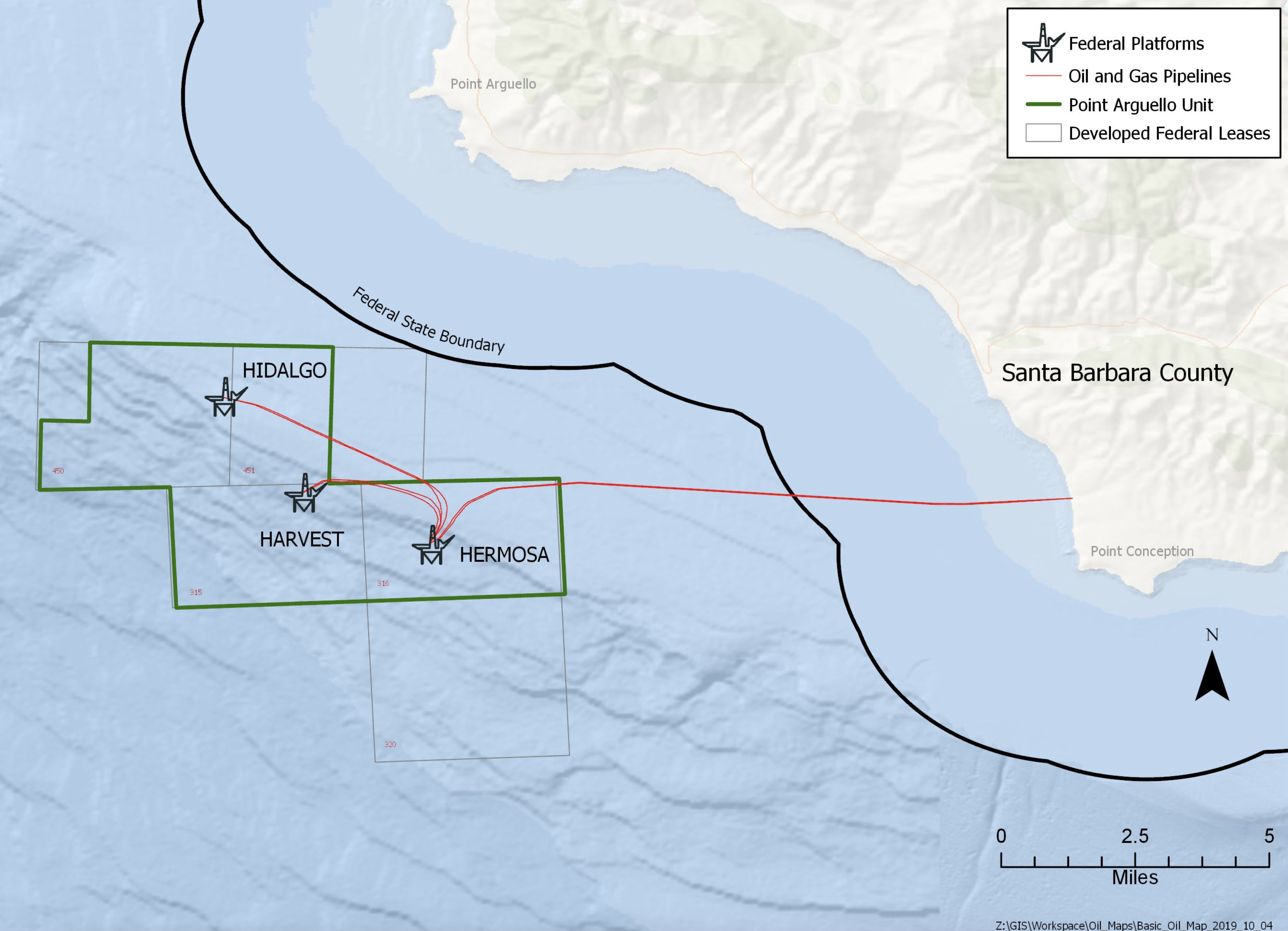
A 1981 lease sale offshore California was quite another matter. That sale (no. 53) set records that will never be surpassed. A single lease (OCS-P 0450) encompassing a little more than 5000 acres was sold to Chevron and Phillips for an astounding $333 million. This equates to $1.013 billion in 2021 dollars. That single bid (in 1981 dollars) exceeds the total high bids for any Gulf of Mexico sale since 2015.

High bids for Sale 53 totaled $2.3 billion ($7.0 billion in 2021 dollars!) for only 81 tracts. A GoM sale in 2008 received $3.7 billion in high bids, but that was for 603 tracts.

Unfortunately, production from lease 0450 never met expectations. Platform Hidalgo (0450) and the other two Pt. Arguello field platforms (Harvest and Hermosa) are no longer producing and are in the process of being decommissioned. An interesting criminal case involving Platform Harvest, then operated by Texaco, will be discussed at a later date.

Pt. Arguello Field

OCS Sale data

Pacific only data

John Smith’s Pacific decommissioning update

Read Full Post »

  • One sale was for oil and gas leases. That sale was carefully planned and publicly announced in accordance with established BOEM regulations and procedures. Proposed and final notices of sale were published for public review. The final notice was published in the Federal Register on 10/4/2021. 32 companies participated in the sale.
  • The second sale was for CCS purposes. That sale was unannounced and had only one participant. That sale was facilitated by a provision in the Infrastructure bill that was signed just 2 days before the lease sale. There was no public notice.

Read Full Post »

  • Should CCS leases have been offered in a separate sale as is the case for salt, sulfur, and wind operations?
  • Was CCS activity considered in the environmental reviews for this sale?
  • Was CCS mentioned in the Notice of Sale?
  • How will these CCS bids be evaluated?
  • Will the CCS bidding influence the Judge’s decision on the pending Sale 257 litigation?

Read Full Post »

Excerpt from SEC. 40307. GEOLOGIC CARBON SEQUESTRATION ON THE OUTER CONTINENTAL SHELF:
(b) Leases, Easements, or Rights-of-way for Energy and Related Purposes.--Section 8(p)(1) of the Outer Continental Shelf Lands Act (43 U.S.C. 1337(p)(1)) is amended--
        (1) in subparagraph (C), by striking ``or'' after the semicolon;
        (2) in subparagraph (D), by striking the period at the end and inserting ``; or''; and
        (3) by adding at the end the following:
            ``(E) provide for, support, or are directly related to the injection of a carbon dioxide stream to sub-seabed geologic formations for the purpose of long-term carbon sequestration.''.
    (c) Clarification.--A carbon dioxide stream injected for the purpose of carbon sequestration under subparagraph (E) of section 8(p)(1) of the Outer Continental Shelf Lands Act (43 U.S.C. 1337(p)(1))  shall not be considered to be material (as defined in section 3 of the Marine Protection, Research, and Sanctuaries Act of 1972 (33 U.S.C. 1402)) for purposes of that Act (33 U.S.C. 1401 et seq.).
    (d) Regulations.--Not later than 1 year after the date of enactment of this Act, the Secretary of the Interior shall promulgate regulations to carry out the amendments made by this section.

This will be an interesting challenge for the DOI folks (BSEE/BOEM?) charged with writing the regulation given the jurisdictional issues related to capturing onshore CO2 and transporting it to the OCS. Also, when was this provision added to the infrastructure bill and did its apparent obscurity and delayed enactment give certain parties some type of competitive advantage at the sale?

Read Full Post »

  • Exxon was the sole bidder on 94 tracts, all on the Texas shelf. All of the bids were $27.50/acre, just above the $25/acre minimum for shelf tracts.
  • Those bids accounted for 100% of Exxon’s bids and 30.5% of the high bids for the entire sale! 
  • Either Exxon sees resource potential that no one else (including Exxon) has seen for decades (I’m not discounting this possibility) or something else is going on here.
  • Stay tuned!

Absent Exxon’s surprise activity, this was a pretty typical sale of recent vintage: $177 million in high bids on 214 tracts. Even with all of the Exxon bids included, only tracts totaling 1.7 million acres received bids. (See previous post.)

Read Full Post »

U.S. To Sell Area the Size of New Mexico For Offshore Drilling Just 5 Days After COP26

Newsweek
  • 80 million acres is the total area in the Gulf of Mexico that is open for possible leasing in Sale 257. The area receiving bids will be only a small fraction of that.
  • In the previous sale (256), which was almost exactly one year ago, the same area was open for sale and only 0.6% of that area received bids. Only 93 of the nearly 15,000 tracts offered received bids. 7 of the high bids were rejected, so only 86 new leases were issued.
  • There are currently only 2,027 active GoM leases (10.8 million acres), less than half the number that existed in 1/2016 (4460) and less than 1/3 the number that existed in the beginning of 2011.
  • US offshore leases are among the smallest in the world, only a fraction of the sized of those offered by most other nations with offshore oil and gas programs.
  • Modern deepwater development is noteworthy for high production from very few platforms. Only 57 surface facilities account for more than 90% of current GoM oil production.

Read Full Post »

Q    Can I just ask one more on oil and gas?  So, we just saw President Biden take action now in terms of the — protecting oil and gas development on Native lands and Tribal lands.  But later this week, the U.S. government will open up for auction many, many acres — an area larger than several states, actually — to oil and gas leasing because of this legal situation. 

So there are critics who say that you should have done more to avert this action.  And I wonder if you can just say, you know, what action could potentially be done.  Is there — are there any last-minute steps that could be taken to prevent those auctions from going forward?

MS. PSAKI:  Well, you know, the President did — as you know, Andrea, but just to get others up to speed — issue an executive order pausing oil and gas leasing on public lands and in offshore waters to facilitate the identification and implementation of long-needed permitting and leasing reforms. 

Shortly thereafter, the Interior Department cancelled the pending offshore oil and gas lease in the Gulf of Mexico known as Lease Sale 257. 

So, what you’re referring to, I believe, is the fact that, in June, a federal district court in Louisiana stopped the President’s leasing pause and ruled that the Interior Department is legally required to go through with the sale of the Lease Sale 257, which is what you’re refer- — what Andrea is referring to in terms of putting up a bunch of lease sales — oil and gas lease sales. 

We believe the decision is wrong, and the Justice Department is appealing it.  So it’s in the courts; it’s in a legal process.  We’re required to comply with the injunction.  It’s a legal case and legal process, but it’s important for advocates and other people out there who are following this to understand that it’s not aligned with our view, the President’s policies, or the executive order that he signed.

Go ahead.

Q    So there’s no more la- — so, you can’t take any last-minute action to prevent that from going forward?

MS. PSAKI:  I would point you to the Justice Department.  They, of course, are appealing this, and I would point you to them for any legal action or what their options are.

White House

Read Full Post »

« Newer Posts - Older Posts »