The Proposed Final Program includes a maximum of three potential oil and gas lease sales – the fewest oil and gas lease sales in history – in the Gulf of Mexico Program Area scheduled in 2025, 2027 and 2029.
The plan looks good. It appears to be consistent with previous contingency plans. Offshore operations should not be impacted.
“During the shutdown BSEE will continue critical permitting, oversight, preparedness verification, and related activities that are necessary to protect workers and the environment from operations associated with conventional and renewable energy development on the Outer Continental Shelf. Approximately 40% of the 851 BSEE employees will be retained to accomplish these activities and will be designated as exempt, as their salaries will be funded from non-lapsing prior year carryover. Should an extended shutdown occur, exhausting current funding sources, all the exempt personnel would be designated as excepted as they are essential for life and safety.”
Federal funding lapses, real or threatened, are rather common. They range from false alarms to the extended shutdown of 35 days that occurred in 2018-19. In no case have offshore oil and gas operations been significantly affected. BSEE and its predecessors developed and implemented contingency plans that identified “essential employees” needed to monitor operations and review necessary permits.
Hopefully, DOI will provide clarity on these matters today, since a Federal government shutdown could begin at midnight tomorrow. Needless to say, any disruption in ongoing oil and gas production operations would have significant safety and economic implications.
How does a Coast Guard station casually post an endangered species observation on Facebook before confirming the accuracy of the sighting?
Even if the species identity had been confirmed, is a Facebook post an appropriate means of making such announcements?
Shouldn’t the observation have been reported to NOAA for any further action?
Was the Coast Guard station aware of Lease Sale 261 and the related Rice’s whale litigation?
Did the Coast Guard station understand the potential economic implications of the alleged sighting, not just for offshore oil and gas but for all commercial activities in the GoM?
Why did so many media outlets run with the Facebook post without confirmation from the Coast Guard or NOAA?
Why has only one organization, the Miami Herald, published the corrected information?
Why has there been no public statement from the Coast Guard?
Over the weekend, the Coast Guard station in Venice, LA rather recklessly announced the following on Facebook: “CRITICALLY ENDANGERED SPECIES SIGHTING: Station Venice presents to you……. Rice’s Whale.”The Facebook comment captioned a 16-second video of the whales swimming nearby, reportedly in the Mississippi Canyon area of the Gulf of Mexico. The video was removed on Tuesday. CBS reported on the Facebook post but was unable to obtain confirmation from the Coast Guard.
Given the timing and significance of the Coast Guard announcement relative to Lease Sale 261, this was a massive report. However, we now learn that the whales were incorrectly identified. Both the Coast Guard and NOAA are confirming that the whales were misidentified as Rice’s whales and were actually sperm whales.
CLARIFICATION: This story has been updated to reflect that Coast Guard officials identified the whales spotted in the Gulf of Mexico as sperm whales after previously identifying them as critically endangered Rice’s whales. The National Oceanic and Atmospheric Administration also told McClatchy News in a statement that they are sperm whales.
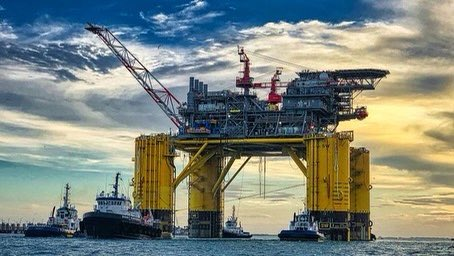
Pictured: Transocean’s Deepwater Proteus. T/O should name one of their drillships Deepwater Diligence 😉
Seven of the deepwater exploratory wells drilled in the Gulf of Mexico in 2023 (YTD) were spudded within 4.5 years of the effective date of their leases. Three of these wells were spudded within 3 years of their lease effective dates (see table below).
These are impressive achievements when you consider the time required for consultation with partners (if any) and contractors, site surveys, exploration plan development and approval, well planning, and drilling permit preparation and approval.
The subject wells accounted for 28% of thedeepwater exploratory well starts in 2023 (25 net YTD wells after subtracting restarts at the same location).
date lease effective
spud date
elapsed time (months)
water depth (ft)
operator
3/1/2021
8/27/2023
30
6498
Shell
8/1/2020
5/21/2023
34
2211
Talos
8/1/2020
3/15/2023
31
3338
Talos
12/1/2019
6/5/2023
42
4228
Chevron
11/1/2019
6/1/2023
43
4603
Hess
7/1/2019
7/11/2023
48
7486
Kosmos
12/1/2018
6/6/2023
54
4127
bp
Below are the exploration plan (EP) and permit (APD) approval timeframes for these 7 wells. With the exception of the Kosmos EP which required a number of modifications, the regulator actions appear to have been timely. For the bp, Shell, and Chevron wells, only 4-6 months elapsed between EP submittal and APD approval.
operator
block
date EP received
date EP approved
APD received
APD approved
Shell
WR 365
3/1/2023
5/17/2023
5/11/2023
8/8/2023
Talos
GC 78
1/19/2021
4/16/2021
3/8/2023
5/26/2023
Talos
MC 162
4/1/2022
7/13/2022
8/2/2022
3/2/2023
Chevron
MC 937
12/7/2022
5/19/2023
4/21/2023
5/21/2023
Hess
MC 727
8/30/2022
11/3/2022
12/21/2022
4/24/2023
Kosmos
KC 964
1/3/2020
10/12/2022
4/18/2023
7/3/2023
bp
GC 436
1/18/2023
4/14/2023
3/29/2023
6/5/2023
Notes: EP=Exploration Plan, APD=Application for Permit to Drill, WR=Walker Ridge, GC=Green Canyon, MC=Mississippi Canyon, KC=Keathley Canyon
IT IS ORDERED that appellants’ opposed motion for partial stay pending appeal is GRANTED in part. The preliminary injunction that was entered by the Memorandum Order of September 21, 2023, is hereby AMENDED only in that the sale that was set for September 27, 2023, is ORDERED to take place by November 8, 2023. No extension will be granted. That is to say: Insofar as the preliminary injunction is concerned, the final paragraph of the Memorandum Order remains in effect, pending appeal of the preliminary injunction, with the exception that “September 30, 2023,” is changed to “November 8, 2023.”
BOEM is allowed to delay the sale until Nov. 8, which is consistent with the Federal government’s request.
All other aspects of the Preliminary Injunction remain in place, but the 5th Cir. still needs to hear and decide the government’s appeal of the PI. Monday’s decision was on the emergency motion and not the merits of the Preliminary Injunction.
Assuming the Gulf of Mexico oil and gas lease sale proceeds tomorrow in accordance with Judge Cain’s order, some interesting questions and issues remain:
Will the lingering Rice’s whale issues affect bidding for deepwater leases? Friday’s court order is not a final resolution of those issues, either legally or administratively. While the Rice’s whale stipulation, at the direction of the Federal court, will not be included in the Sale 261 leases, BOEM’s Notice to Lessees and Operators (NTL) includes the same provisions and still stands pending further consultations with NOAA. Although the NTL is a “guidance document” (wink-wink), there are ways of making it stick through the exploration plan approval process. Even without binding requirements, companies might choose to fully comply to minimize legal risks.
When will the next GoM lease sale be held? Will the uncertainty spur or constrain bidding?

 Bud's Offshore Energy (BOE)