
Feeds:
Posts
Comments

Archive for the ‘Gulf of Mexico’ Category

15,531 of the 15,537 comments on the bid adequacy rule were from a single organization, Friends of the Earth. I have no problem with the Friends of the Earth campaign given that their comment letter is pertinent to the topic. Their main point is that the bid adequacy process fails “to factor in the climate and social costs of continued Outer Continental Shelf oil and gas lease sales into the bid process.” Although that may be a reasonable position, those issues are addressed in the programmatic and sale specific environmental reviews which factor into when and where sales are held, tract exclusions, special lease stipulations, and the comprehensive operating regulations. Once bids are submitted, the issue (and the sole purpose of the bid adequacy rule) is whether those bids represent fair market value for the oil and gas resource potential of the leases being offered.

Given that 96.3% of the US OCS is off-limits to oil and gas leasing, only 0.7% is currently open to exploration, and the new 5 year plan includes the fewest lease sales in OCS program history, it’s rather a stretch to argue that environmental concerns are not being prioritized.

The State of Alaska submitted very good comments (attached) that point to the historical differences in Gulf of Mexico and Alaska leasing. The State argues that a simpler approach to determining fair market value would encourage exploration and development on offshore lands that have seen little of either in recent years. Knowing BOEM’s expectations prior to the sale, perhaps through higher minimum bid requirements, would ensure that companies do not underbid and that tracts are successfully leased.

The Gulf of Mexico leasing program of today is looking more like the frontier area leasing of the past. As previously noted, the uncertainty regarding future sales changes the historic GoM leasing dynamic. The next opportunity for purchasing unleased GoM tracts is now a troubling unknown. This would seem to make it less prudent to reject bids based on uncertain prospect evaluations. Absent leasing and exploration, the true resource and revenue potential will never be known.

It was good to see the strong comments submitted by my former Minerals Management Service colleagues Dr. Marshall Rose and Ted Tupper. Marshall, who was our Chief Economist, commented that the proposed rule did not identify the problem and explain how the rule addressed that problem. Ted, a senior statistician, points to past failures of the bid adequacy process and proposes specific changes. It’s great to see the passion that our retired employees have for the program they were so instrumental in developing and managing.

The rule was finalized without any substantive changes.

Read Full Post »

Safety first: As a descendant of troubled Fieldwood Energy, which had a very poor safety and compliance record, QuarterNorth Energy (QNE) had much to prove. That said, QNE has had a good compliance record in its brief 2 year history. During 76 facility inspections in 2022 and 2023, QNE was cited for only 15 Incidents of noncompliance, all but 2 of which were warnings. This is on par with the companies that had the best compliance records during that period.

BSEE’s incident statistics are hopelessly out-of-date, with the latest data being for 2021, so we have limited information on QNE safety incidents. However, BSEE’s District Investigation Reports, which document the more significant incidents, are relatively current and no QNE incidents were investigated in 2022 and 2023.

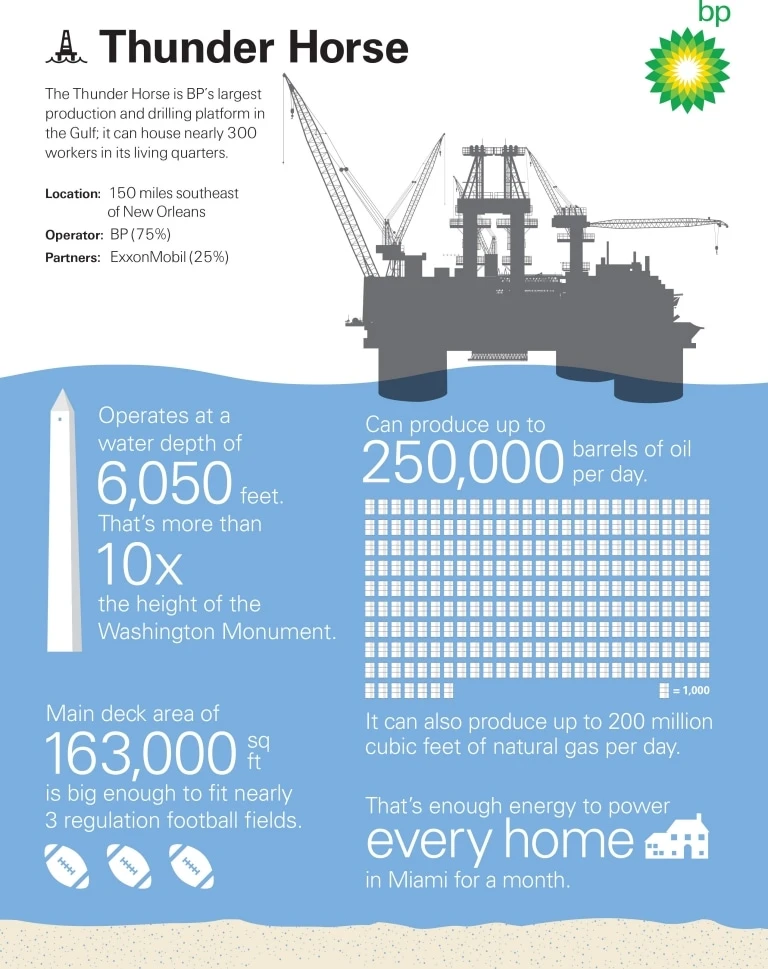
Platforms: Consistent with the general sense that QNE inherited the best of Fieldwood’s facilities, the company’s 15 platforms include Bullwinkle, the Thunder Hawk floating production unit in 6050′ of water, and prominent shelf platforms Tarantula and Hickory.

The acquisition reunites 2 iconic Shell platforms under the same ownership. QNE’s Bullwinkle, installed in 1988 in 1353′ of water, is the world’s tallest (non-compliant) steel tower platform. Talos’s Cognac, installed in 1978 in 1023′ of water, is the first platform in >1000′ of water.

Production and reserves: Per Talos, QNE adds 30,000 boe/d of production and 69 million boe of reserves.

Drilling: Per BSEE records, QNE was the operator for 2 deepwater exploration wells, both of which are classified as completed.

Active leases: The QNE acquisition will add 51 leases to the Talos’s 143 lease inventory.

Recent lease sale activity:

SaleQNETalos
2572/110/10
2596/45/4
2616/414/13
total/high bids for QuarterNorth (QNE) and Talos

Sales price and decommissioning: QNE was already on the market for “more than $2 billion,” shortly after the company was formed. Talos is paying $1.29 billion consisting of 24.8 million shares of Talos’s common stock and approximately $965 million in cash. A case study of the complex Fieldwood bankruptcy and the outcomes for the various parties would be most interesting. Also of interest would be a study of the decommissioning obligations of the former companies and the extent to which the sale proceeds are being applied.

Read Full Post »

The attached BSEE Safety Alert addresses chronic and persistent helideck issues that pose significant risks to offshore workers. Meanwhile, we are still waiting for the final NTSB report on the tragic 12/29/2022 helideck incident that killed the helicopter pilot and 3 passengers.

Read Full Post »

The above map shows the offshore carbon disposal leases acquired by Repsol from the Texas General Land Office (GLO) and the adjacent Federal tracts Repsol bid on at OCS Lease Sale 261. There should be absolutely no confusion regarding Repsol intentions at Sale 261. They plan to develop a large CO2 disposal hub offshore Corpus Christi and bid improperly at an OCS oil and gas lease sale to support that objective.

Perhaps blinded by visions of “a stream of U.S. government grants, followed by generous tax credits for every ton of carbon stored,” Repsol (Sale 261) and Exxon (Sales 257 and 259) have made a mockery of the OCS leasing process and the regulations that guide it. The Repsol bids should be promptly rejected.

So what about the Exxon nearshore Texas leases that have already been issued? Given that Exxon misled the Federal government and improperly acquired carbon disposal leases at an oil and gas lease sale, those bids should be cancelled pursuant to 30 CFR § 556.1102:

(c) BOEM may cancel your lease if it determines that the lease was obtained by fraud or misrepresentation. You will have notice and an opportunity to be heard before BOEM cancels your lease.

While Exxon’s oil production increases in the Permian Basin and offshore Guyana are impressive, is it not hypocritical for Exxon and other major producers to capitalize on the capture and disposal of emissions associated with the consumption of their products? Is it not just a bit unsavory for oil companies to cash in on (and virtue signal about) carbon collection and disposal at the public’s expense? Perhaps companies that believe oil and gas production is harmful to society should be reducing production rather than engaging in enterprises intended to sustain it.

Read Full Post »

Among the top 10 companies at Sale 261 (based on the number of high bids) are household names Shell, Chevron/Hess, Oxy/Anadarko, and bp, and international majors Equinor (Norway) and Woodside (Australia).

Lesser known companies have also become important deepwater players including two, Red Willow (owned by the Southern Ute tribe) and Houston Energy, that cracked the top 10 bidders list. Other emerging deepwater companies, Ridgewood, CSL Expl, Westlawn, Alta Mar, and CL&F were also active sale 261 participants. All of these companies bid in partnership with other independents.

Company257259261
Red Willow51325
Houston Energy5918
Ridgewood028
CSL Expl113
Westlawn035
Alta Mar009
CL&F003
Number of bids by emerging deepwater players at Sales 257, 259, and 261.
Houston Energy’s GoM portfolio

Read Full Post »

Sale 261: single bid tracts in blue, multi-bid tracts in red (2), green (3), and purple (5)

The interest of the majors and most independents has shifted entirely to deepwater prospects, as evidenced by the above graphic and sale data. Nonetheless, a few resourceful companies continue to find value in the shallow waters of the continental shelf.

There’s an art to finding oil—particularly in the Gulf of Mexico. After decades of drilling, this world-class basin still holds vast potential for those skilled enough to unlock it. Arena energy is applying expert insight and advanced technology to identify new Gulf of Mexico oil and gas exploration opportunities. This is the art of oil finding in the 21st century.

Arena Energy

Arena Energy, a successful shelf operator for a quarter of a century, was the leading shelf bidder with 6 high bids. In 2023 Arena was once again the most active shelf driller with 20 well starts. They claim a 94% drilling success rate. Arena currently operates 123 platforms and is the GoM’s 7th ranked natural gas producer and the 11th ranked oil producer.

Cantium, another leading shelf operator, was the high bidder on 4 tracts. Cantium drilled 10 wells in 2023 and currently operates 86 platforms. Cantium claims to maintain “the highest level of operational safety and regulatory compliance by maximizing efficiencies and empowering employees,” and publicly available compliance data bear that out. Cantium was a BOE Honor Roll company for 2022, and a preliminary look at the data indicates that their 2023 performance was also excellent. Cantium is ranked 18th in both oil and natural gas production.

Byron Energy, which is headquartered in Australia, is the only international company investing in the GoM shelf. Byron was the high bidder on 2 tracts and currently operates 2 platforms. The company drilled 3 wells in 2023. Byron intends to continue focusing on the shallow waters of the Gulf. 

Thoughts on the attributes of a successful shelf operator:

  • Bid alone and conduct operations independently to facilitate efficiency and timely decisions.
  • Lean and flat organizational structure for optimal communication and effective project management.
  • Skilled staff and state-of-the art exploration technology.
  • Outstanding contractor selection and oversight.
  • Safety, environmental, and compliance leadership, absent which your company won’t be around for long.
  • Think small. Gleaning old fields and producing modest new discoveries can be profitable!
  • Control growth and debt. Busts follow booms and highly leveraged companies are the most vulnerable.
  • Study the successful shelf operators and the failures. What did they do right and wrong?

Read Full Post »

At Sale 261, Repsol was the sole bidder for 36 nearshore Texas tracts in the Mustang Island and Matagorda Island areas (red blocks at the western end of the map above). Exxon acquired 163 nearshore Texas tracts (blue in map above) at Sales 257 and 259.

Why Repsol’s carbon disposal bids should be rejected (as Exxon’s Sale 257 and 259 bids should have been):

  • Sale 261 was an oil and gas lease sale. The Notice of Sale said nothing about carbon sequestration and did not offer the opportunity to acquire leases for that purpose. Therefore, the public notice requirements in 30 CFR § 556.308 were not fulfilled.
  • Because there was no draft or final Notice of Sale for sequestration (carbon disposal) leasing, interested parties did not have the opportunity to comment on tract exclusions, stipulations, bidding parameters, rental fees, royalties, and other factors pertinent to any OCS lease sale.
  • 30 CFR § 556.308 requires publication of a lease form. No carbon sequestration lease form has been posted or published for comment.
  • Carbon sequestration operations were not considered in the environmental assessments conducted prior to this or any other OCS lease sale.
  • No evaluation criteria for carbon sequestration bids have been published.

Hopefully, the carbon sequestration regulations that are under development will preclude conversion of leases acquired at Sales 257, 259, and 261. At a minimum, these regulations should require a competitive process for converting any oil and gas leases.

The difference between the conversion of the Exxon and Repsol leases and the conversion of other existing oil and gas leases is that the Exxon and Repsol leases were acquired solely for the purpose of carbon disposal with no intention of oil and gas exploration and production. Also, they can conduct geophysical surveys on their extensive (arguably monopolistic) nearshore Texas lease holdings, which gives them an unfair competitive advantage should a carbon sequestration lease sale be held.

To their credit, Repsol bid legitimately on 9 oil and gas leases at Sale 261. Exxon did not participate in Sale 261, and their only participation in Sales 257 and 259 was for carbon disposal purposes. Prior to Sale 257, the company had not acquired an OCS lease since 2008.

Read Full Post »

Cox proposes to sell its Gulf of Mexico assets to W&T Offshore for $88.5 million. The bankruptcy case docket has 64 pages of linked documents including many objections to the terms of the sale.

The bankruptcy court’s priorities should be 1) minimizing safety and environmental risks and 2) protecting the public from the massive decommissioning liabilities.

Per the latest BOEM information, Cox and affiliates Energy XXI and EPL operate 477 platforms, which is 31% of the Gulf of Mexico total! (See the related information posted last June.) BSEE estimates that the decommissioning costs for these platforms will exceed $4.5 billion!

Per BSEE data, Cox and its affiliates were cited for 780 incidents of noncompliance (violations) in 2023. They thus accounted for 43% of all 2023 GoM INCs.

Questions:

  • How will taxpayers be protected from Cox’s $4.5+ billion decommissioning obligations?
  • What is the plan for both safely decommissioning facilities and operating those that remain?
  • Why was Cox allowed to continue expanding GoM operations without demonstrating financial assurance and operational competence?
  • Why did BOEM propose to eliminate consideration of a company’s compliance record in determining the need for supplemental financial assurance?
  • How was a failing operator (Cox) selected just 8 months ago for a Federally funded (DOE) project to repurpose GoM facilities for carbon sequestration purposes?

The Cox bankruptcy is yet another costly lesson for Federal regulators. Moving forward, decommissioning and lease assignment policies must prioritize safety, environmental protection, and protection of the public’s financial interests.

Read Full Post »

On January 2, 2024, Chevron Corporation announced that for fourth quarter 2023, the Company will be impairing a portion of its U.S. upstream assets, primarily in California, due to continuing regulatory challenges in the state that have resulted in lower anticipated future investment levels in its business plans. The Company expects to continue operating the impacted assets for many years to come. In addition, the Company will be recognizing a loss related to abandonment and decommissioning obligations from previously sold oil and gas production assets in the U.S. Gulf of Mexico, as companies that purchased these assets have filed for protection under Chapter 11 of the U.S. Bankruptcy Code, and we believe it is now probable and estimable that a portion of these obligations will revert to the Company. We expect to undertake the decommissioning activities on these assets over the next decade.

SEC filing

On Monday, we will be posting comments on the proposed bankruptcy sale of Cox’s GoM assets and the related safety and decommissioning concerns.

Read Full Post »

Dr. Maurice (Mo) Stewart, an outstanding petroleum engineer, author, and teacher, passed away over the holidays after a long battle with ALS. Mo worked in the Office of Field Operations in the Gulf of Mexico Region of the US Geological Survey (which became part of the Minerals Management Service in 1982) while earning a PhD in Petroleum Engineering from Tulane University.

Mo specialized in production operations and the associated safety systems. He was the lead author of the production safety sections of the MMS operating regulations when they were completely revised in the 1980s. He authored or co-authored (with Ken Arnold) several textbooks and numerous technical papers on oil and gas processing. He was active on API technical committees and was a lecturer for the Society of Petroleum Engineers in the US and internationally.

Mo conducted training sessions for MMS staff at all levels of the organization. He was an outstanding speaker who spiced his presentations with anecdotes and slides from his many travels. His presentations were not just informative, they were highly entertaining!

After leaving MMS, Mo was an instructor and consultant in Indonesia, where he lived for some time, and throughout the world. His incredible life was brought to a sad end by an incurable disease. I’m grateful to have had the opportunity to work with such an outstanding engineer, dedicated safety professional, and all-around good guy. Bud

Read Full Post »

« Newer Posts - Older Posts »