active leases ➡ producible leases ➡ energy production
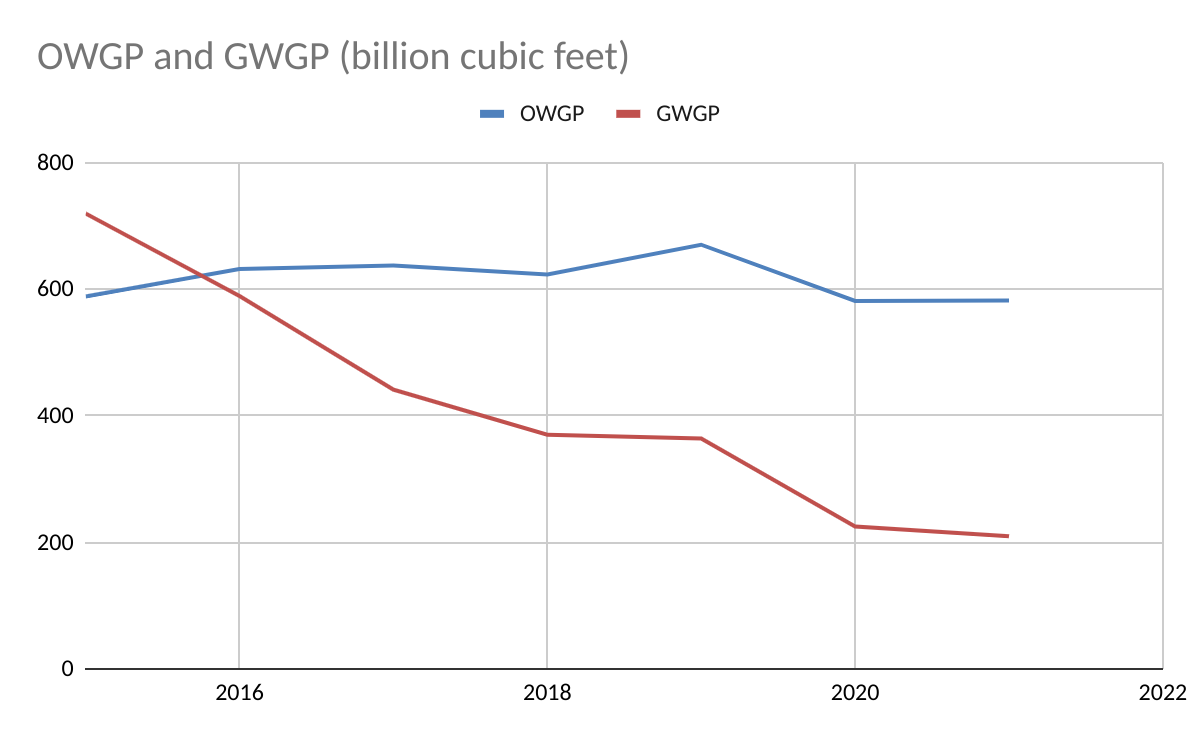
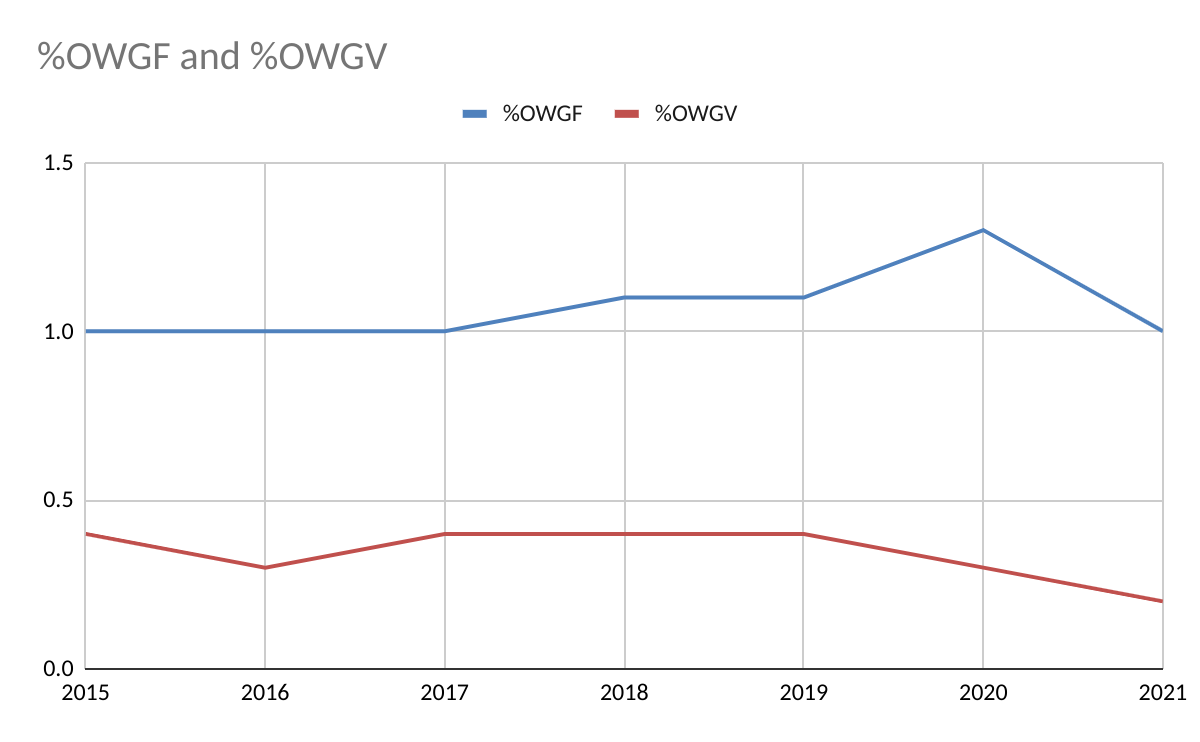
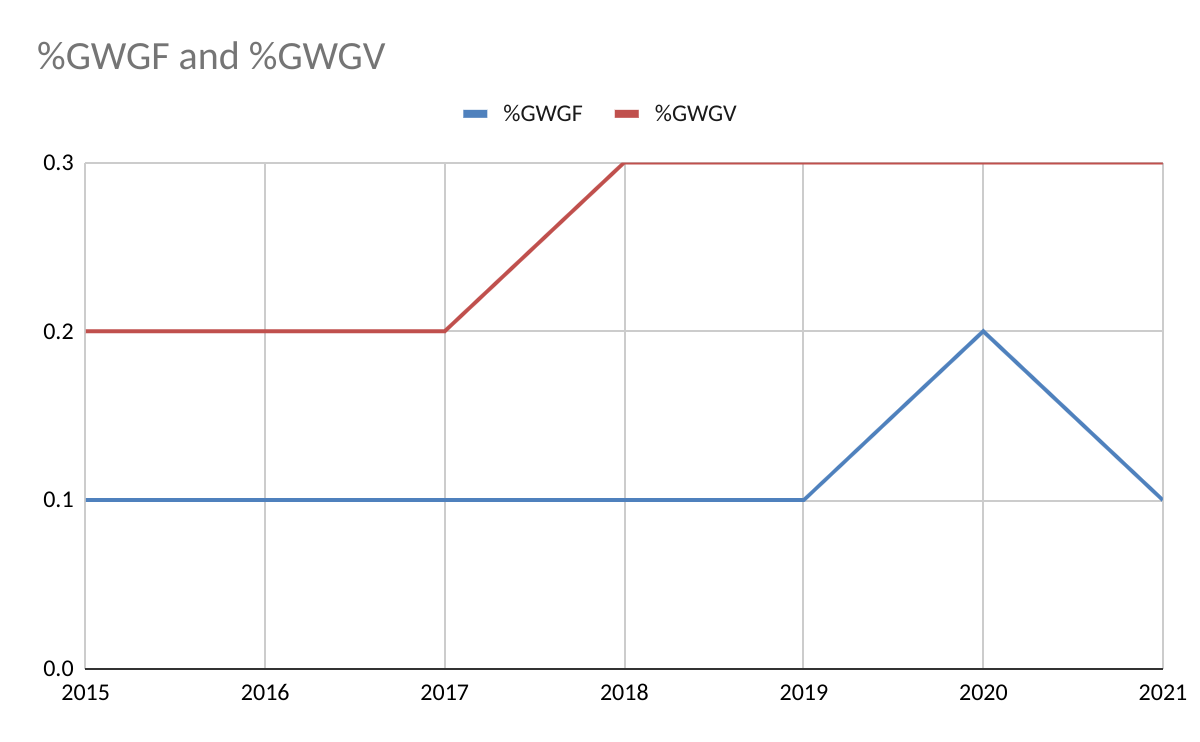
The future of US offshore energy production is in jeopardy. As is clear in the first chart below, the problem is the precipitous decline in opportunities (l.e. leases), not the will to produce. At 27.3% (6/2022 data), the % of active leases that are producing is near the historic high of 30%. The spin doctors really need to drop the old and tired nonproducing leases excuse.
As is the case every 5 years or so, there is another aquaculture push within the Federal government. It looks like this will be a very process-rich endeavor (check out the list of “Scoping Information Needs“), so don’t expect much soon.
NOAA Fisheries is conducting public scoping for a programmatic environmental impact statement to consider identifying one or more AOAs in federal waters of the Gulf of Mexico. The programmatic environmental impact statement will evaluate the impacts and benefits associated with siting aquaculture in those locations, which could occur through future proposals and project level review. Public scoping is an opportunity for the public to provide input on the range of issues to be addressed in the programmatic environmental impact statement. This is a planning effort and no specific aquaculture-related activities or individual aquaculture projects are being proposed at this time.
In the past the thought was that we would be importing LNG, i.e. “Rigs-to-Regasification.” Now that we are exporting LNG, we are adding “Rigs-to-Refrigeration” to the alternative use list.
Per our previous post on this topic, New Fortress Energy is moving forward with fast-track LNG projects in the Gulf. Three converted jack-up rigs purchased from Maersk will make up the first “Fast LNG” liquefaction train.
New Fortress is planning to install its first two “Fast LNG” units in West Delta Lease Block 38, located about 16 nm off Grand Isle, Louisiana. The two independent liquefaction trains at this deepwater “port” would export about 1.4 million tonnes per annum (mtpa) of LNG each. Though small by shoreside standards, the plant design would offer a number of advantages, like low cost and speed to market – a critical factor at a time of high demand for LNG. The company says that it should be able to produce each facility on an 18-20 month timescale, from engineering through construction and commissioning.
Given the challenges posed by tropical storms, particularly for jackup units, the design criteria for these “permanent” jack-up liquefaction facilities and the role of classification societies are of particular interest.
Offshore California, the best that most facility operators and their predecessors (to the extent they continue to hold decommissioning liabilities) can hope for is a graceful exit with manageable financial losses. (The situation is a bit different for Exxon’s Santa Ynez Unit, which has been shut-in since 2015 while the company seeks to resolve oil transportation issues resulting from an onshore pipeline rupture. Here is the latest episode of that amazing saga.)
California’s Federal offshore, where 9 mobile drilling units (MODUs) were operating concurrently in the early 1980s, hasn’t seen a MODU in over 30 years. However, 23 production platforms, some of which are massive structures, remain (see the presentation below). At this point, these platforms are expensive monuments given that their combined production (per EIA) is only 7000 BOPD.
Regardless of their production status, the California offshore platforms continue to be ecologically significant. Dr. Jerry Schubel is among the many marine scientists who understand the importance of the life that has grown on and around these structures. The scientific community also sees other research, educational, and recreational uses for these platforms as per our Rigs-to-Reefs +++ page.
To their credit, State and Federal agencies, trade organizations, and interested third parties continue to discuss the issues and consider alternatives. A recent workshop was helpful in that regard. Attached is the excellent presentation by Bob Byrd and John Smith, who have been at the vanguard in addressing California decommissioning issues. Embedded below is the YouTube video of the presentations from their session. These are excellent updates for those who have an interest in decommissioning issues.
Dr. Malcolm Sharples, a leading offshore engineer for many years, forwarded this interesting presentation by Peter Zeihan. It’s long (2.5 hours) but you can watch in chunks or jump around based on your particular interests.
I was surprised by Peter’s firm prediction that a US oil export ban was coming soon, but now I see that such a ban is actually being considered. This excellent assessment by the Federal Reserve Bank of Dallas explains why a ban on crude exports would not lower gasoline prices, but would reduce domestic exploration and production, increase the trade deficit, and increase US dependency on crude oil imports. Offshore projects, which require massive capital investment, could be particularly hard hit. Unfortunately, an oil export ban would be such a bad decision that it might actually happen.
His speech began with a slide declaring that “unsubstantiated, shrill, partisan, self-serving, apocalyptic warnings are ALWAYS wrong.” Stuart Kirk, HSBC
Sadly, any oil industry exec who dared to publicly question climate orthodoxy would face a similar or worse fate.
I do like this very sensible quote:
A former Blackrock executive focused on sustainable investment said Kirk’s remarks had “done us a service” in discussions on climate change risk by “infusing a dose of honesty into a debate that is otherwise leading us nowhere,”
The most serious attempt at forming a national oil company in the US was a 1975 Senate bill to establish the Federal Oil and Gas Corporation or FOGCO. (Oddly, the bill’s sponsors weren’t troubled by that acronym.) FOGCO was proposed at a time when natural gas supplies didn’t satisfy demand, and that was the primary impetus behind the legislation. (Supply issues went away when price controls were lifted.)
Concerns about a FOGCO then and now:
The political pressures under which a national oil company operates are not conducive to sound, expeditious decisionmaking. (Unfortunately, some current industry execs seem overly responsive to pressure from governments and activist organizations, which is not always in the best interest of the company and its shareholders).
Would limit competition and private investment.
Would delay or prevent innovation:
The shale revolution was driven by nimble private companies operating on private land in supportive states. Why is there Marcellus shale development in PA, WV, and OH, and none in NY? (Hint: It’s not the absence of resources.) Why could the US shale experience not be replicated in Europe?
Innovative deepwater development projects were driven by private companies and the supportive public policies of the 1990s.
A national oil company could be the first step in the process of nationalizing the petroleum industry.
Guyana is far different from the US and should do what is perceived to be in their best interest. Best wishes to the people of Guyana as they weight their options.
The CEO of Italian power firm Enel has cast doubt on the continued benefit of using gas to produce electricity, telling CNBC it is“stupid” and that cheaper and better alternatives are now available.
“You can produce electricity better, cheaper, without using gas … Gas is a precious molecule and you should leave it for … applications where that is needed,” he added.
Gas is scarce and expensive in Europe because of bad foreign and energy policy decisions, most notably dependence on Russia and unrealistic expectations regarding renewables. Mr. Starace seems intent on doubling down on the latter. Of course, Enel is a large renewable energy generator and a natural gas purchaser and consumer (not a producer). His comments are thus rather self-serving.
I do agree with Enel on CCS:
Although the company could rely on carbon offsets or carbon capture to hit that target, Bernabei said the technology has failed to take off, despite receiving funding from the EU and national governments. He said there is no reason to expect that situation to change, especially since carbon capture and storage, or CCS, technology is not guaranteed to eliminate 100% of emissions.
“These are very big and complex projects. And at the end, they will not solve the problem,” Bernabei said. “We already tried CCS in the past and it didn’t lead to success. So why do it again?”