Fleming is opposed to carbon capture and sequestration: “If elected to the U.S. Senate, the first bill I will submit will be to fully defund and repeal the 45Q tax credits that pay for this. There’s no market for this. People don’t buy this technology.”
“This is purely crony capitalism, where you have the government paying wealthy companies that are going to make a lot of money out of this, and the average landowner is going to suffer from it. So I’ve committed that I will submit the bill that will defund it so that money will no longer be available, and it will stop all these projects.”
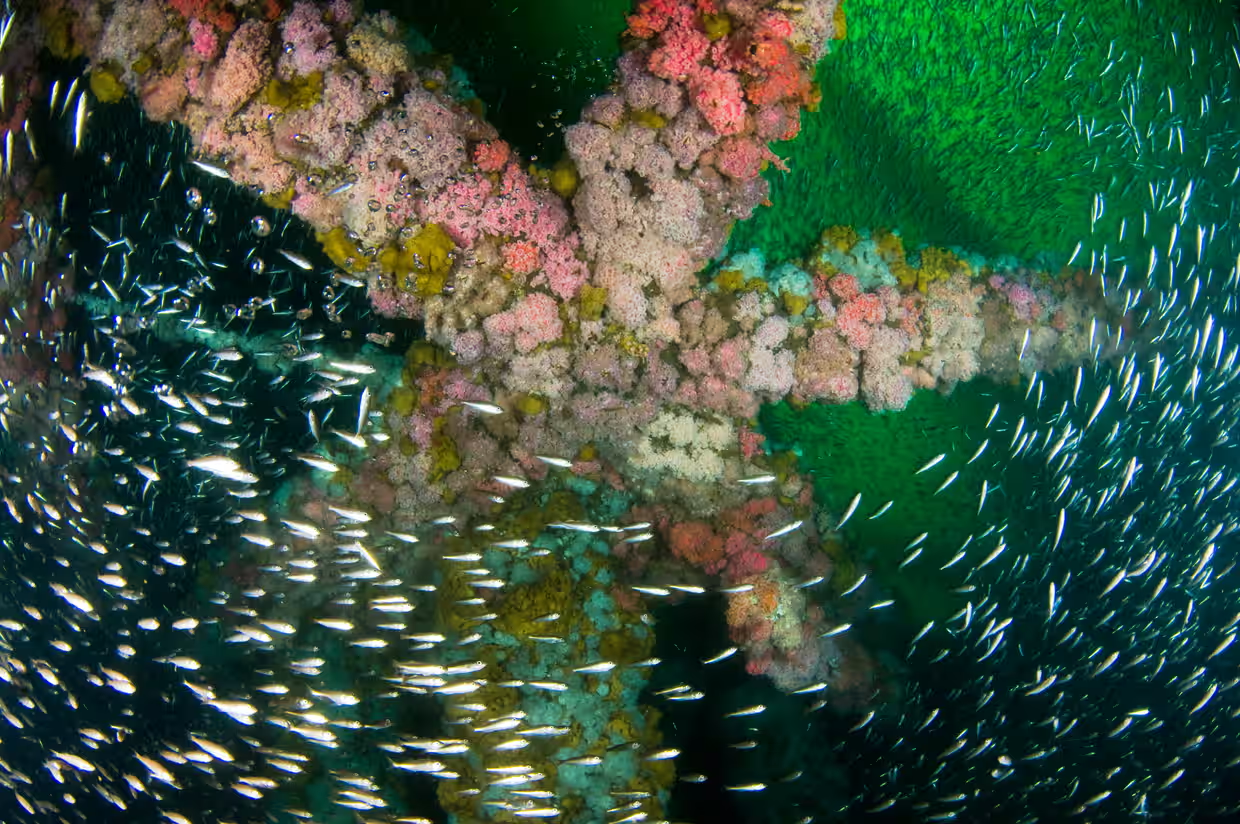
John Smith, decommissioning specialist and BOE contributor, has shared his comments (attached) on the Marine Fisheries Habitat Protection Act. This legislation would expand the successful reefing programs on the OCS by facilitating the conversion of retired production platforms into artificial reefs.
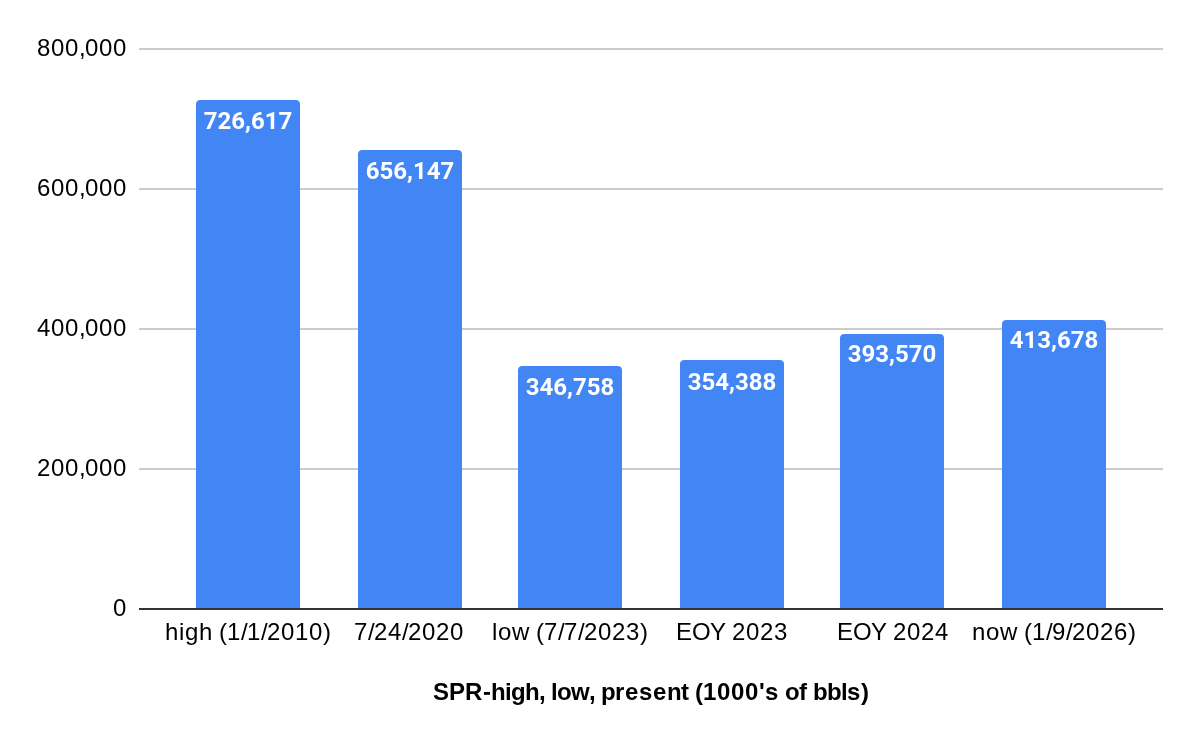
10 million bbls were added in 2025. Only 67 million bbls (<10% of capacity) have been added since the 7/7/2023 nadir. Unsurprisingly, It’s easier to deplete strategic national assets than replace them.
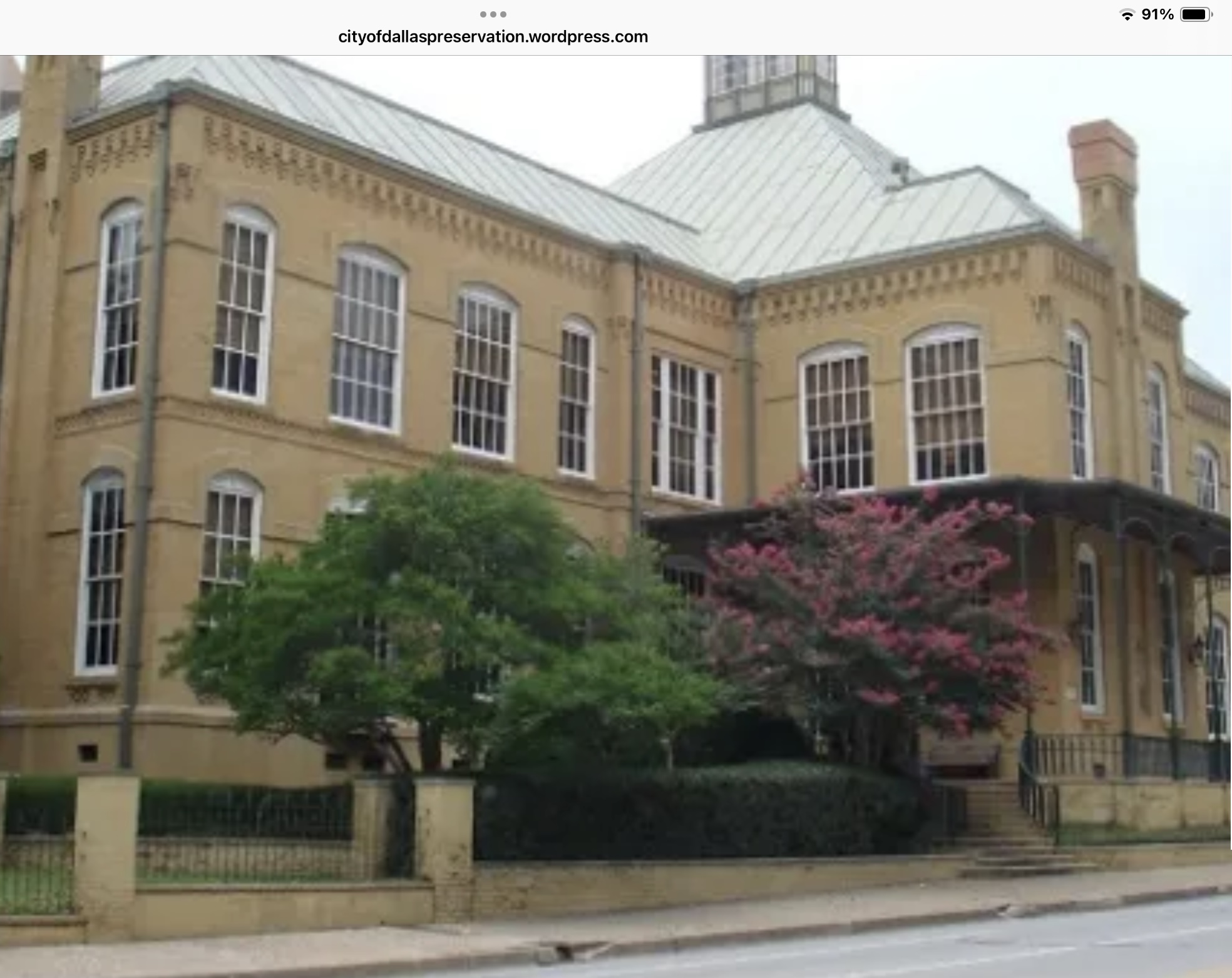
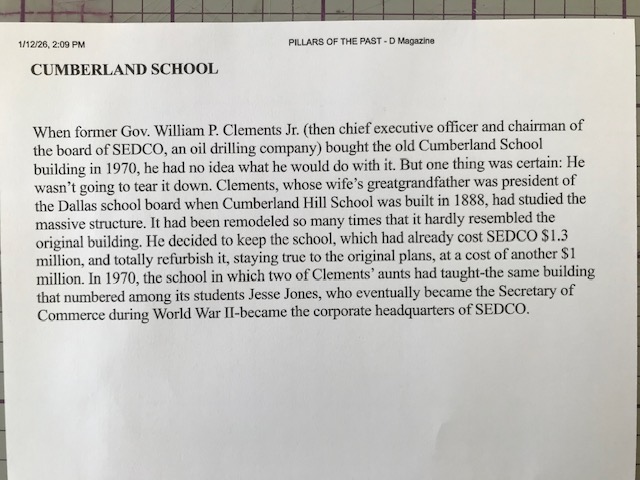
Per JL Daeschler, Sedco’s Far East, North Sea, and South America operations were all run from Dallas in the late 60’s. In 1970, an old schoolhouse became Sedco’s corporate headquarters (see picture and narrative pasted above). Thank you Bill Clements for saving this historic building – what a beautiful headquarters for the challenging and booming offshore industry!
JL: After 2 years with SEDCO in Miri, East Malaysia (1971) I moved to Brownsville Tx. But in 1979 I returned to the old school house in Dallas in secondment to Sedco Hamilton Production Services from Hamilton Brothers Oil & Gas. The main objective of the joint venture was promotion of floating production systems and in particular use of semi sub technology. One project assignment was the BP “Buchan” field in the North Sea. (Note: this work was a precursor to the deepwater floating production units that are now the method of choice for deepwater development in the Gulf.)
JL is pictured (right below) on the Sedco 135 during operations offshore East Malaysia.
Wisdom from JL: Rules were pretty simple, as you can read on the rig wall in the picture. No App, pin, or password…. In fact no internet and mobile phone, just a radio operator.
Safety was grounded in the attitude and respect of 100 + people living and working together (47 working / 47 sleeping and 6 managing and protecting others. More difficult was the integration of the visiting contractors, logging/cementing / diving / VIPs. (Still true today!) No division amongst ages, nationality ( sometimes 6 of them) religions, Job position , and ethnicity. Just get along and do what you get paid for! Safety issues were dealt with immediately with short, unscheduled “toolbox” meetings – less reporting and more fixing.
(As an aside, Dan Bourgeois and I were on assignment to Petronas in 1977 and visited their East Malaysian operations. Does anyone in Petronas remember us? 😉)
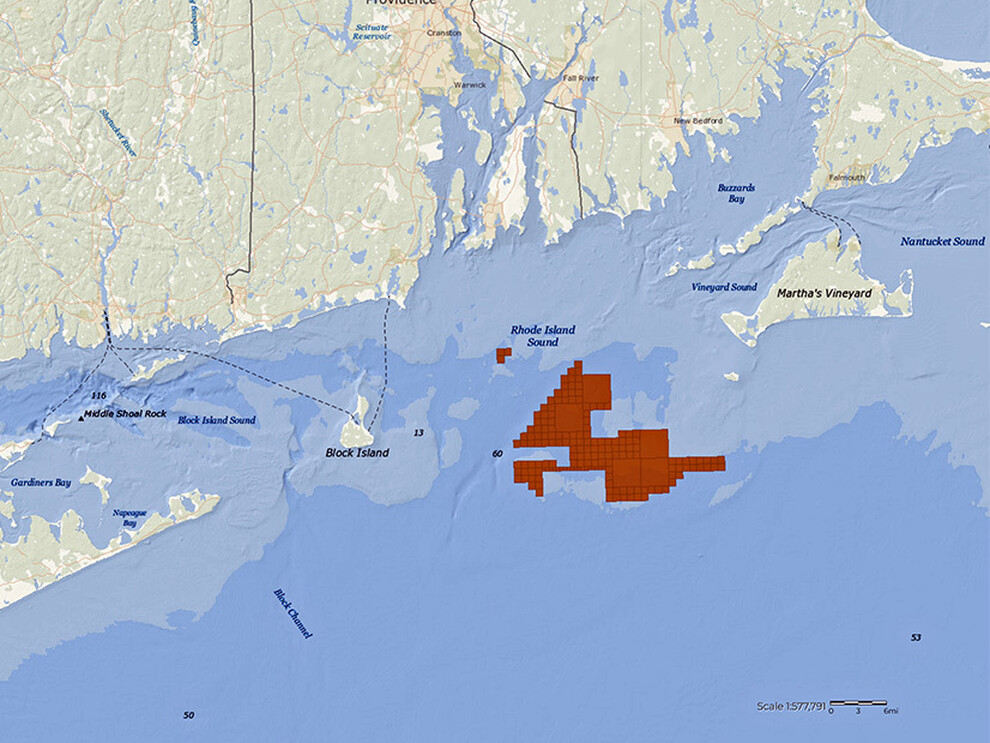
Orsted has a lease contract, and no matter where you stand on offshore wind, you have to have a compelling case to halt a project that is in the advanced stages of development.
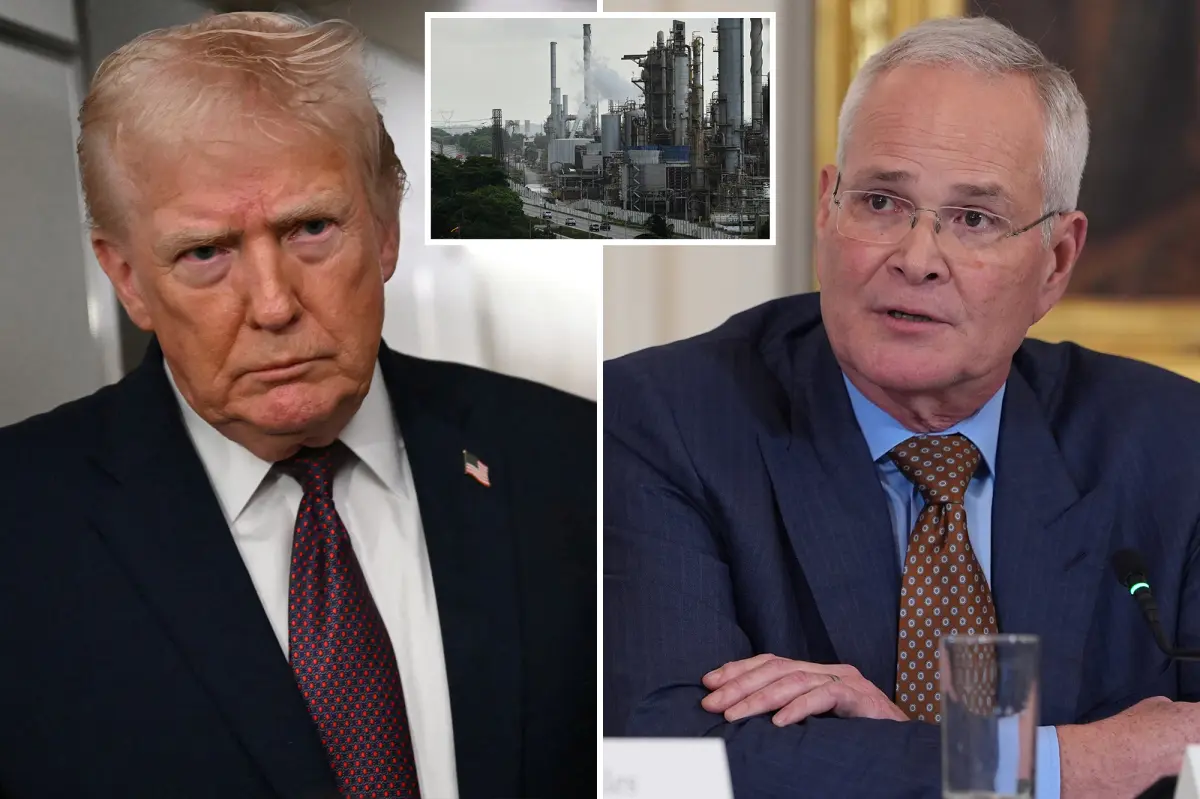
Unsurprisingly, President Trump was not particularly pleased with Darren Woods’ “uninvestable” quote, the main media takeaway from Friday’s meeting on redevelopment of Venezuela’s oil and gas resources.
Exxon CEO Darren Woods: “If we look at the legal and commercial constructs and frameworks in place today in Venezuela — today, it’s uninvestable.”
The response from President Trump: “I didn’t like Exxon’s response,” Trump said to reporters on Air Force One as he departed West Palm Beach, Florida. “They’re playing too cute.” He told reporters he was inclined to deny Exxon any role in rebuilding Venezuela’s oil industry.
If Exxon is now in the President’s doghouse, what does this mean for the Santa Ynez Unit, an Exxon orphan that was adopted by Sable Offshore? Given Sable’s financial challenges, the SYU may soon be returning to Exxon.
Regardless of ownership, an SYU production restart faces strong opposition in California and is fully dependent on an assertive and supportive Federal government. Meanwhile, an injunction on SYU production remains in place, and despite rumors to the contrary, Sable confirms they are complying with that order.
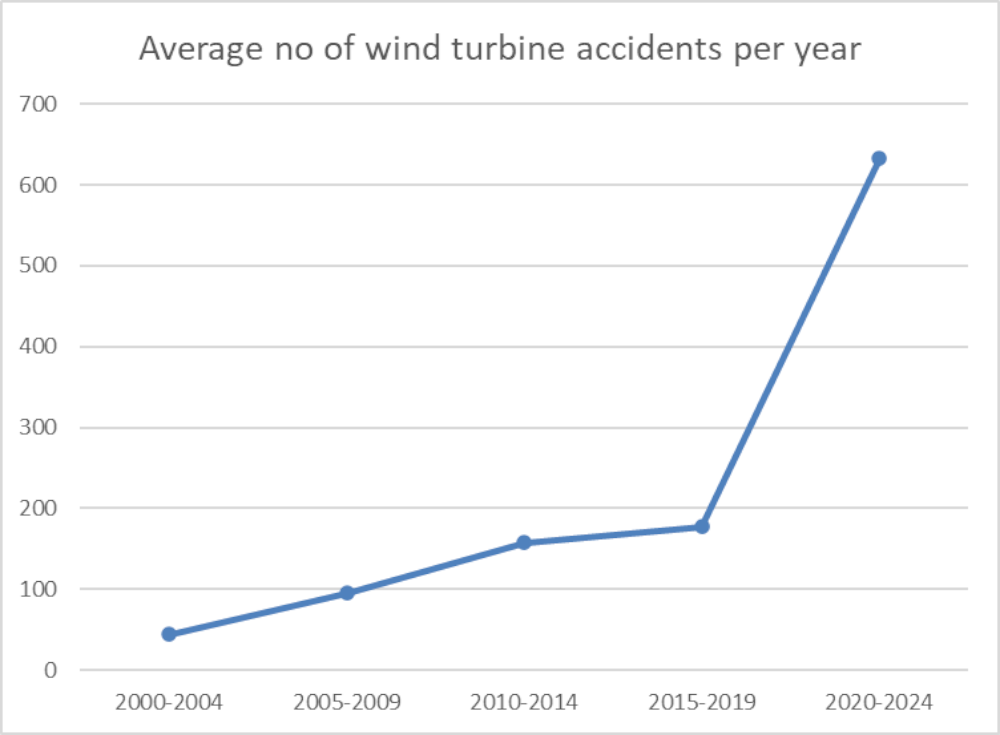
The SAS data indicate that the number of wind turbine incidents has risen sharply in recent years (see chart below). The increased number of turbines worldwide, and perhaps better news coverage of incidents, presumably contributed to the sharp increase. Nonetheless, the growing number of incidents is disconcerting, as is the absence of industry and government summaries and reports.
SAS acknowledges that their list, which is dependent on publicly available reports, is merely the “tip of the iceberg.” For example, the list does not include the June 2, 2025, Empire Wind project fatality.
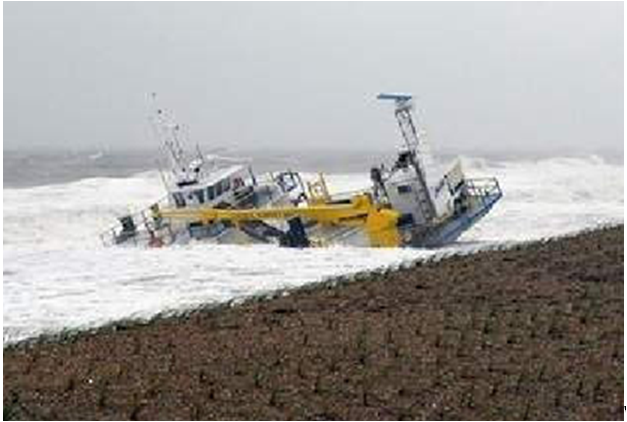
The SAS list does capture the 2008 collapse of the Russell Peterson liftboat, which was collecting data offshore Delaware for a wind project. One worker died and another was rescued. The Coast Guard never issued a report on this tragic incident. Serious questions remain about the positioning of a liftboat in the Mid-Atlantic for several months beginning in March when major storms are likely, the liftboat’s failure mechanisms, the operator’s authority to be conducting this research, and the actions that were taken in preparation for storm conditions.
The Russell Peterson toppled in May 2008 while gathering data for a proposed offshore wind project.
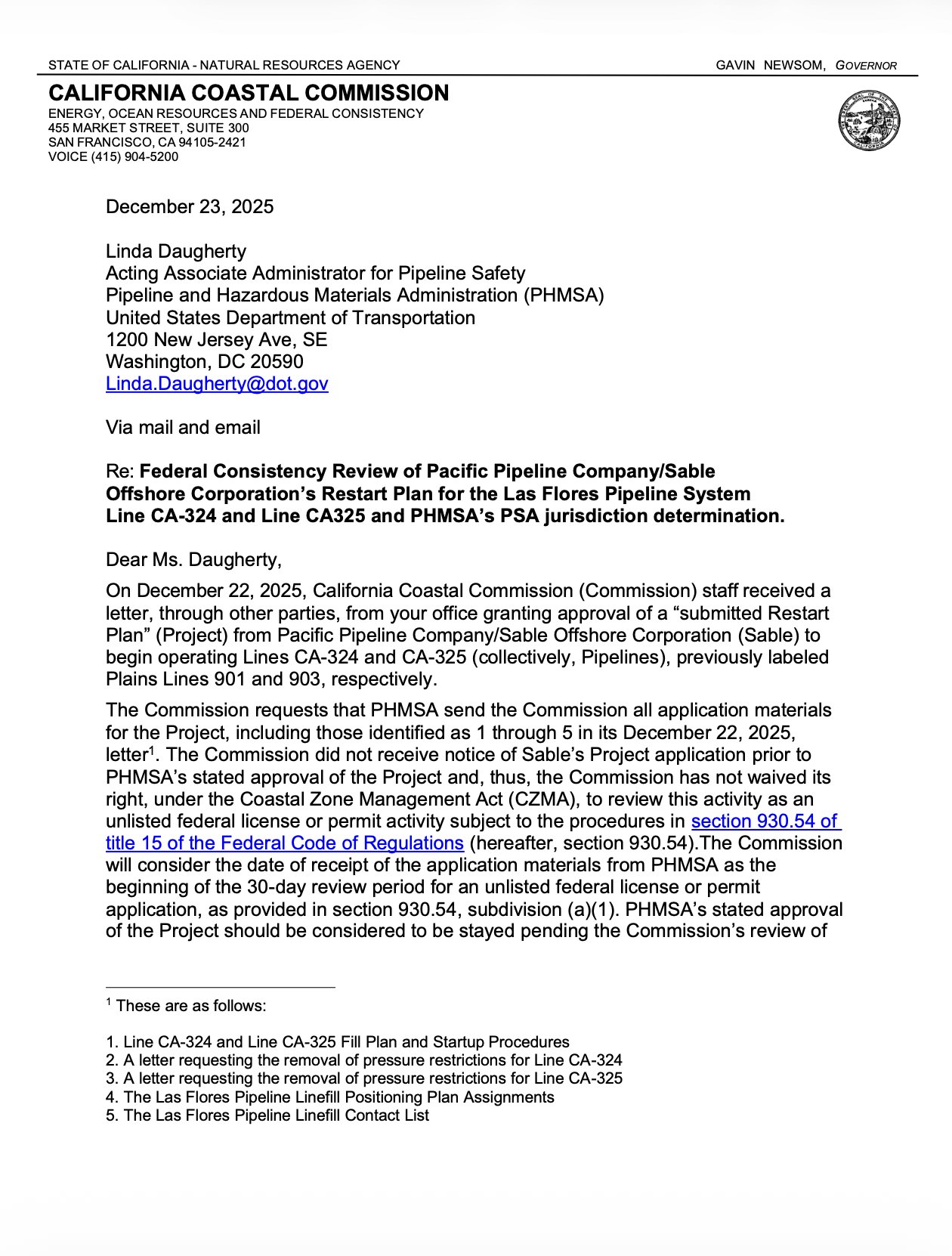
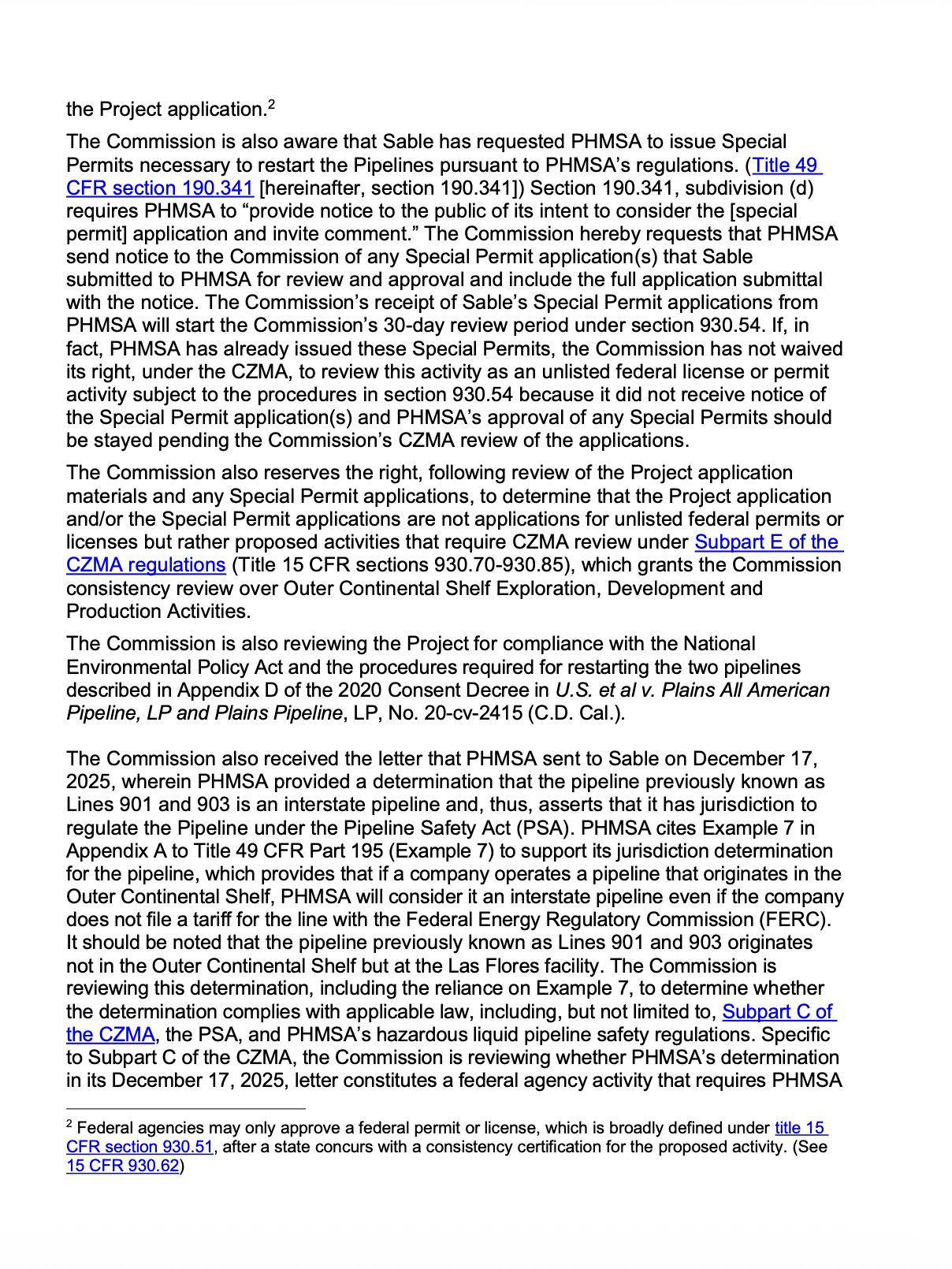
The Commission’s letter to PHMSA is attached (click on pages to enlarge). The CCC asserts the right, pursuant to the Coastal Zone Management Act, to review Sable’s restart/special permit application and further asserts that PHMSA’s special permit should be stayed pending their review.
The Commission also raises NEPA and Consent Decree compliance issues, and implies that PHMSA’s designation of the pipeline as “interstate” is subject to consistency review.
Note: In light of last night’s events, I’m re-posting this 10/13/2025 BOE post.
Nobel Peace Prize winner Maria Corina Machado wisely calls for privatizing Venezuela’s oil and gas industry, which was highly respected prior to the Chavez regime. The national oil company, Petróleos de Venezuela (PDVSA), is now a corrupt arm of the Maduro government.
“The whole Board is responsible for the loss of about 800,000 barrels per day of oil production; for the fraudulent certification of “proven oil reserves” in the Orinoco heavy oil region; for the irregular contracting, with a ghost company, of the offshore drilling barge Aban Pearl for twice the amount really paid to the owners of the barge; for the importing of 180,000 tons of food that later went to rot in Venezuelan ports but provided some of the members of the board with millions of dollars in criminal profits; and in numerous other corrupt practices that are well documented.“
Machado’s oil and gas platform is pasted below. She has a good perspective on the proper role of govt.
Privatization and reactivation of oil and gas production by attracting specialized international and national companies. Venezuela has one of the world’s largest reserves of oil and natural gas. As per the Organization of Petroleum Exporting Countries (OPEC) and the International Energy Agency (IEA), the country has reserves of over 300 billion barrels of oil and 200 trillion cubic feet of natural gas. The goal in this area is to steadily increase oil and gas production in order to leverage the window of opportunity that exists in today’s global demand for hydrocarbons. Achieving this objective will require enormous investments that the Venezuelan State cannot undertake. The solution is to attract private capital, and the strategy to achieve this end is the industry’s privatization. Where appropriate, all the industry’s productive activities will be privatized in order to secure massive private investments and a sustained increase in production, under conditions that guarantee legal certainty and an environment that is attractive for investors. The State will continue to receive fiscal income in the form of royalties and taxes, and will ensure that an operational framework exists in which private companies can increase production in the shortest possible timeframe. A Venezuelan Energy and Petroleum Agency will be established to exercise the role of industry regulator. Oil privatization will allow Venezuela to regain its position as a safe and reliable supplier, and will provide unparalleled investment opportunities in the industry.
Attached is the supplemental complaint in the lawsuit Revolution Wind, LLC v. United States Department of the Interior, Case No. 1:25-cv-02999-RCL, filed in the U.S. District Court for the District of Columbia.