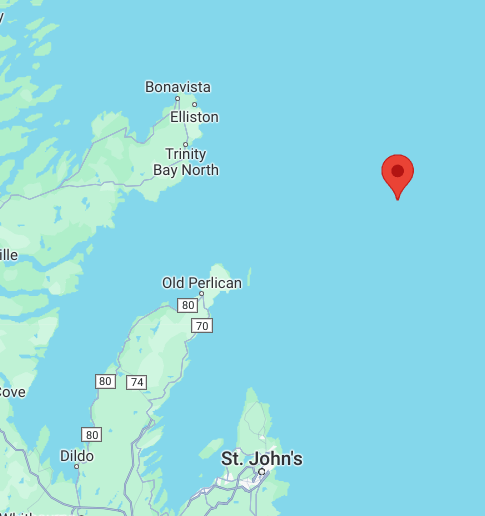
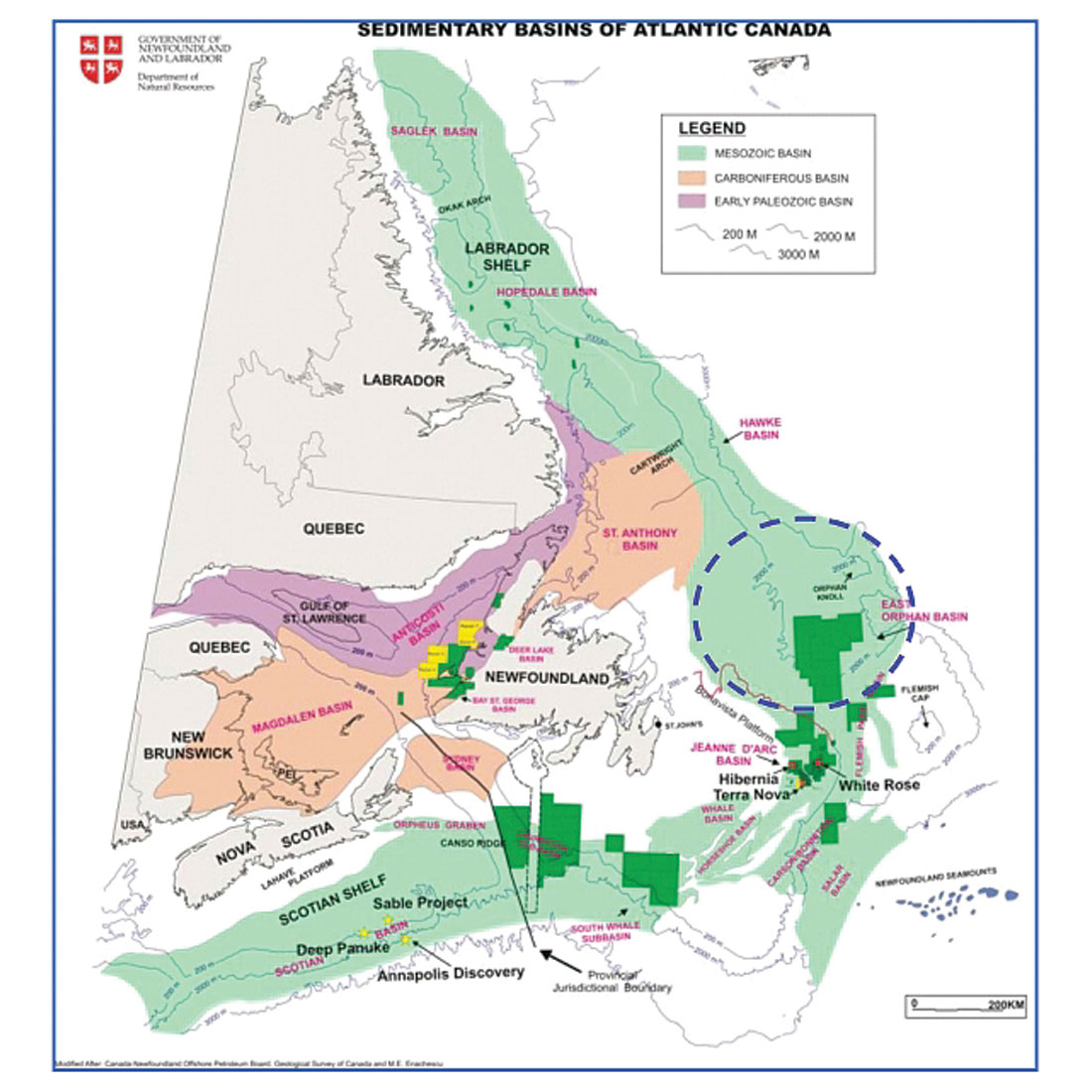
The DrillMAX has exited Bulls Bay and is en route to the Orphan Basin, where Exxon will drill a high potential exploratory well. As of this morning at ~1000 GMT, the drillship was headed north at 7.7 kts (see map).
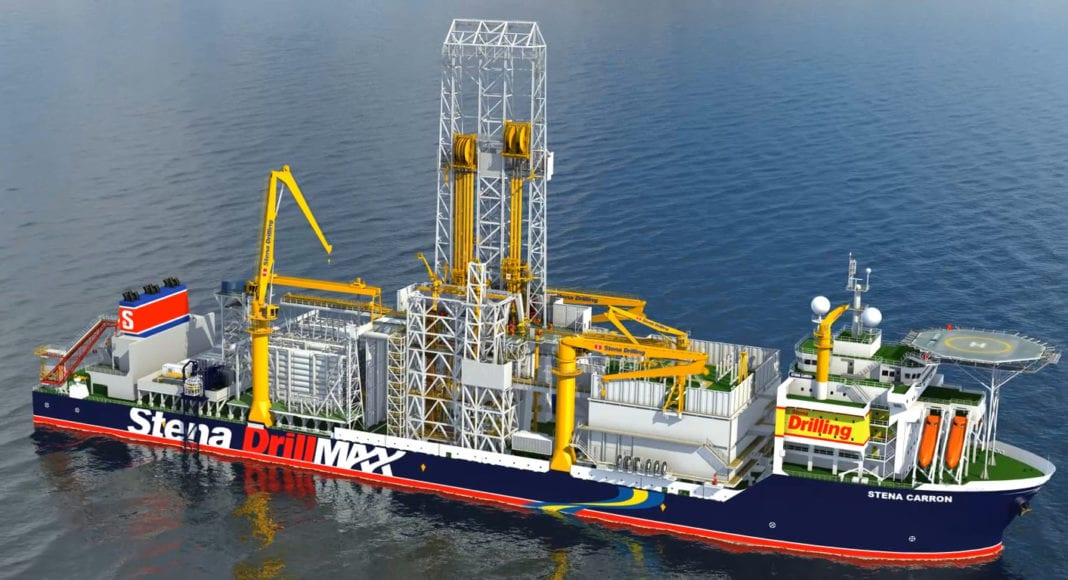
Posted in Canada, drilling, Offshore Energy - General, tagged exploratory drilling, Exxon, Orphan basin, Stena Drillmax on May 18, 2024| Leave a Comment »
The DrillMAX has exited Bulls Bay and is en route to the Orphan Basin, where Exxon will drill a high potential exploratory well. As of this morning at ~1000 GMT, the drillship was headed north at 7.7 kts (see map).
Posted in drilling, Norway, Offshore Energy - General, tagged 17th of May, Constitution Day, Gratulerer med Dagen, JL Daeschler, Noble Innovator, Norway on May 17, 2024| Leave a Comment »

On Constitution Day, best wishes to our Norwegian friends!
This JL Daeschler photo was taken in Stavanger harbor in 2003. JL’s wife Debra, a Petrodata Marine editor, is pictured in the foreground. The rig in the background is the Maersk (now Noble) Innovator, a large jackup capable of operating in water depths to 492 ft. The legs are 674 ft (Washington Monument = 555 ft).

Posted in Canada, drilling, Uncategorized, tagged Canada, geomagnetic storms, gps, oil drilling, solar storms on May 14, 2024| Leave a Comment »
Last year, there were reports that a level 3 geomagnetic solar storm rendered GPS signals unreliable and caused the brief suspension of at least one drilling operation in Canada (tweet below).

This weekend’s solar storms were level 5, the highest category (see chart below), but there have been no public reports to date of suspended drilling operations.

Posted in Canada, drilling, Offshore Energy - General, tagged Bay Bulls, exploratory drilling, Exxon, Orphan basin, Stena Drillmax on May 9, 2024| Leave a Comment »
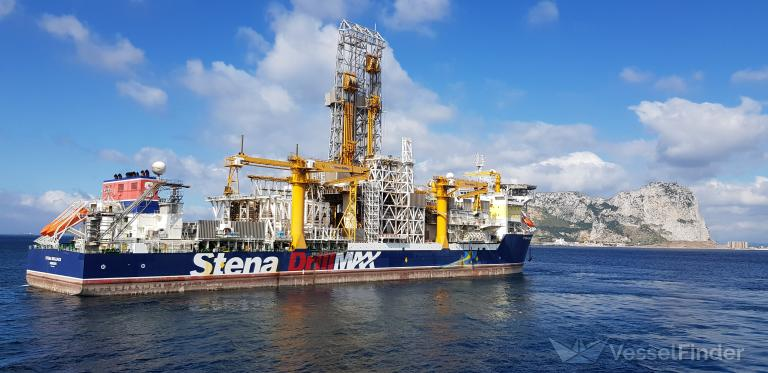
According to rig locator data, the DrillMAX is moored in Bay Bulls, Newfoundland in preparation for transit to the site of Exxon’s high potential exploratory well in the Orphan Basin.

Posted in Canada, drilling, energy policy, Offshore Energy - General, tagged Algerich well, Argentina, Atlantic, Atlantic drilling, Atlantic OCS, Canada, Deepwater US Atlantic, Equinor, Newfoundland, Orphan basin, Pan America, Stena Drillmax, Valaris on April 30, 2024| Leave a Comment »

The Valaris DS-17 drillship is now on location to drill the Algerich-1 well for Equinor 315 km from Mar del Plata in 1527 m of water at Block CAN 100.
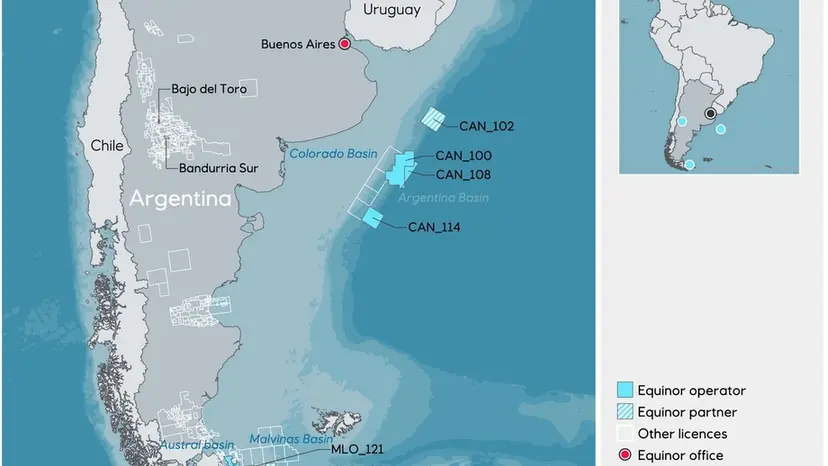

Concurrently, at the opposite end of the Pan American continents, the Stena DrillMAX is closing in on Exxon’s Orphan Basin location offshore Newfoundland to drill another high potential well.
Meanwhile, the US Atlantic is “wind-only,” despite high deepwater oil and gas potential. The late Paul Post, an esteemed colleague and the leading expert on the petroleum geology of the US Atlantic, believed the deepwater US Atlantic could contain >20 billion BOE. No other Pan American nation has completely closed its Atlantic margin to oil and gas exploration.
Can a nation with a debt of $35 trillion afford to ignore oil and gas resources that will remain in high demand for decades?
Posted in Canada, drilling, Guyana, Offshore Energy - General, tagged 3000 m, 500 km, Exxon, Newfoundland, Orphan basin, Stena Drillmax on April 24, 2024| Leave a Comment »
The DrillMAX is en route from Guyana to drill the Persephone wildcat well 500 km NE of Newfoundland in the highly prospective Orphan basin (3000 m water depth). This looks like the farthest from shore any well has been drilled in the Atlantic. The late spring date is prudent.This is definitely a well to watch because of the resource potential and difficult operating conditions.

Posted in accidents, drilling, Gulf of Mexico, Offshore Energy - General, well control incidents, tagged BSEE, complacency, Deepwater Horizon, Jason Mathews, macondo, MMS, offshore safety, safety culture on April 19, 2024| 1 Comment »
I had the pleasure of working with Jason Mathews when he was a young MMS engineer. He truly cared about our safety mission and has taken that commitment to the next level at BSEE. Jason shared this important, heartfelt message on the anniversary of the Macondo blowout.
One of the greatest gifts I ever received in life is having a little girl and having the opportunity to go home every evening and spending time with her at cheer, softball, doing homework, etc. I have a great deal of respect for the men and women who work offshore and put their lives on hold for 14-28 days to deliver much needed OCS production to meet US demand. Undoubtedly, they are better / tougher people than me.
Over the last year, my team has seen multiple incidents that had a high potential severity that could have led to a fatal / serious injury or major incident in the GOM. Although we can sit and debate the causal factors for hours, one that jumps to the top of the discussion is the Human Factor – Complacency. Of all the things a leader should fear, complacency heads the list. There is no doubt success breeds complacency, and complacency breeds failure.
To this day, I am still shook by the mindset and complacency of many onboard the Deepwater Horizon prior to the incident. During testimony in the public hearings, John Guide, the BP well team leader for the Horizon, believed that the rig crew had become “too comfortable” because of its good track record for drilling difficult wells. Ross Skidmore, a BP contractor on the rig on April 20, testified that the crew became complacent after completing drilling because “when you get to that point, everybody goes to the mindset that weʹre through, this job is done.” To me, the complacency on the Deepwater Horizon could be attributable to the crew not having access to all of the well data (OptiCem reports – cement job risk) available to BP personnel onshore and the well site leaders on the rig. Our investigation concluded, the overall complacency of the Deepwater Horizon crew was a possible contributing cause of the kick detection failure.
As regulators, we have special roles in the GOM as it relates to safety:
In order to achieve greatness offshore, we ,as a regulator, have to believe we can, and never sit still until we achieve it.
Everyone on this email has a very critical function and role. Never underestimate the value of what you do, have the proper mindset, and avoid complacency.
Do whatever it takes to ensure the people offshore are gifted the same gift we receive every day – going home to our families.
All In –
Jason P. Mathews, Petroleum Engineer, Field Operations – OSM
Posted in drilling, Gulf of Mexico, Offshore Energy - General, tagged 2024 vs. 2001, deepwater rig capabilities, Diamond Offshore, Gulf of Mexico drilling, macondo, Marshall Islands, Noble Corp., regulatory fragmentation, rig counts, Stena, transocean, Valaris on April 11, 2024| Leave a Comment »
The active rig count in the GoM in 2001 was 148 (AL-4, LA-119, TX-25), which is >8 times the current Baker Hughes rig count of 18. The 2001 rig count was not a one year blip; the number of rigs active in the GoM exceeded 100 for the ten year period from 1994-2003.
While the current rig count is anemic by comparison, the capabilities of the fleet are anything but. Below is a list derived from drilling contractor status reports of deepwater rigs now operating in the Gulf.
All of these rigs are dynamically positioned and are capable of drilling in 12,000′ of water. They have dual derricks and 15,000 psi rated BOP rams (one has a 20,000 psi stack, and another can be upgraded to 20,000 psi). The annular preventers are rated at 10,000 psi. All have impressive storage and hook load capacities, the latest tubular handling equipment, advanced control systems, and efficient power generation.
Note that most of the rigs fly the flag of the Marshall Islands. This “flag of convenience” registration is preferred for reasons related to taxation and operational freedom. For the record, the fact that the Deepwater Horizon was registered in the Marshall Islands had little to do with the Macondo blowout. The DWH was subject to all Coast Guard and MMS regulations under the OCS Lands Act.
The main cause of the Macondo blowout was the poorly planned and executed well suspension operation. Certain equipment capability, maintenance, and employee training issues were contributing factors. However, with that said, the Marshall Islands report on the blowout candidly acknowledges that “the complexity of and interdependence between the drilling and marine systems and personnel suggests a need for increased communication and coordination between the flag State and coastal State drilling regulators.” Hopefully, that coordination is being achieved and the risks associated with the fragmented regulation of mobile drilling units are being effectively managed.
| Contractor | Rig | Operator | Est. end date | Flag |
| Transocean | Deepwater Titan | Chevron | 3/2028 | Marshall Islands |
| Transocean | Deepwater Atlas | Beacon | 4/2025 | Marshall Islands |
| Transocean | Deepwater Poseidon | Shell | 4/2028 | Marshall Islands |
| Transocean | Deepwater Pontus | Shell | 10/2027 | Marshall Islands |
| Transocean | Deepwater Conqueror | Chevron | 3/2025 | Marshall Islands |
| Transocean | Deepwater Proteus | Shell | 5/2026 | Marshall Islands |
| Transocean | Deepwater Thalassa | Shell | 2/2026 | Marshall Islands |
| Transocean | Deepwater Asgard | Hess | 4/2024 | Marshall Islands |
| Stena | Evolution | Shell | 4/2029 | Marshall Islands |
| Noble | Stanley Lafosse | ??? | 11/2024 | Liberia |
| Noble | Valiant | LLOG | 2/2025 | Marshall Islands |
| Noble | Globetrotter I | Shell | 5/2024 | Liberia |
| Noble | Globetrotter II | Shell | 5/2024 | Liberia |
| Valaris | DS-18 | Chevron | 8/2025 | Marshall Islands |
| Valaris | DS-16 | Oxy | 6/2026 | Marshall Islands |
| Diamond Offshore | BlackHawk | Oxy | 10/2024 | Marshall Islands |
| Diamond Offshore | BlackHornet | bp | 3/2027 | Marshall Islands |
| Diamond Offshore | BlackLion | bp | 9/2026 | Marshall Islands |
Short video about the Stena Evolution, the newest entry to the Gulf of Mexico fleet:
Posted in drilling, Gulf of Mexico, Offshore Energy - General, tagged Gulf of Mexico, offshore drilling, rig counts on March 22, 2024| Leave a Comment »
Swimming upstream against the Federal policy current, Gulf of Mexico drilling is demonstrating impressive forward progress. Baker Hughes reports 22 active GoM rigs on 3/15/2024, an increase of 3 from the previous week.
Glancing at the charts, this appears to be the highest GoM rig count since Nov. 2019, and is double the recent low of 11 in 2022.

It’s unclear whether Baker Hughes is including the CCS drilling operation offshore Texas. If so, the actual oil and gas rig count is 21 rather than 22.
Baker Hughes also reports 1 active rig offshore California (decommissioning?) and 1 active rig offshore Alaska (Endicott or Northstar?)
Per Baker Hughes, no rigs are currently active offshore Canada.
Posted in climate, drilling, energy, tagged field tests, gyrotron, Nabors Drilling, Quaise Energy, ultradeep geothermal on March 6, 2024| Leave a Comment »

Given the intermittency, space preemption, aesthetic, and wildlife issues associated with wind and solar power, more attention has been shifting to geothermal energy. Quaise’s plan to tap ultradeep heat resources has been on our radar for several years and has been attracting private funding and a bit of media buzz.
Quaise is exciting not only because of the unlimited energy potential, but because of the fascinating gyrotron technology that vaporizes hard rock and could enable wells to be drilled to depths of 20-30 km and temperatures of >1000° C. Nabors, a leading drilling contractor, is one of the Quaise investors, and will be involved with the test drilling.
Demonstrating the gyrotron technology in the field is a big step up from doing so in the lab. Those of us in the “peanut gallery” are awaiting more definitive information on the lab tests that have been conducted to date and the important field tests, which are scheduled for this year.
 Bud's Offshore Energy (BOE)