John Smith shared an outstanding paper (attached) that was presented by co-author Robert Byrd at the SPE Regional Meeting in Garden Grove, CA last week.
John Smith: “My objective in writing the paper is to hopefully spur legislators to recognize the benefits of reefing and the legislative fixes required to facilitate reefing and the removal of aging infrastructure. The California Department of Fish and Wildlife Habitat Lead was very complimentary of the paper and has distributed it to the Interagency Team which is developing a California Artificial Reefing Plan.”
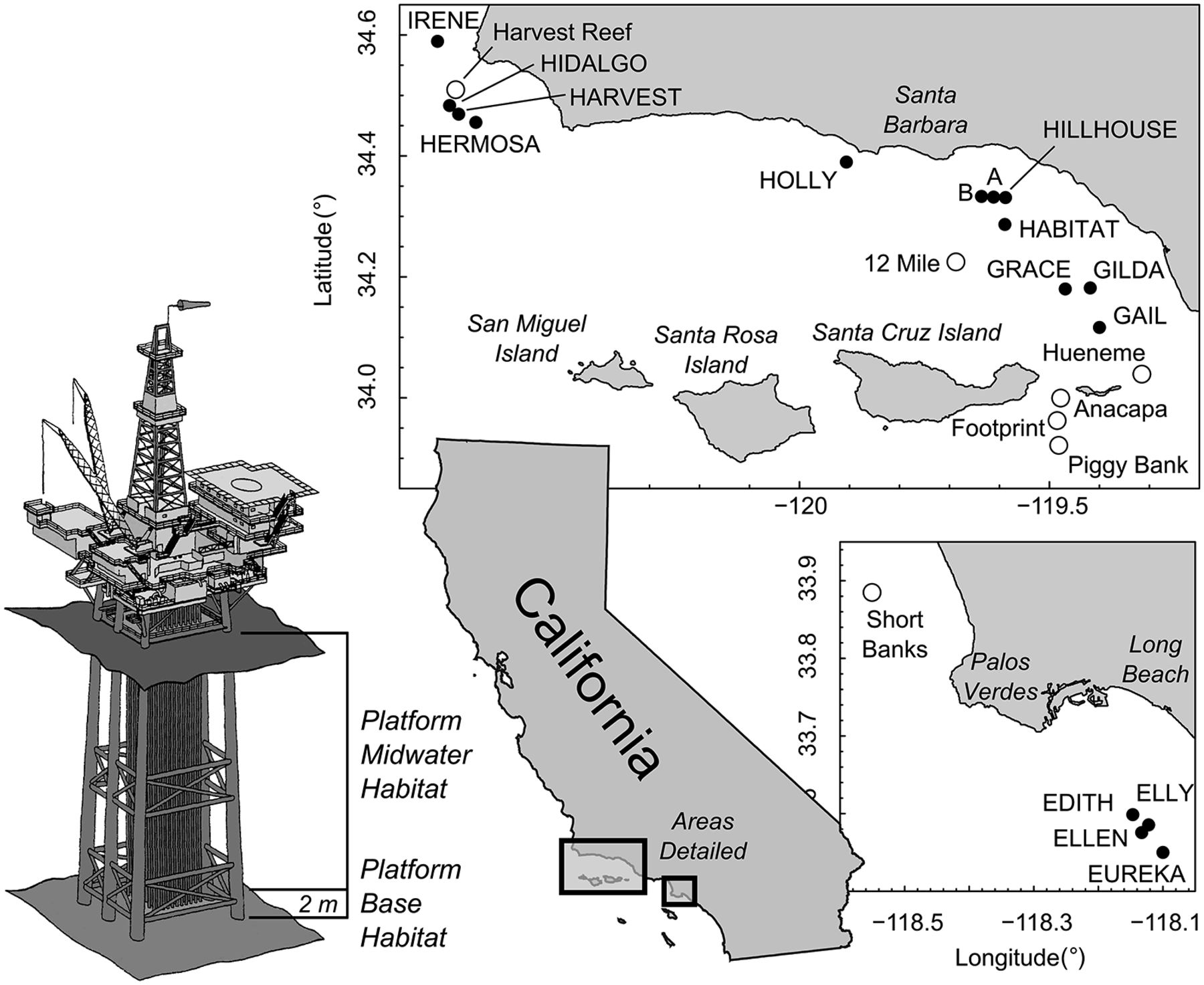
John adds: “They are in the process of creating a statewide artificial reef plan and you can sign up for updates and get more information. The California Artificial Reef Program (CARP) Plan won’t discuss the specifics of Rigs-to-Reefs but will be compliant with the National Fisheries Enhancement Act and National Artificial Reef Plan and meet the BSEE requirement of having an adopted state artificial reef plan. The intent is to add an addendum to the plan when resources become available to move Rigs-to-Reefs forward in California. You can check out the latest program update that further discusses the CARP Plan and Rigs-to-Reefs.”
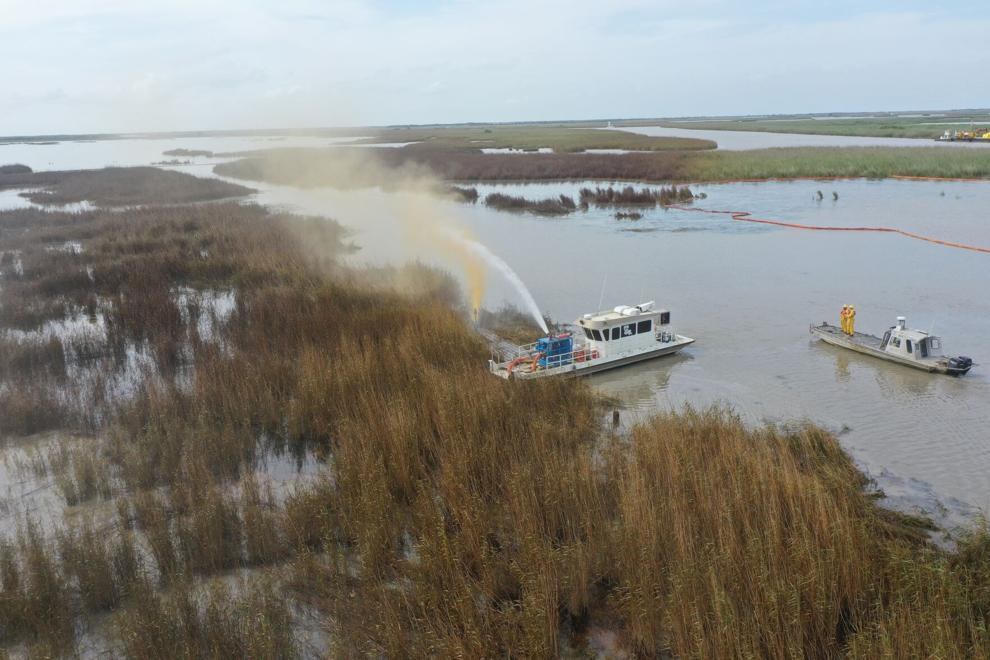
Coast Guard photo. Thanks to Lars Herbst for bringing this incident to my attention.
In what the Coast Guard is describing as an “uncontrolled discharge” (euphemism for blowout), an 82-year-old oil well has been spewing oil, gas, and water into the coastal marshes of southern Plaquemines Parish, Louisiana, for more than a week.
In hopes of future production, prior and current owners had elected not to permanently plug the well, apparently with the State’s acquiescence.
The Coast Guard has taken over the response and has accessed the Oil Spill Liability Trust Fund.
We don’t need relaxed decommissioning and financial assurance requirements. We need a cooperative Federal, State, and industry effort to ensure that wells are plugged in a timely manner and that financial assurance is provided to protect the public interest.
Those who are concerned about minimizing the Federal government’s decommissioning risk exposure should closely monitor this process. Some companies and their political allies have sought to minimize the financial risks associated with plugging wells and removing facilities. As a result, it has been necessary to defend BOEM from unwarranted commentary about decommissioning issues and the financial assurance rule. Stay tuned!
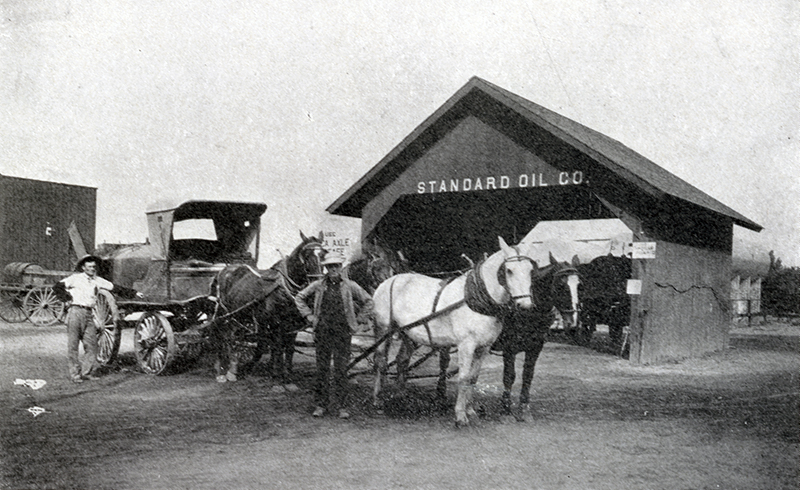
Remember that Chevron was once Standard Oil ofCalifornia. The attached WSJ article discusses the ugly divorce after all these years.
Chevron tired of California’s attempts to dictate corporate strategy. Per Chevron CEO Mike Wirth:
“Putting bureaucrats in charge of centrally planning key segments of the economy hasn’t worked in other socialist states,” Wirth said in a Nov. 1 call with investors. “I doubt it will be any different in California.”
California wanted Chevron to commit to the State’s energy agenda:
“Chevron has a future in clean energy in California. They can join us in our steady, long-term transition to a state powered by clean energy,” said Daniel Villaseñor, a spokesman for the governor’s office.
California wanted the interests of shareholders to be subordinate to the State’s carbon goals:
Newsom said Wirth had invested far more in shareholder payouts than in developing low-carbon energy.
Other State actions that contributed to the divorce:
accused Chevron and other companies of price gouging
accused Chevron, as a fossil fuel producer, of indirectly causing tragic fires
Inexplicably, BSEE’s ROD designates the most environmentally harmful, unsafe, and costly alternative as the “preferred alternative.” The decision is contrary to the opinions expressed by the leading experts on the ecology of California offshore platforms, most notablyDr. Milton Love of the University of California at Santa Barbara.
Why did BSEE select alternative 1 (complete removal) when their $1.6 million EIS acknowledges that alternative 2 (partial removal) is environmentally preferable? Was their decision influenced by activists who support the alternative that is most punitive to the industry they despise?
“On December 7, 2023, the Bureau of Safety and Environmental Enforcement (BSEE) issued a Record of Decision (ROD) recommending the full removal of California’s 23 offshore oil platforms in federal waters, following a Programmatic Environmental Impact Statement (PEIS) conducted to assess decommissioning options for platforms, pipelines, and other related infrastructure. However, upon close review, the PEIS and ROD appear to have reached misguided and detrimental conclusions due to critical oversights in their analyses.” Asher Radziner, Montecito Journal
Of particular interest are mandated reviews of the:
RIsk Management and Financial Assurance Rule: Those who want to gut this rule should come to the table with proposals that better protect the taxpayer from decommissioning liabilities. Pretending that decommissioning financial risks don’t exist or that they are someone else’s (or the govt’s) problem is unacceptable.
5 Year leasing program – This review is urgently needed. See this and this!
BOP/Well Control Rule – This keystone safety rule has undergone multiple reviews in recent years. Because of the rule’s importance, further review for continuous improvement purposes may nonetheless be warranted. Here are the blog comments on the current version of the rule.
After a zero fatality year in 2023, the first in at least 60 years, Jason Mathews of BSEE advises that one worker was killed during US OCS oil and gas operations in 2024.
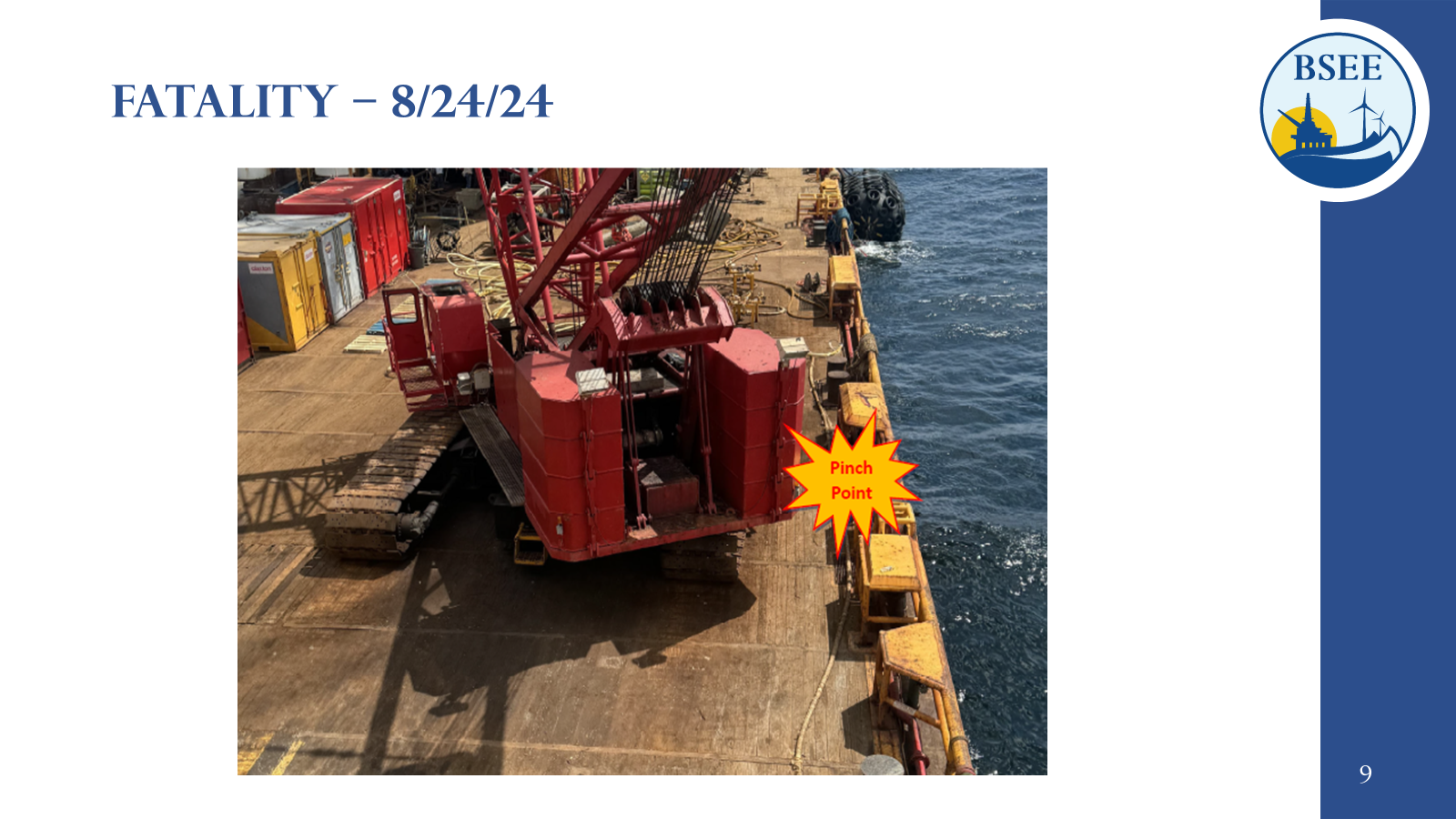
The fatality occurred during decommissioning operations on the Helix D/B EPIC HEDRON at Talos Energy’s Ship Shoal Block 225 “D” platform in the Gulf. The platform was to be reefed in Eugene Island Block 276.
The victim, who worked for Triton Diving Services, was moving hoses on the port side of the barge and got caught between the bulwark and counterweight of the crawler crane (see picture below).
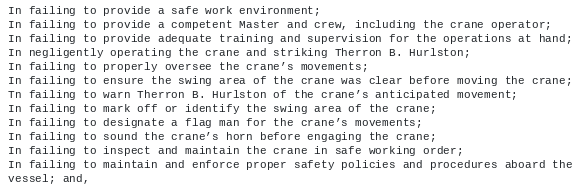
The victim’s family have filed a wrongful death lawsuit against Helix Energy Services and Triton Diving Services. The plaintiffs assert that prior to the crane movement the crane operator and crew had not undertaken measures to assure that the crane’s swing area was clear of other crew members. Per their filing, Triton and Helix were negligent as follows:
As expected, the White House announced the largest ever permanent ban on offshore oil and gas leasing in the US, and to the best of my knowledge, anywhere in the world.
The sheer magnitude of the ban makes other such withdrawals appear modest by comparison. It’s amazing how bold Presidents (and their handlers) become when they are about to leave office.
The permanent ban includes:
The entire Atlantic Outer Continental Shelf (OCS): While there are no current oil and gas leases in the US Atlantic, the region is highly prospective and could contain more than 20 billion barrels of oil equivalent (BOE).
The Eastern Gulf of Mexico: This is the OCS area that many petroleum geologists find most attractive. The best prospects are >100 miles from shore which minimizes coastal risks, and the high natural gas potential aligns with Florida legislation supporting the use of gas for power generation.
The entire Pacific OCS: While the resources are substantial, their loss has been a foregone conclusion for 25 years. When you can’t even decommission old platforms or restore production on important existing facilities (i.e. the Santa Ynez Unit), how can you possibly expect to issue new leases?
The remainder of the OCS offshore western Alaska. The wishes of the majority of Alaskans, who support offshore exploration and development, have been largely ignored for decades.
President-elect Trump has vowed to reverse President Biden’s leasing ban, but that may not be so easy. This is not a matter of simply reversing an executive order. Sec. 12(a) of OCSLA grants the authority to withdraw lands to the President and does not provide for reversal by future Presidents. The attached NYU Law brief concludes that “a subsequent president lacks authority to restore previously withdrawn lands to the federal oil and gas leasing inventory.”
The new Administration will no doubt have a different view than that expressed in the NYU Law brief, but any reversal decision will likely be challenged in court.
Those who wrote and approved Sec. 12(a) should have had more foresight. However, 72 years ago the authors presumably thought Presidents would only use the authority to remove small, especially sensitive areas from leasing consideration, and never thought that a President would remove both of our oceans and much of the Gulf of Mexico!
Congress could of course reverse the Biden bans, but given the complexity of offshore energy issues, such legislation may be difficult to pass.
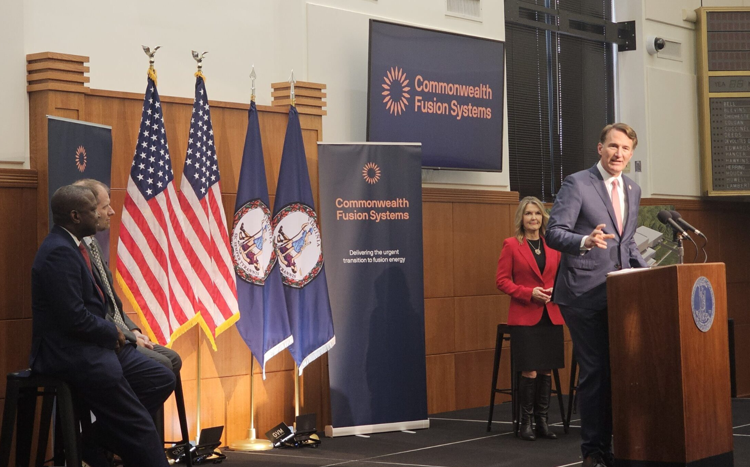
Commonwealth Fusion Systems (CFS) will independently finance, build, own, and operate a grid-scale fusion power plant in Chesterfield County, Virginia.
Dominion Energy will provide non-financial collaboration, including development and technical expertise as well as leasing rights for the proposed site.
This pioneering plant will generate 400 MW of continuous energy on 25 acres (total site is 100 acres). By comparison, Dominion Energy’s offshore wind project, which will include 176 turbines and 3 offshore substations, will intermittently produce (on average) 1092 MW (2600 MW x 0.42 capacity factor).
Gov. Youngkin emphasized that the project will be financed entirely by CFS, with no costs passed on to Dominion Energy ratepayers. (Good news for us Dominion Energy customers! 😀)
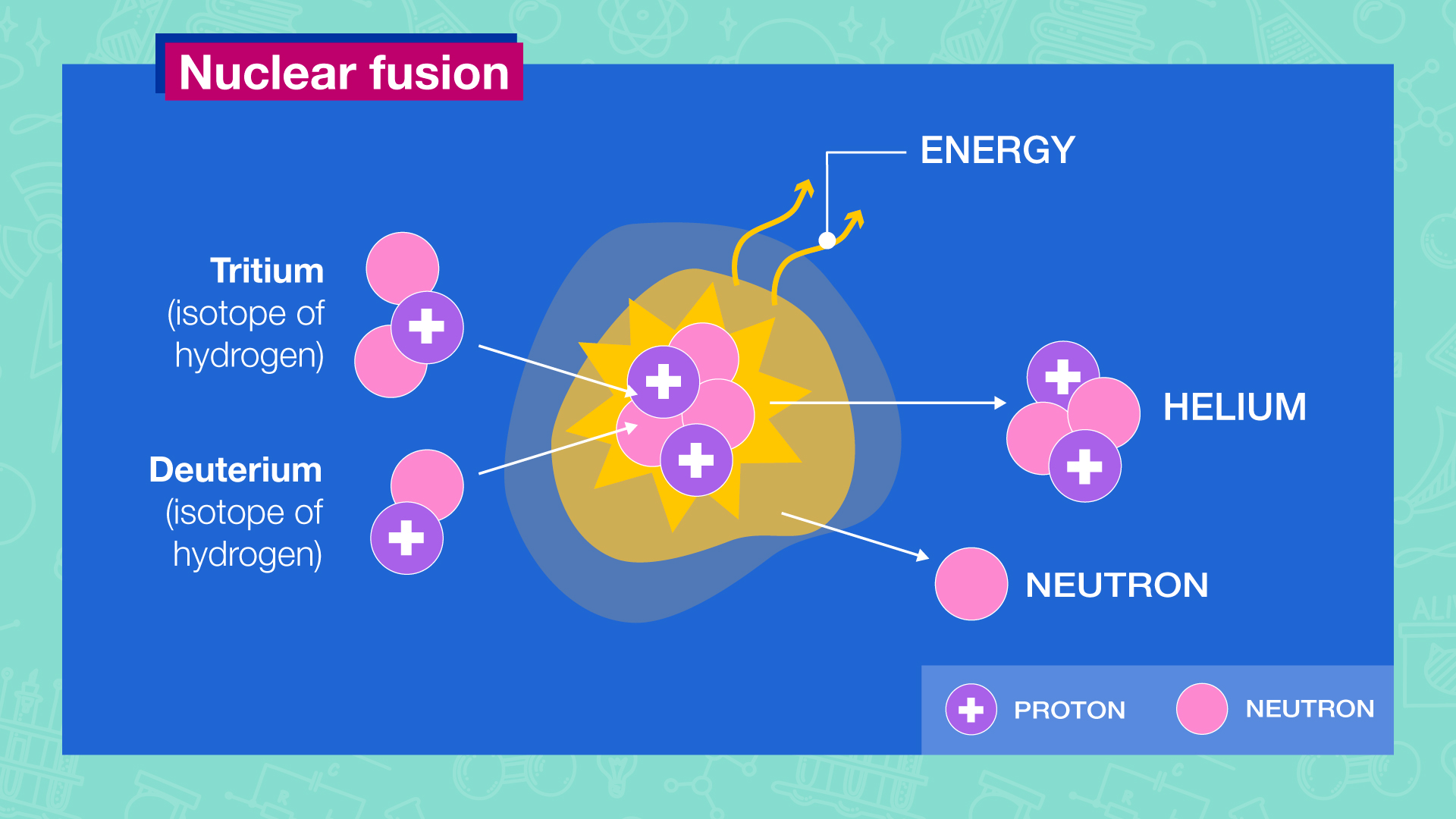
Fusion technology works by combining hydrogen isotopes — deuterium extracted from water and tritium from lithium — under extreme heat and pressure, using powerful magnets to fuse the elements. The process generates heat, which boils water to create steam that spins a turbine, producing electricity. The byproduct is helium.
Why BOE, and most everyone else, likes nuclear fusion:
Clean and sustainable power source.
Unlike traditional nuclear power plants that rely on fission, fusion replicates the energy-producing process of the sun.
Modest space requirements.
Generates four times more energy per kilogram of fuel than fission and nearly four million times more energy than burning oil or coal.
No radioactive waste
Safe energy source; no risk of a meltdown event
Nuclear Regulatory Commission has determined that fusion technology, unlike fission, does not require a federal license.
The implications of advanced nuclear technology, not only the holy grail of fusion energy, but also modular fission reactors, for intermittent wind and solar power are substantial.Ultradeep geothermalis on a similar timeframe, and could also supersede wind and solar.
The logic behind costly offshore wind projects is therefore questionable, and the regulators better make sure that the decommissioning of these facilities is fully funded. The most likely long-term scenario is for natural gas to continue meeting most power generation needs as the nuclear and ultradeep geothermal alternatives are phased in.
More about fusion. Most of you can start at Level 3. 😉
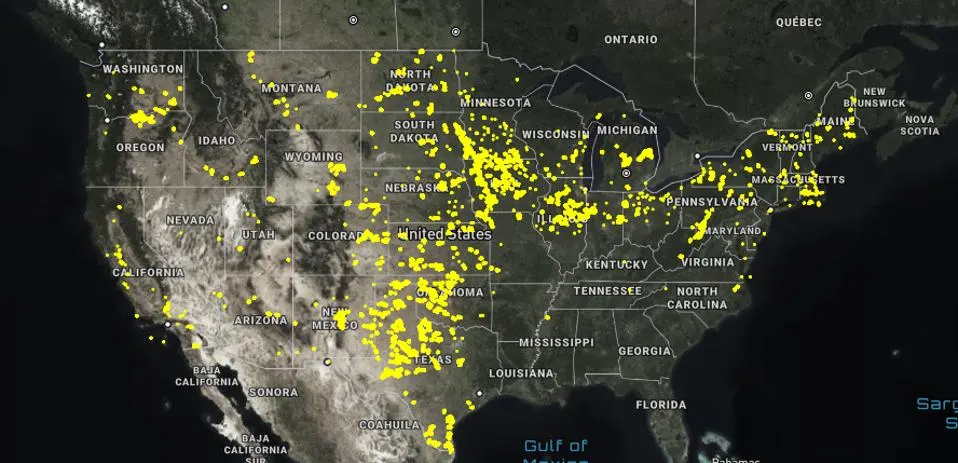
Forbes (USGS map of active wind turbines): “The U.S. Wind Turbine Database contains more than74,695 wind turbines built since 1980, spread between 1,699 wind power projects in 45 states. However, thousands of wind turbines are reaching the end of their operational lifespan and need to be either repowered to make way for updated (often larger) turbines or entirely decommissioned to allow for new uses of the land they occupy. Unfortunately, there is no uniform legal framework to regulate the steps involved, nor is there an accepted industry-wide set of best practices, and the environmental costs are considerable.”
Forbes: “As is often the case when new technologies come to market, unintended downstream consequences are not always immediately obvious to the players. Enthusiasm for clean energy initially pushed the first wind turbines into existence in the U.S. without considering the environmental and monetary costs that would be involved in either upgrading or bringing projects to a close later in their life cycle. “




 Bud's Offshore Energy (BOE)