Feeds:
Posts
Comments

Archive for the ‘decommissioning’ Category

Despite scientific support, California’s “rigs to reefs” program has made little progress. Comments in yesterday’s LA Times article help explain why:

Fed by concerns from some environmental advocates and a skepticism about the motives of California’s billion-dollar oil industry, the Rigs to Reefs program that passed in 2010 was so complicated by political compromise that the permitting process became almost unworkable, (State Sen.) Hertzberg said.

Not a single oil company has applied in the history of the program, according to the State Lands Commission, which has jurisdiction over state waters.

LA Times

“Oil companies want a clear path to compliance,” he said. “They’re operating in many cases at a loss, but it’s cheaper to operate at a loss than it is to face millions for decommissioning.”

Gary Brown, Orange County Coastkeeper

Read Full Post »

Were it not for the surprising CCS bidding, which was accomplished without public notice, last week’s Gulf of Mexico sale would have been pretty ordinary – $177 million on 214 tracts.

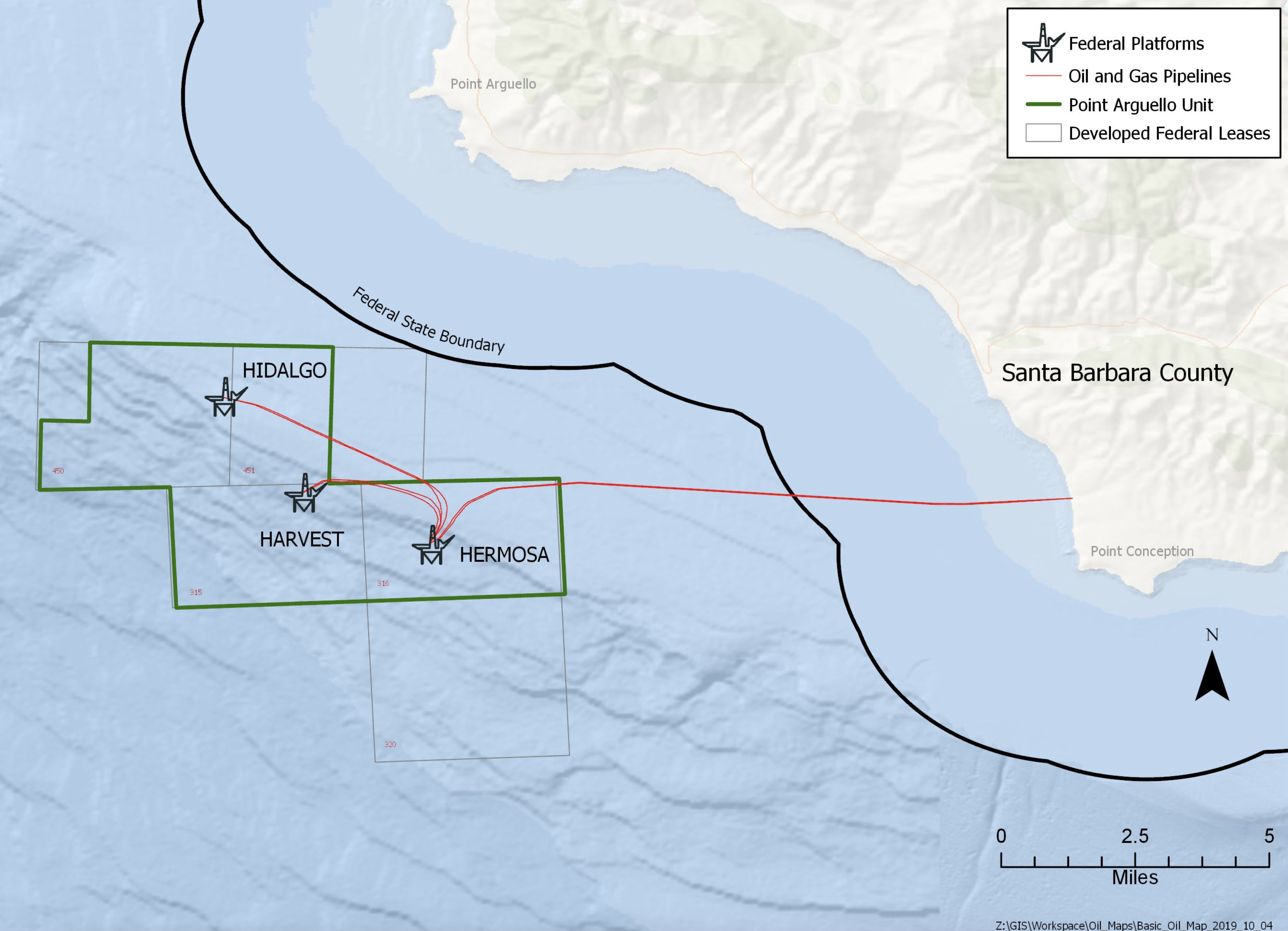
A 1981 lease sale offshore California was quite another matter. That sale (no. 53) set records that will never be surpassed. A single lease (OCS-P 0450) encompassing a little more than 5000 acres was sold to Chevron and Phillips for an astounding $333 million. This equates to $1.013 billion in 2021 dollars. That single bid (in 1981 dollars) exceeds the total high bids for any Gulf of Mexico sale since 2015.

High bids for Sale 53 totaled $2.3 billion ($7.0 billion in 2021 dollars!) for only 81 tracts. A GoM sale in 2008 received $3.7 billion in high bids, but that was for 603 tracts.

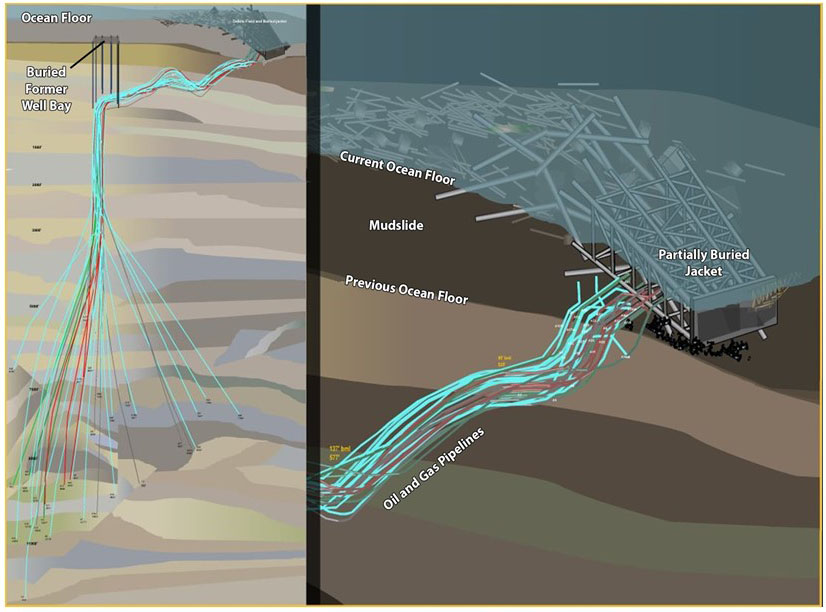
Unfortunately, production from lease 0450 never met expectations. Platform Hidalgo (0450) and the other two Pt. Arguello field platforms (Harvest and Hermosa) are no longer producing and are in the process of being decommissioned. An interesting criminal case involving Platform Harvest, then operated by Texaco, will be discussed at a later date.

Pt. Arguello Field

OCS Sale data

Pacific only data

John Smith’s Pacific decommissioning update

Read Full Post »

Veteran marine science advocate Jerry Schubel, former president of Long Beach’s Aquarium of the Pacific, is among those pushing for offshore oil platforms to be transformed for new ocean uses. He points out that the underwater portion of the structures already are a boon to marine life.

“They have enormous value as ecosystems because of the life that has grown on and around them,” he said.

He points out that other states have rigs-to-reefs programs — and California does as well, though it needs funding before it can function. Once the ball gets rolling, oil companies could be tapped to cover costs with fees drawn from the money they would save by not having to haul dismantled rigs ashore. Schubel estimated that turning platforms into reefs could cut decommissioning costs in half.

But Schubel says artificial reefs should be just the beginning. How about fish farms? Research labs? Windmills? Hotels for divers?

“The uses,” he said, “are limited only by our imagination.”

Orange County Register

Well said Dr. Schubel! For a full list of alternative uses for offshore platforms see the official Rigs-to-Reefs+++ page.

Read Full Post »

Are the Saudis reading BOE?

The Public Investment Fund (PIF) announced today the launch of “THE RIG.”, a new tourism project. Inspired by offshore oil platforms, “THE RIG.” will be located in the Arabian Gulf and will span a combined total area of more than 150,000 square meters and provide a multitude of hospitality offerings, adventures, and aquatic sporting experiences.

PIF News Release

Were they inspired by this BOE exclusive?

Rigs-to-Rides
Rigs-to-Rides

Read Full Post »

Scandpower study (2004) for MMS:

Overall Conclusion
Currently, there are no regulations that require removal of subsea pipelines if they are not an obstruction to navigation. Based on the high costs for removing the pipelines, the personnel risk involved in the removal operations, the negative effect on overall emissions to air and the very limited reduction in discharges to sea, the overall conclusion is that it is better to leave the pipelines in place. If possible, re-use of the pipelines is the optimal solution.

Environmental Impacts
The impacts on the environment and the marine environment from pipelines and cables left in place were found to be very minor. Conversely recovery operations will have a negative impact on the environment. The number of vessels required for removal operations and long operating hours will result in considerably more releases and emissions than leaving the pipelines in place. In addition the energy savings benefit from recycling the pipeline materials will be exceeded by the energy required to remove the pipelines and separate the materials.

Pipeline Decommissioning: Environmental Impact Metric (per Scandpower)

Remove/
recycle
Remove/
landfill
Reuse or
preserve
Bury Abandon
in place
EnergyHighHighLowModerateNone
EmissionsHighHighLowLowLow
DischargesLowLowModerateLowLow
HabitatLowLowModerateLowLow
AestheticsLowModerateNoneNoneNone
Resource
Utilization
HighNoneHighNoneNone
LitteringLowLowLowLowModerate

The “Habitat” impacts row seems questionable. Pipeline removal certainly has a greater impact on habitat than abandonment in place, particularly for buried pipelines.

Read Full Post »

The piece small challenge
Platform Harmony Jacket

For those interested in California offshore decommissioning, attached is an excellent update presented at a 2020 forum by my former colleague John Smith.

Read Full Post »

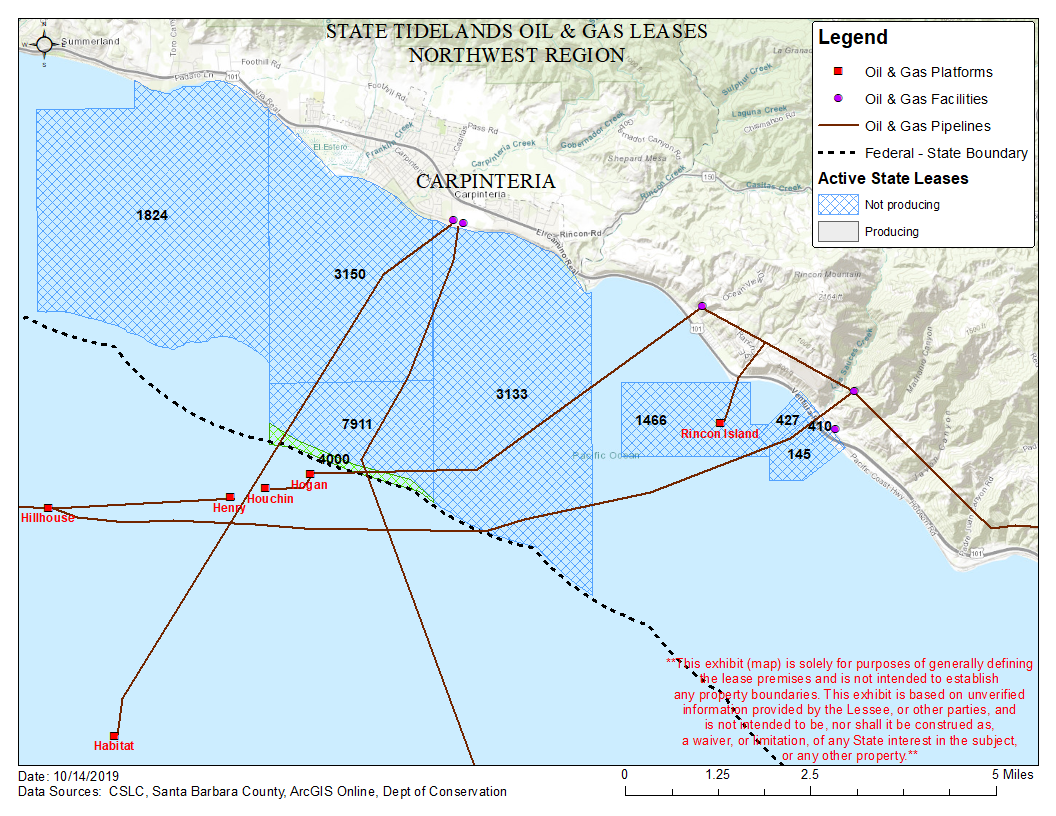
The troubled past of Platforms Hogan and Houchin extends into California State waters. In the 1990’s, Signal Hill and affiliates launched plans to drill directionally from Hogan into adjacent State leases 4000, 7911, and 3133 (see map above). These plans were dubious from the outset given MMS (Federal regulator) concerns about Hogan’s structural integrity. The planning process was never successfully concluded and the 3 State leases were terminated in 2019. For full details see this California State Lands Commission report:

In a related action, the State is suing Signal Hill for unpaid rentals on the pipeline lease that carried production from Hogan to shore. The amount due is approximately $287,000.

Read Full Post »

A recent Washington Post (WP) article, based in part on a March 2021 General Accountability Office (GAO) report, raises interesting pipeline decommissioning issues, but might benefit from some additional context, which I have attempted to provide below:

  • Decommissioning liability issues are not simply a matter of “companies trying to get out of that obligation.” Much of the complexity is associated with decades-long chains of lease ownership and the respective responsibilities of prior lessees. Pertinent questions include the following:
    • If a company sold a lease decades ago and there have since been multiple owners, to what extent is the original owner still liable for decommissioning lease facilities? (Note that guidance from the Federal government has not been entirely consistent over the decades.)
    • If current leaseholders fail to fulfill their obligations, who is next in line and why?
    • To what extent are prior lessees liable for wells and structures constructed subsequent to their ownership?
    • Knowing that decommissioning costs can vary significantly, what amounts of security should be required? How should these funds be protected or managed? Should an assigning company also collect funds to protect their interest?
    • How do inconsistent Federal policies and financial assurance requirements, and improper practices by subsequent owners, affect the liability of prior lessees? In that regard, the case of Platforms Hogan and Houchin in the Pacific OCS Region is interesting and pertinent.
  • Per the WP, “Federal regulations require the removal of offshore pipelines once they are decommissioned, but the rules are rarely enforced.” This statement is doubly incorrect.
    • 30 CFR § 250.1750 provides for decommissioning pipelines in place when the Regional Supervisor (BSEE) determines that the pipeline does not constitute a hazard (obstruction) to navigation and commercial fishing operations, unduly interfere with other uses of the OCS, or have adverse environmental effects. The consensus opinion of the regulators’ engineers and scientists has been that the safety and environmental risks associated with pipeline removal were significantly greater than those for decommissioning in place in accordance with the procedures specified in 250.1751.
    • The comment about enforcement is unfounded. BSEE and its predecessors have strictly enforced decommissioning requirements despite the challenges related to inconsistent policy direction, industry downturns, and hurricane damage. BSEE has an effective program to ensure that idle wells are plugged and platforms are removed in a timely manner. For this reason, 3315 platforms have been removed since 2001; 1933 since 2010. Only about 1800 platforms remain. This very significant loss of habitat is a concern to fishing organizations, another factor that complicates decommissioning policy.
  • In situ decommissioning of buried or trenched offshore pipelines is the standard throughout the world. The seafloor disturbance and safety risks associated with the removal of such pipelines are universally viewed as unwarranted. The pipeline decommissioning procedures followed elsewhere are similar to those described in 30 CFR 250.1751. In the Gulf of Mexico, pipelines installed in less that 200′ of water are typically buried (30 CFR 250.1003) to minimize interference with commercial fishing and other activities.
  • The decommissioning of wind turbines, which are typically more densely located and closer to shore, and their attendant power cables and substructures, will also be challenging. In their 9/16/2019 Congressional testimony, the Responsible Offshore Development Alliance expressed concern about the practice of leaving structural foundations when turbines are abandoned.

In remarks to the WP, Syed Khalil, a coastal restoration geologist for the State of Louisiana, commented that they have enough sand to meet their short term needs, but future needs were a major concern. The Gulf of Mexico Offshore Sand Management Working Group would seem to be the best mechanism for timely action and a workable, long-term action plan. The minutes of their meetings are quite instructive. Rulemaking is not a solution unless the parties want to tie their fate to both the 25 year pipeline rule rewrite (draft published in 2007, another draft coming? final?) and the contentious and similarly interminable financial assurance rule.

Read Full Post »

« Newer Posts