Feeds:
Posts
Comments

Archive for the ‘climate’ Category

Santa Ynez Unit items (thanks to John Smith for the links):

Cuts in carbon capture spending coming? These are cuts that both climate activists and skeptics can support.

In a peer reviewed paper, AI (Grok-3) debunks the man-made climate crisis narrative.

Doug Burgum: Hydraulic fracturing technology is “one of the reasons why the U.S. shale revolution is a miracle. But that miracle keeps on getting better and better. It’s the thing that has literally turned around the economy.” Posted here 15 years ago: Natural Gas Bonanza – Why Aren’t We Celebrating?

Read Full Post »

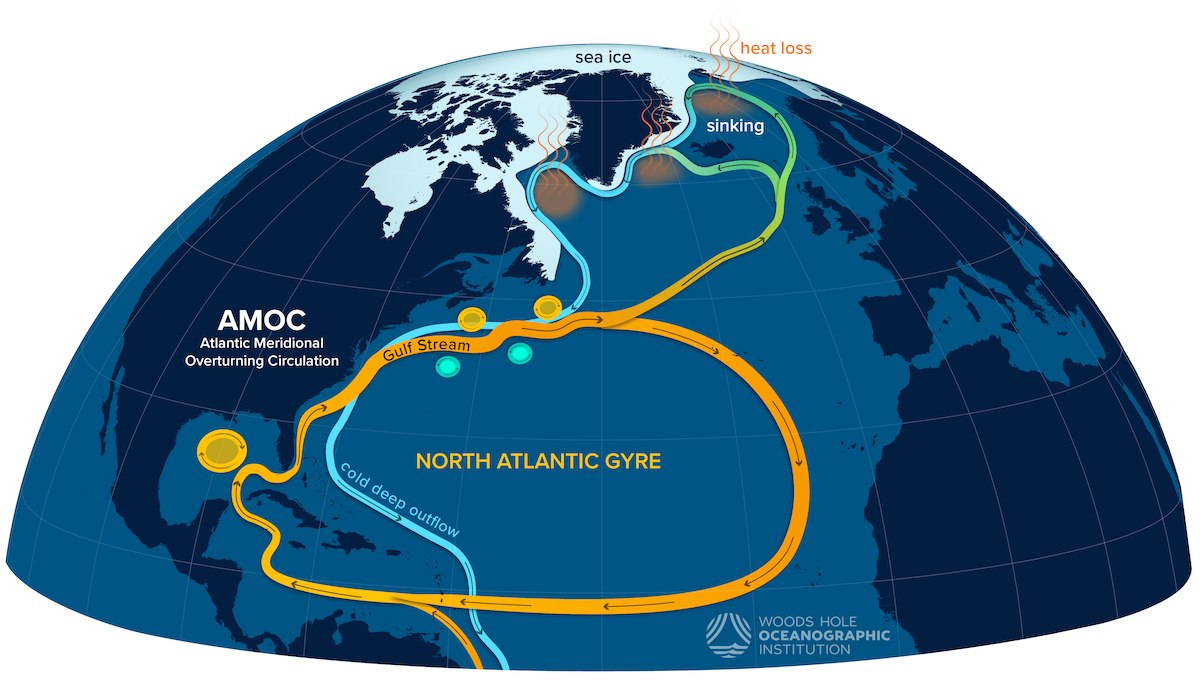
WHOI graphic: The AMOC not only distributes the ocean’s heat, moisture, and nutrients, but regulates the Earth’s climate and weather.

Contrary to alarmist forecasts that climate change could cause the Atlantic Meridional Overturning Circulation (AMOC) to collapse as soon as 2025, an important Woods Hole study found that the AMOC has not declined in the last 60 years.

“Based on the results, the AMOC is more stable than we thought,” co-author Linus Vogt said. “This might mean that the AMOC isn’t as close to a tipping point as previously suggested.”

Of course, the usual caveat about past performance not necessarily being predictive applies:

Co-author Nicholas Foukal: “That doesn’t say anything about its future, but it doesn’t appear the anticipated changes have occurred yet.”

Perhaps the urgent warnings about the collapse of the AMOC, if not unfounded, were at least premature.

Read Full Post »

While a graduate student more than 50 years ago, I wrote a paper entitled “The Use of Natural Gas in Improving Air Quality.”  My professor, Dr. Richard Gordon (RIP), a terrific economist who greatly influenced my thinking about energy, liked the paper but thought I was too optimistic about the availability of gas. 

The sense at the time was that natural gas was a premium energy source in short supply. I was blissfully ignorant and thought we geologists and petroleum engineers would find and produce the gas. The Shale Boom, for which I can take zero credit, has proven me correct, so I’m taking another victory lap. 😀

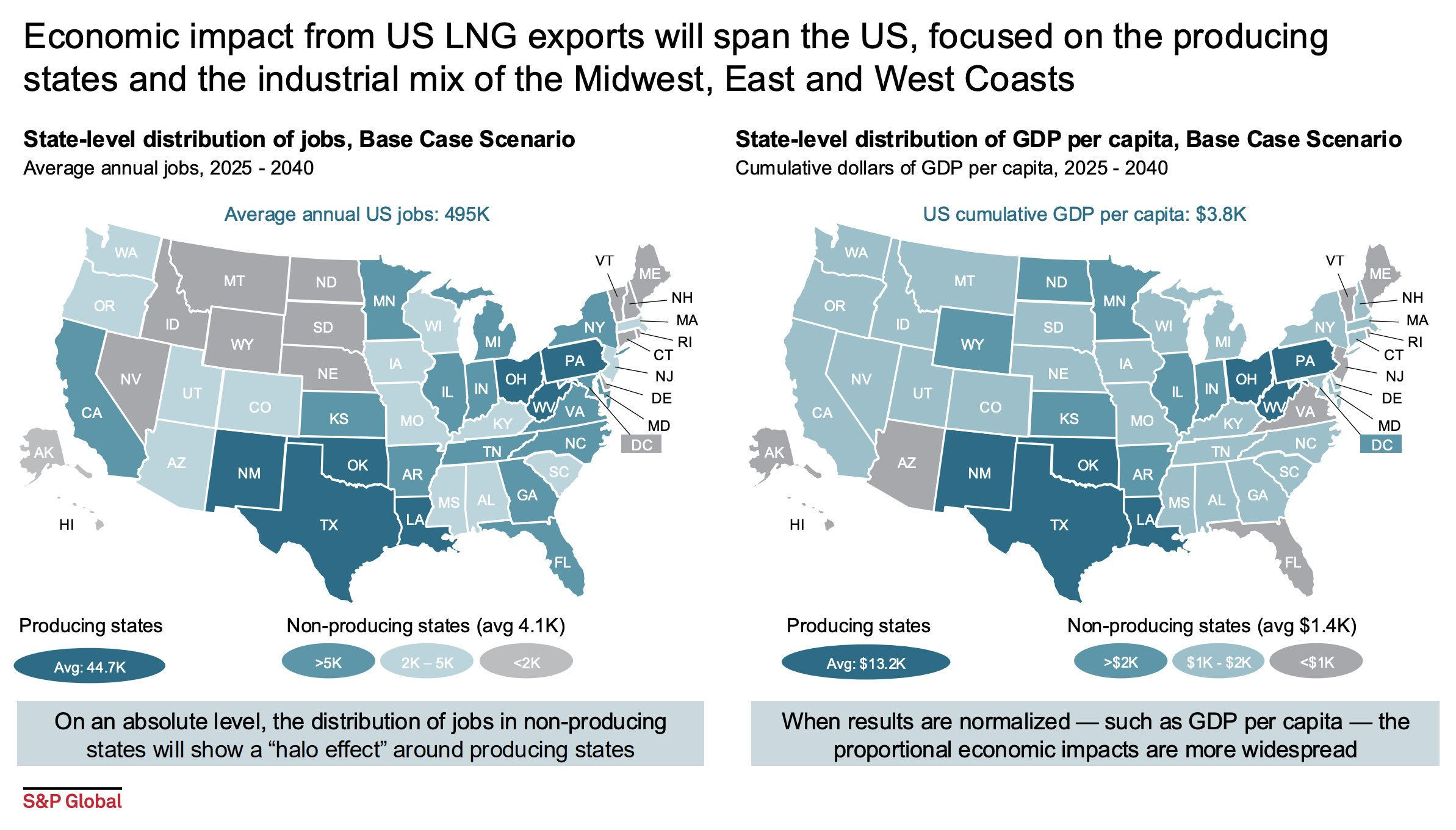
Last week, the great Dan Yergin and his team at S&P Global issued a report that explains how economically and environmentally important natural gas has become. Key findings from the report are pasted below:

Environmental Benefits:

  • Higher US LNG exports lead to lower overall global emissions by displacing the more GHG intensive fuels that would replace them.
  • End use combustion is responsible for 57–87% of GHG intensity for coal, oil, gas and LNG, with supply chain methane emissions the key driver of variation between fuels (e.g., domestic vs. international LNG, domestic versus piped natural gas imports, or different crude oil streams).
  • Coal emits roughly 70% more greenhouse gases than the US LNG it would replace across all the alternatives analyzed.

Economic Benefits:

  • US LNG’s unprecedented growth is enabled by an extended cross-state value chain, that reaches beyond the core-producing states – about 90% of every dollar spent remains within United States supply chains
  • Of the annual average of 495,000 US jobs supported through 2040, 37% will be in non-producing states. As many jobs will be supported in on-producing states as in Texas
  • Over the same period, LNG Exports will contribute $1.3 trillion in GDP, with $383 billion or 30% in non-producing states. On a per capita basis, producing states benefit from a cumulative $13.2K GDP per capita
  • The US Northeast (NE) has vast amounts of low-cost gas reserves in the Marcellus and Utica formations (New York, Pennsylvania, West Virginia, Ohio), sufficient to meet nationwide demand for ~17 years
  • Due to pipeline constraints these reserves are being developed at a suboptimal rate, pushing gas prices at Boston, Chicago and New York City Gates up 160% higher than the national gas market in peak months
  • Expanding NE pipeline capacity by 6.1 Bcf/d could reduce HH gas prices by $0.20/MMBtu and significantly lower prices across the region. Cumulative nationwide consumer savings could reach $76 billion through 2040

Should you be interested in learning more, the above findings are well supported by detailed information in the report.

Read Full Post »

WSJ: “How many multibillion-dollar projects must go bust before a Governor comes to his senses? The answer is blowing in the wind, but New Jersey’s Phil Murphy doesn’t seem to be listening.”

Ouch!: Note how it’s always the developers that give up on these projects and never the state, despite the awful prospects for ratepayers. Gov. Murphy has treated renewable energy as a sacred cause no matter the costs since 2018. That includes a bill he signed to let Ørsted pocket federal credits it had promised to pass on to customers, though he clawed money back when the projects died.

Read Full Post »

Thanks to the Colorado Oil & Gas Association’s tongue-in-cheek “Customer Appreciation Award,” which rivals the Not My Job Award as a means of recognizing extraordinary individual and organizational chutzpah, Chris Wright was on our radar long before he became Secretary of Energy.

He continues to impress:

Read Full Post »

link

For three decades you were labeled a crank, a “climate denier,” someone who pigheadedly rejects “settled science,” if you didn’t embrace the belief that life on earth faces imminent extinction from “global warming” and, later, “climate change.” The possibility that an entire academic discipline, climate science, could have gone badly amiss by groupthink and self-flattery wasn’t thought possible. In many quarters this orthodoxy still reigns unquestioned.

Read Full Post »

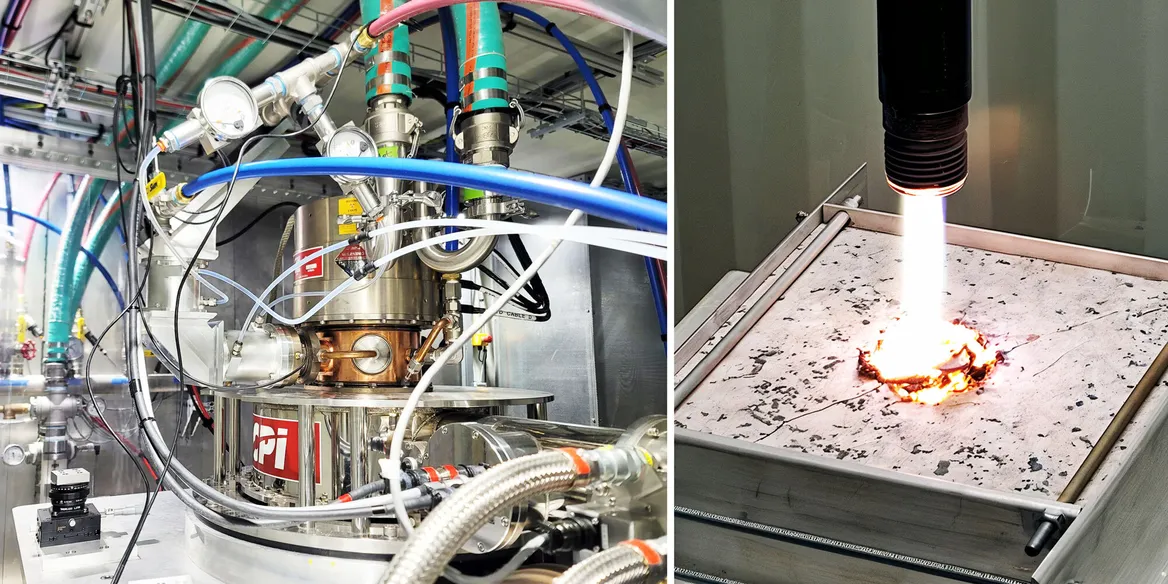
Quaise Energy’s gyrotron (left) can vaporize boreholes through rock.

See this very good Noema Magazine article.

In an age when energy policy is so often hostage to fierce partisanship, there is hope that geothermal can be the one clean energy solution that could satisfy climate change campaigners and the ‘drill baby drill’ lobby alike.”

Updates on Quaise Energy’s highly anticipated gyrotron field test and related information:

  • “Lab-test data suggest that the gyrotron’s beam will lose only around 50% of its power at a depth of six miles. To put that into perspective, the attenuation of a rotating drill string at 10 kilometers can be 98%,” Araque said. “You only get 2% of the mechanical power down to the bit.”
  • Quaise’s field test will take place on a disused oil drilling pad in the northern exurbs of Houston. Next month, a gyrotron 100 times as powerful as the one in the laboratory will be pointed at the earth and switched on.
  • By spring, Quaise will have erected another platform in a disused quarry near Marble Falls, a city on the Colorado River northwest of Austin.
  • Quaise’s ultimate ambition is that its drills can be “dropped-in” to existing oil and gas wells.
  • By 2026, Quaise should be positioned to launch its first commercial venture. Within that short timescale, an answer to the question of whether superdeep geothermal can be truly transformative should come into clearer focus.

Quaise’s Araque: “Our civilization uses 25 terawatts, and it doubles every 25 years. By 2050 we need 50 terawatts. By 2100 we need 200 terawatts. When you look at those numbers, you realize that diffuse and intermittent renewables don’t have the scale. The externalities are too high.”

Read Full Post »

Equinor’s investment in Orsted and their Empire Wind project in the US Atlantic are featured in this DN article (translated to English). Excerpts follow:

Equinor’s investment of over 26 billion kroner in the Danish wind power company Ørsted has so far been a financial disaster – and now it’s going from bad to worse.

We are very negative about the whole green initiative, as the return on the investments they make is far too low. When they also buy minority stakes in other green companies that we cannot count on, such as Ørsted, it means that we would rather own other oil companies.” Gaute Eie, Eika Kapitalforvaltning

The market has long been concerned that Equinor will throw money at renewable projects with low or no profitability.

In a recent note, Pareto analysts Tom Erik Kristiansen and Olav Haugerud point out that the Ørsted writedown does not bode well for Equinor’s own US projects either. They foresee a writedown of up to $1.1 billion, given that Equinor faces the same type of challenges as Ørsted.

Eie believes there is no reason why Equinor in particular should have a green initiative:

Aker BP is not doing green, Vår Energi is not doing green, and all the big oil companies are going back on this. Then we’ll see if Equinor has the guts to buy even more Ørsted shares, because now it’s 35 percent cheaper. If they do, we’ll have even fewer Equinor shares.

Sissener believes Equinor should rather focus on dividends and concentrate on oil and gas projects.

We generally stay away from companies where the state is a major owner, because there you have to be so politically correct all the time. What we need are shareholder-friendly board representatives who know how to run a business and maintain control. In a broader perspective, this helps to destroy trust in Norwegian business.

Read Full Post »

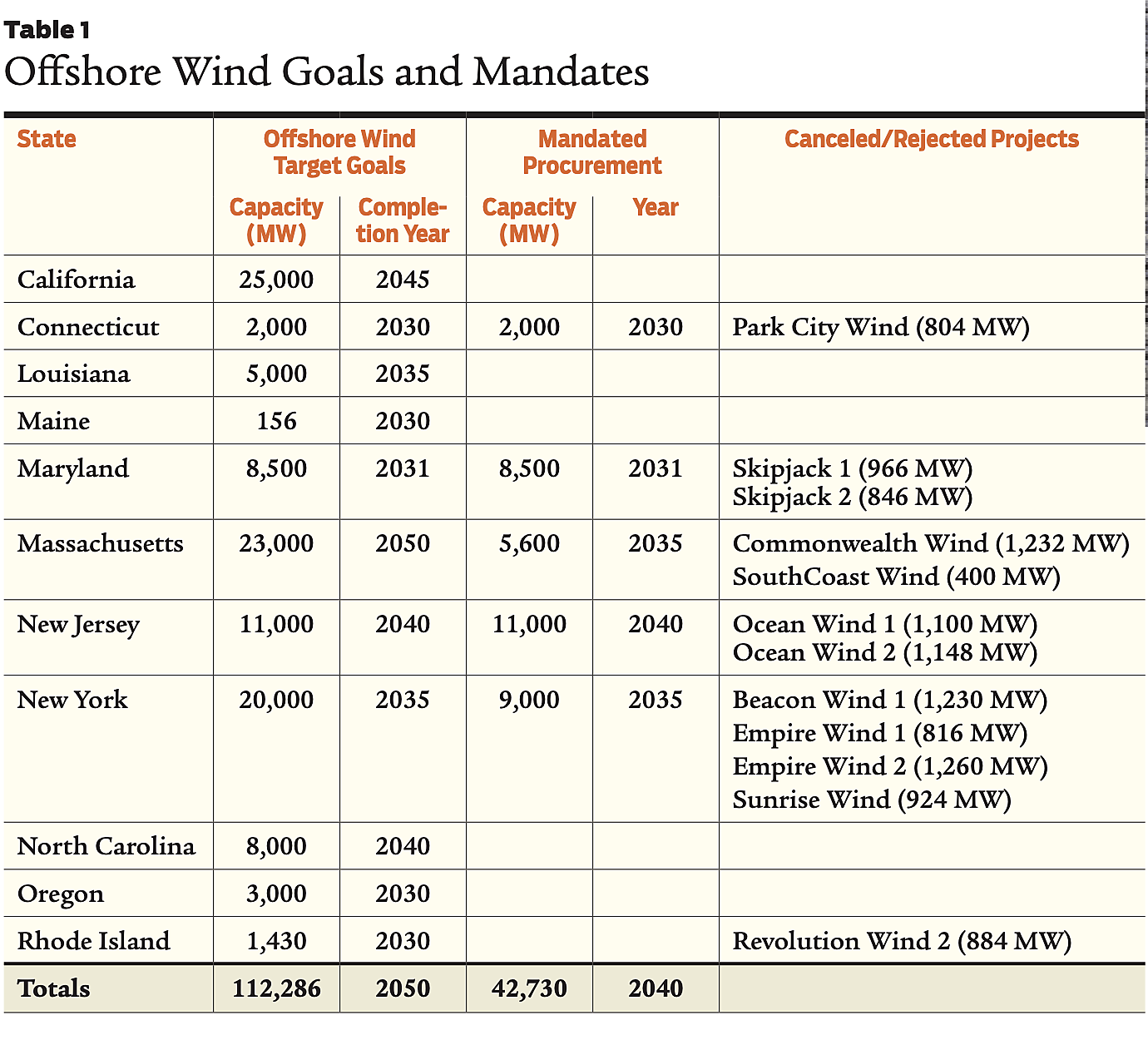
A senior administration official who is familiar with the executive actions and authorized to brief Fox News Digital said Trump on day one will end “Catch and Release;” pause all offshore wind leases; terminate the electric vehicle mandate; abolish the Green New Deal; withdraw from the Paris Climate Accord; and take several major steps to assert presidential control over the federal bureaucracy.

The senior official told Fox News Digital that the energy executive order deals with “every single energy policy,” and addresses liquid natural gas, ports, fracking, pipelines, permitting and more, while also terminating President Biden polices he said “have constrained U.S. energy supply.” 

Read Full Post »

Equinor diagram: power cables from shore to Johan Sverdrup field

“It’s an absolutely sh*t situation,” said Norway’s energy minister Terje Aasland reacting to electricity prices in the country that are six times that of the EU average.

The two ruling parties in Norway want to cut the two power inter-connectors that link the country with Denmark when they come up for renewal in 2026. The smaller coalition party, the Center Party, wants to revisit similar energy links with the UK and Europe.

A related matter is Norway’s push to power offshore platforms with electricity from shore. This policy makes neither economic nor environmental sense, and introduces new safety and operational risks.

This BOE post cites the obvious (per NPD): “The power from shore projects will lead to an increase in electricity prices in Norway.” The post also presents seven other reasons why powering those facilities from shore is not a good idea.

Meanwhile, Total’s plan to partially power the Culzean field (UK) with a floating turbine is similarly irrational. The scheme adds costs and risks with no apparent benefit.

Read Full Post »

« Newer Posts - Older Posts »