Feeds:
Posts
Comments

Archive for the ‘climate’ Category

Each annual licensing round will only take place if key tests are met that support the transition to net zero. The first test is that the UK must be projected to import more oil and gas from other countries than it produces at home

The second is that the carbon emissions associated with the production of UK gas are lower than the equivalent emissions from imported liquefied natural gas

If both these tests are met, the NSTA will be required to invite applications for new licences annually.

GOV.UK

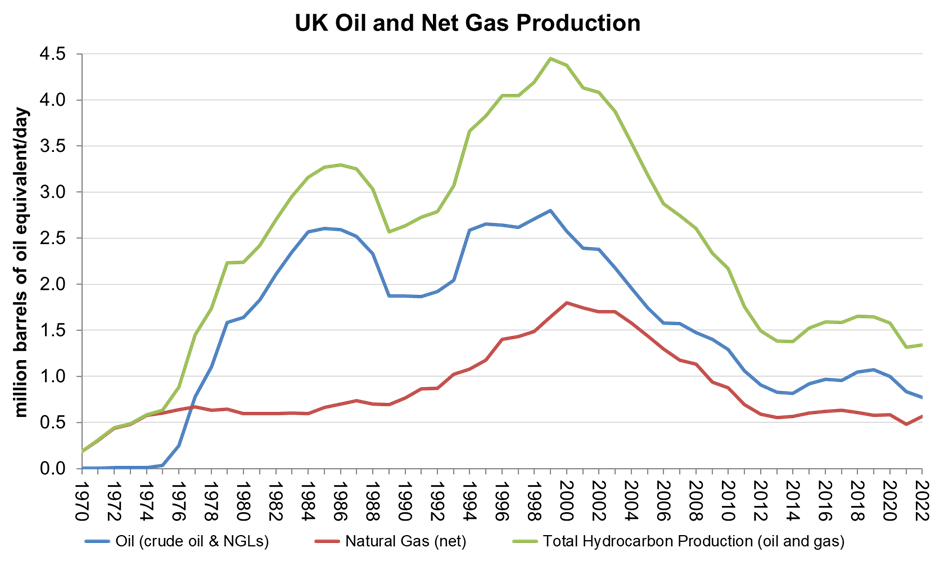
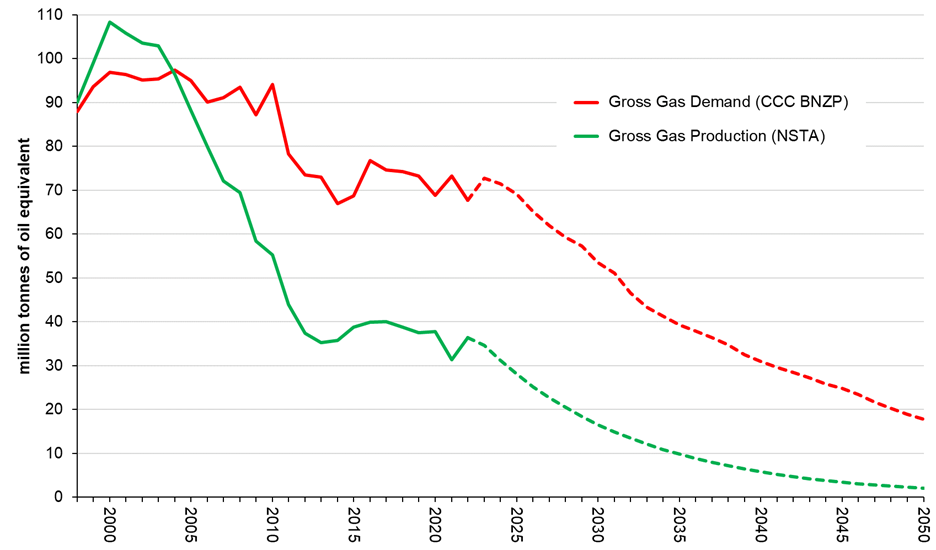
The “key tests” would seem to ensure annual licensing rounds for the foreseeable future. The charts below are from UK EiTi. The first chart illustrates the sharp decline in UK production over the past 20 years. The second and third charts illustrate the large projected gaps between supply and demand, particularly for natural gas.

In 2050, total production of oil and gas is estimated at ~10 million tonnes of oil equivalent. The projected 2050 demand is estimated at ~35 tonnes. For domestic production to exceed imports over the next 20-30 years, resource licensing and field development would have to be very successful and efficient.

Projections of UK Gas Demand and Production

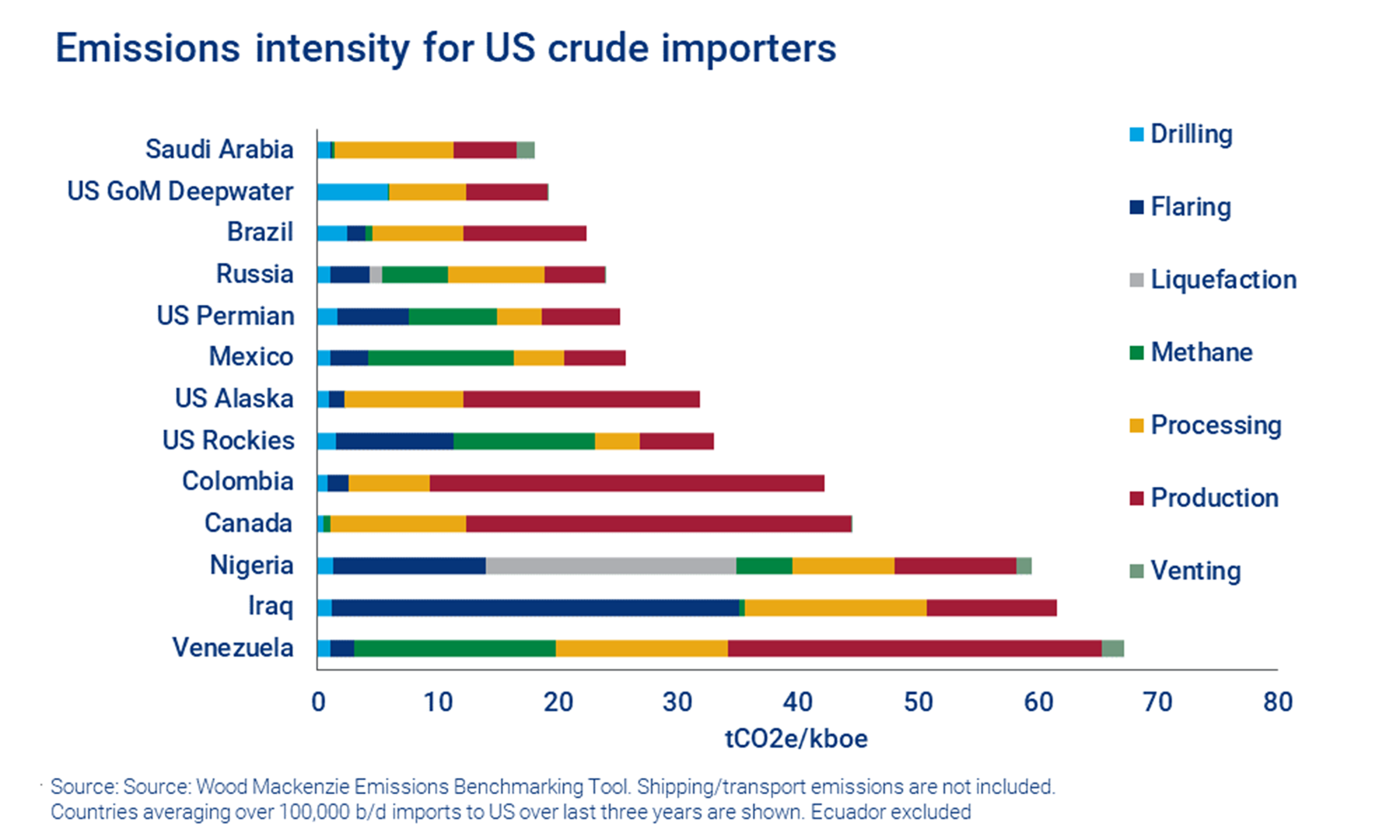
With regard to the second test, carbon emissions from the production of UK gas should maintain their advantage over imported LNG given the energy required to liquefy and transport that gas.

It would have perhaps been more transparent to simply stipulate annual licensing rounds, but that would probably not have been politically acceptable.

Read Full Post »

Deputy Secretary of the Interior Tommy Beaudreau was “disrupted” (perhaps a euphemism for the thuggish behavior demonstrated in the video clip below) by climate ultras in New York on Sept. 21. On Oct. 4, Mr. Beaudreau announced that he would be leaving the Dept. of the Interior.

The official announcement provides no reasons for his departure. By all accounts, Beaudreau was highly regarded by career employees in the Department. Was he troubled by his experience in NYC and the absence of a response from DOI? Was it difficult being a lone advocate for a more balanced energy policy?

Read Full Post »

Impressive acquisition:

Hypocrisy?

  • Exxon is clearly intent on maximizing production in the Permian. This makes good business sense and is good for the US economy.
  • Contradictorily, Exxon intends to establish a CO2 disposal business (“carbon sequestration”) in the Gulf of Mexico. Is their goal to profit from emissions resulting from the consumption of the production that they are maximizing?
  • If Exxon believes the consumption of oil and gas is harmful to society, as suggested by their CO2 disposal plans, perhaps they should be curtailing their oil and gas production business rather than expanding it.
  • Deepwater Gulf of Mexico production, which Exxon has shunned, has much lower carbon intensity than Permian production, but Exxon’s sole GoM interest is CO2 disposal. Shouldn’t a company that is intent on reducing upstream GHG emissions be active in the leading offshore region in that regard, the region that is adjacent to their world headquarters?

Read Full Post »

Read Full Post »

BOEM’s five year plan presented one of the few recent opportunities to “vote” solely on the issue of offshore oil and gas leasing. Advocates facilitated the voting process by providing form letters for and against leasing. Both opponents and supporters are quite good at these campaigns, so neither side had a significant organizational advantage.

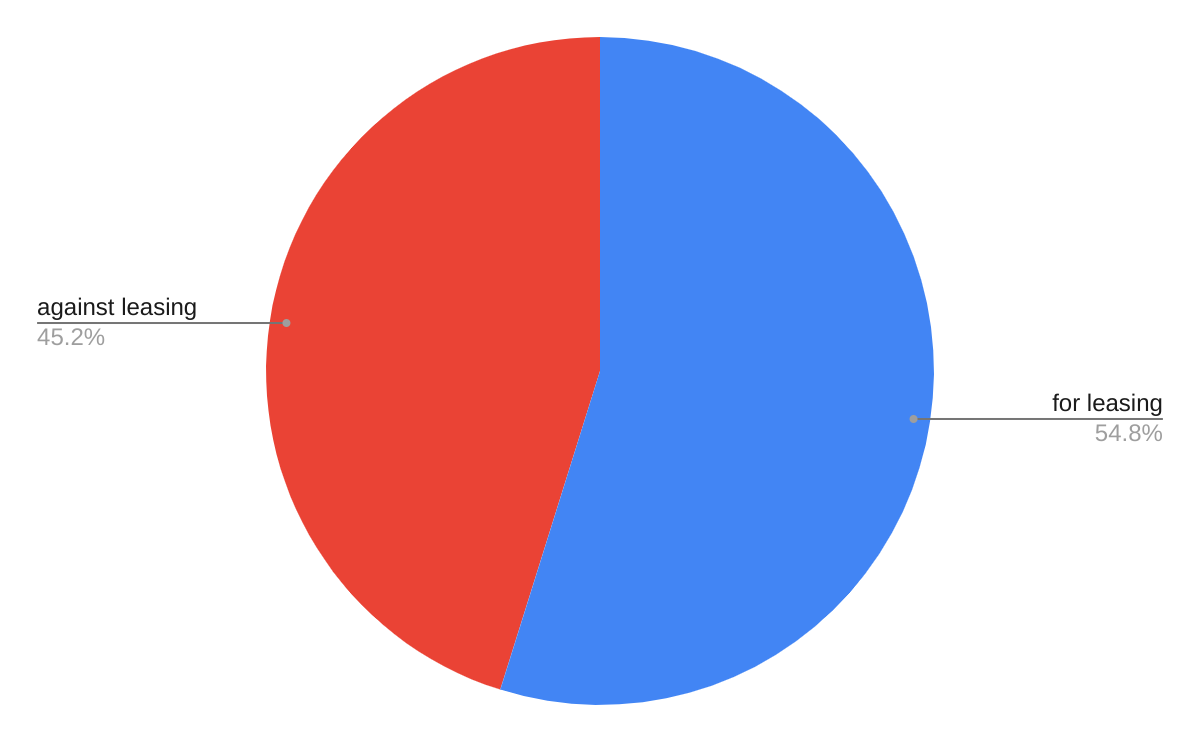
BOEM summarized (Table A-11 of the plan) the public comments, and I tabulated the 748,719 letters on the attached spreadsheet. The number of letters supporting oil and gas lease sales exceeded those opposed by 72,383 or 21.4%. The supporters campaign also had more breadth in that there were 49 separate campaigns vs. 45 for leasing opponents.

The NRDC demonstrated their organizational clout with the largest single campaign (107,355 letters). Denise Neal, a name that is unfamiliar to me, impressively organized the largest proponent campaign (61,122 letters).

Summary:

  • letters supporting offshore oil and gas leasing: 410,551
  • letters opposing offshore oil and gas leasing: 338,168
  • letter campaigns supporting leasing: 49
  • letter campaigns opposing leasing: 45
  • largest campaign: NRDC – 107,355 letters in opposition (32% of all such letters)
  • largest pro-leasing campaign: Denise Neal – 61,122 letters in support (15% of all letters in support)

Reasons for and against leasing per BOEM Table A-11:

Reasons for supporting lease salesReasons for opposing lease sales
reduce energy costs, farming costs, prices of gasoline and other goodsclimate
jobsenvironmental justice, local communities
energy independencefisheries
intl competitivenessmarine environment
national securitymarine mammals
GoM production is lower in carbon intensity, higher US environmental stds.fossil fuel dependency, unnecessary to meet energy needs, oppose new fossil fuel investments, leasing “would not reduce gas prices”
domestic oil and gas preferable during transitionoil spill risks
help improve supply chainair pollution
help address inflationstockpiling ocean space, energy price gouging

Interesting contradiction: Opponents of Sale 257 argued in Federal Court that BOEM failed to consider the positive GHG effect that higher prices (the logical result of lower production) would have as a result of reduced demand. The judge agreed with that argument and vacated the sale. Some of the same groups have now commented (per the BOEM summary) that additional leasing “would not reduce gas prices.”

Read Full Post »

The January 2022 post about a 5 year leasing plan with no lease sales would have been reality were it not for the congressional mandate in Section 50265(b)(2) of the IRA. That provision requires BOEM to offer at least 60 million OCS acres for oil and gas leasing within the 12 months prior to issuing an offshore wind lease. While I initially thought that requirement was petty, it is now apparent that without it we would have had a leasing plan with no lease sales.

The current leasing policy as articulated in both the draft and final proposed program is to phase out oil and gas production:

The long-term nature of OCS oil and gas development, such that production on a lease may not begin for a decade or more after lease issuance and can continue for decades, makes consideration of
net-zero pathways relevant to the Secretary’s determinations on how the National OCS Program best meets the Nation’s energy needs.

p. 6, Five Year Leasing Plan

Basing leasing decisions on highly uncertain “net-zero pathways” would seem to be a considerable stretch of the Secretary’s authority under the OCS Lands Act. A strategic shutdown of the offshore oil and gas program, which would dramatically increase energy supply and security risks going forward, should be authorized by Congress. Even the threat of such a shutdown could have major economic implications.

Read Full Post »

Not only have no official findings been released, but there has been little new speculation since our June 2023 update. Given the political stakes, it is increasingly unlikely that the responsible parties will be identified.

Read Full Post »

As has been previously discussed on this blog, the renewable energy source that shows the greatest promise for generating the power needed to support economic growth is ultradeep geothermal.

This JPT article nicely describes the opportunities and challenges

Microwave drilling test. Source JPT/Quaise Energy

Good comparison of drilling into hard basement rock with conventional and millimeter wave (microwave) technologies:

The technical readiness level (TRL) for microwave drilling reflects that it has yet to be field tested. The drilling rate includes an estimated amount of flat time. The levelized cost of energy (LCOE) is an all-in estimate of the cost per megawatt-hour (MWh). Source: JPT/Quaise Energy.

Quaise Energy’s first full-scale testing of a hybrid drilling rig combining conventional rotary drilling and millimeter wave drilling capabilities is scheduled for 2024.

Read Full Post »

A BOE post from last December commented on the seemingly irrational bidding for Atlantic and Pacific wind leases. More recent posts have reported on the woes of Atlantic leaseholders.

Two Atlantic lessees, Commonwealth Wind and SouthCoast Wind, which paid $135 million for each of their North Atlantic leases, have now agreed to pay $48 million and $60 million respectively to cancel their power purchase agreements with electric utilities. Perhaps the effective date of these leases (see below) reflects on the wisdom of their purchase.🍋

Both Commonwealth Wind and SouthCoast Wind are hoping to rebid their projects in a Massachusetts offshore wind procurement scheduled for next year. 

Commonwealth Magazine

Some northeast states and their public utilities may be in a bit of a bind. Either they accept higher electric rates and the likely public backlash, or they deviate from their staunch anti-gas, anti-nuclear orthodoxy. Similarly, oil companies that have invested heavily in offshore wind may find that they are not just less profitable, but (even) less popular.

Read Full Post »

New York’s looming, self-imposed electric power crisis:

Something here does not remotely add up.  If New York state succeeds by 2030 in closing its natural gas plants — the plants that account for 60% of the State’s generation capacity — that would bring our total installed capacity down from 37.5 GW to as little as 15 GW. But we need almost 60 GW to meet projected demand.  And that’s 60 GW that can be called on any time as needed to meet peak usage.  The 9 GW of projected offshore wind turbines wouldn’t make much of a dent even if they operated all the time and could be dispatched to meet peak demand, which they can’t.  Instead, they will operate only about a third of the time, and at their own whim.  At best they will provide about 3 GW on average, when what we need for this full electrification project is more like 45 GW of dispatchable power to add to our existing hydro and nuclear.   

Manhattan Contrarian

Power generation realities:

  • Assuming sufficient capacity, gas power plants respond to variable demand.
  • Wind and solar power are intermittent, such that demand must respond to variable supply (not a prescription for economic growth).
  • Power grids can function effectively with only natural gas, but not with only wind/solar.
  • Integrated wind, solar, and gas systems can reduce, but not eliminate, demand for gas-generated power.
Siemens gas turbine for the offshore industry

Offshore platforms: In some regions, there is a push to power platforms with renewable energy transported by electric cable. Currently, most platforms are efficiently powered by gas turbines which satisfy energy needs even when demand spikes during well operations like tripping out of the hole. The extent to which renewables can reliably support platform operations during these and other operations, when power interruptions are unacceptable from a safety standpoint, is a risk that must be assessed prior to committing to alternative energy sources.

The environmental benefits of powering platforms with renewable energy also have not been clearly documented. In most cases, offshore platforms produce sufficient gas to support their power demands. Should platforms be powered by imported electricity, gas that is not used for platform operations would presumably be marketed for consumption elsewhere or reinjected.

If the gas is marketed and consumed elsewhere, there is essentially no net (global) CO2 emissions reduction benefit. Gas that is reinjected is wasted unless there is an enhanced oil recovery benefit. So, the net environmental benefit from importing electric power seems questionable, and the operational risks could be significant.

Read Full Post »

« Newer Posts - Older Posts »