Feeds:
Posts
Comments

Archive for the ‘California’ Category

Per the Daily Compounder on X:

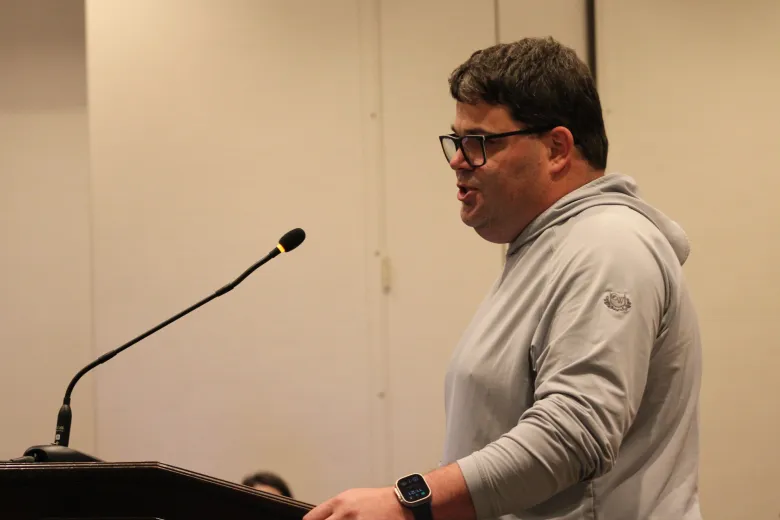
The Board voted 2-2 to uphold the approval of the transfer of permits from Exxon to Sable. The tie vote meant the appeal of the previous approval failed.

Interestingly, one of the Supervisors reportedly slammed the California Coastal Commission for being politically motivated and abusing the law.

Read Full Post »

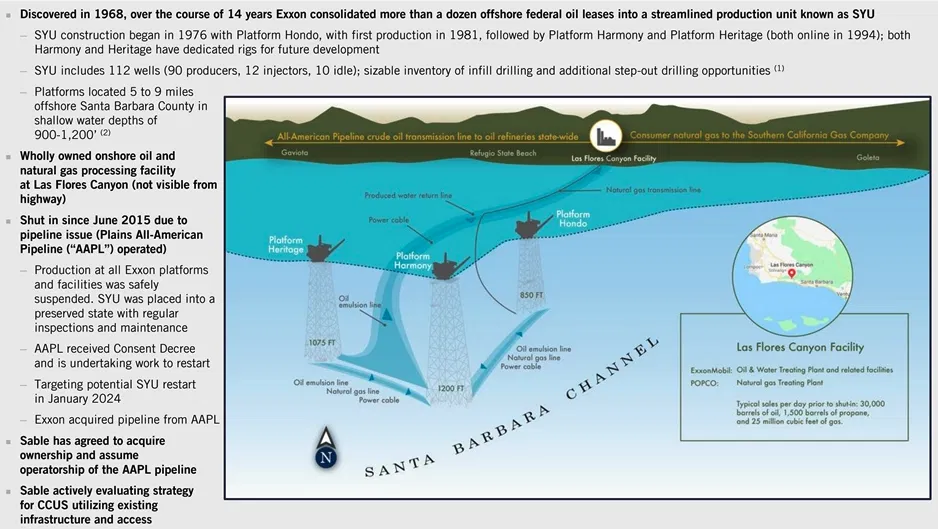
The Santa Barbara Independent has published a long, balanced article on Sable’s Santa Ynez Unit production restart which has reached a critical juncture. Today (2/25/2025), the Santa Barbara County Board of Supervisors will be asked to approve the transfer of the project from Exxon to Sable.

This will be the Board’s first and last chance to have any influence over restarting the pipeline, and thus allowing the three offshore platforms to begin drilling again.” (Expect initial production to be from existing wells supplemented over time with new drilling, well workovers, and recompletions.)

The Board has limited authority in this matter: “The county’s legal advisors and energy planners have told the supervisors that there are no grounds to say no. It is not up to them to determine whether Sable’s liability insurance is enough to cover the costs of a reasonable worst-case oil-spill scenario; it’s only up to them to ascertain whether Sable has filed a certificate of insurance with the proper state agency.

All the essential questions regarding the pipeline’s safety measures are in the hands of California state agencies, headquartered in cities far away, with names so confusing that even people working there can’t tell you what the acronyms mean.” (see Regulatory fragmentation)

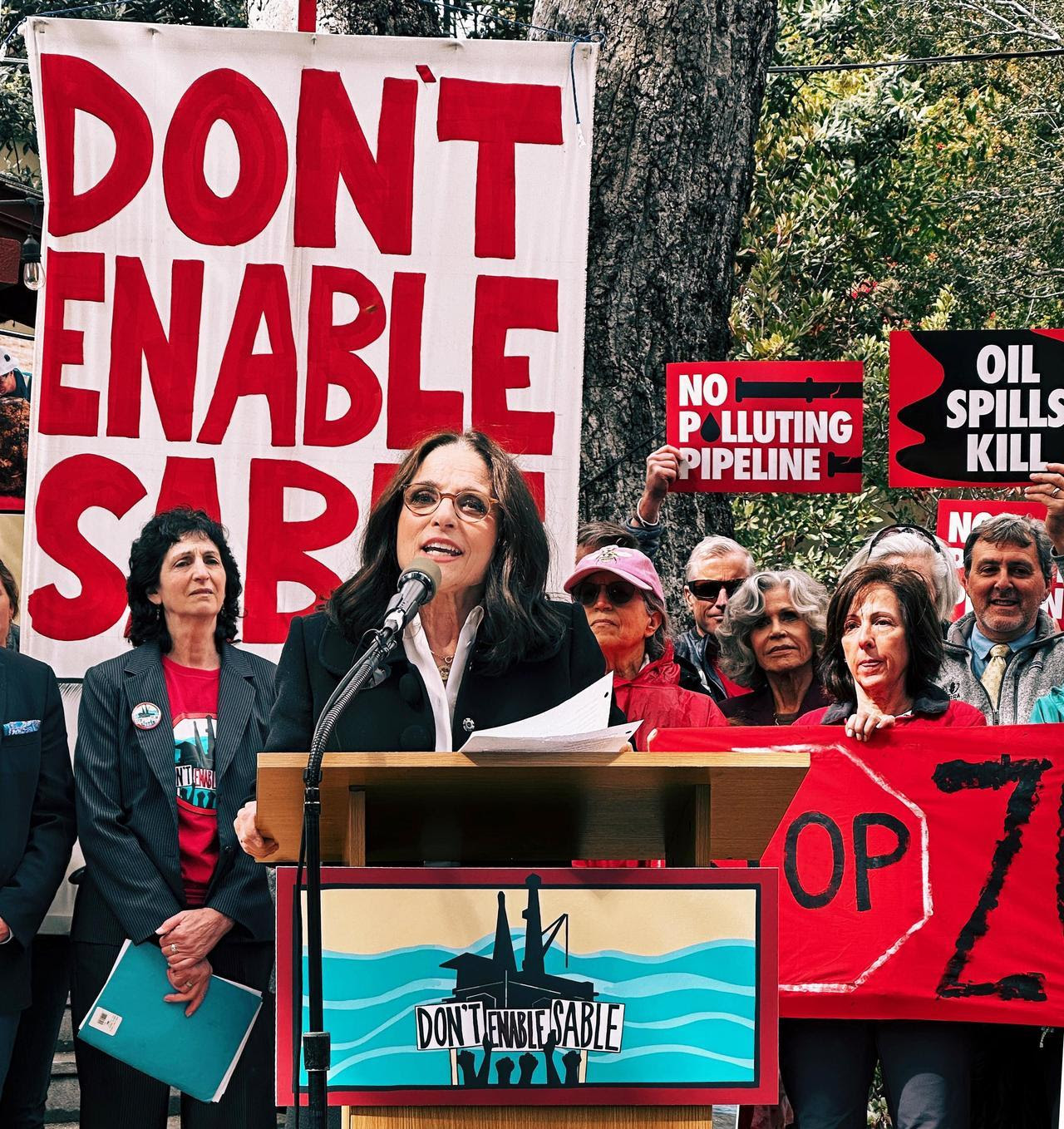
Interesting tidbits: Danielson (the Sable representative) let me know that he would not be answering these questions. He was cordial, but he was not happy about a recent Independent story featuring attorney Linda Krop of the Environmental Defense Center perhaps Sable’s most implacable and formidable opponent, expounding in an unchallenged format on what a threat the pipeline still posed. Interviewing Krop was Victoria Riskin, herself a committed anti-oil advocate. Actress and Montecito resident Julia Louis-Dreyfus — of Seinfeld and Veep fame — apparently liked the article enough to send it to her social media followers.

Below are the pros and cons of the SYU restart as cited by the Independent. (Clarification: The 10 billion bbl oil reserves number (“pros” slide) is at least an order of magnitude too high and is perhaps a typographical error. BSEE’s June 2023 data sheet (excerpt pasted at the end of this post) indicates remaining oil reserves of 190 million bbls for the 3 SYU fields. Adding the gas reserves ups the total to 243 million bbls of oil equivalent (boe). Additional reserves could likely be confirmed with new extended reach wells, but anything more than 1 billion bbls would be highly unlikely. Sable’s investor presentation (p.5) indicates 646 million bbl of Remaining Total Net Estimated Contingent Resources.)

Read Full Post »

John Smith forwarded Sable’s court filing (attached) and highlighted important text.

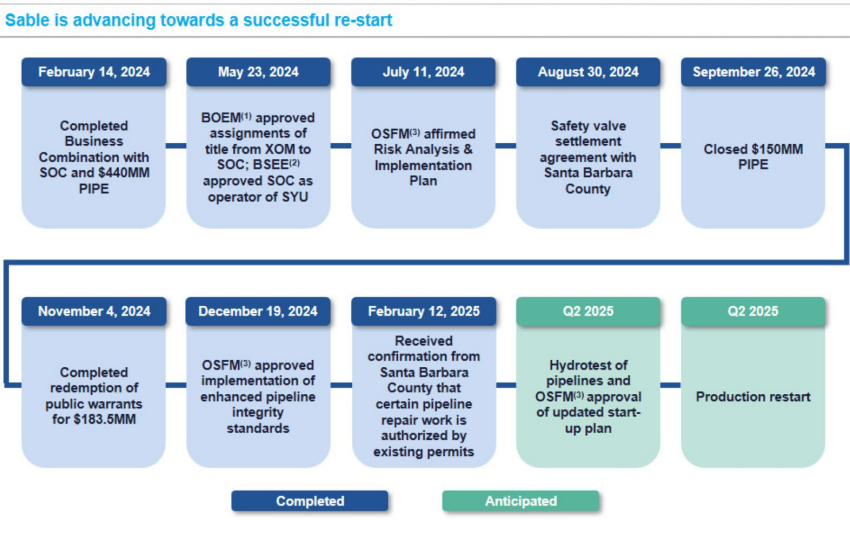
The Coastal Commission has asserted that anomaly repair work on Sable’s onshore pipeline, which was required by the California Fire Marshall and approved by Santa Barbara County, constitutes a violation of the Coastal Act.

Santa Barbara County had confirmed in writing that Sable’s repair work is authorized by the pipeline’s existing coastal development permits and, consistent with the County’s past practices, no new or separate Coastal Act authorization is required.

John and I believe Sable has a strong case, but you can be the judge. For the Commission and County to have such divergent opinions is rather surprising.

Among other assertions, Sable argues (par. 115) that the Coastal Commission violated the takings clause of the Fifth Amendment to the U.S. Constitution, as incorporated by the Fourteenth Amendment, which prohibits the temporary or permanent taking of private property for public use without prior, just compensation. This could lead to significant liability costs for the State.

Much more on Sable’s Santa Ynez Unit challenges.

Read Full Post »

the early years

Remember that Chevron was once Standard Oil of California. The attached WSJ article discusses the ugly divorce after all these years.

Chevron tired of California’s attempts to dictate corporate strategy. Per Chevron CEO Mike Wirth:

“Putting bureaucrats in charge of centrally planning key segments of the economy hasn’t worked in other socialist states,” Wirth said in a Nov. 1 call with investors. “I doubt it will be any different in California.”

California wanted Chevron to commit to the State’s energy agenda:

Chevron has a future in clean energy in California. They can join us in our steady, long-term transition to a state powered by clean energy,” said Daniel Villaseñor, a spokesman for the governor’s office.

California wanted the interests of shareholders to be subordinate to the State’s carbon goals:

Newsom said Wirth had invested far more in shareholder payouts than in developing low-carbon energy.

Other State actions that contributed to the divorce:

  • accused Chevron and other companies of price gouging
  • accused Chevron, as a fossil fuel producer, of indirectly causing tragic fires
  • banning the sale of gasoline-powered cars by 2035
  • rules that increased gasoline prices
  • lawsuit alleging climate change deception

Not mentioned in the article are the costly challenges Chevron and others are experiencing in decommissioning offshore platforms.

Read Full Post »

Sable’s stock soared on Thursday following a favorable Santa Barbara County decision (letter pasted below).

Sable’s path is still rocky. Decommissioning specialist John Smith notes that “Sable faces a number of permitting obstacles not to mention litigation by the Environmental Defense Center and others who are committed to trying to stop the SYU restart.  The next hurdle will be a Feb 25 Santa Barbara County hearing on an appeal of the ownership transfer from XOM to Sable.  And we should not overlook the OCS related litigation on ownership transfer, SYU Development and Production Plan updates, and Court ordered prohibition on fracking absent a Fracking EIS and consultation.”

The County’s letter is pasted below. Note the diverse responsibilities of this SBC division: Energy, Minerals, Compliance & Cannabis 😀

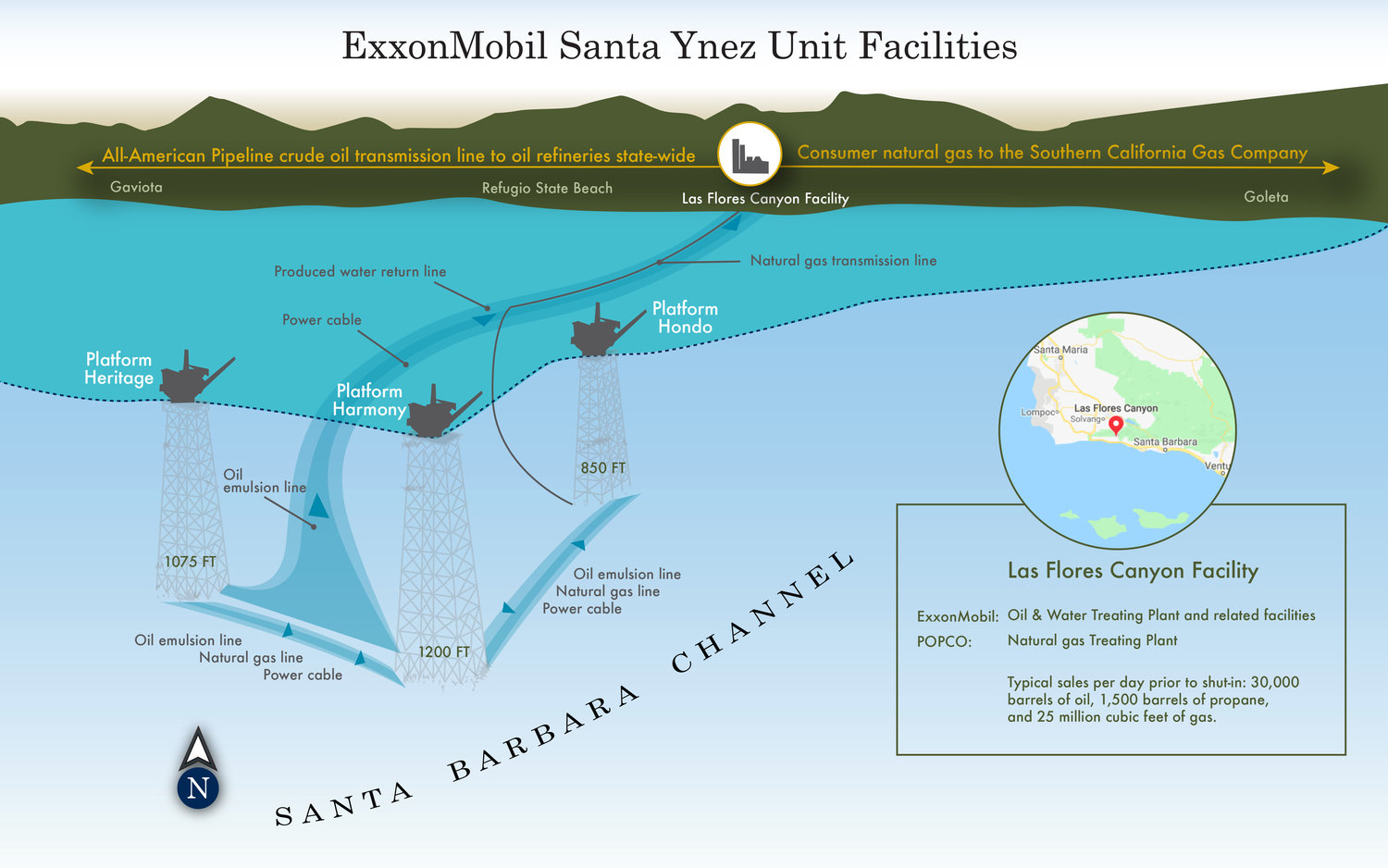
Background on the SYU

Santa Ynez Unit posts

Read Full Post »

PNAS: “among the most productive marine fish habitats globally”

Secretarial Order No. 3418 identified energy policies and regulations requiring immediate Interior Dept. review. A policy decision that should be added to the list is BSEE’s Record of Decision (ROD) for the Programmatic Environmental Impact Statement on Pacific OCS Decommissioning.

Inexplicably, BSEE’s ROD designates the most environmentally harmful, unsafe, and costly alternative as the “preferred alternative.” The decision is contrary to the opinions expressed by the leading experts on the ecology of California offshore platforms, most notably Dr. Milton Love of the University of California at Santa Barbara.

Why did BSEE select alternative 1 (complete removal) when their $1.6 million EIS acknowledges that alternative 2 (partial removal) is environmentally preferable? Was their decision influenced by activists who support the alternative that is most punitive to the industry they despise?

The Interior Dept. needs to immediately review this decision so that stalled decommissioning projects can move forward in a manner that is most efficient and best protects “the most productive marine habitats per unit area in the world.”

beneath Platform Gilda, Santa Barbara Channel

On December 7, 2023, the Bureau of Safety and Environmental Enforcement (BSEE) issued a Record of Decision (ROD) recommending the full removal of California’s 23 offshore oil platforms in federal waters, following a Programmatic Environmental Impact Statement (PEIS) conducted to assess decommissioning options for platforms, pipelines, and other related infrastructure. However, upon close review, the PEIS and ROD appear to have reached misguided and detrimental conclusions due to critical oversights in their analyses.” Asher Radziner, Montecito Journal

More posts on California decommissioning

Read Full Post »

My friends and former colleagues in Southern California do not live in areas that were devastated by the recent fires.

However, Nabil Masri, one of our outstanding petroleum engineers, sent this picture taken from his driveway in Camarillo during the “Mountain Fire” in November. His home was in an evacuation warning area, and the family was packed and ready to go. Fortunately, things improved and they did not have to evacuate.

Read Full Post »

Read Full Post »

As expected, the White House announced the largest ever permanent ban on offshore oil and gas leasing in the US, and to the best of my knowledge, anywhere in the world.

The sheer magnitude of the ban makes other such withdrawals appear modest by comparison. It’s amazing how bold Presidents (and their handlers) become when they are about to leave office.

The permanent ban includes:

  • The entire Atlantic Outer Continental Shelf (OCS): While there are no current oil and gas leases in the US Atlantic, the region is highly prospective and could contain more than 20 billion barrels of oil equivalent (BOE).
  • The Eastern Gulf of Mexico: This is the OCS area that many petroleum geologists find most attractive. The best prospects are >100 miles from shore which minimizes coastal risks, and the high natural gas potential aligns with Florida legislation supporting the use of gas for power generation.
  • The entire Pacific OCS: While the resources are substantial, their loss has been a foregone conclusion for 25 years. When you can’t even decommission old platforms or restore production on important existing facilities (i.e. the Santa Ynez Unit), how can you possibly expect to issue new leases?
  • The remainder of the OCS offshore western Alaska. The wishes of the majority of Alaskans, who support offshore exploration and development, have been largely ignored for decades.

President-elect Trump has vowed to reverse President Biden’s leasing ban, but that may not be so easy. This is not a matter of simply reversing an executive order. Sec. 12(a) of OCSLA grants the authority to withdraw lands to the President and does not provide for reversal by future Presidents. The attached NYU Law brief concludes that “a subsequent president lacks authority to restore previously withdrawn lands to the federal oil and gas leasing inventory.”

The new Administration will no doubt have a different view than that expressed in the NYU Law brief, but any reversal decision will likely be challenged in court.

Those who wrote and approved Sec. 12(a) should have had more foresight. However, 72 years ago the authors presumably thought Presidents would only use the authority to remove small, especially sensitive areas from leasing consideration, and never thought that a President would remove both of our oceans and much of the Gulf of Mexico!

Congress could of course reverse the Biden bans, but given the complexity of offshore energy issues, such legislation may be difficult to pass.

Read Full Post »

Attached is an excellent Scientific American article featuring BOE contributor and decommissioning specialist John Smith, former colleague and marine biologist Dr. Ann Bull, and Dr. Milton Love, the leading authority on California’s offshore platform ecosystems.

I had the pleasure of taking a highly informative boat tour around Platform Holly with Dr. Love and a group of international visitors. Holly, which is pictured at sunset in the BOE header, is among the platforms awaiting decommissioning.

Dr. Love on the total removal of California offshore platforms:

“As a biologist, I just give people facts,” he says. “But I have my own view as a citizen, which is: I just think it’s criminal to kill huge numbers of animals because they settled on a piece of steel instead of a rock.”

Read Full Post »

« Newer Posts - Older Posts »