Feeds:
Posts
Comments

Archive for the ‘California’ Category

Senator Schiff and 22 California representatives sent the attached letter to Gov. Newsome urging him to:

  • Require the Fire Marshal to reconsider the state waiver for the pipeline, conduct environmental review, and hold a public hearing;
  • Require a coastal development permit for restart of the pipeline;
  • Require State Parks to conduct environmental review and hold a public hearing prior to deciding whether to approve a new easement for the pipeline through Gaviota State Park.

The good news for Sable: Despite the bluster in the letter’s opening paragraphs, none of the requests to Gov. Newsome are knockout punches. The first two relate to matters that have already been addressed and Sable is in a favorable position. The third, the Gaviota State Park easement renewal, is currently under review and should not be a decisive blow.

The bad news for Sable: Punches will continue to be thrown even after production resumes (should that ever actually happen.)

Much more on Sable

Read Full Post »

The California Coastal Commission is simply out of control and has veered far from its purpose of protecting the coast,” said Rep. Kiley. “From blocking SpaceX rocket launches to obstructing fire prevention projects, the Commission has repeatedly threatened the safety of Californians and weakened our national defense, while needlessly undercutting innovation and economic progress. The need to rein in the Commission has become urgent as we face the challenge of rebuilding Los Angeles following the fires.

The bill (attached), introduced by Kevin Kiley (CA), would amend the Coastal Zone Management Act (CZMA) to expedite important coastal activities, including national security initiatives, critical infrastructure development, and disaster mitigation and recovery efforts. Key provision:

‘‘(2) LIMITATION ON OBJECTION.—An objection or other challenge by a coastal state to an activity subject to a conclusive presumption of concurrence under paragraph (1) may not delay or otherwise prevent the activity from proceeding.”

While perhaps unlikely to be enacted, the bill addresses regulatory authority that many perceive to be unchecked and abusive. Congressional attention is clearly warranted.

Read Full Post »

The Santa Barbara County Board of Supervisors tie vote on the transfer of permits from Exxon to Sable has both sides declaring victory! (And I thought I was the only one who was confused!)

Noozhawk photo

Per Noozhawk:

“During Wednesday’s meeting of the county Planning Commission, Lisa Plowman, director of Planning & Development, expressed uncertainty about the future of the permits and said the split vote meant that the board took no action.

“We are in the process of (…) determining what that actually means in the long run for Sable and the opponents,” Plowman said.”

“The county has not in recent memory had a tie vote under this section. The county is looking into what happens next.”

Sables’ take: Sable is pleased the appeals failed and the Planning Commission’s approval of the Santa Ynez Unit permit transfer to Sable stands. We look forward to continuing to work with the county to finalize the permit transfer and to safely restarting production as soon as possible.”

Environmental Defense Center’s take: “We applaud the Board of Supervisors’ decision to NOT transfer permits to Sable to operate a defective pipeline and dangerous processing facilities on our shores.”

Just when you thought this couldn’t get more complicated!😖😣

Read Full Post »

SANTA BARBARA, Calif. — A controversial oil project on California’s Central Coast remains unresolved after the Santa Barbara County Board of Supervisors deadlocked 2-2 on a vote regarding a permit transfer for a pipeline linked to the 2015 Refugio oil spill. The stalemate means Sable Offshore Corp.’s application remains pending without approval or denial, leaving the next steps up to the company.

“They still have a pending application with no action taken on it,” said Kelsey Gerckens Buttitta, public information officer with Santa Barbara County. “It hasn’t been approved or denied. It’s now up to Sable to decide what to do next.”

Read Full Post »

Per the Daily Compounder on X:

The Board voted 2-2 to uphold the approval of the transfer of permits from Exxon to Sable. The tie vote meant the appeal of the previous approval failed.

Interestingly, one of the Supervisors reportedly slammed the California Coastal Commission for being politically motivated and abusing the law.

Read Full Post »

The Santa Barbara Independent has published a long, balanced article on Sable’s Santa Ynez Unit production restart which has reached a critical juncture. Today (2/25/2025), the Santa Barbara County Board of Supervisors will be asked to approve the transfer of the project from Exxon to Sable.

This will be the Board’s first and last chance to have any influence over restarting the pipeline, and thus allowing the three offshore platforms to begin drilling again.” (Expect initial production to be from existing wells supplemented over time with new drilling, well workovers, and recompletions.)

The Board has limited authority in this matter: “The county’s legal advisors and energy planners have told the supervisors that there are no grounds to say no. It is not up to them to determine whether Sable’s liability insurance is enough to cover the costs of a reasonable worst-case oil-spill scenario; it’s only up to them to ascertain whether Sable has filed a certificate of insurance with the proper state agency.

All the essential questions regarding the pipeline’s safety measures are in the hands of California state agencies, headquartered in cities far away, with names so confusing that even people working there can’t tell you what the acronyms mean.” (see Regulatory fragmentation)

Interesting tidbits: Danielson (the Sable representative) let me know that he would not be answering these questions. He was cordial, but he was not happy about a recent Independent story featuring attorney Linda Krop of the Environmental Defense Center perhaps Sable’s most implacable and formidable opponent, expounding in an unchallenged format on what a threat the pipeline still posed. Interviewing Krop was Victoria Riskin, herself a committed anti-oil advocate. Actress and Montecito resident Julia Louis-Dreyfus — of Seinfeld and Veep fame — apparently liked the article enough to send it to her social media followers.

Below are the pros and cons of the SYU restart as cited by the Independent. (Clarification: The 10 billion bbl oil reserves number (“pros” slide) is at least an order of magnitude too high and is perhaps a typographical error. BSEE’s June 2023 data sheet (excerpt pasted at the end of this post) indicates remaining oil reserves of 190 million bbls for the 3 SYU fields. Adding the gas reserves ups the total to 243 million bbls of oil equivalent (boe). Additional reserves could likely be confirmed with new extended reach wells, but anything more than 1 billion bbls would be highly unlikely. Sable’s investor presentation (p.5) indicates 646 million bbl of Remaining Total Net Estimated Contingent Resources.)

Read Full Post »

John Smith forwarded Sable’s court filing (attached) and highlighted important text.

The Coastal Commission has asserted that anomaly repair work on Sable’s onshore pipeline, which was required by the California Fire Marshall and approved by Santa Barbara County, constitutes a violation of the Coastal Act.

Santa Barbara County had confirmed in writing that Sable’s repair work is authorized by the pipeline’s existing coastal development permits and, consistent with the County’s past practices, no new or separate Coastal Act authorization is required.

John and I believe Sable has a strong case, but you can be the judge. For the Commission and County to have such divergent opinions is rather surprising.

Among other assertions, Sable argues (par. 115) that the Coastal Commission violated the takings clause of the Fifth Amendment to the U.S. Constitution, as incorporated by the Fourteenth Amendment, which prohibits the temporary or permanent taking of private property for public use without prior, just compensation. This could lead to significant liability costs for the State.

Much more on Sable’s Santa Ynez Unit challenges.

Read Full Post »

the early years

Remember that Chevron was once Standard Oil of California. The attached WSJ article discusses the ugly divorce after all these years.

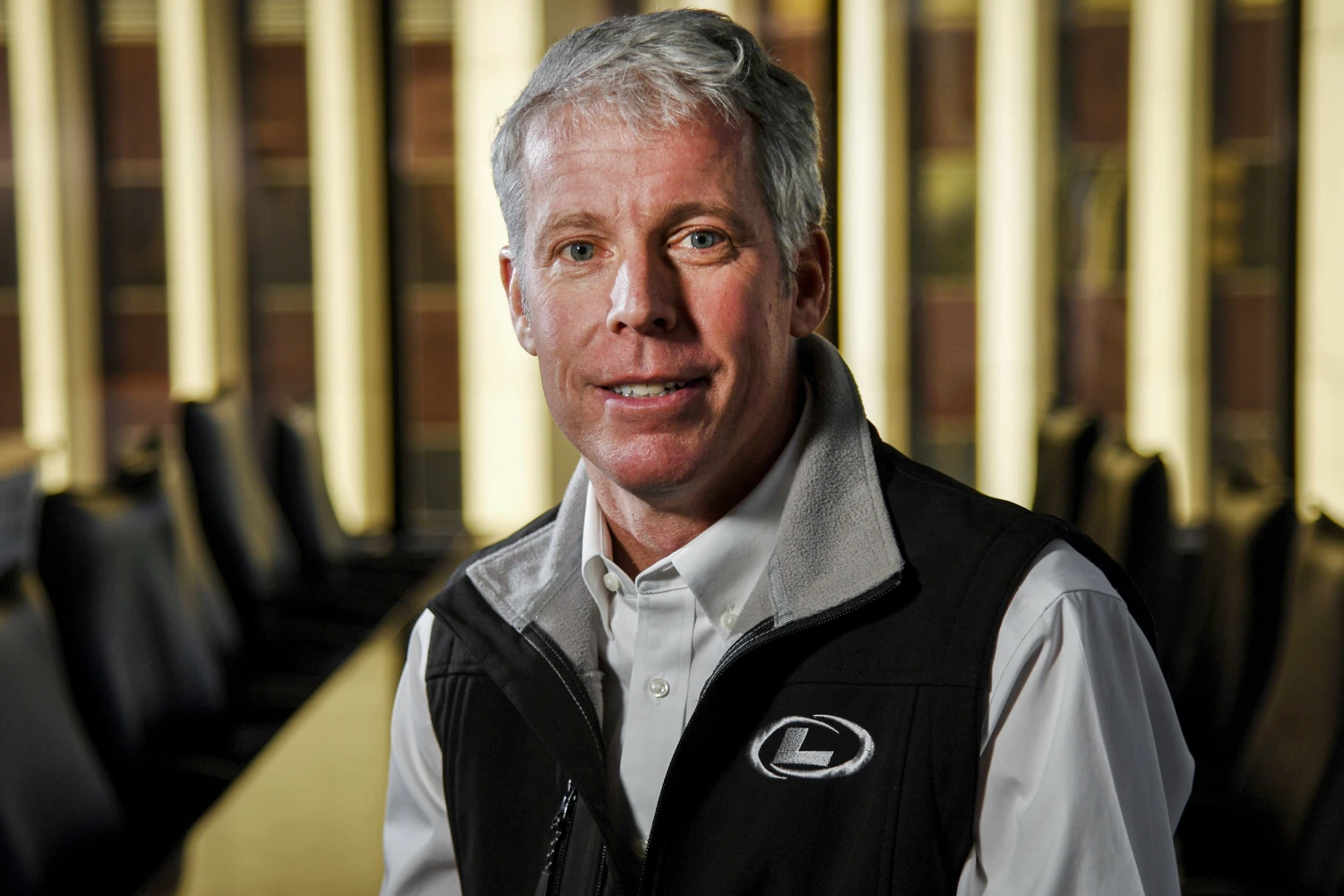
Chevron tired of California’s attempts to dictate corporate strategy. Per Chevron CEO Mike Wirth:

“Putting bureaucrats in charge of centrally planning key segments of the economy hasn’t worked in other socialist states,” Wirth said in a Nov. 1 call with investors. “I doubt it will be any different in California.”

California wanted Chevron to commit to the State’s energy agenda:

Chevron has a future in clean energy in California. They can join us in our steady, long-term transition to a state powered by clean energy,” said Daniel Villaseñor, a spokesman for the governor’s office.

California wanted the interests of shareholders to be subordinate to the State’s carbon goals:

Newsom said Wirth had invested far more in shareholder payouts than in developing low-carbon energy.

Other State actions that contributed to the divorce:

  • accused Chevron and other companies of price gouging
  • accused Chevron, as a fossil fuel producer, of indirectly causing tragic fires
  • banning the sale of gasoline-powered cars by 2035
  • rules that increased gasoline prices
  • lawsuit alleging climate change deception

Not mentioned in the article are the costly challenges Chevron and others are experiencing in decommissioning offshore platforms.

Read Full Post »

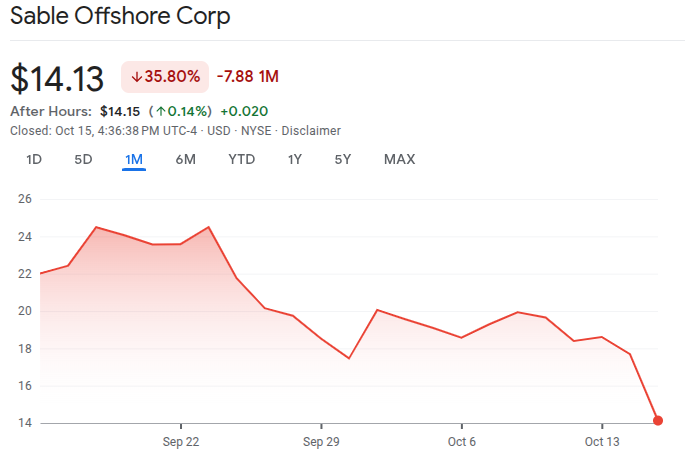
Sable’s stock soared on Thursday following a favorable Santa Barbara County decision (letter pasted below).

Sable’s path is still rocky. Decommissioning specialist John Smith notes that “Sable faces a number of permitting obstacles not to mention litigation by the Environmental Defense Center and others who are committed to trying to stop the SYU restart.  The next hurdle will be a Feb 25 Santa Barbara County hearing on an appeal of the ownership transfer from XOM to Sable.  And we should not overlook the OCS related litigation on ownership transfer, SYU Development and Production Plan updates, and Court ordered prohibition on fracking absent a Fracking EIS and consultation.”

The County’s letter is pasted below. Note the diverse responsibilities of this SBC division: Energy, Minerals, Compliance & Cannabis 😀

Background on the SYU

Santa Ynez Unit posts

Read Full Post »

PNAS: “among the most productive marine fish habitats globally”

Secretarial Order No. 3418 identified energy policies and regulations requiring immediate Interior Dept. review. A policy decision that should be added to the list is BSEE’s Record of Decision (ROD) for the Programmatic Environmental Impact Statement on Pacific OCS Decommissioning.

Inexplicably, BSEE’s ROD designates the most environmentally harmful, unsafe, and costly alternative as the “preferred alternative.” The decision is contrary to the opinions expressed by the leading experts on the ecology of California offshore platforms, most notably Dr. Milton Love of the University of California at Santa Barbara.

Why did BSEE select alternative 1 (complete removal) when their $1.6 million EIS acknowledges that alternative 2 (partial removal) is environmentally preferable? Was their decision influenced by activists who support the alternative that is most punitive to the industry they despise?

The Interior Dept. needs to immediately review this decision so that stalled decommissioning projects can move forward in a manner that is most efficient and best protects “the most productive marine habitats per unit area in the world.”

beneath Platform Gilda, Santa Barbara Channel

On December 7, 2023, the Bureau of Safety and Environmental Enforcement (BSEE) issued a Record of Decision (ROD) recommending the full removal of California’s 23 offshore oil platforms in federal waters, following a Programmatic Environmental Impact Statement (PEIS) conducted to assess decommissioning options for platforms, pipelines, and other related infrastructure. However, upon close review, the PEIS and ROD appear to have reached misguided and detrimental conclusions due to critical oversights in their analyses.” Asher Radziner, Montecito Journal

More posts on California decommissioning

Read Full Post »

« Newer Posts - Older Posts »