In a peer reviewed paper, AI (Grok-3) debunks the man-made climate crisis narrative.
Doug Burgum: Hydraulic fracturing technology is “one of the reasons why the U.S. shale revolution is a miracle. But that miracle keeps on getting better and better. It’s the thing that has literally turned around the economy.” Posted here 15 years ago: Natural Gas Bonanza – Why Aren’t We Celebrating?
“The State Fire Marshal stated on February 25 — during a packed-house meeting at La Cumbre Junior High School — that he would not issue Sable authorization to restart production at the Santa Ynez Unit until all outstanding permit issues between Sable and the eight state agencies with oversight authority are resolved.“
Although Sable has a good defense against the Coastal Commission’s accusations, that statement by the Fire Marshal is ominous.
More bad news for Sable: The Center for Biological Diversity suit challenging the Federal government’s extension of the 16 Santa Ynez Unit leases is not going well. The government requested a voluntary remand of BSEE’s 2023 approval because “BSEE plans to reconsider its decision in light of Plaintiffs’ claims and conduct additional analysis, as warranted, under OCSLA and NEPA.”
In the attached decision, shared by John Smith, the judge denied the Federal government’s request. This does not bode well for the Federal government’s case going forward.
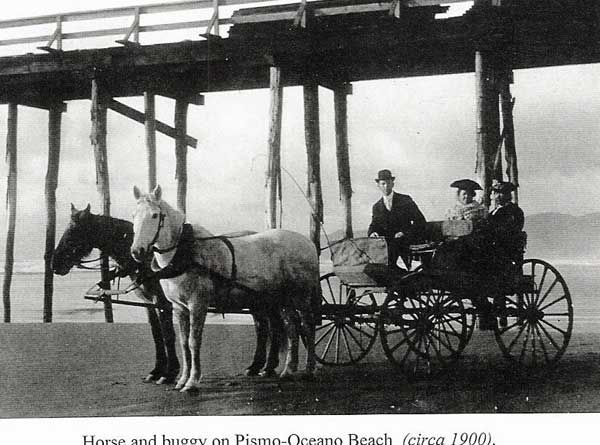
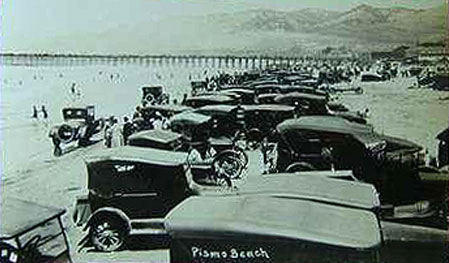
The organization Friends of Oceano Dunes is determined to preserve the long history of off-road vehicle use on Pismo-Oceano beach. See the video below and the historic photos from Bob2000.com.
The Coastal Commission, which dislikes off-road vehicles as much as they dislike offshore oil and gas operations (well maybe not quite that much! 😉) lost a court case with some similarities to the suit filed by Sable Offshore.
Noozhawk: In an opinion filed Monday, the Second Circuit Court of Appeals found that the commission’s attempt to ban off-road vehicles at the Dunes contradicts the language of the Local Coastal Plan put in place by San Luis Obispo County.
The Court ruled that the decision to open or close the Dunes to vehicles fell under the jurisdiction of the county, not the Coastal Commission.
Sable’s dispute with the Commission is similar in that Sable contends that their pipeline repair and maintenance activities are in compliance with Santa Barbara County’s Coastal Zoning Ordinance, Local Coastal Program (LCP), and the Coastal Act. Will Sable also be victorious in Court?
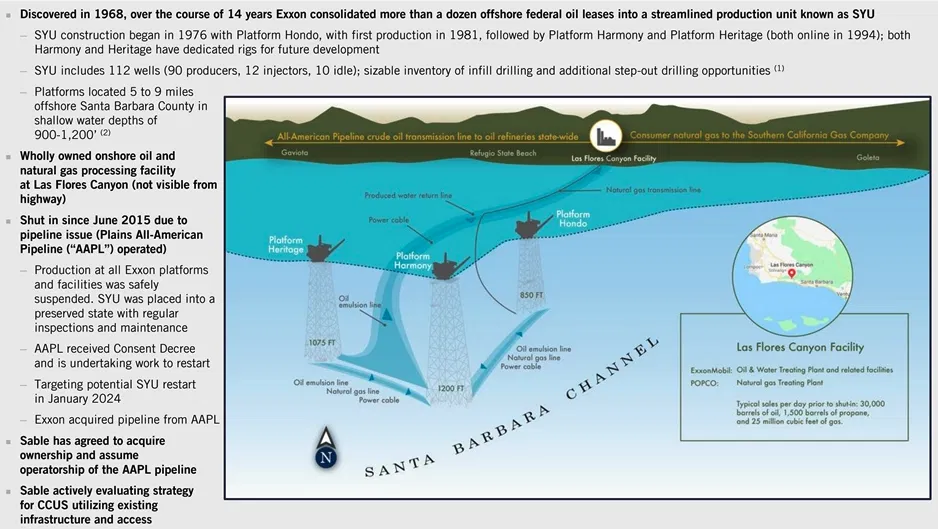
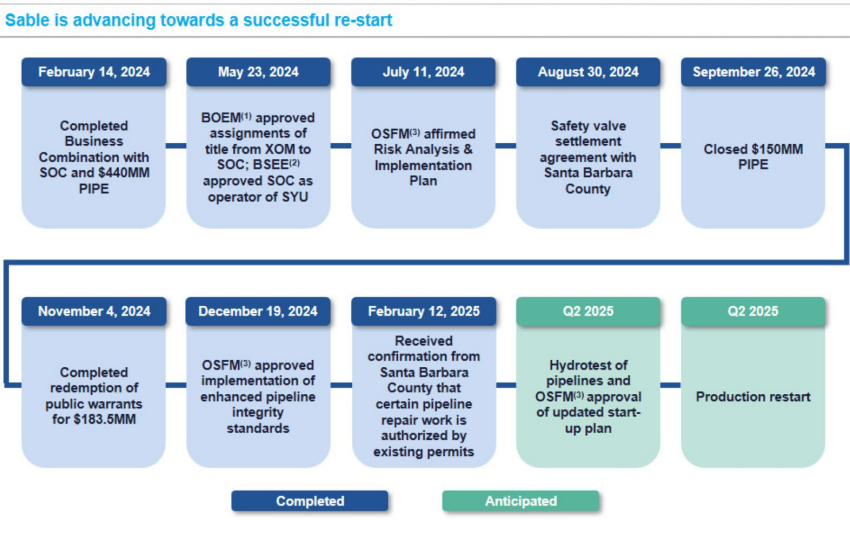
Attached is a recent Sable Offshore presentation for investors. Notably, Sable is now projecting to resume Santa Ynez Unit production in Q2 2025 (see slide below). John Smith thinks this is unrealistic, and I have to agree.
It’s tough for an offshore producer to succeed in California, but Sable is making a strong effort. Exxon must agree, because they have extended Sable’s first production deadline to 3/1/2026, which reflects a more plausible Q1 2026 restart. Additional extensions seem likely if necessary given that Exxon’s other options aren’t very attractive.
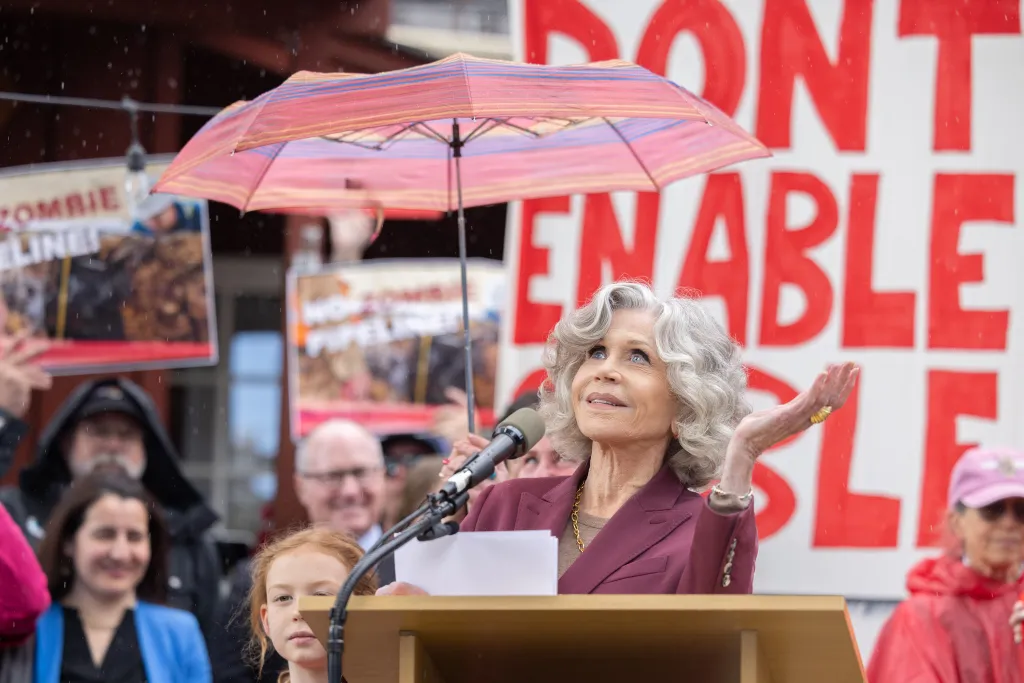
Santa Barbara resident Julia-Louis Dreyfus fires up the crowd. Photo Credit: Ingrid Bostrom, Independent
The Santa Barbara Independent and Noozhawk have closely followed the Sable saga and provided good coverage of the “Information Meeting.” BOE contributor John Smith followed the meeting online and shares his impressions.
Independent: “What was advertised as an informational meeting with eight state agencies that oversee Sable’s operations quickly became emotionally charged when the Environmental Defense Center’s Linda Krop and resident actor Julia Louis-Dreyfus were surprisingly called onto the stage to voice their opposition to the oil project.“
John Smith reports that the meeting got off to a good start before deteriorating:
Smith: “The CCC (Coastal Commission) presentation was interesting because it highlights their position and disagreement with SBC (Santa Barbara County) who determined permits were not required by Sable for maintenance and repair work. I think the agencies did a good job in sharing information on the status of permits, which if people were objective, may have alleviated many of their major concerns. Unfortunately, it went downhill at the end when EDC and Hollywood types were given the floor.”
Unsurprisingly, a State Senator facilitated the ambush:
Independent: “When Senator Limón’s staff called to the stage the Environmental Defense Center’s chief counsel, Linda Krop — who hosted a star-studded press conference beforehand with state legislators, actors Julia Louis-Dreyfus and Jane Fonda, and Ventura-based Patagonia CEO Ryan Gellert, among others, outside the EDC’s headquarters — the town hall shifted gears from an info-session into a quasi-rally. Krop’s emotion-inciting words, followed by an angry, passionate speech from Louis-Dreyfus, put the room into a cacophony of cheers and jeers.“
Sable supporters (workers, not movie stars) were also in the house:
Independent: “Sable Offshore management, employees, contractors, labor, and supporters showed up today in good faith to participate in a town hall meeting where only government officials were on the agenda to present,” said Steve Rusch, Sable’s vice president of environmental and governmental affairs, in a statement. “Project opponents forced the moderators to give them dedicated time to present biased information and smear the project. The opponents’ self-serving fundraiser and rally was not an appropriate use of public resources.”
“Not one word was said about the working people,” a Sable employee and union member told the Independent after he walked out. “This is my home, too, and I’m going to fight, too…. Without this, we’re just unemployed.”
Interestingly, regulatory fragmentation, a topic that this blog has railed about, was mentioned by one of the Sable opponents, and I suspect the Sable supporters agree!:
Noozhawk: “One of the audience members was Ravid Raphael, who has lived in Goleta for the past 11 years. One of his concerns was that there are too many departments and that they are too fragmented.“
Jane Fonda (no one would question her credibility😉) – Photo Credit: Ingrid Bostrom, Independent
The Commission staff appears to be asserting Commission jurisdiction over already permitted activities in order to attempt to exert influence over Sable’s planned restart of the Santa Ynez Unit oil production operations. Jurisdiction over restart activities is entirely outside of the Commission’s jurisdiction and is separately regulated by other agencies.
Sable’s repair and maintenance activities (anomaly repairs, safety valve installation, and span remediation) are in compliance with applicable provisions of Santa Barbara County’s Coastal Zoning Ordinance (CZO), certified Local Coastal Program (LCP), and the Coastal Act. As such, no cease and desist order is warranted – whether issued by the Executive Director or the full Coastal Commission.
The onshore and offshore repair and maintenance work is fully authorized by coastal development permits previously approved by Santa Barbara County and the Commission. Therefore, those activities do not require new or amended coastal development permits and are not otherwise subject to the Commission’s jurisdiction or enforcement authority.
Onshore anomalies: Santa Barbara County reviewed the detailed information Sable submitted with Zoning Clearance applications in 2024 and confirmed in a letter dated February 12, 2025, that the anomaly repair work is authorized by the pipelines’ existing coastal development permits and, consistent with past practice, no new or separate Coastal Act authorization is required for Sable to perform the work. Commission staff has repeatedly ignored that the County — as the applicable agency with delegated LCP authority under the Coastal Act — expressly has confirmed that the anomaly repair work was authorized by the onshore pipelines’ existing Coastal Development Permit, Final Development Plan, and Conditions of Approval.
Onshore safety valves: Sable was required to undertake safety valve repair and maintenance activities pursuant to state law that the Coastal Commission supported. The safety valve repair work involves the exact same type of work as pipeline anomaly repairs, and Sable completed the safety valve work only after the County confirmed in writing that no further authorization from the County was required for the safety valves.
Offshore span remediation: Sable’s span remediation maintenance activities were fully contemplated and authorized within the original coastal development permit approved by the Coastal Commission for the Offshore Pipelines in 1988 and the Development and Production Plan approved by the Department of the Interior. The span remediation maintenance activities involve the placement of sand-cement bags beneath certain segments of the offshore pipelines to provide additional pipeline support. The exact same support enhancement (span remediation) activities have been performed in the past on these same offshore pipelines without requiring any new Coastal Act authorizations.
Sable has filed a lawsuit against the Commission in Superior Court in Santa Barbara County where it has asked the Court for damages and declaratory and injunctive relief to protect its vested rights to repair, maintain and operate the Santa Ynez Unit and Las Flores Pipeline Systems.
Senator Schiff and 22 California representatives sent the attached letter to Gov. Newsome urging him to:
Require the Fire Marshal to reconsider the state waiver for the pipeline, conduct environmental review, and hold a public hearing;
Require a coastal development permit for restart of the pipeline;
Require State Parks to conduct environmental review and hold a public hearing prior to deciding whether to approve a new easement for the pipeline through Gaviota State Park.
The good news for Sable: Despite the bluster in the letter’s opening paragraphs, none of the requests to Gov. Newsome are knockout punches. The first two relate to matters that have already been addressed and Sable is in a favorable position. The third, the Gaviota State Park easement renewal, is currently under review and should not be a decisive blow.
The bad news for Sable: Punches will continue to be thrown even after production resumes (should that ever actually happen.)
“The California Coastal Commission is simply out of control and has veered far from its purpose of protecting the coast,” said Rep. Kiley. “From blocking SpaceX rocket launches to obstructing fire prevention projects, the Commission has repeatedly threatened the safety of Californians and weakened our national defense, while needlessly undercutting innovation and economic progress. The need to rein in the Commission has become urgent as we face the challenge of rebuilding Los Angeles following the fires. ”
The bill (attached), introduced by Kevin Kiley (CA), would amend the Coastal Zone Management Act (CZMA) to expedite important coastal activities, including national security initiatives, critical infrastructure development, and disaster mitigation and recovery efforts. Key provision:
‘‘(2) LIMITATION ON OBJECTION.—An objection or other challenge by a coastal state to an activity subject to a conclusive presumption of concurrence under paragraph (1) may not delay or otherwise prevent the activity from proceeding.”
While perhaps unlikely to be enacted, the bill addresses regulatory authority that many perceive to be unchecked and abusive. Congressional attention is clearly warranted.
The Santa Barbara County Board of Supervisors tie vote on the transfer of permits from Exxon to Sable has both sides declaring victory! (And I thought I was the only one who was confused!)
“During Wednesday’s meeting of the county Planning Commission, Lisa Plowman, director of Planning & Development, expressed uncertainty about the future of the permits and said the split vote meant that the board took no action.
“We are in the process of (…) determining what that actually means in the long run for Sable and the opponents,” Plowman said.”
“The county has not in recent memory had a tie vote under this section. The county is looking into what happens next.”
Sables’ take: “Sable is pleased the appeals failed and the Planning Commission’s approval of the Santa Ynez Unit permit transfer to Sable stands. We look forward to continuing to work with the county to finalize the permit transfer and to safely restarting production as soon as possible.”
Environmental Defense Center’s take: “We applaud the Board of Supervisors’ decision to NOT transfer permits to Sable to operate a defective pipeline and dangerous processing facilities on our shores.”
Just when you thought this couldn’t get more complicated!😖😣
SANTA BARBARA, Calif. — A controversial oil project on California’s Central Coast remains unresolved after the Santa Barbara County Board of Supervisors deadlocked 2-2 on a vote regarding a permit transfer for a pipeline linked to the 2015 Refugio oil spill. The stalemate means Sable Offshore Corp.’s application remains pending without approval or denial, leaving the next steps up to the company.
“They still have a pending application with no action taken on it,” said Kelsey Gerckens Buttitta, public information officer with Santa Barbara County. “It hasn’t been approved or denied. It’s now up to Sable to decide what to do next.”