Feeds:
Posts
Comments

Archive for the ‘accidents’ Category

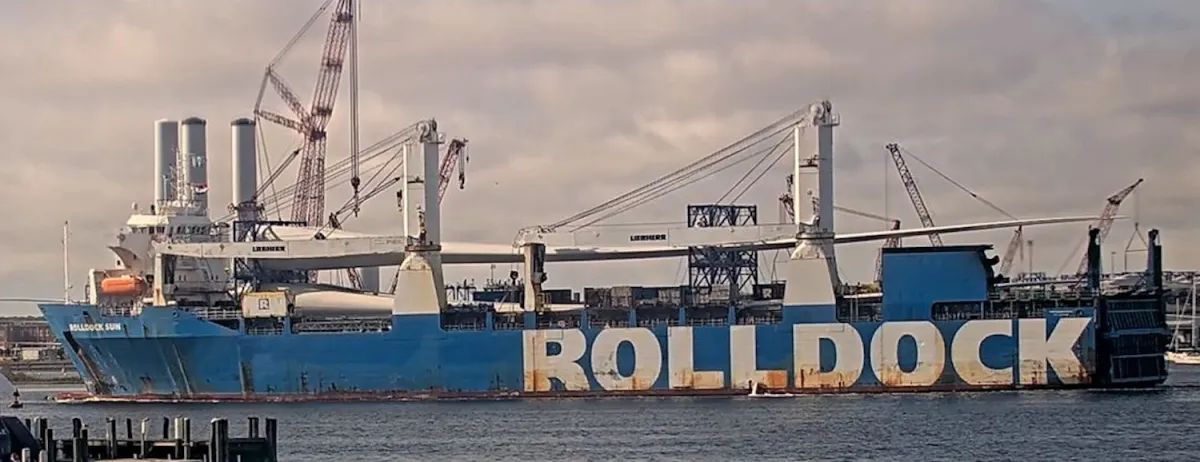
New Bedford Light: The Rolldock Sun leaves New Bedford on Friday with two blades visible. Credit: Courtesy of West Island Weather

Per the New Bedford Light, the turbine blade delivery vessel Rolldock Sun was seen on Friday carrying at least two blades out of New Bedford. It was not headed for the Vineyard Wind site. According to vessel tracking websites, the Rolldock Sun was en route to the Port of Cherbourg, where GE Vernova has a blade manufacturing facility. 

The most likely explanation for returning the blades to Cherbourg is that defects were detected or suspected. The blade that failed, reportedly as a result of a manufacturing issue, is probably not the only one that was defective.

The New Bedford Light asked GE Vernova, Vineyard Wind, and the Federal regulator BSEE why the blades were being transported to Cherbourg. They received the following responses (my comments in parentheses):

GE Vernova: “No comment on this matter.” (This is the worst possible response. In the absence of information, people are left to speculate. If there was no problem with the blades, why wouldn’t GE simply provide an explanation? Their non-response simply reinforces suspicions that the blades were defective. If that is the case, why not take credit for procedures that identified the suspect defects, albeit belatedly?

Vineyard Wind: “The weekend has gotten in the way of the information flow,” and they would share information should they hear anything. Another request for information was not answered as of noon Monday. (Not exactly confidence inspiring from the company whose blade failure littered beaches and the offshore environment. They are deservedly being watched, and need to be more transparent and responsive.)

BSEE: A BSEE spokesperson did not answer questions and said by email that the agency has no new information. (Disappointing, but not surprising.)


Read Full Post »

Swedish engineer Erik Andersson has personally investigated the September 2022 sabotage of the Nord Stream pipelines. He is perhaps the most informed independent investigator of the incident and the associated legal and political drama.

Andersson provided an updated defense document filed by the pipelines’ insurers (attached) and posted his observations on X. His X comments are consolidated below.

  • Nord Stream insurers Lloyds & Arch just filed an amended defense document (attached) which reveals technical details confirming a fifth Nord Stream bomb, which failed to break the NS1B line, placed just 90 meters from the successful bomb on NS1 line A.
  • Lloyds & Arch intend to prove in court that the government of Ukraine ordered the destruction.
  • The insurers have access to classified information in the criminal investigation which not even the victims have had up to now.
  • The insurers doubled down on their previous claim that the destruction was an act of war (and thus they are not liable). They all but say it was ordered by the Ukrainian government, and will rely on “expert evidence” of this.
  • The locations of the northern Nord Stream bombs are marked on the nautical chart (pasted below). The previously known bombs have orange markers and the new bomb we learned about in the NS vs Lloyds filing is marked red.
  • I (Andersson) have repeatedly said that I dismissed Seymour Hersh claim of 8 bombs after my expedition, and have assumed there were exactly four bombs. This has now been proven false, and I think that we again have to account for the possibility that there were perhaps 8 bombs, and that Sy Hersh is perhaps right in his claim that “the Americans sped back to the crime scene to remove the unexploded bombs.”
  • Andersson’s personal view is that it doesn’t matter much if Team USA trusted and protected the Ukrainian sailboat crew so they could place the bombs, or if they just waited for the sailboat cover operation to finish before detonating the bombs they had placed there by other means (making sure they didn’t do anything that couldn’t have been done from a sailboat).
  • The presence of American, Danish and Swedish warships in the area, with all their surveillance capabilities, including the underwater surveillance, makes it a very hard sell that the Ukrainians did this alone without American participation.
  • American warships were also present at the crime scene when it was closed off (justified by an erroneous interpretation of international law) and cleaned up by the Swedish investigation. If any materials were found which contradicted the sailboat narrative, these materials could have been removed.
  • It’s impossible to trust the investigations when (1) the crime scene was illegally blocked & cleaned with US military protection, (2) international investigation was blocked, and (3) the Swedish and Danish investigations were closed with a bogus justification contradicting the premise of “jurisdiction” which was used to seize control of all information in the first place. (Very interesting point about Sweden and Denmark. After 16+ months of investigation, they both punted. Sweden suddenly didn’t have jurisdiction and Denmark decided they didn’t have sufficient grounds to pursue a criminal case.)

Read Full Post »

Given the absence of industry and government data on wind turbine incidents, Scotland Against Spin (SAS) has done yeoman’s work in filling the void. SAS gathers information from press reports and official releases. A PDF of the latest SAS update summary is attached. You can view their complete incident compilation (318 pages) here. Kudos to SAS for their diligence.

As good as their work has been, SAS acknowledges that their information is far from complete and may only represent the tip of the wind turbine incident iceberg. Per SAS:

  • In 2011, RenewableUK confirmed that there had been 1500 wind turbine incidents in the UK alone in the previous 5 years.
  • In July 2019, EnergyVoice reported a total of 81 cases where workers had been injured on UK windfarms since 2014. The SAS table includes only 15 of these incidents (<19%).
  • In February 2021, the industry publication Wind Power Engineering and Development admitted to 865 offshore accidents during 2019. SAS captured only 4 (<0.5%).
  • A 13 August 2018 publication by Power Technology reported 737 incidents from UK offshore windfarms during 2016 alone, with the majority occurring during operations rather than development. 44% of medical emergencies were turbine related. In comparison, only 4 UK offshore incidents are listed in the SAS data – equivalent to 0.5%.

    Lars Herbst had previously reported, based on the Wind Power article cited above, that “with an estimated 700,000 blades in operation globally, there are, on average, 3,800 incidents of blade failure each year.” Lars noted that the annual blade failure rate of about 0.5% translates to 1.5% of all operating wind turbines experiencing a blade failure every year, a remarkably high failure frequency.

    A sad irony is that one of the five operational Vineyard Wind turbines experienced a very impactful blade failure less than 5 months after the project had begun delivering a limited amount of power and government officials were patting themselves on their backs and declaring victory.

    “This marks a turning point in the clean energy transition. After many decades of advocacy, research, policymaking, and finally construction, America’s offshore wind industry has gone from a dream to reality,” said Governor Maura Healey. “Across Massachusetts, in 30,000 homes and businesses, when you turn on the light, you will now be using clean, affordable energy. This will make the air we breathe safer and healthier, save customers money, and bring us one step closer to achieving net-zero emissions.” 

    Read Full Post »

    Just when the media seemed to be settling on rogue Ukrainians in a rented yacht being responsible for the sabotage of the Nord Stream pipelines, comments by a Danish harbor master have muddied the waters.

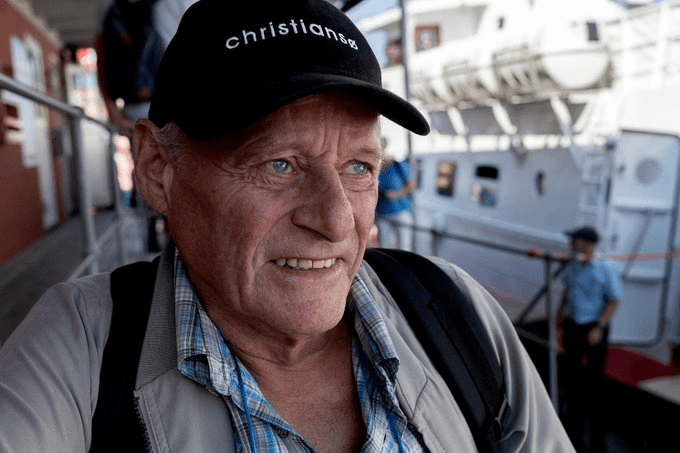
    On the second anniversary of the Nord Stream pipeline sabotage, the Danish publication Politiken posted comments from John Anker Nielsen, harbor master on Christiansø, the small Danish Island near the explosion sites.

    Swedish engineer, Erik Andersson tweeted an excerpt from the Politiken article:

    “For the first few days, the harbor master said he was “not allowed to say a thing”. But today, John Anker Nielsen can reveal that four or five days before the Nord Stream blasts, he was out with the rescue service on Christiansø because there were some ships with switched-off radios. They turned out to be American naval vessels, and when the rescue service approached, they were told by Naval Command to turn back. Therefore, the harbor master has some faith in the theory that American star journalist Seymour Hersh, among others, has put forward without any documentation: that the US was behind the sabotage. The Americans have these small unmanned submarines that can solve any task, John Anker Nielsen has been told.”

    Erik commented further:

    The harbor master isn’t making this up. He wasn’t alone on the rescue vessel ordered to stay clear of the American warships.

    Read Full Post »

    Chevron slide: Advances in seismic imaging help characterize deepwater development opportunities

    A new JPT article features comments from BOE contributor Lars Herbst on advances in HPHT technology, control systems, sensors and transmitters, and automation that are facilitating the next era of deepwater development.

    Well capping technology, which provides a tertiary well control capability, is an essential element of post-Macondo exploration and development. Lars points to the importance of BSEE’s unannounced drill program to verify that capping stacks can be transported and installed in a timely manner. Chevron expresses pride in leading a team that deployed and installed a capping stack in 6,200 feet of water in a drill monitored by BSEE. During that drill, a remotely operated vehicle (ROV) closed 10 valves to shut in a simulated well.

    Exxon’s Jayme Meier aptly characterizes the challenge and excitement of deepwater development:

    “You are floating on a surface, and you have to be able to pinpoint exactly where you’re going to land subsea hardware, exactly where you’re going to moor an FPSO and hit target boxes that are a few feet by a few feet, and they’re 6,000 ft below you,” she said. “It is the most exciting thing that I’ve ever been involved in. And it involves technology, technical know-how, and an ability to really plan the base plan and the contingency plan.”

    Advances in deepwater technology are indeed impressive, but continuous improvement must always be the objective. In that regard, Lars rightfully emphasizes the importance of sustaining research through the industry’s up and down cycles.

    Read Full Post »

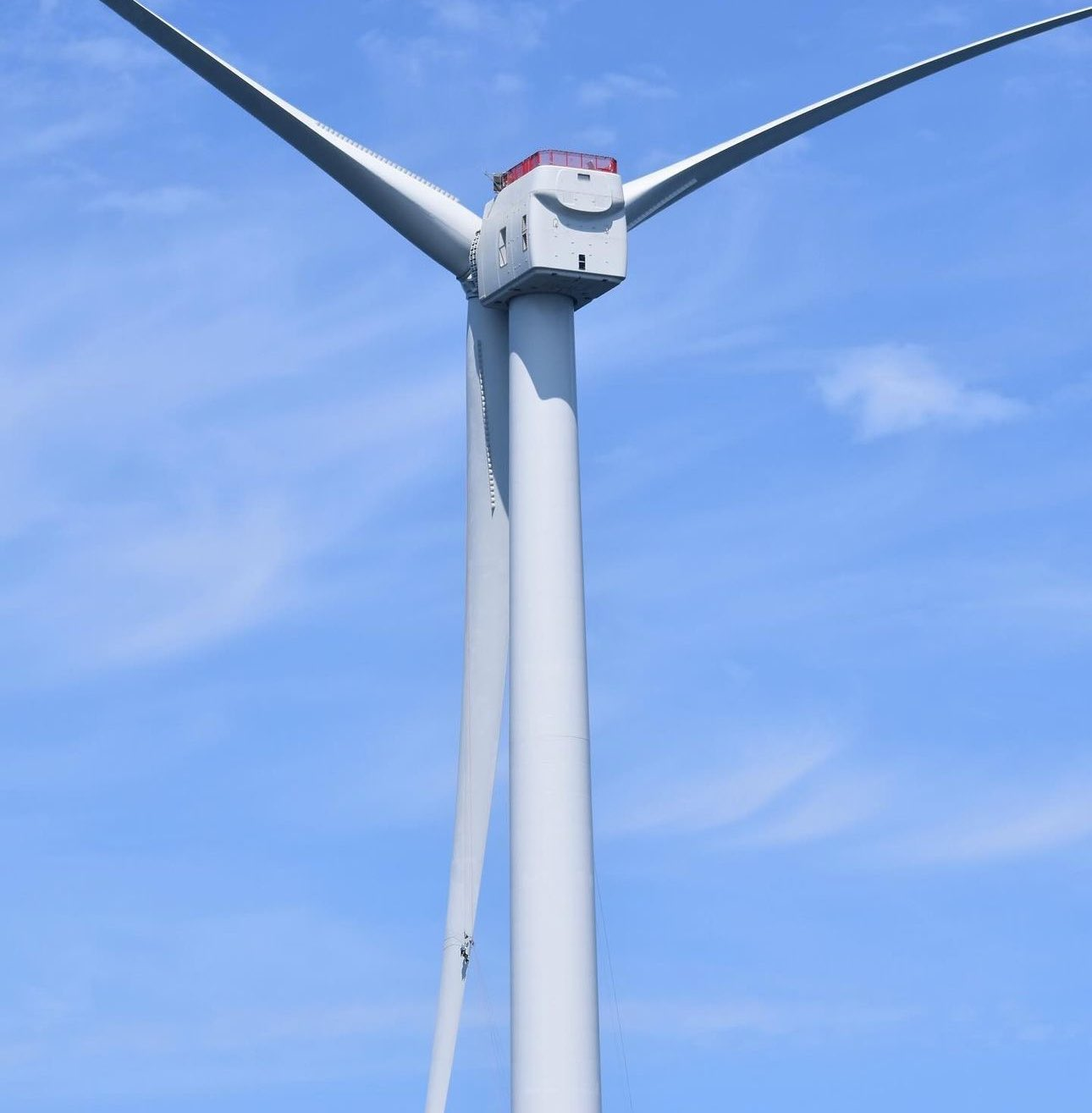
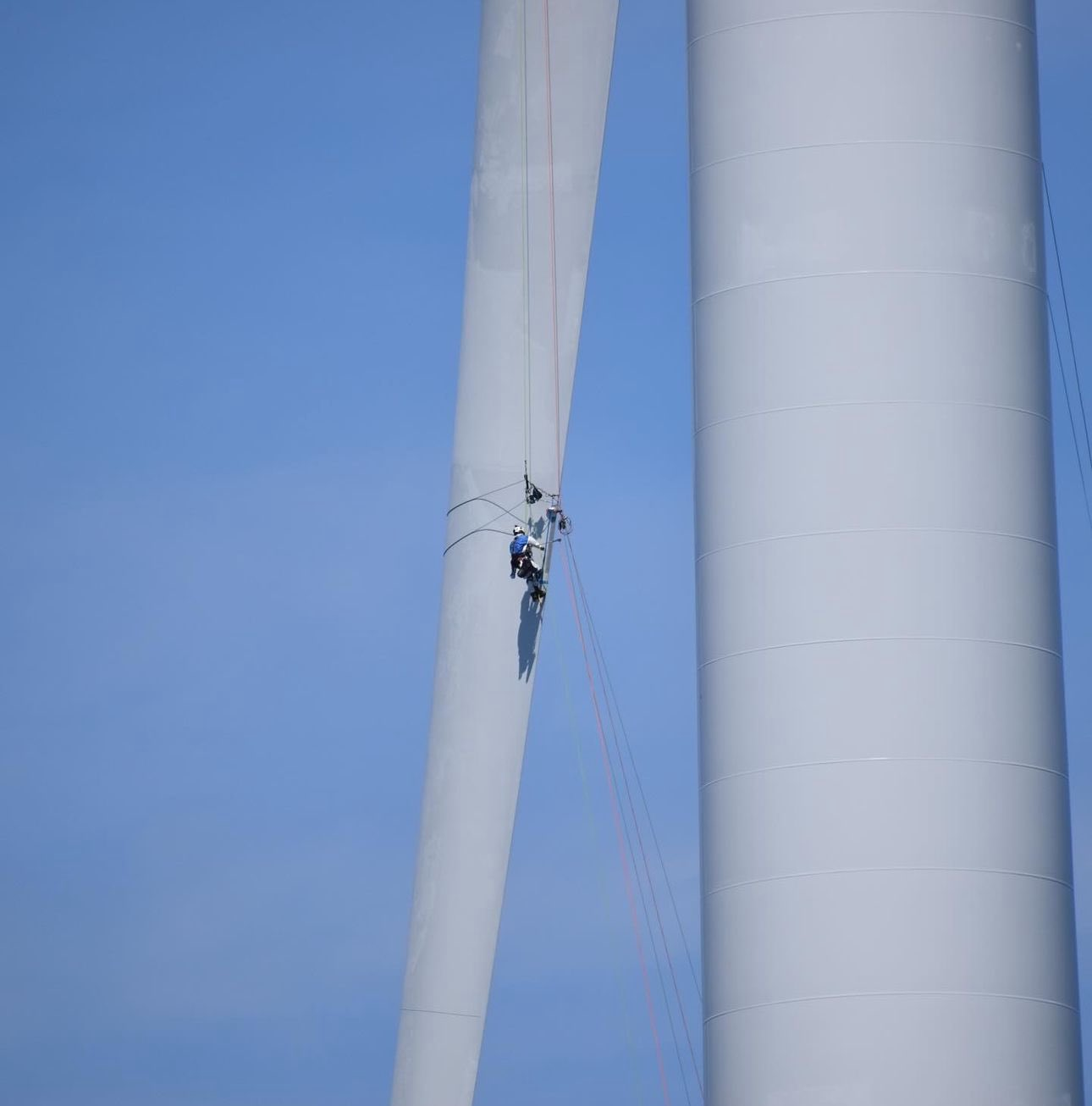
    This real-life Spider-Man, seen on a Vineyard Wind turbine blade, is Tyler Paton. Tyler is an independent composite specialist who inspects and repairs blades on site. The Nantucket Current shared these images on X.

    posted by Brian J @Mainsail23

    Read Full Post »

    • The “highly unusual and rare” talking point for turbine blade failures seems to have finally been discarded.
    • 3 new GE Haliade-X blades failed shortly after installation at Dogger Bank and Vineyard Wind. A total of only 48 turbines had been installed.
    Offshore wind projectHaliade-X turbines installedblade failures
    Dogger Bank272
    Vineyard Wind211

    Read Full Post »

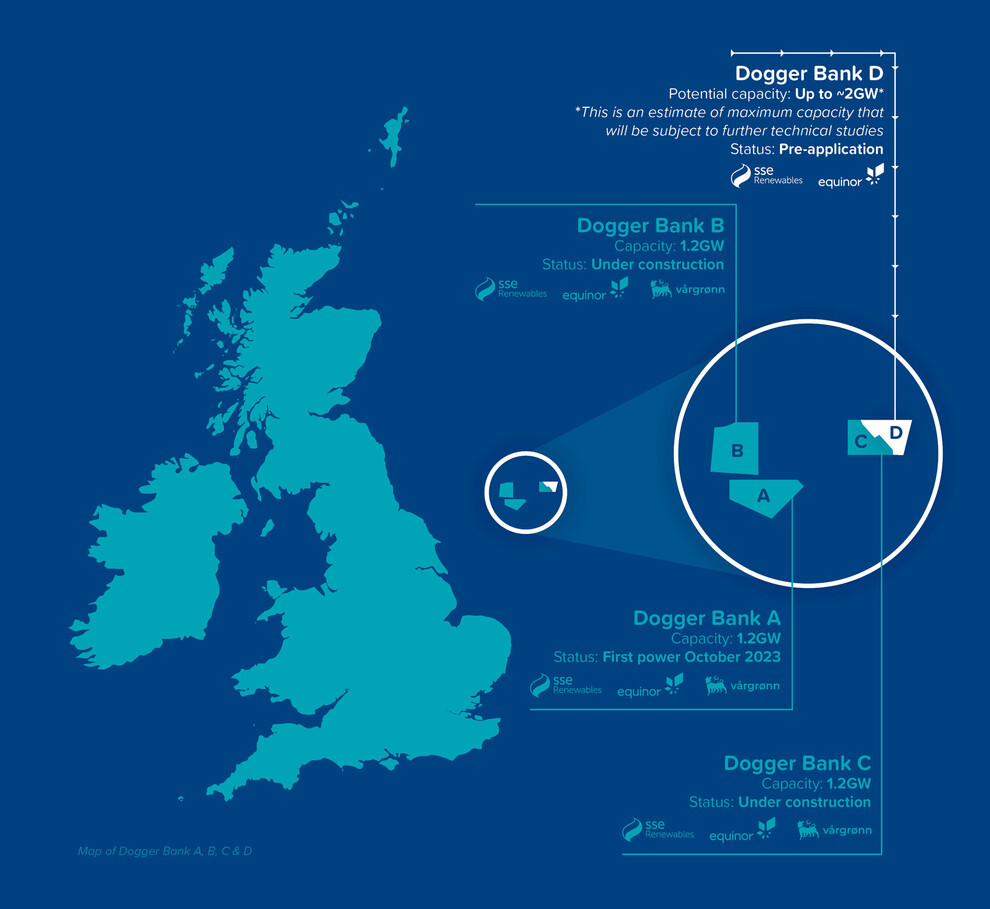
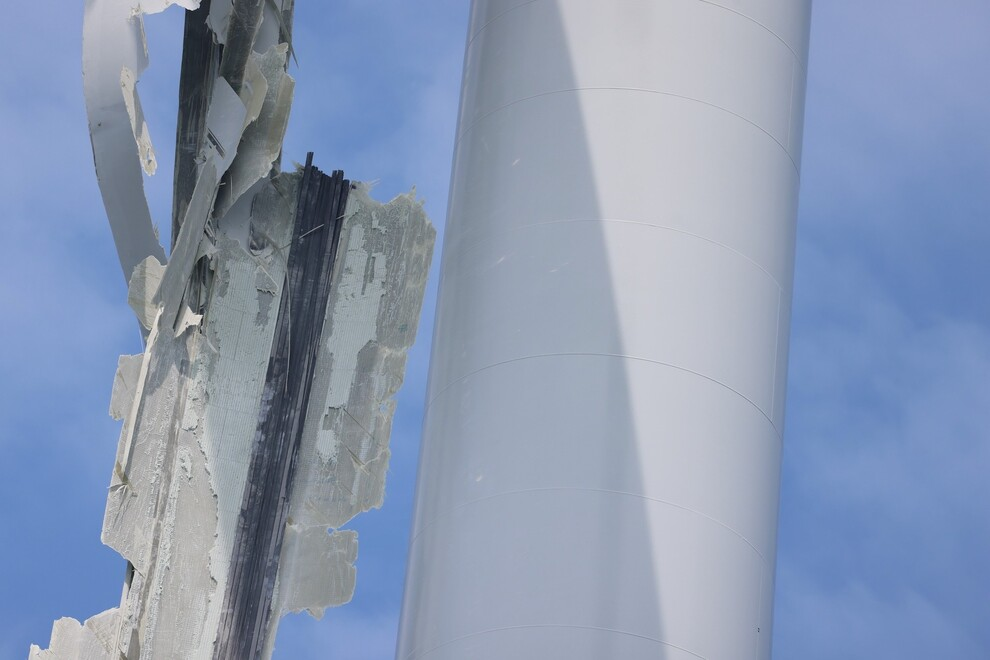
    The operator of the wind farm released this short statement yesterday (8/22/2024):

    We are aware of a blade failure which occurred this morning on an installed turbine at Dogger Bank A offshore wind farm, which is currently under construction. In line with safety procedures, the surrounding marine area has been restricted and relevant authorities notified. No one was injured or in the vicinity at the time the damage was sustained.

    We are working closely with the turbine manufacturer, GE Vernova, which has initiated an investigation into the cause of the incident.

    Further updates will be issued in due course as more information becomes available.

    There have thus been at least 3 GE Vernova Haliade-X turbine failures at new offshore wind farms in 2024 – two at Dogger Bank and one at Vineyard Wind.

    Read Full Post »

    A close-up of the damaged GE Haliade-X turbine blade at the Vineyard Wind farm in late July. Photo by Burton Balkind

    From the Nantucket Current:

    Additionally, ultimate authority over the wind farm remained unclear, with various federal agencies claiming responsibility over different portions of the permitting, licensing, review, and operation of the wind farm.

    “Sometimes I have a hard time figuring out, who do we talk to? Who is going to keep us safe? Who is the responsible boss here? Who is going to make the hard decision?” Select Board member Matt Fee asked.

    As previously discussed, regulatory fragmentation is a safety and environmental risk factor.

    Causes of regulatory fragmentation:

    • Separate legislation granting redundant or overlapping authority to different departments or agencies.
    • Legislation that is non-specific, assigning broad authority to the President or cabinet level level officials, leaving it up to the bureaus to resolve.
    • Bi- and multi-lateral agreements like MOA’s and MOU’s, which are intended to “coordinate the redundancy,” often cause more confusion than they prevent, creating gaps in the process.
    • “Fixing” problems by adding redundancy.

    The Dept. of the Interior’s division of responsibilities for offshore wind, which was finalized in January 2023, inexplicably assigns review and approval of Construction and Operations Plans to the Bureau of Ocean Energy Management (i.e. the land manager, lessor, and wind energy promoter) rather than the Bureau of Safety and Environmental Enforcement (i.e. the principal regulator of the activities described in those plans).

    More significantly, the offshore wind responsibilities of the 2 bureaus are so intertwined (as is also the case for offshore oil and gas), that attempts to separate the functions have, at a minimum, created inefficiencies and increased regulatory and operational costs.

    FTR, the idea that having the BOEM and BSEE functions combined in a single bureau, as was the case with the predecessor bureau (MMS), had anything to do with the Macondo blowout is a complete fallacy. Regarding the accusations that were made toward MMS, the Chief Counsel for the national commission that investigated the tragic incident found no evidence that ethical lapses on the part of MMS employees played any role in causing the blowout. 

    There were important regulatory changes made after the Macondo blowout. These included capping stack requirements, mandatory safety management systems, and updated rules and standards for cementing/zonal isolation and blowout preventer systems. None of these improvements were precipitated by or dependent on the division of MMS into two bureaus.

    Read Full Post »

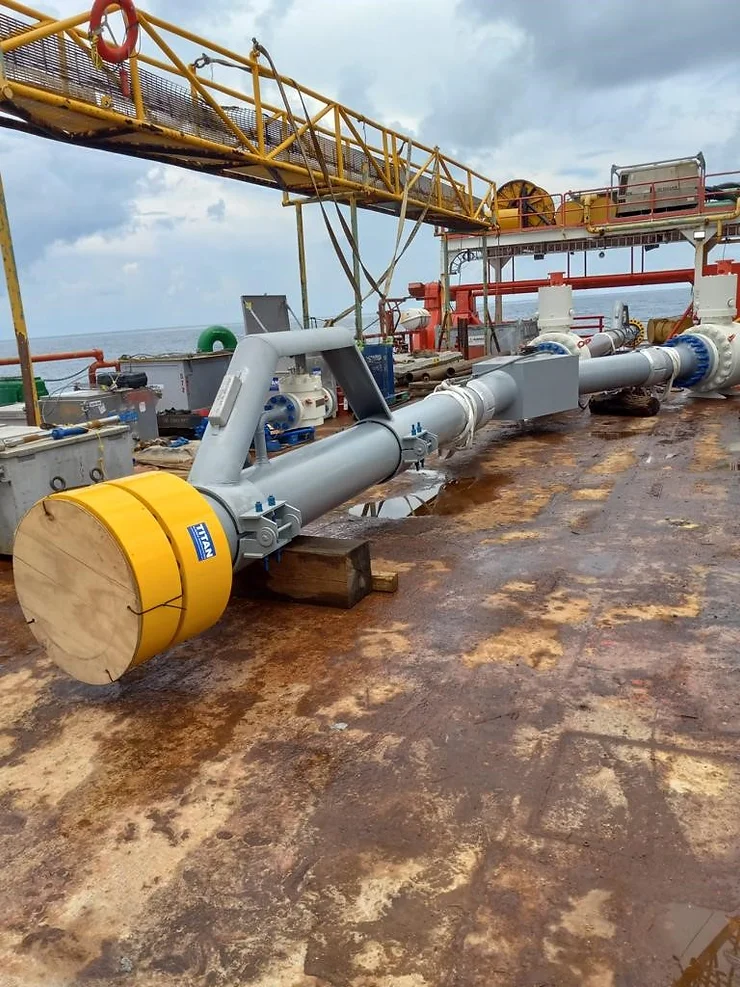
    Above: Pigable Y connector for the 6.5-mile 18-inch pipeline extending from a subsea connection in MP289 to a subsea connection with MPOG in MP268 with a capacity of up to 80,000 barrels per day.

    A colleague shared his research on the November 2023 Main Pass Oil Gathering (MPOG) connector leak in the Gulf of Mexico. Given the extraordinary amount of time it takes to produce accident reports these days, it may be a while before we see the NTSB report. (Keep in mind that we are still waiting for their final report on the December 2022 helicopter crash at the West Delta 106 A platform.)

    The pipeline associated with the leak is BSEE Segment No. 11015, an 18” oil line permitted under Panther Operating Company, LLC . MPOG and Panther are owned by Third Coast ( MAIN PASS OIL GATHERING PROJECT COMPLETION (third-coast.com) . Information on this company website shows that a project was completed for the installation of a new segment 20793 and the new line placed in service on August 20, 2022.

    The picture shown in the website for this project (pasted above) shows what looks like a subsea pigable Y connection, which means the main line had to be cut for this connector to be installed. The location of this subsea tie-in for the new segment is in MP 268 and the approximate distance from the Mississippi River delta is 44 miles.

    As for other subsea connections, the nearest to shore is in MP 144 about 27 miles from the delta. The report on the leak says that it occurred 19 miles from delta, so not sure if there are any connectors. This distance from the delta would be in the vicinity of MP 72 and mapping information shows no connections in this area, only pipeline crossings. See attached map for PSN 11015.

    Read Full Post »

    « Newer Posts - Older Posts »