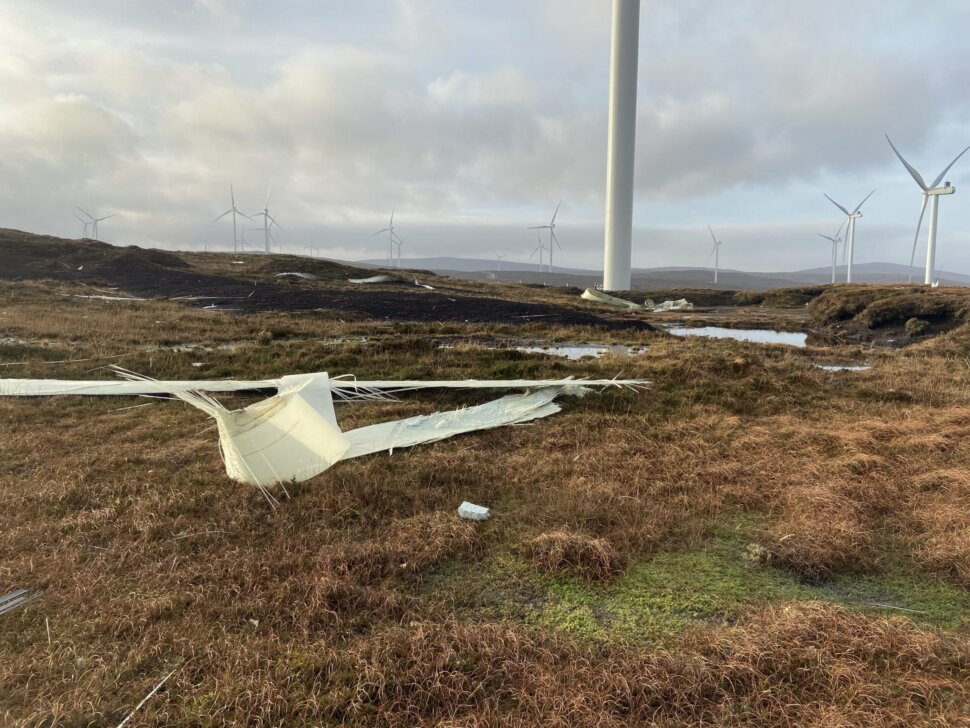
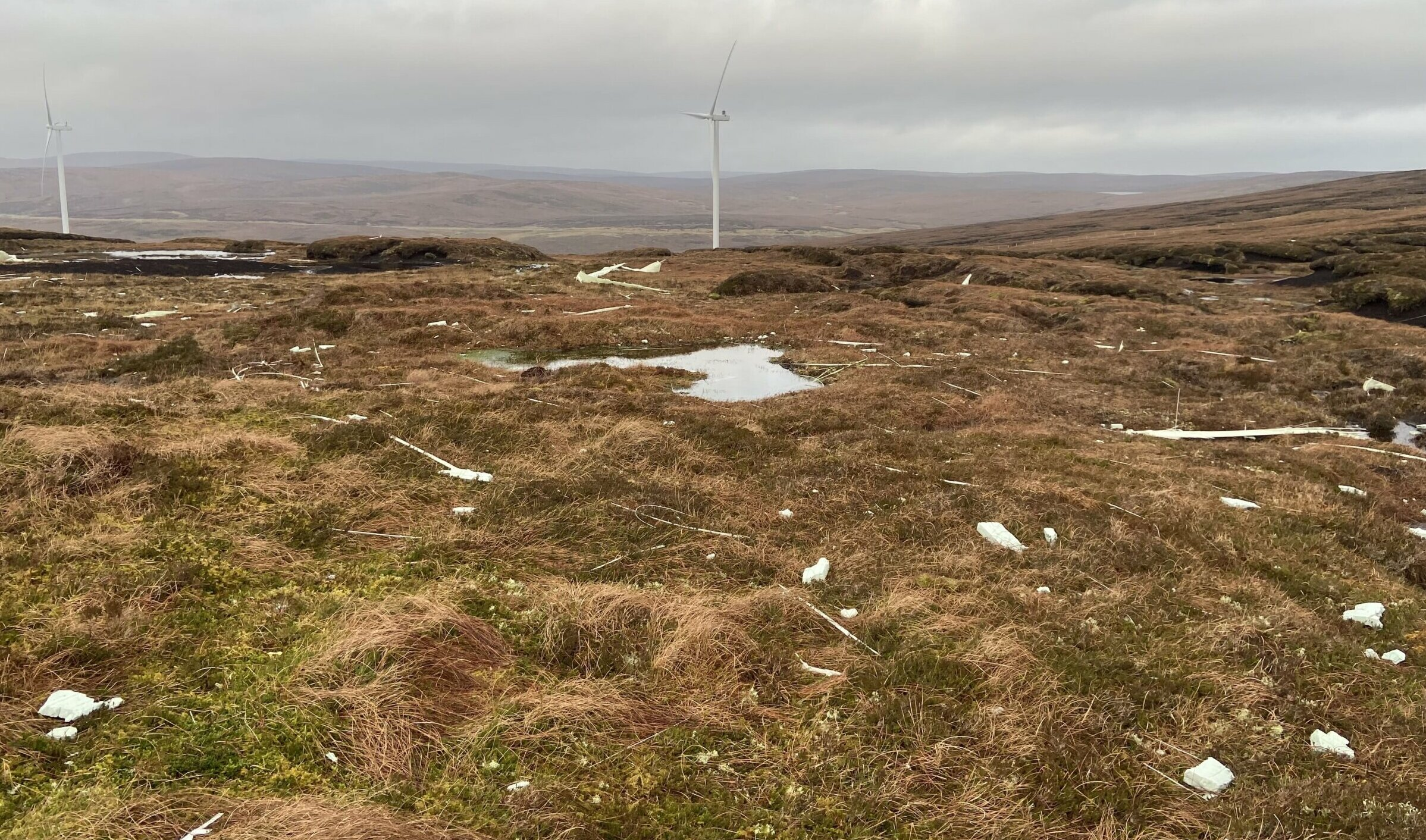
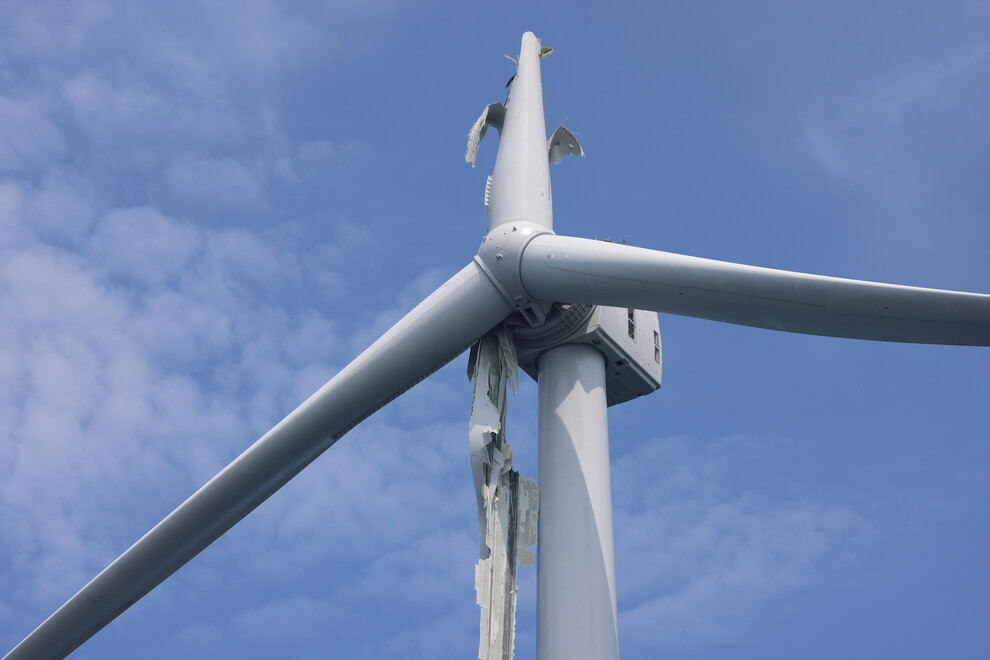
The suspension order for the Vineyard Wind project was lifted on the last business day before the change in Administration and before the completion of the Federal investigation into the blade failure.
Posted in accidents, Offshore Wind, Regulation, tagged blade failure, BSEE, Nantucket, suspension order lifted, Vineyard Wind on January 18, 2025| Leave a Comment »

The suspension order for the Vineyard Wind project was lifted on the last business day before the change in Administration and before the completion of the Federal investigation into the blade failure.
Posted in accidents, Gulf of Mexico, Offshore Energy - General, tagged 4 fatalities, helicopter crash, helideck safety, NTSB, West Delta 106 on January 16, 2025| Leave a Comment »
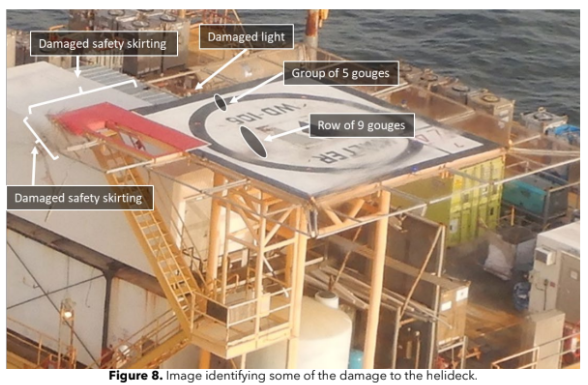
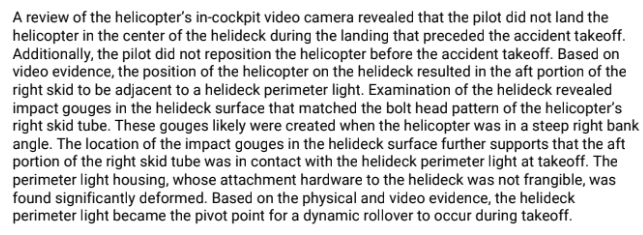
The NTSB has still not issued a final report, which is troubling. However, the detailed Operations Group Factual Report (including attachments) can be accessed in the case docket This and other items in the docket should be of interest to those involved with offshore operations and helicopter safety.
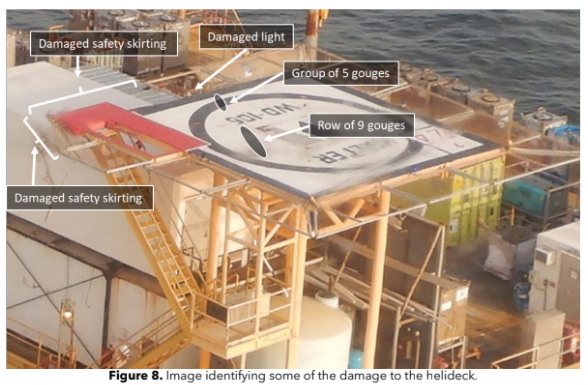
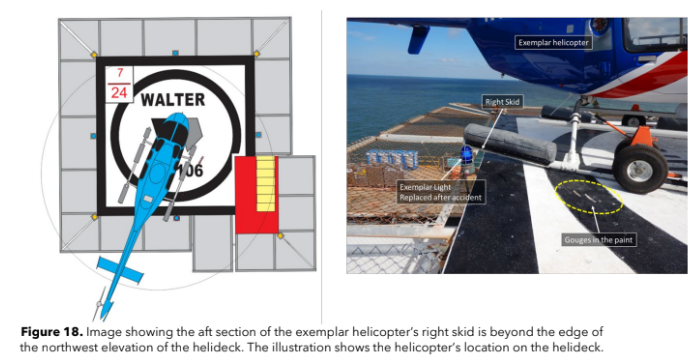
From the factual report, below are graphics showing the helideck damage and assumed final position of the helicopter.


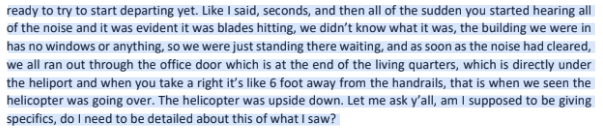
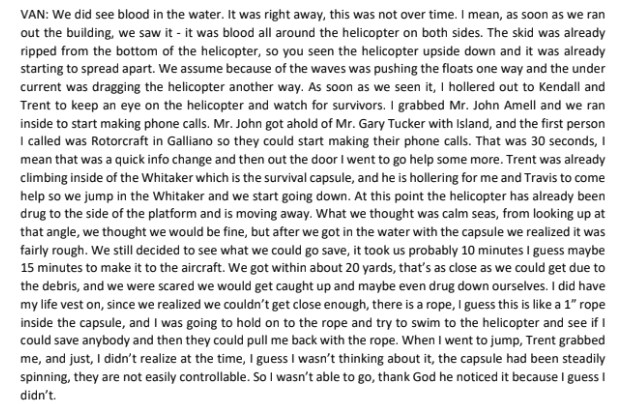
Excerpts from the testimony of a worker at the platform who was part of an attempted search and rescue operation in the platform’s Whitaker escape capsule:
Posted in accidents, energy policy, Offshore Wind, UK, tagged 2024 update, Scotland Against Spin, wind incidents, worldwide data on January 10, 2025| 1 Comment »

Given the absence of industry and government data on wind turbine incidents, Scotland Against Spin (SAS) has done yeoman’s work in filling the void. SAS gathers information from press reports and official releases. A PDF of the latest SAS update summary (through 2024) is attached. You can view their complete incident compilation (324 pages) here. Kudos to SAS for their diligence.
Be sure to see the introductory text at the top of the attached table. Some key points:
Although SAS is committed to reforming the Scottish government’s wind energy policy, their incident data summaries are credible. It’s disappointing that the wind industry is unwilling to publish comprehensive incident data that would help protect lives and the environment, and improve the performance of all participants.
Posted in accidents, decommissioning, Gulf of Mexico, Offshore Energy - General, tagged 2024, crane safety, decommissioning, Helix, OCS fatality, Talos, Triton Diving Services, wrongful death on January 9, 2025| Leave a Comment »
After a zero fatality year in 2023, the first in at least 60 years, Jason Mathews of BSEE advises that one worker was killed during US OCS oil and gas operations in 2024.
The fatality occurred during decommissioning operations on the Helix D/B EPIC HEDRON at Talos Energy’s Ship Shoal Block 225 “D” platform in the Gulf. The platform was to be reefed in Eugene Island Block 276.
The victim, who worked for Triton Diving Services, was moving hoses on the port side of the barge and got caught between the bulwark and counterweight of the crawler crane (see picture below).
The victim’s family have filed a wrongful death lawsuit against Helix Energy Services and Triton Diving Services. The plaintiffs assert that prior to the crane movement the crane operator and crew had not undertaken measures to assure that the crane’s swing area was clear of other crew members. Per their filing, Triton and Helix were negligent as follows:

They further assert that:

The incident remains under investigation by BSEE.

Posted in accidents, drilling, Gulf of Mexico, hurricanes, Offshore Energy - General, Regulation, tagged effective regulation, Gale Norton, Hurricane Katrina, Hurricane Rita', industry standards, Johnnie Burton, MODU stationkeeping, mooring failures on December 11, 2024| 2 Comments »

Optimally, the regulator establishes clear objectives for the operating companies and a schedule for achieving those objectives. This approach was demonstrated with great success following the 2005 hurricane season (Katrina and Rita) when numerous mooring system and other stationkeeping issues were identified.
Minerals Management Service Director Johnnie Burton sent a letter (attachment 1) to industry leaders calling for a face-to-face meeting with Department of the Interior Secretary Gale Norton. The Secretary outlined her concerns and informed offshore operators that there would be no drilling from moored mobile drilling units or jackup rigs during the next hurricane season until the issues identified during Hurricanes Katrina and Rita were addressed.
The collaborative effort that followed was a resounding success (2nd attachment). In addition to addressing station keeping concerns, a comprehensive list of hurricane issues was developed. Industry and government then worked together to assess mitigations and develop new standards and procedures. The essential MODU standards were completed before the 2006 hurricane season, and all of the related concerns were effectively addressed prior to the 2009 hurricane season. Had the government elected to promulgate regulations to address all of these issues, much of this work would have never been completed.
Posted in accidents, climate, Wind Energy, tagged blade failures, GE Vernova, modular reactors, quality control, wind turbines on December 9, 2024| Leave a Comment »


Per CNBC:
“GE Vernova is aiming to deploy small nuclear reactors across the developed world over the next decade, staking out a leadership position in a budding technology that could play a central role in meeting surging electricity demand and reducing carbon dioxide emissions.“
Posted in accidents, energy policy, pipelines, Russia, tagged Andromeda, Der Spiegel, Gazprom, Jeffrey Brodsky, Michael Kobs, Nord Stream, Russia, Ukraine on December 4, 2024| 2 Comments »

Just when we were settling on Der Spiegel’s account of the Nord Stream sabotage, Michael Kobs provides reasons for skepticism. Are the detailed revelations in Der Spiegel part of a coordinated effort to relieve governments of any responsibility and glorify the destruction of economically important pipelines?
“Since the German arrest warrant for a participant in the Nord Stream terrorist attack, efforts have also increased in Germany to portray the terrorist attack as a “legitimate” or even “admirable” war effort. However, the greatest effort is to relieve the burden on state actors. And so, since recently, the alleged perpetrators seem to be chatting without reservation, spreading out every little detail in front of journalists, and putting every (already revealed) fact in the “right” non-governmental light.” ~Michael Kobs
Kolb also raises questions about the circuitous route followed by the Andromeda in arriving at the blast sites (illustration below) and the presence of 3 US Navy warships in the area. His piece is interesting reading for those who are still trying to make sense of all of this.

Meanwhile, independent journalist Jeffrey Brodsky continues to delve deeply into Nord Stream issues. A recent interesting and detailed piece refutes assertions that Gazprom and Russia somehow benefited from the Nord Stream attack. Mr. Brodsky provides evidence to the contrary concluding that the destruction of the pipelines has contributed significantly to Gazprom’s financial problems. He noted that:
Unsurprisingly, the “experts” and politicians who argued that the Nord Stream sabotage would benefit Gazprom and Russia have failed to modify or correct their assertions. Mr. Brodsky concludes his detailed analysis as follows:
“However, despite the numerous facts that have emerged since the attack, the damage caused to Russia and Gazprom by the sabotage remains willfully ignored. Politicians and experts who claimed that the sabotage would be beneficial to Russia or Gazprom financially, legally or geopolitically seem to have merely skimmed the first chapters of the Nord Stream story. So far, almost none of them have publicly corrected themselves after hastily familiarizing themselves with its complex plot. But since the perpetrator of the sabotage has not yet been unmasked, they still have the opportunity to pre-order the unfinished sequel to the book. Perhaps it will end up being an international bestseller. ~ Jeffrey Brodsky
Posted in accidents, climate, Norway, Offshore Energy - General, tagged CO2, electrification policy, Equinor, gas turbines, Johan Sverdrup, Norway, power outage on November 20, 2024| Leave a Comment »

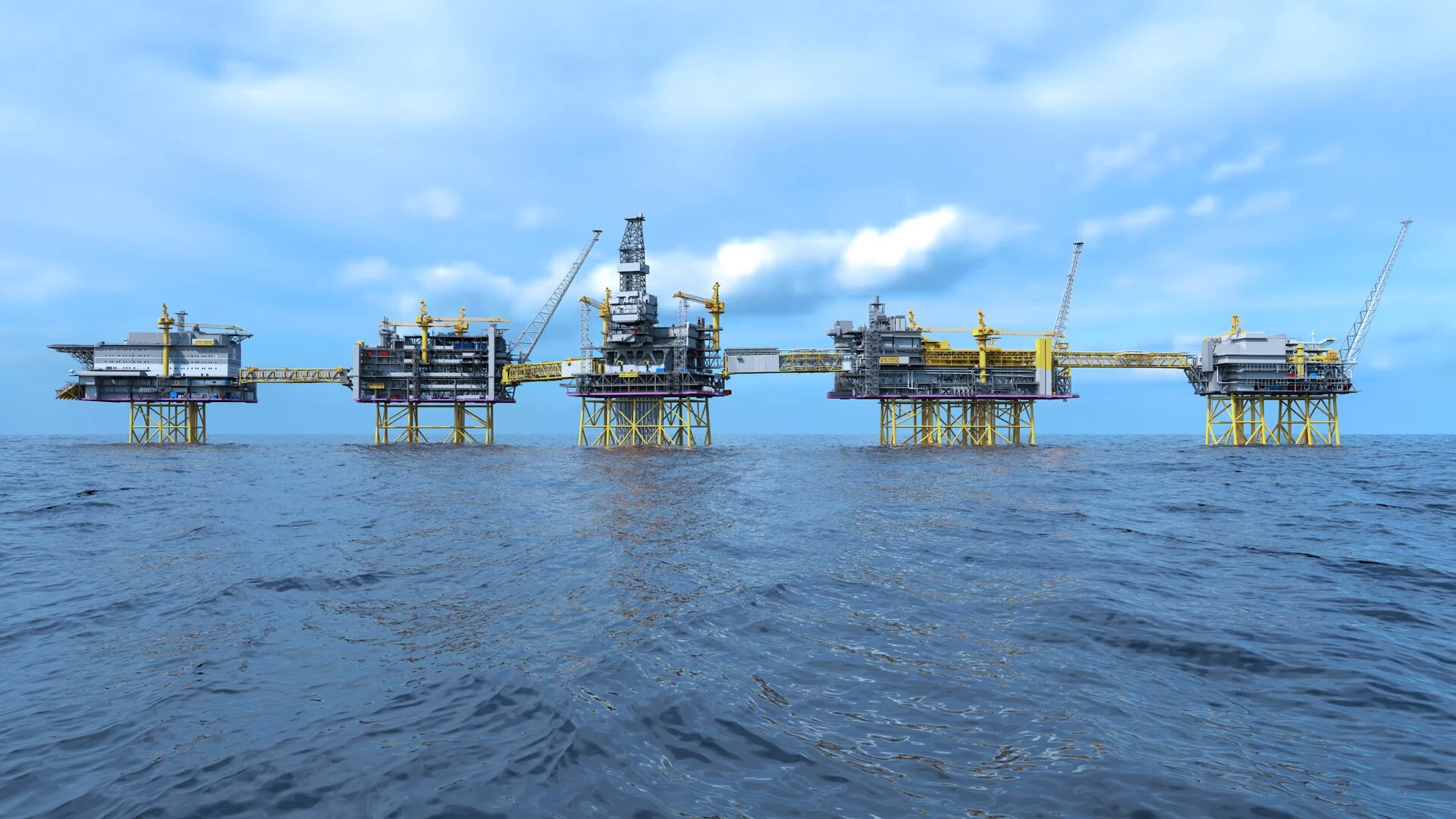
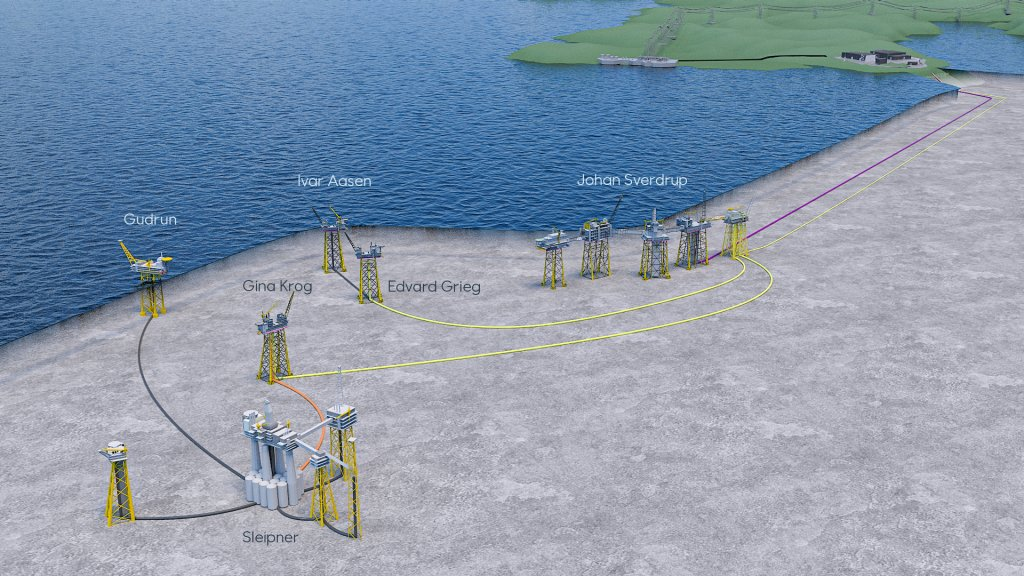
Production from Equinor’s important Johan Sverdrup field, which accounts for 755,000 bopd (36% of Norway’s oil production), was shut-in on Monday as a result of a power outage. Production was in the process of being restored on Tuesday.
According to Equinor, the outage was caused by overheating at an electric converter station onshore.
A 2022 BOE post questioned Norway’s push to power offshore platforms with electricity transmitted from shore. This incident reinforces those concerns. Summary:
I hope the investigation of this incident considers some of these broader electrification policy issues.

Posted in accidents, Offshore Wind, Regulation, tagged civil penalties, criminal penalties, data falsification, Gaspe plant, GE Vernova, Quebec, turbine blade failure, Vineyard Wind on November 13, 2024| Leave a Comment »

On Oct. 24, Radio Gaspesie reported serious data falsification allegations related to the manufacturing GE Vernova turbine blades at their Gaspé, Quebec facility. GE Vernova’s delay in commenting on those charges is surprising given their economic and legal implications in both Canada and the US.
GE Vernova has informed the New Bedford Light that they have taken corrective actions at their blade facility in Gaspé after an extensive internal review of their blade manufacturing and quality assurance program. However, they have yet to comment on the data falsification allegations.
Actions speak louder than words, and the Light reports that GE Vernova laid off nine managers and suspended 11 unionized floor workers at the Gaspé factory. A representative for the union informed the Light that the production manager has been dismissed and the general manager has resigned.
Neither Vineyard Wind nor BSEE, the Federal safety regulator for the Vineyard Wind project, has commented on the matter. BSEE’s investigation of the blade failure is still pending and has seemingly gotten more complicated as a result of the manufacturing issues.
In addition to legal proceedings in Quebec, GE Vernova and Vineyard Wind are subject to possible civil and criminal penalties in the US. Civil penalties, which are administered by BSEE, seem likely given the extensive pollution from turbine blade fragments.
Criminal penalties, which are possible if the data falsification charges are proven true, are imposed by the Dept. of Justice. The applicable criminal penalties statute is pasted below.
43 U.S. Code § 1350 – Remedies and penalties – (c) Criminal penalties
Any person who knowingly and willfully (1) violates any provision of this subchapter, any term of a lease, license, or permit issued pursuant to this subchapter, or any regulation or order issued under the authority of this subchapter designed to protect health, safety, or the environment or conserve natural resources, (2) makes any false statement, representation, or certification in any application, record, report, or other document filed or required to be maintained under this subchapter, (3) falsifies, tampers with, or renders inaccurate any monitoring device or method of record required to be maintained under this subchapter, or (4) reveals any data or information required to be kept confidential by this subchapter shall, upon conviction, be punished by a fine of not more than $100,000, or by imprisonment for not more than ten years, or both. Each day that a violation under clause (1) of this subsection continues, or each day that any monitoring device or data recorder remains inoperative or inaccurate because of any activity described in clause (3) of this subsection, shall constitute a separate violation.
Posted in accidents, Offshore Wind, Regulation, tagged falsified data, Gaspe plant, GE Vernova, turbine blade failure, Vineyard Wind on November 8, 2024| 4 Comments »

See the translated excerpts below from a Radio Gaspesie report. This is a massive scandal if true.
“Yesterday, the vice-president of global operations at GE Vernova reportedly addressed all employees at the Gaspé plant to provide an update on the situation.
The investigation, led by GE Vernova’s lawyers, reportedly revealed that employees were asked by senior company executives to falsify quality control data. Data associated with a well-made blade was then associated with poorly made blades. Our sources indicate that this is a widespread practice in the industry.
The senior management of the Gaspé plant also allegedly implemented a points system that encouraged employees to skip verification steps, thus prioritizing production quantity over quality.
Our sources say the points system allegedly involved tight management oversight that bordered on intimidation of employees.
The oversized 107m blades that were produced in Gaspé for the construction of marine parks are said to be affected. The integrity of the entire production of the longest blades in America is currently being called into question.“