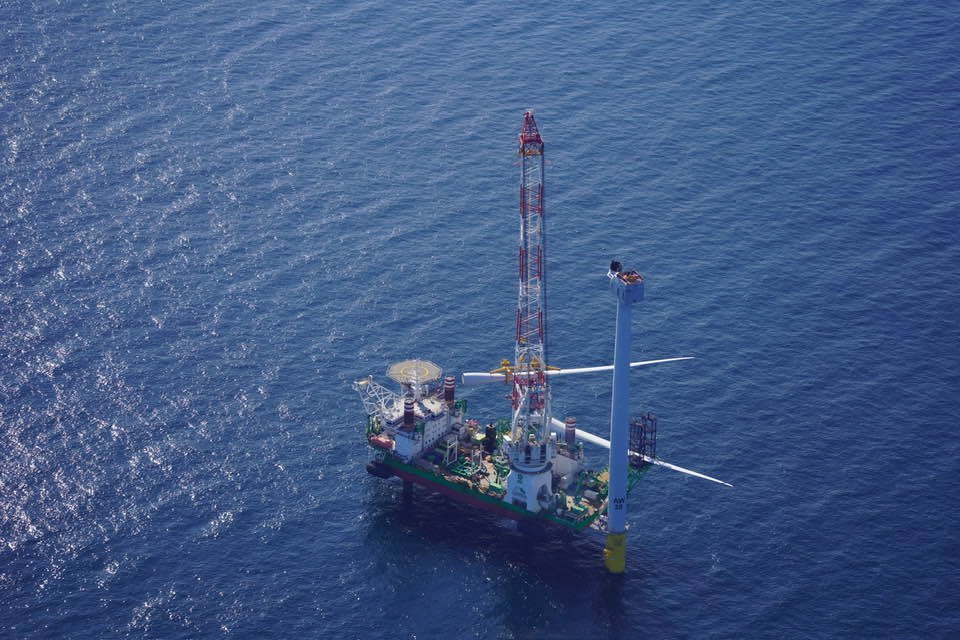
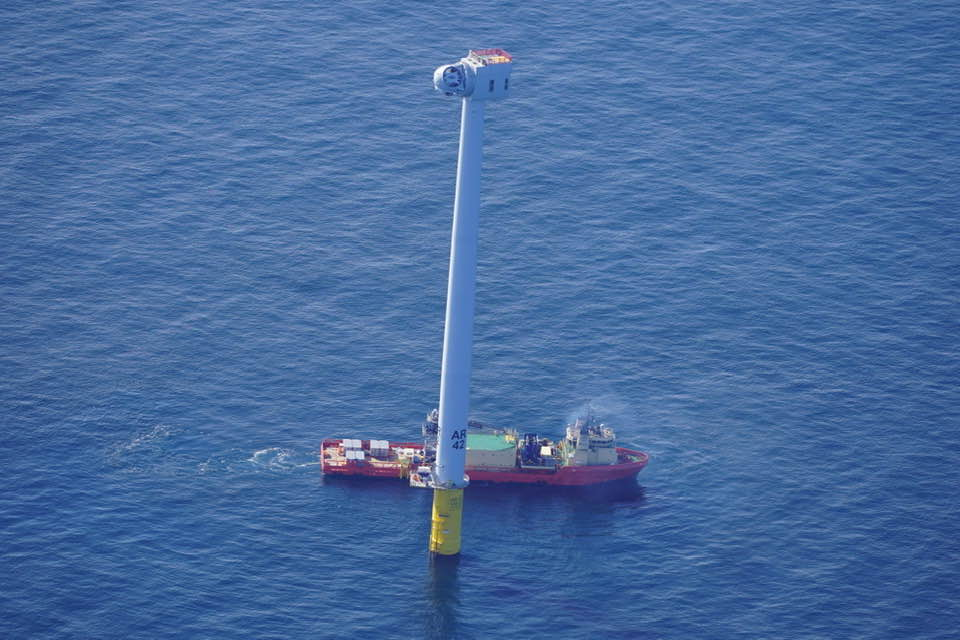
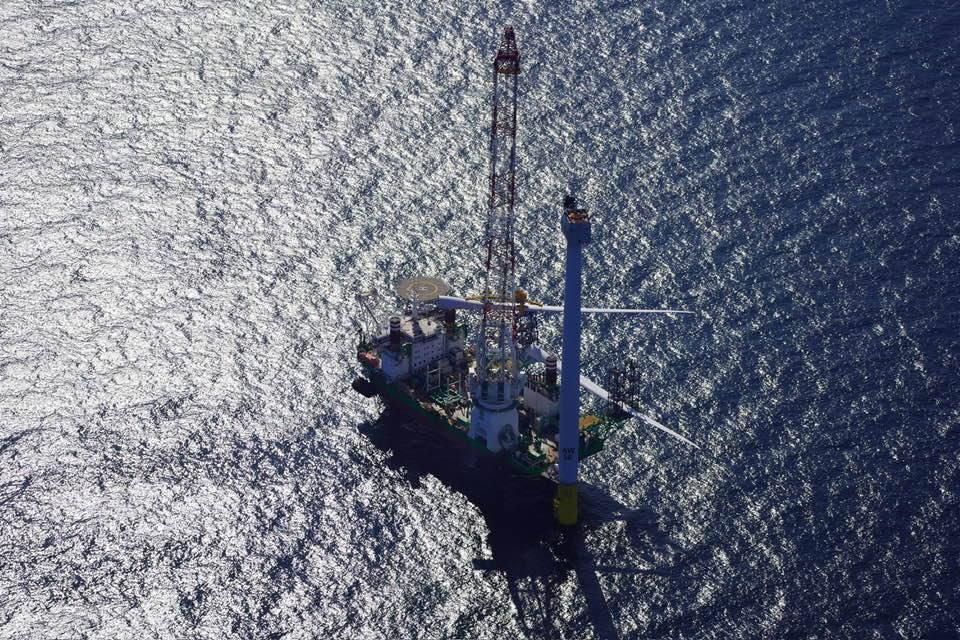
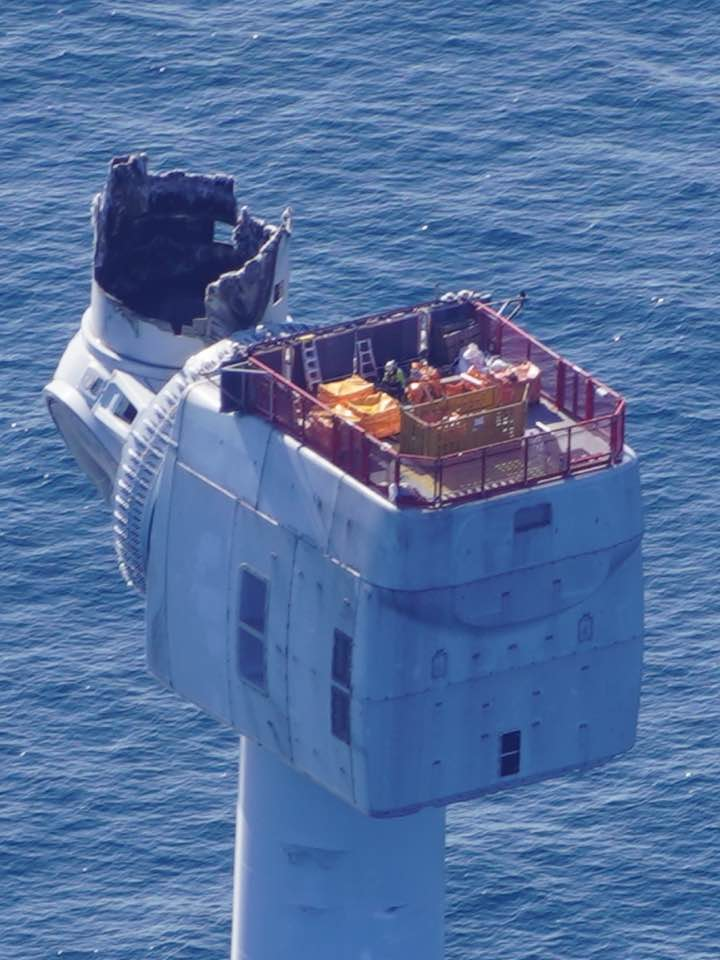
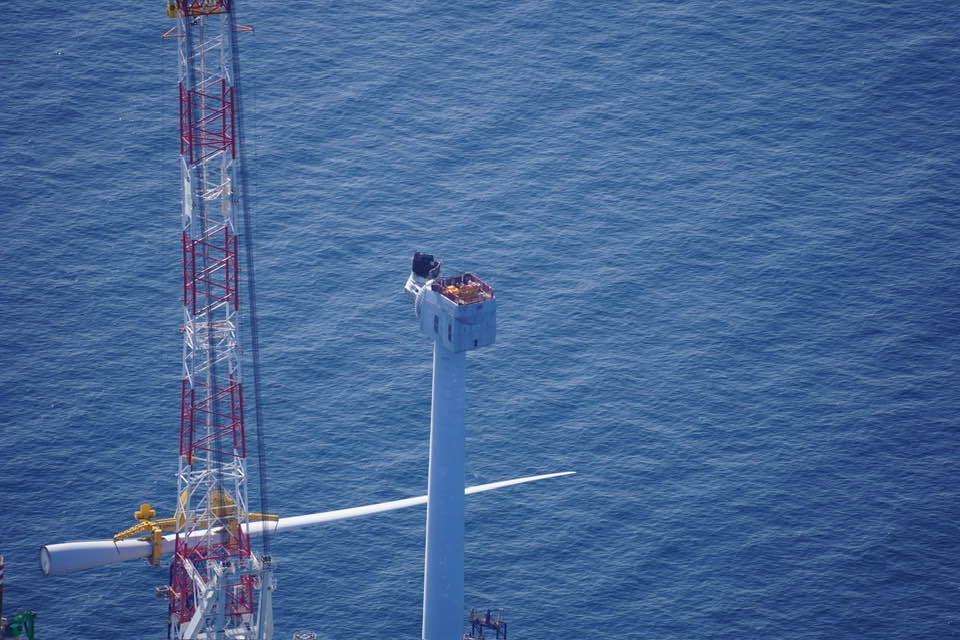
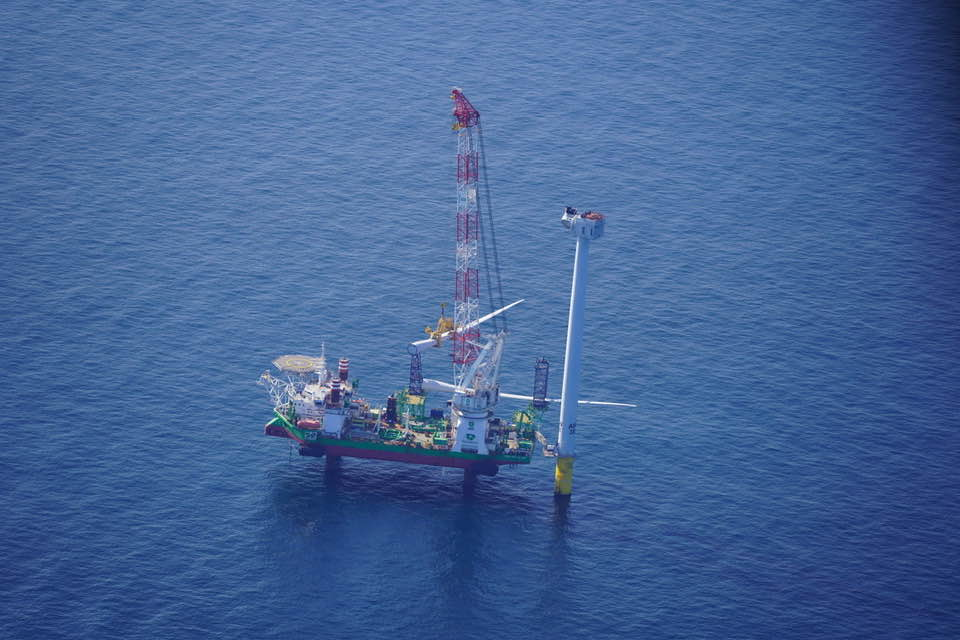
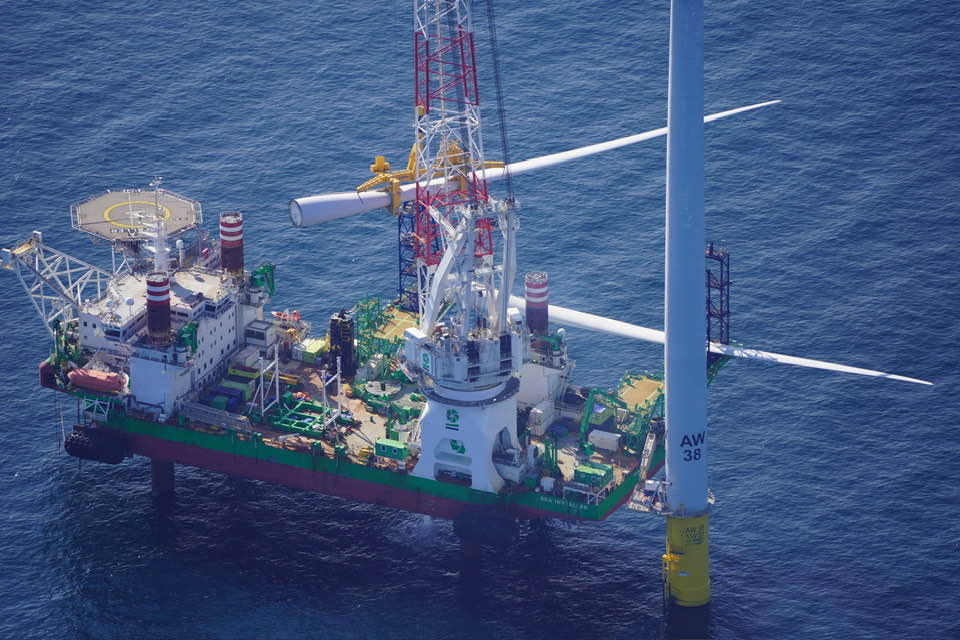
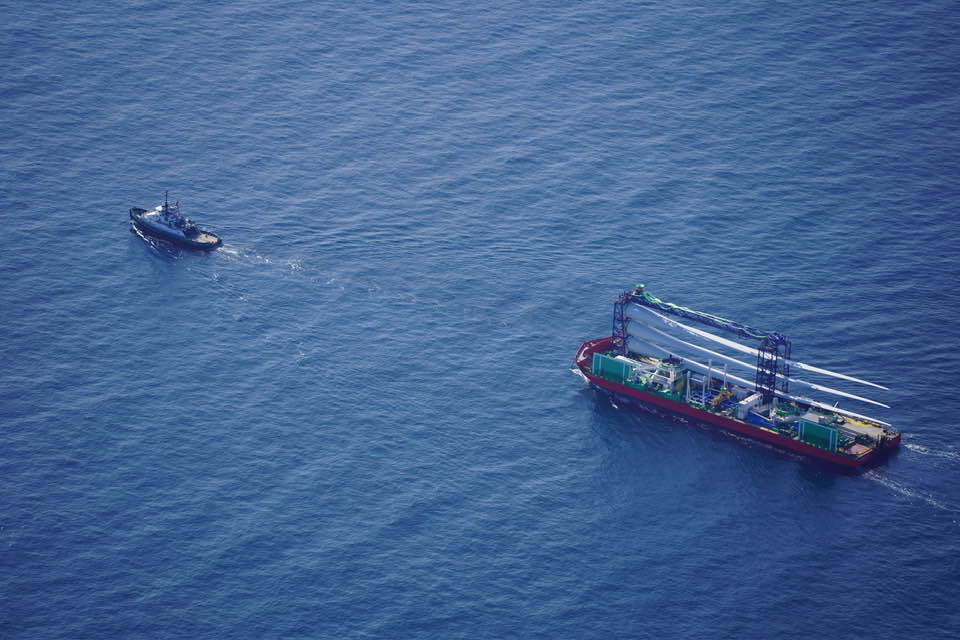
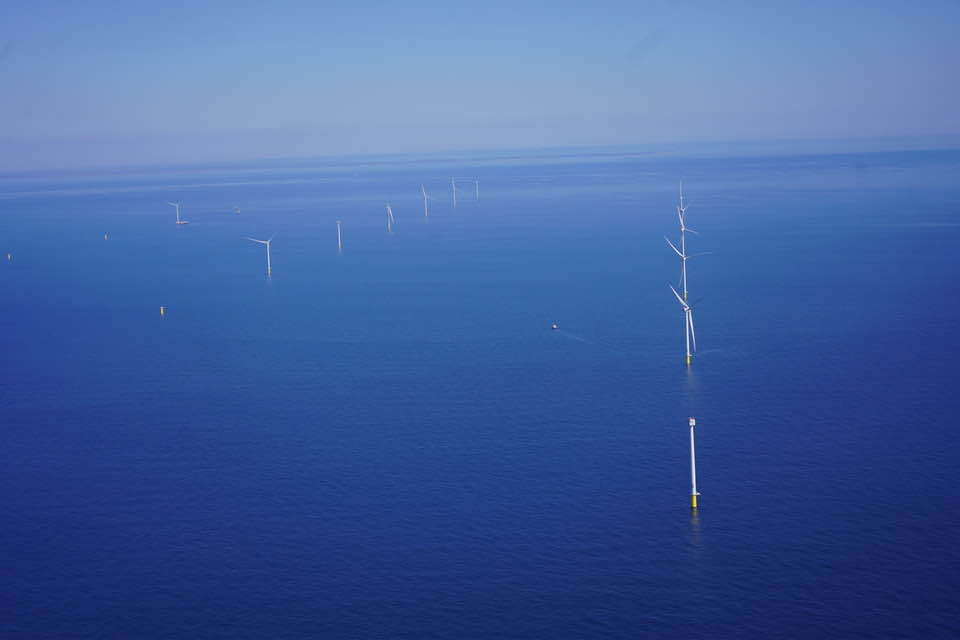
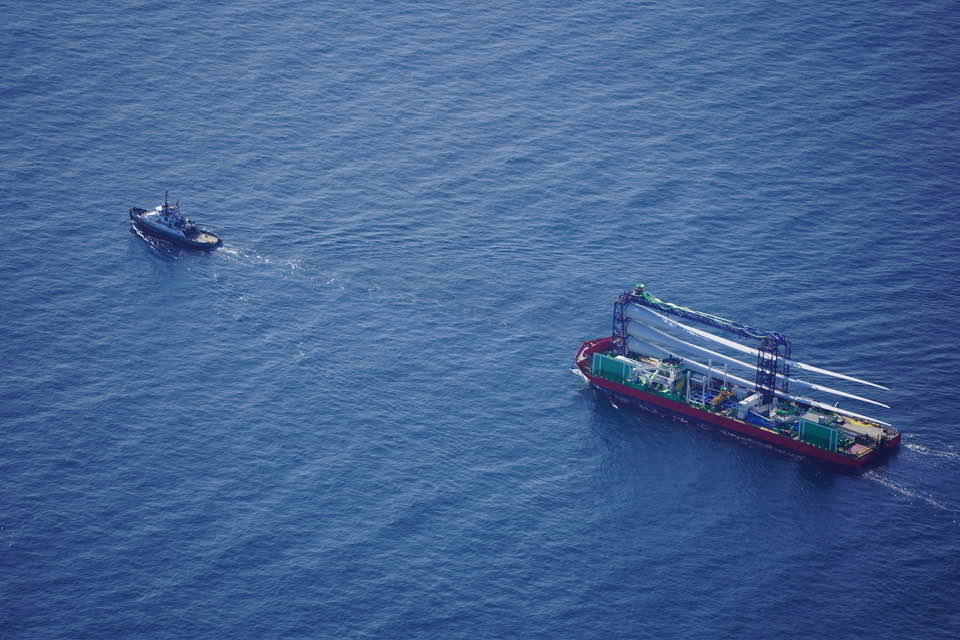
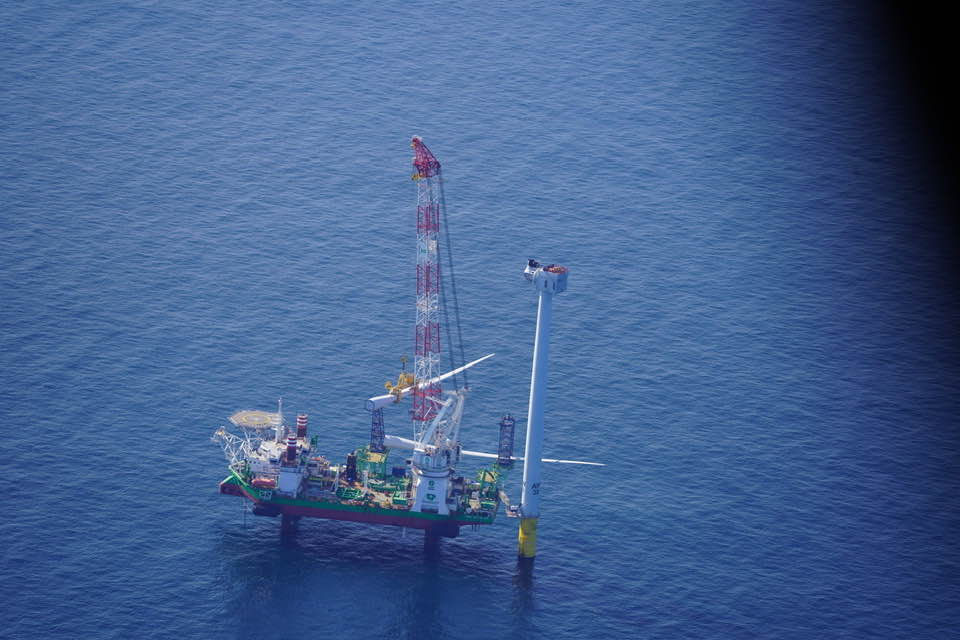
Below are interesting pictures of Vineyard Wind’s repair and installation activity taken today by Nantucket pilot Doug Lindley. He commented that only of the turbines was spinning.
Also note the vessel transporting replacement blades.
It’s a bit difficult to rationalize all of this, but the Administration of Massachusetts Governor Maura Healey sees these projects as being critical to the Commonwealth’s energy future.
BSEE incident investigations are another window into OCS safety performance.
Panel reports are published for the most significant OCS incidents (e.g. fatalities, serious injuries, significant pollution). Unfortunately, these reports have been unacceptably delayed in recent years. Status reports are not provided leaving the public in the dark as to what is being investigated and why.
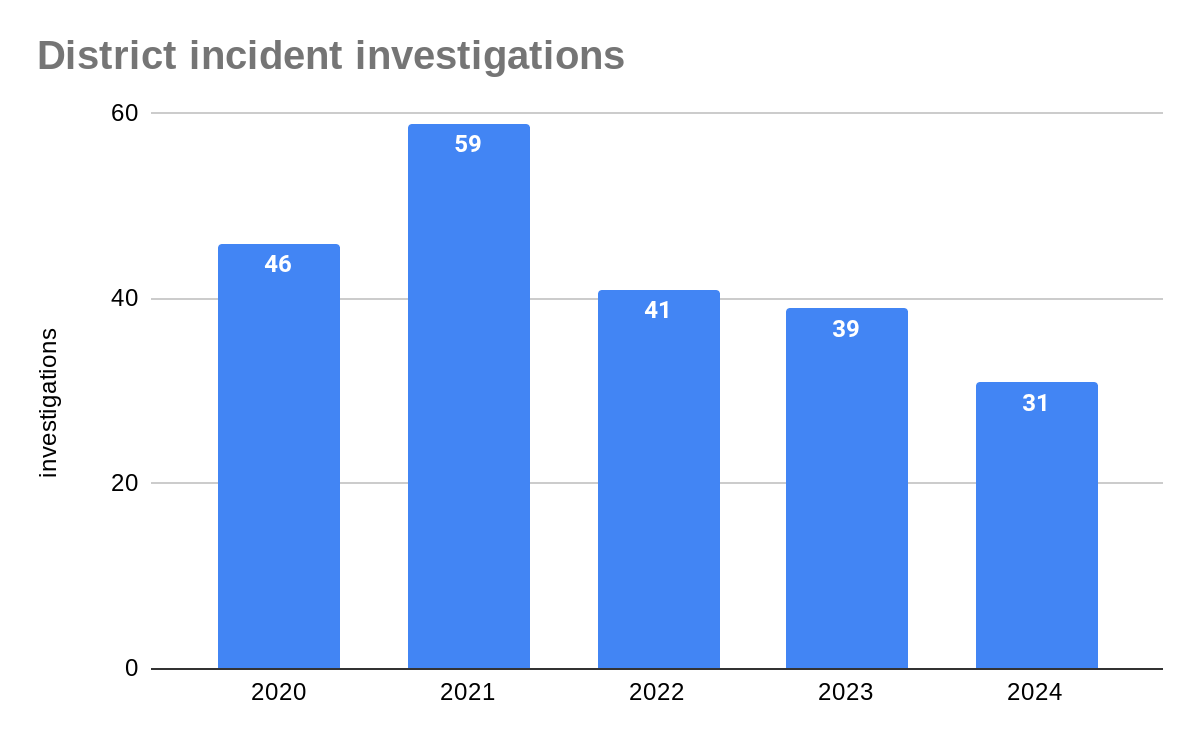
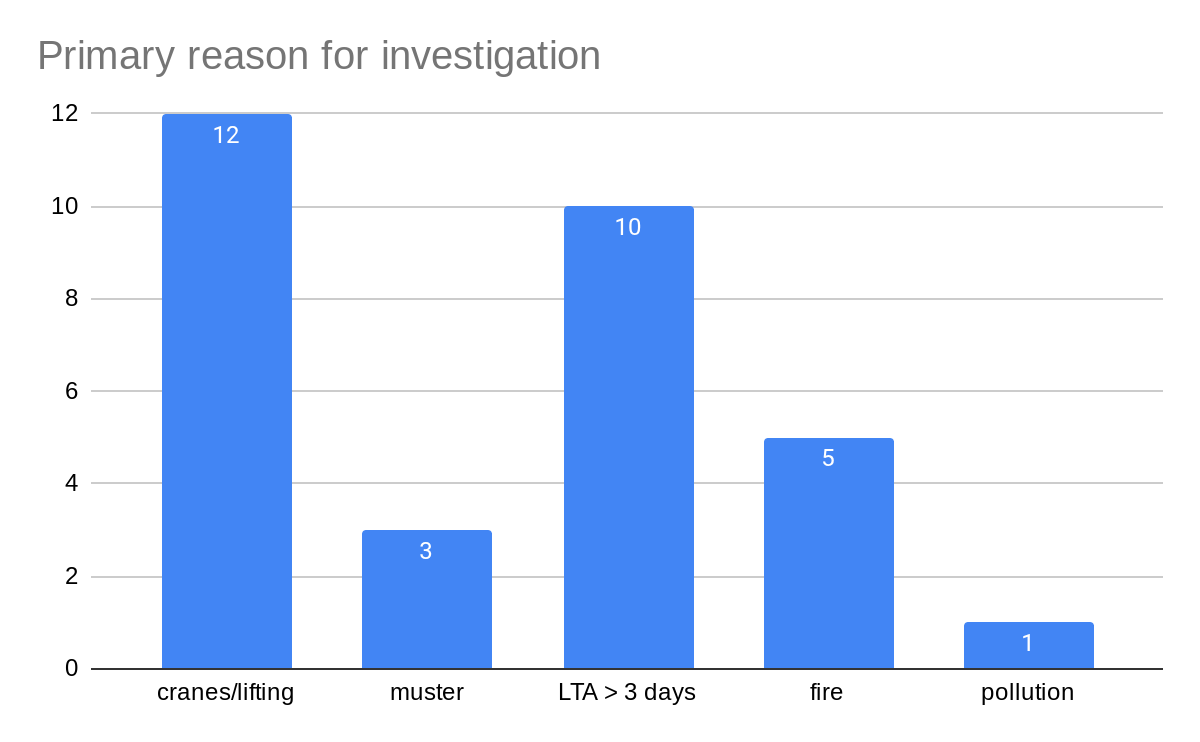
The more common investigations, conducted by BSEE’s district offices, are timely and informative. The Districts typically investigate lost time (>72 hours) injuries, crane and lifting equipment incidents, small fires, pollution events, property damage > $25k, gas releases, and other incidents requiring workers to muster for possible evacuation.
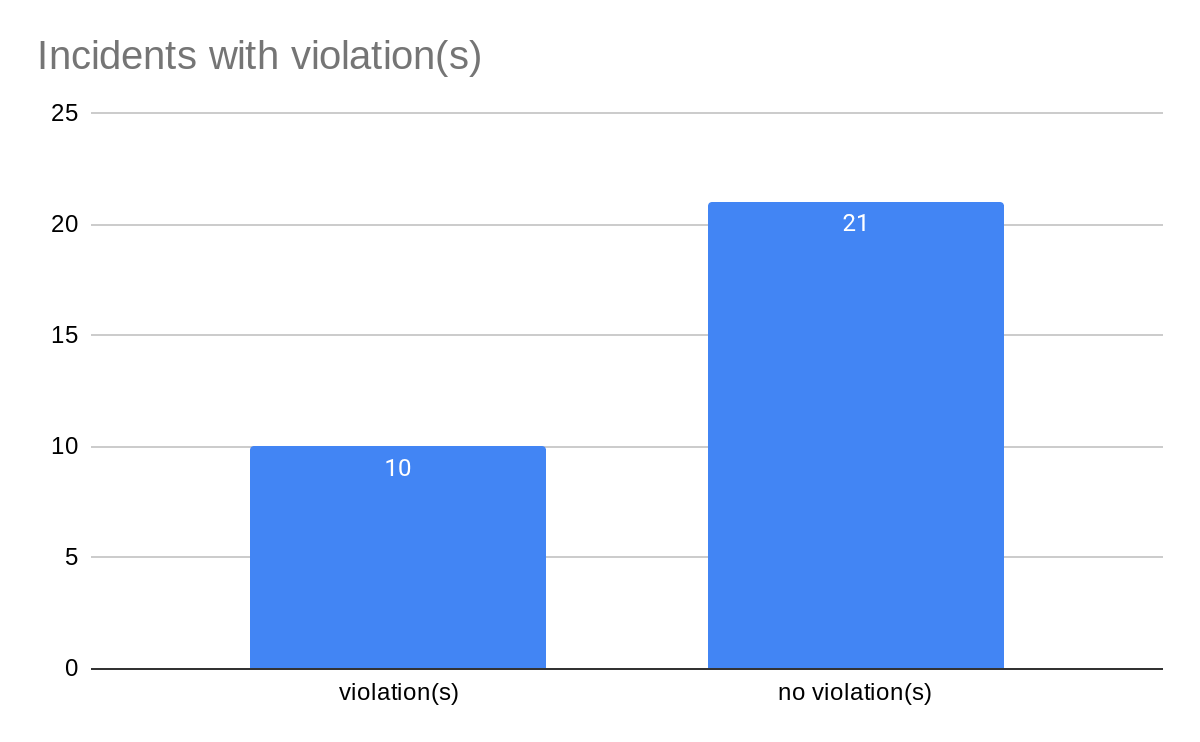
The number of District investigations in 2024 declined significantly to 31, one-third fewer than the average of 46.25 for the past 4 years.
Violations were not identified for 2/3 of the incidents.
A complete list of the 2024 District investigations follows. Hyperlinks are provided for those who want to review the reports.
The 2024 Gulf of America Safety Compliance Leaders are ranked below according to the number of incidents of non-compliance (INCs) per facility inspection. To be ranked, a company must:
operate at least 2 production platforms
have drilled at least 2 wells during the year
average <1 INC for every 3 facility inspections (0.33 INCs/facility inspection)
average <1 INC for every 10 inspections (0.1 INCs/inspection). Note that each facility inspection may include multiple types of inspections (e.g. production, pipeline, pollution, Coast Guard, site security, etc). In 2024, there were on average 3.4 inspections for every facility inspection.
District investigation reports are more timely and provide additional insights into safety performance. Impressively, Hess had no incidents warranting a District investigation, and was the only ranked operator with this distinction. I will comment more on the District reports in a future post
Chevron’s 2024 compliance record was among the best in the history of the US OCS oil and gas program. Was it the absolute best? Were it not for the FSI INC at a Unocal (Chevron) facility, one could unequivocally assert that it was. Further evaluation of that INC would be helpful. However, details on specific INCs are not publicly available, so the significance of that violation cannot be evaluated.
operator
W
CSI
FSI
total INCs
facility insp
INCs/ fac insp
insp
INCs/ insp
Chevron
1
0
1
2
117
0.02
311
0.006
BP
2
3
0
5
93
0.05
251
0.02
Anadarko
8
9
1
18
143
0.13
344
0.05
Hess
2
3
0
5
26
0.19
67
0.07
Walter
6
4
1
11
50
0.22
161
0.07
Shell
23
17
5
45
199
0.23
495
0.09
Cantium
24
8
0
32
123
0.26
537
0.06
Murphy
8
9
1
18
70
0.26
191
0.09
Arena
29
28
3
60
189
0.32
803
0.07
Gulf-wide
957
398
109
1464
3133
0.47
10664
0.14
Notes: Numbers are from published BSEE data; INC=incident of non-compliance; W=warning INC; CSI=component shut-in INC; FSI=facility shut-in INC; INCs/fac insp= INCs issued per facility inspection; each facility-inspection may include multiple types of inspections (e.g. production, pipeline, pollution, Coast Guard, site security, etc), in 2024, there were on average 3.4 inspections for every facility inspection
Not meeting the production facilities requirement to be ranked among the top performers, but nonetheless noteworthy, was the compliance record of BOE Exploration & Production (no relation to the BOE blog 😀). See their impressive inspection results below:
W
CSI
FSI
total INCs
facility insp
INCs/ fac insp
insp
INCs/ insp
BOE
1
1
0
2
21
0.1
48
0.04
Transparency on inspections and incidents is important for a program that is dependent on public confidence. For independent observers to better evaluate industry-wide and company-specific safety performance, publication of the following information should be considered:
quarterly updates of the incident tables, as was once common practice
posting of violation summaries for inspections resulting in the issuance of one or more INCs
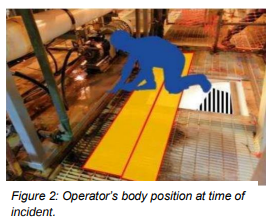
BSEE’s risk-based inspection and safety alert programs have effectively drawn attention to grating risks. Attached is a recent alert describing a grating incident that could have been fatal.
A worker installing a pump in a skid above unsafe grating was kneeling on scaffolding boards. The tip of his boot was on the corroded grating when it suddenly gave way. The worker was able to grab a nearby section of piping to support himself. The 36″ x 36″ piece of grating collapsed and fell into the water.
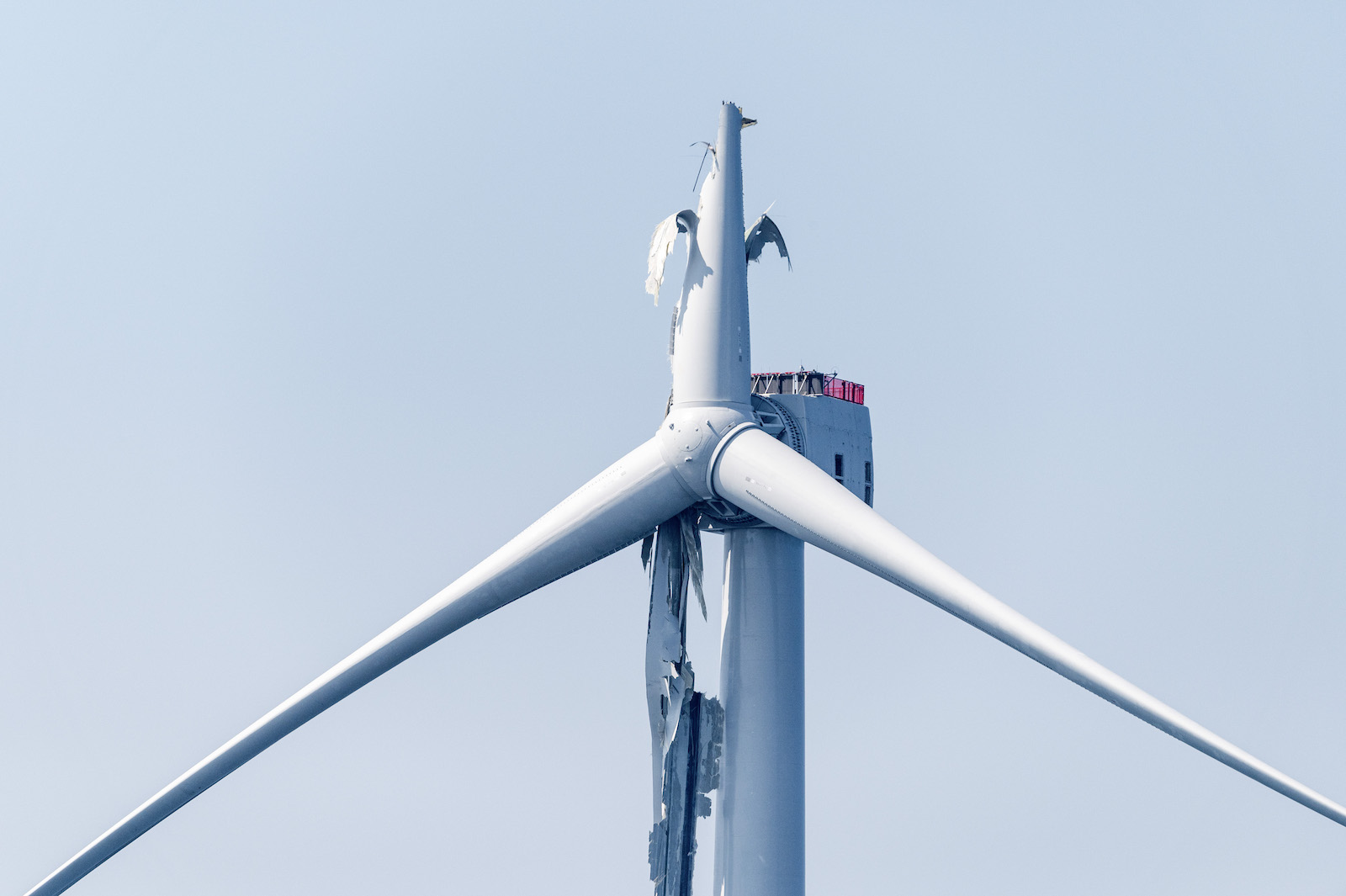
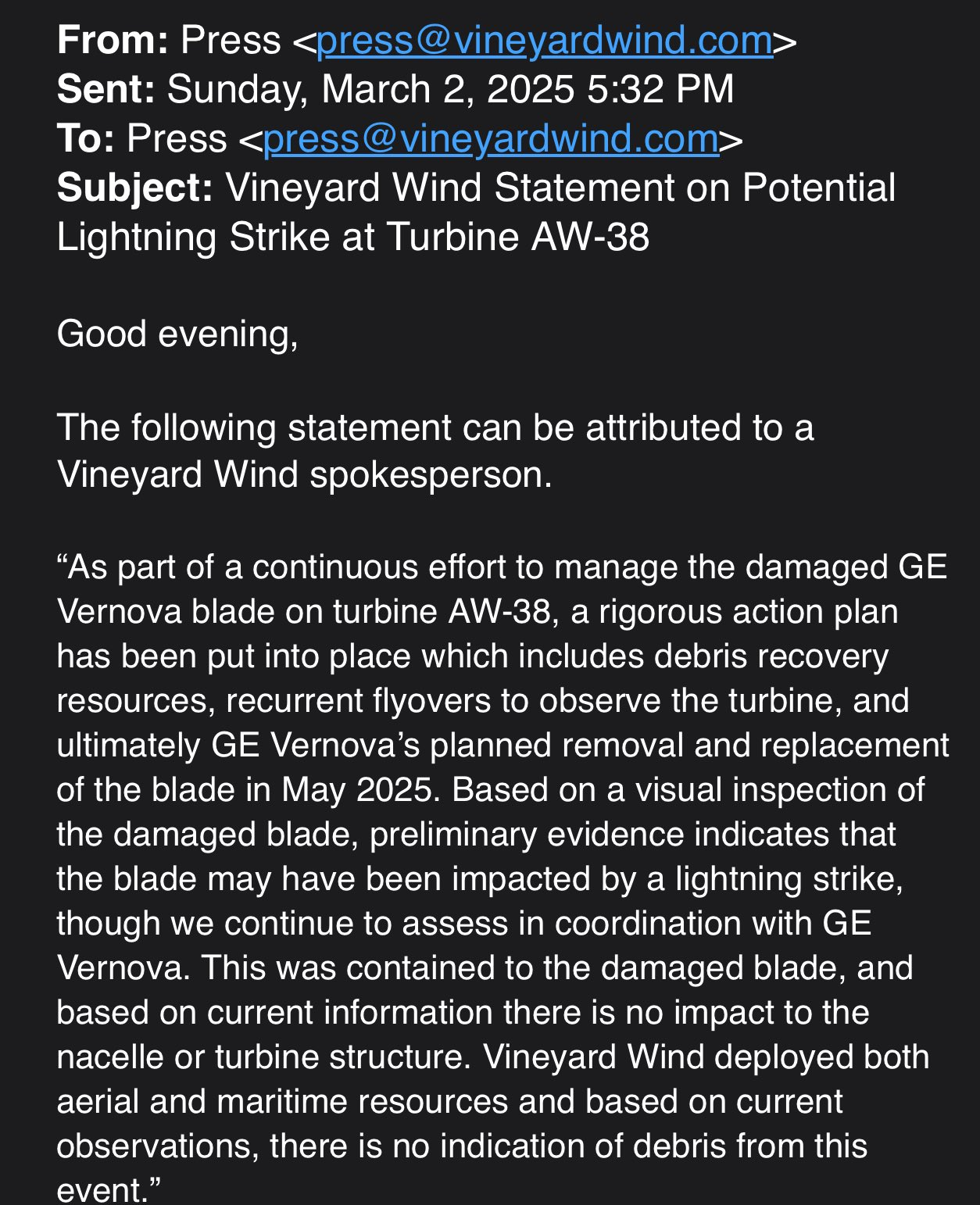
The same Vineyard Wind turbine blade that failed last summer has now been struck by lightning:
“Lightning struck the fractured stub of Vineyard Wind’s broken turbine blade in the early morning hours on Friday (2/27), according to representatives from Vineyard Wind and the Coast Guard. It was the remnants of the broken blade that snapped this July that were still attached to the turbine.”
“It appears the town (Nantucket) was not informed of the lightning strike by Vineyard Wind until it received media inquiries about it, over 48 hours after it happened.”
Politico.EU: “NATO will send around 10 ships to guard important underwater infrastructure in the Baltic Sea by the end of the week, Finnish newspaper Yle reported on Tuesday.
Why increase operating costs and expose platform operations to power disruption risks when there is no net environmental benefit?
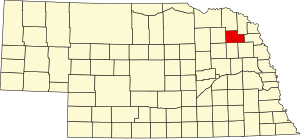
Posted on Facebook by the Wayne County, Nebraska Sheriff’s Office:
“On 02-22-25, the Wayne County Sheriff’s Office responded to a report of two work-related fatalities.
South of Winside, NE, a wind turbine maintenance crew experienced an equipment failure, which resulted in two men falling from a turbine. Eddy Noriega Sebinet (age 46) and Raidel Justiz Noriega (age 37) were pronounced deceased at the scene.
The Wayne County Sheriff’s Office was assisted at the scene by the Winside Volunteer Fire Department.

 Bud's Offshore Energy (BOE)