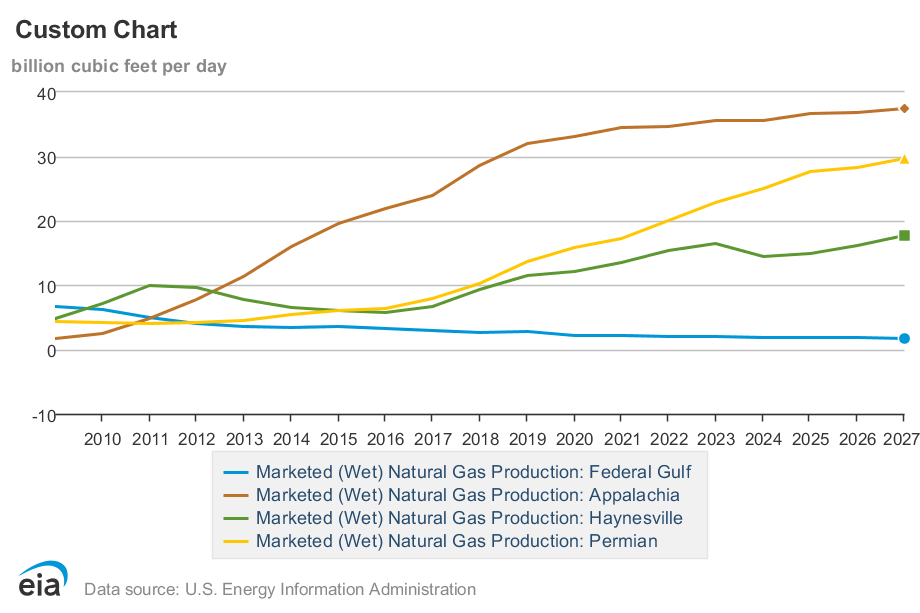
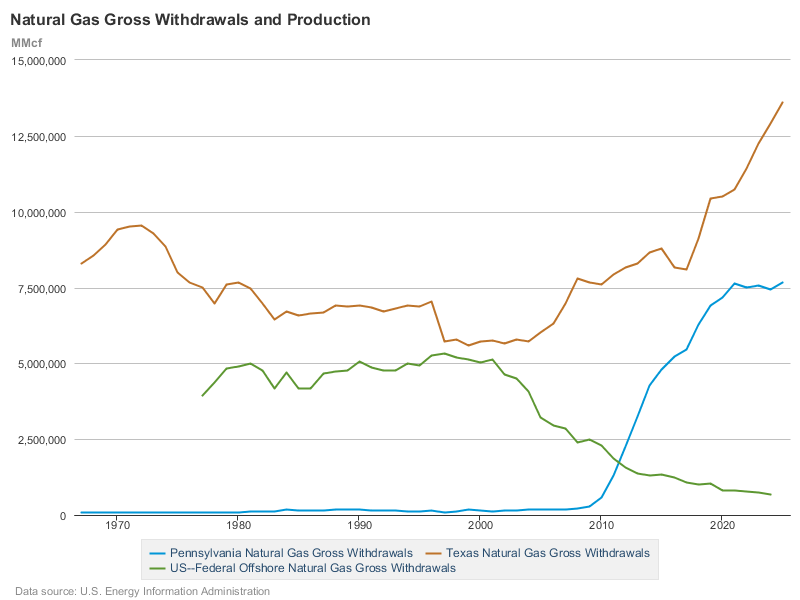
In 2025, more natural gas was produced in the Appalachia region of the Northeast than in any other US region, accounting for 31% of marketed natural gas production. (See the chart below.) Were it not for pipeline capacity limitations, recent growth in Appalachia production would have been greater.
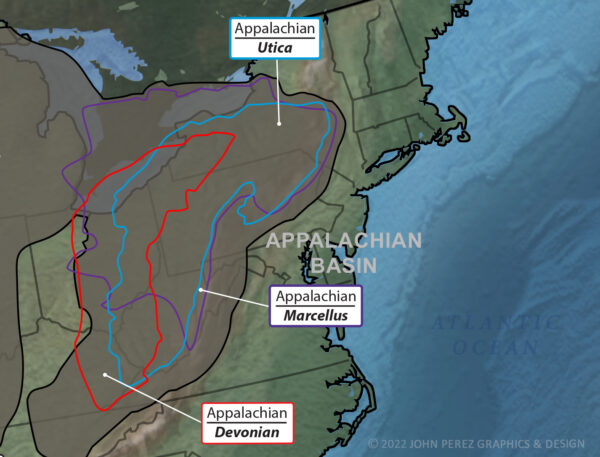
Appalachia production is primarily from the Marcellus and Utica shales in PA, WV, and Ohio.
OCS gas production, 80% of which is now associated gas from deepwater oil wells, continues to lag the shale basins. This is a big change from 25 years ago when the OCS produced more gas than any state but Texas. (See the chart below.) Interest in ultradeep (subsurface) OCS shelf gas prospects remains scant despite favorable demand forecasts and technological advances.
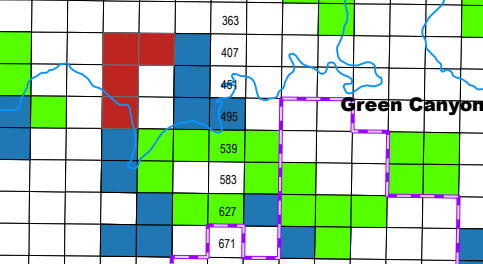
red=blocks receiving bids at BBG2; blue=BBG1 and Sale 261 leases; green=active leases issued prior to Sale 261
Although bidding at Sale BBG2 was rather subdued, Gulf heavyweights BP, Chevron, Shell, and Oxy/Anadarko, along with increasingly important Woodside Energy, competed for the 4 red blocks in the Green Canyon area (map above and table below). These elephant hunters presumably see excellent Paleogene (Wilcox) prospectivity in those blocks.
17 of the sale’s 38 bids (45%) and $32.8 milion of the sale’s $47 million in high bids (70%) were for these 4 blocks. BP’s $21 million bid for GC 404 was by far the sale’s highest bid.
Green Canyon Block No.
No. of bidders
High Bidder
Bid
404
5
BP
$21,009,990
405
2
BP
$885,99
448
5
Chevron
$4,967,067
492
5
Chevron
$5,887,188
At this time, the high costs and technical complexities (e.g. deepwaterand high pressure/high temperature reservoirs) limit Wilcox development to major oil companies and well financed, technically savvy independents. Expect some of the international majors that did not participate in BBG2 to acquire lease interest at a later date, which will again raise questions about the merits of joint bidding restrictions.
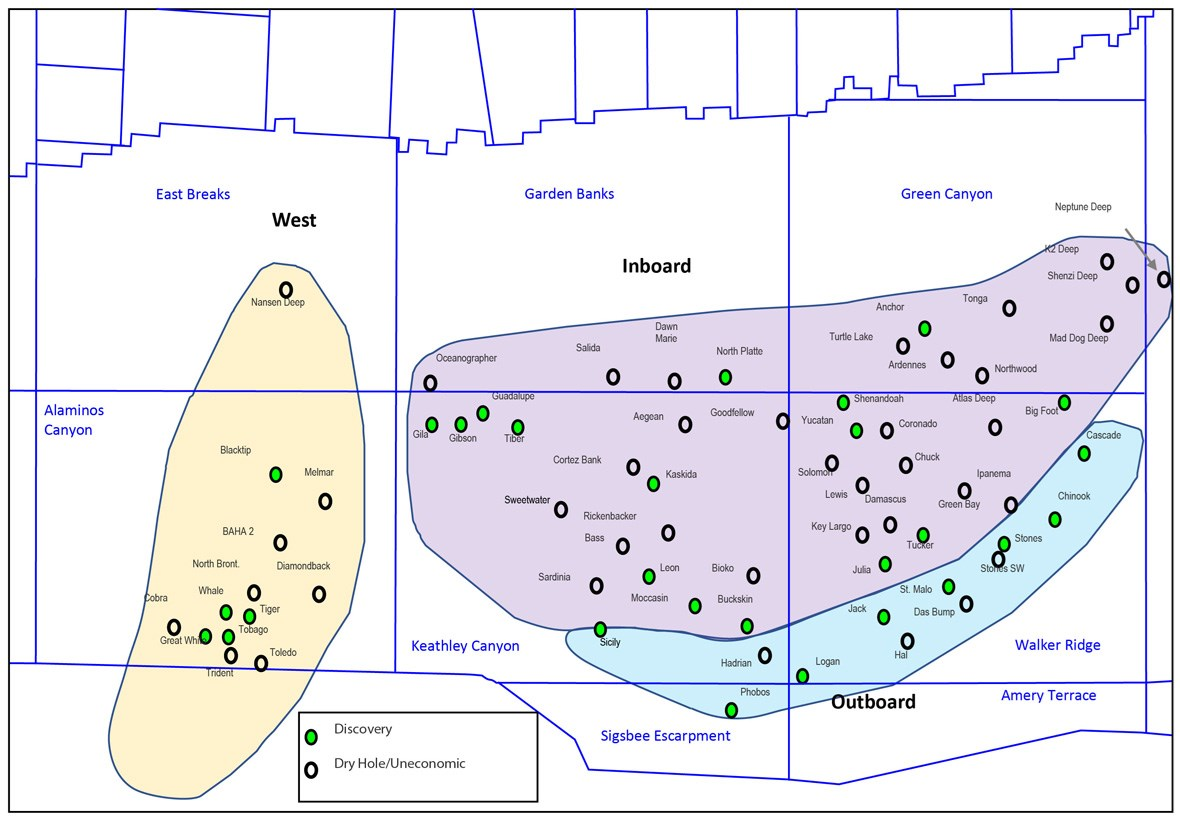
From AAPG graphic-Wilcox trend map. Eastern area can be subdivided into an outboard and inboard trend, with wells in the latter area showing variable thickness due to salt tectonics contemporaneous with deposition (From Zarra et al. 2019’s AAPG Search and Discovery article).
Imbedded below is a good presentation on the Paleogene Wilcox by Dr. Mike Sweet, Univ. of Texas:
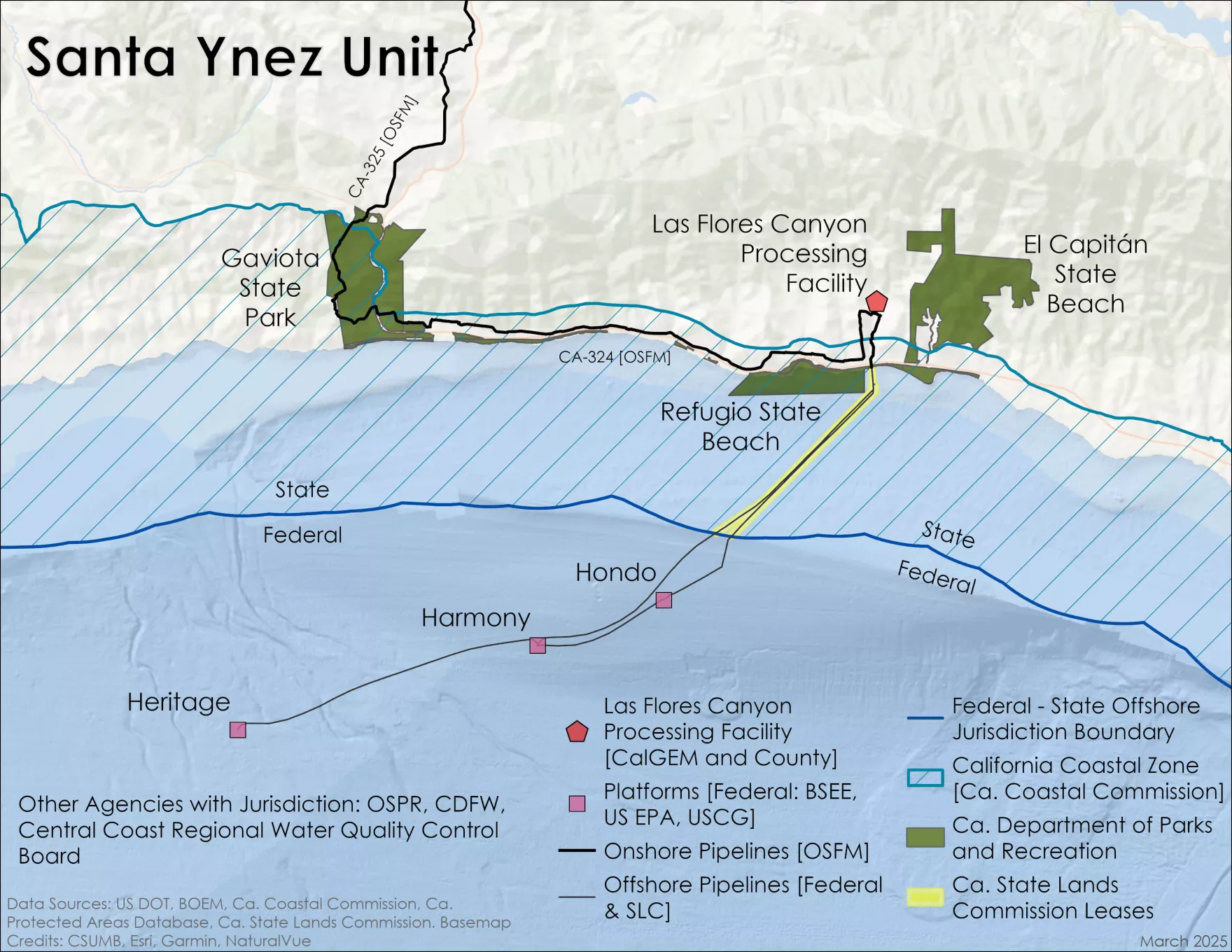
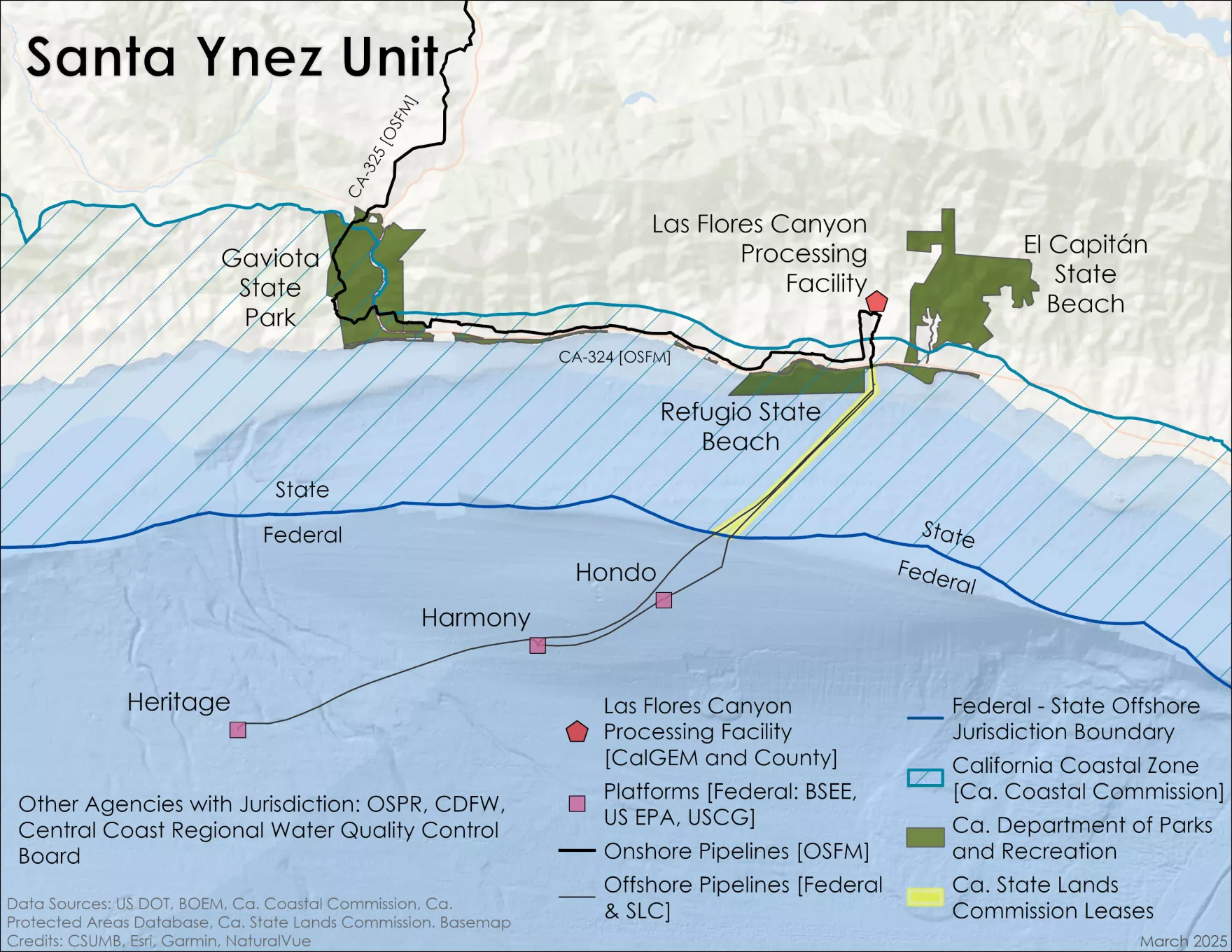
Add the unprecedented events of the last two weeks to the long and troubled history of the Santa Ynez Unit dating back to the Offshore Storage & Treatment facility days.There are no parallels in the history of the US OCS program.
To date in March:
3/3/2026: The Dept. of Justice issues an opinion asserting that, under the Defense Production Act of 1950 (DPA), an order issued by the President or his delegee would preempt California laws currently impeding Sable from resuming production and operating the associated pipeline infrastructure.
3/13/2026: Secretary of Energy Chris Wright issues an order to Sable invoking the DPA to immediately prioritize and allocate pipeline transportation services for hydrocarbons from the SYU through the Santa Ynez Pipeline System (SYPS).
3/14/2026: Sable resumes the transportation of Santa Ynez Unit oil through the SYPS from Las Flores Canyon (LFC) to Pentland Station. Prior to resuming hydrocarbon transportation from LFC to Sable’s sales point at Pentland Station, Sable had approximately 540,000 barrels of processed crude oil in storage at LFC, representing more than the line fill volume for the SYPS between LFC and Pentland Station.
3/16/2026: Sable resumes oil production at anticipated rate of 50,000 bopd and expects first sales by April 1, 2026. Production ramp-up is anticipated to proceed with full production resumption at Platforms Harmony and Heritage this month and Platform Hondo in June 2026
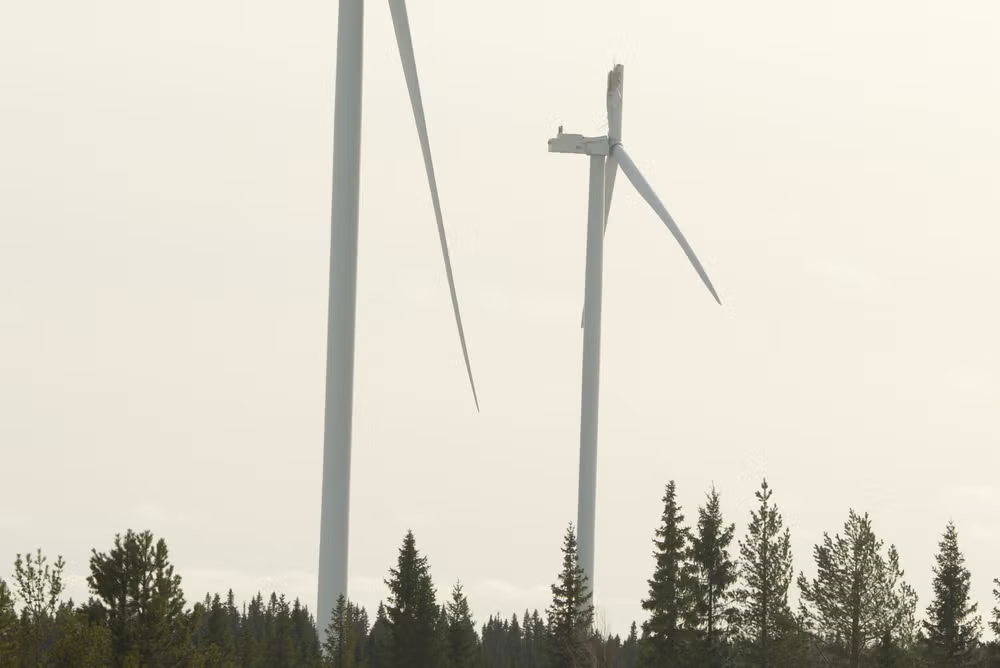
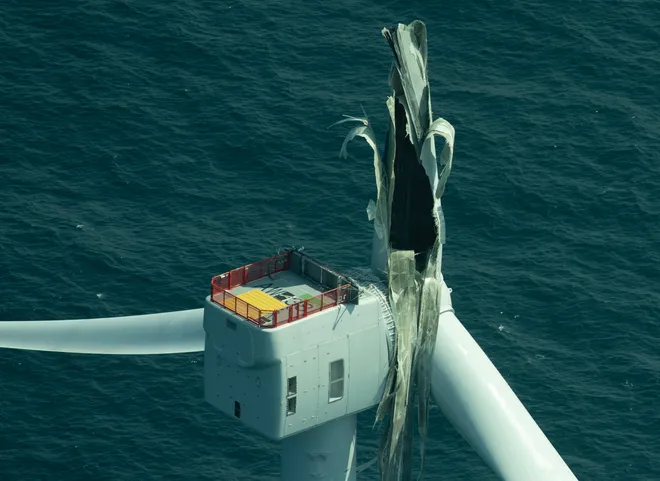
Broken blade at GE wind turbine at Björkvattnet wind farm in Sweden. Alexander Pohl photo posted at Recharge Per Recharge: The first blade break at the wind farm was probably caused by a manufacturing defect, and the second was damaged during installation. According to regional newspaper Jämtlandstidning, local residents were complaining about not getting sufficient information about the third such incident.
“We don’t know what’s happening because we’re not told anything,” Terese Björk, who witnessed the broken blade on Friday, told the newspaper.
The primary purpose of the independent investigation is to prevent recurrences at this or other projects in the US and worldwide. Available data suggest that blade failures are far too common.
(Bloomberg) — The Trump administration on Friday took action to clear the way for oil production off the California coast in a bid to ease the global fuel pressures created by the war with Iran.
The announcement by Energy Secretary Chris Wright follows an executive order signed by President Donald Trump on Friday and directs Sable Offshore Corp., a Houston-based company, to begin restoring operations for the Santa Ynez Unit and Santa Ynez Pipeline System in California.
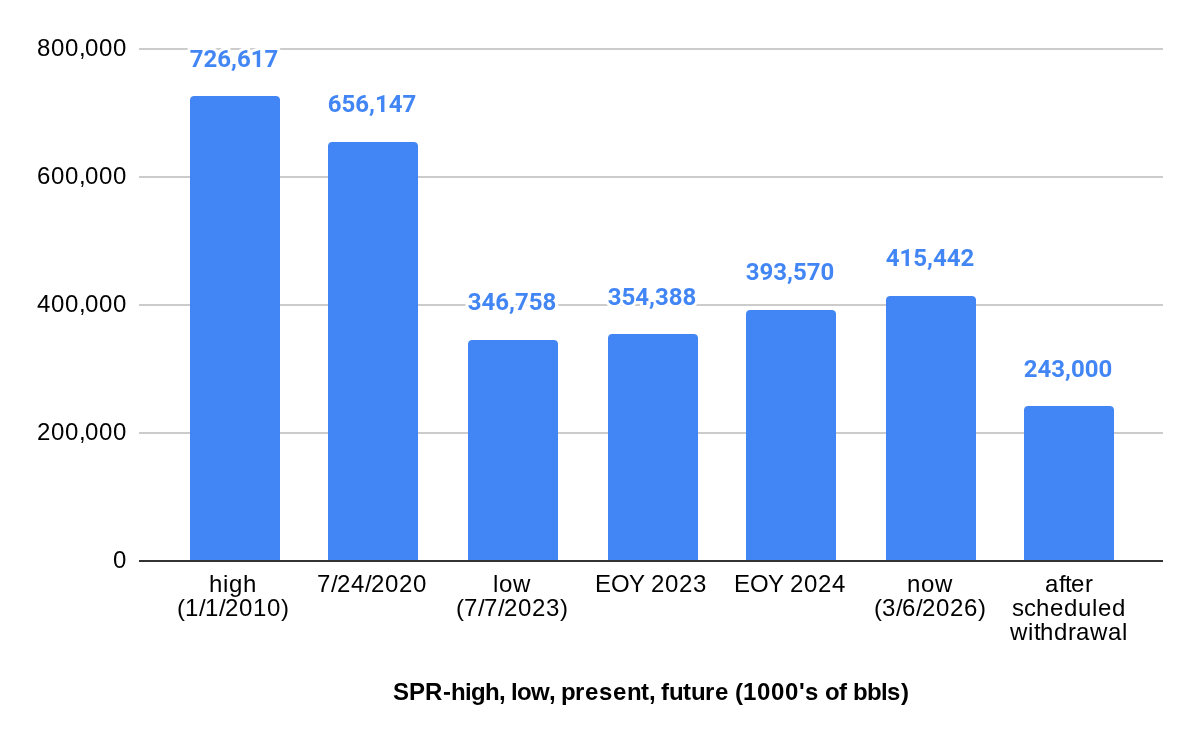
DOE (3/11/2026): “Earlier today, 32 member nations of the International Energy Agency unanimously agreed to President Trump’s request to lower energy prices with a coordinated release of 400 million barrels of oil and refined products from their respective reserves.
“As part of this effort, President Trump authorized the Department of Energy to release 172 million barrels from the Strategic Petroleum Reserve, beginning next week. This will take approximately 120 days to deliver based on planned discharge rates.
This will reduce the SPR to ~ 243 million bbls, 1/3 of capacity and the lowest level since it was initially filled in 2010. Market disturbances and national elections are too frequent to have confidence that the SPR will be refilled, even to the 500 million bbl level.
Meanwhile, the oil markets didn’t seem to be impressed by the announcement.

 Bud's Offshore Energy (BOE)