The SAS data indicate that the number of wind turbine incidents has risen sharply in recent years (see chart below). The increased number of turbines worldwide, and perhaps better news coverage of incidents, presumably contributed to the sharp increase. Nonetheless, the growing number of incidents is disconcerting, as is the absence of industry and government summaries and reports.
SAS acknowledges that their list, which is dependent on publicly available reports, is merely the “tip of the iceberg.” For example, the list does not include the June 2, 2025, Empire Wind project fatality.
The SAS list does capture the 2008 collapse of the Russell Peterson liftboat, which was collecting data offshore Delaware for a wind project. One worker died and another was rescued. The Coast Guard never issued a report on this tragic incident. Serious questions remain about the positioning of a liftboat in the Mid-Atlantic for several months beginning in March when major storms are likely, the liftboat’s failure mechanisms, the operator’s authority to be conducting this research, and the actions that were taken in preparation for storm conditions.
The Russell Peterson toppled in May 2008 while gathering data for a proposed offshore wind project.
The number of BSEE inspections in 2025 (first chart) remained relatively constant despite the extended government shutdown.
The decline in the number of Incidents of Noncompliance (INCs) in 2025 is encouraging (chart 2).
Given that BSEE’s tables have yet to be updated to include 2024 incidents, let alone 2025, it’s difficult to assess whether there have been similar declines in the number and severity of incidents. We do know that there were no occupational fatalities in 2025. (Note that OCS incident tables were once updated within 30 days at the end of each quarter. The public has a right to timely information on the type of incidents that are occurring, the operating companies, and the resulting casualties, pollution, and property damage.)
Chart 3 shows the decline in INCs by type – warnings, component shut-ins, and facility shut-ins
As is typically the case, a few companies accounted for a disproportionate number of violations, most notably the Cox legacy operators. More on this in a subsequent post.
The top 6 oil producers all had excellent compliance records, as did a leading shelf operator. More to follow.
Sable Offshore, California’s most notorious operator, fared well during 77 inspections of their three platforms in the Santa Barbara Channel.
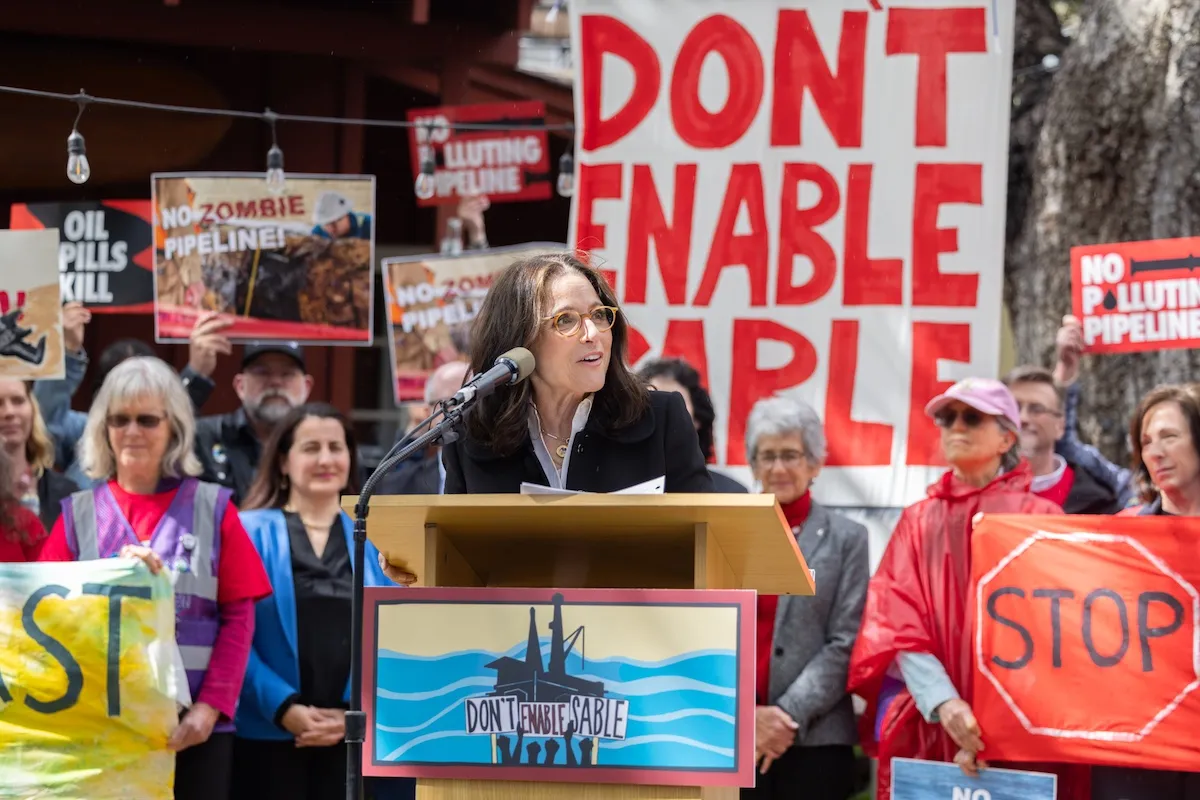
The Commission’s letter to PHMSA is attached (click on pages to enlarge). The CCC asserts the right, pursuant to the Coastal Zone Management Act, to review Sable’s restart/special permit application and further asserts that PHMSA’s special permit should be stayed pending their review.
The Commission also raises NEPA and Consent Decree compliance issues, and implies that PHMSA’s designation of the pipeline as “interstate” is subject to consistency review.
An Airbus H160 helicopter carrying eight people made an emergency landing at sea off the coast of Cabo Frio, Brazil, on Friday (1/2), prompting a rapid search and rescue operation by the Brazilian Navy. All occupants were rescued safely, underscoring the importance of offshore aviation safety and emergency response readiness.
The incident involved an OMNI Táxi Aéreo helicopter operating in support of offshore production platforms. The aircraft landed approximately 74 kilometers south of Cabo Frio, Brazil. Six passengers and two crew members were on board at the time of the emergency landing.
Following the landing, a Search and Rescue (SAR) operation was immediately activated. A Navy helicopter was dispatched to the location, where the occupants had evacuated into two life rafts. All eight individuals were recovered and transported to the clinic at the Naval Air Base of São Pedro da Aldeia. Authorities confirmed that everyone was in good condition.
Fortunately, the weather was good and the sea conditions were calm.
A colleague of mine, Bill Gazdik, died in a helicopter crash while en route to the Western Pacesetter 1 drilling rig offshore New Jersey in 1978. Another colleague, Jack Willock, was seriously injured in that incident. Jack attributed his survival to the helicopter “dunker” training he had recently completed.
Although the number of events has decreased significantly over the years, helicopter incidents are still a leading safety concern. Four died on 12/29/2022 when a helicopter crashed at the West Delta 106 A platform the Gulf.
rescue offshore Brazil from the Rig Pigs Facebook page
Note: In light of last night’s events, I’m re-posting this 10/13/2025 BOE post.
Nobel Peace Prize winner Maria Corina Machado wisely calls for privatizing Venezuela’s oil and gas industry, which was highly respected prior to the Chavez regime. The national oil company, Petróleos de Venezuela (PDVSA), is now a corrupt arm of the Maduro government.
“The whole Board is responsible for the loss of about 800,000 barrels per day of oil production; for the fraudulent certification of “proven oil reserves” in the Orinoco heavy oil region; for the irregular contracting, with a ghost company, of the offshore drilling barge Aban Pearl for twice the amount really paid to the owners of the barge; for the importing of 180,000 tons of food that later went to rot in Venezuelan ports but provided some of the members of the board with millions of dollars in criminal profits; and in numerous other corrupt practices that are well documented.“
Machado’s oil and gas platform is pasted below. She has a good perspective on the proper role of govt.
Privatization and reactivation of oil and gas production by attracting specialized international and national companies. Venezuela has one of the world’s largest reserves of oil and natural gas. As per the Organization of Petroleum Exporting Countries (OPEC) and the International Energy Agency (IEA), the country has reserves of over 300 billion barrels of oil and 200 trillion cubic feet of natural gas. The goal in this area is to steadily increase oil and gas production in order to leverage the window of opportunity that exists in today’s global demand for hydrocarbons. Achieving this objective will require enormous investments that the Venezuelan State cannot undertake. The solution is to attract private capital, and the strategy to achieve this end is the industry’s privatization. Where appropriate, all the industry’s productive activities will be privatized in order to secure massive private investments and a sustained increase in production, under conditions that guarantee legal certainty and an environment that is attractive for investors. The State will continue to receive fiscal income in the form of royalties and taxes, and will ensure that an operational framework exists in which private companies can increase production in the shortest possible timeframe. A Venezuelan Energy and Petroleum Agency will be established to exercise the role of industry regulator. Oil privatization will allow Venezuela to regain its position as a safe and reliable supplier, and will provide unparalleled investment opportunities in the industry.
Attached is the supplemental complaint in the lawsuit Revolution Wind, LLC v. United States Department of the Interior, Case No. 1:25-cv-02999-RCL, filed in the U.S. District Court for the District of Columbia.
In addition to the Virginia Wind and Santa Ynez Unit courtroom drama, the EIA reported that Gulf of America oil production averaged 2.031 million bopd in October. That is the second highest Gulf OCS monthly oil production in history, trailing only the Aug. 2019 record of 2.044 million bopd.
Also, with only two 2025 months remaining to be reported, the annual production record is a distinct possibility. 693 million bbls were produced in the Gulf in 2019. That mark will be exceeded if daily production averaged >2 million bopd in Nov. and Dec.
The President of Guyana, Irfaan Ali puts the BBC’s Stephen Sackur firmly in his place over his questions regarding Guyana’s policies on climate change & net zero. pic.twitter.com/irvtltPWyQ
Happy New Year! 2026 is sure to be another exciting year in the offshore energy world! Thanks for joining the parade!
While the blog deals primarily with US events and issues, international viewers are greatly appreciated. According to WordPress, the blog was viewed in over 100 countries in 2025. In terms of viewership, the top 10 after the US were (in descending order) the UK, Canada, Germany, Australia, China, the Netherlands, Singapore, Norway, India, and Italy. Thanks for stopping by!
Energy drives prosperity and the opportunity for social and environmental progress. The late Petr Beckmann, an electrical engineering professor at the University of Colorado and a prominent nuclear energy advocate, reminded us:
BOE is an independent, unsponsored, ad-free blog that is dedicated to offshore safety, pollution prevention, energy production, effective regulation, and responsible energy policy.