Feeds:
Posts
Comments

Archive for July, 2025

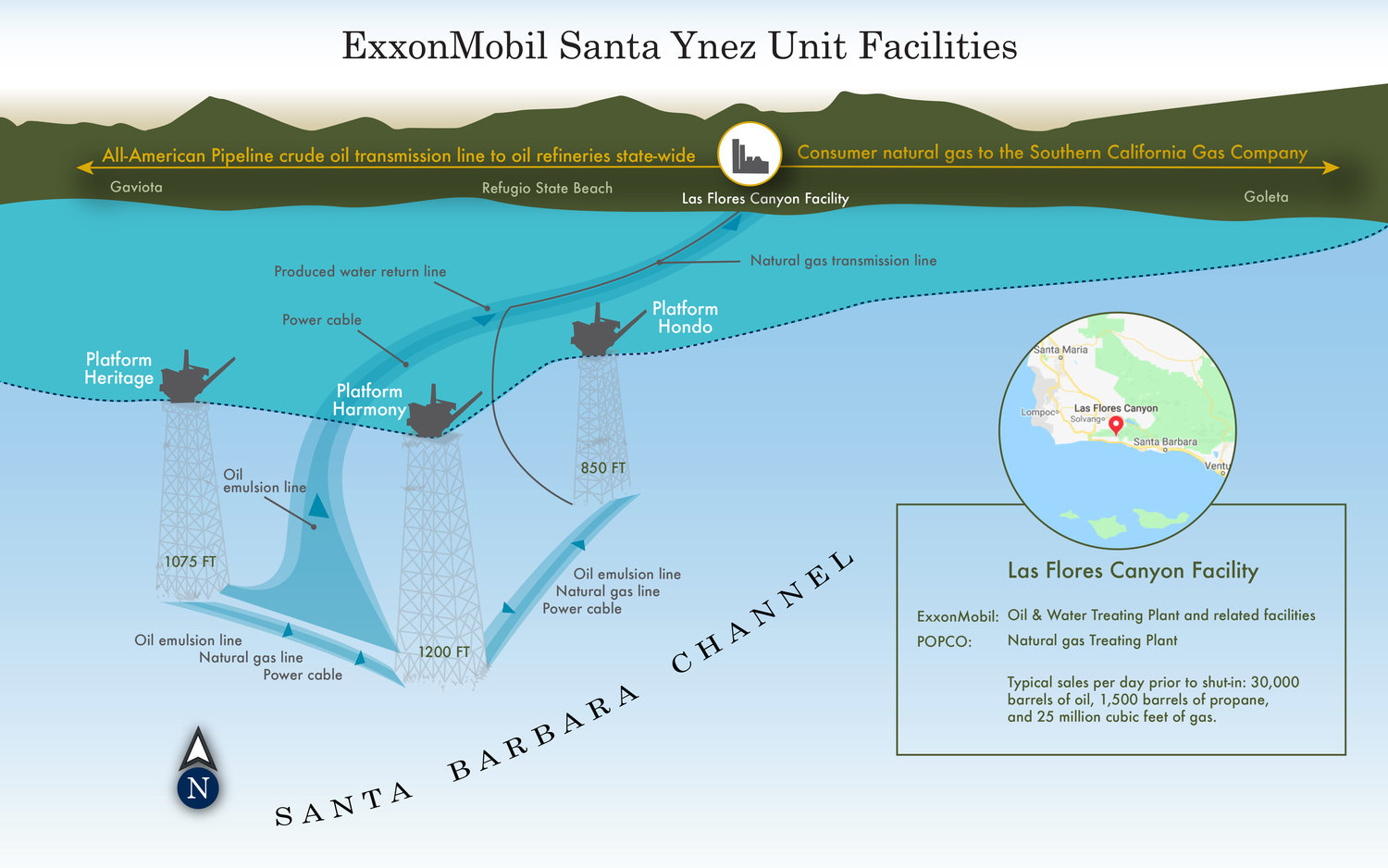
On July 25, 2025, more than 2 months after Sable’s brief production restart and 7 weeks after a court decision halted further production, BSEE surprisingly announced the resumption of Santa Ynez Unit (SYU) production boasting:

This is a significant achievement for the Interior Department and aligns with the Administration’s Energy Dominance initiative, as it successfully resumed production in just five months.

Were the authors of the press release unaware that the SYU production, which was largely from well tests, was halted by court order shortly after it began? More philosophically, is such cheerleading appropriate for the principal safety regulator, particularly given that BSEE is engaged in litigation over its practices in facilitating SYU production?

Ironically, just 3 days after BSEE hailed the resumption of production, the attached lawsuit was filed on behalf of investors who purchased Sable Offshore securities between May 19, 2025 and June 3, 2025. BOE contributor John Smith shared the filing.

The plaintiffs allege misleading statements regarding the resumption of production. Some of the key points cited in the filing:

  • On May 19, 2025, before the market opened, the Company issued a press release entitled “Sable Offshore Corp. Reports Restart of Oil Production at the Santa Ynez Unit and Anticipated Oil Sales from the Las Flores Pipeline System in June 2025.”
  • The release informed that Sable expected to fill the ~540,000 barrels of crude oil storage capacity at LFC (Los Flores Canyon onshore processing facility) by the middle of June 2025 and subsequently recommence oil sales in July 2025.
  • Following the May 19 Press Release, Sable Offshore stock climbed from a closing price of $28.86 per share on May 16, 2025 to $33.02 per share on May 19, 2025, a 14.4% climb in share price.
  • Contrary to Defendants’ representations, Sable Offshore had not resumed commercial production off the coast of California.
  • Defendants then used the share price appreciation following the May 19 Press Release to conduct a secondary public offering (or “SPO”) at a higher offering price per share than would have otherwise been possible.
  • State Lands Commission staff informed the Lt. Gov./Commission Chair that the limited oil flows were the result of well-testing procedures required by BSEE prior to restart. These activities did not constitute a resumption of commercial production or a full restart of the SYU.
  • Characterizing testing activities as a restart of operations is not only misleading but also highly inappropriate –particularly given that Sable has not obtained the necessary regulatory approvals to fully resume operations at SYU.
  • Any attempt to restart commercial operations at the SYU without final regulatory approvals may place the company in violation of its lease terms and jeopardize the status of Sable’s holdover State lease.
  • Santa Barbara County Judge Thomas Anderle granted a preliminary injunction requested by the California Coastal Commission against Sable Offshore for alleged violations of The California Coastal Act.

      Read Full Post »

      By rescinding WEAs, BOEM is ending the federal practice of designating large areas of the OCS for speculative wind development, and is de-designating over 3.5 million acres of unleased federal waters previously targeted for offshore wind development across the Gulf of America, Gulf of Maine, the New York Bight, California, Oregon, and the Central Atlantic.”

      full announcement

      Read Full Post »

      On Tuesday morning, the Nantucket Select Board blasted Vineyard Wind and gave the company 2 weeks to respond to their 15 demands. The Nantucket Current provides good coverage of the press conference. The specific demands are listed below.

      1. Text emergency notifications to designated Town officials within 1 hour.
      2. Alert the same officials when blade monitors detect anomalies.
      3. Share with Nantucket the content of any written communications with or from federal agencies regarding project failures that have impacts on Nantucket.
      4. Email detailed monthly project updates to the Select Board and Town Manager.
      5. Present updates and take public questions at Select Board meetings upon request and no less than quarterly.
      6. Respond to written questions from the Select Board within three business days.
      7. Provide relevant project reports within 1 week of submission to any agency.
      8. Share all studies or data reports on adverse effects within five business days of receipt.
      9. Disclose correspondence with regulatory agencies within 15 business days.
      10. Notify the Town if the company is asserting any confidentiality claims to shield public disclosure of reports or data in regulatory filings.
      11. Pay liquidated damages ($250,000) per violation of the above communication protocols.
      12. Pay liquidated damages ($25,000) per turbine per day) for each day that turbine lights are on without the Aircraft Detection and Lighting System (ADLS) being active.
      13. Within 2 months, initiate a process to seek public input on new emergency response plans—including blade failure scenarios.
      14. Establish and maintain a $10 million escrow fund to ensure coverage of cleanup costs from future failures.
      15. Permanently suspend new projects if any future incident forces beach closures or shellfish harvesting bans for seven consecutive days or 14 total days in any 6-month period.

      I observed the press conference on the Town’s YouTube channel, and my sense is that this may be Vineyard Wind’s last chance to amicably resolve these issues. Board member Dawn Hill, who now regrets signing the increasingly unpopular Good Neighbor Agreement with Vineyard Wind, didn’t hold back when she said:

      “These wind turbines are bigger, brighter, and much more impactful than we ever thought, and not to mention the environmental hazard from failures. But my choice would be with our new, federal administration to really wake up and try and put an end to these things, because they’re not worth it to the coast of the United States.”

      Read Full Post »

      Background: On February 12, 2024, the bankruptcy court approved the sale of certain Cox Operating assets to Natural Resources Worldwide LLC (NRW), a company that “does not mine, drill, or produce minerals, has no operations, and conducts business solely in an office environment.”

      NRW contracted with Array Petroleum to operate the former Cox Assets. Array subsequently sued NRW, asserting that NRW received $78,000,000 in revenue, but disbursed only about $48,000,000 to pay Array’s invoices and those of the subcontractor.

      The court filing claimed that NRW failed to pay Array $2.5 million, the subcontractors $10.7 million, and the United States $12 million. A large share of the subcontractor costs were probably for well operations given that 21 Array workover applications were approved in 2024 and 2025. The $12 million due to the Federal government is reportedly for royalty payments. Were any revenues set aside for decommissioning liabilities?

      Array’s lawsuit was dismissed by the court on January 3, 2025, after a joint motion to dismiss was filed by the defendants. Information on the reasons for the dismissal is not publicly available.

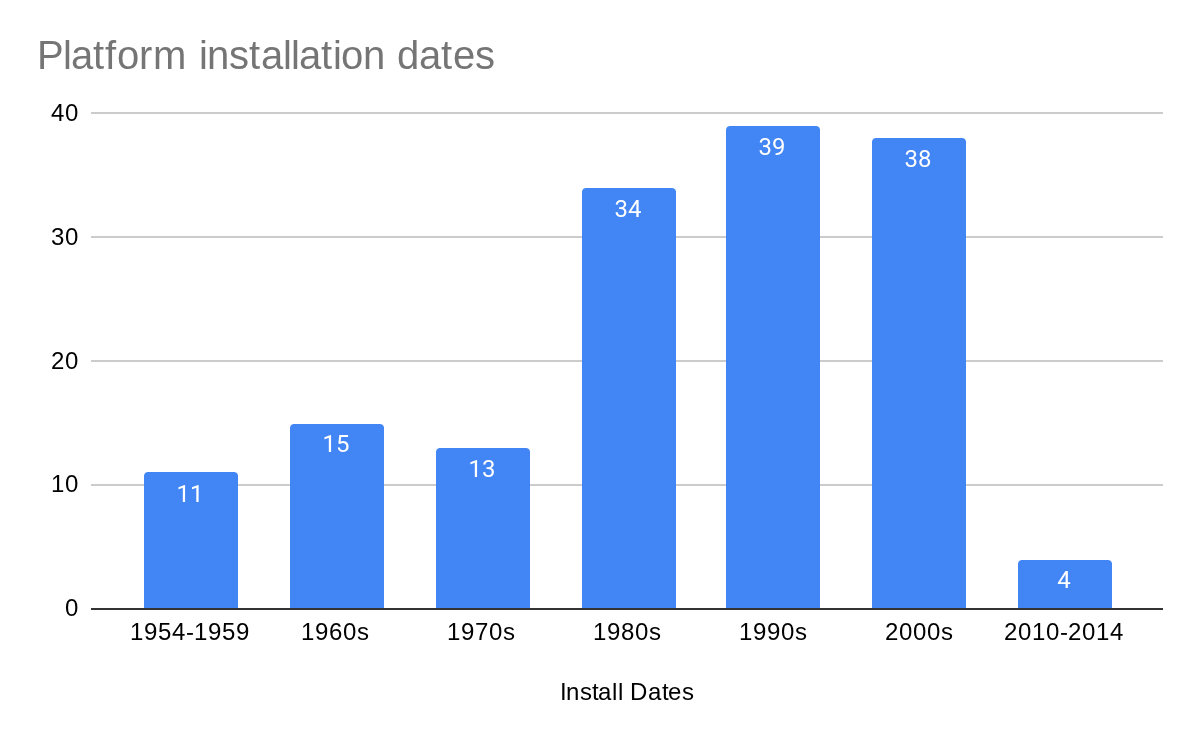
      Old platforms: According to BOEM records, Array operates 154 platforms previously owned by Cox. These platforms are in the Ship Shoal, South Marsh Island, and West Delta areas of the Gulf of America. Most are >30 years old and four are more than 70 years old (see chart below). 41 are classified as major structures including 15 of the 26 platforms installed in the 1950s and 1960s. 44 are manned on a 24 hour basis. 79 have helidecks. Massive decommissioning liabilities loom.

      Violations: NRW/Array ranks 37th out of 42 companies in GoA oil production (2025 YTD) and 36th out of 42 companies in gas production, but leads the pack in Incidents of Noncompliance (INCs):

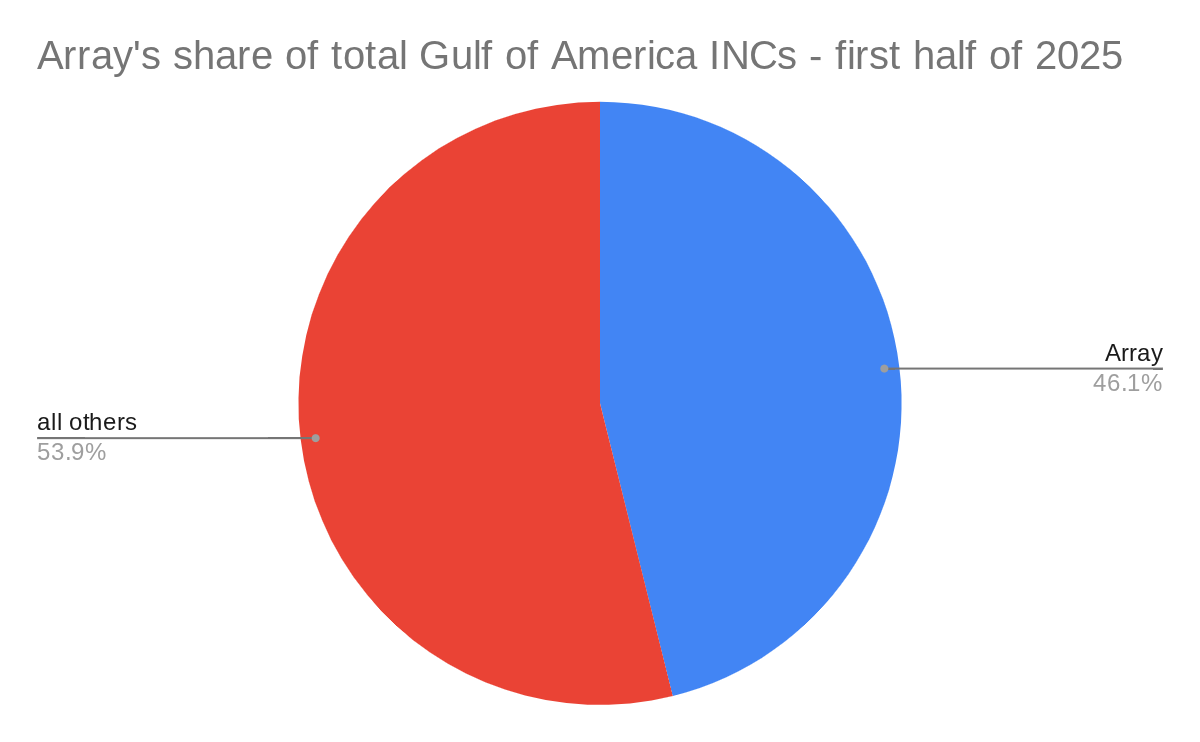
      • Array accounted for nearly half of all GoA INCs issued in the first half of 2025 (chart below).
      • Array was issued 9 times more warning INCs (311) than any other operator. Apache was second with 34.
      • Array had more component shut-in INCS (46) than any other operator. W&T, another operator of Cox legacy platforms, was second with 32.
      • Array had more facility shut-in INCs (6) than any other operator. W&T was again second with 5.
      • Array averaged 2.0 INCs/facility inspection vs. a combined average of 0.3 INCs/facility inspection for all other operators.
      violation typewarningscomponent shut-insfacility shut-ins
      Array311466
      all others21116449

      Lessons that should have been learned from the Cox, Fieldwood, Black Elk, Signal Hill, and other bankruptcies dating back to the Alliance Operating Corp. failure in 1989:

      • There are many small and mid-sized companies that are responsible operators. Their participation in the OCS program should be encouraged. However, others have demonstrated, by their inattention to financial and safety requirements, that they are not fit to operate OCS facilities.
      • The growth of Fieldwood, Cox, Signal Hill, and Black Elk was in part facilitated by lax lease assignment and financial assurance policies. 
      • Operating companies should have to demonstrate that they can operate safety and comply with the regulations before they are approved to acquire more properties.
      • Despite ample evidence of the importance of compliance and safety performance in determining the need for supplemental financial assurance, BOEM’s 2024 rule dropped all consideration of these factors.,
      • Expect the ultimate public cost of the Cox bankruptcy, in terms of decommissioning liabilities and the need for increased oversight, to be large.
      • The Federal govt (Justice/Interior) should strongly oppose bankruptcy court asset sales that increase public financial, safety, and environmental risks.

      Read Full Post »

      The attached petition from Save the East Coast Inc. et al requests that NOAA revoke the Empire Wind Letter of Authorization using the emergency authority delineated at 50 C.F.R. § 216.106(f).

      This is a strong filing, but revocation would be difficult given the extensive development activity to date and the Administration’s decision in May to allow the project to go forward.

      Read Full Post »

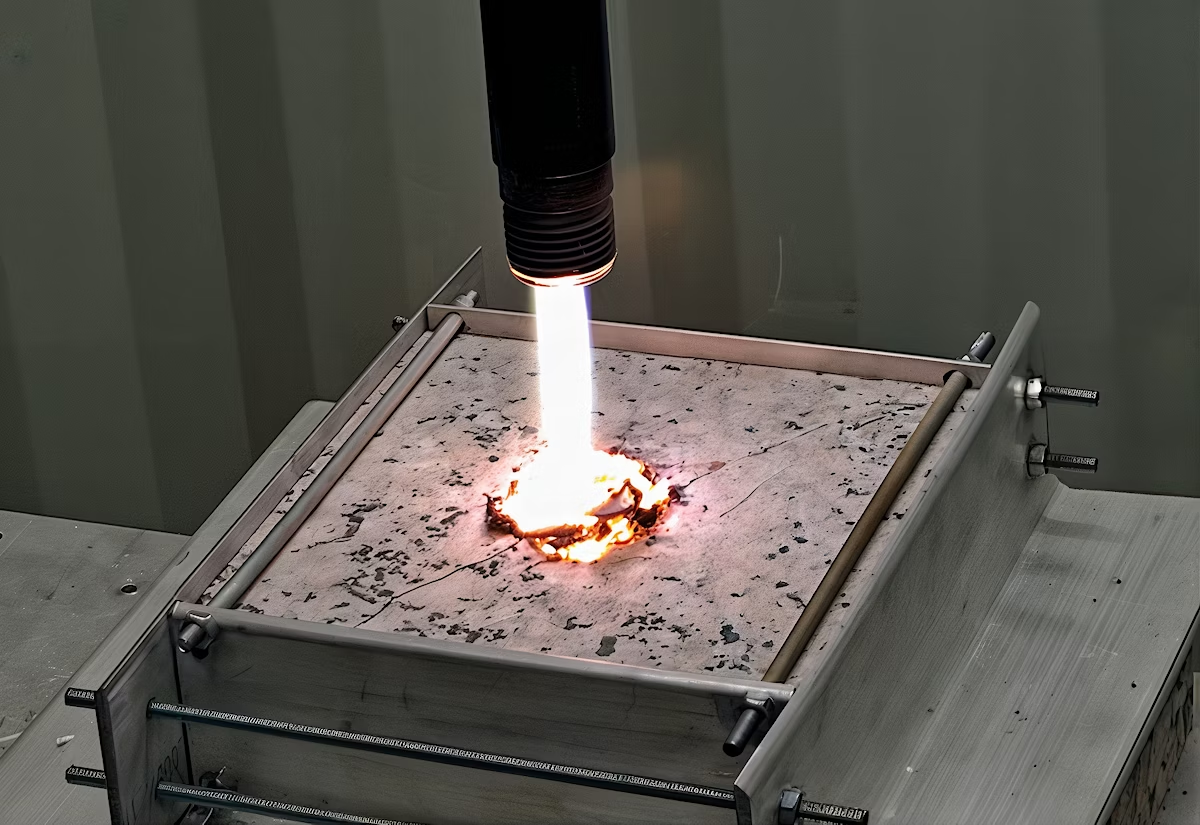
      HOUSTON (7/22/2025) – “Quaise Energy, a leading developer of grid-scale superhot geothermal energy, today announced it has successfully drilled to a depth of 100 meters using its proprietary millimeter wave technology at its field site in Central Texas. This achievement sets a record for millimeter wave drilling and marks a major step forward in unlocking the Earth’s vast geothermal energy as a scalable, baseload energy source.

      • Prior to this year, millimeter wave drilling had only been demonstrated in the laboratory (a few centimeters deep).
      • The granite drilled during the field test is the same type of hard rock found in the basement layer of the Earth’s crust.
      • Quaise has plans to build a gyrotron with 10x more power.
      • A pilot power plant in the Western U.S. is planned for as early as 2028.

      Related posts

      Read Full Post »

      Per the New Bedford Light:

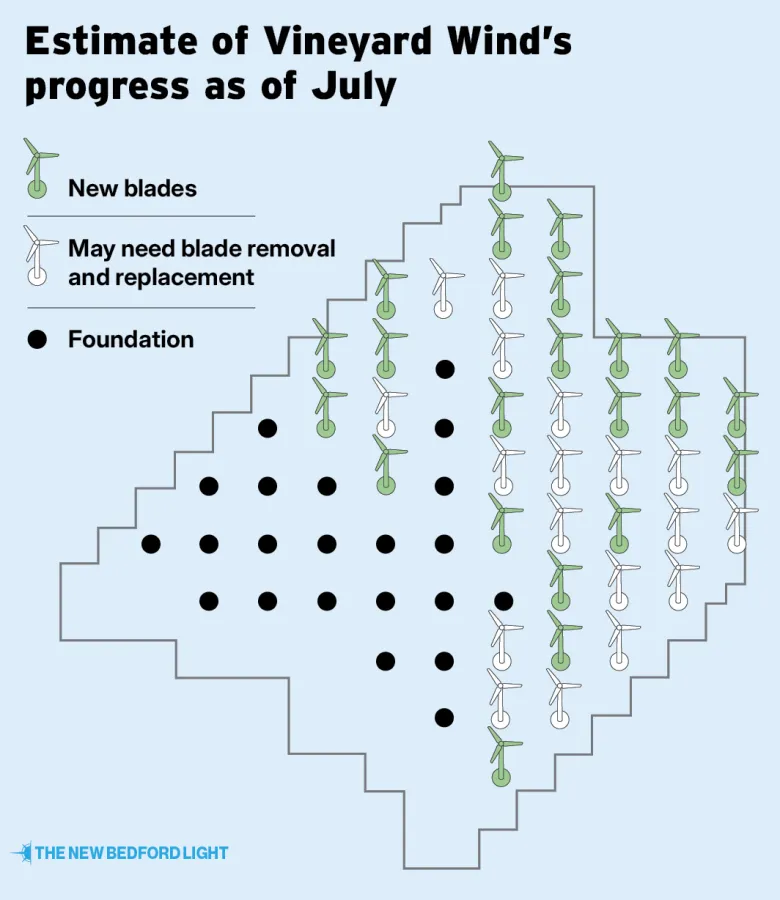
      • Vineyard Wind is now sending power from 17 turbines to the Massachusetts grid, up from four in May.
      • According to satellite images, it appears at least 40 of the project’s 62 turbines are in the water as of this month.
      • Can’t tell how many blades are from the Canadian plant that manufactured the blade that failed, and therefore need to be removed and replaced.
      • A cross-examination of past detailed maps from Vineyard Wind and new satellite images suggests that about 22 of the 40 seemingly installed turbines are likely complete.
      • A second turbine installation vessel,  the new Danish jack-up Wind Pace, has arrived and is assisting the Sea Installer, the primary installation vessel.

      Given the absence of updates from Vineyard Wind and its regulators, the excellent reporting by local media like the New Bedford Light and Nantucket Current is much appreciated.

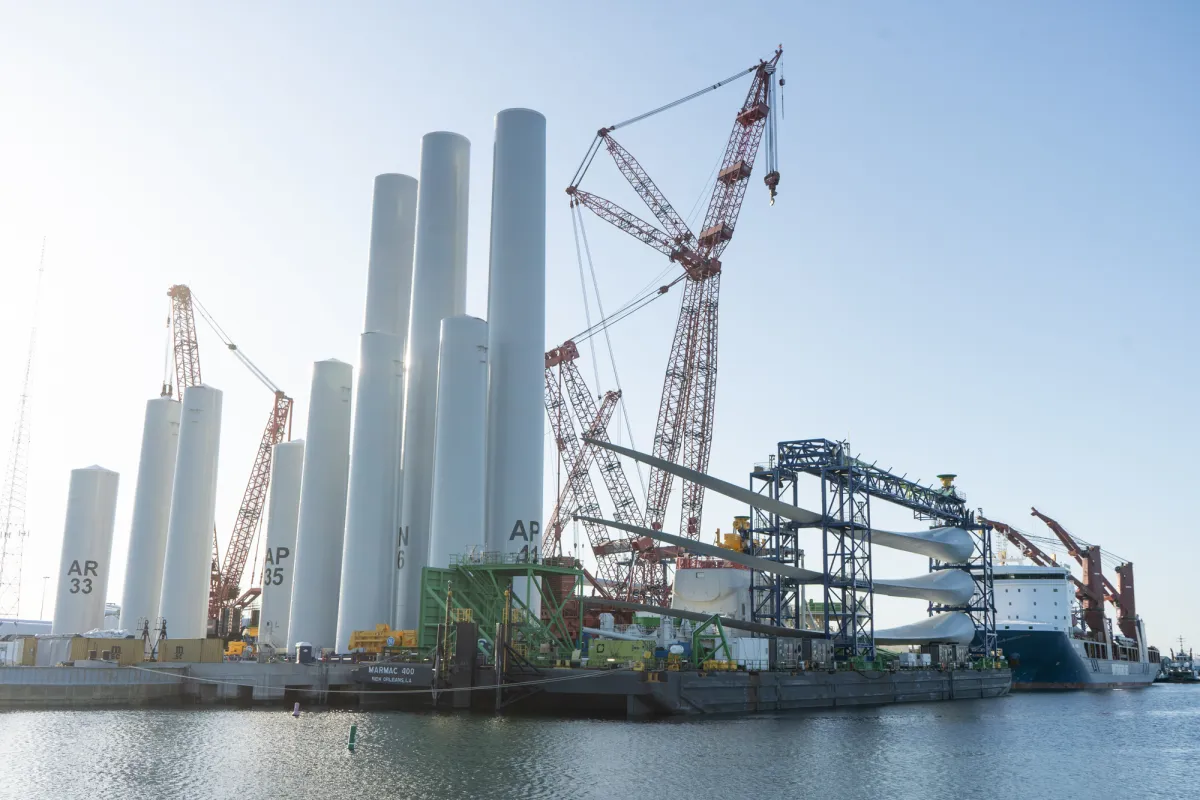
      Turbine tower components stand tall at the New Bedford Marine Commerce Terminal in April 2025. Credit: Eleonora Bianchi / The New Bedford Light

      Read Full Post »

      Nantucket Current: Nantucket officials and attorneys will hold a press conference next Tuesday, July 29th, at 9:30 a.m. regarding “Vineyard Wind’s failure to meet its legal and public commitments to the community.” 

      Meanwhile, is this a satisfactory response from BSEE to the Current’s inquiry regarding the bureau’s long delayed report on the turbine blade incident?

      “BSEE’s comprehensive and independent investigation is ongoing,” an agency spokesperson wrote in an email to the Current on Tuesday. “There is no timetable for the completion of the investigation, as BSEE focuses on ensuring that the investigation is thorough and complete.”

      Read Full Post »

      Linked below is a new Rigs to Reefs film (“Steel to Sanctuary”). Note the commentary on permitting complexity and regulatory fragmentation.

      Not mentioned in the film are the extraordinary efforts of the Mineral Management Service’s Villere Reggio in establishing the Rigs to Reefs program. Villere (pictured below), has a most interesting family history as summarized in the caption. See p. 3 of this issue of MMS Today for the complete article.

      Read Full Post »

      In the Independent, Nick Welsh aptly described the latest court decision in the long and winding road that Sable Offshore hopes will lead to Santa Ynez Unit production:

      When Judge Donna Geck got through ruling on the latest showdown between Sable Offshore Oil and Santa Barbara’s environmental establishment last Friday morning, it wasn’t clear if the no-nonsense judge cut the proverbial baby in half or kicked the can down the proverbial road.” 

      Bottom line: The judge will “continue to bar the Fire Marshal from taking any steps to process Sable’s restart application until 10 days after Sable had received all the necessary permits and approvals from the myriad of state, federal, and local agencies that enjoy some degree of regulatory oversight over the proposed project.” Does that mean any agency, even one with a minor or questionable role, can block the project?

      As the author notes:

      “As of this writing, it’s not entirely clear which of those agencies have yet to issue Sable the permits it needs to start the restart process and when they’re likely to do so, if at all. Even less clear is whether there’s any agreement among the dueling parties as to which agencies have standing to even weigh in.”

      Read Full Post »

      Older Posts »