Die Dunkelflaute or dark lulls have drawn attention to the need for dispatchable power (typically from gas turbines or coal-fired power plants) when the weather isn’t cooperating.
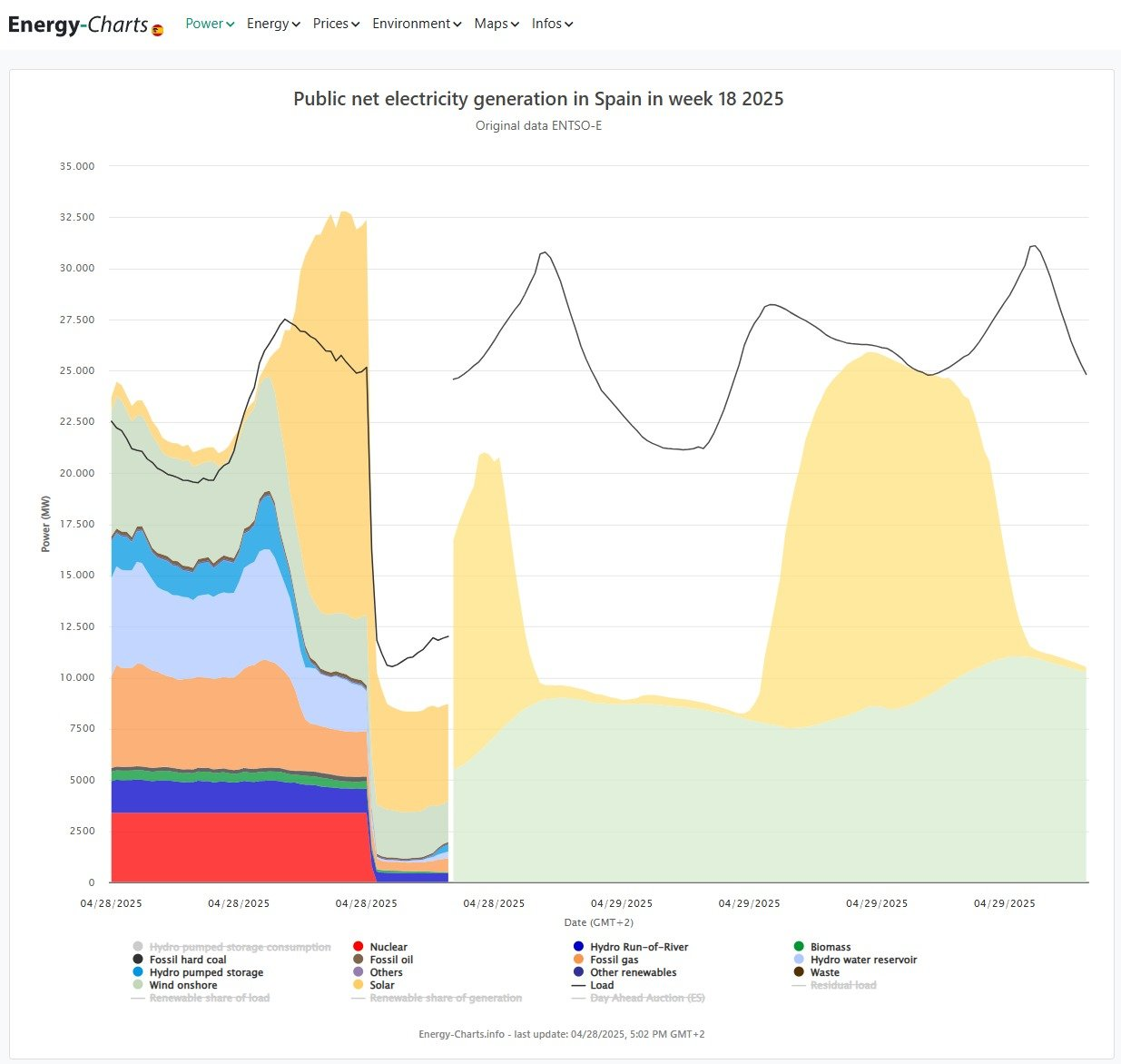
The massive power outage in Spain and Portugal on Monday may be the result of the opposite challenge – a surge in solar power supply greatly exceeding demand (dark line in chart below).
Note that no extreme weather events were reported in Spain on April 28, 2025. The Portuguese grid operator mentioned “extreme temperature variations” in Spain’s interior, possibly causing grid oscillations, but no storms or heatwaves were noted. Weather was typical for April, with mild temperatures (8-19°C) and some rain.
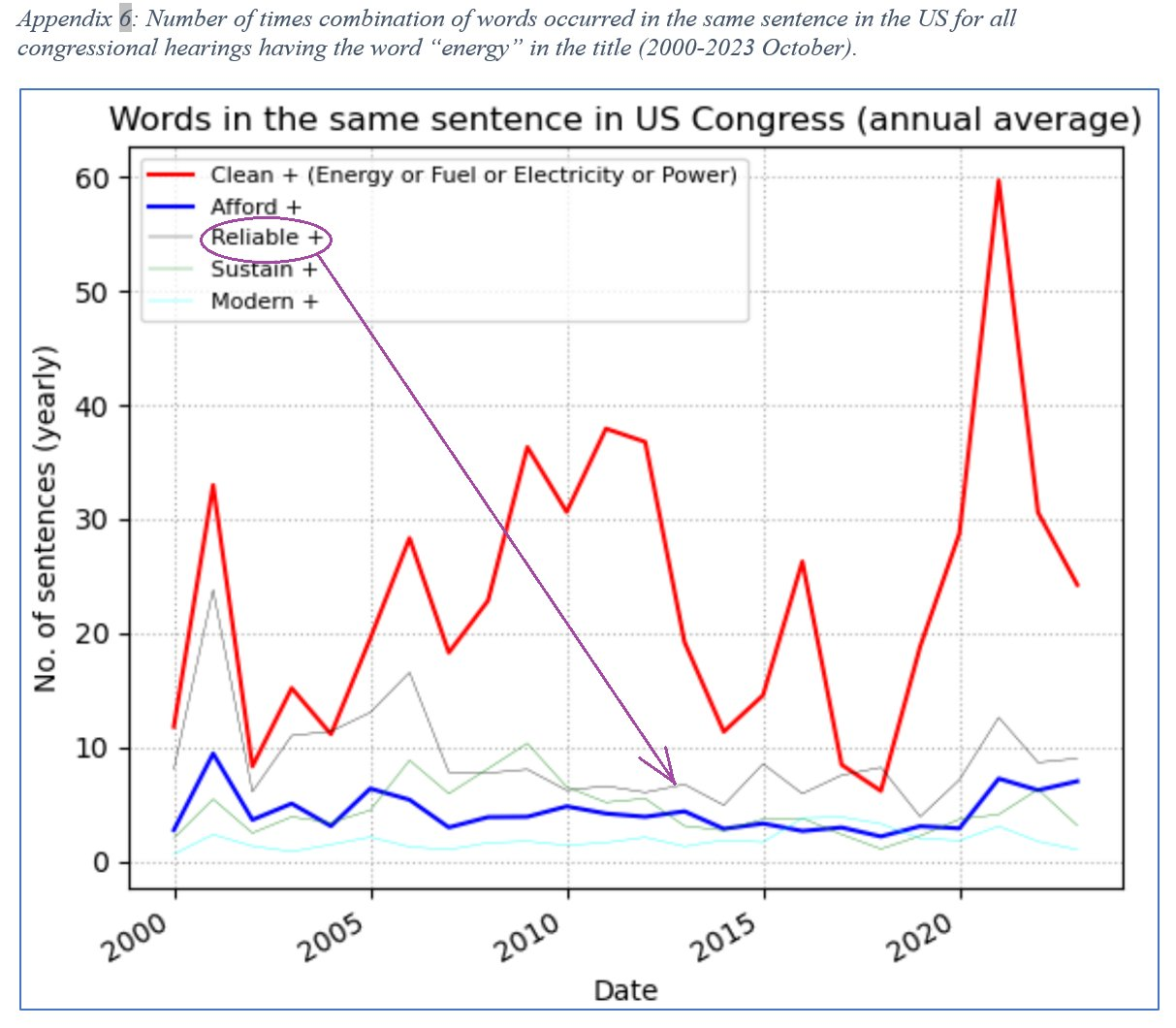
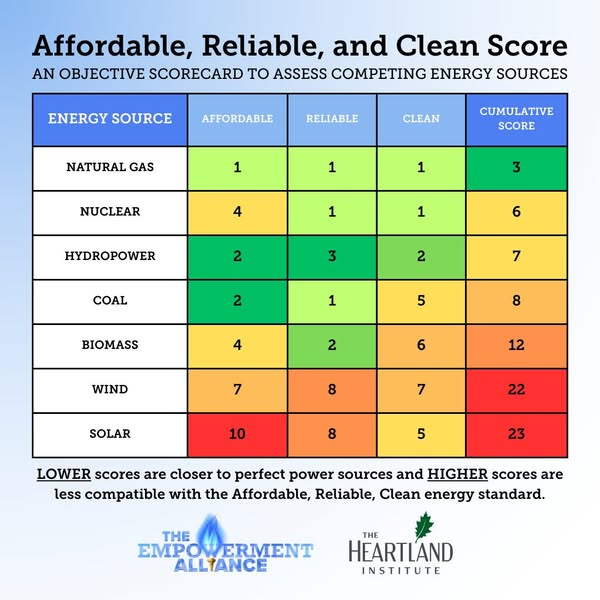
Meanwhile, the political focus in the US (chart below), and perhaps more so in Europe, had been on “clean” rather than reliable power.
Bottom line: Over-reliance on highly variable wind and solar power challenges grid management, putting supply reliability at risk.
… and shared a mineral water toast! 😉 (Weak joke, but at least it’s original and topical!)
NOAA and TMC, a Canadian company, are working together to bypass the stifling UN deep sea minerals bureaucracy.
NOAA raises a glass: Yesterday, President Trump signed an Executive Order establishing a framework for American companies to identify and retrieve offshore critical minerals and resources. The Executive Order prioritizes U.S. leadership in seabed mapping and mineral exploration, ensuring reliable access to critical minerals like manganese, nickel, cobalt and rare earth elements.
In support of the Executive Order, NOAA is committed to an expeditious review of applications for exploration licenses and commercial recovery permits. The agency will provide the necessary resources for license and permit reviews to ensure that those reviews go forward without undue delays.
TMC is positioned to play a central role in supporting an American industrial ecosystem underpinned by deep-seabed minerals, and poised to mobilize tens of billions in private investment in the U.S. across shipbuilding, ports, mineral processing, and advanced manufacturing
The Company through its U.S. subsidiary expects to file license and permit applications under the U.S. Deep Seabed Hard Mineral Resources Act (DSHMRA) in the second quarter of 2025
China boos: “The US authorization… violates international law and harms the overall interests of the international community,” Chinese foreign ministry spokesman Guo Jiakun said on Friday.
TMC and other companies like Impossible Metals (see below) have had enough of the endless delays at the United Nations’ International Seabed Authority, which is still developing regulations. Mining companies and others have spent years gathering data and providing input.
Meanwhile in US waters:
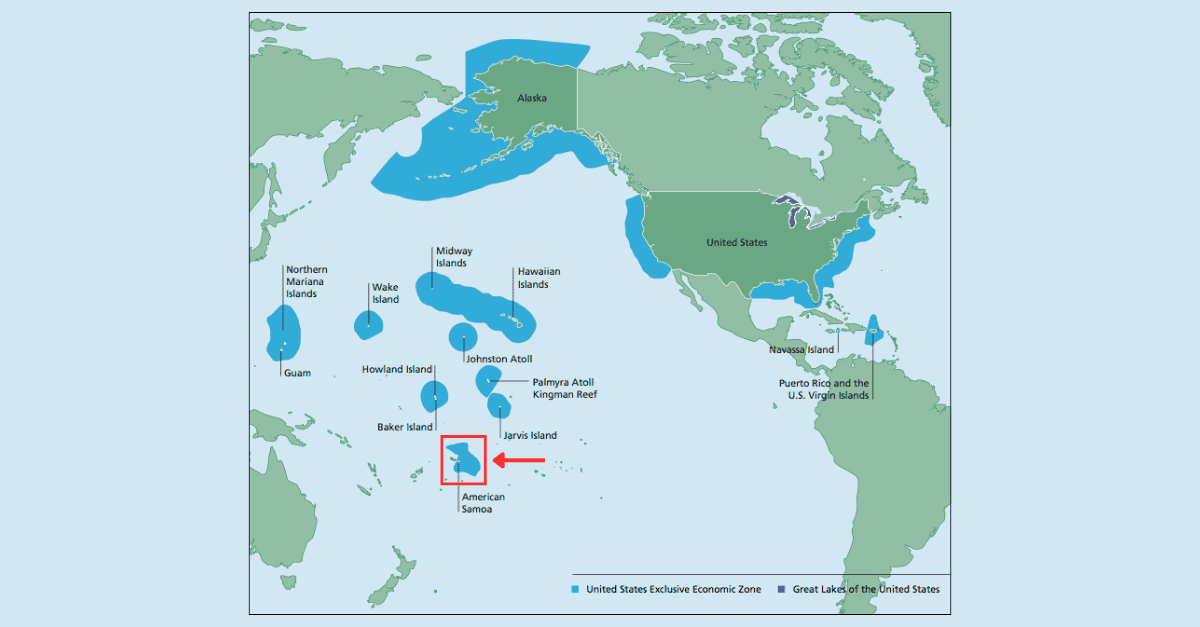
San Jose, CA – Impossible Metals, a pioneering US-based deep-sea mining company, has submitted a request to commence a leasing process for exploration and potential mining of critical minerals in the deep sea off the coast of American Samoa. Impossible Metals is the first company to request a lease of critical minerals under the Outer Continental Shelf Lands Act of 1953, which is regulated by the U.S. Bureau of Ocean Energy Management (BOEM), part of the U.S. Department of the Interior.
Impossible Metals has developed the only autonomous underwater robot (AUV) for selective harvesting. The novel underwater robot uses advanced robotics, AI, and a buoyancy engine to hover above the seabed, accurately identifying and avoiding nodules with visible life while minimizing disruption to the habitat and native biodiversity. This method will have the lowest environmental impact and cost among land and deep-sea mining approaches, setting a new standard for responsible resource collection.
BSEE’s decision to revise downhole commingling policy by increasing the allowable pressure differential between reservoirs is sound and supported by an impressive University of Texas (UT) Petroleum Engineering study. Although the announcement hype is a bit much, this is the way regulation is supposed to work.
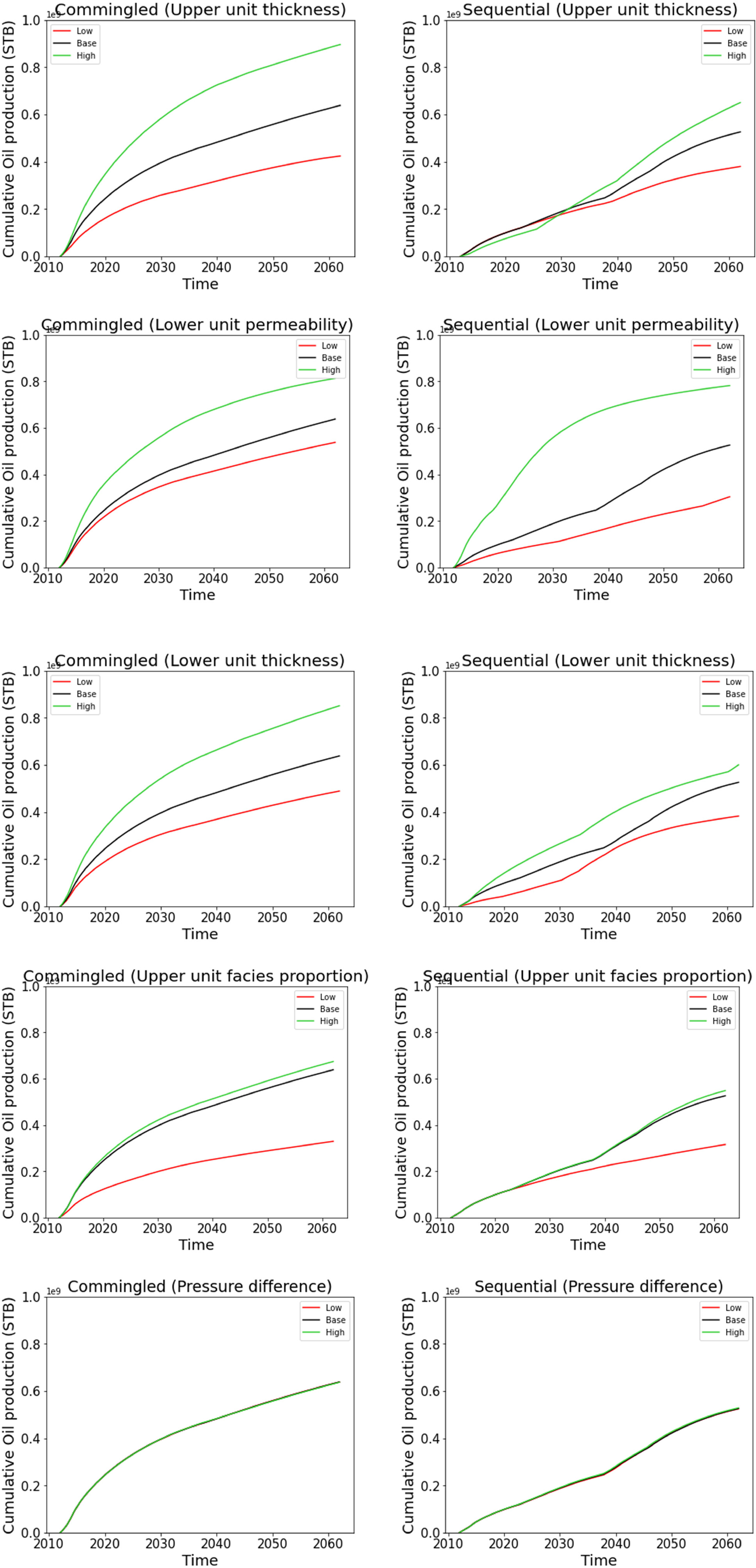
The main benefit of commingling (vs. sequential production) is the accelerated return on investment, which is fine as long as other risks are not introduced and ultimate oil recovery is not sacrificed. The UT study of Paleogene (Wilcox) reservoirs found that downhole commingling actually maximizes per-well oil production compared to sequential schemes. Over 30 and 50 years, commingling yields 61% and 21% more oil respectively.
The UT study analyzed 3 cases with 19 variables (Table 2 in their report). The reservoir pressure differentials were 500, 1000, and 1500 psi. Interestingly, pressure differential had essentially no impact on cumulative production in either the commingled or sequential scenarios.
Figure 13. Cumulative production over 50 years for commingled (left) and sequential (right) production scheme. The most significant variables are shown in the first four pairs of plots. The last pair of plots shows the least important parameter which is pressure difference between reservoir units.
Also note that (fig. 13):
As the upper reservoir thickness increases to 1000 ft (high case), total production increases by 41% for the commingled production scheme and 26% for the sequential production scheme.
The second most important field feature is upper reservoir facies proportion for both production schemes. A higher sand proportion in the reservoir results in higher production.
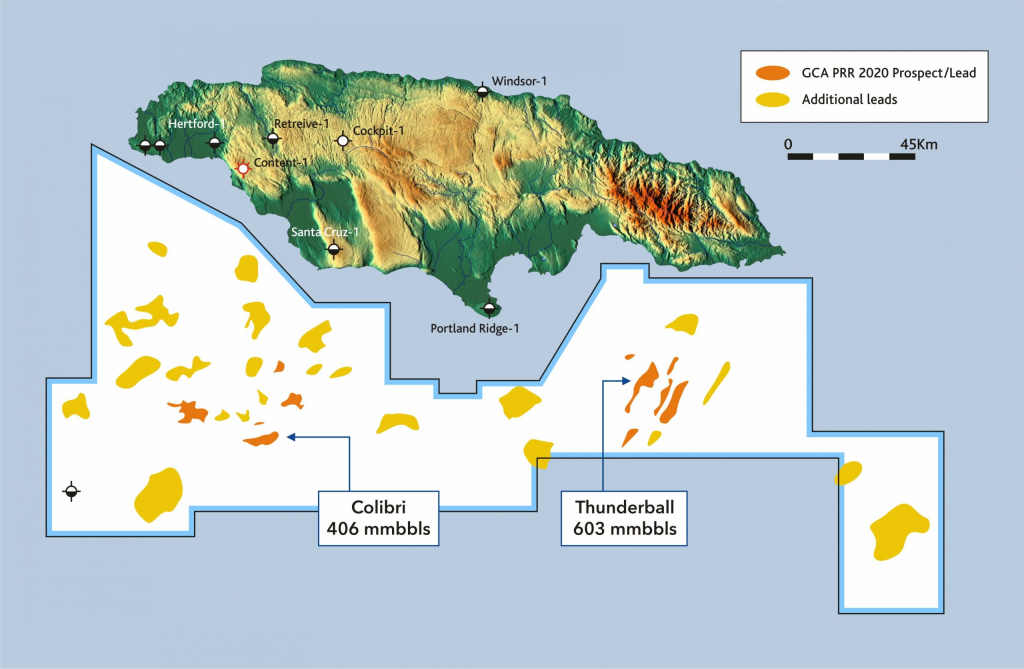
United Oil & Gas Plc (AIM: “UOG”), the oil and gas company with a high-impact exploration asset in Jamaica and a development asset in the UK, is pleased to announce that it has secured an early two-year extension to the Walton Morant licence offshore Jamaica, now valid until 31 January 2028, where it holds a 100% working interest.
The Company would like to formally acknowledge and thank the government and people of Jamaica for the continued support of oil and gas exploration in Jamaica. The extension provides UOG with the security required to advance discussions with farm-in partners and progress technical work, reinforcing the significant exploration potential of this licence.
With the extended tenure confirmed, United have re-engaged with selected parties who had previously expressed interest before the farm-out process was suspended in December 2024, as well as new interest from additional groups. At present, multiple companies are under Non-Disclosure Agreements (NDAs) and actively reviewing data as part of the farm-out process.
Comments:
The Jamaican govt not only granted a second 2 year license extension, but they did so 10 months before the deadline. Could the upcoming elections, scheduled for later this year, have been a factor in the timing of their decision?
Does the govt have that much confidence in a company that is dependent on finding a partner to fund an exploration well?
If the license had been allowed to expire, was the govt concerned about administrative or political constraints associated with re-offering the license area?
United Oil and Gas excels at promotion and isn’t shy about making bold statements about their Walton-Morant license. They have been talking for several years about strong interest from prospective partners, but no deal has been made.
United’s estimate of 7 billion barrels for the license area represents the sum of the prospective unrisked resources for each prospect. The resource estimate is dependent on oil being discovered and developed at each prospect, and is thus speculative.
Although combustion of natural gas emits 30% and 45% less CO2 than oil and coal respectively, the CO2 emissions are still significant. As a result, those who focus solely on greenhouse gases and ignore all other impacts (e.g. other air pollutants like NOx, SO2, and particulates, land use and space preemption, visual effects, and wildlife risks), want to limit the production and use of gas. However, whether or not fossil fuel consumption is significantly affecting the climate, the use for natural gas will be economically and environmentally imperative for the foreseeable future.
Not all natural gas production is equal from an environmental standpoint. Because this is an offshore energy blog, I draw your attention to the unique advantages of offshore gas production: minimal visual impact, bird friendly (rigs-to-roosts!), no risks to freshwater aquifers, and few land use issues.
Currently, most offshore gas production is in the form of oil-well gas (AKA associated or casing head gas). Offshore gas production is thus being primarily driven by oil demand, and is an added benefit from deepwater oil development.
Offshore gas-well or non-associated gas is largely the domain of independent operators producing in the shallower waters of the continental shelf. Non-associated gas has an added benefit in that there is little or no spill risk (depending on how dry the gas is). Shelf gas platforms also provide ecosystem benefits through their reef effect (rigs-to-reefs). Sustaining this non-associated gas production is therefore desirable from both energy and environmental standpoints.
Scotland Against Spin (SAS) continues to provide an important public service by compiling wind turbine incident data from press reports and official releases. Their updated table includes 327 pages of incidents.
Oregon Live found out about the state of industry and government data on wind turbine incidents while investigating a turbine blade failure in Biglow Canyon, Oregon:
“Accident and safety data is hard to come by for the wind industry.”
“There is no national database of incidents. Owners don’t publicize them. Vendors are reluctant to discuss it. And reporting rules vary by state, or even by county.”
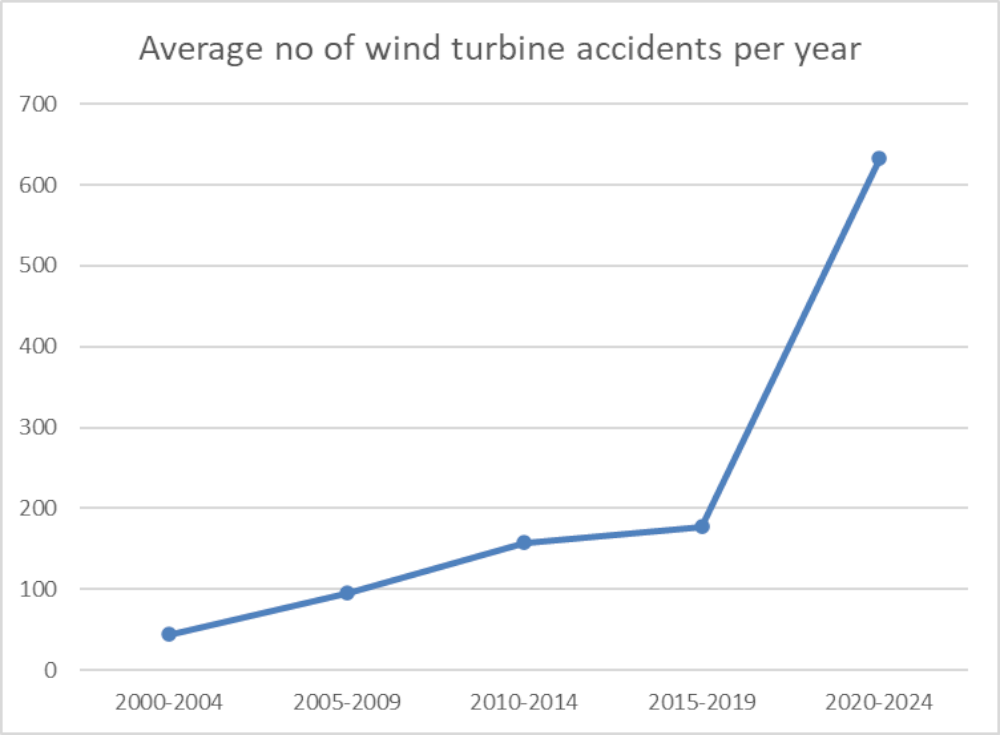
Thankfully, SAS diligently gathers publicly available reports and updates their tables in a timely manner. Their data indicate that the number of wind turbine incidents has risen sharply in recent years (see chart below). So, of course, has the number of turbines.
The World Wind Energy Assoc. reports an increase of ~60% in wind turbine capacity between 2019 and 2023. This capacity increase would only partially account for the recent tripling in annual incidents reported by SAS, and SAS believes their list is merely the “tip of the iceberg.”
A high priority for wind industry regulators in the US and internationally should be establishing a consistent wind energy incident reporting regime and making the data available to the public in a timely and organized manner.
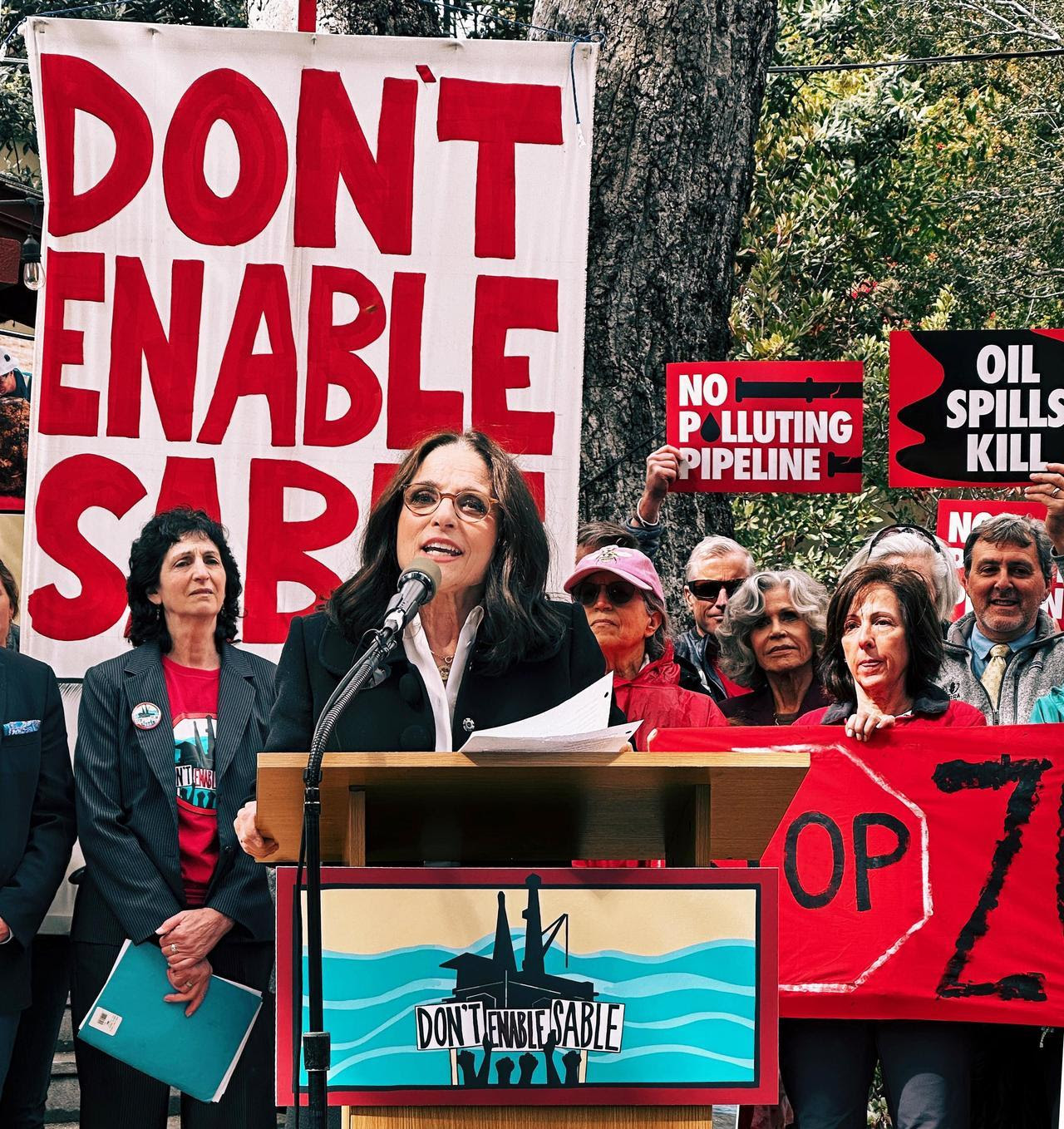
California Attorney General Rob Bonta unsuccessfully requested that a Santa Barbara Superior Court judge issue a temporary restraining order on the Texas-based oil company for defying a cease-and-desist order issued last week by the California Coastal Commission.
Initially, Judge Anderle planned on granting the restraining order at Bonta’s request in his tentative ruling. However, his opinion changed after reading Sable’s opposition documents in the courtroom on April 17.
Arguments for a preliminary injunction will be heard on May 14.
Meanwhile, in an “All Hands on Deck” message to their mailing list, the Environmental Defense Center (EDC) predicts doom and gloom unless supporters answer their fundraising call:
This fight is now in a critical phase. We need your help to ensure EDC can continue to present the strongest defense against Sable’s dangerous proposal.
EDC photo
Lastly, Market Beat reports the following large purchases of Sable shares. Those investors better have a high risk tolerance!
Harraden Circle Investments LLC bought 220,000 shares of Sable Offshore stock. Sable now accounts for approximately 4.6% of Harraden’s investment portfolio, making the stock its 9th largest position.
State Street Corp boosted its stake in shares of Sable by 74.3% during the 3rd quarter. State Street Corp now owns 1,589,395 shares of the company’s stock after acquiring an additional 677,426 shares in the last quarter.
Vanguard Group Inc. boosted its holdings in Sable Offshore by 23.6% in the 4th quarter. Vanguard now owns 3,486,126 shares of the company’s stock.
Emerald Advisers LLC bought a new stake in shares of Sable Offshore in the fourth quarter valued at about $6,700,000.
Bridgewater Associates LP acquired a new position in Sable Offshore in the 4th quarter valued at approximately $4,693,000.
Renaissance Technologies LLC grew its holdings in shares of Sable Offshore by 313.8% during the 4th quarter. Renaissance now owns 269,800 shares of the company’s stock worth $6,178,000 after purchasing an additional 204,600 shares in the last quarter.
26.19% of Sable’s stock is owned by hedge funds and other institutional investors.
The following message is from Jason Mathews – petroleum engineer, football coach, proud father, and outstanding offshore safety leader.
Happy Easter – BSEE Family and Friends
The explosion on the Deepwater Horizon oil rig occurred on April 20, 2010, at approximately 9:45 p.m. CDT. Shortly after the initial explosion, a series of further explosions and a firestorm engulfed the platform that forever changed our industry and eleven families.
This past week, I was in Orlando with my family attending an International Cheer event – All Star World Championship. As I was sitting there, I noticed a young athlete with a date written on her shoes, and she touched the date as she walked back with her team. My assumption was it was something to inspire her.
It quickly reminded me of a young man by the name of Shane Roshto. At only 22 years young, he was a victim of the Deepwater Horizon explosion, and he had written the date of his wedding and his son’s birthday on the inside of his hard hat. Those dates served as reminders of the important people and events in his life while working on the rig miles away from those who meant the most to him.
On Wednesday evening, they brought the top ten teams at the cheer competition onto the stage and called out each finalist on the stage until there were three left, and my daughter’s team was still remaining. While those girls were on stage, I thought back on the countless hours her coaches pushed her and always requested more from them because they had a collective goal to win Nationals and Worlds, and then they called the third-place finisher. It seemed like forever before they called the second-place finisher, but when they did, I got to witness athletes, coaches and families reach something they had put everything into since they began cheer. A date LA Spirit – Fame will never forget – April 16th, and only four days from a day we will never forget – April 20th.
At the conclusion of the day after taking everything in and calming down, I sent this message to the coaches of my daughter’s team – “Coaches thanks for “living your legacy” with our girls at LA Spirit. Every one of your goals, expectations, and coaching styles foster a meaningful life well beyond cheer that leaves a positive impact on our girls. All too often, our girls are told what they can and can’t do with their schedules, their abilities, or their choices. Y’all showed them they can do whatever they set their mind to if they want it bad enough and are willing to make sacrifices for it. As a parent, thank you for making positive memories and experiences that have a ripple effect and continue to inspire our girls for years to come.”
Although the two events have nothing in common (one being a tragedy and one being a highlight), they both drive individuals to live their legacies. At BSEE, all of us (not just inspectors and engineers) have an awesome responsibility to live our legacy in the oil and gas industry by actively shaping our life’s story and influence by focusing on our values, actions, and contributions to those around us (and those who work offshore).
Whether you have days like April 20th or April 16th, always “Live Your Legacy.”
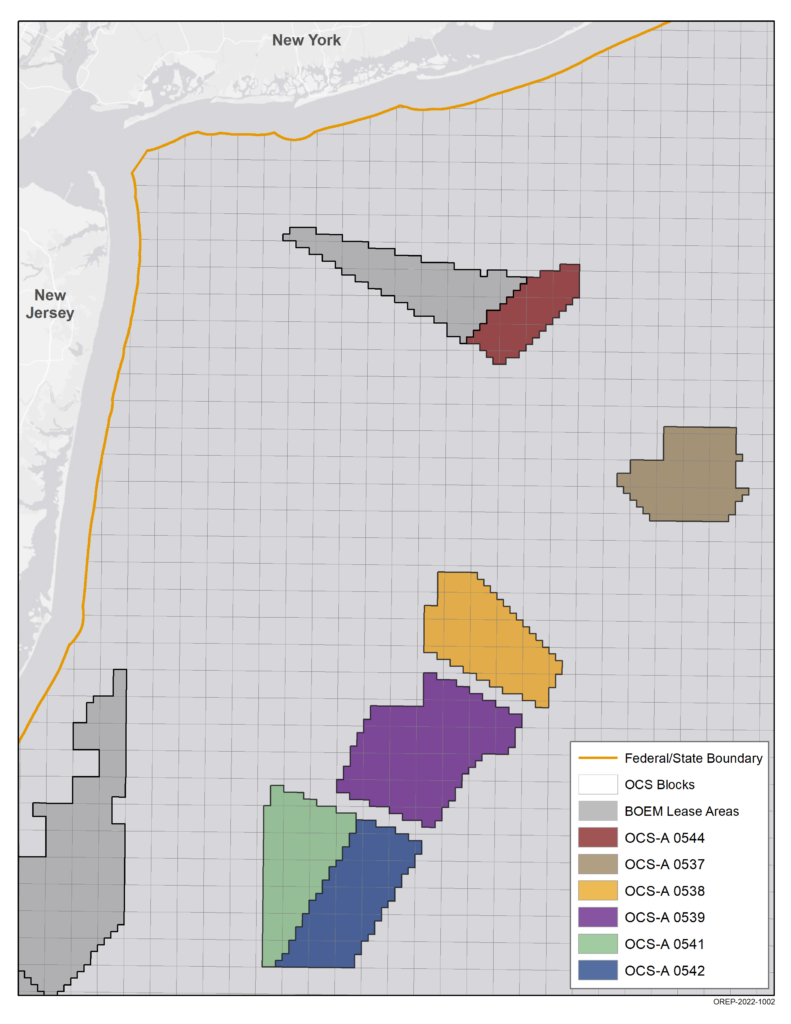
Bidding at the February 2022 Atlantic (NY/NJ) wind saleseemed incomprehensible given the economic and political uncertainties associated with offshore wind development.The 6 leases garnered bids ranging from $285 million to an astounding $1.1 billion, with total high bids of $4.37 billion! The Administration’s victory message correctly boasted that this was the “nation’s highest grossing competitive energy lease sale in history.”
The intense bidding was driven by the lure of subsidies, guaranteed power sales, unprecedented Federal and State promotion, peak climate activism, inattention to mounting public opposition, and irrational expectations regarding the role of offshore wind in powering the regional economy.
The table below summarizes the sale results and the current status for the 6 leasesissued following the 2/2022 sale. One lease has been essentially terminated by the partners and the State. The other leases are in holding patterns in the planning phases.
high bidder
lease #
acres
bid ($millions)
status
Bluepoint Wind (EDP, ENGIE, Global Infrastructure Partners)
The first US commercial offshore project, Vineyard Wind, has proven to be a major step backward for the wind industry. After being granted questionable financial and quality assurance waivers to reduce costs and “allow Vineyard Wind to adhere to its construction schedule,” the July 2024 turbine blade failure and subsequent lightning strike have raised new questions about the technology, industry, and regulatory regime. The report on the blade failure, which should arguably be a precursor to the resumption of Atlantic wind development, has yet to be released.
The one shining light, relatively speaking, for Atlantic wind development, has been Coastal Virginia Offshore Wind. That large project is on track to be completed at the end of 2026. Although the cost has risen about nine per cent, to $10.7 billion, that increase is understandable given the higher than anticipated costs for upgrading the onshore network.




 Bud's Offshore Energy (BOE)