Feeds:
Posts
Comments

Archive for March, 2025

BOEM’s 2024 Marine Archaeology Rule

Exercising authority granted in the Congressional Review Act (Chapter 8 of Title 5 of the United States Code), Congress passed Joint Resolution 11 nullifying the Bureau of Ocean Energy Management rule titled “Protection of Marine Archaeological Resources” (Sept. 3, 2024).

Nullification of a final rule is not common. Since its Enactment in 1996, the CRA has been used to overturn only 20 rules. This is the first time an OCS energy rule has been nullified.

Enactment of a CRA resolution of disapproval is unlikely in most circumstances, because a President would be expected to veto a joint resolution disapproving a rule issued by the President’s own Administration.

There are also time limitations for nullifying a rule. The joint resolution must be introduced during a 60-days- of-continuous-session period beginning when the rule has been published in the Federal Register and been received by Congress. However, if within 60 session days after a rule is submitted, Congress adjourns its session, the periods to introduce and act on a disapproval resolution reoccur in their entirety in the next session of Congress.

It’s also noteworthy that a CRA resolution cannot be filibustered if the Senate acts on the resolution during a 60-days-of-Senate-session period beginning when the rule has been received by Congress.

Most of the 20 nullifications involved rules finalized at the end of a previous administration that were nullified at the beginning of a new administration with a majority in both chambers of Congress. That is the case for the Marine Archaeology Rule, which was published at the end of the Biden administration and nullified at the beginning of the Trump administration. .

The nullified OCS rule required operators to submit an archaeological report identifying potential archaeological resources with any exploration or development plan. The rule modified regulations that only required such a report only when a BOEM regional director had reason to believe that an archaeological resource may be present in the lease area. 

Archaeological survey requirements have been somewhat contentious since they were introduced in the 1970s. There were concerns about decisions to require the protection of speculative, low probability sites that could significantly alter operating plans.

A reasonable balance and an apparent consensus was achieved by limiting the report requirements to areas where studies and other information indicated the potential for such resources. BOEM’s new rule tightened the requirement considerably, which led to opposition and ultimately nullification.

Resolution Timeline

2/4/2025SenateResolution Introduced by Sen. Kennedy
2/25/2025SenatePassed by Yea-Nay Vote 54 – 44
3/6/2025HousePassed by Yea-Nay vote: 221 – 202, 1 Present
3/13/2025Presidentsigned

Read Full Post »

Juergen Maier, chairman of GB Energy, “a planned British government-owned renewable energy investment body,” is promising to revive Aberdeen with “green energy” jobs, and to create “something special for the years ahead.”

Maier: “Floating offshore wind, green hydrogen, and carbon capture should be as synonymous with Aberdeen’s future as oil and gas have been with its past.” This is an interesting comment given that the success of the industries he is promoting is far from assured; nor is the continuation of government edicts and subsidies on which they are dependent.

How many times have we been told that the government driven energy transition would create thousands of jobs? How many workers in economically important industries have been told to transition to politically favored professions? How many Keystone Pipeline workers found the promised “green energy jobs?” Why were coal miners condescendingly told to “learn to code?”

Perhaps Mr. Maier should broaden his message by showing support for development of the Rosebank and Jackdaw fields, and for sustaining production of oil and gas, on which the UK will be dependent for many years. As Louise Gilmour wisely opined in her column in the Scotsman:

We need more of it because even the most ardent supporters of renewable energy, the most vocal proponents of net zero, quietly admit oil and, especially, gas will be needed for a couple of decades at least. That obvious truth, that inarguable necessity, is not, apparently, enough for ministers to encourage UK production, however, or temper their rhetoric around renewables.

Allowing our rigs and refineries to power down and relying on other countries to keep the lights on still seems a little, well, counter-intuitive. We will import oil and gas but not produce it while happily exporting contracts, skills and jobs overseas? The practical impact of Labour’s refusal to grant new exploration licences in the North Sea might remain unclear but the message it sent was absolutely crystal.

Read Full Post »

China plans to build an “Offshore Space Station” 2,000 meters below the ocean surface in the South China Sea. The plan is to complete the station, which will accommodate 6 scientists, by 2030.

This is by far the deepest water for which a subsea human habitat has been proposed. By comparison, the planned Proteus (Fabien Cousteau) underwater station will be in just 20 meters of water off the northeast coast of Curaçao. A Sentinel/UK habitat is planned for depths up to 200 meters in the Mediterranean.

The primary focus of the deepwater South China Sea facility will reportedly be the study of deepwater seep ecosystems which are rich in marine life and deposits of methane hydrates. Hydrates are an energy resource that has much potential. However, because of the risk of uncontrolled methane releases and seafloor instability, there is limited support for the production of hydrate methane.

A deepwater science station near hydrates and methane seeps would be a dangerous operating environment given the potential for methane blowouts and cratering caused by destabilized hydrates. Given that nearly all of the research could be conducted safer and cheaper with Autonomous Underwater Vehichles (AUVs) and advanced robotics, the scientific value of a deepwater station seems questionable.

The offshore oil and gas industry considered subsea habitats in the 1970s but has since abandoned the idea. Lockheed designed a one atmosphere seafloor chamber (diagram below) that was installed in the Gulf in 1972 at a water depth of 375 ft.

Dry chamber well and production systems lost favor because of concerns about flooding, high costs, and safety risks associated with transporting workers to the chambers and placing them in close proximity to “live” wells and production equipment.

Perhaps the main drivers for China’s deepwater “space station” are geopolitical. Taiwan, Vietnam, the Philippines, Malaysia, and Brunei reject Beijing’s claims of sovereignty and each claim parts of the South China Sea (see map below).

By establishing a seafloor community in a strategic location, China could strengthen its highly questionable claim to the entire South China Sea. China would also have reason to increase Navy vessel activity in disputed waters to support and defend their subsea community.

This will be a project to watch if it actually goes forward.

Read Full Post »

Santa Barbara resident Julia-Louis Dreyfus fires up the crowd. Photo Credit: Ingrid Bostrom, Independent

The Santa Barbara Independent and Noozhawk have closely followed the Sable saga and provided good coverage of the “Information Meeting.” BOE contributor John Smith followed the meeting online and shares his impressions.

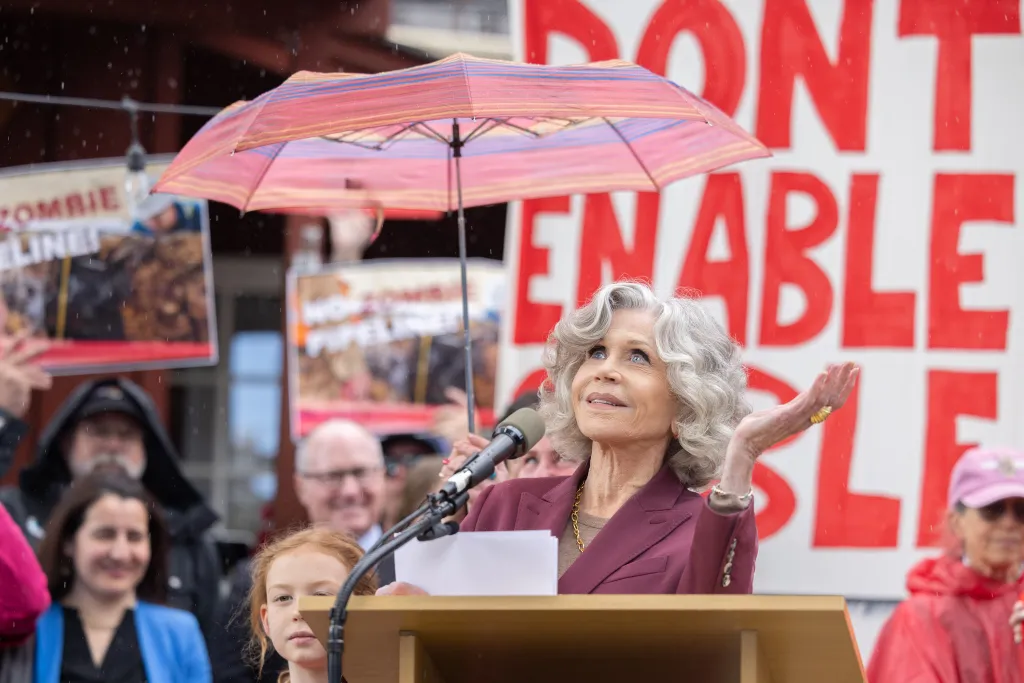
Independent: “What was advertised as an informational meeting with eight state agencies that oversee Sable’s operations quickly became emotionally charged when the Environmental Defense Center’s Linda Krop and resident actor Julia Louis-Dreyfus were surprisingly called onto the stage to voice their opposition to the oil project.

John Smith reports that the meeting got off to a good start before deteriorating:

Smith: “The CCC (Coastal Commission) presentation was interesting because it highlights their position and disagreement with SBC (Santa Barbara County) who determined permits were not required by Sable for maintenance and repair work.  I think the agencies did a good job in sharing information on the status of permits, which if people were objective, may have alleviated many of their major concerns.  Unfortunately, it went downhill at the end when EDC and Hollywood types were given the floor.”  

Unsurprisingly, a State Senator facilitated the ambush:

Independent: “When Senator Limón’s staff called to the stage the Environmental Defense Center’s chief counsel, Linda Krop — who hosted a star-studded press conference beforehand with state legislators, actors Julia Louis-Dreyfus and Jane Fonda, and Ventura-based Patagonia CEO Ryan Gellert, among others, outside the EDC’s headquarters — the town hall shifted gears from an info-session into a quasi-rally. Krop’s emotion-inciting words, followed by an angry, passionate speech from Louis-Dreyfus, put the room into a cacophony of cheers and jeers.

Sable supporters (workers, not movie stars) were also in the house:

Independent: “Sable Offshore management, employees, contractors, labor, and supporters showed up today in good faith to participate in a town hall meeting where only government officials were on the agenda to present,” said Steve Rusch, Sable’s vice president of environmental and governmental affairs, in a statement. “Project opponents forced the moderators to give them dedicated time to present biased information and smear the project. The opponents’ self-serving fundraiser and rally was not an appropriate use of public resources.”

Not one word was said about the working people,” a Sable employee and union member told the Independent after he walked out. “This is my home, too, and I’m going to fight, too…. Without this, we’re just unemployed.”

Interestingly, regulatory fragmentation, a topic that this blog has railed about, was mentioned by one of the Sable opponents, and I suspect the Sable supporters agree!:

Noozhawk: “One of the audience members was Ravid Raphael, who has lived in Goleta for the past 11 years. One of his concerns was that there are too many departments and that they are too fragmented.

Jane Fonda (no one would question her credibility😉) – Photo Credit: Ingrid Bostrom, Independent

Read Full Post »

See the attached letter from Sable’s attorneys; highlights below:

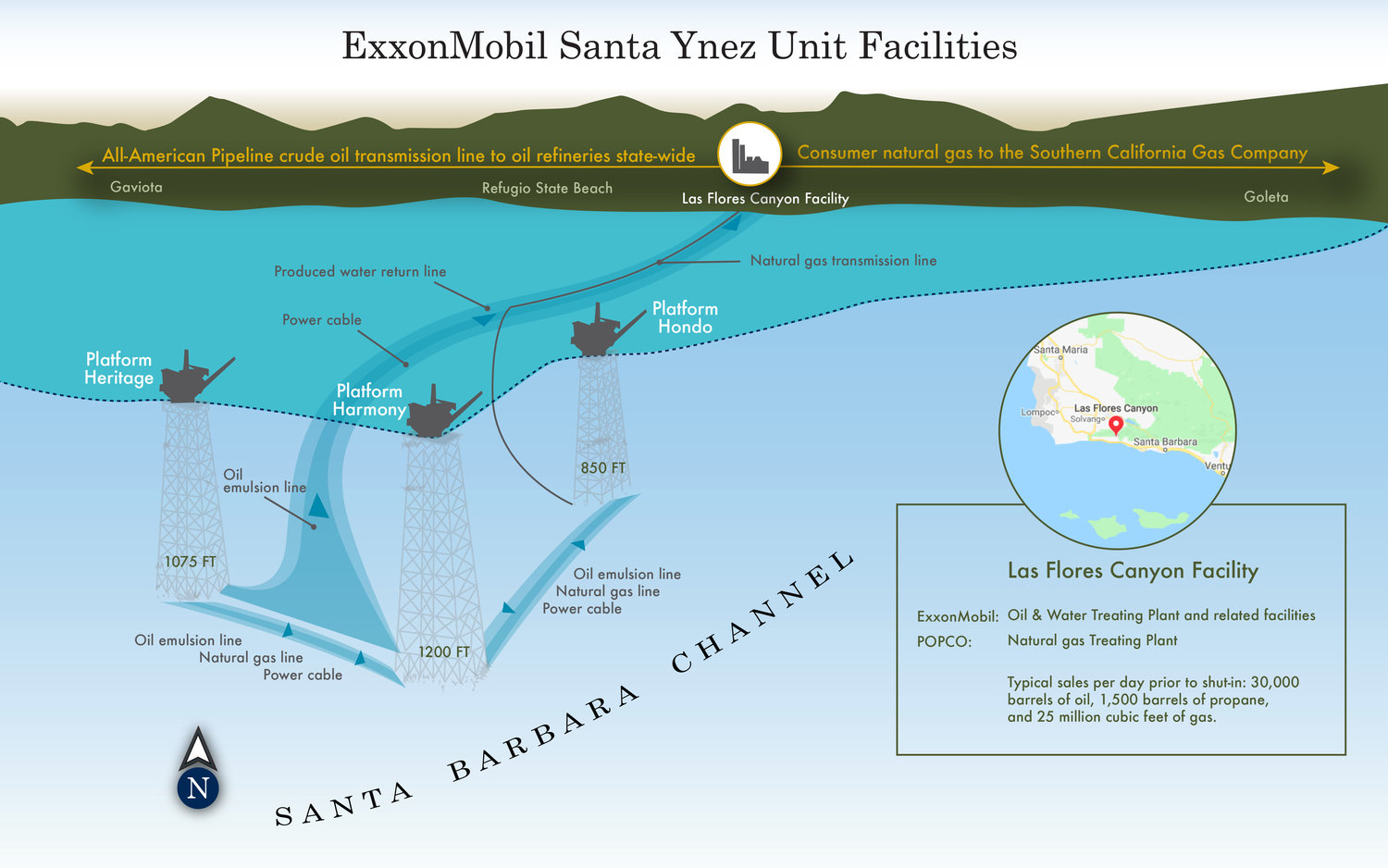
  • The Commission staff appears to be asserting Commission jurisdiction over already permitted activities in order to attempt to exert influence over Sable’s planned restart of the Santa Ynez Unit oil production operations. Jurisdiction over restart activities is entirely outside of the Commission’s jurisdiction and is separately regulated by other agencies.
  • Sable’s repair and maintenance activities (anomaly repairs, safety valve installation, and span remediation) are in compliance with applicable provisions of Santa Barbara County’s Coastal Zoning Ordinance (CZO), certified Local Coastal Program (LCP), and the Coastal Act. As such, no cease and desist order is warranted – whether issued by the Executive Director or the full Coastal Commission.
  • The onshore and offshore repair and maintenance work is fully authorized by coastal development permits previously approved by Santa Barbara County and the Commission. Therefore, those activities do not require new or amended coastal development permits and are not otherwise subject to the Commission’s jurisdiction or enforcement authority.
  • Onshore anomalies: Santa Barbara County reviewed the detailed information Sable submitted with Zoning Clearance applications in 2024 and confirmed in a letter dated February 12, 2025, that the anomaly repair work is authorized by the pipelines’ existing coastal development permits and, consistent with past practice, no new or separate Coastal Act authorization is required for Sable to perform the work. Commission staff has repeatedly ignored that the County — as the applicable agency with delegated LCP authority under the Coastal Act — expressly has confirmed that the anomaly repair work was authorized by the onshore pipelines’ existing Coastal Development Permit, Final Development Plan, and Conditions of Approval.
  • Onshore safety valves: Sable was required to undertake safety valve repair and maintenance activities pursuant to state law that the Coastal Commission supported. The safety valve repair work involves the exact same type of work as pipeline anomaly repairs, and Sable completed the safety valve work only after the County confirmed in writing that no further authorization from the County was required for the safety valves.
  • Offshore span remediation: Sable’s span remediation maintenance activities were fully contemplated and authorized within the original coastal development permit approved by the Coastal Commission for the Offshore Pipelines in 1988 and the Development and Production Plan approved by the Department of the Interior. The span remediation maintenance activities involve the placement of sand-cement bags beneath certain segments of the offshore pipelines to provide additional pipeline support. The exact same support enhancement (span remediation) activities have been performed in the past on these same offshore pipelines without requiring any new Coastal Act authorizations.
  • Sable has filed a lawsuit against the Commission in Superior Court in Santa Barbara County where it has asked the Court for damages and declaratory and injunctive relief to protect its vested rights to repair, maintain and operate the Santa Ynez Unit and Las Flores Pipeline Systems.

Read Full Post »

While a graduate student more than 50 years ago, I wrote a paper entitled “The Use of Natural Gas in Improving Air Quality.”  My professor, Dr. Richard Gordon (RIP), a terrific economist who greatly influenced my thinking about energy, liked the paper but thought I was too optimistic about the availability of gas. 

The sense at the time was that natural gas was a premium energy source in short supply. I was blissfully ignorant and thought we geologists and petroleum engineers would find and produce the gas. The Shale Boom, for which I can take zero credit, has proven me correct, so I’m taking another victory lap. 😀

Last week, the great Dan Yergin and his team at S&P Global issued a report that explains how economically and environmentally important natural gas has become. Key findings from the report are pasted below:

Environmental Benefits:

  • Higher US LNG exports lead to lower overall global emissions by displacing the more GHG intensive fuels that would replace them.
  • End use combustion is responsible for 57–87% of GHG intensity for coal, oil, gas and LNG, with supply chain methane emissions the key driver of variation between fuels (e.g., domestic vs. international LNG, domestic versus piped natural gas imports, or different crude oil streams).
  • Coal emits roughly 70% more greenhouse gases than the US LNG it would replace across all the alternatives analyzed.

Economic Benefits:

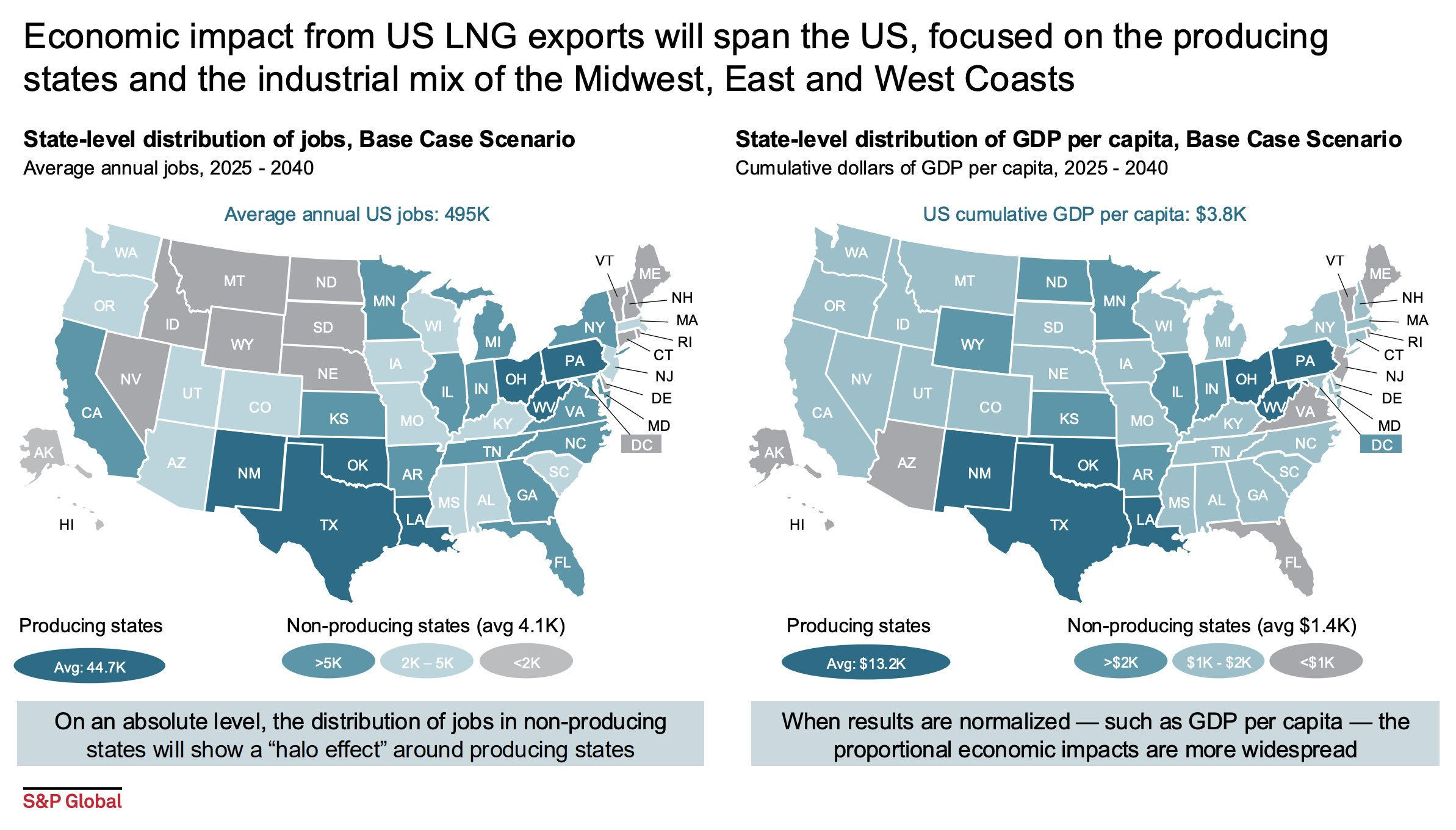
  • US LNG’s unprecedented growth is enabled by an extended cross-state value chain, that reaches beyond the core-producing states – about 90% of every dollar spent remains within United States supply chains
  • Of the annual average of 495,000 US jobs supported through 2040, 37% will be in non-producing states. As many jobs will be supported in on-producing states as in Texas
  • Over the same period, LNG Exports will contribute $1.3 trillion in GDP, with $383 billion or 30% in non-producing states. On a per capita basis, producing states benefit from a cumulative $13.2K GDP per capita
  • The US Northeast (NE) has vast amounts of low-cost gas reserves in the Marcellus and Utica formations (New York, Pennsylvania, West Virginia, Ohio), sufficient to meet nationwide demand for ~17 years
  • Due to pipeline constraints these reserves are being developed at a suboptimal rate, pushing gas prices at Boston, Chicago and New York City Gates up 160% higher than the national gas market in peak months
  • Expanding NE pipeline capacity by 6.1 Bcf/d could reduce HH gas prices by $0.20/MMBtu and significantly lower prices across the region. Cumulative nationwide consumer savings could reach $76 billion through 2040

Should you be interested in learning more, the above findings are well supported by detailed information in the report.

Read Full Post »

Senator Schiff and 22 California representatives sent the attached letter to Gov. Newsome urging him to:

  • Require the Fire Marshal to reconsider the state waiver for the pipeline, conduct environmental review, and hold a public hearing;
  • Require a coastal development permit for restart of the pipeline;
  • Require State Parks to conduct environmental review and hold a public hearing prior to deciding whether to approve a new easement for the pipeline through Gaviota State Park.

The good news for Sable: Despite the bluster in the letter’s opening paragraphs, none of the requests to Gov. Newsome are knockout punches. The first two relate to matters that have already been addressed and Sable is in a favorable position. The third, the Gaviota State Park easement renewal, is currently under review and should not be a decisive blow.

The bad news for Sable: Punches will continue to be thrown even after production resumes (should that ever actually happen.)

Much more on Sable

Read Full Post »

In light of the recent NASA/SpaceX advances in rocketry, a manned mission to Mars seems inevitable, perhaps within the next 5 years. See the SpaceX Mars landing video below.

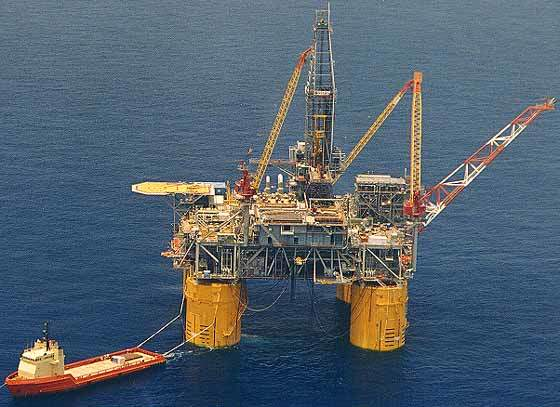
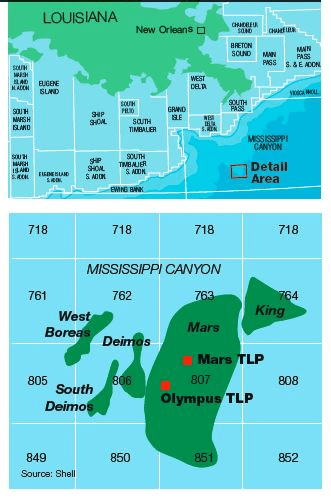
While the space program generates more media buzz given the sci-fi appeal, the achievements of the offshore oil and gas industry are similarly impressive. The Gulf of America has its own Mars, a massive deepwater project that has been ongoing and expanding for 30 years, and may ultimately produce more than 1 billion barrels of oil equivalent (boe).

Like a mission to Mars, the successful development of deepwater oil and gas resources is a technical marvel that requires:

  • Identifying prospects deep beneath the seafloor using advanced subsurface imaging capabilities.
  • Drilling exploratory wells from floating rigs, using advanced stationkeeping systems that maintain a precise location on the water surface.
  • Drilling deep beneath the seafloor while transmitting real-time geologic, temperature, and pressure data to the rig and distant onshore locations.
  • Ensuring well integrity by installing and cementing multiple strings of protective casing.
  • Processing production at buoyant surface facilities designed to withstand worst case storm conditions.
  • Connecting clusters of subsea wells to a host surface facility that may be many miles away.
  • Increasing ultimate recovery with reservoir engineering studies and advanced well completion practices.

Life on the planet Mars will be dependent on technology developed for the offshore Mars and other deepwater projects.

Read Full Post »

Historically, falls are the most common cause of offshore injuries and fatalities, and hazardous grating is a leading contributing factor to these incidents.

BSEE’s risk-based inspection and safety alert programs have effectively drawn attention to grating risks. Attached is a recent alert describing a grating incident that could have been fatal.

A worker installing a pump in a skid above unsafe grating was kneeling on scaffolding boards. The tip of his boot was on the corroded grating when it suddenly gave way. The worker was able to grab a nearby section of piping to support himself. The 36″ x 36″ piece of grating collapsed and fell into the water.

Read Full Post »

Orsted photo: wind wakes trailing turbines at Vattenfall’s Horns Rev wind farm offshore Denmark

The oil industry has a long history of dealing with the correlative rights issues associated with oil drainage from competitive reservoirs. Similar issues are arising in the offshore wind industry.

Orsted believes ‘catastrophic wake losses’ threaten the existence of their Irish Sea wind farms, claiming that wakes from EnBW, BP, and RWE projects could shorten the life of Orsted’s assets. Note that wind wakes can stretch as far as 100 km.

Orsted claims that four nearby wind farms in the Irish Sea could result in a drop in Orsted’s annual energy production of up to 5.34%, and is seeking mitigation or compensation.

This is all rather familiar to the oil industry and its regulators, particularly the call for compensation!

Read Full Post »

« Newer Posts - Older Posts »