Feeds:
Posts
Comments

Archive for April, 2011

Jupiter Flotel

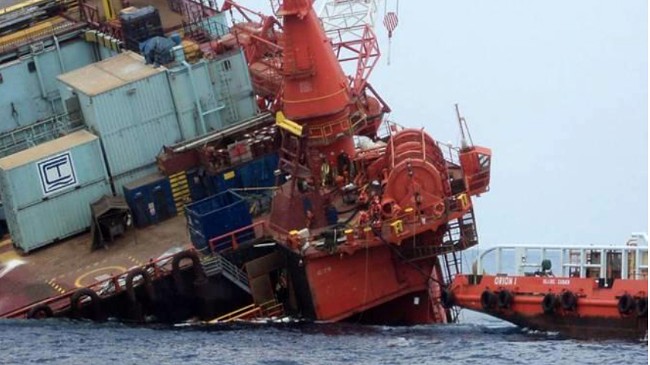
….interest in offshore accidents quickly diminishes.  The Pemex Jupiter semisubmersible quarters facility sank last week with 713 workers aboard (fortunately all were safely evacuated). This stunning near-disaster received minimal coverage. Follow-up reports are non-existent.  As our friend JL Daeschler asked, how does a flotel capsize in calm conditions and shallow water? What went wrong and why? Let’s hope that a comprehensive investigation is conducted and that the findings are shared worldwide (unlike Venezuela’s handling of the Aban Pearl sinking).

As we have noted before, Macondo would have disappeared from the news within a week if the deadly fire and explosion had not been followed by a sustained oil spill. The only investigation would have been by Coast Guard and the Minerals Management Service (which would likely still exist). There would have been no National Commission, National Academy, Chemical Safety Board, or congressional investigations, and prosecution by the Justice Department would have been unlikely.

In the US, offshore spills are media events; other accidents are not. How much attention did the horrific fire and explosion that killed seven workers on the South Pass 60 B Platform receive in 1989? Virtually none. How about the lives lost in helicopter crashes? While the crash that killed 17 off Newfoundland in 2009 has been well studied and reported, offshore helicopter crashes in the US receive almost no attention. Ditto for crane accidents. If we want to build a proper safety culture, we need to pay as much attention to the low-profile accidents as we do the pollution spectaculars, and everyone needs to participate.

Read Full Post »

  • Require that a Central Gulf of Mexico (GoM) oil and gas lease sale be held within 4 months of enactment, and that a second sale for that area be held within 12 months.
  • Require that a Western GoM sale be held within 8 months of enactment.
  • Stipulate that prior environmental reviews would satisfy NEPA requirements for the GoM sales.
  • Require that a Virginia offshore sale be conducted within 1 year of enactment. [Comment: While I support a sale offshore Virginia, I do not believe this can be accomplished in one year.]

HR 1231 would:

  • Require that specified volumes of oil and gas (per estimates made by MMS in 2006) be made available for leasing.
  • Set offshore production goals.
  • Give credits (for use in paying lease bonuses) to companies for costs associated with pre-sale seismic surveys.   [Comment:  If the legislation provides reasonable assurance that lease sales will be held, why are the seismic survey credits needed? The seismic data will have a high commercial value. Collection of these data should not have to be subsidized by the Federal government.]

HR 1229 would:

  • Require that DOI act on drilling applications within 60 days.
  • Extend the term leases where the approval of drilling applications was delayed following the Macondo blowout.
  • Make the 5th Circuit Court the venue for any civil actions involving GoM energy projects.
  • [Comment: The important question is not the number of days that the regulator should be given to review applications, but whether a complex permit review and approval process is the optimal regulatory approach. A lesson learned from virtually every major accident, from Santa Barbara through the Ocean Ranger, Alexander Kielland, Piper Alpha, and Macondo, is that command and control regulation is not in the best interest of offshore safety. Industry should not rely on government to manage its operations and government should focus on safety achievement, not directing the day-to-day activities of offshore companies. Over the long-term, the US would be better served if regulatory resources were dedicated to risk assessment, data analysis, assessment of operator and contractor management systems, targeted inspections and audits, participation in standards development and research, and safety leadership.]

Read Full Post »

can something be done about the Customs mess at Washington Dulles? The long delays are not a good way to greet international visitors or welcome home returning Americans.

Read Full Post »

link

In the 21st licensing round, additional requirements have been introduced with regard to the qualifications of the licensees that will undertake particularly demanding deep-water drilling operations or drill in areas in which high temperature/high pressure (HTHP) conditions are expected. Under these licences, there must be at least one competent partner in addition to the operator. The partner must have drilled at least one well as an operator on the Norwegian Continental Shelf, or have similar relevant experience from another offshore petroleum province.

I had never thought about a requiring a partner, and specifying the qualifications that the partner must have. This makes some sense in that the operator will not only have internal oversight, but also oversight by the partner(s). The result is a verification program administered by competent partners who have an incentive to ensure safe operations.  Interesting approach.

Read Full Post »

Per the Evening Express in Aberdeen:

A DIVER working for an oil company has died at sea.

The 49-year-old oil worker took ill while diving with the Acergy Osprey, operated by Subsea7 which is based in Westhill.

No other information is available at this time.

Read Full Post »

Jan de Jong, Inspector General, State Supervision of Mines, the Netherlands

I want to thank Jan de Jong, Inspector General, State Supervision of Mines (SSM), the Netherlands, for the support he expressed for the former Minerals Management Service at yesterday’s Ministerial Forum in Washington. Jan spoke favorably about his experiences with MMS personnel and questioned the public criticism.

Last year, SSM celebrated its 200th anniversary. I encourage you to view an excellent anniversary video about this very effective regulator. Pay special attention to the description of their regulatory philosophy, which begins at about the 6 minute mark.

Read Full Post »

International Guests

  • The conference was nicely organized by the folks in the Department of the Interior and BOEMRE
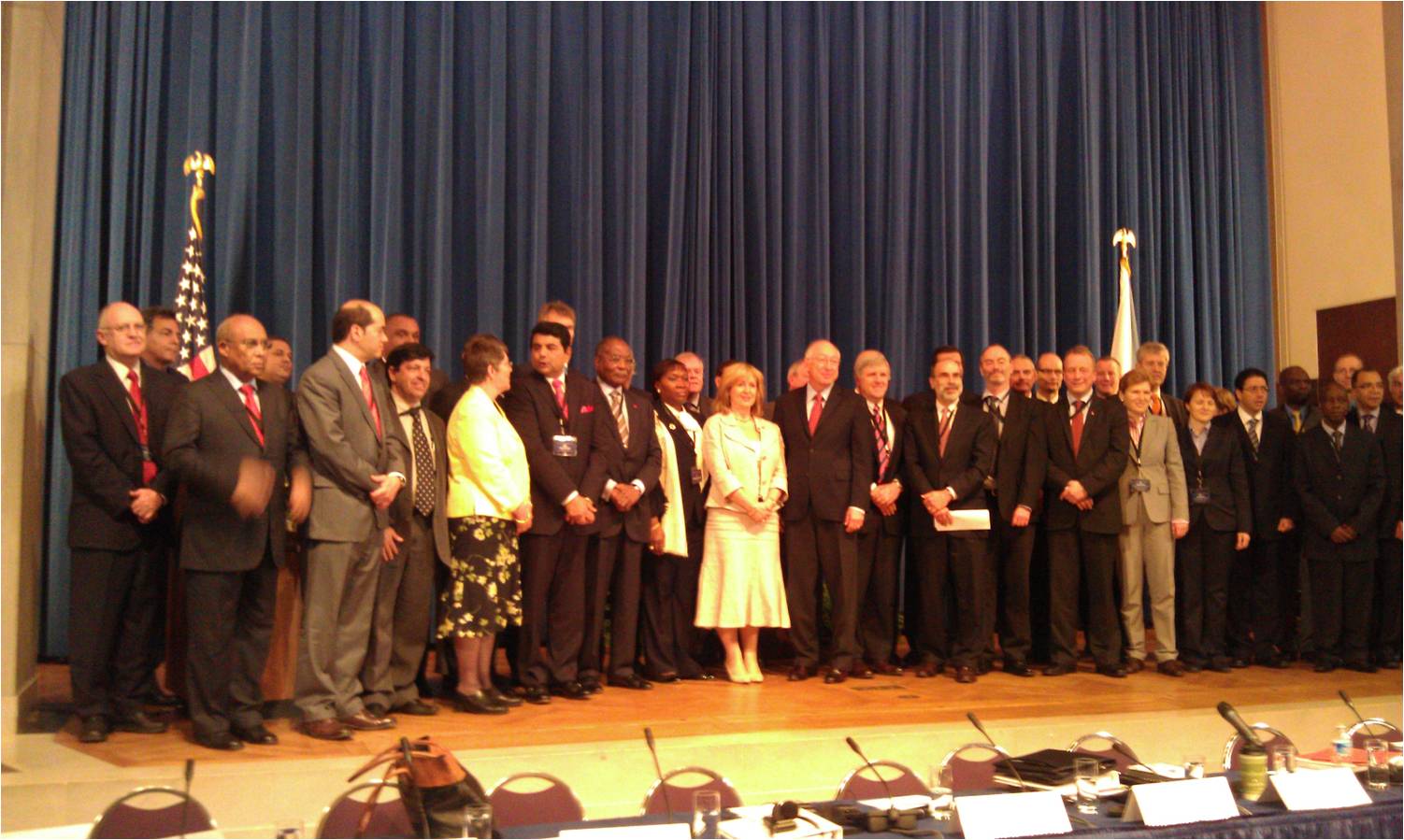
  • Angola, Australia, Brazil, Canada, India, Mexico, Netherlands, Norway, the United Kingdom, Russia, and the US were represented. The European Union also participated.
  • Brazil was represented by two Petrobras managers, rather than governmental officials. This raised some eyebrows.
  • Australia formally announced yet another offshore regulators’ conference, the International Offshore Petroleum Regulators and Operators Summit in Perth (10-11 August). Do we need better coordination of the coordination conferences? Isn’t the International Regulators’ Forum (IRF) the best means of managing all of this?
  • The need for expanded offshore oil and gas operations was recognized by all participants.
  • Malcolm Webb of Oil and Gas UK, announced that UK operators would have a capping capability for subsea wells by the end of the summer. However,  no well containment system is planned. This omission, which was attributed to North Sea weather and sea conditions, is surprising. Capping is not an option if well integrity concerns prevent a well from being shut-in, either with the BOP or a cap (if the BOP failed). The absence of a well containment option would seem to be a significant gap in their response capability.
  • A working group was formed to consider a new or strengthened international organization for offshore safety and pollution prevention. In my view, the best option would be to enhance existing cooperation mechanisms, most notably the IRF. International cooperation on safety is not a new concept. The IRF, which was mentioned positively by many of the speakers at the Ministerial Forum, has existed since 1994 and has an ongoing international standards effort. A related group, ICRARD, has been coordinating offshore safety research for more than 15 years. Various industry organizations have international programs. ISO has a good system for developing and managing standards. The International Maritime Organization has official committees that address certain offshore safety and pollution issues. Making better use of existing committees and forums would seem to make more sense than starting new ones.

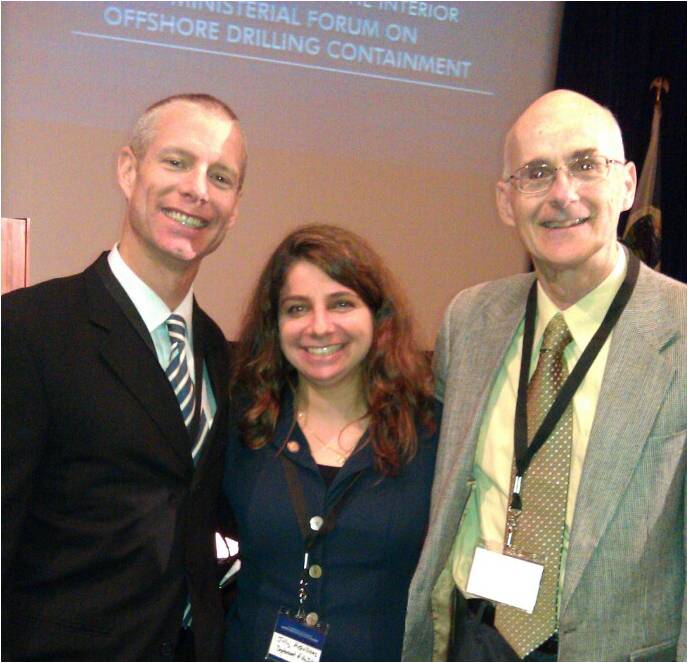
With BOEMRE dynamos - (Kona) Kevin Kunkel and July (Ms. COOL) McQuilliams

link to videos

Read Full Post »

Good report; worth reading.  Some of the positive points are unlikely to get much attention, so we’ll mention them here:

  1. The National Incident Management System/Incident Command System worked as intended
  2. Personnel provided by the Responsible Party (RP) and Coast Guard personnel worked effectively together, and there was “unity of effort” throughout the response organization.
  3. The team found no evidence of collusion between the Coast Guard and RP.
  4. The response generally benefited from the ability of the Government and the private sector to rapidly assess and adapt to new or unusual contingencies and develop innovative solutions for problems not previously experienced.
  5. The knowledge acquired and capabilities learned from this experience are unprecedented, and should become a basis for significant improvements in planning, preparedness, and response for industry, Government, and the response community.

The “Political Demands” section beginning on page 75 includes relatively candid observations on the challenges associated with the management of such a high profile response.

Read Full Post »

Growing demand for new offshore oil rigs, partly driven by the Gulf of Mexico spill last year, has led to a spurt of building in shipyards and raised tough questions about what to do with the old rigs. Reuters

What? Have they not looked at the Rigs-to-Reefs+++ page(a BOE exclusive)?

“At a certain point it just doesn’t make any sense to upgrade them or put another 5-10 million bucks into them,” said John Tasdemir, an analyst at Canaccord Genuity. “Better just to scrap them and either start over, or just do something else.”

“Do something else” is correct and there are many options!

Read Full Post »

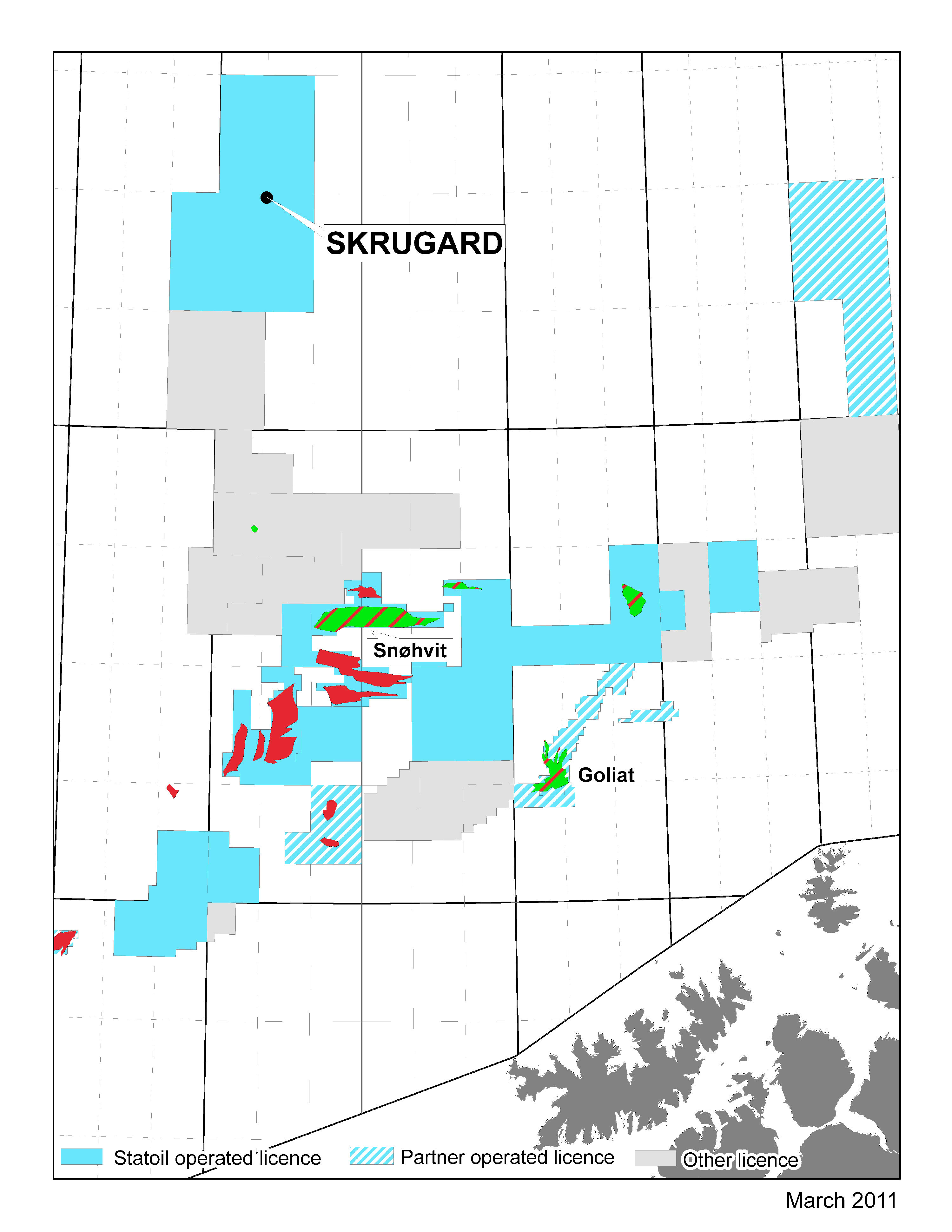
Statoil, along with partners Eni Norway and Petoro, has made a significant oil discovery on the Skrugard prospect in the Barents Sea. The breakthrough discovery is one of the most important finds on the Norwegian continental shelf in the last decade. Statoil announcement

Read Full Post »

« Newer Posts - Older Posts »