Feeds:
Posts
Comments

Posts Tagged ‘well control’

JL Daeschler, pioneering subsea engineer and BOE contributor, recounted a frightening incident in 1976, a year after UK North Sea production began:

We found ourselves in a drastic situation. While working on a subsea well, the wireline retrievable tubing safety valve got tangled up in the tree area. We had an open well situation and couldn’t cut the wire in the subsea tree. Further, the weather was bad, and keeping on location was difficult. The riser hydraulic release was faulty, so there was an imminent high risk of a “jammed ” subsea tree, bent/damaged riser, and uncontrollable well flow.

We got through this, but recognized that improved well control capabilities were needed during workover operations. Management decided that any future workover operations on a subsea tree/well would require a small diameter workover BOP with shearing capability immediately above the Xmas tree. A year later, we had the hybrid kit pictured below (with JL). Note that the guide funnels are slim to run on guide lines and not overshoot the guide base posts.
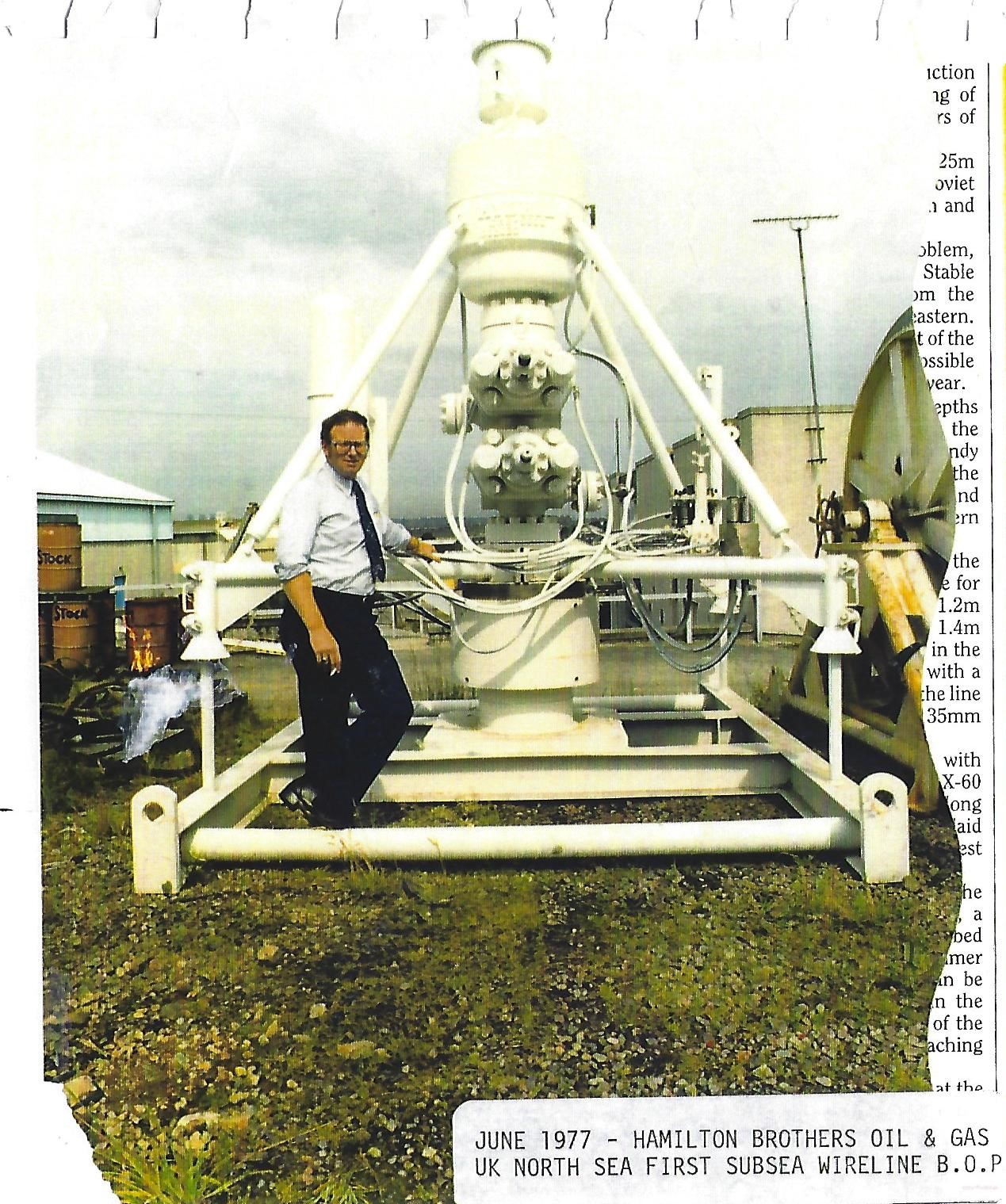
JL’s story reminds us once again that safety achievement is dependent on continuous improvement driven by experience, research, and technological advances.

When I was a young engineer with the US Geological Survey, the OCS safety regulator at the time, my boss and mentor Richard Krahl (known as “Mr. OCS” for his commitment to offshore safety) slammed😀 a copy of the first edition of API RP 14C (Analysis, Design, Installation, and Testing of Safety Systems for Offshore Production Facilities) on my desk and told me to read it carefully. That pioneering process safety document has grown with the offshore industry and is now in its 8th edition.

Similarly, API RP 2A-WSD (Planning, Designing, and Constructing Fixed Offshore Platforms— Working Stress Design) is now in its 22nd edition and API STD 53 (Well Control Equipment Systems for Drilling Wells) is in its 5th edition. There are countless other examples of the progression in safety equipment and practices.

As individuals, companies, agencies, and collectively as an industry, there can be no standing still. Nothing is routine and the challenges continue to grow: deeper wells, more complex geology, higher temperature and pressure, deeper water, harsher environments, remote locations, new security risks, and more. We get better or we get worse, and the latter is not an option. Onward!
Read Full Post »

As we approach the 55th anniversary of the Santa Barbara blowout (more to follow), pioneering subsea engineer JL Daeschler reminds us of a lesser known, but very serious, drilling blowout that occurred the same year offshore Northern Australia.

As is the case with most historic incidents, the lessons learned are still pertinent today and should be studied by those involved with well operations. Training sessions should consider what went wrong then, how technology and practices have changed since, how similar incidents could still occur, and innovations and improved practices that could further mitigate well control risks.

While well control technology and procedures are much improved, the fundamental issues discussed in the attached video remain the same. Well control must always be considered a work in progress with continuous improvement being the objective.

(The Sedco 135G semisubmersible that drilled this well is of the same design as the Sedco 135B rig that sank offshore Borneo in 1965.)

Read Full Post »

Raphael is a highly regarded offshore safety leader and a positive force for continuous safety achievement in Brazil and internationally.

Read Full Post »

Phil Rae piece in Fuel Fix

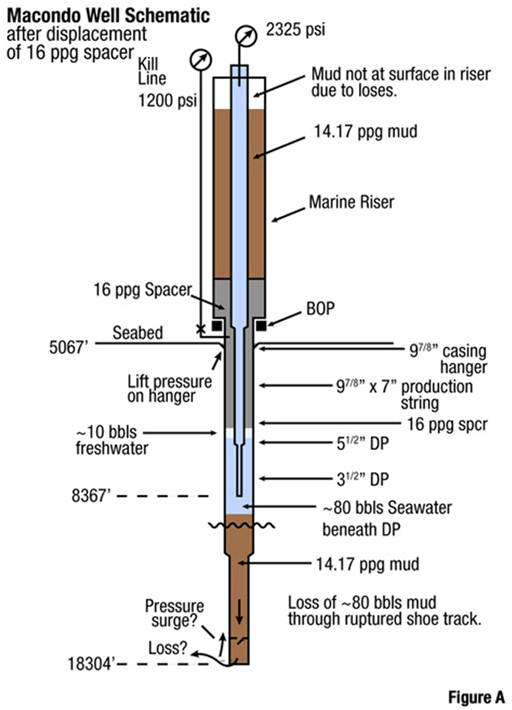
  1. The well clearly had losses through the shoe during the initial displacement of the heavy spacer with seawater, immediately prior to the negative test.
  2. Allowing for, and accepting, losses of ~80 bbls during spacer displacement, explains ALL pressure and flow anomalies without the need to create or invoke undocumented and unsubstantiated valve closures or manipulations that contradict witness testimony of events. It also eliminates the need to adopt unrealistically-low pump efficiencies for the rig pumps, hypothetical washed-out tubing and ridiculously high viscosities for the drilling mud, in an effort to fit questionable computer models.
  3. Despite extensive examination by investigators and the publication of several reports, the fact that the well experienced losses, making it even more severely underbalanced than was planned, has been given little credence or has received little or no attention, despite several clear indications that this was the case. While this statement regarding losses may be self-evident, its significance on the outcome at Macondo merits closer examination since it explains many previous, apparently-contradictory aspects of the disaster.
  4. Under-displacement of heavyweight spacer, as a result of losses during displacement, caused U-tubing and partial evacuation of the kill line, the lower end of which was later refilled with heavyweight spacer, driven by pressure and flow from the formation. The vacuum, initially, and subsequent invasion of heavy fluid rendered the kill line useless for monitoring the well since the line was effectively blind to pressure changes in the well.
  5. While initial flow into the well was through the shoe, pressure above the casing hanger seal during the negative test was reduced to levels that could have allowed the casing to lift, compromising the seal and possibly also allowing flow from the external annulus.
  6. The well encountered further losses during the second displacement (to displace the riser), after completion of the negative test. These losses, which were perhaps as much as 200 bbls, effectively replaced heavy mud with sea water in the casing below the drill pipe. This further underbalanced the well to the point that it was being kept under control only by pumping friction pressure. As the pump rate was reduced prior to shut down for the sheen test, effectively reducing system backpressure, the now severely underbalanced well began to flow.

Read Full Post »

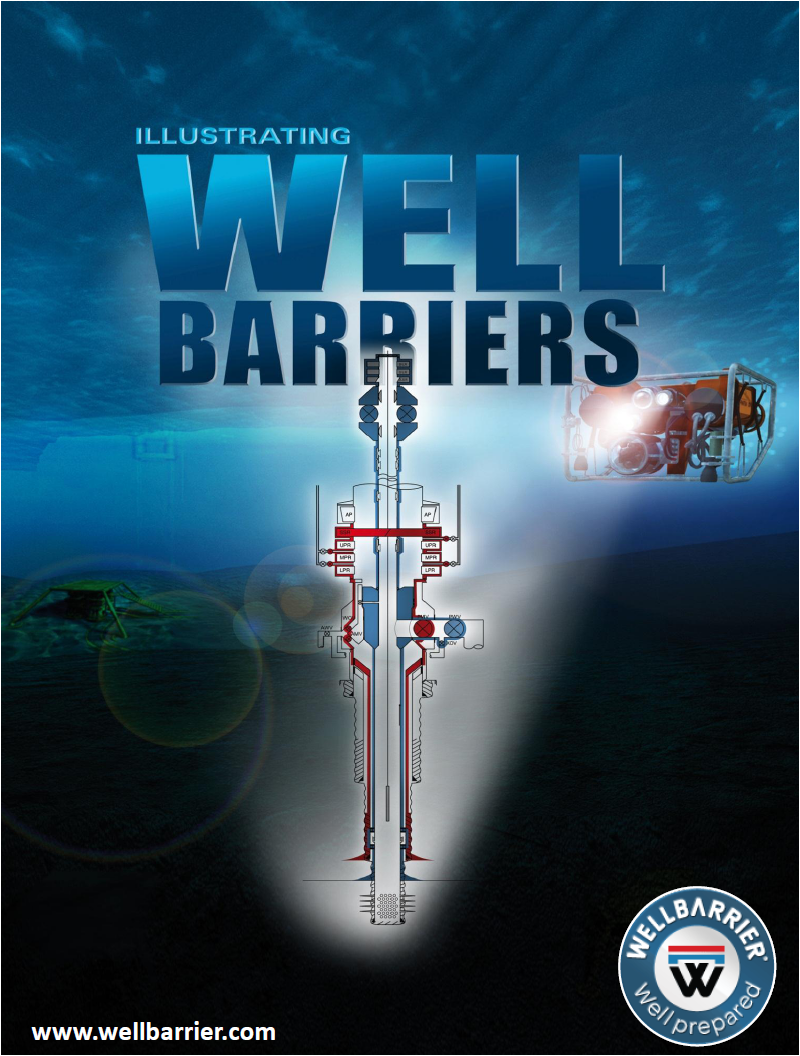
Our friend Tore Fjågesund from WellBarrier sent us this clever poster.

Read Full Post »

From the West Australian:

A new system to regulate the offshore gas and oil industry – a direct response to the 2009 Montara north of the Kimberley – has been approved by the Federal Parliament’s lower house.

Under the changes, the seven state and territory authorities will be replaced by a single Commonwealth body, the National Offshore Petroleum Safety and Environmental Management Authority.

It will regulate all safety issues from exploration to well decommissioning.

In the US, the jurisdictional conflicts (offshore) differ in that they typically involve multiple Federal regulators with overlapping jurisdiction and different priorities. Since most of the necessary streamlining would only involve Federal agencies, one would think that regulatory reform would be achievable, especially after a major blowout that killed eleven. Unfortunately, meaningful US reform appears to be highly unlikely.

Read Full Post »

I don’t buy the argument that industry and regulators have paid too much attention to personal safety at the expense of process safety. Casualties from falls, falling objects, helicopter crashes, and other workplace activities have been persistent, and safety management programs must emphasize practices and procedures that will reduce occurrence rates.

Also, process safety has hardly been ignored. API RP 14 C has proven to be an effective safety analysis procedure for addressing undesirable events associated with each process component of a production facility.  For more complex facilities, Deepwater Operating Plans and API RP 14J, “Recommended Practice for Design and Hazard Analysis for Offshore Production Facilities, ” are good risk management supplements to RP 14C.

That said, we need better programs for sustaining the focus needed to further reduce the probability of low frequency, high consequence events.  When memories about the most recent disaster start to fade, what do we do to keep workers on edge and prevent complacency? What more can be done to prevent events with enormous consequence potential?  Some thoughts:

  1. Establish programs to remind employees about past disasters – how they happened and how they could have been prevented. How many offshore workers know the chain of events that led to the Santa Barbara blowout, Ocean Ranger sinking, Alexander Kielland capsizing, Piper Alpha fire and explosion, Ixtoc blowout, and other historic incidents? When discussing international incidents, we need to explain how our facilities or region might have been vulnerable under similar circumstances.
  2. Present information on minor incidents that could have escalated into disasters, emphasizing what could have gone wrong and why.
  3. Don’t just focus on the last disaster.  While addressing the operational and organizational issues that surfaced at Montara and Macondo, we also must assess incident data and identify activities and practices that could lead to the next disaster.
  4. Operators should not rely on the regulator to manage their operations. Reading about Montara and Macondo, one senses that the regulators were called on to referee internal company disputes and protect the operators and contractors from themselves.
  5. Regulators should not be making day-to-day operating decisions. Regulators should make sure that the regulations are clear and that operators have effective management procedures for adjusting programs as new information is obtained. Regimes that provide for regulator approval of each activity or adjustment promote operator complacency and are not in the best interest of safety over the long term.
  6. Service companies and contractors must challenge operators and regulators.  Operators should expect contractors to think and question, not to simply execute orders. There are impressive examples of contractors insisting on safety improvements, and being willing to forego business rather than compromise on safety.
  7. All sectors of the offshore industry should participate in standards development. Effective standards are dependent on diverse input.
  8. Industry and government leaders should promote innovation. Obvious weaknesses should be identified and industry should be challenged to propose solutions. For example, why do concerns about “false alarms” preclude automatic alarm activation (see Transocean’s Macondo report)? Data from redundant sensors can be analyzed by predictive software that is capable of quickly identifying real events. Similarly, why have advances in BOPE, including monitoring systems, been so slow? Why are BOP capabilities still poorly understood? Why are well integrity and casing pressure issues (producing wells) so common?

Read Full Post »

Links

Animation of Transocean’s BOP analysis

Transocean’s BOP Defense:

Forensic evidence from independent post-incident testing by Det Norske Veritas (DNV) and evaluation by the Transocean investigation team confirm that the Deepwater Horizon BOP was properly maintained and did operate as designed. However, it was overcome by conditions created by the extreme dynamic flow, the force of which pushed the drill pipe upward, washed or eroded the drill pipe and other rubber and metal elements, and forced the drill pipe to bow within the BOP. This prevented the BOP from completely shearing the drill pipe and sealing the well.

In other words, Transocean contends that properly maintained BOPE was not up to the task of shutting-in and securing a high-rate well. If true, this finding has significant implications for the offshore industry.  I’m looking forward to reading the government’s findings on the BOP failure when the Joint Investigation Team report is issued next month.


Read Full Post »

BP settled Macondo litigation with Weatherford, manufacturer of the float equipment equipment used in the Macondo well. The failure of this equipment was a key contributing factor in the Macondo blowout. Under the agreement, Weatherford will pay BP $75 million.  This money will be applied to the $20 billion Macondo trust fund.

Weatherford is the first of BP’s contractors to formally agree with BP that the entire industry can and should learn from the Deepwater Horizon incident. Accordingly, Weatherford has committed to working with BP to take actions to improve processes and procedures, managerial systems, and safety and best practices in offshore drilling operations. BP and Weatherford will encourage other companies in the drilling industry to join them in this improvement and reform effort.

Comments:

  1. $75 million seems like a rather modest payment by Weatherford given the magnitude of Macondo damage costs. BP will “indemnify Weatherford for compensatory claims resulting from the accident.”  Presumably, Weatherford’s sales agreements provide good legal protection.
  2. One of the root causes of the Montara blowout was also a float collar failure. That float collar was also supplied by Weatherford.  I’m surprised that this common cause and supplier have received almost no attention. Of course, no one has paid much attention to Montara, either before or after Macondo. Had more attention been paid to the Montara inquiry, Macondo might have been avoided.  (Note that most of the post-Macondo commentary still implies that deep water is the threat even though Montara was in 80 m of water and the root causes of Macondo were not water depth related).
  3. When do we learn more about the “improvement and reform effort” described in the quote above?

Read Full Post »

Resources Minister Martin Ferguson is determined to establish a single national regulator after the Montara oil spill in the Timor Sea leaked oil and gas condensate for more than two months in 2009.

The WA government is at odds with Mr Ferguson over plans for a national regulator and wants to maintain responsibility for oversight of the industry in the state.

Senator Eggleston and Senator David Bushby said the federal government had introduced the legislation to parliament before concluding ongoing negotiations with the WA government. Herald Sun

Meanwhile, still no news regarding any penalties for Montara operator PTTEP.  Will there be none?

Read Full Post »

Older Posts »