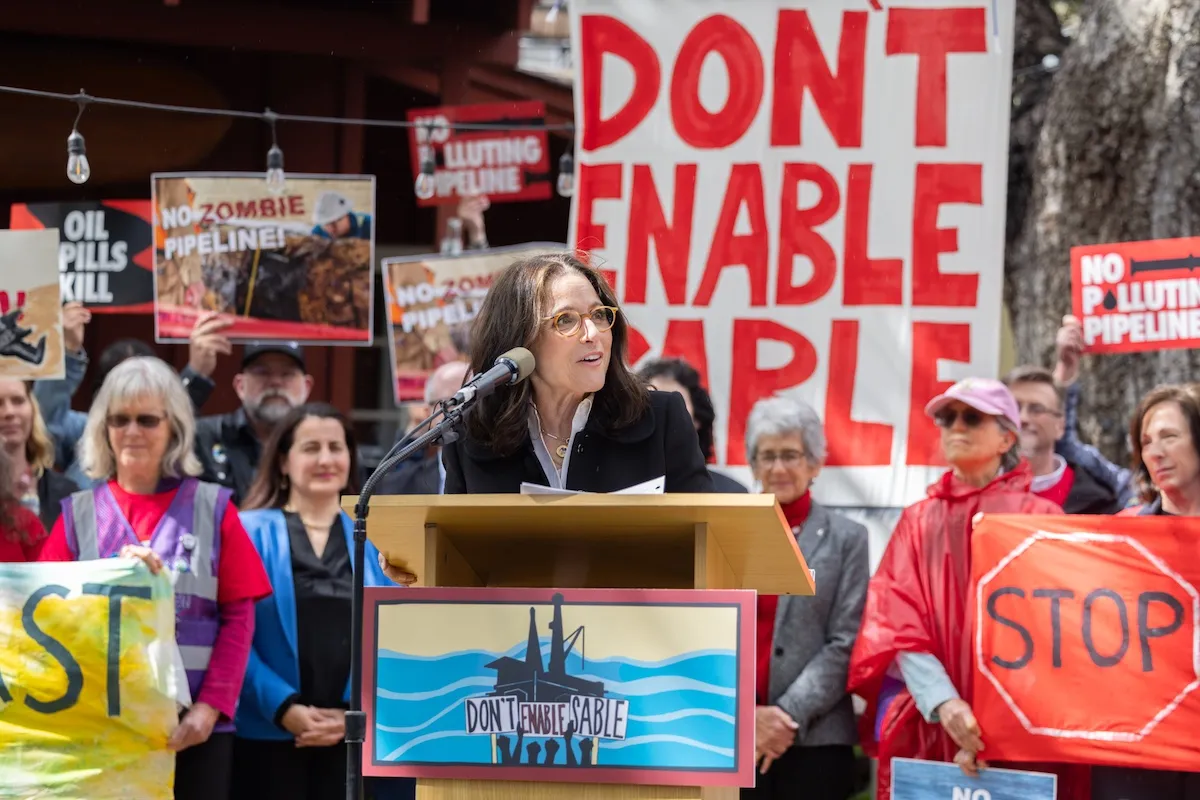
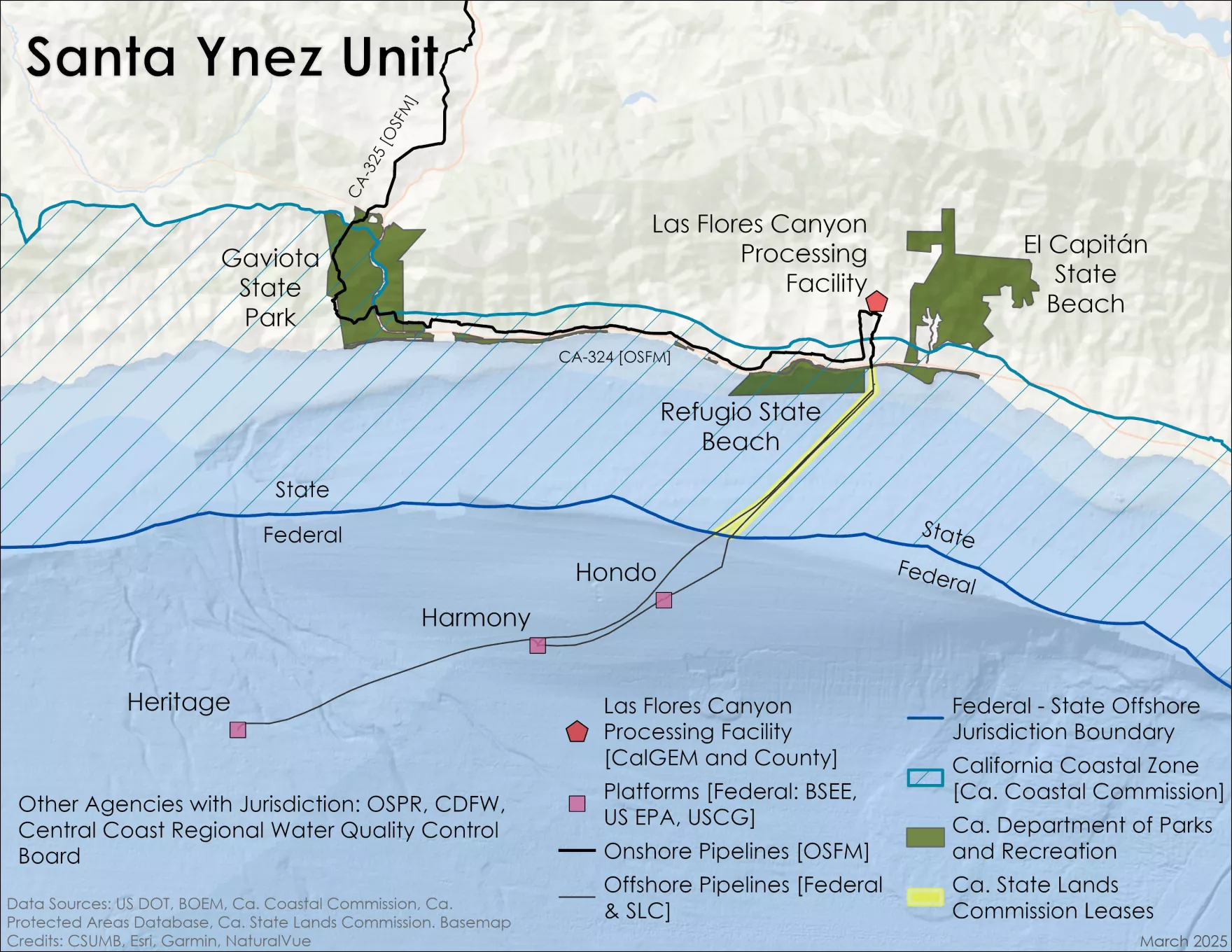
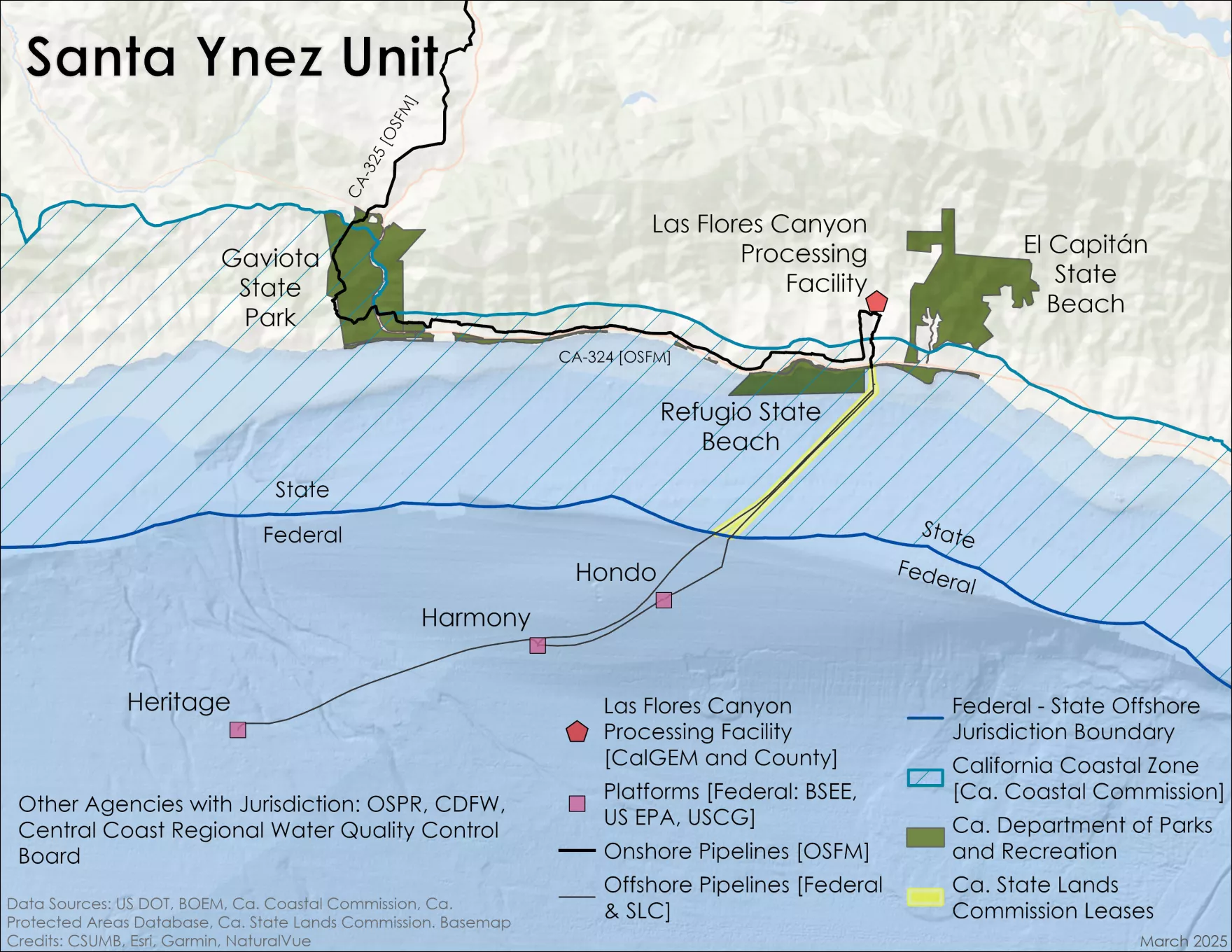
“The Santa Barbara Channel has been dubbed the Galápagos of North America” ~ Maggie Hall, Environmental Defense Center attorney. (comments: 1. clever branding ala calling ANWR “America’s Serengeti!;” 2. no natural oil seeps in the Galapagos Islands; 3. 130 years of oil production history in the Channel)
Sable opponents organize entertaining rallies featuring famous celebrities:
Ted Danson Jane FondaJulia-Louis Dreyfus
Meanwhile, Sable has some starpower of its own with strong public support from golfer Phil Mickelson.
Senior Federal officials and key agencies are outspoken Sable supporters:
“Only in California! Newsom is blocking oil production off California’s coast from reaching their own refineries, driving gasoline prices even higher for Californians! Now, this oil production will have to be shipped elsewhere, lowering gas prices for other areas— just not for California! This is the opposite of common sense!” ~ Energy Secretary Chris Wright
BSEE declared victory 6 months ago: “This is a significant achievement for the Interior Department and aligns with the Administration’s Energy Dominance initiative, as it successfully resumed production in just five months.”
Perhaps most entertaining are the exchanges on X between Sable bulls and short-sellers. A few examples are embedded below:
Listen Lassy, you could take your signing bonus and have $10 million in cash right now. But that’s short term thinking. Once Big Daddy Trump gets the regulations fixed Sable stock will be worth 50, 60, maybe even 100x that. We’ll be sipping Coffee for Wellness on our yachts in… pic.twitter.com/H2le8c0otE
Good luck but this stock & company are train wrecks. I live close to pipeline so state, local opposition to a restart remains steadfast. Here’s latest news, do your homework.https://t.co/ZfKSKwwrcW
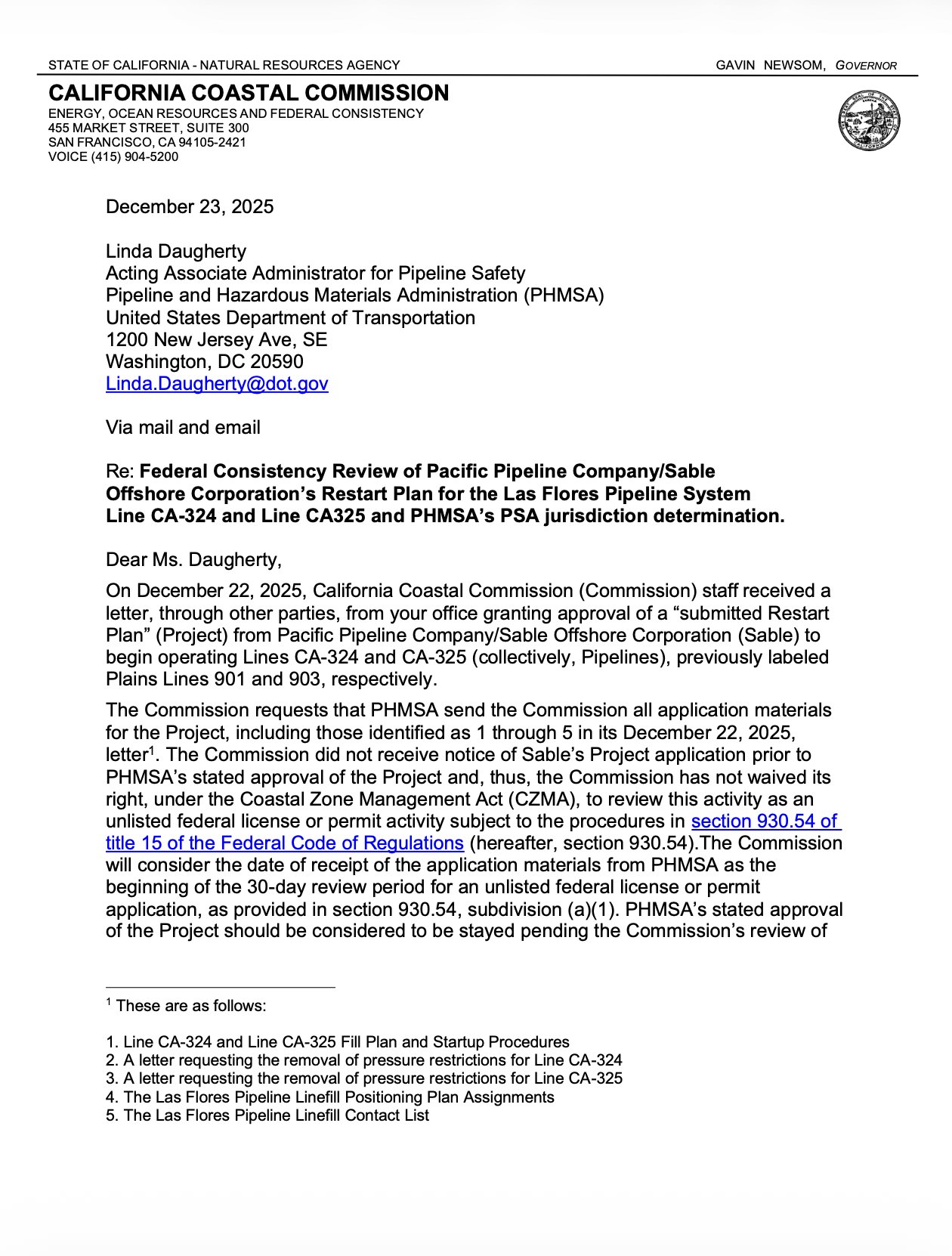
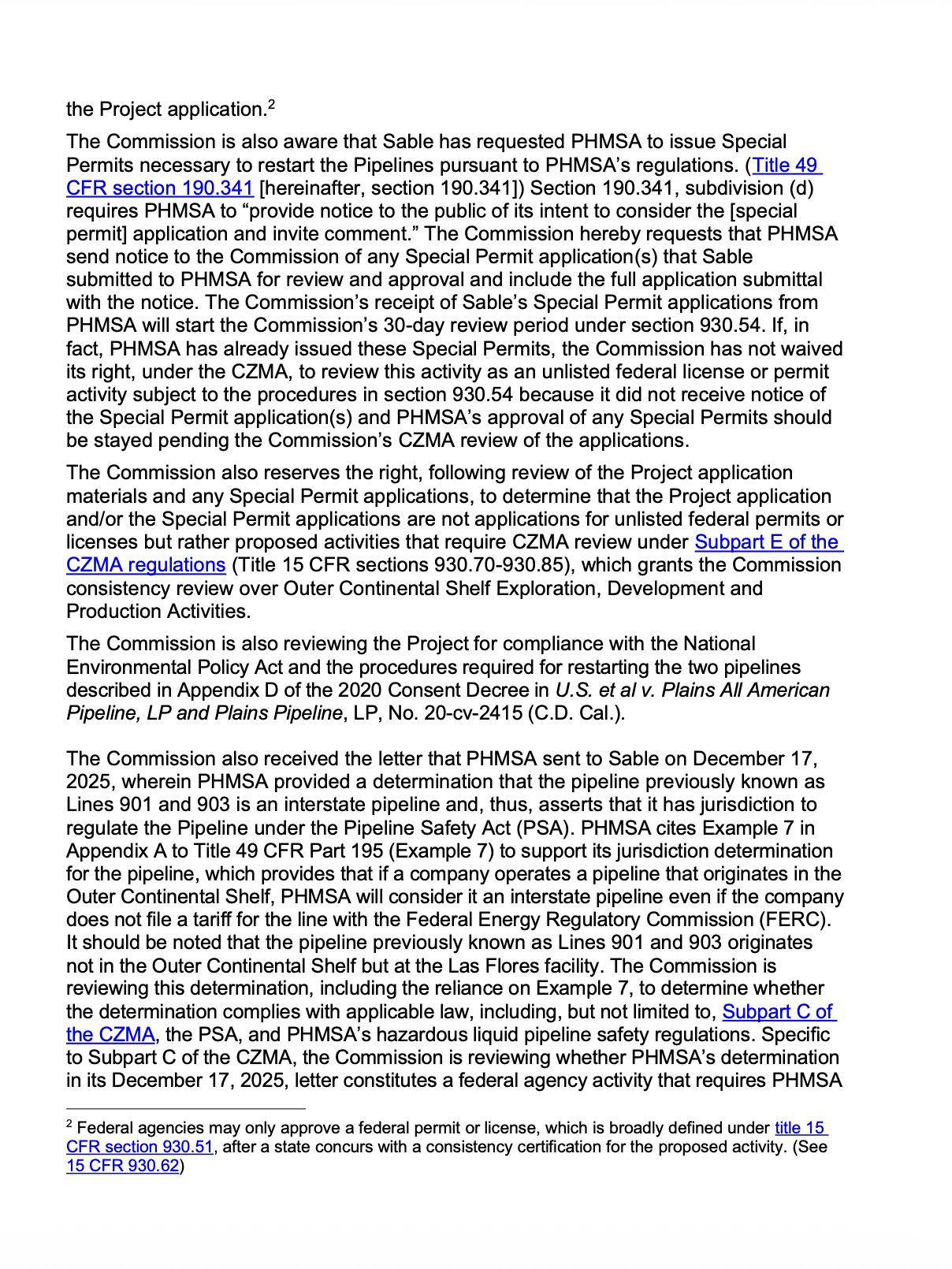
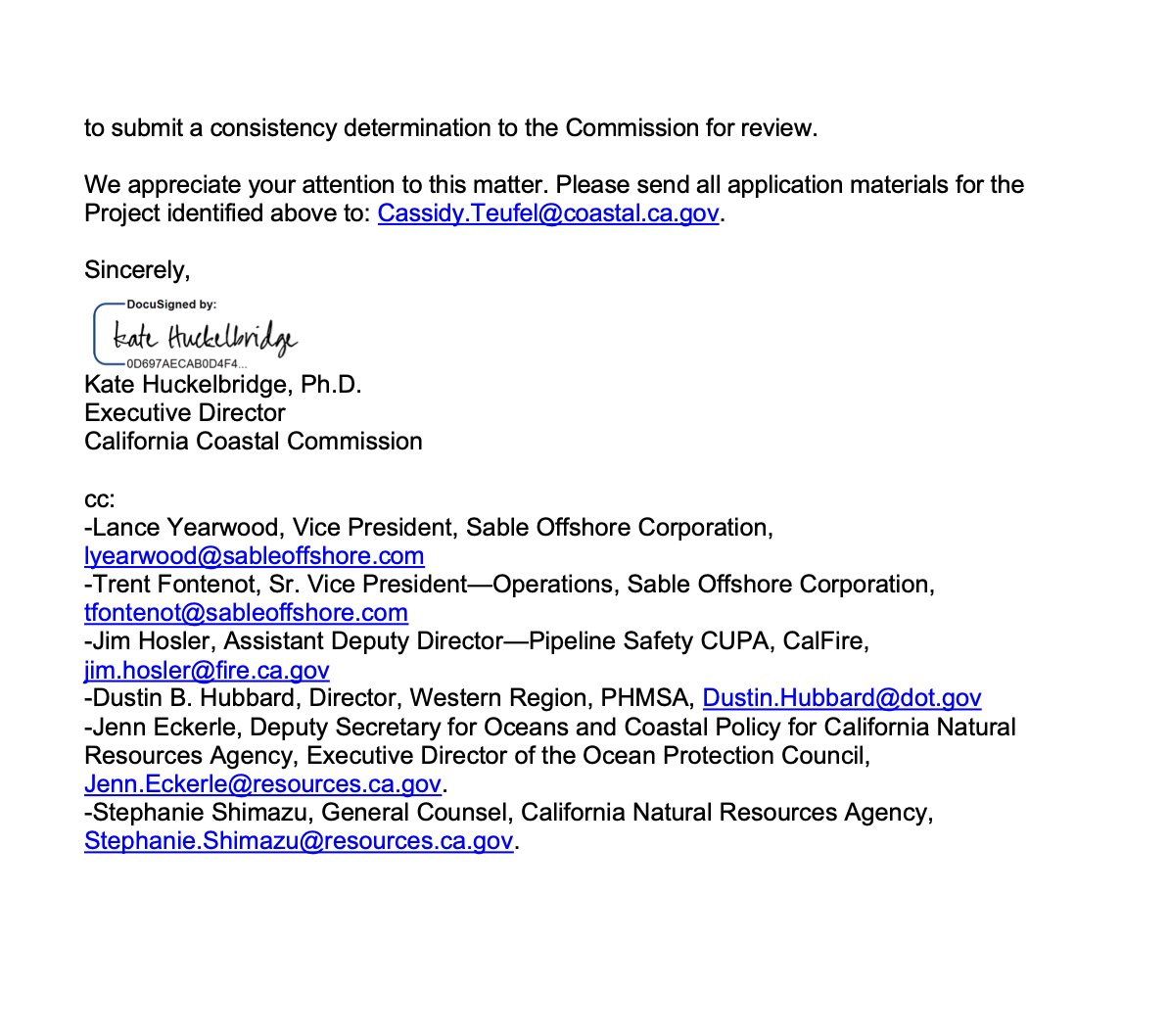
The Commission’s letter to PHMSA is attached (click on pages to enlarge). The CCC asserts the right, pursuant to the Coastal Zone Management Act, to review Sable’s restart/special permit application and further asserts that PHMSA’s special permit should be stayed pending their review.
The Commission also raises NEPA and Consent Decree compliance issues, and implies that PHMSA’s designation of the pipeline as “interstate” is subject to consistency review.
$SOC Field Update: Hydro-testing finalized this morning. System has officially transitioned to Line Fill. Nitrogen displacement by crude is underway. Expecting first oil at Pentland early-mid Jan. The operational window is now locked.
$SOC: Ninth Circuit order grants leave to intervene, but denies the request to stay PHMSA’s Dec. 22 Restart Plan approval and Dec. 23 Emergency Special Permit. Case is expedited and goes on the next available calendar. Briefing: opening Jan. 26, 2026; answering Feb. 17;… pic.twitter.com/YdGeVMu6cI
Attached are PHMSA’s Christmas week Emergency Special Permit and Permit Analysis document. Is the path clear to restart SYU production before New Year’s day?
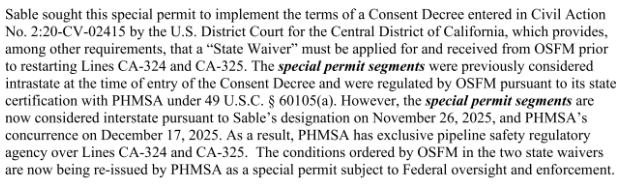
Three excerpts from the first attachment are pasted below. The last paragraph on p. 2 succinctly explains PHMSA’a emergency permit:
PHMSA was able to assume jurisdiction from the State because the pipeline transports Federal OCS oil and is thus inherently interstate. The perceived problem with a PHMSA takeover had been the court approved Consent Decree that was executed following the 2015 Refugio pipeline spill. That Decree specifies that the State Fire Marshal must approve a restart of the pipeline. The first paragraph on p. 2 of the permit explains PHMSA’s position that the Consent Decree has been superseded.
The provision pasted below (p. 4 of the permit) seems contradictory in that it stipulates compliance with the Consent Decree. However, PHMSA apparently sees no contradiction in that references to the Fire Marshal (OSFM) should now be read as references to PHMSA. PHMSA presumably included this provision to reaffirm the need to comply with the technical requirements in the Decree.
The second attachment is PHMSA’s analysis of the special permit. Note that the permit expires in 60 days. Public notice and opportunity for comment would be required for a renewal.
Environmental organizations reacted quickly to the PHMSA permit, filing an emergency motion in the 9th circuit (third attachment). Observations:
Impressive effort given the time crunch. The PHMSA permit was issued on 12/23, just 3 days prior to the court filing. No Christmas break for those folks!
If you wonder why the petition was filed with the 9th Circuit (seemed convenient given the 9th Circuit’s reputation), a filing at the Circuit level is required for appeals of PHMSA orders.
Petitioners strongest argument: Sable is not entitled to emergency relief, as there is no real emergency. PHMSA asserts that EO 14156, which declared a National Energy Emergency, supports the emergency permit.
The petitioners environmental doom prediction is not compelling. PHMSA’s position is that the mitigations they are imposing (reduced operating pressure, inline inspections, testing and sampling, etc) provide protection equal to or greater than than the corrosion remediation requirement that is being waived.
The petitioners asked the Court for relief no later than 12/26. That date has passed. Will there be a ruling today?
Barring an injunction, odds are that Sable restarts production prior to New Year’s Day, when a requirement (SB 237) for a new Coastal Development Plan, takes effect.
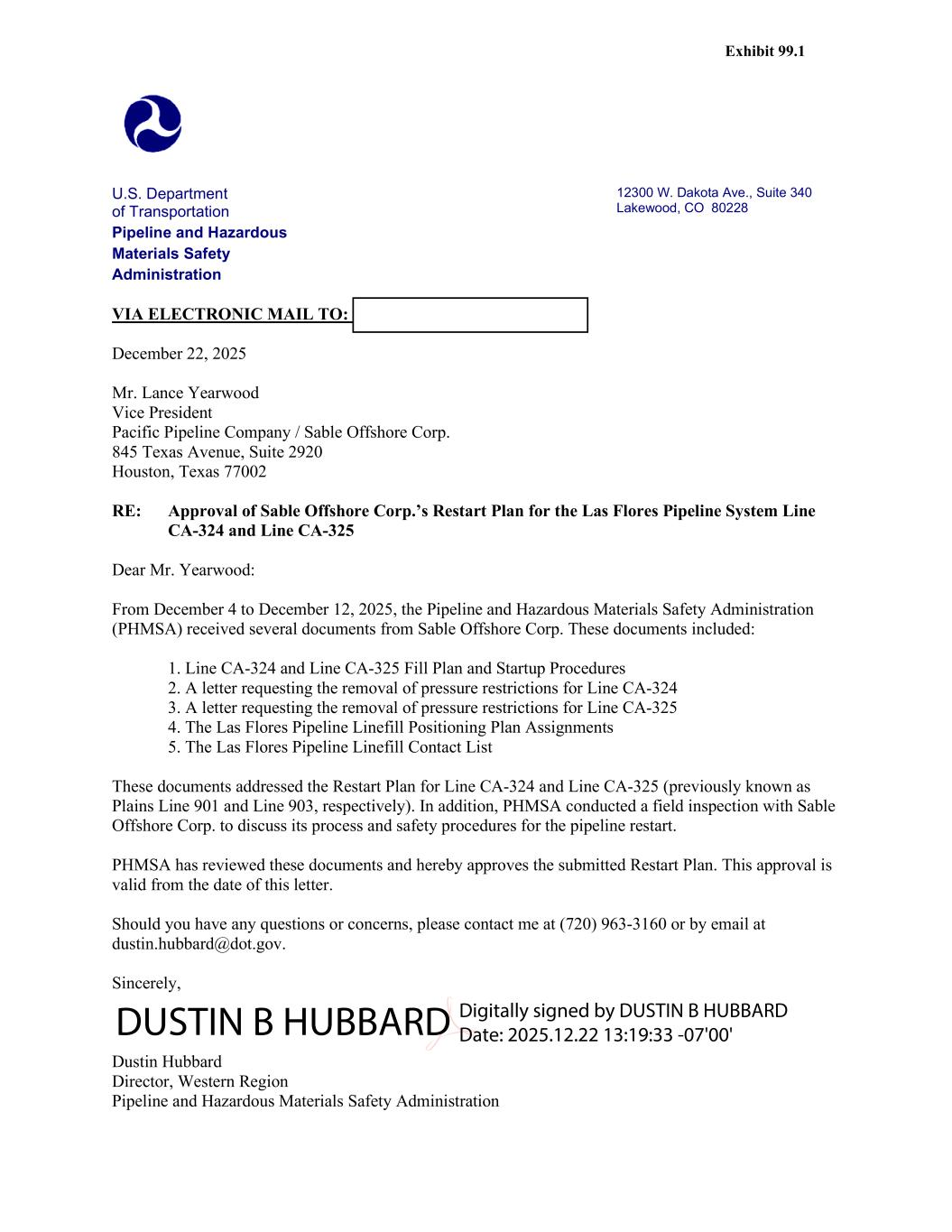
The anticipated State-Federal jurisdictional battle over Sable’s Las Flores Canyon Pipeline is on! See the attached letter from the Pipeline and Hazardous Materials Safety Administration (PHMSA) declaring that the pipeline is under Federal jurisdiction.
The major hurdle for PHMSA/Sable is thecourt approved Consent Decree that was executed following the 2015 Refugio pipeline spill. The Decree, which designates the California Fire Marshal as the sole regulator for the pipeline, is not mentioned in the PHMSA letter. Needless to say, another major legal battle looms.
Excerpt from the PHMSA letter:
PHMSA’s evaluation of the Las Flores Pipeline confirms that it transports crude oil from the OCS to an onshore processing facility at Las Flores Canyon and continues the transportation of crude oil from Las Flores Canyon to Pentland, California. Consistent with Appendix A, the Las Flores Pipeline is an interstate pipeline. As portions of the Las Flores Pipeline were previously considered to be intrastate and regulated by OSFM, PHMSA is notifying OSFM that the Las Flores Pipeline is subject to the regulatory oversight of PHMSA.
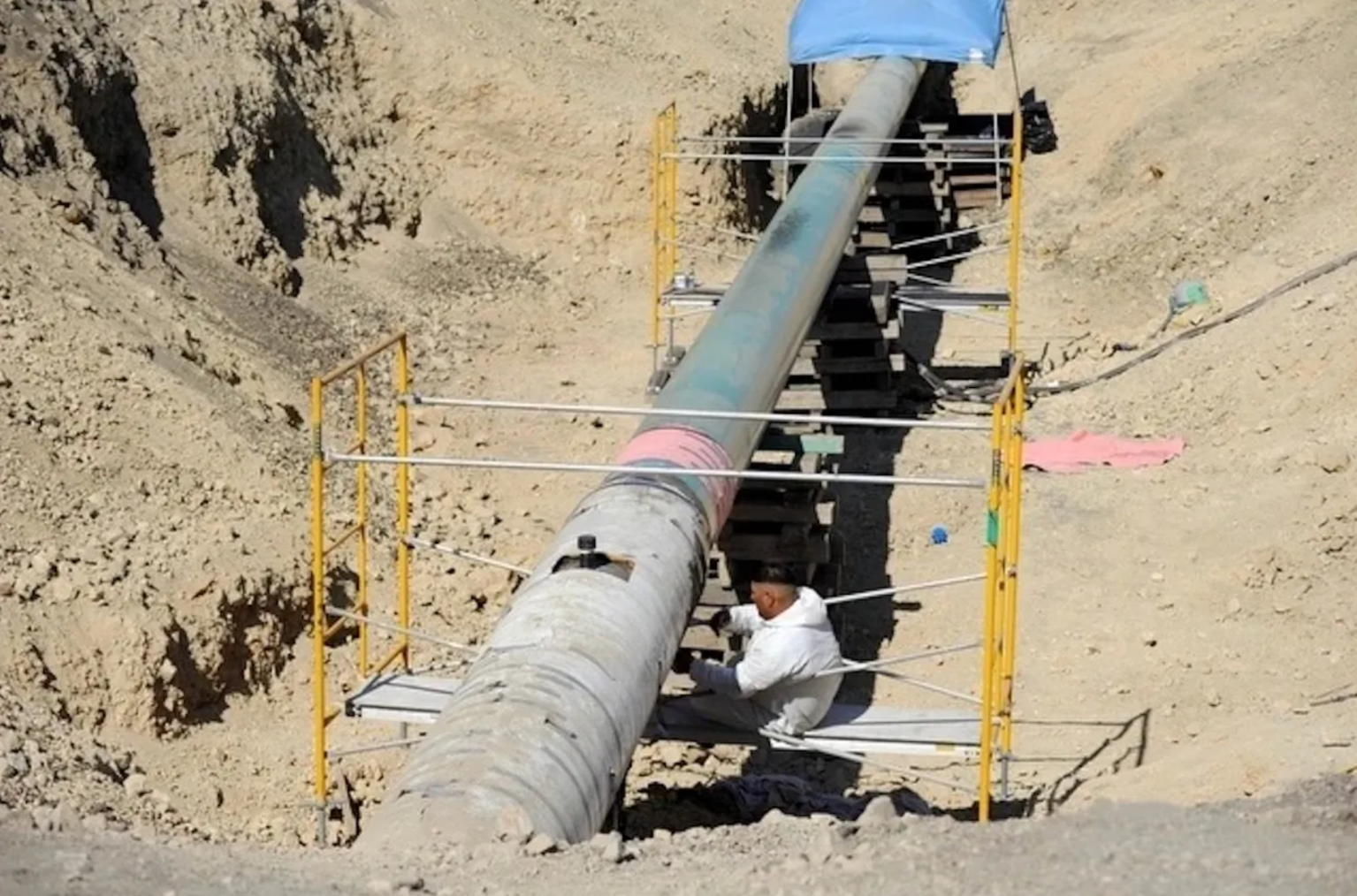
Sable Offshore is attempting to restart the same pipeline that caused the Refugio Oil Spill in 2015. | Credit: Paul Wellman File Photo
Sable Offshore oil believes the federal Pipeline and Hazardous Materials Safety Administration (PHMSA) , not the California Fire Marshal, should have jurisdiction over the company’s onshore pipeline.
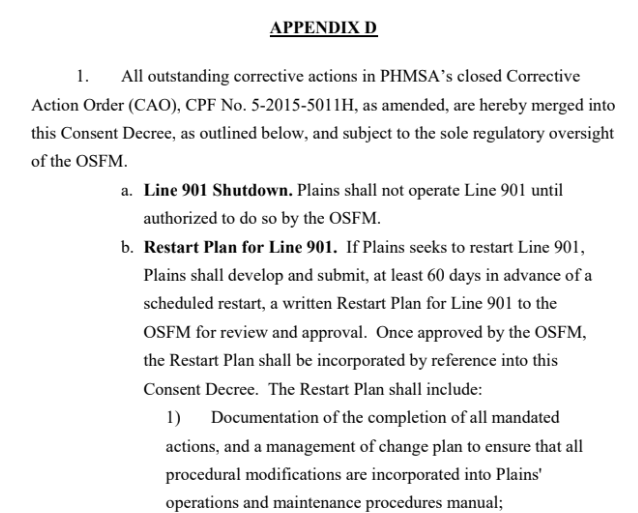
I once had the same opinion as Sable. Their pipeline is, by definition, an interstate line because it carries OCS production. Then I read Appendix D of the court approved Consent Decree that was executed following the 2015 Refugio pipeline spill. That Decree is quite clear regarding regulatory jurisdiction, and would have to be overturned to transfer authority to PHMSA.
The full Consent Decree is attached. Pasted below is an excerpt from Appendix D:
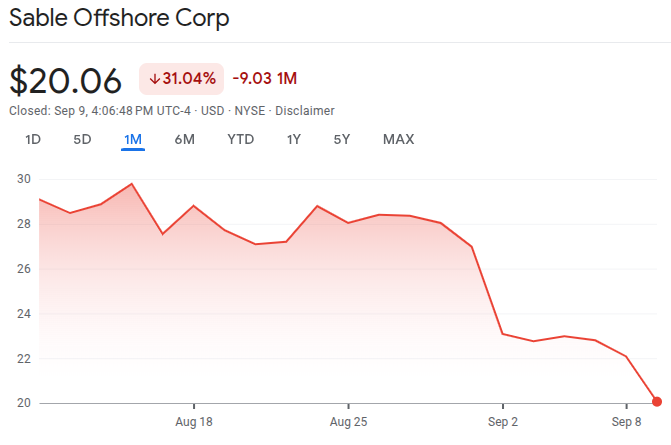
Sables’ share price sank on Tuesday following reports from Bloomberg and others that Governor Newsom is proposing new restrictions on California’s offshore oil industry. With Sable Offshore as a primary target, stricter requirements for restarting inactive intrastate oil pipelines would be imposed. •
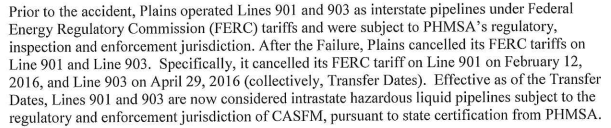
This could trigger yet another legal battle or increase the complexity of those that are ongoing. The onshore pipeline, now owned by Sable Offshore, was originally classified as an interstate pipeline under Federal jurisdiction. However, following the 2015 Refugio oil spill, it was reclassified as an intrastate pipeline via a 2016 letter of understanding signed by representatives of the Federal Office of Pipeline Safety (DOT-PHMSA) and the Office of the State Fire Marshal (pertinent text pasted below).
Given that the Sable pipeline will carry OCS production, it would seem to fundamentally be an interstate line (Federal jurisdiction), as it was when owned by Plains. Could DOT reverse the 2016 letter agreement? That is conjecture for the attorneys and courts to consider.
Meanwhile, below is an upbeat Sable video on the pipeline!
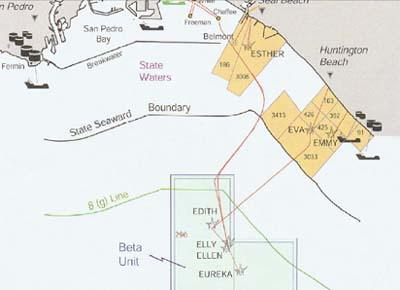
HOUSTON, April 10, 2023 (GLOBE NEWSWIRE) — Amplify Energy Corp. (“Amplify” or the “Company”) (NYSE: AMPY) today announced that it has received the required approvals from federal regulatory agencies to restart operations at the Beta Field. Initial steps to resume full operations will involve filling the San Pedro Bay Pipeline with production, a process which commenced over the past weekend and is expected to take approximately two weeks to complete. Following the line fill process, the pipeline will be operated in accordance with the restart procedures that were reviewed and approved by the Pipeline and Hazardous Materials Safety Administration (PHMSA).
Odd that the news release didn’t mention BSEE, the agency which would have had to approve the resumption of production.
18 months after the pipeline spill near Huntington Beach, settlements have been reached, fines have been paid, and production from the Beta Unit has resumed, but the Federal investigation report is still unavailable. Why?
One would hope that this spill will lead to an independent review of the regulatory regime for offshore pipelines. Consideration should be given to designating a single regulator that is responsible and accountable for offshore pipeline safety (a joint authority approach might also merit consideration) and developing a single set of clear and consistent regulations.