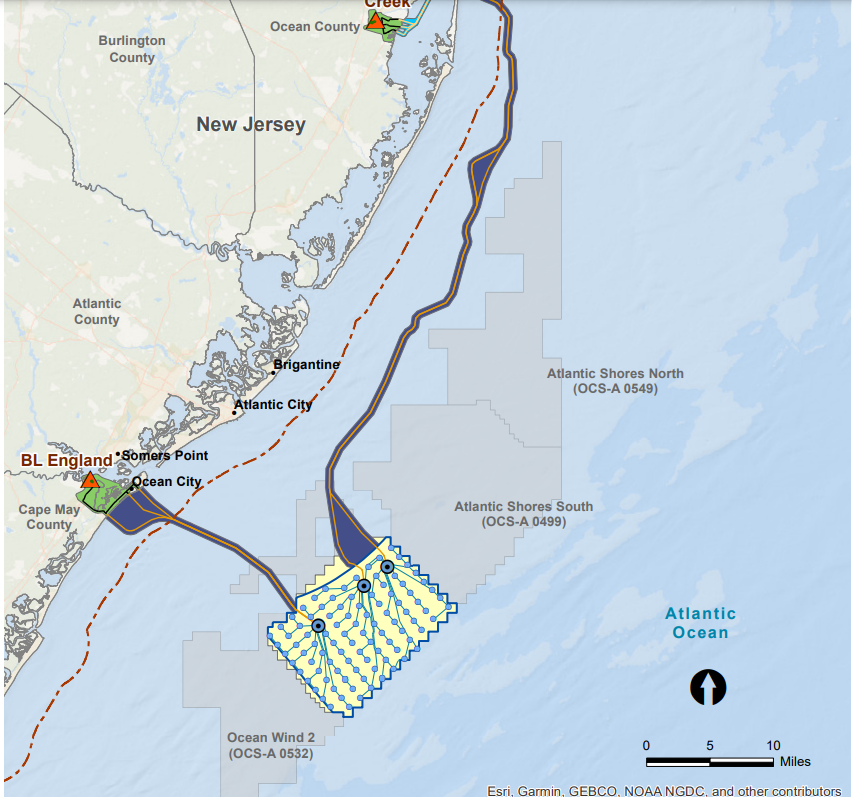
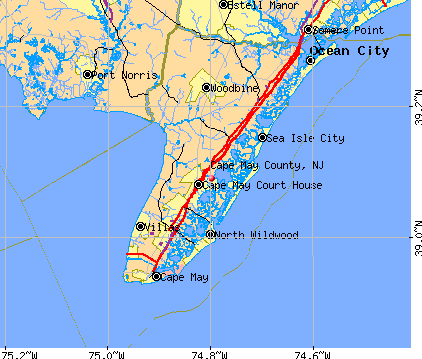
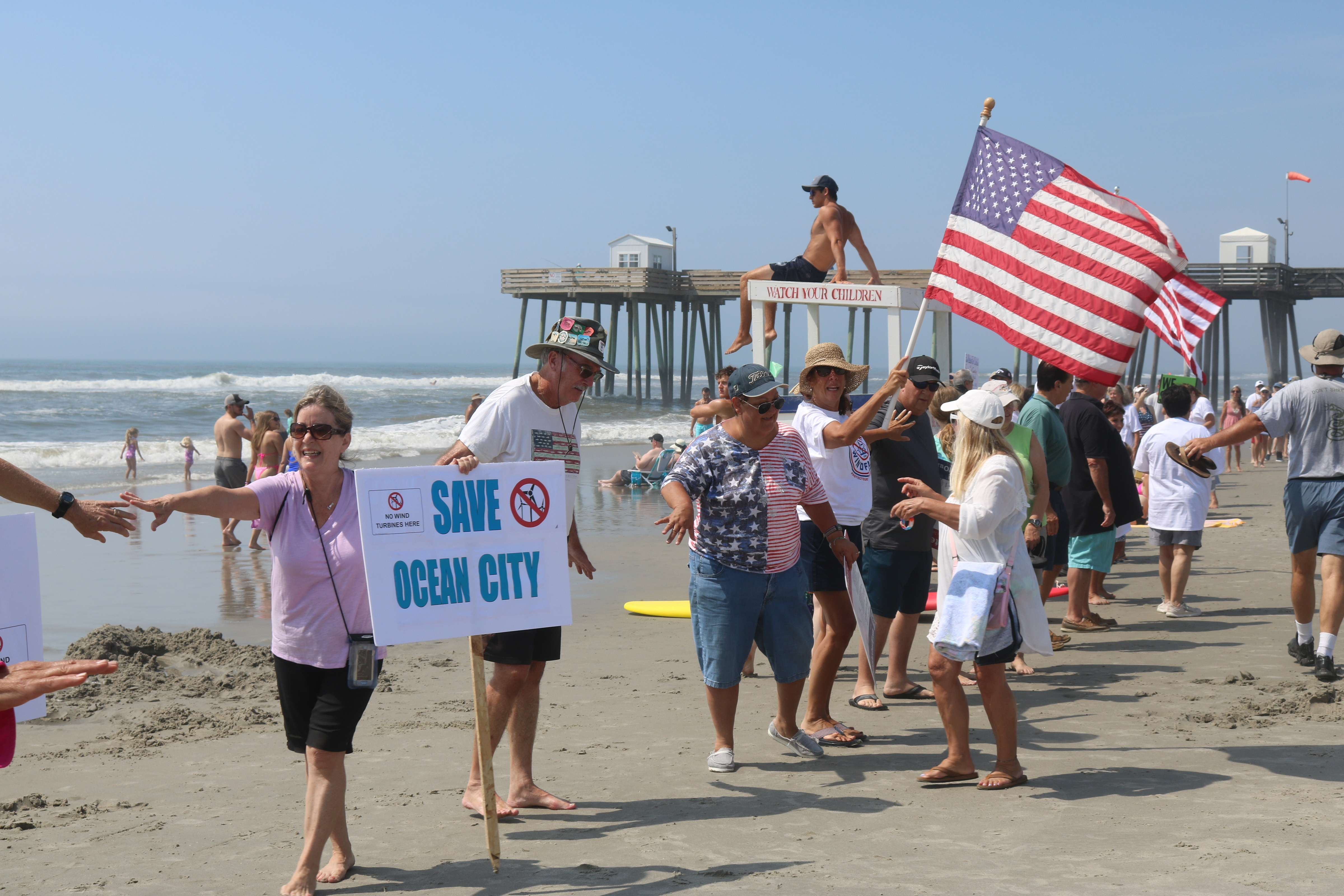
NJ Governor Murphy, an offshore wind promoter, is not pleased:
“Today’s decision by Orsted to abandon its commitments to New Jersey is outrageous and calls into question the company’s credibility and competence,” the Democratic governor said. “As recently as several weeks ago, the company made public statements regarding the viability and progress of the Ocean Wind I project.”
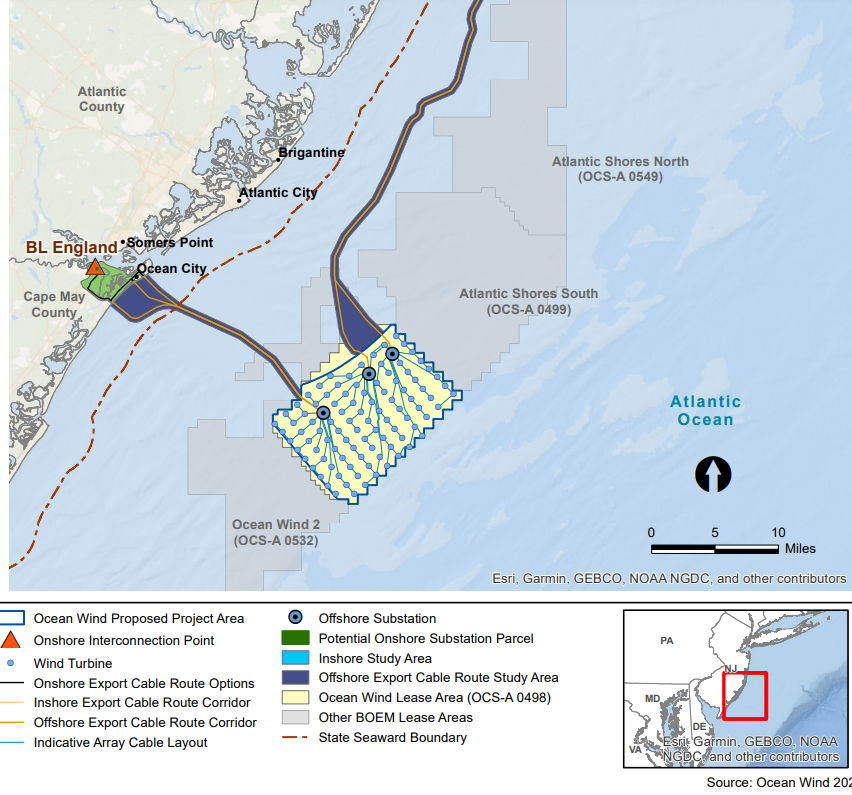
Perhaps the Governor’s credibility and competence is also taking a hit, as is staking the State’s energy future on highly uncertain, intermittent, and facility-intensive power systems. .
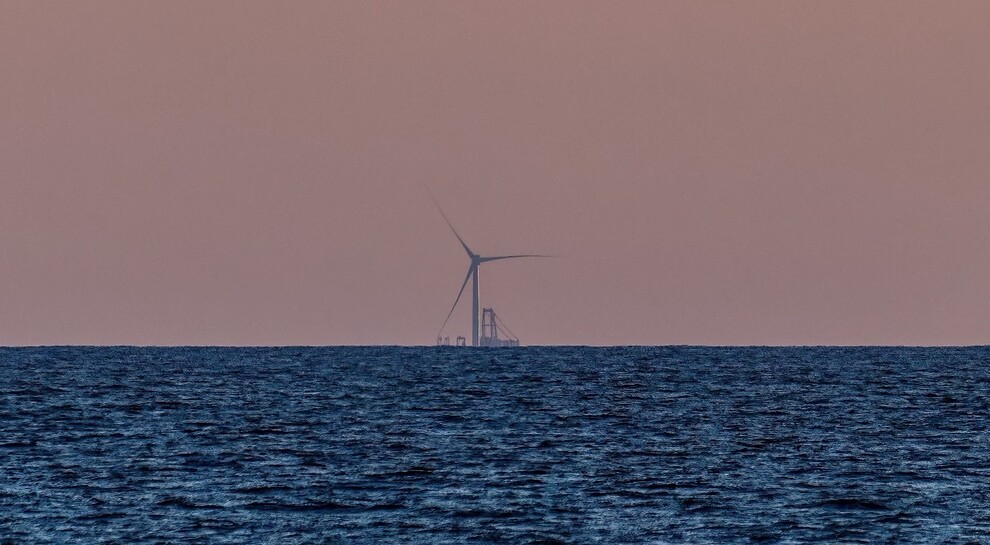
Additionally, the Maria Mitchell Association and the Nantucket Preservation Trust, co-signers on the Good Neighbor Agreement, canceled scheduled interviews despite the fact that the only thing rising quicker than the first visible wind turbine off Nantucket’s south shore is the local level of uneasiness associated with this eyesore.
In my opinion, the long-term sustainability of offshore wind farms simply doesn’t add up. Seaside communities like Nantucket will become the visual victims of the federal government’s desire to have 30 gigawatts of offshore wind production by 2030. Especially from a financial perspective, what sounded so good a few years ago doesn’t appear so rosy today.
The first Vineyard Wind turbine 15 miles off Nantucket. Photo by Charity Grace Mofsen
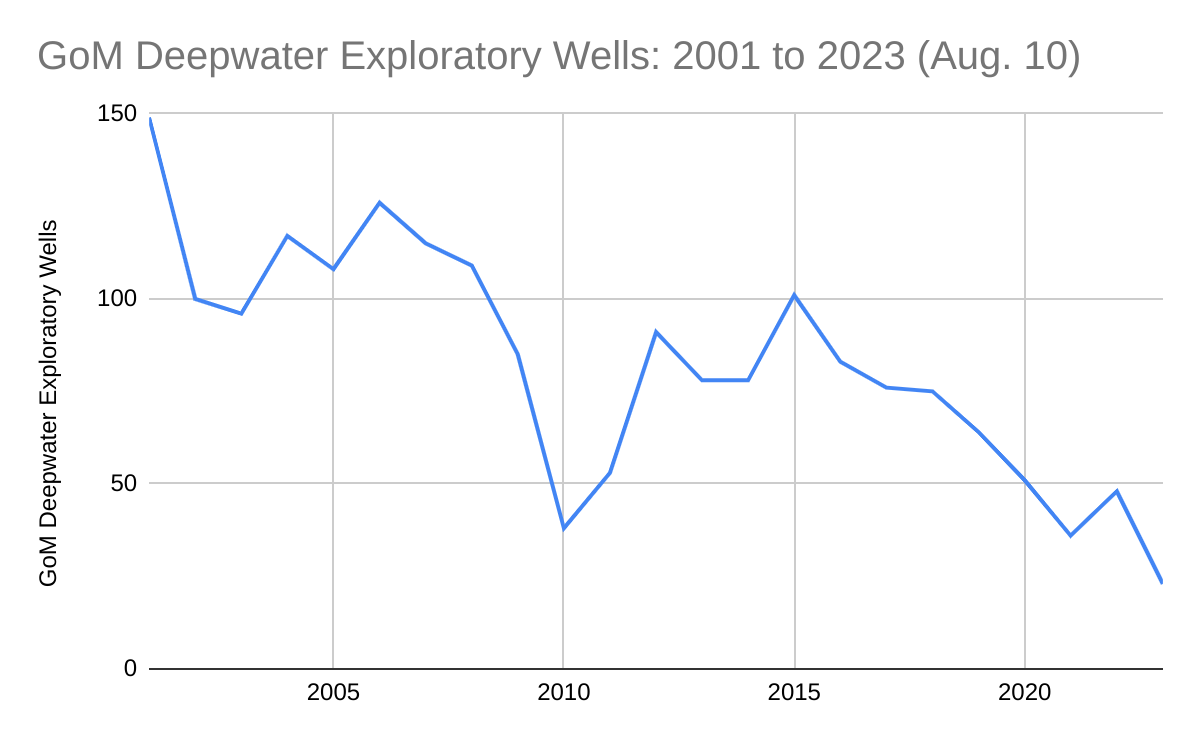
Record low exploratory drilling: 2023 will be the third consecutive year with fewer than 50 deepwater exploratory well starts. The only other year this century with <50 deepwater exploratory well starts was 2010 when there was a post-Macondo drilling moratorium.
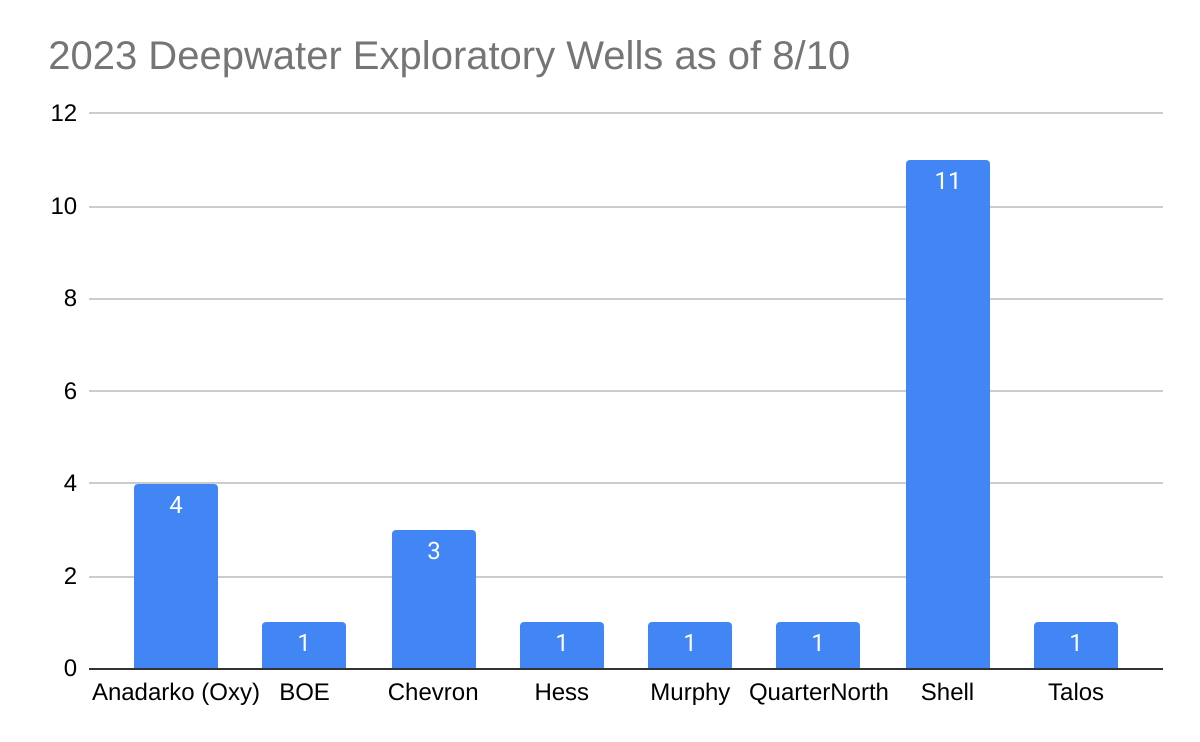
Low participation: Only 8 companies have started deepwater exploratory wells in 2023 YTD. Anadarko, Chevron, and Shell drilled 78% of the wells, with Shell alone accounting for 48%. Compare these numbers with 2001, when 24 companies drilled 149 deepwater exploratory wells.
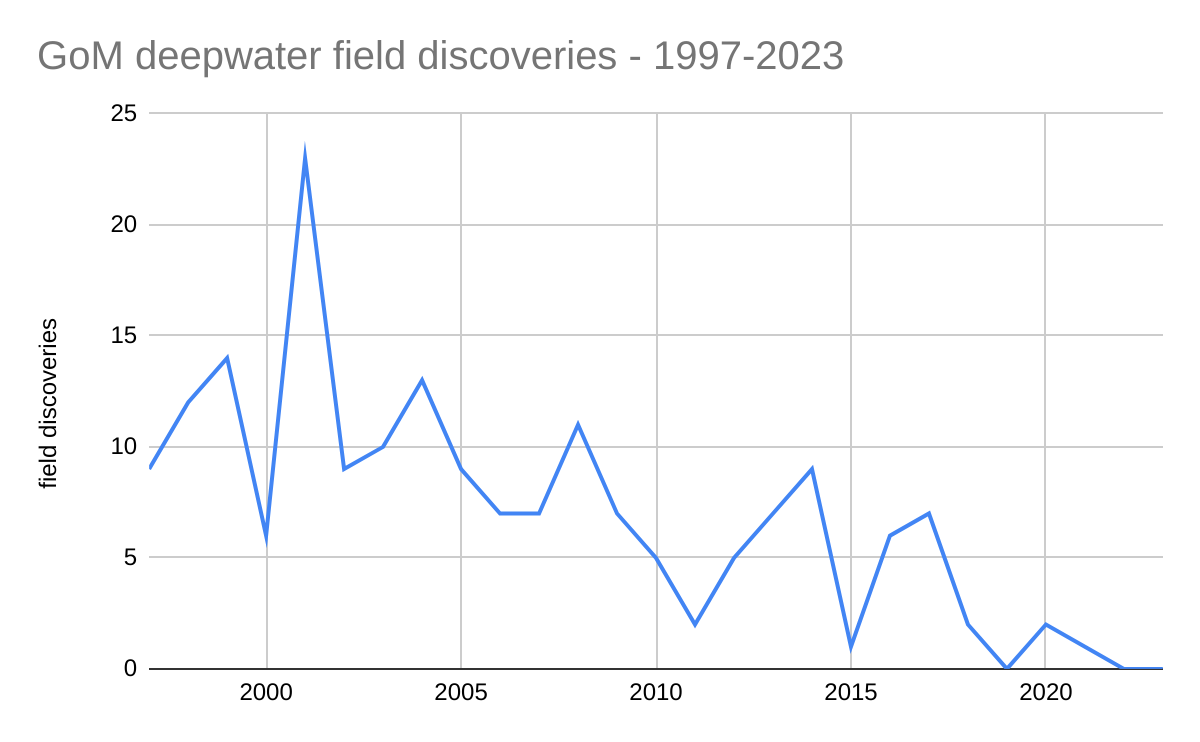
Absence of new field discoveries: Per BOEM’s database, no deepwater fields have been discovered since March 2021 and there were only 3 discoveries in the past 5 years (see chart below)
Leasing and regulatory uncertainty: When will the 5 year leasing plan be finalized and how much will leasing be restricted? What will be the effect of the expanded Rice’s whale area on deepwater operations? To what extent is this expansion justified? What other legal and regulatory threats are on the horizon?
Unrealistic expectations regarding the “energy transition:” In a stunning introductory statement, the Proposed 5 Year Leasing Plan expressed concerns that new leases would produce too much oil and gas for too long. OPEC+ must love the way the US sanctions its own energy production, most notably the oil and gas resources of the OCS. More than 96% of the OCS is off-limits to oil and gas leasing, and the 5 year plan proposed to constrain leasing in the only areas that remain. The favored offshore wind program was intended to be a complement to, not a replacement for, the oil and gas program. Wind energy is limited by intermittency, space preemption, navigation, and wildlife protection concerns.
Some companies have visions of the GoM as a carbon dumping hub: The largest US oil company, which hasn’t drilled a well in the GoM in nearly 4 years and operates just one production platform, seeks praise and profit by sequestering CO2 beneath the Gulf while maximizing oil production elsewhere. How will this sustain economically and strategically important GoM oil and gas production?
Last week I had the privilege of attending a retirement party for Jim Bennett. Jim spent most of his 43 year Federal career in the OCS program focusing on environmental reviews and offshore wind. Most recently he served as Chief of the Offshore Renewable Energy Program. Congratulations to Jim on a long and very successful career!
Promoting the offshore wind program is a very high BOEM priority. The bureau is charged with deploying 30 gigawatts of offshore wind energy capacity by 2030, which requires extensive advocacy. However, BOEM is also a core regulator for offshore wind projects, and the concern is that their regulatory role could be compromised by their advocacy priorities.
Per Notice to Lessees 2023 N-01, which arguably should have been published for public comment given its regulatory significance, BOEM has retained important responsibilities for wind project development and operations. These include review and approval of construction and operations plans, site assessment plans, and general activities plans. BOEM may also exercise enforcement authority through the issuance of violation notices and the assessment of civil penalties.
BOEM exists because in 2010 the Administration wanted to separate the OCS program’s leasing (sales/advocacy) and safety (regulatory/enforcement) functions. The intent was to avoid conflicting missions (or the appearance thereof) in the post-Macondo era. (More on this in an upcoming post.)
Ironically, the Save LBI comment describes BSEE as “a distinct unit within BOEM.” That may seem to be the case, but BSEE is actually a separate bureau in the Department of the Interior.
While it’s highly unlikely that wind turbine siting activities are responsible for the alarming number of whale deaths, some of the vociferous wind industry defenders would have been among the first to point the finger at oil and gas operations if there were any in the US Atlantic.
Some quotes from a recent USA Today article followed by BOE comments:
“It’s just a cynical disinformation campaign,” said Greenpeace’s oceans director John Hocevar. “It doesn’t seem to worry them that it’s not based in any kind of evidence.” (Comment: World class chutzpah on the part of Greenpeace, the master of disinformation.)
Gib Brogan, a campaign director with Oceana, an international ocean advocacy group, said those opposed to wind power are using a spate of whale deaths in the area as an opportunity. (Comment: Does Oceana suddenly find this type of opportunism to be shocking?)
“Groups opposed to clean energy projects spread baseless misinformation that has been debunked by scientists and experts,” said JC Sandberg, chief advocacy officer with the American Clean Power Association, a renewable energy trade group. (Comments: Use of the term “clean energy” is clever advocacy that serves to discredit other forms of energy. All energy sources have pros and cons, environmentally and otherwise. Wind and solar have significant visual, space preemption, navigation, wildlife risk, and intermittency issues, and are heavily dependent on subsidies and mandates. When all issues are considered, one could argue, as we have, that offshore gas, particularlynonassociated gas, is perhaps the environmentally preferred energy alternative.)
Liz is an experienced attorney and leader in clean energy, climate change, and environmental law and policy. A member of the Biden-Harris administration since January 20, 2021, Liz has served as Senior Counselor to Secretary Haaland with an emphasis on water policy and climate change resilience. In this role, Liz also served as Chair of the Indian Water Rights Working Group, which manages, negotiates and implements settlements of water rights claims.
Prior to joining the Administration, Liz was Deputy Director of the non-partisan State Energy & Environmental Impact Center at NYU School of Law, which supports state Attorneys General addressing clean energy, climate, and environmental initiatives of regional and national importance. President Biden is the third President under which Liz has served at Interior, having worked for both the Clinton and Obama administrations. Under Secretaries Ken Salazar and Sally Jewell, Liz served as Interior’s Associate Deputy Secretary as well as Principal Deputy Assistant Secretary in the Office of Policy, Management and Budget. She was a key architect of the Obama Administration’s work to create a new offshore wind industry and leasing program.
Congratulations to Ms. Klein on being appointed to lead the Bureau of Ocean Energy Management. In addition to her commendable support for offshore wind energy, I trust that she appreciates the national importance of the OCS oil and gas program and the need for regular lease sales.
“Mom” (US govt) strongly and openly favors one child (offshore wind) over the other (offshore oil and gas). As a result, beneficial family synergy is not realized, and neither “child” reaches her full potential.
The wind program was intended to complement the oil and gas program, not replace it.
These articles highlight some of the challenges facing offshore wind:
WSJ: Soaring Costs Threaten U.S. Offshore-Wind Buildout
Bloomberg: US Ignored Own Scientists’ Warning in Backing Atlantic Wind Farm
NJ.com: Offshore wind is on N.J.’s horizon but activists worry of impact to whales, economy, the view
Despite the spectacular 2022 lease sales, not all is rosy for US offshore wind development.
In 2011, then-Interior Secretary Ken Salazar said the Obama administration had set a goal of “10 gigawatts of offshore wind generating capacity by 2020 and 54 gigawatts by 2030.” How has that worked? Well, 11 years after Salazar’s speech, the US has seven turbines operating offshore with a total of capacity of 42 megawatts — or some 9,958 megawatts short of the goal laid out by Salazar.
Gordon Hughes, a professor of economics at the University of Edinburgh, has found that the output of Europe’s offshore wind turbines has been declining by about 4.5% per year. In a report titled “Wind Power Economics: Rhetoric and Reality,” published by the London-based Renewable Energy Foundation in 2020, Hughes concluded that declining output will result in higher operating costs that will start to exceed revenues “after 12 or 15 years.
…addressing climate change through ocean “industrialization” using an “inefficient, expensive and largely untested strategy” was not the right path forward – Kari Martin, Clean Ocean Action
“By undertaking an industrialization project this big, it far outweighs any (climate change) benefit anybody’s ever talked about, or even tried to quantify,” he said. “The harms of this undertaking is, in my view, far worse than any benefits we could realize.” – Michael Dean, Middletown, NJ
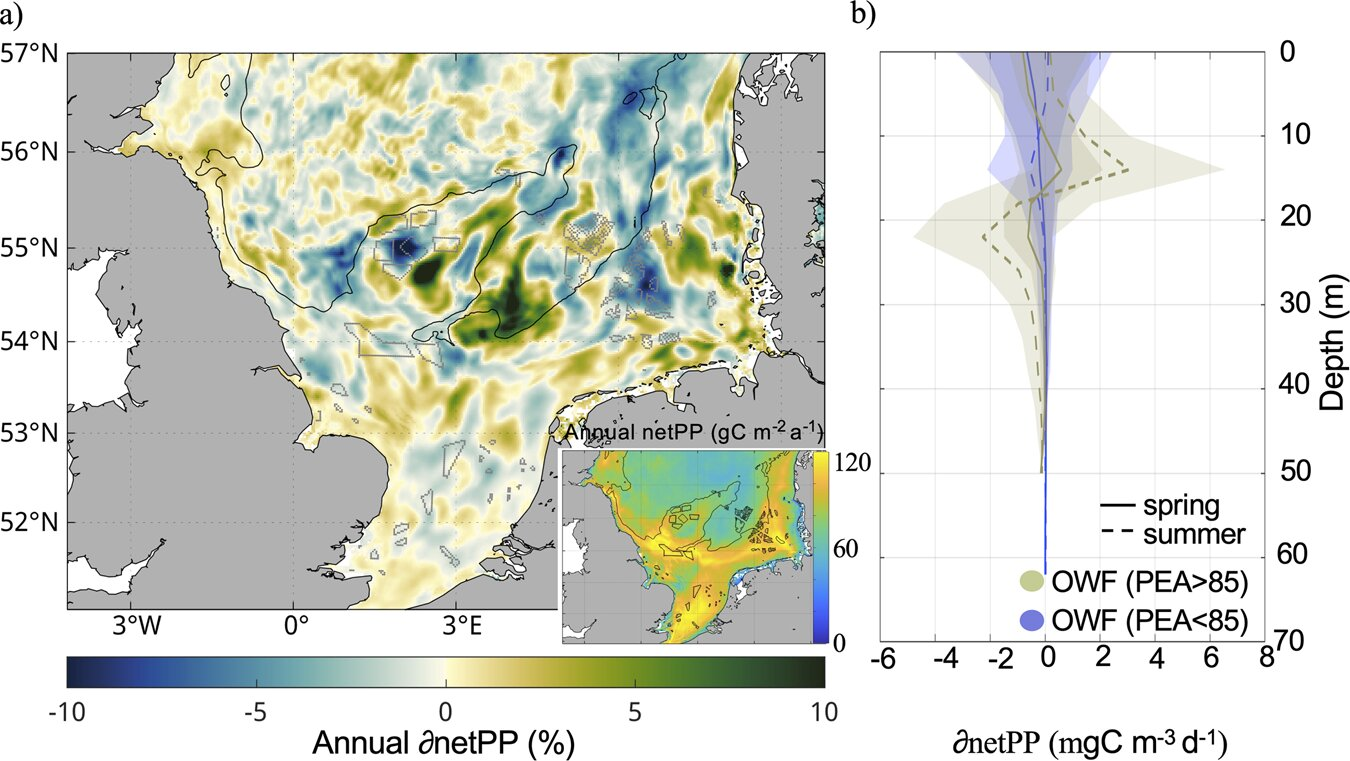
In their latest publication, (scientists at the Helmholtz-Zentrum Hereon) now show that large-scale wind farms can strongly influence marine primary production as well as the oxygen levels in and beyond the wind farm areas. Their results were published in the journal Communications Earth & Environment.
… For example, Nils Christiansen’s team proved that wake turbulences—air vortices caused by wind turbines—change the flow and stratification of the water beneath them. But the climate just above the sea surface is also being permanently changed, as another team led by Dr. Naveed Akhtar was able to show.