- The flaring provision complicates compliance and may increase safety risks: (p. 649) Exception 1 exempts “gas vented or flared for not longer than 48 hours in an emergency situation that poses a danger to human health, safety, or the environment.” This is inconsistent with the carefully constructed BSEE regulations which allow limited (48 hours cumulative) flaring for certain operations (e.g. during the unloading or cleaning of a well, drill-stem testing, production testing, and other well-evaluation testing). Such flaring is essential but not normally “an emergency situation.” The bill could thus compromise safety by unnecessarily restricting or complicating well operations and by limiting flaring in circumstances where such flaring reduces safety risks.
- Time for BOEM to get to work 😉: (p. 650): Per our previous post, the highlight section of the bill (from an offshore oil and gas standpoint) reinstates Lease Sale 257 (GoM) and requires that the scheduled 2022 lease sales 258 (GoM) and 259 (Cook Inlet) be held by 12/31/2022. Lease Sale 261 (GoM) must be held by 9/30/2023.
- Petty but perhaps necessary: p. 655: The provision restricting wind leasing when no oil and gas lease sale has been held in the prior year is in the final bill.
Posts Tagged ‘Offshore Wind’
Inflation Reduction Act: BOE’s top 3 takeaways
Posted in climate, energy policy, Gulf of Mexico, Offshore Energy - General, tagged flaring, Inflation Reduction Act, Lease Sale 257, offshore oil, Offshore Wind on August 15, 2022| Leave a Comment »
Wind vs. oil and gas: Is this necessary?
Posted in climate, energy policy, Gulf of Mexico, Offshore Energy - General, Wind Energy, tagged Manchin, offshore oil, Offshore Wind, Schumer on August 1, 2022| Leave a Comment »
When we (MMS) drafted the OCSLA amendments (incorporated into the Energy Policy Act of 2005) that authorized offshore wind operations, we envisioned complementary and synergistic programs. Offshore wind and oil/gas development have many similarities and a common purpose – energy production. There is considerable overlap among the operating companies and contractors.
Unfortunately, politicians are better at dividing than uniting, and a provision in the Schumer-Manchin legislation pits the offshore wind and oil/gas programs against each other. The text (pasted below) from p. 646 of the bill restricts wind leasing when no oil and gas lease sale has been held in the prior year.
I share the concerns about the OCS program evolving into a wind-only program, as has already happened in the Atlantic (more on this at a later date). However, oil and gas sales should be held because they make economic and environmental sense, not because they are a condition for holding wind sales. Oil and gas sales are not punishment and wind sales are not rewards, and holding a single GoM lease sale each year does not balance the offshore program.
(b) LIMITATION ON ISSUANCE OF CERTAIN LEASES OR RIGHTS-OF-WAY.—During the 10-year period beginning on the date of enactment of this Act—
(2) the Secretary may not issue a lease for offshore wind development under section 8(p)(1)(C) of the Outer Continental Shelf Lands Act (43 U.S.C.1337(p)(1)(C)) unless—
(A) an offshore lease sale has been held during the 1-year period ending on the date of the issuance of the lease for offshore wind development; and (B) the sum total of acres offered for lease in offshore lease sales during the 1-year period ending on the date of the issuance of the lease for offshore wind development is not less than 60,000,000 acres.
RODA follows through on threat to sue the Federal government over Vineyard Wind 1 approval
Posted in Offshore Wind, Wind Energy, tagged litigation, Offshore Wind, RODA, Vineyard Wind I on February 9, 2022| Leave a Comment »
On October 19, 2021, RODA issued the government agencies a 60-day Notice of its Intent to Sue if they did not comply with the Clean Water Act, Endangered Species Act, Outer Continental Shelf Lands Act, and other federal environmental statutes. “The Alliance received no reply, and the environmental violations were not remedied,” Hawkins stated. “The decisions on this project didn’t balance ocean resource conservation and management, and must not set a precedent for the enormous “pipeline of projects” the government plans to facilitate in the near term. So we had no alternative to filing suit.”
Responsible Offshore Development Alliance
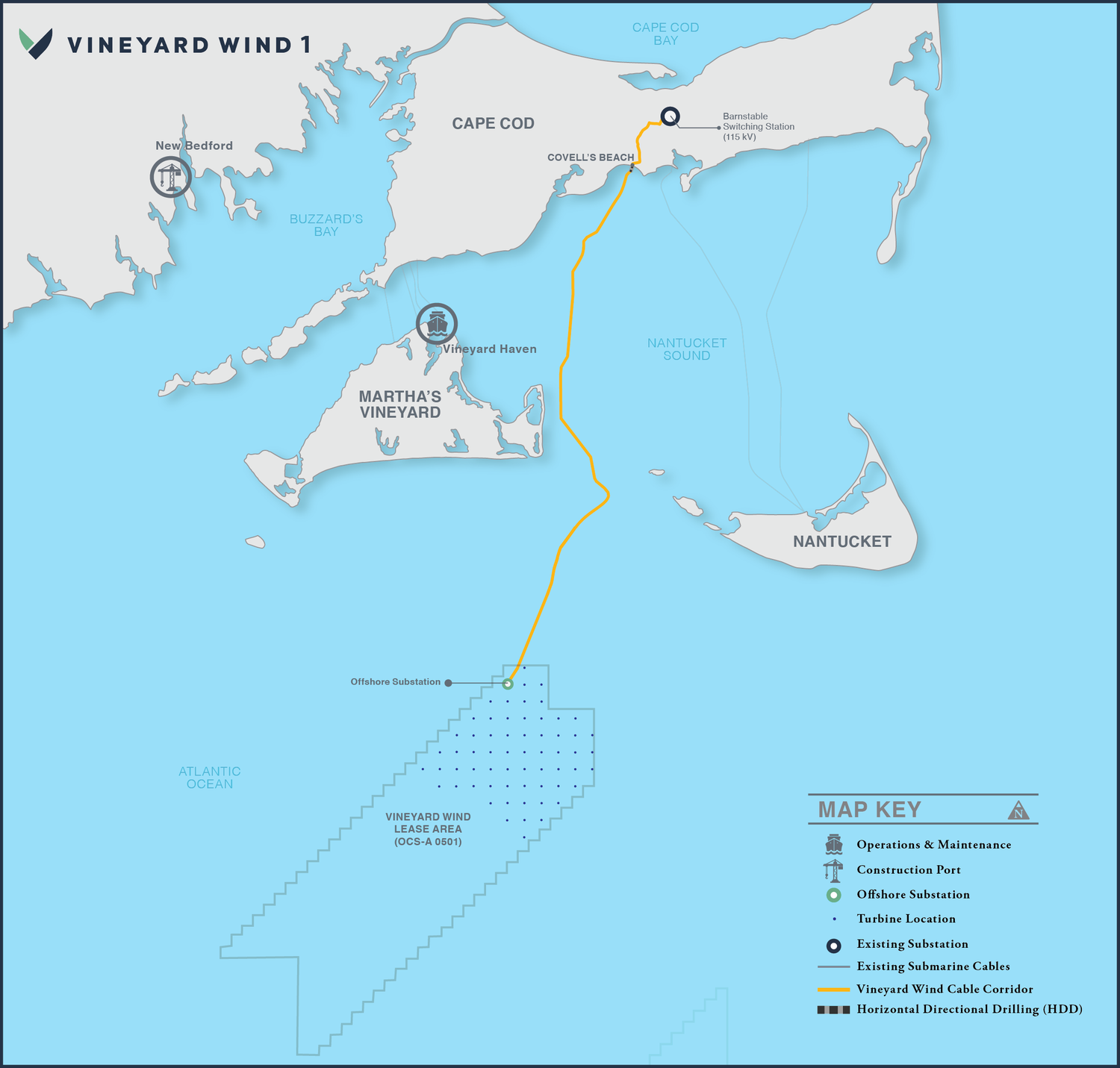
Vineyard Wind 1 is a 62-turbine offshore wind project to be built 15 miles south of Martha’s Vineyard, and is the first commercial-scale wind project approved for US offshore waters.
Of particular interest to the offshore industry, RODA’s court filing raises concerns about the structural integrity of the 13 MW Haliade-X turbines during Atlantic hurricanes, ice shedding in the winter, radar interference, pile driving noise, Jones Act violations, and failure to consider decommissioning issues.
More on the Lease Sale 257 decision
Posted in CCS, Gulf of Mexico, Offshore Energy - General, Offshore Wind, Wind Energy, tagged carbon sequestration, CCS, Lease Sale 257, leasing pause, Offshore Wind on February 2, 2022| Leave a Comment »
The judge correctly dismissed the unfounded claim that new oil and gas leasing would preclude wind development in the Gulf. BOE comments:
- The number of GoM platforms is down 75% from its peak and continuing to decline.
- Most new production is in the deepwater GoM and is accomplished with very few, remote and widely dispersed facilities. There are currently only 57 deepwater platforms across the entire Gulf.
- The wind industry appreciates the synergy between offshore oil and gas and offshore wind operations. Indeed the oil industry has been very supportive of offshore wind, and some of the same operating companies and contractors are major players in both industries.
- t has been 17 years since the enabling legislation was passed, yet we are still awaiting the first commercial wind project in the US Atlantic. You can’t blame the oil and gas industry for that delay. To the contrary, one can make the case that the presence of oil and gas operations would have accelerated Atlantic wind development.
- The enabling legislation for offshore wind was drafted by the agency that managed the offshore oil and gas program and recognized the compatibility of oil and wind development. Wind development is clearly a high priority for BOEM, the current OCS land manager.
Will the Administration appeal the court decision to vacate the lease sale or does the decision assist them by reinstating their leasing pause? How will the conflict between the DC court decision and the injunction invalidating the leasing pause (Federal Court for the Western District of Louisiana) be resolved?
What does this mean for the 94 leases that were to have been acquired for carbon sequestration purposes? Will BOEM have a proper CCS sale after conducting an environmental assessment, determining bidding terms and evaluation criteria, and publishing a Notice of Sale? Or will there be a legislative end run that authorizes the issuance of the leases without these steps?
Interesting offshore energy storage concept
Posted in Offshore Energy - General, Offshore Wind, Wind Energy, tagged energy storage, ocean battery, ocean grazer, Offshore Wind on January 13, 2022| Leave a Comment »
See the video below. The size and durability of the bladders could be issues at locations where there are other seafloor activities (e.g. trawling), but this and other pumped hydro-storage concepts are promising. Onshore testing of this concept is scheduled for 2023 in the Netherlands. Energy storage and stable, reliable power supply will be critical to the long-term success of offshore wind projects.
For those who thought offshore wind would be a breeze…
Posted in Offshore Energy - General, Offshore Wind, Wind Energy, tagged Energy Policy Act of 2005, Offshore Wind, RIght Whale, Vineyard Wind on January 12, 2022| Leave a Comment »
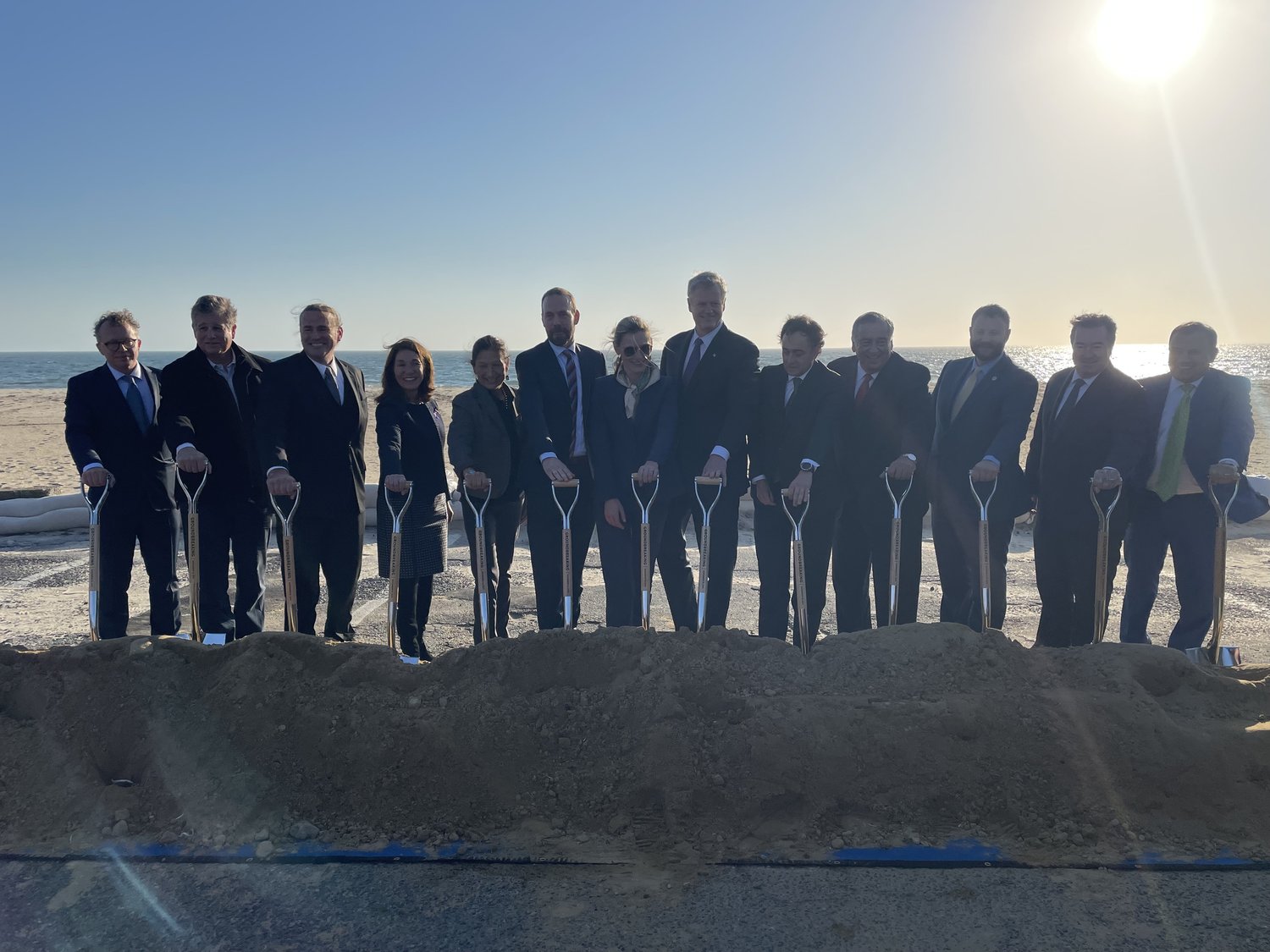
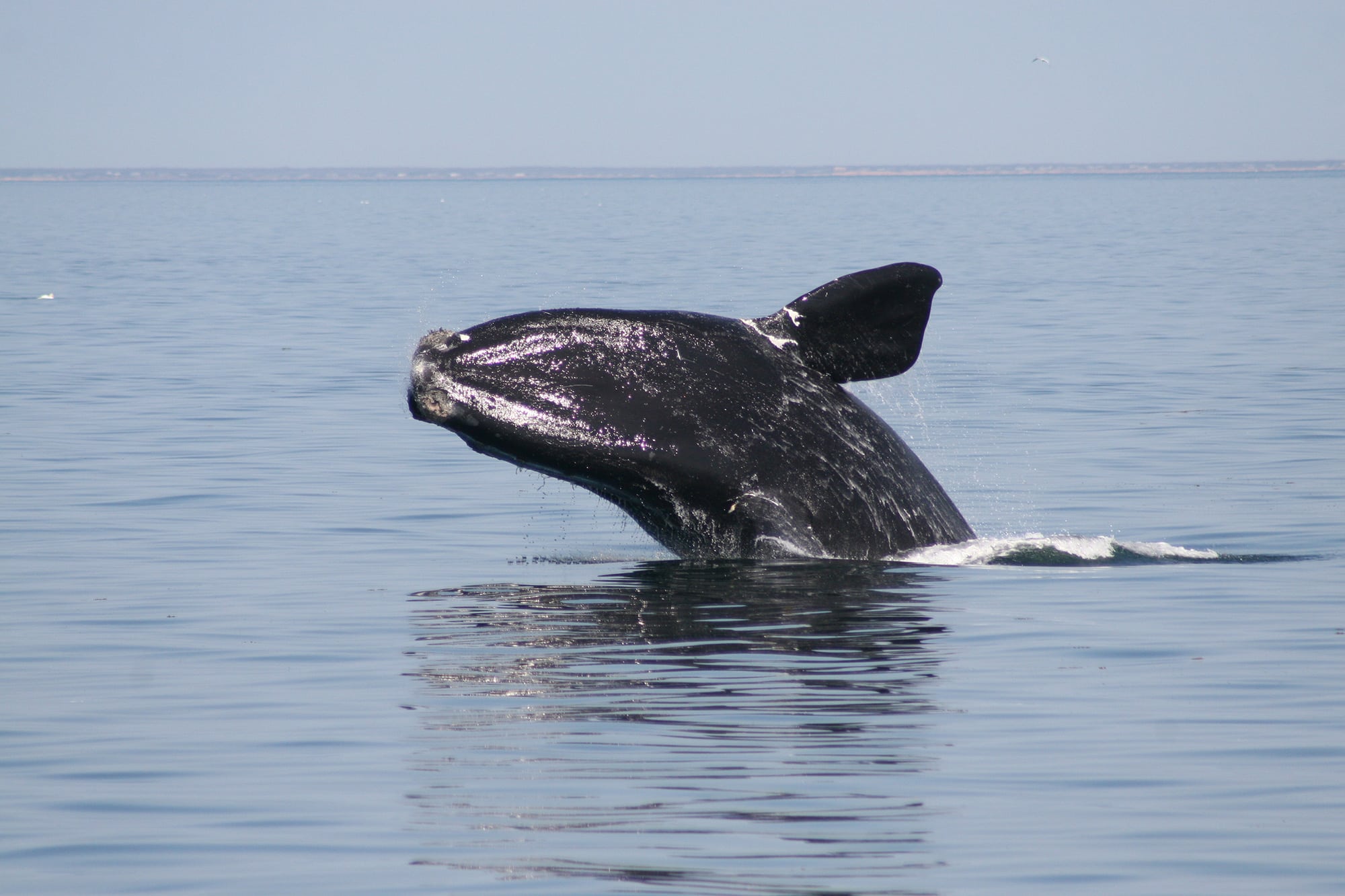
Nearly 17 years after the Energy Policy Act of 2005 (incorporating language drafted by Minerals Management Service staff) authorized wind energy projects in Federal offshore waters, commercial offshore wind power is not imminent. Despite enthusiastic political support and promised State and Federal subsidies, no commercial scale offshore wind development has commenced. The groundbreaking ceremony for Vineyard Wind I (pictured above), the first project approved by BOEM, may prove to have been premature. The project faces multiple lawsuits from commercial fishing organizations and an organization concerned about possible impacts to the endangered right whale.
BOEM approves 2nd North Atlantic Wind Project
Posted in Offshore Energy - General, Offshore Wind, Wind Energy, tagged BOEM, North Atlantic, Offshore Wind, RODA, South Fork Wind, Vineyard Wind I on November 29, 2021| Leave a Comment »
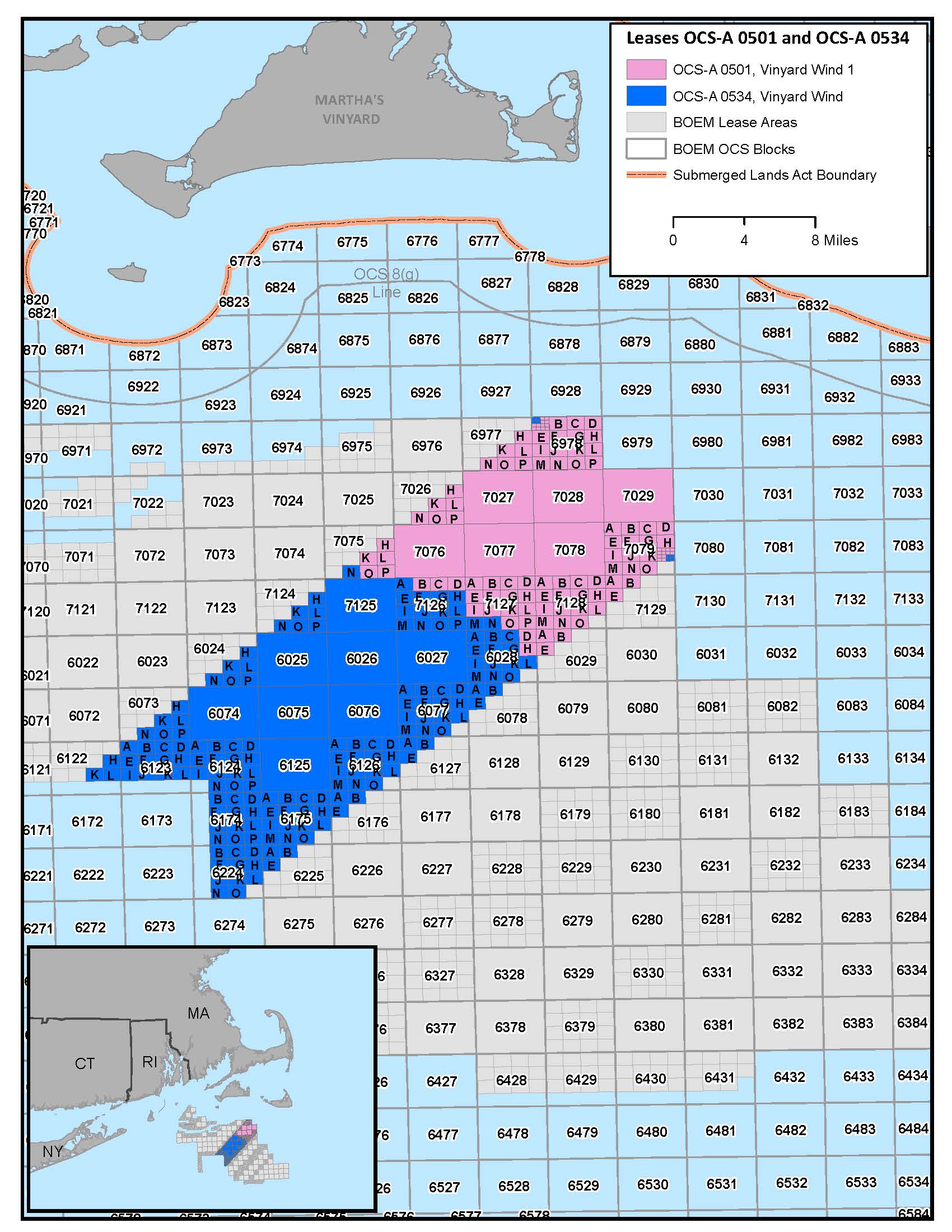
- South Fork Wind: 19 miles southeast of Block Island, Rhode Island
- 12 or fewer Siemens-Gamesa’s 11-megawatt turbines
- BOEM approved the larger (62 turbine) Vineyard Wind 1 project on July 15, 2021. Those turbines will be located approximately 15 miles south of Martha’s Vineyard and Nantucket. On Oct. 19, the Responsible Offshore Development Alliance (RODA) filed a 60-day Notice of Intent to Sue the Federal Government over violations of lease management and environmental statutes.

Green Hydrogen and the Great Rick Carrier
Posted in Offshore Energy - General, Offshore Wind, Wind Energy, tagged Bald Eagle Energy, Buchenwald, DDay, Green Hydrogen, Lynn Ramsey, MMS, Offshore Wind, Rick Carrier on September 23, 2021| Leave a Comment »

The growing interest in green hydrogen inspired me to write a post about Rick Carrier, a war hero and visionary who is largely unknown to the offshore energy community. Rick’s plan for a Mid-Atlantic wind-hydrogen demonstration project was the first offshore wind proposal submitted to the Minerals Management Service, the bureau that initiated the offshore wind program in the U. S.
Rick Carrier lived an amazing life – WWII hero, artist, playwright, diver, conservationist, green hydrogen pioneer, and more. Perhaps most noteworthy were his military accomplishments. He was among the first Americans to land on Utah Beach during the D-Day invasion. He subsequently became the first allied soldier to discover the Buchenwald concentration camp. The next day, April 11, 1945, he marched into the camp with Patton’s Third Army and liberated the prisoners. Rick is pictured above at the 2012 March of The Living, an annual walk down the 3-kilometer path from Auschwitz to Birkenau. In June of 2014, Rick returned to Normandy for a ceremony marking the 70th anniversary of D-Day. Later that year, the President of France awarded him the Chevalier of the Legion of Honor — France’s highest honor.
Rick founded the USA Bald Eagle Command in 1975 to protect the endangered American Bald Eagle. The organization’s efforts played a role in President Reagan’s declaration of June 20, 1982 as National Bald Eagle Day. Through the efforts of this and other conservation groups, the Bald Eagle was removed from the Endangered Species list in 2007.
Rick’s green hydrogen proposal was yet another patriotic venture. Through his non-profit, Bald Eagle Energy, he sought to demonstrate the commercial potential for using offshore wind energy to produce hydrogen from sea water. Unfortunately, the framework for permitting such projects had not yet been established. While we tried to find a way to make the project possible, the obstacles were too great.
RIck passed away peacefully on December 12, 2016, at his home in New York City. It was an honor to have met him and worked with him on his green hydrogen initiative.
Block Island Wind Farm
Posted in Offshore Energy - General, Offshore Wind, Wind Energy, tagged Block Island Wind, Offshore Wind on August 20, 2021| Leave a Comment »
For the better part of two months now, four of the five wind turbines at America’s first offshore wind farm haven’t been spinning.
Workers at the Merkur wind farm in the German North Sea found signs of stress fatigue on the support structures of the “helihoist” platforms on some of the project’s GE Haliade turbines.
The Providence Journal, 8/14/2021
Comments:
- Ørsted was prudent to shutdown the turbines to conduct precautionary inspections.
- Press reports imply that Ørsted was slow to advise the public about the reasons for the shutdown.
- The shutdown raises questions about the reliability of wind-centric regional power grids.
- Given the questions that have arisen regarding the regulation of offshore wind projects (this wind farm is in Rhode Island State waters), the absence of any comments from State and local officials was noteworthy. It’s unclear what, if any, role the State had in the shutdown decision.
- Hurricane Henri may give the wind farm a bit of a test this weekend.
Four for the Fourth
Posted in Offshore Energy - General, tagged energy independence, Fourth of July, hydrokinetic energy, offshore energy, offshore oil and gas, Offshore Wind on July 2, 2011| Leave a Comment »

On Independence Day, four keys to realizing our offshore energy potential:
- A national offshore oil and gas program as required by the OCS Lands Act.
- Industry safety and pollution prevention leadership including comprehensive data analyses, research, standards development, management programs, and internal auditing. All operators, contractors, and service companies must participate.
- An efficient, risk-based regulatory program that scrutinizes performance, indentifies weaknesses, and demands excellence.
- Cooperative programs to develop cost-effective, reliable, and safe wind and hydrokinetic energy systems.

