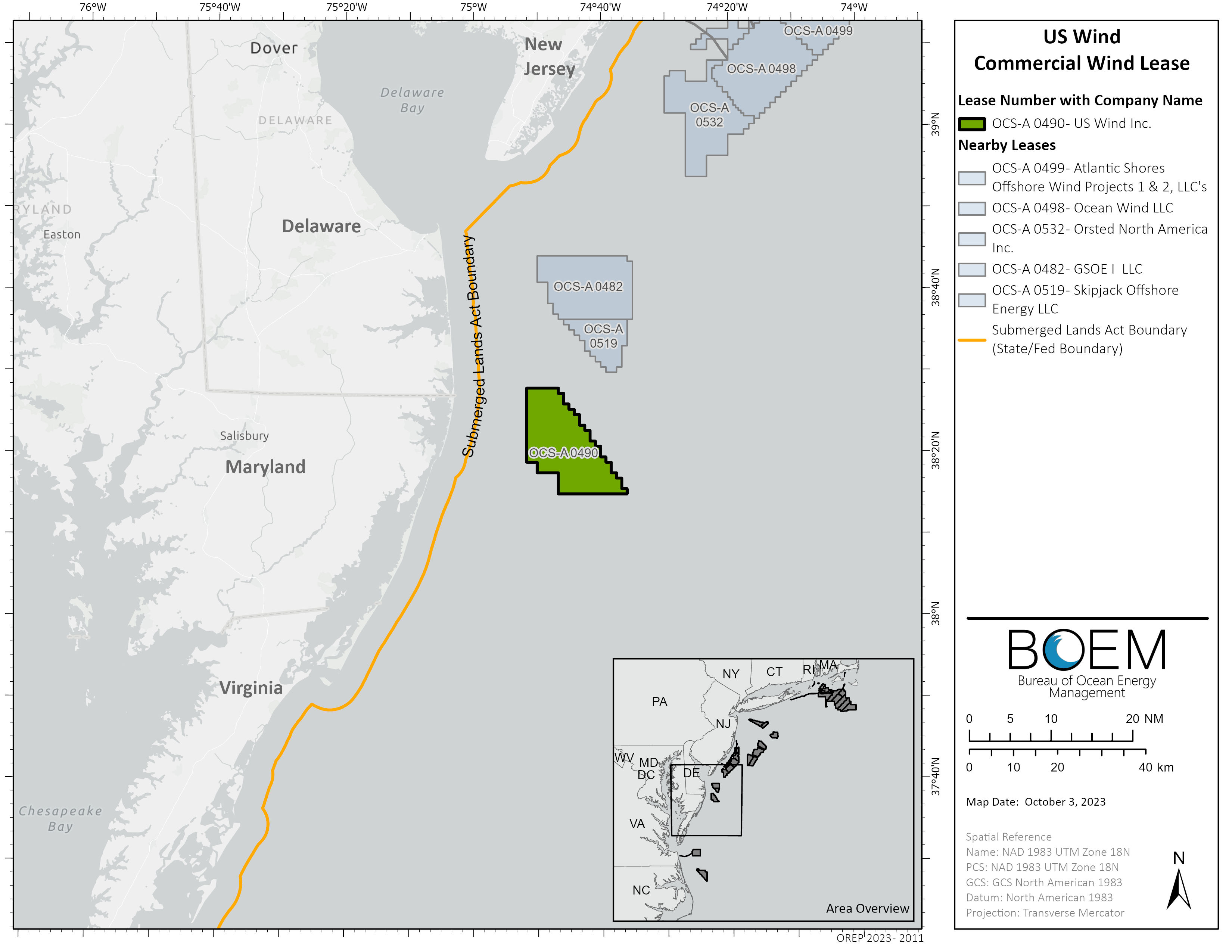
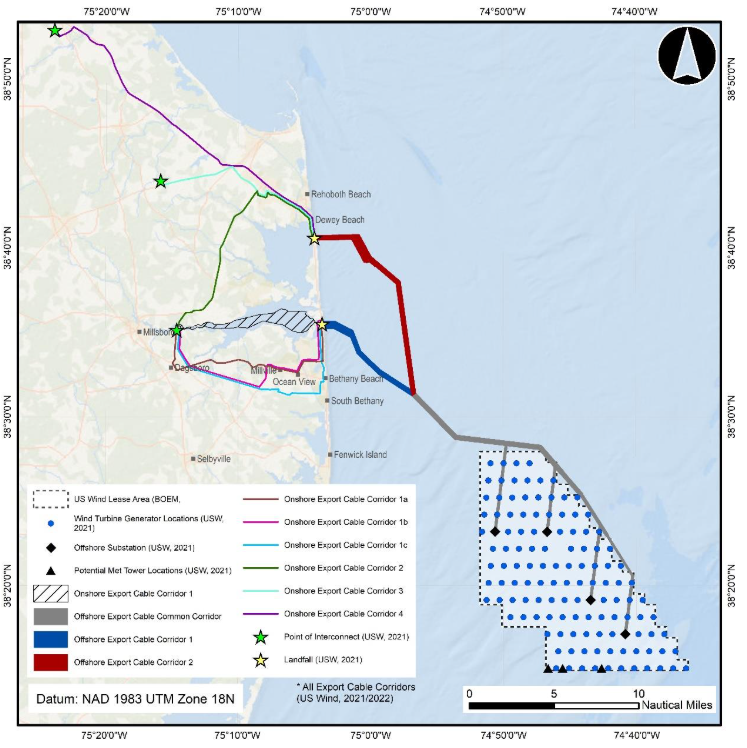
A new court filing (attached) informs that the Dept. of the Interior is reconsidering the Construction & Operations Plan (COP) approval for US Wind’s Maryland Offshore Wind (“MarWin”) Project (maps above). That approval is the subject of litigation filed by Ocean City MD and others.
The key section of the Federal government’s filing is pasted below.
An extension in this case is necessary as Interior intends to reconsider its COP approval and move in the District of Maryland—the first-filed case—for voluntary remand of that agency action. See, e.g., Util. Solid Waste Activities Grp. v. EPA, 901 F.3d 414, 436 (D.C.Cir. 2018) (recognizing that administrative agencies have the authority to reconsider their decisions). The outcome of Interior’s reconsideration has the potential to affect the Plaintiff’s claims in this case.
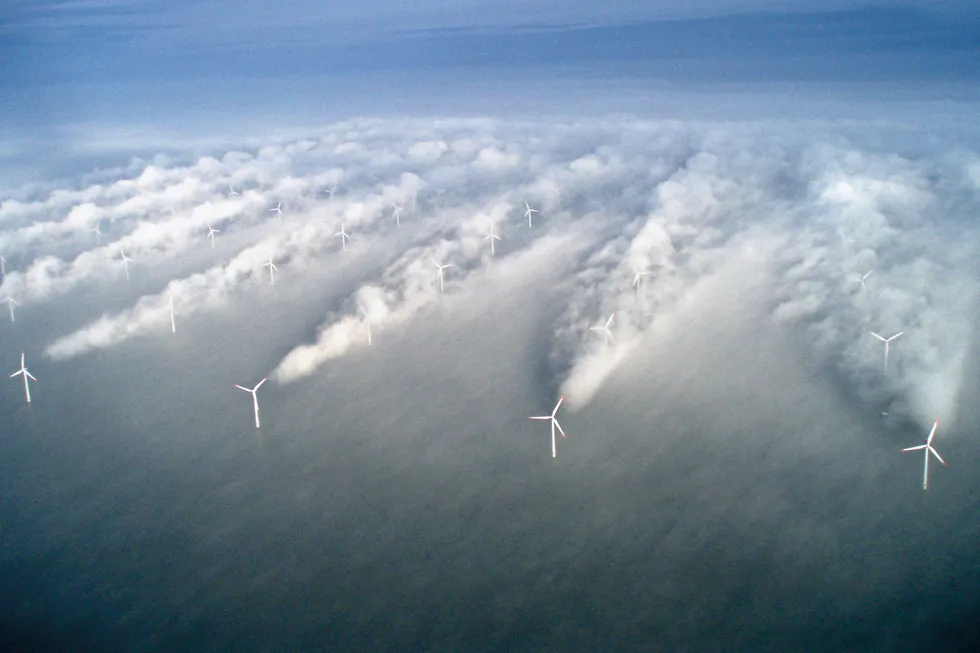
A previous post on wind theft and a recent BBC article point to the rather limited understanding that wind developers and govt land managers have about wind resource management including optimal turbine spacing and protection of correlative rights. Wind is considered a renewable energy resource, but the energy lost through inefficient operating practices is not renewable.
Given that the wake effect can extend for more than 100 km, reduce downwind energy production by >10%, and affect biological productivity, a better understanding of this phenomenon should have preceded the installation of thousands of turbines.
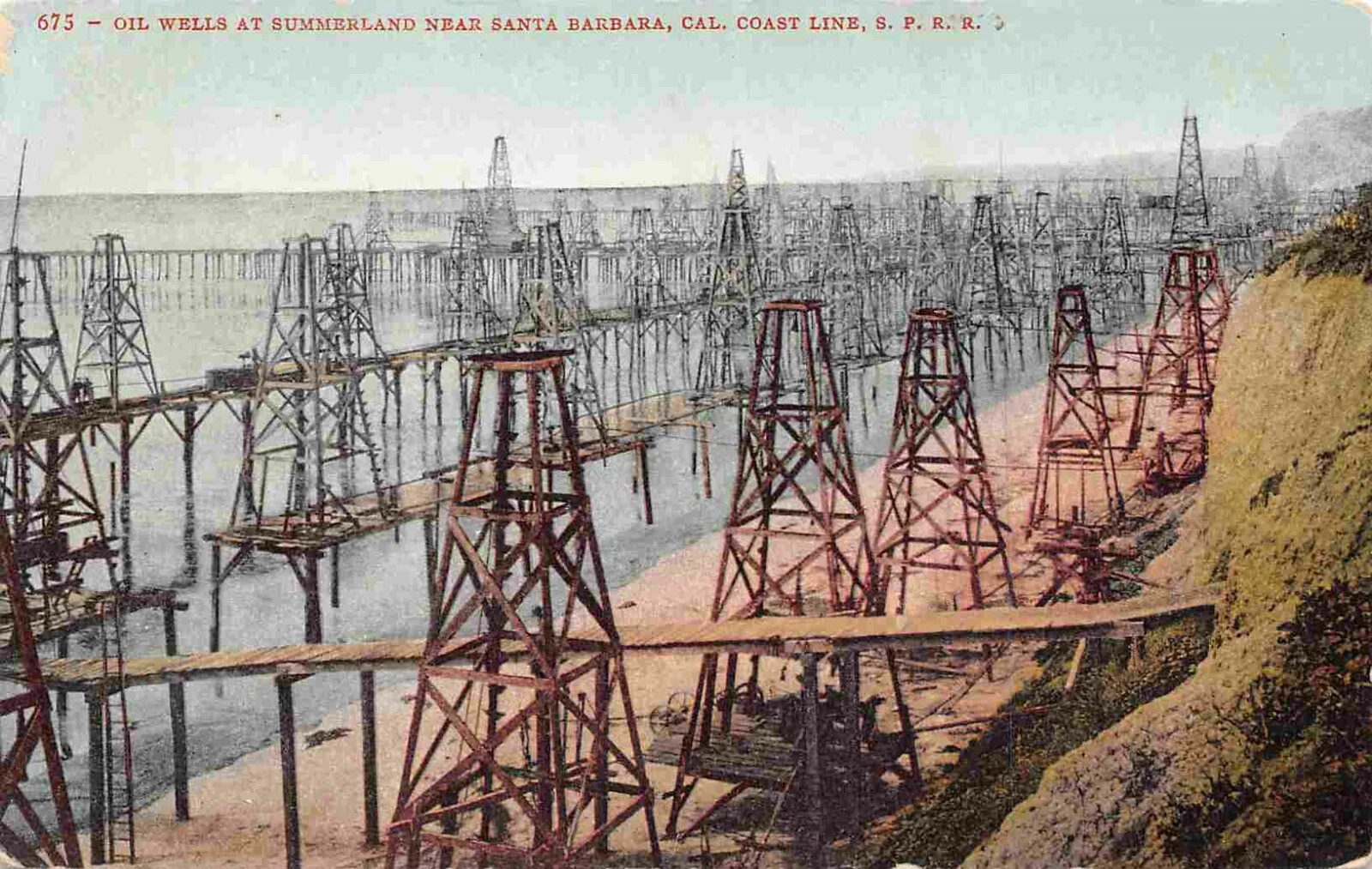
high density, low ultimate recoverycirca 1910modern deepwater production, few facilities, high oil recovery
Wind resource management is reminiscent of the early years of oil production when the “law of capture” reigned supreme and wasteful production practices were a self-defense mechanism.
“You cannot make this stuff up. The Murphy administration already burned through billions of your tax dollars on offshore wind projects that never worked. They pushed it on us even when towns were saying no, fishermen were saying no, and the tourism industry was saying no. They looked the other way while whales washed up on our beaches. They ignored the Pentagon when it said it was a national security risk. The NJ Ratepayer Advocate said it would raise utility bills. The Government Accountability Office (GAO) said the cons outweighed the pros. They did not listen to anyone. And now, after all that, they want to throw even more taxpayer dollars at it in court. It truly is a slap in the face to every taxpayer and every family struggling to pay their energy bill.”
“David is small, semi-nomadic and works across a vast sea area; Goliath is massive and growing rapidly.”
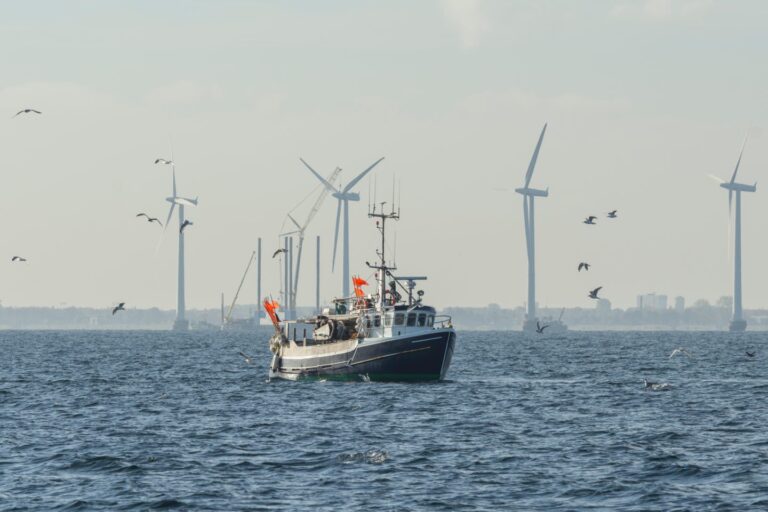
Energy Voice describes the challenges offshore wind poses for the small but culturally important UK commercial fishing industry, highlighting the findings of a fisheries research lab report.
Per Elspeth Macdonal of the Scottish Fishermen’s Federation:
“How it often feels to us is that government says all the right things, has this blue economy vision and all of those great things but, at the end of the day, it actually feels like government is picking winners and losers and, at the moment they seem unable to see past the wind industry as the only game in town.“
This comment on the evolution of the relationship between the fishing and oil industries in the North Sea also aptly describes the US offshore experience:
“The fishing industry eventually learned to live with Big Oil, which is now on the wane, but living with territory-guzzling offshore wind farms – fixed and floating – may prove a lot more challenging.”
All 17 of the States that filed the offshore wind law suit have Democrat governors. However, 6 States with Democrat governors are not parties in the suit (see table below). Two of those governors, Andy Breshear, and Josh Shapiro, are leading moderates within the Democrat party.
Unsurprisingly, 17 States (plus DC) filed the attached lawsuit in Massachusetts federal court asserting that the directive to suspend offshore wind activities is illegal.
This will be interesting given that the OCS Lands Act grants broad authority to the Secretary of the Interior to suspend activities when necessary to ensure safety, protect the environment, or allow for further study of potential impacts.
Those who are familiar with the administration of the OCS Lands Act know that there is really no such thing as a “fully permitted project.” The Secretary can call for further review whenever concerns are raised and there is a need for further investigation.
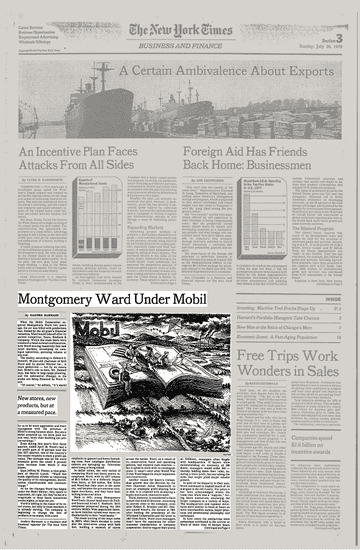
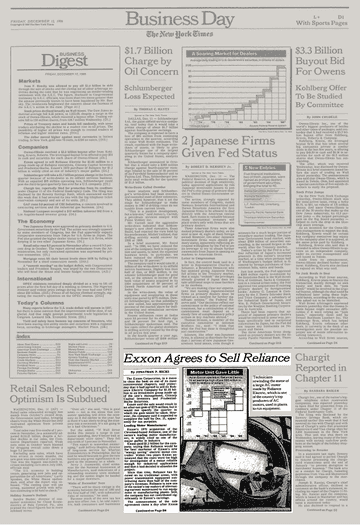
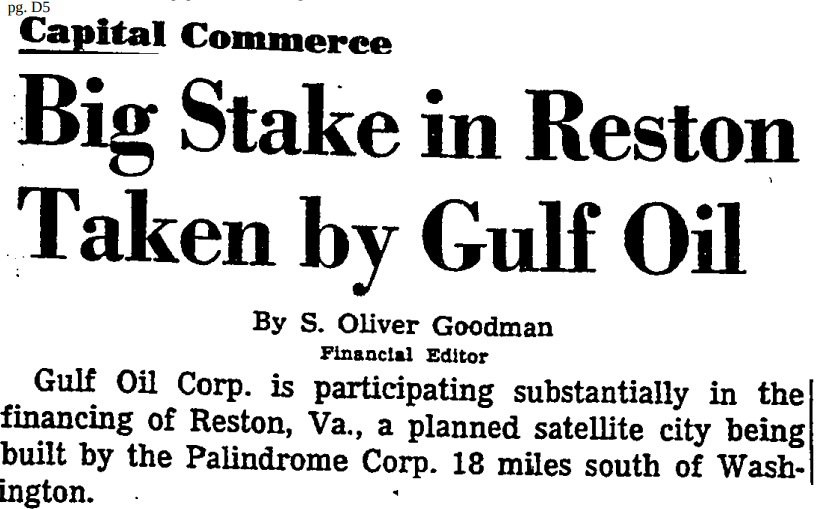
Farther in the past, there were noteworthy failures (below) like Mobil’s acquisition of Montgomery Ward, Exxon’s investment in Reliance Electric, and Gulf’s real estate ventures.
Mobil – Montgomery WardExxon – Reliance ElectricGulf Land – Reston
Finally, don’t expect the carbon sequestration boom that some are forecasting. As wind investors have discovered, industries dependent on mandates and subsidies are risky.
Not much unites climate activists and skeptics, but they are largely aligned in their opposition to carbon sequestration (euphemism for disposal), as are fiscal conservatives. The word chutzpah comes to mind when companies seek public funds to dispose of emissions associated with the combustion of their products.
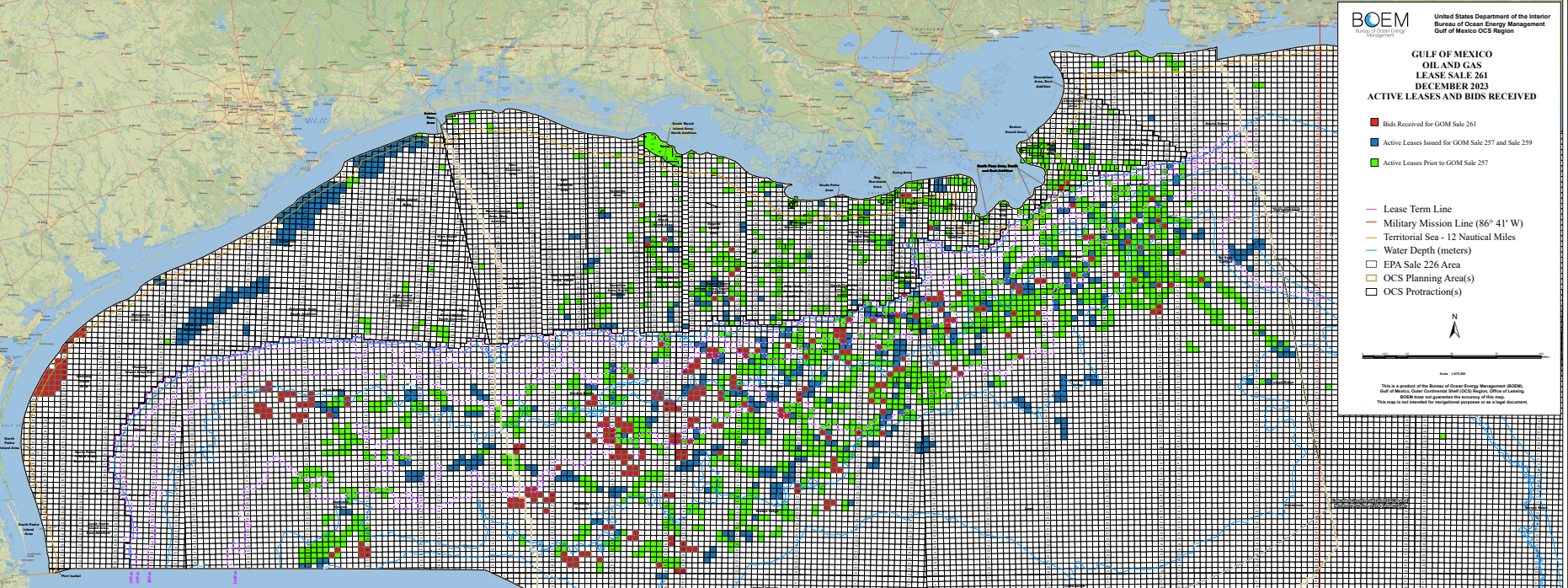
199 oil and gas leases were wrongfully acquired at Sales 257, 259, and 261 with the intent of developing these leases for carbon disposal purposes. Repsol was the sole bidder at Sale 261 for 36 nearshore Texas tracts in the Mustang Island and Matagorda Island areas (red blocks at the western end of the map above). Exxon acquired 163 nearshore Texas tracts (blue in map above) at Sales 257 (94) and 259 (69).
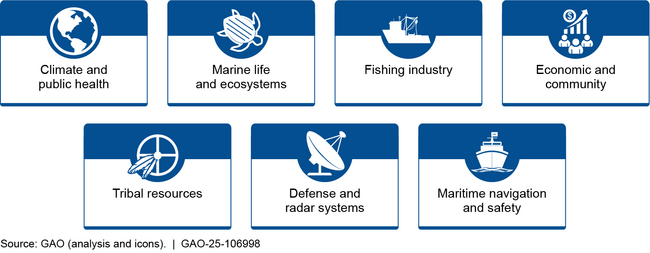
The Government Accountability Office report on Offshore Wind Energy (full report attached) does a good job of summarizing the potential impacts from offshore wind development. They are categorized in the report as follows:
Marine Life and Ecosystems (see table pasted below)
Fishing Industry and Fisheries Management
Economic Development and Community Impacts
Tribal Resources, Including Sacred Sites and Established Fishing Grounds
Defense and Radar Systems
Maritime Navigation and Safety
Unfortunately, GAO’s recommendations, which focus on consultation and staffing (perennial favorites), are rather meaningless. Does GAO really think more consultation will resolve the fundamental concerns of the tribes and fishing industry? Does GAO really think increasing BOEM/BSEE staff is a solution? Wind was the signature offshore energy program of the previous Administration, and it was well resourced.
When the legislation authorizing offshore wind energy development was drafted, we envisioned energy alternatives that could complement thermal energy sources like gas, coal, and nuclear plants. Natural gas plants are particularly important to intermittent energy sources, because their power can be readily dispatched on demand.
Never did we expect attempts to ban the dispatchable energy sources on which renewable energy goals were dependent. Policies that limit gas production, transportation, and consumption don’t boost offshore wind development, they doom it.
In a rush to achieve the Administration’s energy goals, the wind leasing program brushed aside important economic, safety, national security, and environmental issues. Coastal residents, tribes, fishing interests, power customers, and other affected parties have rebelled. Their concerns won’t be smoothed over by increasing consultation.
So now the wind program is in a dark and windless place (a regulatory dunkelflaute?). Five projects are under construction or in the early stages of operation. Construction has been authorized for 6 other projects. Five more projects are in various stages of permitting. What next?
Meanwhile, we still haven’t seen a report on the ugly and embarrassing Vineyard Wind blade failure offshore Nantucket last July. Shouldn’t that report be a precursor to further offshore wind development in the US Atlantic? Also of note, that same turbine was struck by lightning 2 months ago.
Should directed suspension orders be issued pending a complete review of the wind program? If so, for which leases and for how long? Suspension of projects still in the permitting phase would be relatively painless and maybe even attractive given the current state of the wind industry. However, financial impacts for projects in the construction phase would be significant. These important next-step decisions need to be made soon. Muddling along is not a strategy.
Construction and survey activities produce underwater noise that can disturb sensitive marine species. Offshore wind projects take measures to mitigate underwater noise, including the use of bubble curtains to dampen pile driving sound and pausing operations if protected species are sighted.
Changes to marine habitat
Installation of infrastructure, such as turbine foundations and transmission cables, introduces new structures and causes changes to the ocean floor that can alter marine habitat and affect the distribution, abundance, and composition of marine life in the area. These new structures can create artificial habitat that may benefit some species while displacing others and could affect bottom-dwelling species through disturbing the seabed. Artificial habitat effects of wind turbines are well documented, but research is ongoing to monitor and understand impacts on marine life.
Hydrodynamic effects
Operation of wind turbines can affect hydrodynamics and ocean processes such as currents and wind wakes, but little is known about regional effects of widescale deployment on ecosystems.
Vessel disturbance
Vessels can disturb some species and pose strike risks to large marine animals, but the increase in offshore wind vessels is projected to be small compared to the total volume of vessel traffic. Offshore wind vessels are required to take measures such as following speed restrictions and employing protected species observers.
Entanglement risk
Structures, such as mooring cables from floating wind turbines, could snag fishing gear and other marine debris and create entanglement risk to marine animals. Wind projects employ measures to minimize entanglement (e.g., mooring systems designed to detect entanglement), but there is uncertainty about the extent of the risk from floating turbines because of limited deployment.a
Collision risk to birds and bats
Turbine blades pose a collision risk to some sea birds, but little is known about offshore collision risk to bats. Research on collision risks and mitigation measures (e.g., lighting and curtailment) is ongoing.
Juergen Maier, chairman of GB Energy, “a planned British government-owned renewable energy investment body,” is promising to revive Aberdeen with “green energy” jobs, and to create “something special for the years ahead.”
Maier: “Floating offshore wind, green hydrogen, and carbon capture should be as synonymous with Aberdeen’s future as oil and gas have been with its past.” This is an interesting comment given that the success of the industries he is promoting is far from assured; nor is the continuation of government edicts and subsidies on which they are dependent.
How many times have we been told that the government driven energy transition would create thousands of jobs? How many workers in economically important industries have been told to transition to politically favored professions? How many Keystone Pipeline workers found the promised “green energy jobs?” Why were coal miners condescendingly told to “learn to code?”
“We need more of it because even the most ardent supporters of renewable energy, the most vocal proponents of net zero, quietly admit oil and, especially, gas will be needed for a couple of decades at least. That obvious truth, that inarguable necessity, is not, apparently, enough for ministers to encourage UK production, however, or temper their rhetoric around renewables.“
“Allowing our rigs and refineries to power down and relying on other countries to keep the lights on still seems a little, well, counter-intuitive. We will import oil and gas but not produce it while happily exporting contracts, skills and jobs overseas? The practical impact of Labour’s refusal to grant new exploration licences in the North Sea might remain unclear but the message it sent was absolutely crystal.“


 Bud's Offshore Energy (BOE)