Feeds:
Posts
Comments

Posts Tagged ‘Newfoundland’

Newfoundland is only 30 to 90 minutes ahead of the other Atlantic provinces and states, but the offshore energy gap is much greater. Newfoundland continues to be the only Atlantic producer, and the future is looking brighter with another positive step by industry and the provincial government.

Calgary, Alberta (May 31, 2022) – Cenovus Energy Inc. and its partners have agreed to restart the West White Rose Project offshore Newfoundland and Labrador. First oil from the platform is anticipated in the first half of 2026, with peak production anticipated to reach approximately 80,000 barrels per day (bbls/d), 45,000 bbls/d net to Cenovus, by year-end 2029.

Construction includes the completion of the concrete gravity structure and topsides, which will serve as the drilling platform for the project. Once installed, the platform will be tied into existing infrastructure.

Cenovus
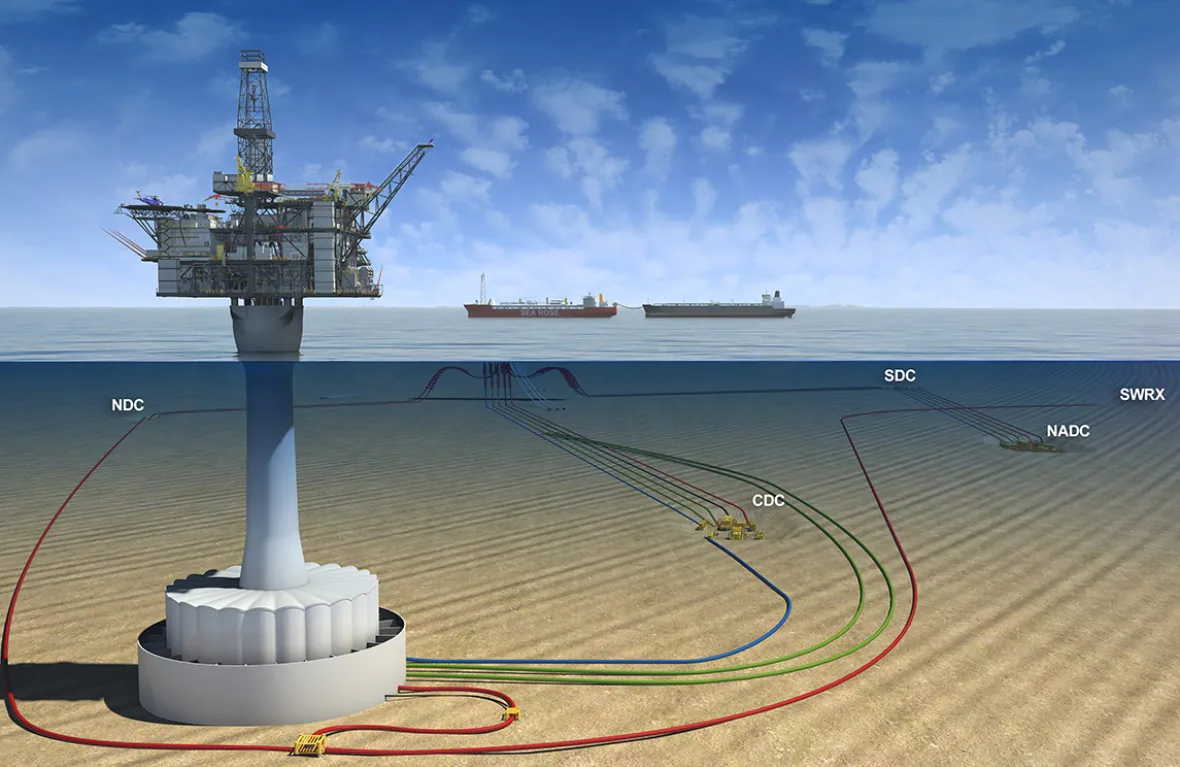
West White Rose Extension Project

Read Full Post »

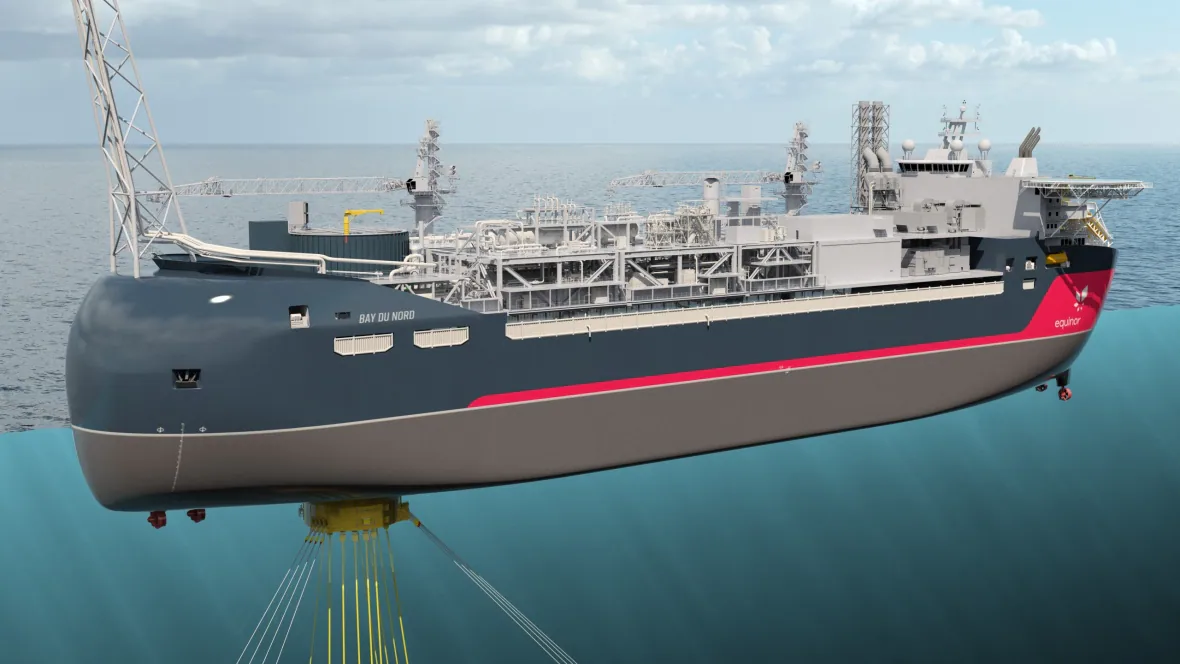
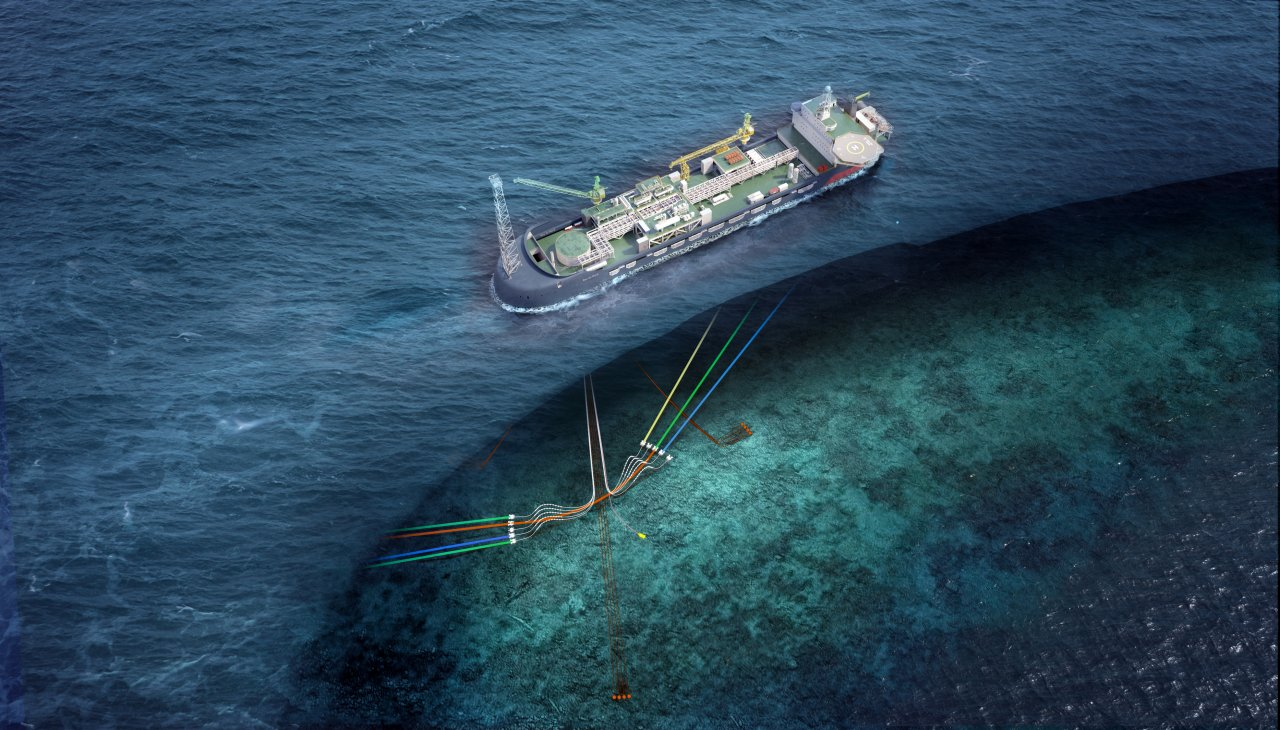
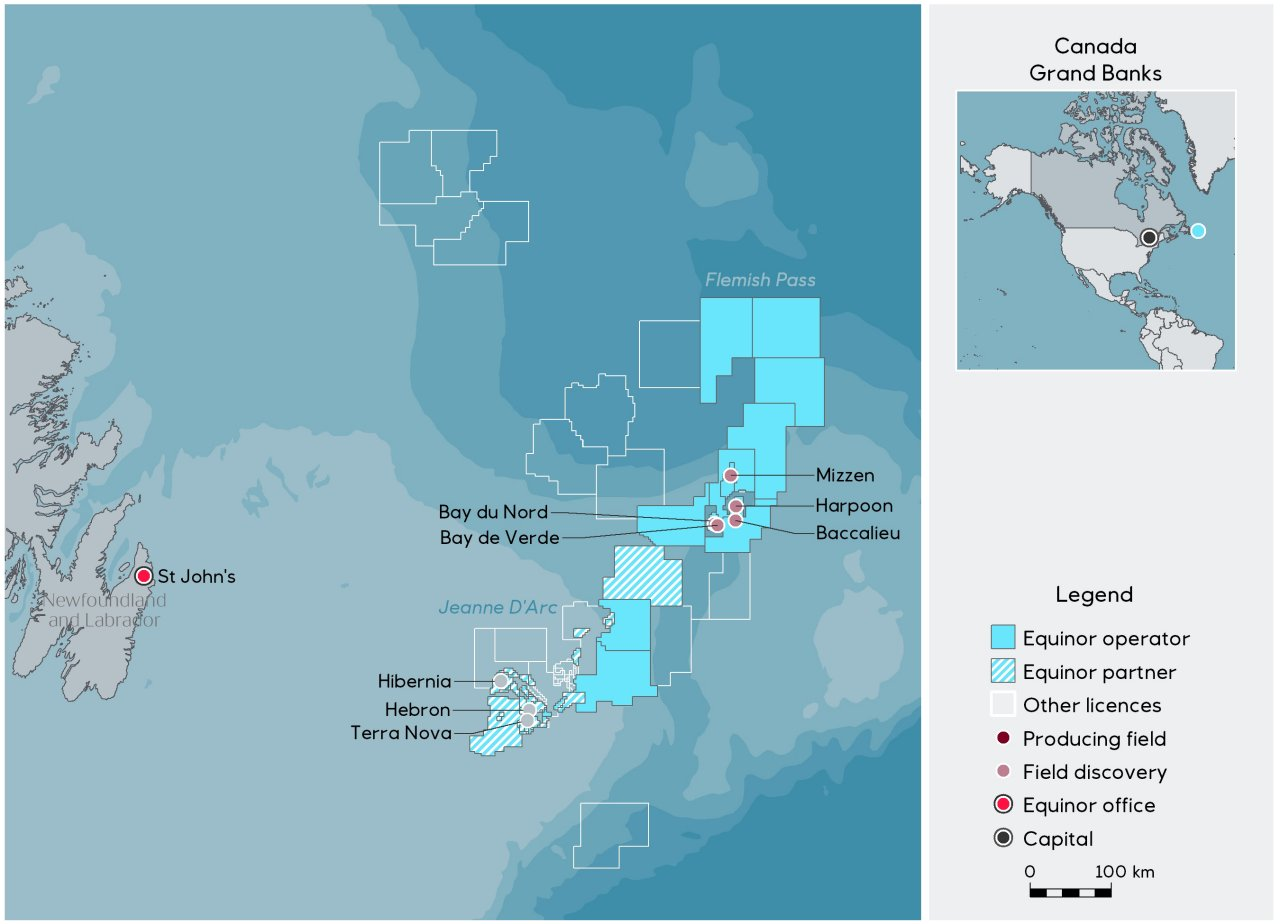
Bay du Nord FPSO planned for 500 km offshore St. John’s in 1200 m water depth

Federal Environment Minister Steven Guilbeault formally approved the Bay du Nord offshore oil megaproject Wednesday, making a decision that will infuriate environmentalists but boost the Newfoundland and Labrador economy.

CBC News

Previous post on this project.

Read Full Post »

Equinor images

A decision on the proposed Bay du Nord oil project off the coast of Newfoundland will be delayed by another 40 days, according to Federal Environment Minister Steven Guilbeault.

Ottawa’s decision for the project was set for Sunday, but was originally scheduled for Dec. 6. The 40-day delay means a decision could come by April 13.

The project has reportedly caused a division within Prime Minister Justin Trudeau’s cabinet, according to Radio-Canada, which reported in February that several Liberal ministers from Ontario, Quebec and British Columbia want to reject Bay du Nord. 

CBC

The delays in Ottawa are disappointing for the following reasons:

  1. Recent polling indicates very strong support among Newfoundlanders for offshore oil and gas operations and the Bay du Nord project. Newfoundland Premier Andrew Fury fully supports the project.
  2. The Impact Assessment Agency of Canada concluded that “the Bay du Nord Development Project is not likely to cause significant adverse environmental effects, taking into account the implementation of mitigation measures.”
  3. Equinor is a responsible offshore operator with a strong track record in Norway and elsewhere.
  4. The importance of “free world” oil and gas production has never been more obvious. That will continue to be the case for the life of this project and beyond.
  5. The project would generate $3.5 billion in revenues to the Government of Newfoundland and Labrador and provide estimated in-province employment of 22.3 million-person hours for the life-of-field.

Read Full Post »

Howard Pike forwarded this comprehensive Ocean Ranger video. Worth watching.

Read Full Post »

This is an excellent tribute written by two brothers who lost their father in the Ocean Ranger tragedy. I highly recommend that you listen and reflect.

Ocean Ranger Memorial Will Look a Little Different This Year
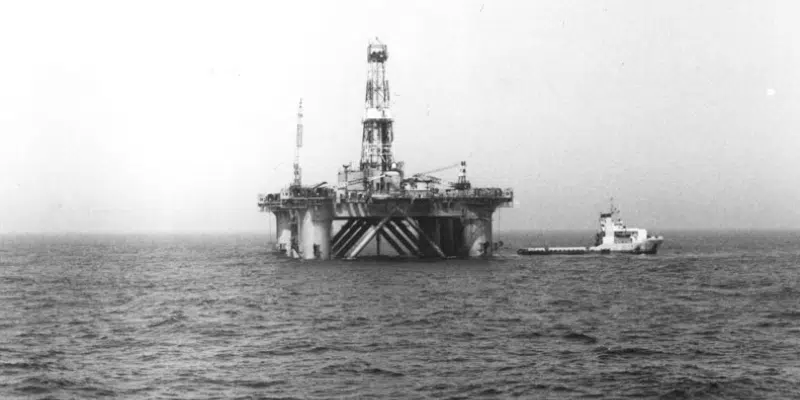
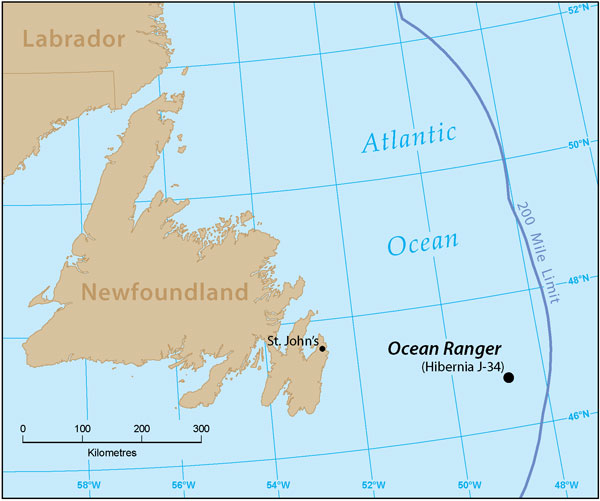
Ocean Ranger
Hibernia Oil Field
Heritage, Newfoundland & Labrador

Condensed below is important background information from my notes and from an outstanding presentation by Howard Pike in St. John’s Newfoundland in 2017.

  • 84 men aboard; no survivors
  • Largest semisubmersible drilling rig of its day
  • US registered MODU
  • The “unsinkable” rig had weathered more than 50 significant storms
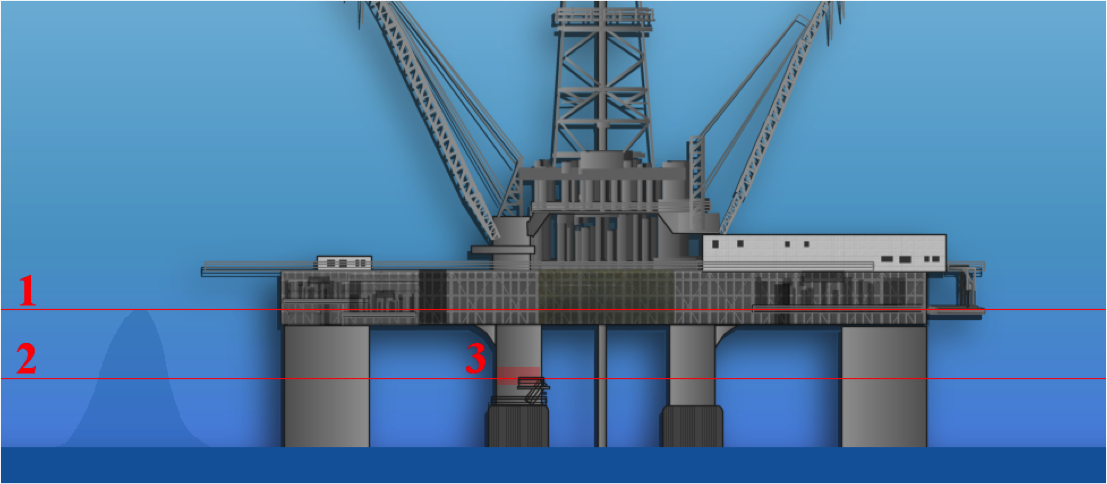
  • Unlike most semisubmersibles, the ballast control room was located in one of the legs (starboard column No.3). At drilling draft, it was just 28 feet above mean sea level.
  • Water depth was 240′, rig was moored with 12 anchors
  • Ballast control operators had minimal training
  • Incident with the ballast control system just a week before the disaster.
  • On February 14th, the Ocean Ranger was battered by a severe storm; wave heights up to 21m; rogue wave damaged deck items on nearby Sedco 706
  • Crew stopped drilling when the heave exceeded 15′, forced to shear the drill pipe during the disconnect process
  • Crew did not deballast to the storm draft from the 80′ drilling draft
  • Waves broke portlight in the ballast control room
  • Salt water soaked the ballast control console
  • Short circuits or inadvertent operator commands caused ballast tank valves in the bow to open.
  • Water flooded the forward ballast tanks, and the rig began to list toward the bow.
  • Crew inadvertently opened more pontoon valves
  • Forward list passed the point of recovery
  • The Ranger’s standby vessel, the Seaforth Highlander, was contacted but was delayed by sea conditions
  • At approximately 1:10 a.m. on February 15 th , the Ocean Ranger began sending mayday signals.
  • Zapata Ugland and Sedco 706, working in the area, sent their standby vessels
  • At 1:30 a.m. the Ocean Ranger’s radio man sent his final transmission. The crew was boarding the lifeboats.
  • Investigators later determined that as the lifeboats descended, violent winds threw them against the side of the rig, damaging some lifeboat hulls before they ever touched the water.
  • Crew did not have survival suits
  • Seaforth Highlander attempted unsuccessfully to rescue survivors from a damaged lifeboat
No. 3 represents the location of the Ocean Ranger control room

At the time of the Ocean Ranger tragedy, 3 rigs – the Alaskan Star, Rowan Midland, and Zapata Saratoga were working on Georges Bank in the US North Atlantic. The nor’easter had passed over Georges Bank before strengthening as it moved toward the Grand Banks. Among the small Georges Bank drilling community there was a kinship with those working in the even harsher environment on the Grand Banks. 40 years later, we are still greatly saddened by what transpired. Many lessons were learned and applied, but the ocean is unforgiving and we must continue to assess storm preparedness. Reflection on past tragedies is an important part of the process.

Read Full Post »

Charles Smith

I’m very sad to report the passing of a leading offshore safety researcher and long-time colleague, Dr. Charles Smith. Charles was a pioneering structural engineer who joined the US Geological Survey’s Conservation Division (then the offshore safety regulator) in ~1977 to establish the Technology Assessment and Research (TAR) Program.  With the thinnest of budgets, Charles formed partnerships that addressed the gamut of offshore safety issues. Some of his accomplishments:

  • Working with the Offshore Technology Research Center (Texas A&M) and others, Charles sponsored projects that led to the successful investigation of deepwater production concepts including TLPs, Spars, FPSOs, and semisubmersibles.  These designs are now the mainstays of deepwater development worldwide.
  • Organized well control projects that included the establishment of the deepwater well control research facility at Louisiana State University. 
  • Established the first ever offshore earthquake measurement network in the Pacific Region. The measurement system at Platform Grace in the Santa Barbara Channel successfully recorded 5 earthquakes and the structural responses at multiple locations on the platform.
  • Conducted research that led to new hurricane design standards for offshore structures and topsides equipment.
  • Working with colleagues at Berkeley and Stanford, conducted groundbreaking research on human and organizational factors affecting offshore safety. This was the basis for important safety culture studies that followed.
  • Studied pipeline risks and corrosion management for structures and pipelines.
  • Studied decommissioning options and their comparative environmental effects. 
  • Assessed arctic development options including gravel and ice islands and monopod concepts.
  • Conducted structural reviews leading to the renovation of the Ohmsett spill response test facility.
  • Participated on organizing committees for the International Conference on Ocean, Offshore, and Arctic Engineering (OMAE).
  • Along with representatives from Norway, the UK, Brazil. Canada, Mexico, Australia, and New Zealand, founded the International Committee on Regulatory Authority Research and Development (ICRARD).

Charles was the only offshore regulatory engineer to be selected as one of 10 finalists for the prestigious NSPE Federal Engineer of the Year award. (Keep in mind that the US government employs more than 130,000 engineers.) In 2009, the year of his retirement from Minerals Management Service, he was inducted into the Offshore Energy Center’s Hall of Fame (Galveston, TX) as as a Technology Pioneer for Health, Safety, and the Environment.   

After retirement Charles moved to Newfoundland and continued working on offshore safety issues with Memorial University, Canadian regulators, and industry representatives.  He and his wife Elaine built a lovely home overlooking the water in Bay Roberts. He was proud to be a citizen of both the US and Canada, and both countries were beneficiaries of his long and enormously successful career. Here is his obituary.

IMG_1766.JPG
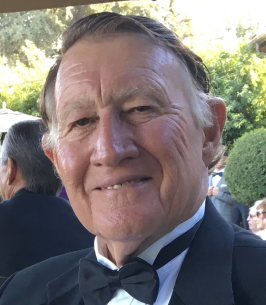
Charles and his wife Elaine with my wife and me and John Gregory and his wife at the Offshore Energy Center Hall of Fame induction gala (Houston, 2009). Bud

Read Full Post »

In light of the 2009 helicopter crash that killed 17 workers offshore Newfoundland and the rash of other helicopter incidents around the world, helicopter safety is a major concern for the offshore industry and regulators. This FAA decision (link courtesy of Cheryl Anderson) is sure to be controversial in Atlantic Canada and elsewhere.

The U.S. aviation regulator says it won’t require the retrofit of a gearbox blamed in a fatal helicopter crash off Newfoundland because it would be too expensive for the industry.

 The decision by the Federal Aviation Administration rejects a call by the Transportation Safety Board of Canada to phase-in a requirement that all Sikorsky S-92A gearboxes be capable of operating at least 30 minutes after losing oil.

The March 2009 crash of Cougar Flight 491 resulted in 17 deaths during a flight to an offshore oil platform, and has brought demands from the families of the victims that regulators in the United States, Canada and Europe change the rules governing the gearbox.

The FAA memo on the decision, obtained by The Canadian Press under U.S. freedom of information legislation, says the service record of the helicopter no longer supports the certification’s basic premise that the chances of an oil leak are “extremely remote.”

Read Full Post »

Proposal: Let’s make April 20th International Offshore Safety Day to honor those who have been killed or injured, to recognize the many workers who provide energy for our economies and way of life, and to encourage safety leadership by all offshore operators, contractors, and service companies.

Discussion: April 20th is, of course, the anniversary of the Macondo tragedy in the Gulf of Mexico. Eleven men died on the Deepwater Horizon that day. Many other offshore workers have died or been injured exploring for and producing offshore energy.  167 workers were killed when Piper Alpha exploded in 1988, 84 died when the Ocean Ranger sank in 1982, 123 perished when the Alexander Kielland capsized in 1980, 17 died in a helicopter crash off Newfoundland in 2009, 11 died when the Petrobras 36 sank in the Roncador field in 2001, and many others have been killed working offshore. Some of these accidents, like last summer’s fatality on the Jack Ryan offshore Nigeria, receive no public notice. Others like the fall in the Gulf on Monday or the recent diver fatality in the North Sea receive just a brief mention.

In addition to honoring those killed or injured, Offshore Safety Day would draw attention to the importance of offshore workers, their dedication and commitment, progress that is being made in addressing offshore safety risks, and the outstanding safety management efforts of leading companies around the world.  It’s time for a day to honor offshore workers!

Read Full Post »

Cheryl Anderson submitted a report on a synthetic mud spill from the Henry Goodrich which is operating offshore Newfoundland.

An estimated 26,400 litres (approximately 166 bbl) synthetic based mud spill occurred Monday east of St. John’s from Suncor Energy Henry Goodrich rig while drilling an exploration well on Monday but not reported until today – a three day delay.  Preliminary reports indicate the cause may have been a valve left open on the mud pit. vocm.com


Read Full Post »

Odd Finnestad has provided some good background information on the Old Harry prospect.

“Old Harry is described as “the largest known undrilled marine structure in Canada”, with twice the potential of the Hibernia field off Newfoundland (up to 2-billion barrels of recoverable oil), or and three times the potential of the Sable Island gas field off the coast of Nova Scotia.” polemincandparadise.com

Read Full Post »

« Newer Posts - Older Posts »