Feeds:
Posts
Comments

Posts Tagged ‘MMS’

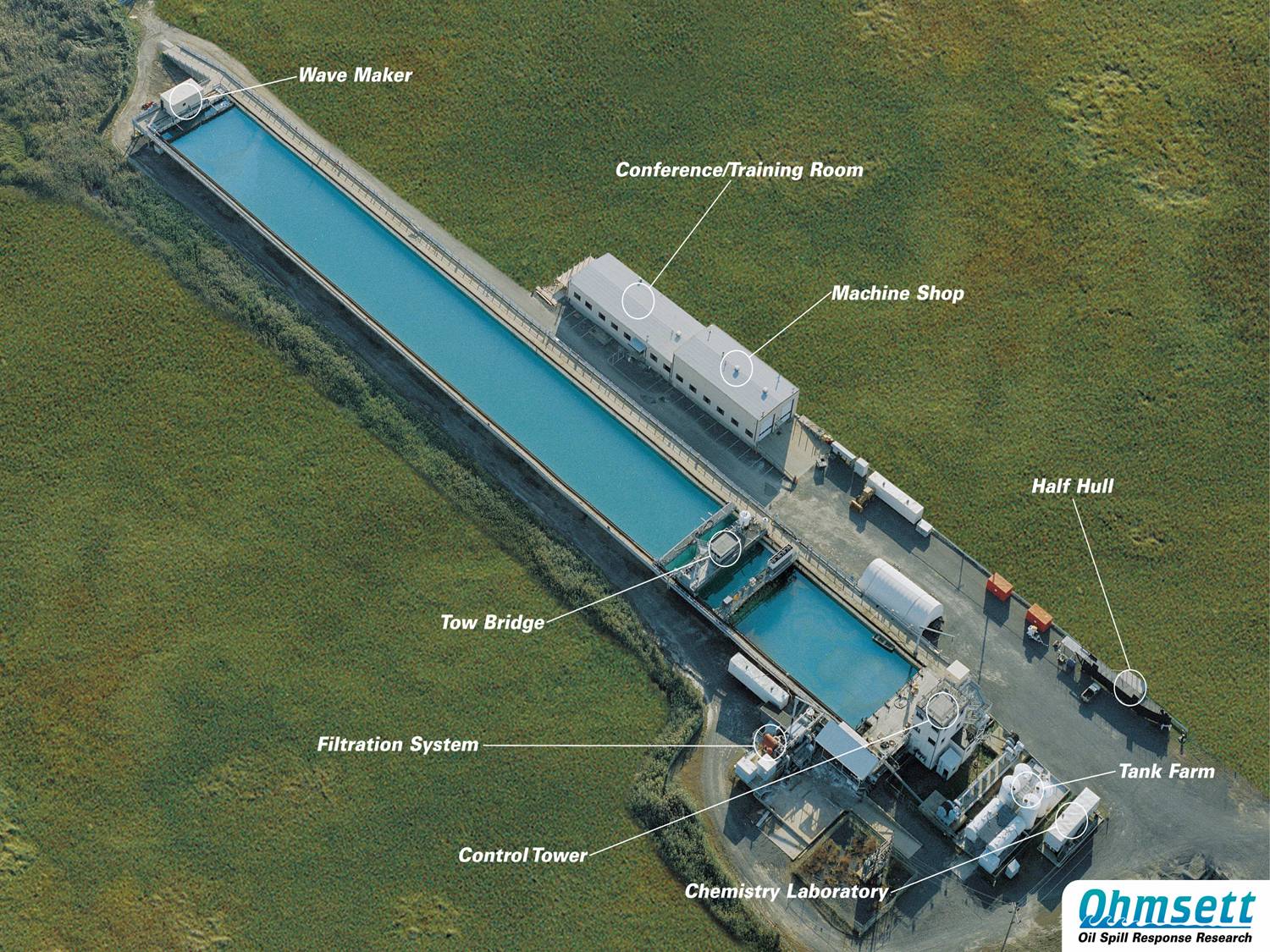
MMS, the National Institute of Standards and Technology, and Environment Canada were leaders in developing and testing in situ burn spill response capabilities in the 1990’s. Tests at the MMS (now BSEE) Ohmsett facility and at sea offshore Newfoundland demonstrated this important spill response option.

BSEE has continued to advance the MMS spill response research program, and recently announced an exciting enhancement to in situ burn capabilities. BSEE and the Naval Research Laboratory invented a low-emissions atomizer burner designed to cleanly and quickly burn spilled oil, even after oil has been emulsified with water. See the video below.

The atomizer works by converting a stream of liquid, in this case, neat or emulsified crude oil, into a fine spray. The combustible spray is then able to completely burn without the plume of black smoke or residue, leaving the area safer for people, wildlife, and the environment. The burner interfaces with off-the-shelf pumps and air compressor equipment, so the collected fuel can be pumped to the burner. It can be mounted on a floating platform to stand freely in the water and has been successfully tested on waves.

NRL
Read Full Post »

Charles Smith

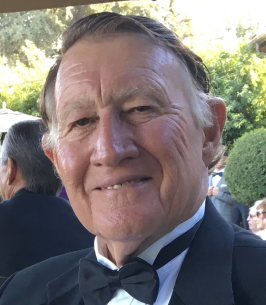
I’m very sad to report the passing of a leading offshore safety researcher and long-time colleague, Dr. Charles Smith. Charles was a pioneering structural engineer who joined the US Geological Survey’s Conservation Division (then the offshore safety regulator) in ~1977 to establish the Technology Assessment and Research (TAR) Program.  With the thinnest of budgets, Charles formed partnerships that addressed the gamut of offshore safety issues. Some of his accomplishments:

  • Working with the Offshore Technology Research Center (Texas A&M) and others, Charles sponsored projects that led to the successful investigation of deepwater production concepts including TLPs, Spars, FPSOs, and semisubmersibles.  These designs are now the mainstays of deepwater development worldwide.
  • Organized well control projects that included the establishment of the deepwater well control research facility at Louisiana State University. 
  • Established the first ever offshore earthquake measurement network in the Pacific Region. The measurement system at Platform Grace in the Santa Barbara Channel successfully recorded 5 earthquakes and the structural responses at multiple locations on the platform.
  • Conducted research that led to new hurricane design standards for offshore structures and topsides equipment.
  • Working with colleagues at Berkeley and Stanford, conducted groundbreaking research on human and organizational factors affecting offshore safety. This was the basis for important safety culture studies that followed.
  • Studied pipeline risks and corrosion management for structures and pipelines.
  • Studied decommissioning options and their comparative environmental effects. 
  • Assessed arctic development options including gravel and ice islands and monopod concepts.
  • Conducted structural reviews leading to the renovation of the Ohmsett spill response test facility.
  • Participated on organizing committees for the International Conference on Ocean, Offshore, and Arctic Engineering (OMAE).
  • Along with representatives from Norway, the UK, Brazil. Canada, Mexico, Australia, and New Zealand, founded the International Committee on Regulatory Authority Research and Development (ICRARD).

Charles was the only offshore regulatory engineer to be selected as one of 10 finalists for the prestigious NSPE Federal Engineer of the Year award. (Keep in mind that the US government employs more than 130,000 engineers.) In 2009, the year of his retirement from Minerals Management Service, he was inducted into the Offshore Energy Center’s Hall of Fame (Galveston, TX) as as a Technology Pioneer for Health, Safety, and the Environment.   

After retirement Charles moved to Newfoundland and continued working on offshore safety issues with Memorial University, Canadian regulators, and industry representatives.  He and his wife Elaine built a lovely home overlooking the water in Bay Roberts. He was proud to be a citizen of both the US and Canada, and both countries were beneficiaries of his long and enormously successful career. Here is his obituary.

IMG_1766.JPG
Charles and his wife Elaine with my wife and me and John Gregory and his wife at the Offshore Energy Center Hall of Fame induction gala (Houston, 2009). Bud

Read Full Post »

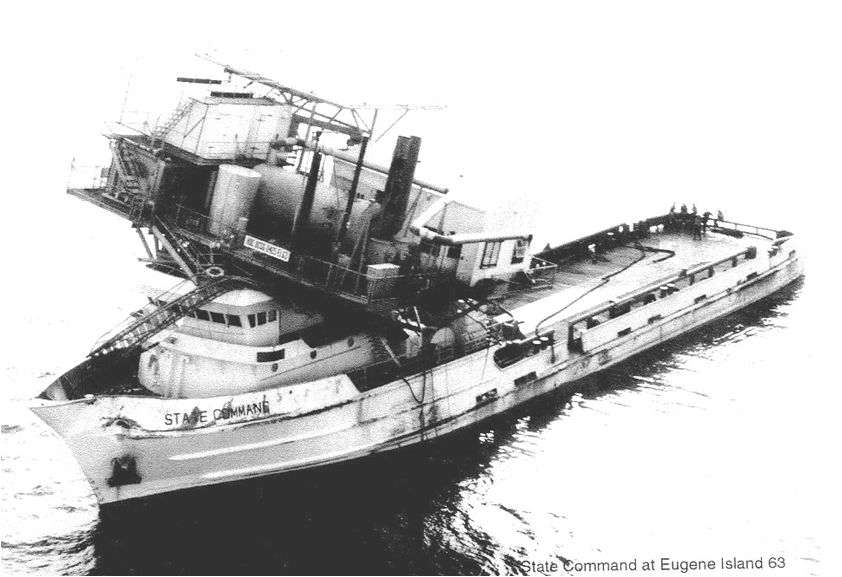
This comment by the late John Borne, an outstanding USGS and MMS engineer/philosopher, reflects on the persistent vessel allision incidents over the years. The reporting of these incidents was spotty, but some could not be denied. Pictured below is the State Command arriving in Morgan City (~1973?) topped by a platform deck. Fortunately, the platform was unmanned and there were no injuries to vessel personnel. You could say this was the first floating production platform 😃

Read Full Post »

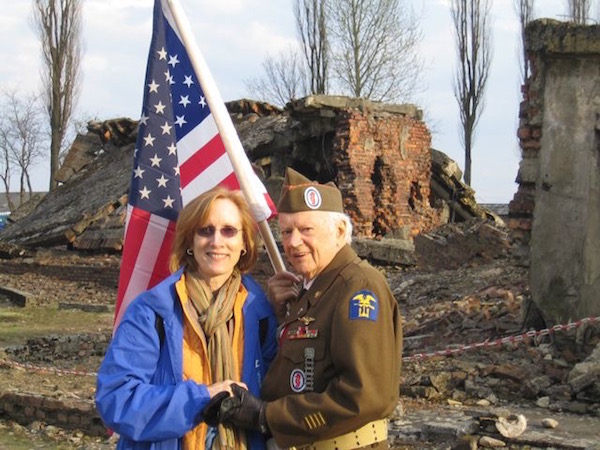
Rick Carrier with life partner Lynn Ramsey, in Poland, following the 2012 March of the Living. Photo courtesy Lynn Ramsey.

The growing interest in green hydrogen inspired me to write a post about Rick Carrier, a war hero and visionary who is largely unknown to the offshore energy community. Rick’s plan for a Mid-Atlantic wind-hydrogen demonstration project was the first offshore wind proposal submitted to the Minerals Management Service, the bureau that initiated the offshore wind program in the U. S.

Rick Carrier lived an amazing life – WWII hero, artist, playwright, diver, conservationist, green hydrogen pioneer, and more. Perhaps most noteworthy were his military accomplishments. He was among the first Americans to land on Utah Beach during the D-Day invasion. He subsequently became the first allied soldier to discover the Buchenwald concentration camp. The next day, April 11, 1945, he marched into the camp with Patton’s Third Army and liberated the prisoners. Rick is pictured above at the 2012 March of The Living, an annual walk down the 3-kilometer path from Auschwitz to Birkenau.  In June of 2014, Rick returned to Normandy for a ceremony marking the 70th anniversary of D-Day. Later that year, the President of France awarded him the Chevalier of the Legion of Honor — France’s highest honor.

Rick founded the USA Bald Eagle Command in 1975 to protect the endangered American Bald Eagle. The organization’s efforts played a role in President Reagan’s declaration of June 20, 1982 as National Bald Eagle Day. Through the efforts of this and other conservation groups, the Bald Eagle was removed from the Endangered Species list in 2007.

Rick’s green hydrogen proposal was yet another patriotic venture. Through his non-profit, Bald Eagle Energy, he sought to demonstrate the commercial potential for using offshore wind energy to produce hydrogen from sea water. Unfortunately, the framework for permitting such projects had not yet been established. While we tried to find a way to make the project possible, the obstacles were too great.

RIck passed away peacefully on December 12, 2016, at his home in New York City. It was an honor to have met him and worked with him on his green hydrogen initiative.

Read Full Post »

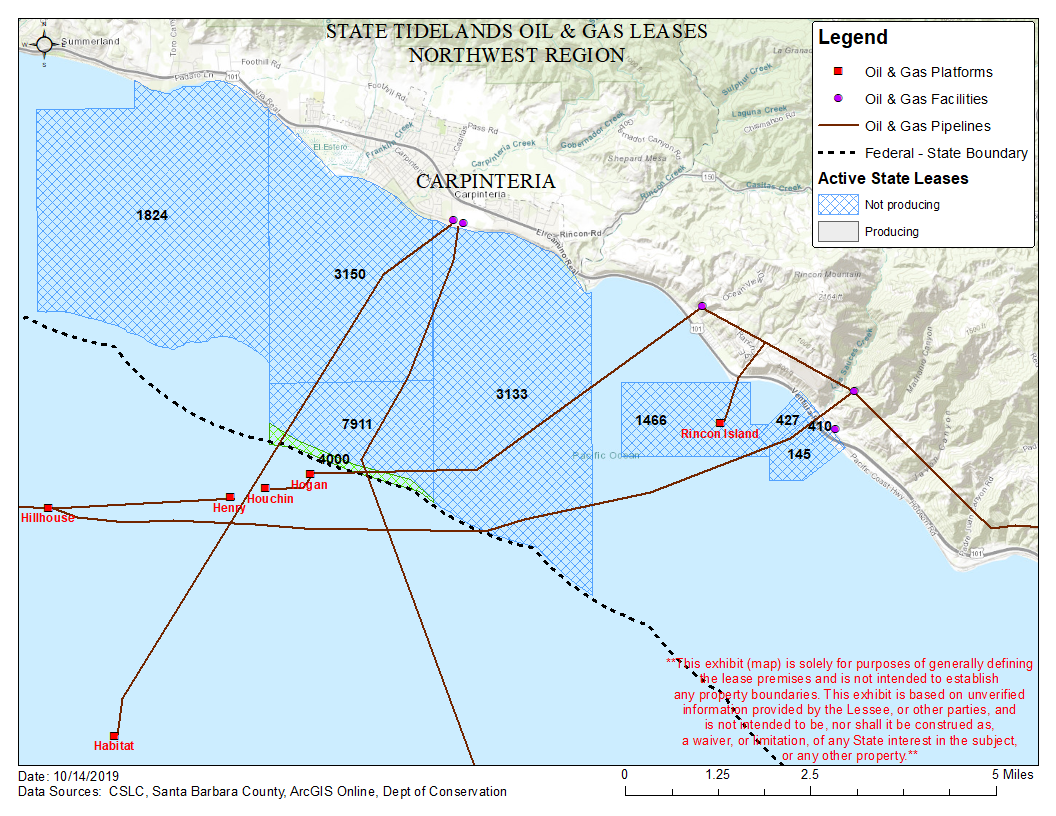
The troubled past of Platforms Hogan and Houchin extends into California State waters. In the 1990’s, Signal Hill and affiliates launched plans to drill directionally from Hogan into adjacent State leases 4000, 7911, and 3133 (see map above). These plans were dubious from the outset given MMS (Federal regulator) concerns about Hogan’s structural integrity. The planning process was never successfully concluded and the 3 State leases were terminated in 2019. For full details see this California State Lands Commission report:

In a related action, the State is suing Signal Hill for unpaid rentals on the pipeline lease that carried production from Hogan to shore. The amount due is approximately $287,000.

Read Full Post »

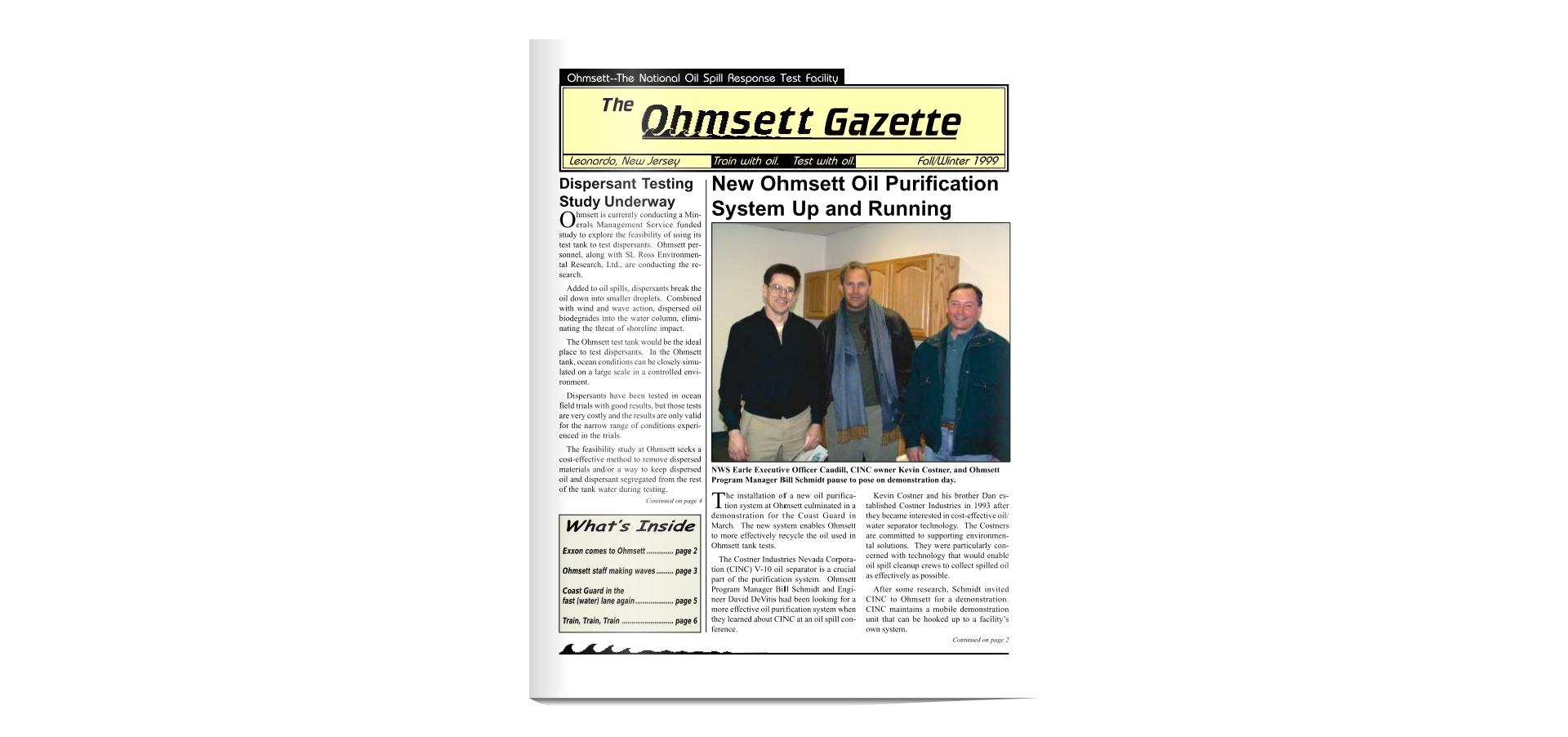
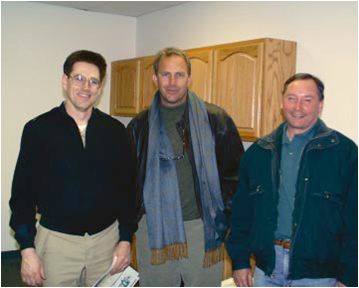
Watching Kevin Costner at the beginning of the “Field of Dreams” game in Iowa reminds me that Kevin visited the MMS Ohmsett facility in New Jersey in 1999. He and his brother had developed an oil purification system that was being tested at Ohmsett (“Tank of Dreams?”). In the picture below, Kevin is flanked by Ohmsett Manager Bill Schmidt and Engineer Dave DeVitis. Were it not for the heroic efforts of Ed Tennyson and other MMS employees, Ohmsett would have been abandoned in the 1980s. More on that in a later post.

Read Full Post »

Much ado about nothing courtesy of the Associated Press:

Copies of the forms submitted by more than 100 inspectors, engineers and permit reviewers in five Gulf coast offices were obtained by the AP under the Freedom of Information Act. Personal information, such as the names of the employees, their friends and their family members, was blacked out to protect privacy. But the companies with ties to government workers were disclosed, and they represent a who’s who of the offshore oil and gas industry, from majors like Chevron, Shell and BP to smaller companies such as W&T Offshore Inc., Ankor Energy LLC and Hilcorp Energy Co.

So yesterday we linked an article about proposed legislation that would, among other things, require that offshore inspectors have “at least three years experience in the oil and natural gas field.” Today, we read contradictory (and silly) comments like the one below in the AP piece that criticize such experience. How would you like to be an oil and gas inspector or prospective offshore regulator?

“It’s nearly impossible to determine where the oil industry ends and the government’s regulatory agency begins,” said Scott Amey of the Project on Government Oversight, after reviewing AP’s data. “These new instances indicate that BOEMRE staff are connected to individuals and oil companies, which raises concerns about lax oversight and the integrity of the agency. Without enhanced enforcement authority and independent oversight of these potential conflicts, I’m uncertain that BOEMRE can assure the public that it is truly watchdogging the offshore oil industry.”

Give these people a break. I have seen absolutely no evidence that improper government-industry relationships or compromised inspections had anything to do with the Macondo blowout or any other recent incident. Inspection and engineering personnel are under continuous scrutiny well beyond what most employees would accept, and recuse themselves from assignments if there could be even a perception of a conflict of interest.

The US offshore program, and every other safety regulator, needs people who understand the operations and technology that they regulate. These regulators need to communicate regularly with industry personnel on operational and regulatory issues. Too little interaction with their professional peers is a greater danger than too much. You don’t advance safety technology and procedures, and resolve concerns, without communication.

DOI offshore personnel have had and will continue to have more than enough oversight; time to move on to another cause.

Read Full Post »

We now have yet another legislative proposal, this time from the House, that fails to address the fundamental offshore safety and regulatory policy issues.

Read Full Post »

Jan de Jong, Inspector General, State Supervision of Mines, the Netherlands

I want to thank Jan de Jong, Inspector General, State Supervision of Mines (SSM), the Netherlands, for the support he expressed for the former Minerals Management Service at yesterday’s Ministerial Forum in Washington. Jan spoke favorably about his experiences with MMS personnel and questioned the public criticism.

Last year, SSM celebrated its 200th anniversary. I encourage you to view an excellent anniversary video about this very effective regulator. Pay special attention to the description of their regulatory philosophy, which begins at about the 6 minute mark.

Read Full Post »

Ohmsett

The seemingly endless crowing about the absence of improvements in spill response capabilities is a story by itself. This topic warrants a full discussion when time permits, but for now I’ll offer a few comments and observations:

  • The Macondo offshore spill response was unprecedented and impressive, and the lessons learned will be applied to improve spill response preparedness around the world.
  • Those who claim that there has been no progress in spill preparedness either have no real interest in spill response or have not been paying attention.
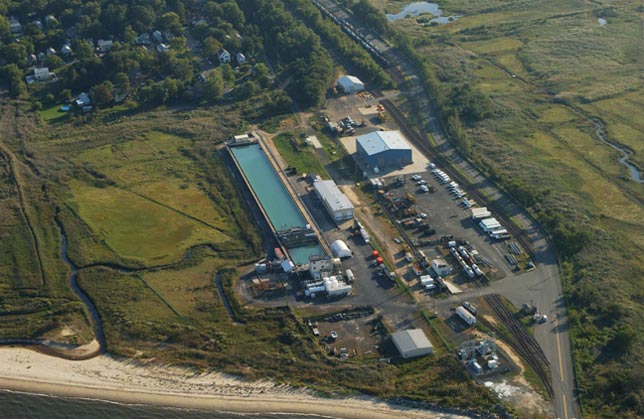
  • Even in the lean years following the Valdez oil spill research surge, the much-maligned MMS continued to conduct important burning, dispersant, remote sensing, and mechanical cleanup studies, while upgrading and expanding the use of the nation’s major oil spill response test facility – Ohmsett (pictured above).  This research was effectively applied during the Macondo spill and smaller, less publicized incidents. Click here for a nice summary of the program and here for the very extensive list of projects and links to the reports. Domestic and international partnerships, most notably with Norway and Canada, helped sustain this important research.
  • Despite periodic attempts to reprogram Ohmsett funding, MMS was able to continue to support this outstanding research facility.  Learn more about Ohmsett.
  • During the blowout, the networks featured the snake oil salesmen and hucksters who peddle super-sorbents and oil-consuming substances during every major spill.  That time should have been given to response experts and serious oil spill researchers.
  • Former industry executives with no real spill response experience trumpeted, without any documentation, claims of extraordinary recovery rates elsewhere (usually in places where no one gets to watch). Their favorite concept, supertanker response systems, received a lot of air time until the “Whale” tanker-skimmer flopped as predicted.
  • You would think that Kevin Costner’s very good separator (tested at Ohmsett in 1999!) was the only advance in response technology. Perhaps more movie and TV stars should get involved with spill response. Charlie (Oil) Sheen would no doubt attract interest to the cause. 🙂

NWS Earle Executive Officer Claudill, Kevin Costner, and Ohmsett Manager Bill Schmidt (1999 photo at Ohmsett)

Read Full Post »

« Newer Posts - Older Posts »