Feeds:
Posts
Comments

Posts Tagged ‘leasing’

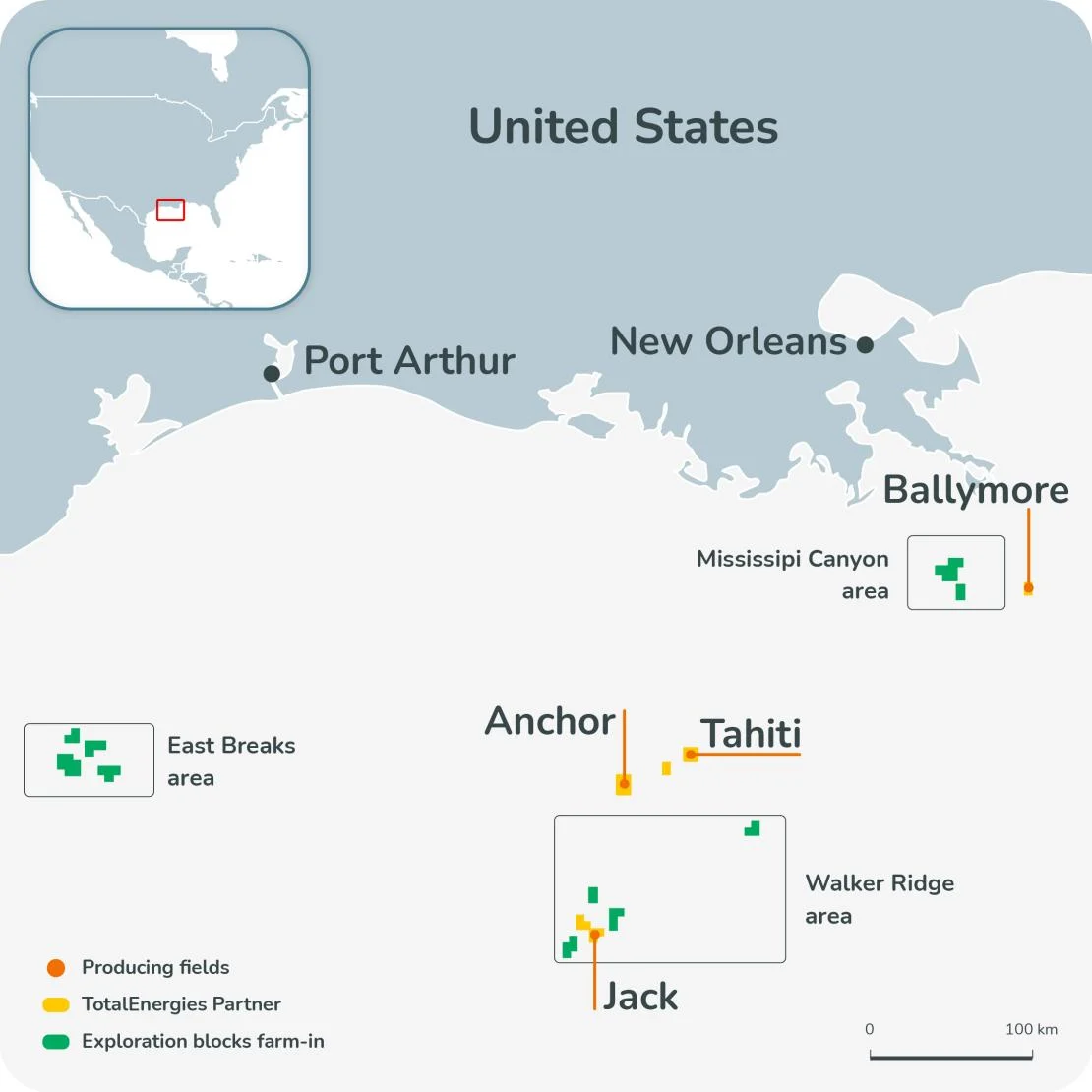
This week Total announced the acquisition of a 25% working interest in 40 Chevron leases in the Gulf of America. Total already owned interest in Chevron’s producing Ballymore (40%), Anchor (37.14%), Jack (25%), and Tahiti (17%) fields. Ironically, Federal regulations prohibited Total from jointly bidding with Chevron for any of those leases at the time of the sales. How does that make sense?

Restrictions limiting joint bidding by major oil companies date back to the Energy Policy and Conservation Act of 1975. Although these restrictions were intended to increase competition and revenues, OCS program economists have asserted, and studies have shown, that the ban results in fewer bids per tract and lower bonuses to the government.

Total did not submit a single bid in any of the past 4 Gulf of America lease sales. Perhaps they prefer to acquire interest in blocks previously leased to companies like Chevron. That is a reasonable acquisition strategy. However, farm-in acquisitions yield no bonus dollars to the Federal government. Wouldn’t it have been in the government’s best interest if some of those acquisition dollars were spent at lease sales where the bonus bids go to the US Treasury? It’s long past time to remove the joint bidding restrictions!
Read Full Post »

A post from last March discussed the high and seemingly unfair royalty and rental rates for new leases in the shallow waters of the Gulf of Mexico shelf. A 50% increase in the shelf royalty rate for lease sales 259 and 261 combined with rather punitive rental rates have likely contributed to the sharp decline in bidding for shelf lease blocks (see table below).

This decline in shelf bidding is unfortunate because the smaller companies that operate in the shallow waters of the Gulf are critical to sustaining the production infrastructure. These companies are also significant producers of environmentally favorable nonassociated (gas-well) natural gas.

lease saleshelf blocks with bids
(excluding CCS bids)
sum of high shelf bids
($million, excluding CCS bids)
25746$8.1
25929$4.1
26113$1.7
The royalty rate for shelf production jumped 50% from sale 257 to sales 259 and 261

BOEM has completed their evaluation of the Sale 261 shelf bids (see below). Each of these blocks received only a single bid, and every bid was accepted. Ironically, the invalid CCS bids for blocks that have no oil and gas value, were the first to be accepted. This was also the case for Sales 257 and 259.

(1) All of the Repsol bids were $32.50/ac. Total bids varied by block size, but were $187,200 for the 5760 acre blocks.
  • Seek a legislative fix to the Inflation Reduction Act😉 provision that established a 1/6 royalty rate floor for all OCS leases (formerly the royalty rate was 1/8 for leases on the shelf).
  • In the interim, administratively lower the royalty for shelf leases to 1/6 (from 18 3/4%).
  • Reconsider the rental rate scheme for shelf leases.
  • For future oil and gas lease sales, accept all high bids that exceed the specified minimum bid (currently $25/ac for the shelf). The Gulf of Mexico shelf has been extensively explored and developed for 70 years. While prospects remain, they are generally marginal as evidenced by the recent lease sale results. Fair market value is what any company is willing to bid (above the specified minimum).
  • Focus on assuring that lease purchasers are technically qualified to minimize safety risks, and that financial assurance for decommissioning (for new and existing leases owned by the high bidder) has been fully addressed.

Read Full Post »

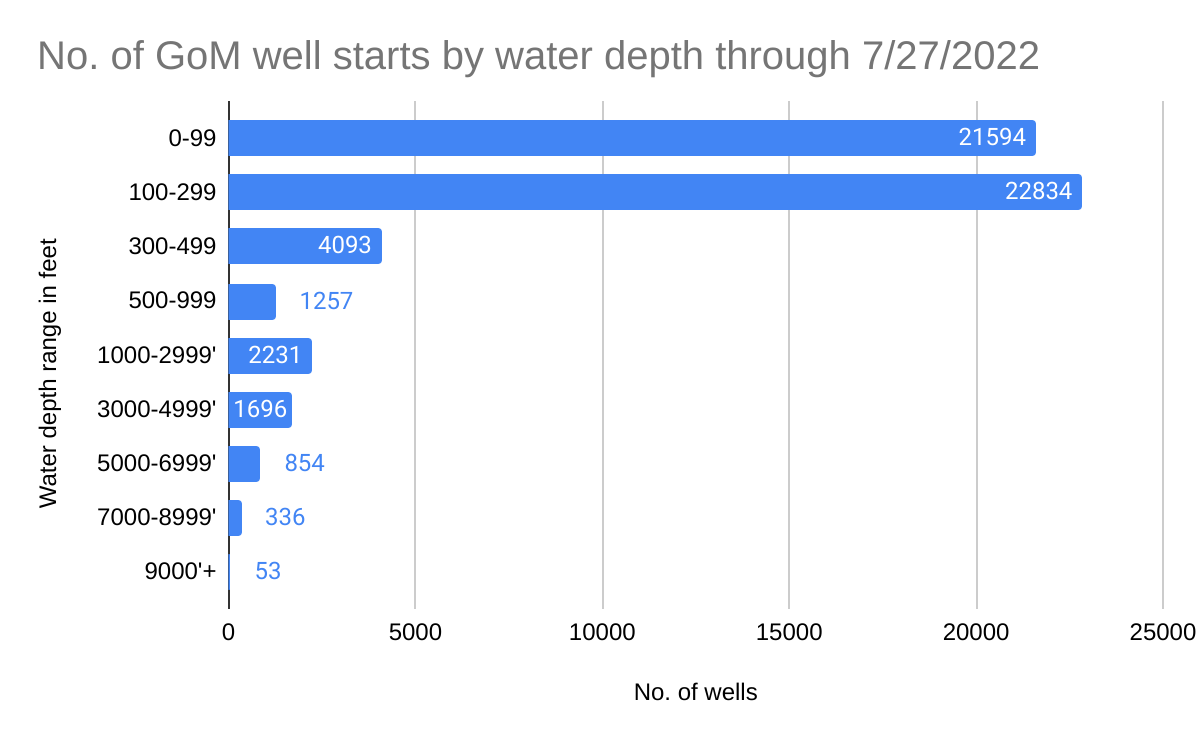
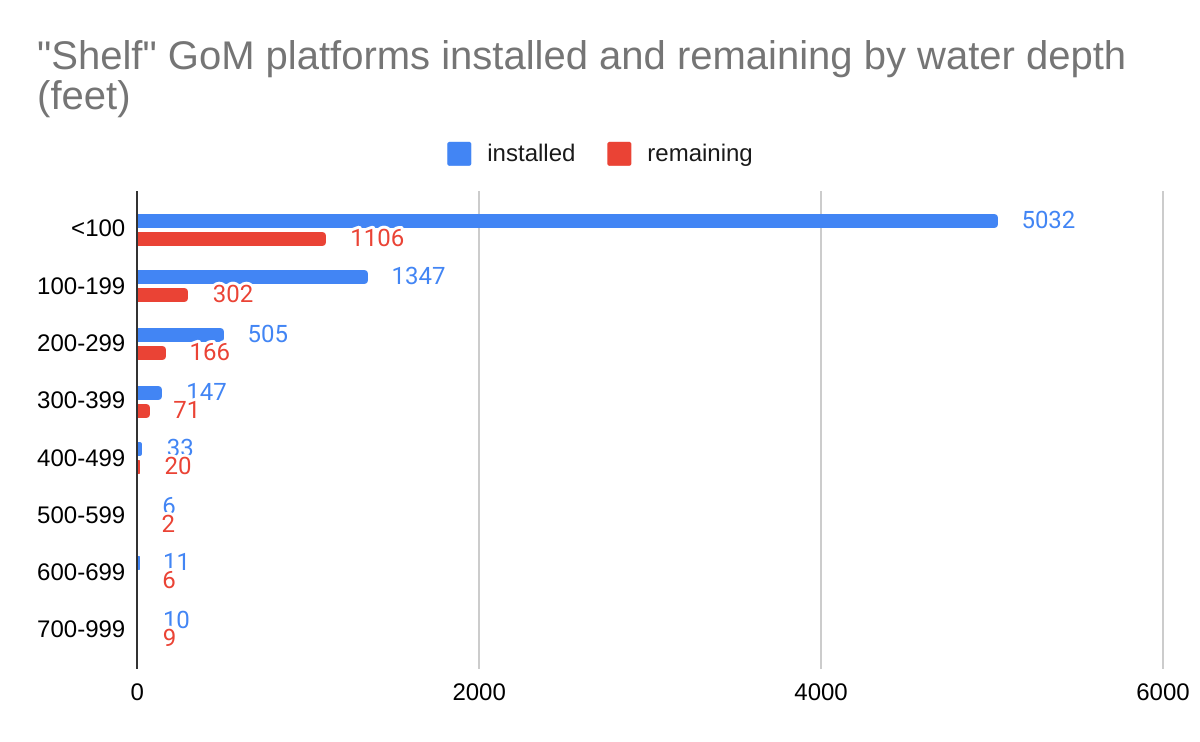
Per our post on the first Gulf of Mexico OCS production, here is what has happened since:

  • 54,948 wells drilled
  • 7159 platforms installed; 1743 remain in place
  • 40,000 miles of pipeline installed (per GAO)
  • Deepest water depth well: 10141 feet, Murphy (2008)
  • Deepest water depth platform: 9560 feet, Stones (Turritella) FPSO, Shell
  • Total oil production: 1947-2022 YTD = 23.6 billion bbls
  • Total gas production: 1947-2022 YD = 190.1 trillion cubic feet
  • Max. annual oil production: 693 million bbls (2019)
  • Max. annual gas production: 5.15 trillion cu ft (1997)
  • 131 lease sales
  • 28,482 tracts leased

Except for the GAO pipeline estimate, all numbers are from BSEE and BOEM online data centers.

Read Full Post »

active leases âž¡ producible leases âž¡ energy production

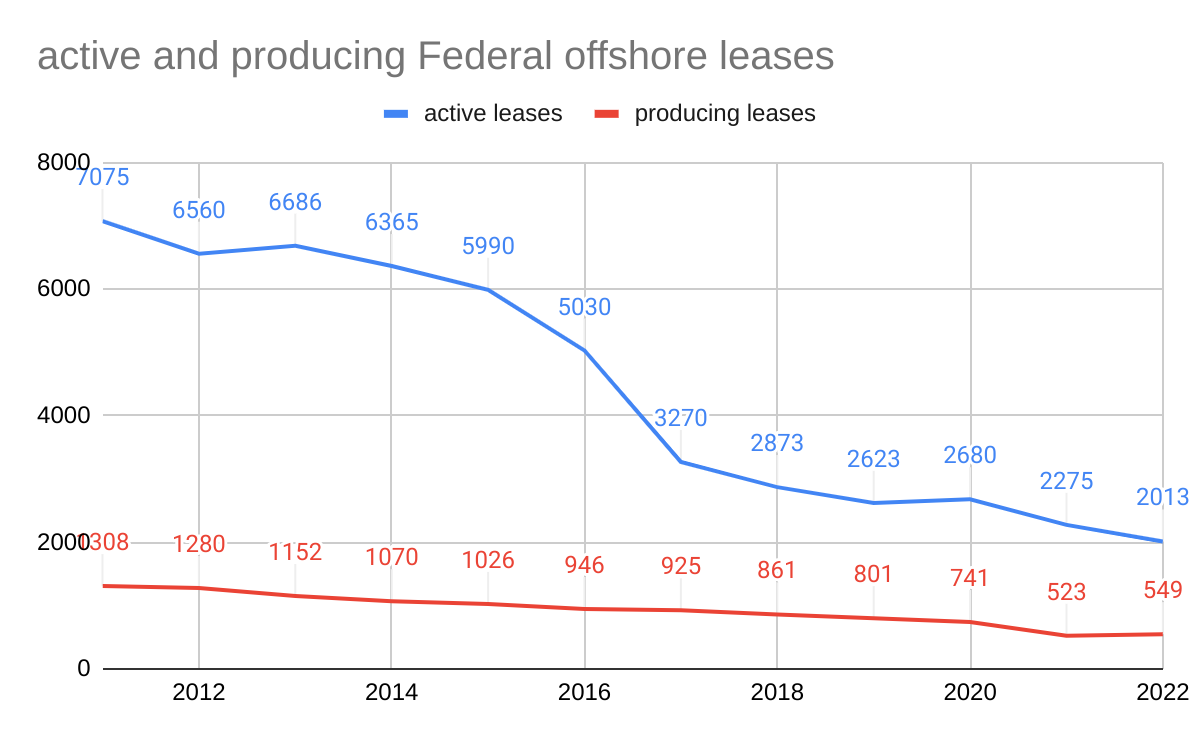
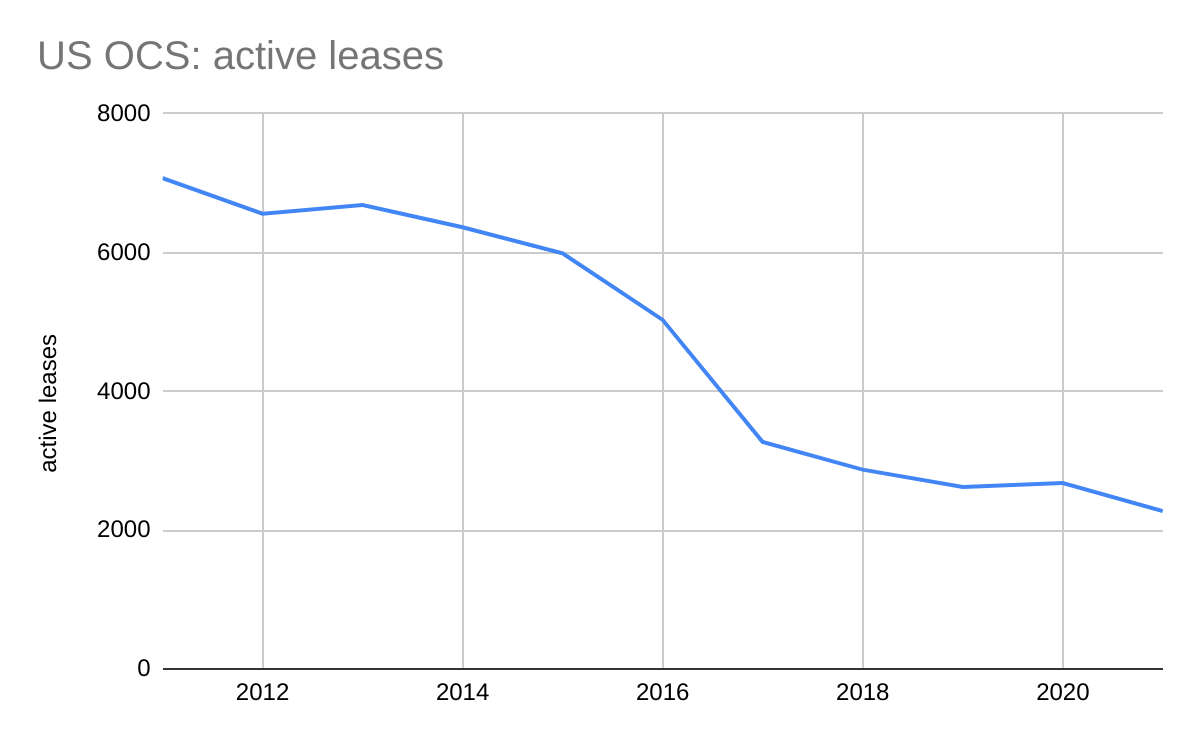
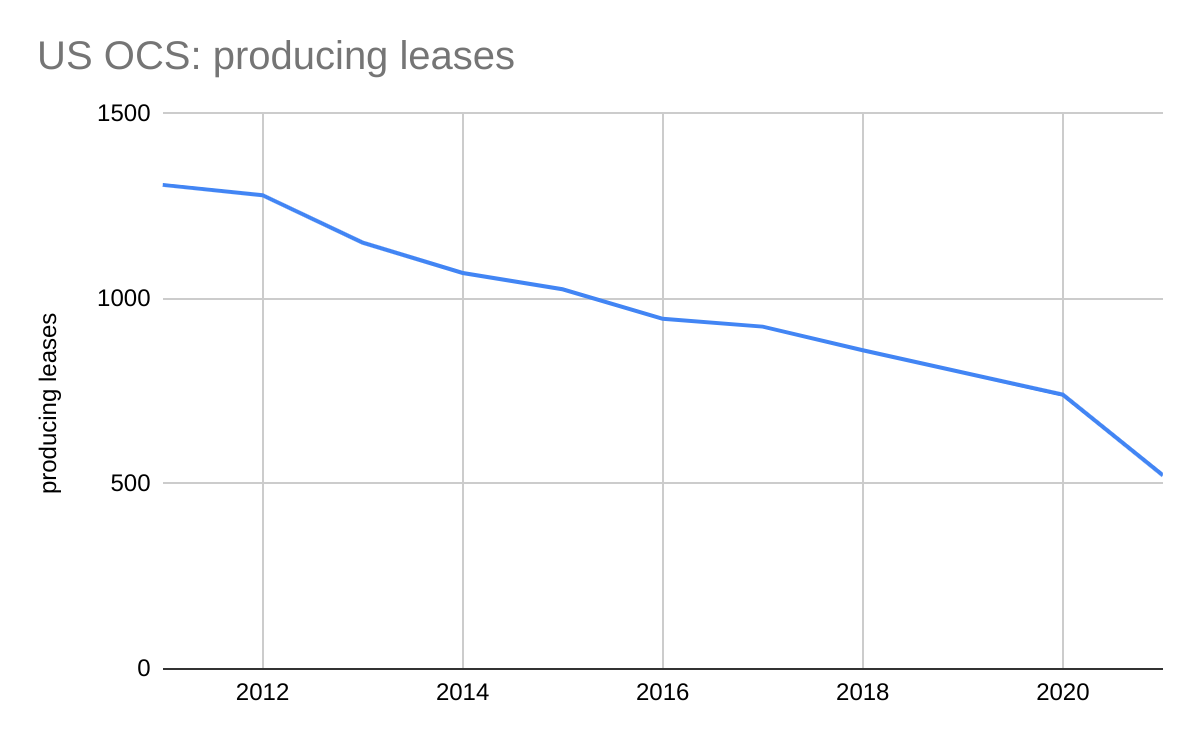
The future of US offshore energy production is in jeopardy. As is clear in the first chart below, the problem is the precipitous decline in opportunities (l.e. leases), not the will to produce. At 27.3% (6/2022 data), the % of active leases that are producing is near the historic high of 30%. The spin doctors really need to drop the old and tired nonproducing leases excuse.

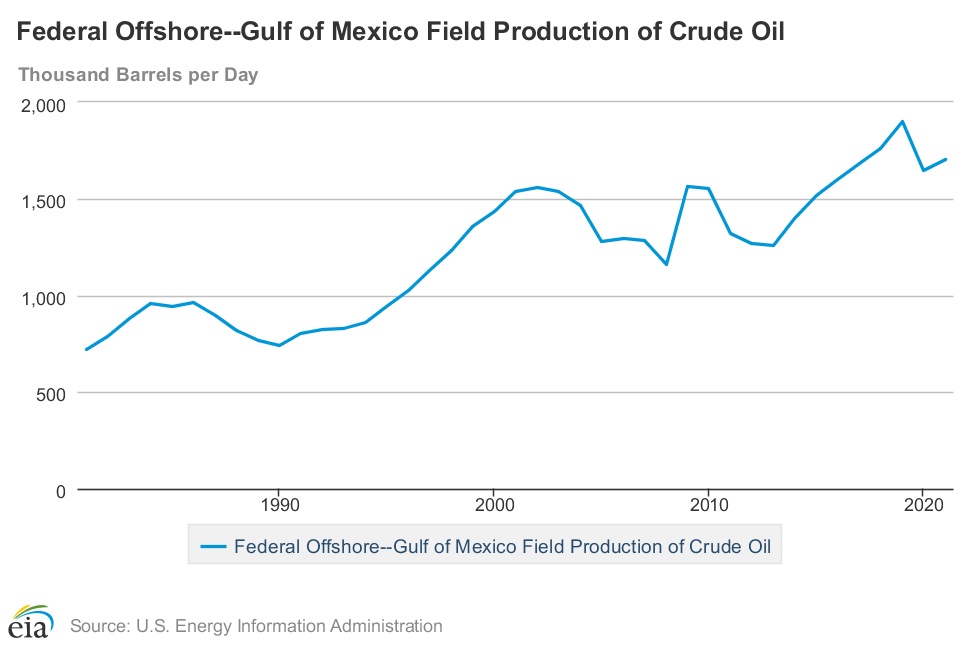
While not nearly as high as it could be with better lease management, offshore production has held up relatively well thanks to deepwater discoveries that were made years ago and technical innovation that makes projects more cost-effective, safer, and cleaner. Gulf of Mexico production should be relatively stable for several years as production from these projects offsets declines elsewhere. However, in the intermediate and longer term, reserve depletion and the absence of new exploration opportunities ensure a downward production trend.

Read Full Post »

There won’t be a deal without significant energy production provisions and Manchin is on the record regarding the need for action on offshore oil and gas leasing. We’ll see what happens.

Read Full Post »

Department of the Interior spokesperson: “there are 10.9 million acres of offshore federal waters already under lease to industry,” and “of those, the industry is not producing on more than three-quarters (75.7% or 8.26 million acres).”

Fox Business

As if the preventable expiration of the 5 year leasing program wasn’t bad enough, we get to hear the non-producing leases bit yet again. This pitch was popularized during the oil embargoes in the 1970’s and resurfaces whenever it is deemed to be politically helpful.

New comments:

Old comments:

  • 539 days since the last US offshore oil and gas lease sale
  • 182 lease sales since 1954, but none since 2020
  • Only 0.5% of US offshore land is leased for oil and gas exploration and production (assuming commercial quantities of oil and gas are discovered).
  • When you acquire a lease, you are not purchasing oil and gas. You are acquiring the right to explore for, and hopefully produce, those resources. Most leases will never produce.
  • Drilling strategies are linked to geophysical data and geologic information obtained in drilling other wells in the area and region.
  • Leases expire if they are not producing by the end of the lease term, which is 5 to 10 years depending on location.
  • You pay bonuses for all leases and annual rental fees for non-producing leases. None of these payments are returned if no discoveries are made.
  • US offshore leases are among the smallest in the world, only a fraction of the sized of those offered by most other nations with offshore oil and gas programs. This complicates exploration and often makes development contingent on the acquisition of additional tracts at future sales.
  • Oil is where you find it, not where you or the government think it is or want it to be.

Read Full Post »

Since well before the Putin crisis, this independent blog has been expressing concerns about sustaining US offshore oil and gas production without new leases and increased exploration (more here). Now that concerns about domestic production and energy security are heightened (understatement of the year!), let’s review where the leasing program stands:

  • 466 days have elapsed since the last oil and gas lease sale (Nov. 19, 2020), with no future sales in sight.
  • There had been 182 sales in the previous 66 years of the US offshore oil and gas program, an average of 2.76 per year. Never before (since 1953) has a year transpired without a lease sale.
  • Currently, there are only 2016 active US OCS leases and 506 producing leases, the fewest in at least 40 years (recent history charted below).
  • Despite favorable geology beneath the deepwater Gulf of Mexico and advanced exploration and well completion technology, US offshore oil production (1.713 million bopd per the latest EIA data – Dec. 2021) is down 16% from the August 2019 peak of 2.044 million BOPD. Gulf oil production is thus the lowest since 2018 (except during hurricane shutdowns).
  • New projects and higher ultimate recoveries from producing reservoirs could increase total offshore production by 10-20% over the next few years, but sharp declines will follow without new leases and increased exploration.

Read Full Post »

Positive measures announced by President Obama during today’s radio address:

  1. Hold a Gulf of Mexico lease sale this year and two next year
  2. Extend Gulf of Mexico and Alaska leases where drilling activity was suspended after the blowout
  3. Accelerate pre-sale seismic surveys in the Mid- and South Atlantic
  4. Conduct annual lease sales in Alaska’s National Petroleum Reserve

Read Full Post »

….. and oil prices fall by more that $10.  See how easy this is 🙂

Even if the legislation is passed by the Senate and enacted (unlikely), the only mandated sale outside of the Gulf of Mexico would be a small wedge in the Atlantic. This wedge would likely be reduced to a sliver by Defense Department concerns.

See our previous comments on this and the two companion House bills.

Read Full Post »

  • Require that a Central Gulf of Mexico (GoM) oil and gas lease sale be held within 4 months of enactment, and that a second sale for that area be held within 12 months.
  • Require that a Western GoM sale be held within 8 months of enactment.
  • Stipulate that prior environmental reviews would satisfy NEPA requirements for the GoM sales.
  • Require that a Virginia offshore sale be conducted within 1 year of enactment. [Comment: While I support a sale offshore Virginia, I do not believe this can be accomplished in one year.]

HR 1231 would:

  • Require that specified volumes of oil and gas (per estimates made by MMS in 2006) be made available for leasing.
  • Set offshore production goals.
  • Give credits (for use in paying lease bonuses) to companies for costs associated with pre-sale seismic surveys.   [Comment:  If the legislation provides reasonable assurance that lease sales will be held, why are the seismic survey credits needed? The seismic data will have a high commercial value. Collection of these data should not have to be subsidized by the Federal government.]

HR 1229 would:

  • Require that DOI act on drilling applications within 60 days.
  • Extend the term leases where the approval of drilling applications was delayed following the Macondo blowout.
  • Make the 5th Circuit Court the venue for any civil actions involving GoM energy projects.
  • [Comment: The important question is not the number of days that the regulator should be given to review applications, but whether a complex permit review and approval process is the optimal regulatory approach. A lesson learned from virtually every major accident, from Santa Barbara through the Ocean Ranger, Alexander Kielland, Piper Alpha, and Macondo, is that command and control regulation is not in the best interest of offshore safety. Industry should not rely on government to manage its operations and government should focus on safety achievement, not directing the day-to-day activities of offshore companies. Over the long-term, the US would be better served if regulatory resources were dedicated to risk assessment, data analysis, assessment of operator and contractor management systems, targeted inspections and audits, participation in standards development and research, and safety leadership.]

Read Full Post »