Feeds:
Posts
Comments

Posts Tagged ‘Exxon’

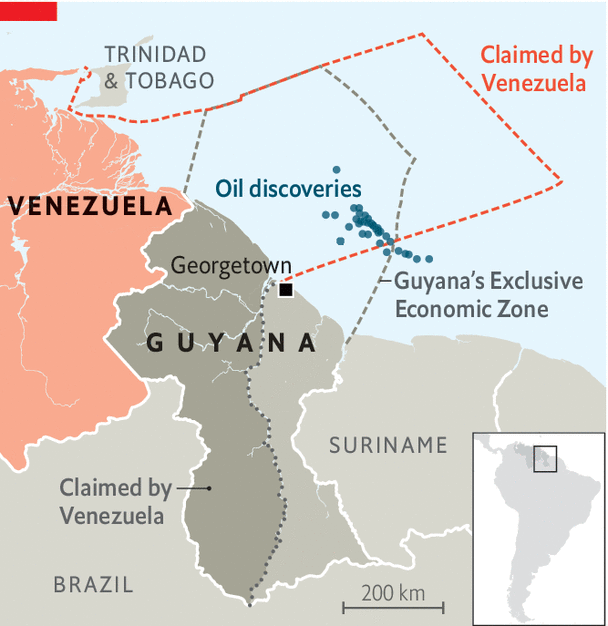
If we pause any of our developments, Maduro succeeds. He has no right in international law to tell the people of Guyana, a sovereign country, how to pursue its affairs.

And that is why we are forging ahead with our development in all 83,000 square miles…if we get paralyzed by this at the government level then we will fall prey to what he is trying to achieve.

Guyana’s Vice President, Dr. Bharrat Jagdeo

Read Full Post »

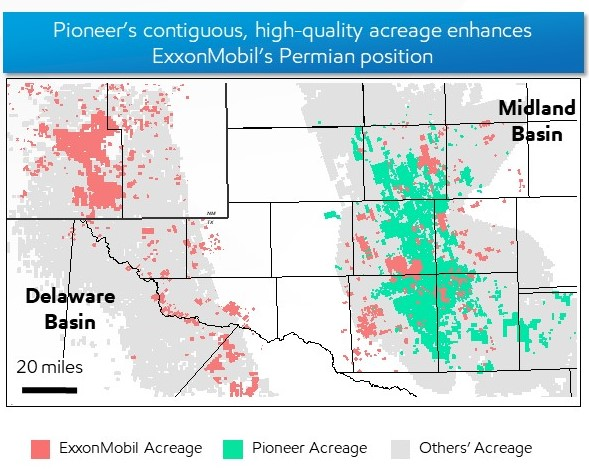
Impressive acquisition:

Hypocrisy?

  • Exxon is clearly intent on maximizing production in the Permian. This makes good business sense and is good for the US economy.
  • Contradictorily, Exxon intends to establish a CO2 disposal business (“carbon sequestration”) in the Gulf of Mexico. Is their goal to profit from emissions resulting from the consumption of the production that they are maximizing?
  • If Exxon believes the consumption of oil and gas is harmful to society, as suggested by their CO2 disposal plans, perhaps they should be curtailing their oil and gas production business rather than expanding it.
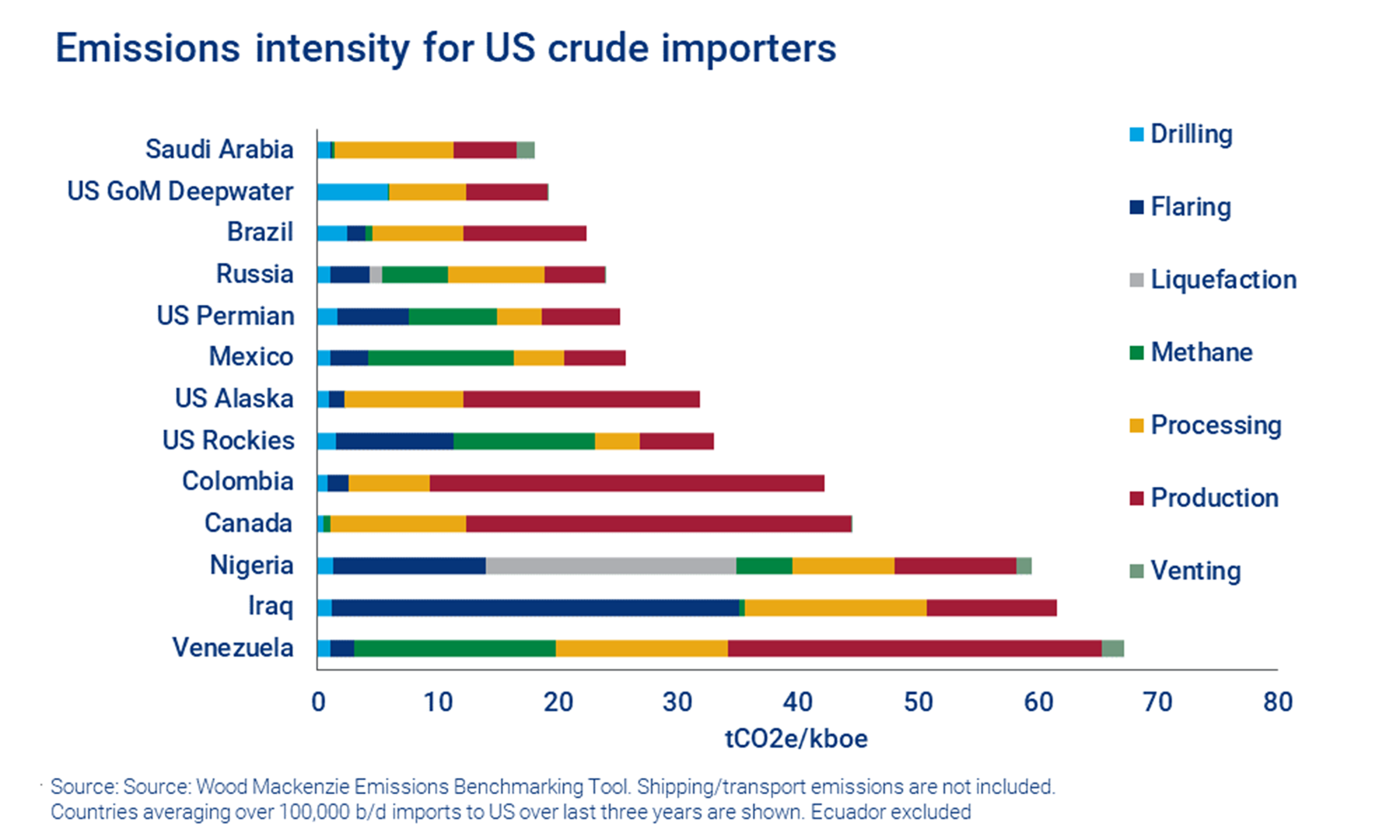
  • Deepwater Gulf of Mexico production, which Exxon has shunned, has much lower carbon intensity than Permian production, but Exxon’s sole GoM interest is CO2 disposal. Shouldn’t a company that is intent on reducing upstream GHG emissions be active in the leading offshore region in that regard, the region that is adjacent to their world headquarters?

Read Full Post »

ENERGYWIRE has reported that the Department of the Interior will publish the legislatively mandated carbon sequestration rule later this year. Given that even close followers of the OCS program were completely unaware of the enabling legislative provisions prior to their enactment, the proposed DOI rule will provide the first opportunity to formally comment.

Within the oil and gas industry and the environmental community, there are considerable differences of opinion about carbon sequestration in general, and more specifically, offshore sequestration. All interested parties are encouraged to submit comments on these important regulations.

Some background information on the sequestration legislation and subsequent actions:

Exxon and other companies intend to commercialize carbon sequestration, and Exxon projects an astounding $4 trillion CCS market by 2050. Such a market will of course be dependent on mandates and subsidies, and the costs will ultimately be borne by taxpayers and consumers.

Is it not a bit unsavory and hypocritical for hydrocarbon producers to capitalize on the capture and disposal of emissions associated with the consumption of their products? Perhaps companies that believe oil and gas production is harmful to society should exit the industry, rather than engage in enterprises that sustain it.

More:

Read Full Post »

OilNow, an informative and boldly named media outlet that covers the oil and gas sector in Guyana, reports that “the Guyana government expects crude oil exports this year to generate US$11.3326 billion in 2023, a 14% increase from the 2022 figure.

Of course, the 3 Stabroek Block partners who are responsible for this production – Exxon (45%), Hess (30%), and CNOOC (25%) – are also doing quite well. If you are wondering about this curious mix of companies – a US supermajor, a large US independent, and a state-owned Chinese mega-company – this OilNow post explains what happened.

Initially, Exxon and Shell were 50/50 partners in the Stabroek Block. Shell thought the chances for success were slim and opted out a year before the world class Liza discovery (ouch!). After Shell departed, Exxon sent “at least 35 letters” to prospective partners and only Hess and CNOOC responded favorably (actually, it was Nexen, not CNOOC that responded). The Liza discovery followed and the rest is history.

Will exploration offshore Jamaica and Barbados also prove successful? Stay tuned.

OilNow

Read Full Post »

As we approach the 4th of July, remember this:

In 1979 Gulf of Mexico oil production had declined to 263 million barrels and many believed that further declines were inevitable. 40 years later, a record 693 million barrels were produced.

Onshore, lateral drilling and hydraulic fracturing capabilities are continuing. As a result, Exxon and others are predicting projecting higher recovery factors in the Permian Basin. Per Exxon CEO Darren Woods: “We are beginning to see the signs of some very promising new technologies that will significantly improve recovery.”

Opportunity + Ingenuity ➡ Energy Independence + Prosperity

Read Full Post »

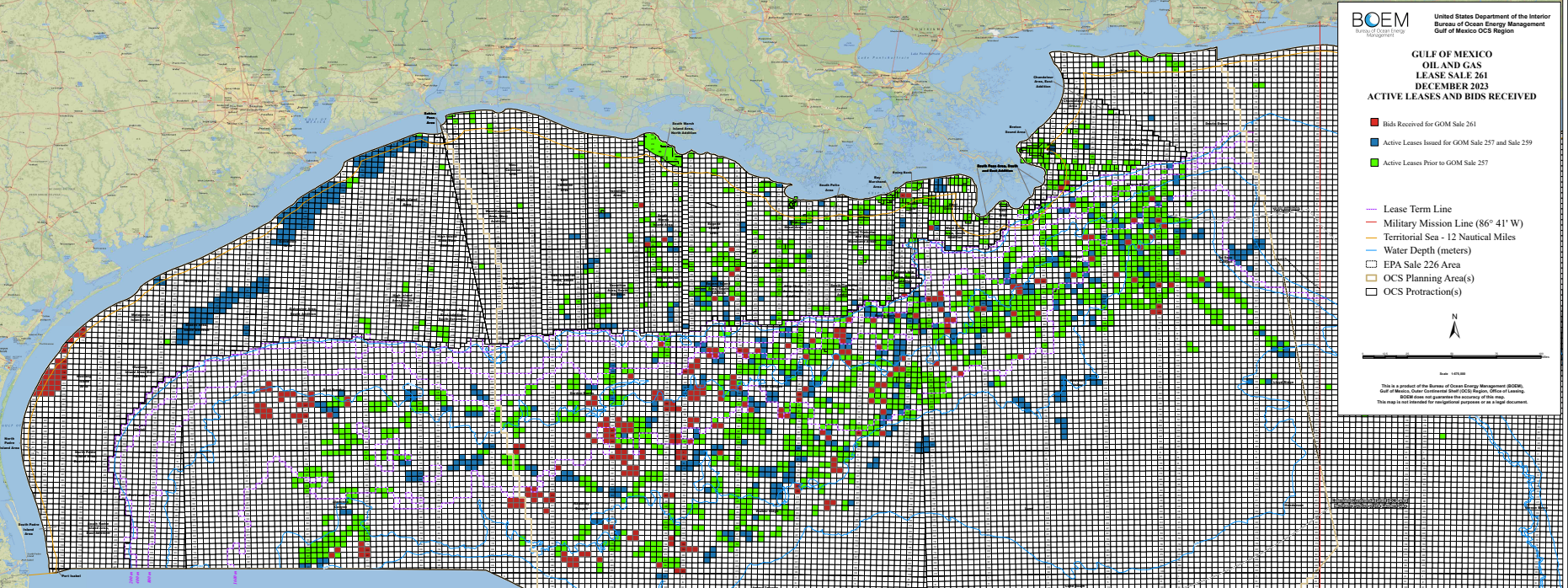
Last week, BOEM announced the acceptance of all 69 of Exxon’s Sale 259 carbon sequestration bids. This is despite these facts: (1) Exxon’s intentions were known, (2) there were no provisions for CCS bidding in the Notice of Sale, (3) no environmental review of CCS leasing was conducted, and (4) there are no procedures for evaluating CCS bids.

Absent some type of legislative maneuver, carbon sequestration is not authorized under these leases. If Exxon is just acquiring the leases for evaluation purposes in preparation for a possible CCS sale in the future, their lease acquisitions may be okay. If they are planning on retaining these leases for actual sequestration operations, that is not okay, at least not until a competitive process has been established for awarding or reclassifying such leases.

It’s also noteworthy that there was a second bidder for th blocks (in red above). Presumably that company, Focus Exploration, was interested in acquiring the tract for oil and gas exploration purposes. However, the Focus bid was a bit lower, so Exxon got the tract.

Read Full Post »

BOEM has accepted 76 of the Sale 259 bids to date including 18 of the 29 legitimate (non-CCS) bids for shelf leases.

Interestingly, none of Exxon’s 69 high bids for shelf leases have been accepted to date. Given that the Exxon bids were for tracts that are presumably considered “nonviable” from an oil and gas production standpoint, those bids should have been accepted by now were they deemed to be valid.

Perhaps BOEM, to their credit, is planning to reject the CCS bids as they may when an unusual bidding pattern has been identified. It is now quire clear (unlike in the immediate aftermath of Sale 257) that Exxon was seeking to acquire these leases for carbon sequestration purposes. That is not allowed given that both Sales 257 and 259 were oil and gas lease sales. As similarly noted for Sale 257:

  • Sale 259 was an oil and gas lease sale. The Notice of Sale said nothing about carbon sequestration and did not offer the opportunity to acquire leases for that purpose. Therefore, the public notice requirements for CCS leasing (30 CFR § 556.308) were not fulfilled.
  • Because there was no draft or final Notice of Sale for CCS leases, interested parties and the public did not have the opportunity to consider and comment on CCS leasing, tract exclusions, bidding parameters, and other factors.
  • 30 CFR § 556.308 requires publication of a lease form. No CCS lease form was posted or published for comment.
  • CCS operations were not considered in the environmental assessments conducted prior to the sale.
  • No evaluation criteria for CCS bids have been published.

Meanwhile, the decision on Green Canyon Block 777 will also be of interest, given that a higher Sale 257 bid for this block was rejected.

Finally, there was a second bid (red block below) from Focus Exploration for one of the blocks Exxon bid on (blue). Will that lower bid, which was presumably for oil and gas exploration purposes, be accepted if the Exxon bids are rejected?

Read Full Post »

There are a number of recent articles related to the Guyana Supreme Court ruling on Exxon’s financial assurance obligations. An Oil Now piece (quoted below) is the most informative. It seems that the Supreme Court decision is based on a provision of Exxon’s EPA permit and that EPA is siding with Exxon in this dispute.

The Guyana government and the Environmental Protection Agency (EPA) are set to appeal a recent Guyana Supreme Court ruling that determined that the EPA and ExxonMobil affiliate, Esso Exploration and Production Guyana Limited (EEPGL), breached the terms of the Liza 1 environmental permit. The permit was revised and granted to EEPGL last year for operations in the Stabroek Block, offshore Guyana.

Justice Sandil Kissoon granted several declarations, including that the EPA failed to enforce compliance by EEPGL of its Financial Assurance obligations to provide an unlimited Parent Company Guarantee Agreement and/or Affiliate Company Guarantee Agreement to indemnify and keep indemnified the EPA and the Government of Guyana against all environmental obligations of the Permit Holder (EEPGL) and Co-Venturers (Hess and CNOOC) within the Stabroek Block.

While acknowledging the court’s ruling, the Government of Guyana, as a major stakeholder, maintained in a statement that the Environmental Permit imposes no obligation on the Permit Holder to provide an unlimited Parent Company Guarantee Agreement and/or Affiliate Company Guarantee Agreement. The government believes that Justice Kissoon erred in his findings and that the ruling could have significant economic and other impacts on the public interest and national development.

OIlNow

Unlimited liability is a rather daunting and open-ended obligation that would trouble permittees in any industry.

In the US, the liability for oil spill cleanup costs is unlimited for offshore facilities, but there is a liability cap for the resulting damages. That cap is currently $167.8 million after a recent inflation adjustment. BP, of course, paid far more than that for damages associated with the Macondo blowout. BP’s costs, which amounted to an astounding $61.6 billion, were both voluntary and compulsory as a result of agreements and settlements. Keep in mind that the damage liability limit was only $75 million at the time. One can imagine what would have happened if a company with less financial strength or more inclination to fight had been responsible for the spill.

Read Full Post »

In addition to the 94 nearshore Texas leases Exxon acquired in Sale 257, the company was the sole Sale 259 bidder for all but one of 69 nearshore Texas blocks. The exception was High Island 177 (in red above). So who gets that lease?

  • the company (Exxon) that was the sole participant in a de facto CCS sale (bid of $182,750)
  • the company (Focus Exploration) that was participating in the announced oil and gas lease sale (bid of $145,177)

If Exxon is just acquiring these leases for evaluation purposes in preparation for a possible CCS sale in the future, their lease acquisitions may be okay. If they are planning on retaining these leases for actual sequestration operations, that is not okay, at least not until a competitive process has been established for awarding or reclassifying such leases. To date, no lease terms or bid evaluation procedures have been proposed for carbon sequestration leases; nor has an environmental review been conducted pursuant to NEPA.

Questions about Gulf of Mexico carbon sequestration

Read Full Post »

Read Full Post »

« Newer Posts - Older Posts »