Feeds:
Posts
Comments

Posts Tagged ‘Deepwater’

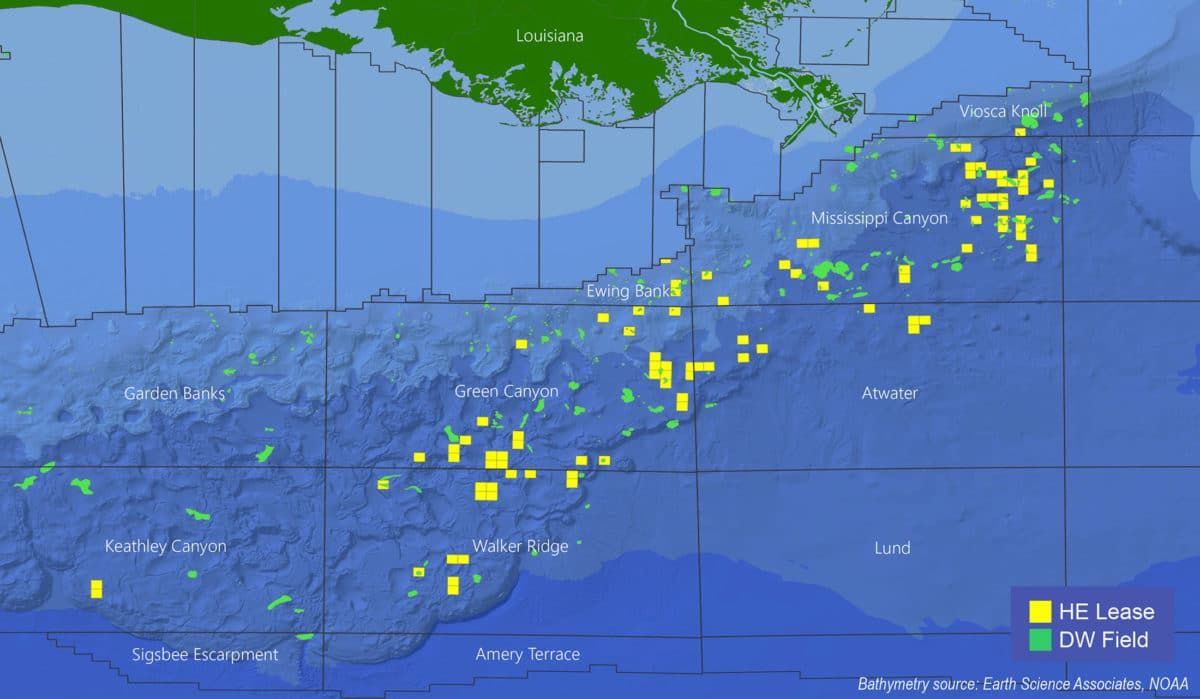
Among the top 10 companies at Sale 261 (based on the number of high bids) are household names Shell, Chevron/Hess, Oxy/Anadarko, and bp, and international majors Equinor (Norway) and Woodside (Australia).

Lesser known companies have also become important deepwater players including two, Red Willow (owned by the Southern Ute tribe) and Houston Energy, that cracked the top 10 bidders list. Other emerging deepwater companies, Ridgewood, CSL Expl, Westlawn, Alta Mar, and CL&F were also active sale 261 participants. All of these companies bid in partnership with other independents.

Company257259261
Red Willow51325
Houston Energy5918
Ridgewood028
CSL Expl113
Westlawn035
Alta Mar009
CL&F003
Number of bids by emerging deepwater players at Sales 257, 259, and 261.
Houston Energy’s GoM portfolio

Read Full Post »

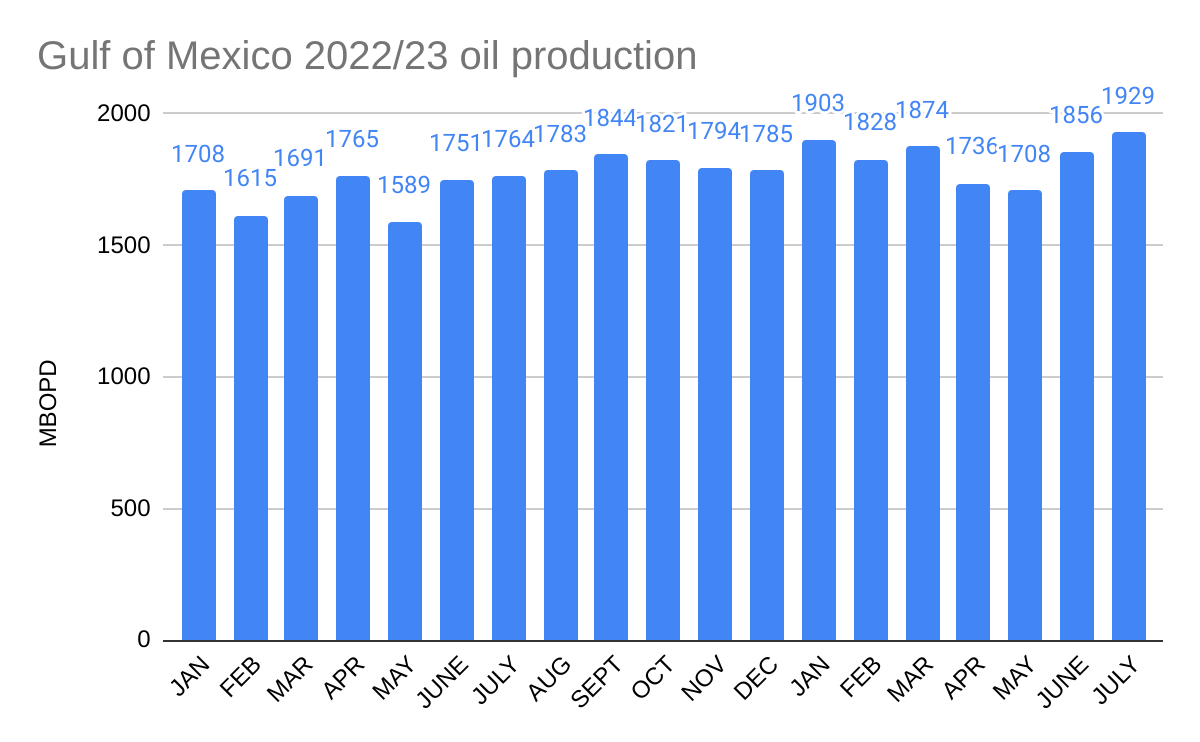
This is presumably due to the new production at Vito and Argos. Will we see 2 million bopd again? Perhaps later this year or next, but production increases are unlikely beyond that given the current state of the offshore leasing program. You can’t efficiently develop and supplement new discoveries without consistent, predictable leasing.

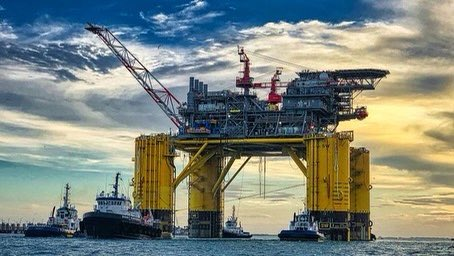
Shell Vito under tow to the Mississippi Canyon area of the Gulf of Mexico.

Read Full Post »

Sept 22 (Reuters) – Talos Energy Inc (TALO.N) said on Thursday it will buy EnVen Energy Corp, a private producer in the deepwater U.S. Gulf of Mexico, in a $1.1 billion deal including debt.

As the data below demonstrate, this is a significant merger from a regional perspective. In 2021, the combined company would have been the sixth largest GoM producer of both oil and gas. The two companies are operating 105 platforms, and their 8 deepwater (>1000′) platforms are 14% of the GoM total. Their compliance records, while not at Honor Roll levels, are better than the GoM average based on INCs/inspection. Some major decommissioning projects loom (see the second table below), and the extent to which the merged company is financially prepared for these obligations is unknown. Particularly noteworthy is the Cognac platform, which was the world’s first platform installed in >1000′ of water.

EnVenTalos
2021 Oil (MMbbls)9.617.5
GoM oil rank137
2022 Gas (Bcf)12.634.8
GoM gas rank169
2021/2022 well starts88
platforms: total1491
platforms >1000′44
BSEE inspections37176
2022 INCs (W, CSI, FSI)12/4/138/23/10
INCs/inspection0.460.40
INC=incident of noncompliance; W=warning; CSI=component shut-in; FSI=facility shut-in

Decommissioning obligations of note:

Platformownertypewater
depth
(ft)
installed
Amberjack Talosfixed11001991
VK 989Talosfixed12901994
Ram PowellTalosTLP32161997
GC 18Talosfixed7501986
CognacEnVenfixed10231978
LobsterEnVenfixed7751994
BrutusEnVenTLP29002001
PrinceEnVenTLP15002001
Cognac platform

Read Full Post »

Foremost energy experts like Daniel Yergin understand that oil and gas will be critical to our economy and security for decades, and that offshore production is an important component of our energy supply chain. Unfortunately, our massive outer continental shelf has, from an oil and gas standpoint, been effectively reduced to the central and western GoM.

Opportunities in the GoM are being seriously constrained by the extended pause in leasing. A lease sale has not been held for 615 days, the longest US offshore leasing gap since the 1950’s.

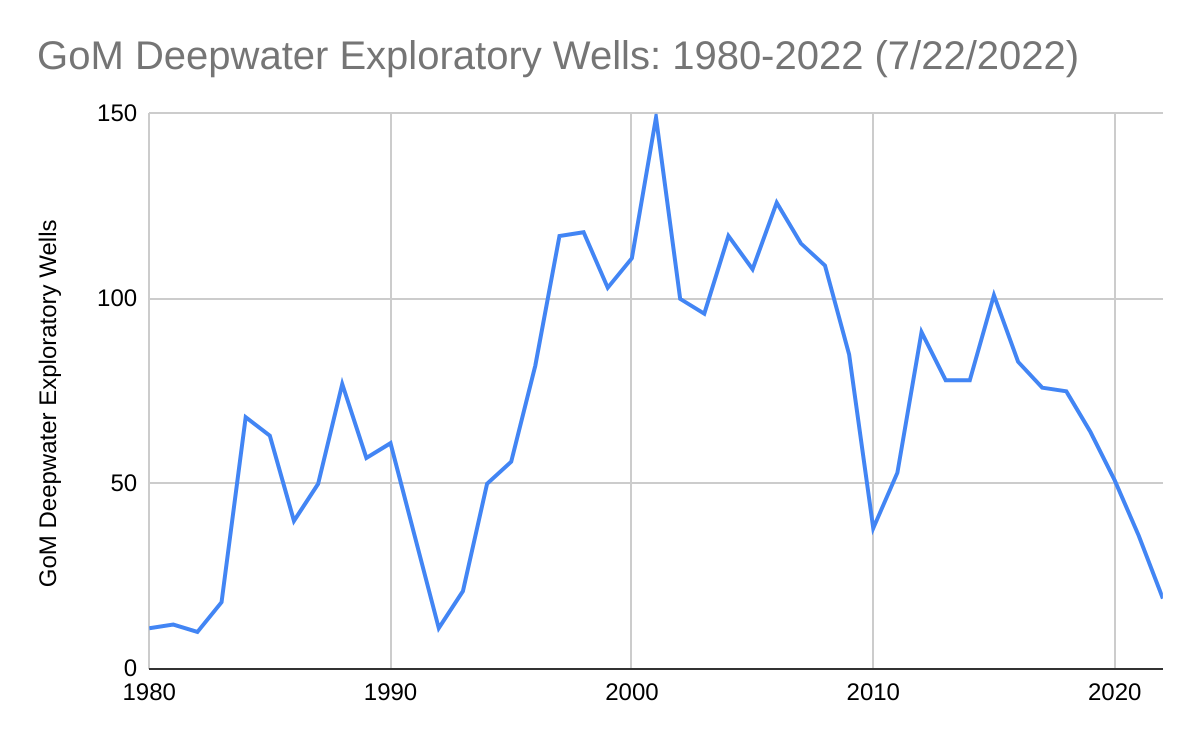
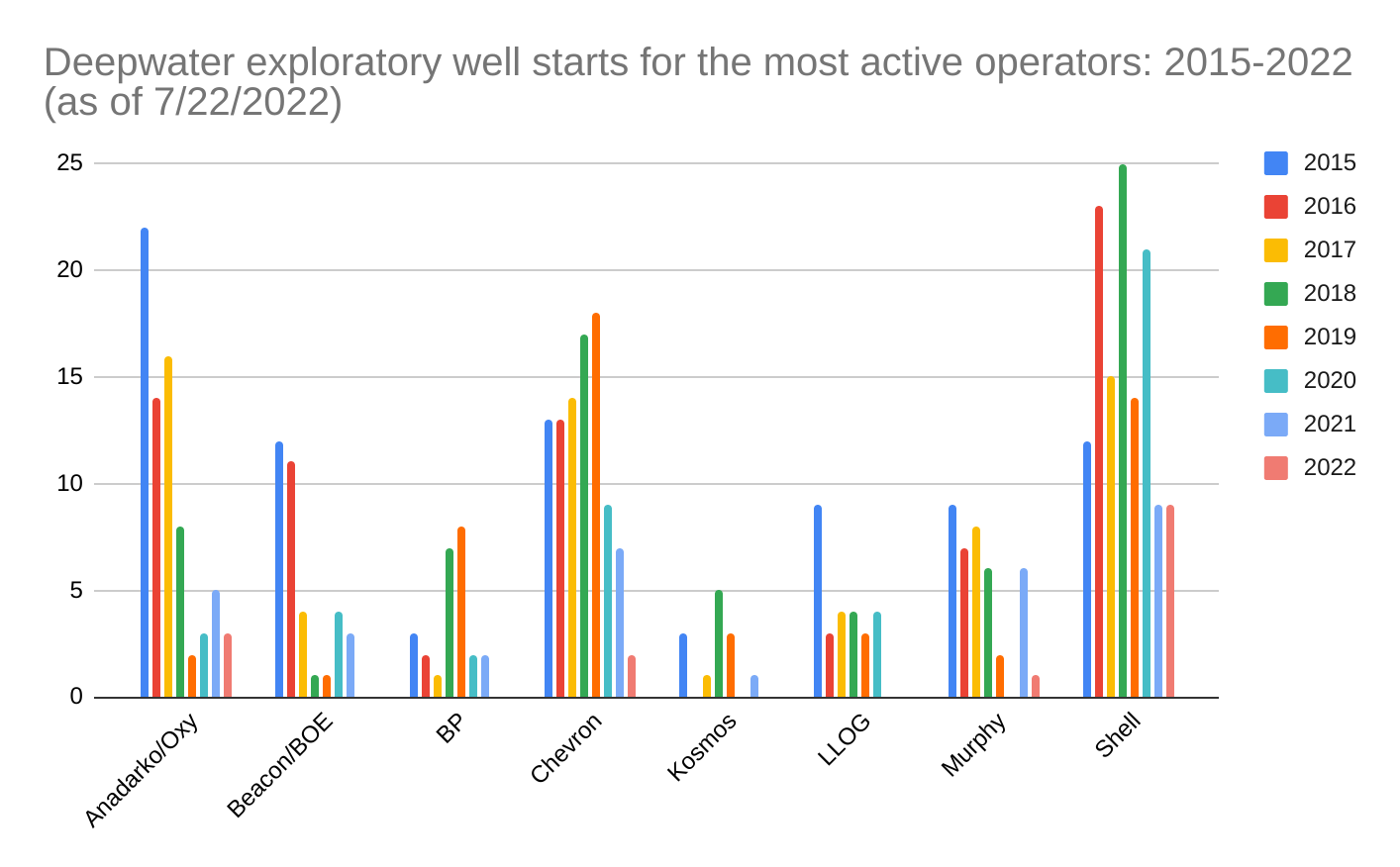
Reserve replacement and sustained production are dependent on exploration. The charts below illustrate the decline in GoM exploratory drilling and the reduced activity by some of the more important operating companies.

Per BSEE data, the number of exploratory well starts averaged only 3/month for the last 18 months (chart 2). This level of activity is the lowest since the early days of deepwater operations (chart 1). There was even more drilling during the post-Macondo moratorium (2010-2011).

ConocoPhillips and Exxon have not drilled a GoM exploratory well since 2016 and 2018 respectively. Activity by other operators has also declined significantly (chart 3). BP has not spudded an exploratory well since Sept. 2021.

No one should be surprised by the sharp decline in reserves and the dearth of recent field discoveries. Hopefully, government and industry will engage in a more thorough discussion of these trends and measures that might improve the intermediate and longer term production outlook.

chart 1
chart 2
chart 3

Read Full Post »

You be the judge.

Read Full Post »

from SeabedRig.com

Advances in drilling technology tend to be evolutionary, not revolutionary. Floating rigs, dynamic positioning, top-drive systems, measurement-while-drilling, automated rig floors, and other important advances were logical next steps, not radical makeovers.

Many of us have long been fascinated by the possibility of locating drilling equipment on the seafloor, particularly for deepwater wells. Why operate from a massive floating vessel that requires a sophisticated stationkeeping system and a long riser to connect to the wellhead? Why link surface personnel to seafloor risks? Why increase the complexity of balancing well pressures (without fracturing formations) by adding thousands of feet to the mud column? Why heave and roll on the surface when you can operate from the seafloor?

It’s not that easy, of course, and there are many questions and issues. While fully automated drilling systems are no longer a reach, what about reliability and repairs?  How will casing be set and cemented? How will downhole measurements be transmitted to the control center? Cuttings samples? Coring? Well testing? The list of challenges is daunting.

At least one company, Seabed Rig, is committed to developing and demonstrating seafloor drilling technology. Earlier this month, Seabed Rig reached agreement with NASA to create the first autonomous drilling rig. While a lot of work remains, Seabed Rig and other pioneering companies are applauded for their innovative thinking and willingness to challenge conventional practices and wisdom.

Read Full Post »
From Platts Oilgram News:

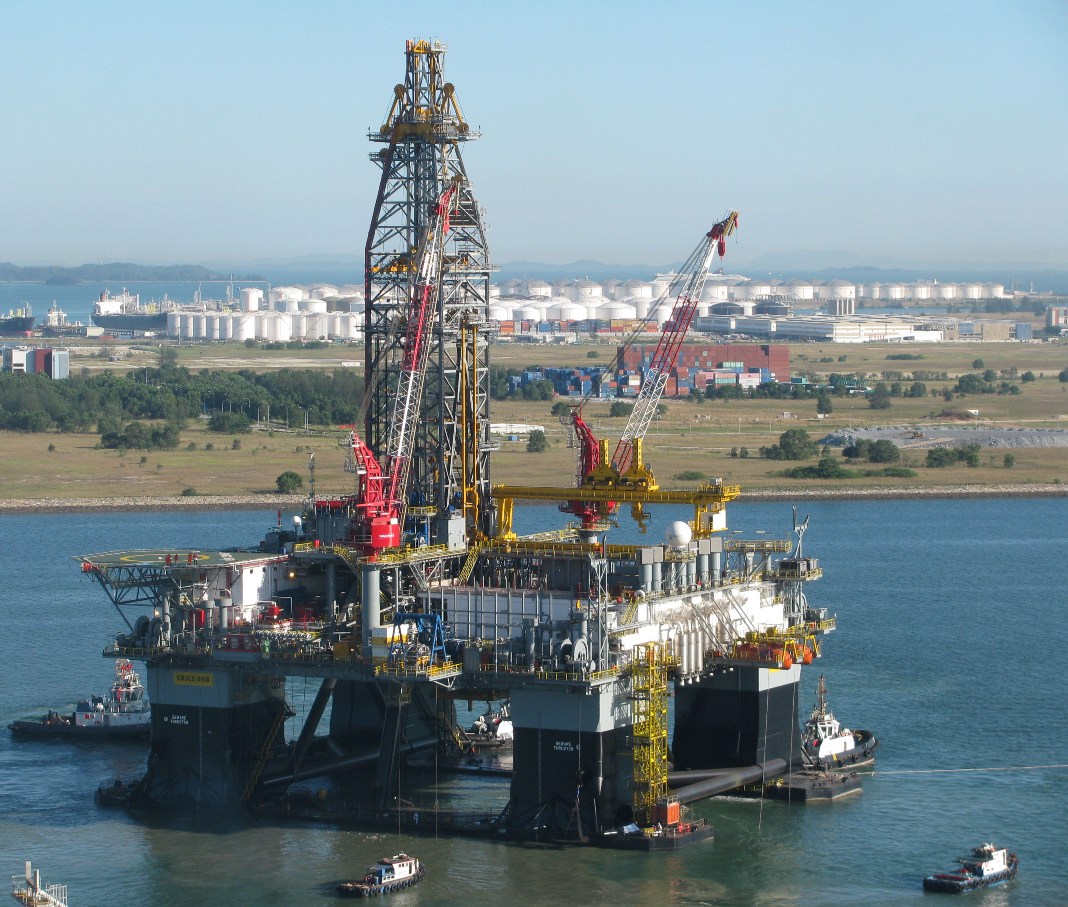
The well had previously been drilled to a depth of 13,585 feet at the time of the moratorium, Noble said. Drilling is expected to resume in late March, targeting total drilling depth of about 19,000 feet, Noble said. Results are expected by the end of May. Noble said it will use the Ensco 8501 rig for the project.

Ensco 8501

Read Full Post »

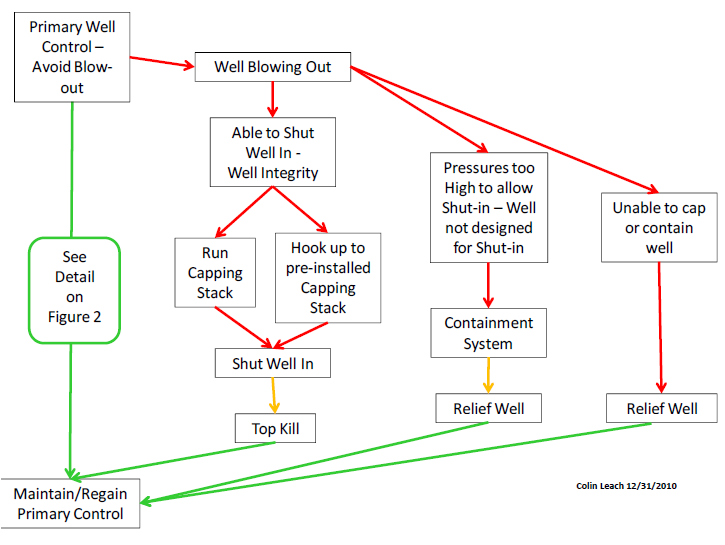
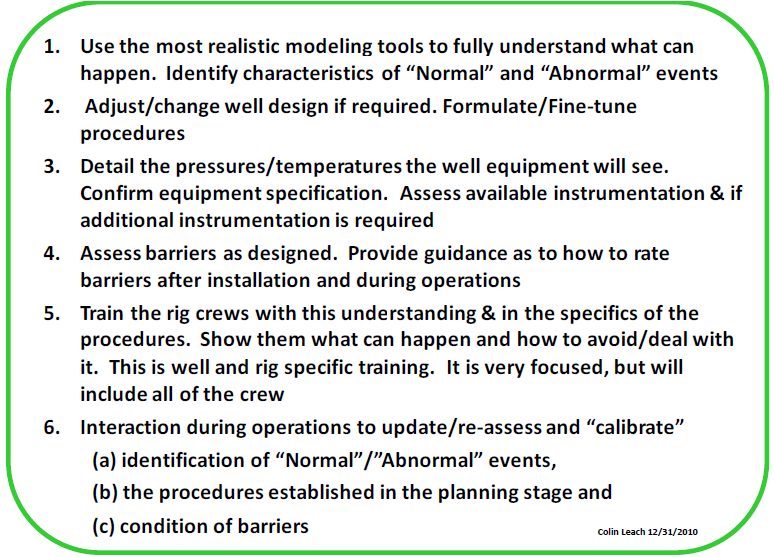
Colin Leach has provided a nice overview of the loss of well control scenarios for a deepwater well (Figure 1), and a concise, but comprehensive, summary of the critical elements of a well control program (Figure 2).   Click on either figure to enlarge.

We appreciate Colin’s continued leadership and initiative on well control issues.

Figure 1: Well Control Activities in Deep Water

Figure 2: Activities Focused on Maintaining Primary Well Control

Read Full Post »

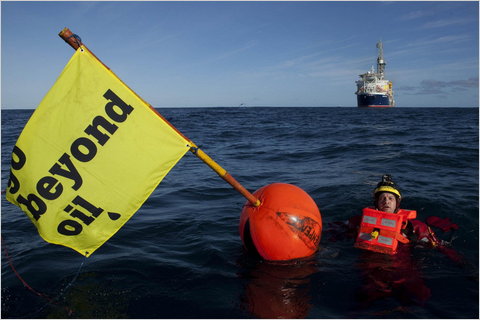
Greenpeace Photo

Despite protests, the UK has approved Chevron’s exploratory well in 1640′ of water west of the Shetland Islands.

It was a choice between producing oil and gas here in U.K. waters, where we have one of the most robust safety and regulatory regimes in the world, with all the economic benefits that will bring, or paying to import oil and gas from elsewhere. UK Department of Energy and Climate Change statement

It’s pretty hard to argue with that logic.

Read Full Post »

As previously posted (July 27, 2010), deep water had little to do with the well integrity problems and other contributing factors leading to the Macondo blowout. The Bly (BP) report further confirms this position.

Of the eight key findings in the Bly report (listed below), only number 4 could be considered to be more of a deepwater issue.  The BOP failures may also have been influenced by deepwater factors.  However, as previously noted, surface BOPs have a much higher failure rate than subsea stacks.

While the Montara blowout was in relatively shallow water, slight variations of findings 1 through 4 were the primary causes of that accident.

BP findings:

  1. The annulus cement barrier did not isolate the hydrocarbons.
  2. The shoe track barriers did not isolate the hydrocarbons.
  3. The negative-pressure test was accepted although well integrity had not been established.
  4. Influx was not recognized until hydrocarbons were in the riser.
  5. Well control response actions failed to regain control of the well.
  6. Diversion to the mud gas separator resulted in gas venting onto the rig.
  7. The fire and gas system did not prevent hydrocarbon ignition.
  8. The BOP emergency mode did not seal the well.

Read Full Post »