Feeds:
Posts
Comments

Posts Tagged ‘carbon disposal’

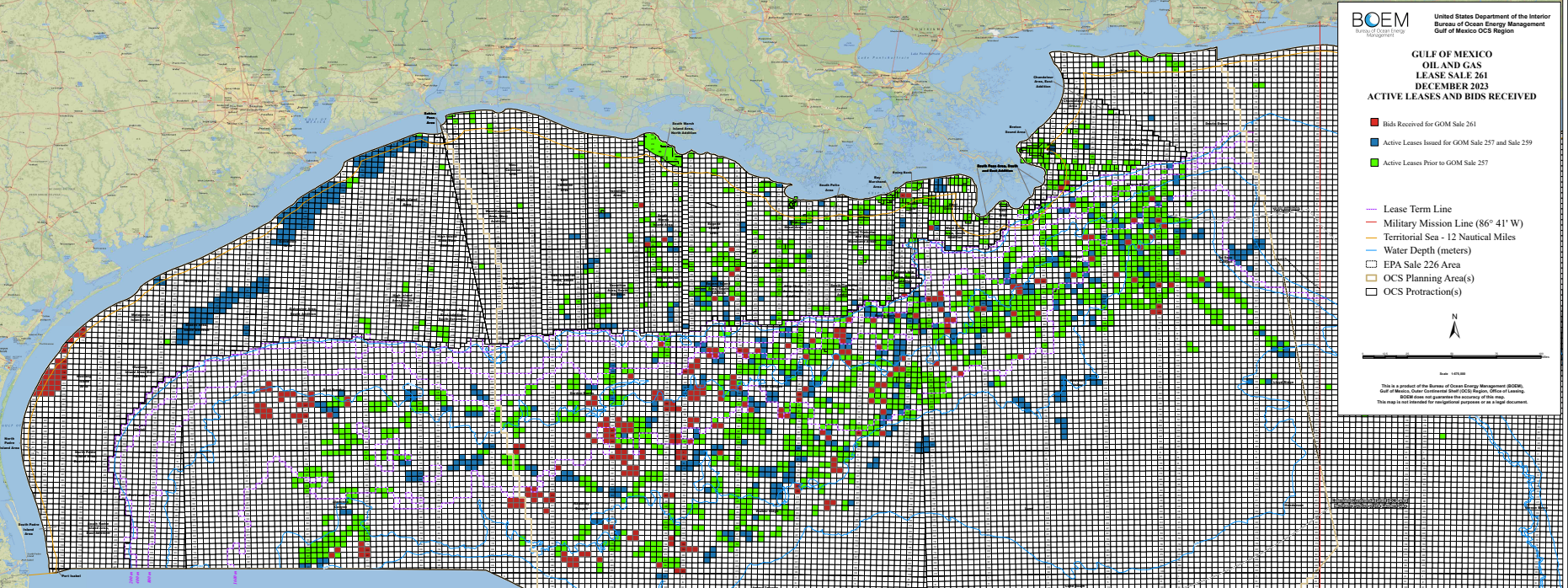
The above map shows the offshore carbon disposal leases acquired by Repsol from the Texas General Land Office (GLO) and the adjacent Federal tracts Repsol bid on at OCS Lease Sale 261. There should be absolutely no confusion regarding Repsol intentions at Sale 261. They plan to develop a large CO2 disposal hub offshore Corpus Christi and bid improperly at an OCS oil and gas lease sale to support that objective.

Perhaps blinded by visions of “a stream of U.S. government grants, followed by generous tax credits for every ton of carbon stored,” Repsol (Sale 261) and Exxon (Sales 257 and 259) have made a mockery of the OCS leasing process and the regulations that guide it. The Repsol bids should be promptly rejected.

So what about the Exxon nearshore Texas leases that have already been issued? Given that Exxon misled the Federal government and improperly acquired carbon disposal leases at an oil and gas lease sale, those bids should be cancelled pursuant to 30 CFR § 556.1102:

(c) BOEM may cancel your lease if it determines that the lease was obtained by fraud or misrepresentation. You will have notice and an opportunity to be heard before BOEM cancels your lease.

While Exxon’s oil production increases in the Permian Basin and offshore Guyana are impressive, is it not hypocritical for Exxon and other major producers to capitalize on the capture and disposal of emissions associated with the consumption of their products? Is it not just a bit unsavory for oil companies to cash in on (and virtue signal about) carbon collection and disposal at the public’s expense? Perhaps companies that believe oil and gas production is harmful to society should be reducing production rather than engaging in enterprises intended to sustain it.

Read Full Post »

At Sale 261, Repsol was the sole bidder for 36 nearshore Texas tracts in the Mustang Island and Matagorda Island areas (red blocks at the western end of the map above). Exxon acquired 163 nearshore Texas tracts (blue in map above) at Sales 257 and 259.

Why Repsol’s carbon disposal bids should be rejected (as Exxon’s Sale 257 and 259 bids should have been):

  • Sale 261 was an oil and gas lease sale. The Notice of Sale said nothing about carbon sequestration and did not offer the opportunity to acquire leases for that purpose. Therefore, the public notice requirements in 30 CFR § 556.308 were not fulfilled.
  • Because there was no draft or final Notice of Sale for sequestration (carbon disposal) leasing, interested parties did not have the opportunity to comment on tract exclusions, stipulations, bidding parameters, rental fees, royalties, and other factors pertinent to any OCS lease sale.
  • 30 CFR § 556.308 requires publication of a lease form. No carbon sequestration lease form has been posted or published for comment.
  • Carbon sequestration operations were not considered in the environmental assessments conducted prior to this or any other OCS lease sale.
  • No evaluation criteria for carbon sequestration bids have been published.

Hopefully, the carbon sequestration regulations that are under development will preclude conversion of leases acquired at Sales 257, 259, and 261. At a minimum, these regulations should require a competitive process for converting any oil and gas leases.

The difference between the conversion of the Exxon and Repsol leases and the conversion of other existing oil and gas leases is that the Exxon and Repsol leases were acquired solely for the purpose of carbon disposal with no intention of oil and gas exploration and production. Also, they can conduct geophysical surveys on their extensive (arguably monopolistic) nearshore Texas lease holdings, which gives them an unfair competitive advantage should a carbon sequestration lease sale be held.

To their credit, Repsol bid legitimately on 9 oil and gas leases at Sale 261. Exxon did not participate in Sale 261, and their only participation in Sales 257 and 259 was for carbon disposal purposes. Prior to Sale 257, the company had not acquired an OCS lease since 2008.

Read Full Post »

« Newer Posts