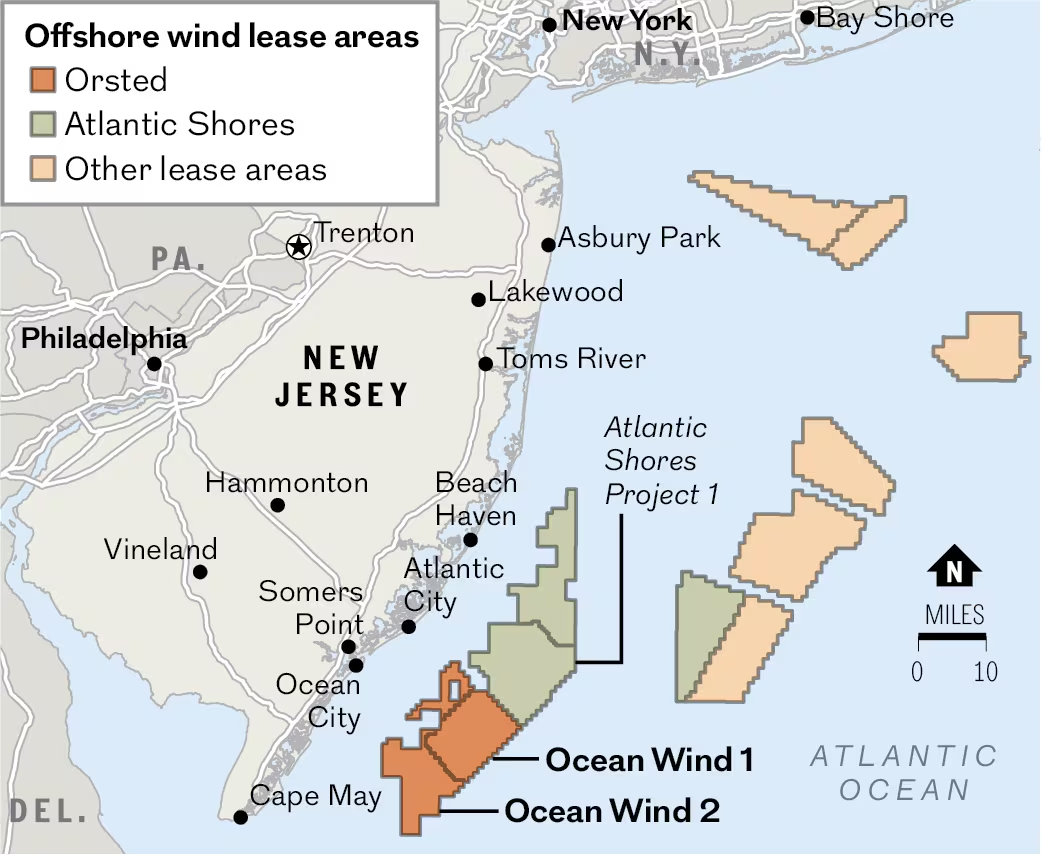
10/31/2023: Citing economic factors, Orsted announces they “will cease development of the Ocean Wind 1 and Ocean Wind 2 projects.” (This should have resulted in termination of the leases.)
1/19/2024: Orsted requests a 2 year “suspension of operations” to extend the leases they had ceased developing. (Presumably, this was a hedge with hopes of marketing the leases or getting better terms.)
2/29/2024: True to form, BOEM approves the questionable 2 year suspension request. The approval letter was dated one day before the leases’ 8th anniversary when they would have presumably expired. (This is unconfirmed because the lease document and BOEM’s wind regulations lack clarity regarding lease expiration.)
BOEM’s approval letter (attached) curiously asserts that “suspension of the operations term is necessary for the Lessee’s full enjoyment of the lease in this circumstance to ensure sufficient time for project operations in support of the Project’s economic viability.” (Interesting wording that expresses the accommodative and promotional philosophy of the Federal wind program.)
8/14/2024: Cape May County comments that they are likely to amend their Federal Court filings “since the actions of the NJBPU would appear to have nullified Orsted’s federal permits.”
8/27/2024: Despite the fact that Orsted has ceased development and New Jersey has vacated its approvals, the Federal leases are still active.
Good luck keeping an oil and gas lease if you cease development and request a suspension of operations. BSEE will rightfully deny your request.
The offshore safety regulator (BSEE) has a very capable technical staff and should produce an informed report on the Vineyard Wind blade failure. The concern is with the internal review process that has seriously delayed the publication of accident investigation reports and safety alerts.
Presumably, DNV, the Vineyard Wind CVA, will provide input into the BSEE investigation. Perhaps the effectiveness of the CVA process and quality control procedures should be separately considered.
Will Equinor, a major oil and gas producer, Dogger Bank partner, and offshore wind advocate, be investigating the Dogger Bank failures?
A comprehensive International data base on turbine incidents and performance is needed.
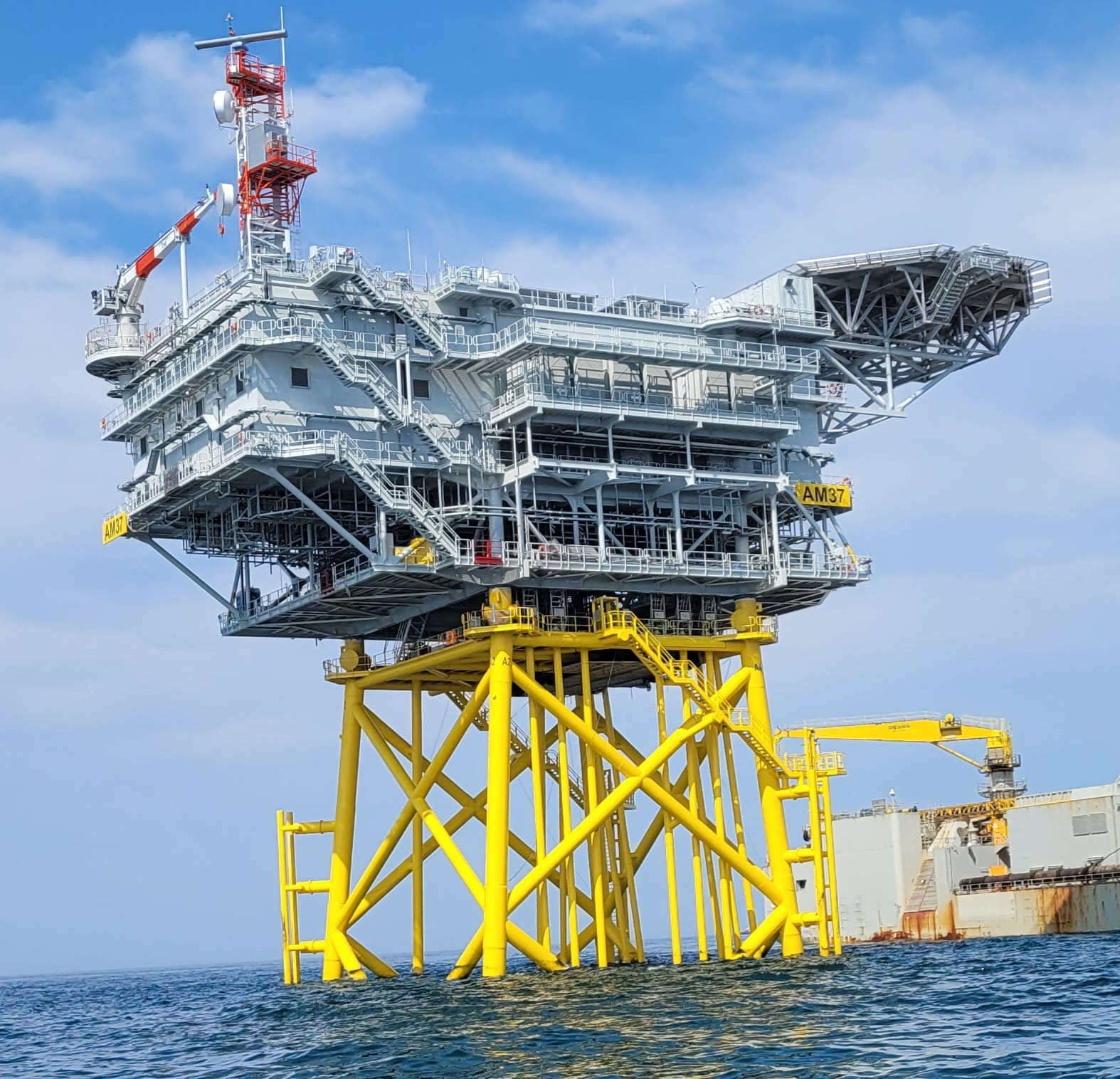
As previously noted, offshore substations are large structures. A closeup of the Vineyard Wind 1 substation is pasted below.
Additionally, ultimate authority over the wind farm remained unclear, with various federal agencies claiming responsibility over different portions of the permitting, licensing, review, and operation of the wind farm.
“Sometimes I have a hard time figuring out, who do we talk to? Who is going to keep us safe? Who is the responsible boss here? Who is going to make the hard decision?” Select Board member Matt Fee asked.
Separate legislation granting redundant or overlapping authority to different departments or agencies.
Legislation that is non-specific, assigning broad authority to the President or cabinet level level officials, leaving it up to the bureaus to resolve.
Bi- and multi-lateral agreements like MOA’s and MOU’s, which are intended to “coordinate the redundancy,” often cause more confusion than they prevent, creating gaps in the process.
“Fixing” problems by adding redundancy.
The Dept. of the Interior’s division of responsibilities for offshore wind, which was finalized in January 2023, inexplicably assigns review and approval of Construction and Operations Plans to the Bureau of Ocean Energy Management (i.e. the land manager, lessor, and wind energy promoter) rather than the Bureau of Safety and Environmental Enforcement (i.e. the principal regulator of the activities described in those plans).
More significantly, the offshore wind responsibilities of the 2 bureaus are so intertwined (as is also the case for offshore oil and gas), that attempts to separate the functions have, at a minimum, created inefficiencies and increased regulatory and operational costs.
FTR, the idea that having the BOEM and BSEE functions combined in a single bureau, as was the case with the predecessor bureau (MMS), had anything to do with the Macondo blowout is a complete fallacy. Regarding the accusations that were made toward MMS, the Chief Counsel for the national commission that investigated the tragic incident found no evidence that ethical lapses on the part of MMS employees played any role in causing the blowout.
There were important regulatory changes made after the Macondo blowout. These included capping stack requirements, mandatory safety management systems, and updated rules and standards for cementing/zonal isolation and blowout preventer systems. None of these improvements were precipitated by or dependent on the division of MMS into two bureaus.
Contrary to the regulations, Vineyard Wind was authorized to begin the fabrication of facilities beforeBOEM “received and offered no objections to the their Facility Design Report (FDR) and Fabrication and Installation Report (FIR).” The approval letter is attached, and excerpts (emphasis added) are pasted below. [Note: The requirement that was then at §585.700(b) is found at §585.632 in the current regulations.]
“Vineyard Wind requests a regulatory departure from §585.700(b) requiring that fabrication of approved facilities not begin until BOEM provides notification that it has received and has no objections to the submitted Facility Design Report (FDR) and Fabrication and Installation Report (FIR). Vineyard Wind proposes to fabricate, but not install the following project elements: 1) Monopile foundations; 2) Electrical service platform; 3) Export cable; 4) Inter-array cables; and 5) Wind turbine generator facilities.
….allowing these fabrication activities to take place earlier in time would allow Vineyard Wind to adhere to its construction schedule, maintain its qualification for the Federal Investment Tax Credit, and meet its contractual obligations under the Power Purchase Agreements with Massachusetts distribution companies.
30 cfr 585.103 requires that a departure provide safety and environmental protection equal to or greater than the provision in the regulations that is waived. BOEM’s letter fails to explain how allowing fabrication to begin before fundamental design and fabrication reports are submitted and reviewed meets this test.
Perhaps even more troubling is BOEM’s response to subsequent requests by other companies to waive the FDR and FIR requirement (example). In these responses, BOEM asserts that their “current interpretation” is that no departure is needed because “the regulation prohibits only fabrication and installation activities on the Outer Continental Shelf (OCS) itself.” How does that make sense given the important activities, including the fabrication of turbine blades and other turbine components, that take place onshore?
In their letters approving the Vineyard Wind and other departures, BOEM implies that their review of these reports is unnecessary because “the design and fabrication of these components would occur under the supervision of the approved CVA” (Certified Verification Agent). That assertion misconstrues the role of the CVA. These agents, nominated and funded by the operator, provide third party oversight that is complementary to, not a substitute for, BOEM/BSEE project reviews.
According to this memo, DNV was the CVA for Vineyard Wind. Their insights on the turbine blade failure will presumably be included in BSEE’s investigation report.
“The order comes as the bureau continues its oversight and investigation into the July 13, 2024, turbine generator blade failure. The order continues to prohibit Vineyard Wind 1 from generating electricity from any of the facilities or building any additional wind turbine generator towers, nacelles, or blades. This order also requires Vineyard Wind 1 to submit to BSEE an analysis of the risk to personnel and mitigation measures developed prior to personnel boarding any facility. Vineyard Wind 1 is not restricted from performing other activities besides those specifically directed for suspension or additional analysis. For example, Vineyard Wind 1 is still permitted to install inter-array cables and conduct surveys outside of the damaged turbine’s safety exclusion zone.”
BSEE also advises that they are conducting their own investigation, and promises to release the findings to the public.
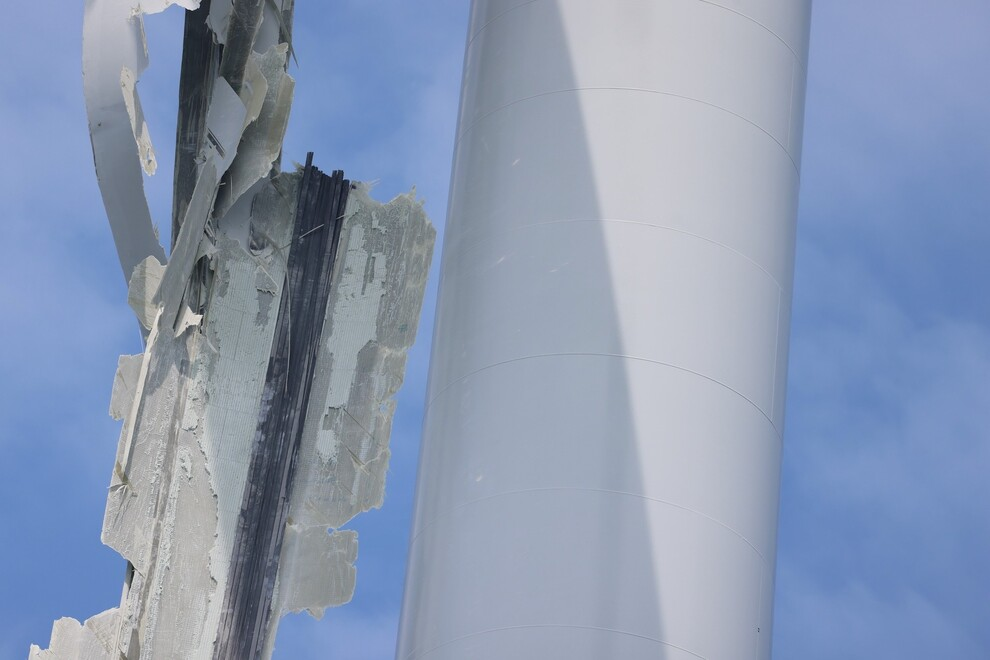
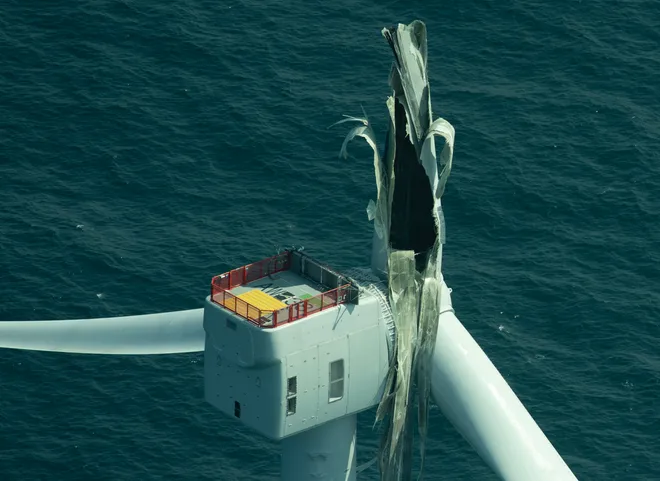
The Vineyard Wind turbine incident, which littered Nantucket beaches, has also tarnished the US offshore wind program. BSEE has prudently halted Vineyard Wind operations and construction pending an investigation into the blade failure.
Offshore wind development is structure rich, so public confidence in the design of turbines and support platforms is critical. BOEM lists 37 active wind leases on the US OCS. Most of these leases have not yet reached the construction phase. A hold on the approval of any Construction and Operations Plans would seem to be appropriate pending completion of the Vineyard Wind investigations.
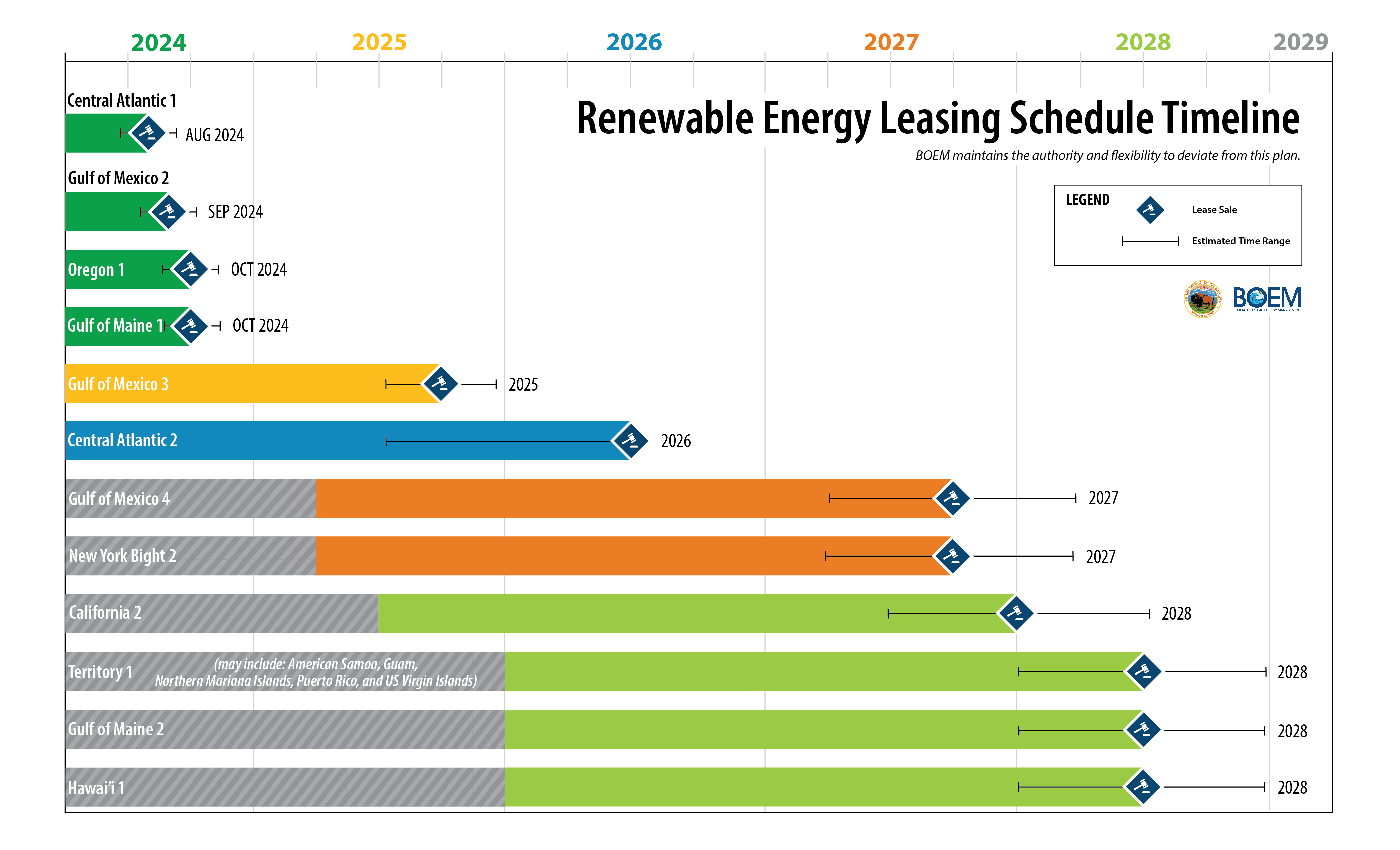
Per the leasing schedule below, BOEM intends to hold 4 wind sales during the remainder of 2024, all within a 3 month period. Only 1 sale is scheduled for each of the following 2 years. Deferring the 2024 sales until the investigations are complete would assist potential lessees by ensuring that the issues of concern were fully understood.
Unfortunately, BOEM’s failure to conduct a 2024 oil and gas lease sale has boxed in the wind program. The Inflation Reduction Act prohibits BOEM from issuing wind leases unless an oil and gas sale has been held within the previous year. Lease Sale 261 was held on 12/20/23 meaning that no wind leases may be issued after 12/20/24. BOEM has compressed the wind leasing schedule, presumably to beat the legislative deadline. It would have been better for both the oil and gas and the wind programs if at least one oil and gas sale had been held in 2024 as has been customary since the 1950s.
Nantucket Current photo: Vineyard Wind turbine AW38 with a damaged blade that has caused thousands of pieces of debris to wash ashore on Nantucket since Tuesday.
“This morning, a significant part of the remaining GE Vernova blade detached from the turbine. Maritime crews were onsite overnight preparing to respond to this development, though current weather conditions create a difficult working environment.”
“We are staying apprised of GE Vernova’s efforts to manage the situation, including the removal and recovery of the remaining blade attached to the turbine.”
Staying apprised? As operator, Vineyard Wind is fully responsible. This is their situation to manage.
BSEE has ordered Vineyard Wind to suspend power production and wind turbine generator construction.
Kudos to BSEE for their decisive and timely action. They need to better understand what happened before allowing operations and construction to continue.
Imagine the pressure on the regulator if the project was providing a significant portion of the region’s electricity.
BSEE’s comment that there has been “no harm to any marine resources or mammals from the incident” is premature given the extensive marine debris and the associated risks to mammals.
What about the CVA?
The regulations at 30 CFR § 285.707-712 assign important responsibilities to Certified Verification Agents (CVAs), independent third parties with established technical expertise. These responsibilities include detailed reviews of the design, fabrication, and installation plans.
Oddly, the CVA’s “Statement of Qualifications” and “Scope of Work and Verification Plan” have been redacted in their entirety from Vineyard Wind’s Construction and Operations Plan (COP) (see Appendix I-C and I-D).
Who was the CVA and why was that important information redacted?
Were any of the CVA requirements waived per 258.705?
Will BOEM, the lessor and Federal wind program manager, be making a statement? Will they be reassessing their COP review procedures?
BOEM should temper their over-the-top promotion of offshore wind. The complete shutdown of the first utility scale offshore wind farm heightens public concerns about the intermittency of this power source, and the need for reliable backup sources.
“A team of BSEE experts is onsite to work closely with Vineyard Wind on an analysis of the cause of the incident and next steps,” the agency said in a statement.
On Sunday (7/14), Capt. Carl Bois, of the fishing charter Topspin out of Nantucket, told the Current he noticed a significant amount of debris in the Vineyard Wind lease area.
“There was so much debris at the wind farm,” Bois said. “We covered many miles and only saw the debris at the wind farm site: big sheets of fiberglass with foam core and lots of loose foam.”
On Saturday night (7/13) the Coast Guard warned Mariners as follows: “Coast Guard received a report of 03 floating debris 10 meters by 2 meters in the vicinity of approximately 26 NM SE of Marthas Vineyard and 22 NM SW of Nantucket in position 40 59.559N 070 25.404W. All marines are requested to use extreme caution while transiting the area.“
On Monday (7/15), Vineyard Wind confirmed that a turbine blade incident occurred on 7/13: “On Saturday evening, Vineyard Wind experienced blade damage on a wind turbine in its offshore development area. No personnel or third parties were in the vicinity of the turbine at the time, and all employees of Vineyard Wind and its contractors are safe and secure.”
On 7/16, Vineyard Wind issued another statement advising that they were deploying teams to Nantucket to clean up debris from the incident.
Comments:
Not a good look for the first large-scale offshore wind project in the US.
It’s unclear what the status of operations was at the time of the incident.
Vineyard Wind seems to be passing the buck a bit when they note that “GE, as the project’s turbine and blade manufacturer and installation contractor, will now be conducting the analysis into the root cause of the incident.” While GE’s findings are critical, Vineyard Wind, as operator, is fully responsible and accountable for the incident and should be leading the analysis.
Was their a third party review of the turbine design?
Was the incident reported to BSEE, the safety regulator for offshore wind? State and local government?
BSEE and the Coast Guard should ensure that Vineyard Wind’s findings and their own independent report are made publicly available in a timely manner. Ditto for Safety Alerts.
What other incidents have occurred during offshore wind facility construction and operations?
Secret Service being scrutinized following assassination attemptHeroic volunteer fire chief Corey Comperatore, who died shielding his family at the Trump rally
As is the case with many Federal and corporate entities, the Secret Service website is long on promotion and short on substantive details and performance data. The limited “Measurable Impact” statistics on their webpage advise that the Secret Service protected 6623 foreign and domestic visits “without incident” in Fiscal Year 2022, which ended 22 months ago.
Their 2024 budget request overview includes a bit more information (pasted below). The Secret Service gives themselves a perfect score if protectees arrive and depart safely. When your scores are always 100%, your performance measures are clearly inadequate.
Like drilling blowouts, assassinations are low frequency, high consequence events. Prevention requires gathering data on lesser events, identifying leading indicators, and tracking high-potential precursors. You don’t prevent high consequence events by only tracking high consequence events.
Inspections are also critical. Does the Secret Service inspect events to assess protective measures such as verifying that the surrounding areas are cleared and being observed? If so, what do those numbers look like.