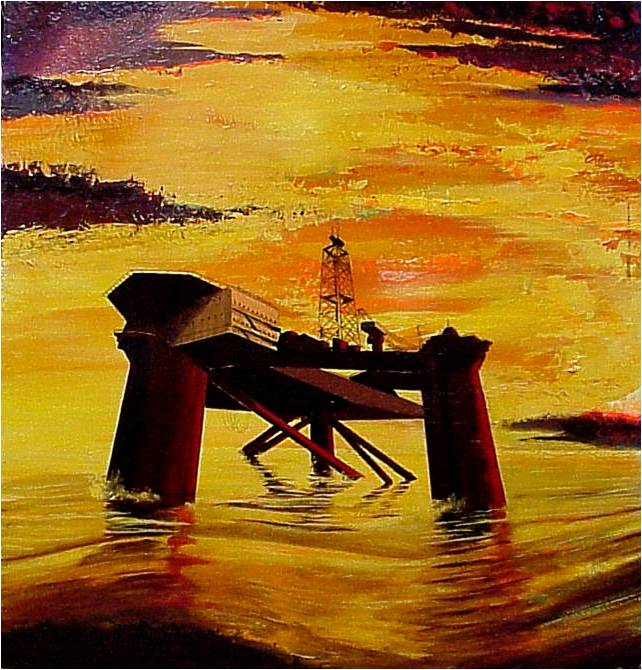
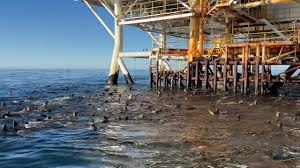
During a recent dive survey at Platform Holly off California’s coast, scientists from the University of California, Santa Barbara (UCSB) had to pause fieldwork because dozens of sea lions took shelter around the structure.
The reason? A pod of killer whales had been spotted hunting near another offshore platform in federal waters.
These real-time encounters reveal more than marine drama. They highlight the ecological role that offshore platforms can play as part of the seascape. UCSB’s work is part of our ongoing study, Understanding Biological Connectivity Among Offshore Structures and Natural Reefs, which explores how marine life moves among natural and manmade habitats.
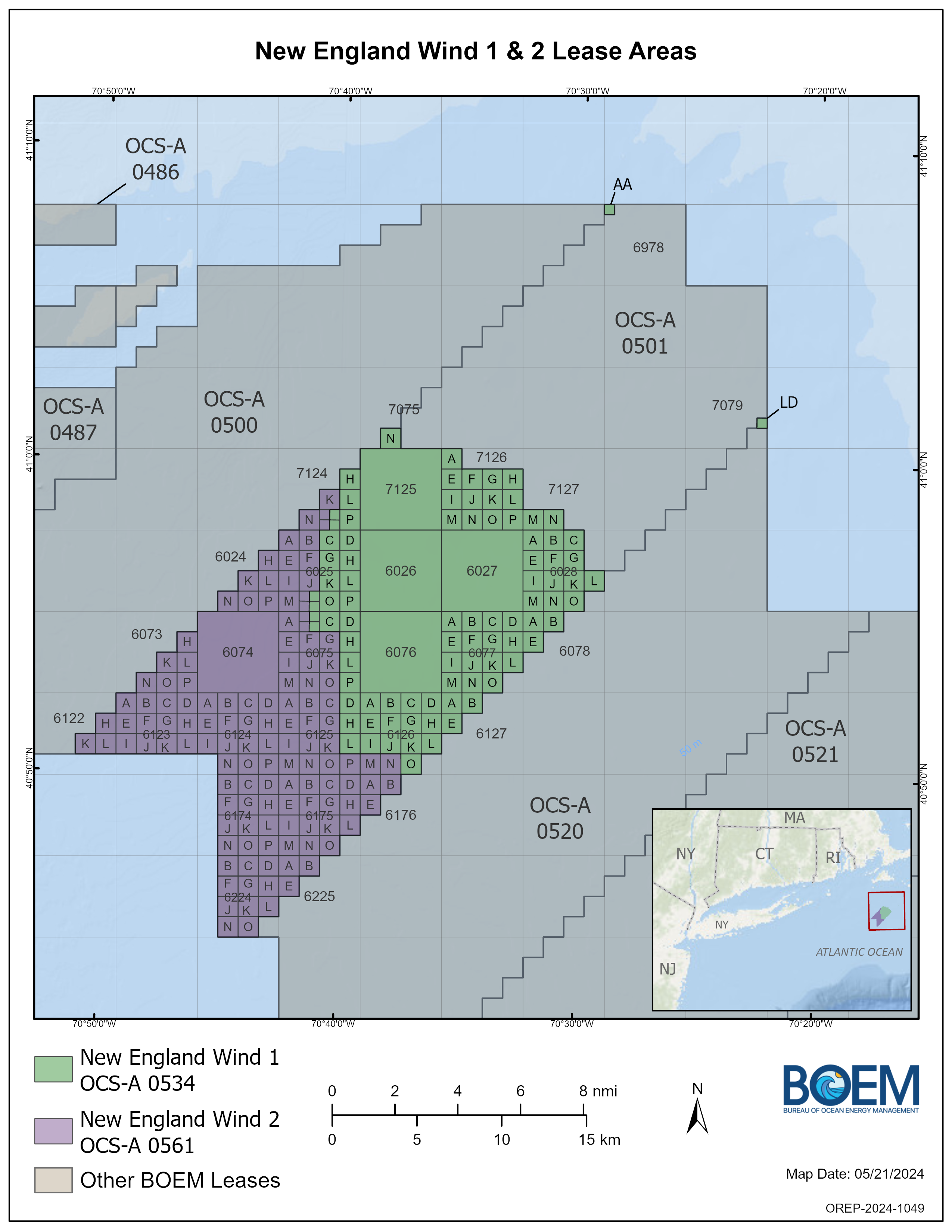
ACK For Whales, the Wampanoag Tribe of Gay Head / Aquinnah, Green Oceans, a coalition of charter fishing groups and seven individuals filed suit in federal court asserting that the Departments of Interior and Commerce violated the law when they approved the Record of Decision (ROD) for the New England Wind 1 and 2 projects.
Construction has not yet begun on the New England Wind 1 and 2 projects. The leases abut Vineyard Wind’s troubled lease 0501 (see above map), site of last summer’s turbine blade failure.
“In offshore wind project after offshore wind project, from Revolution Wind, Vineyard Wind and New England Wind to the others, the government was so desperate to rush these projects that it cut corners and violated the law,” Oliver said. “The government didn’t care if it trampled on the Wampanoag sacred beliefs and rites, hurt the charter boat, fishing and lobster industries or wiped out the Right whales. The only thing that mattered was to get these environmentally destructive turbines built, costs to the rest of us be damned.”
ACK FOR WHALES, INC., VALLORIE OLIVER, AMY DISIBIO, VERONICA BONNET, DOUGLAS LINDLEY, STEVEN AND SHARYL KOHLER, DANNY PRONK, WILLIAM VANDERHOOP, GREEN OCEANS, RHODE ISLAND PARTY AND CHARTER BOAT ASSOCIATION, CAPE COD CHARTER BOAT ASSOCIATION, INC., CONNECTICUT CHARTER AND PARTY BOAT ASSOCIATION, INC., MONTAUK BOATMEN AND CAPTAINS ASSOCIATION, INC. and WAMPANOAG TRIBE OF GAY HEAD AQUINNAH
Defendant:
UNITED STATES DEPARTMENT OF COMMERCE, NATIONAL MARINE FISHERIES SERVICE, BUREAU OF OCEAN ENERGY MANAGEMENT, UNITED STATES DEPARTMENT OF THE INTERIOR, DOUG BURGUM, in his official capacity as Secretary of the Interior, WALTER CRUICKSHANK, in his official capacity as the Director of the Bureau of Ocean Energy Management, HOWARD LUTNICK, in his official capacity as the Secretary of Commerce and EUGENIO PIEIRO SOLER, in his official capacity as the Assistant Administrator of the National Marine Fisheries Service
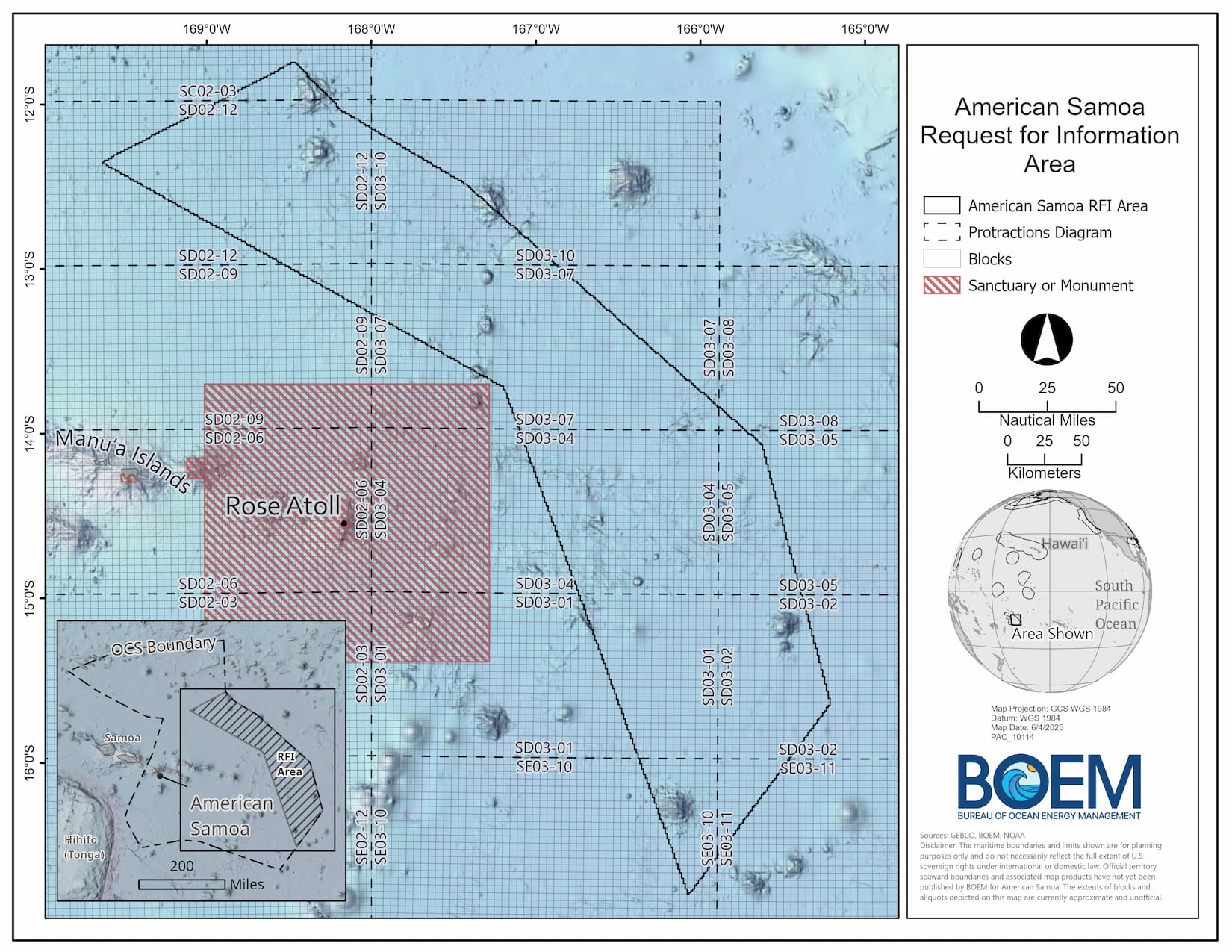
The first step will be the publication of a request for information and Interest in the Federal Register. This notice will seek public input that will help inform BOEM’s assessment of geologic conditions, potential environmental and cultural impacts, and other uses of the area.
Impossible Metals has developed an autonomous underwater vehicle (AUV) for selective mineral harvesting. Their novel AUV uses advanced robotics, AI, and a buoyancy engine to hover above the seabed and minimize disruption to the habitat and native biodiversity. Impossible Metals believes this method will have the lowest environmental impact and cost among land and deep-sea mining approaches.
9 minute interview with the CEO of Impossible Metals:
Those who are concerned about minimizing the Federal government’s decommissioning risk exposure should closely monitor this process. Some companies and their political allies have sought to minimize the financial risks associated with plugging wells and removing facilities. As a result, it has been necessary to defend BOEM from unwarranted commentary about decommissioning issues and the financial assurance rule. Stay tuned!
… and shared a mineral water toast! 😉 (Weak joke, but at least it’s original and topical!)
NOAA and TMC, a Canadian company, are working together to bypass the stifling UN deep sea minerals bureaucracy.
NOAA raises a glass: Yesterday, President Trump signed an Executive Order establishing a framework for American companies to identify and retrieve offshore critical minerals and resources. The Executive Order prioritizes U.S. leadership in seabed mapping and mineral exploration, ensuring reliable access to critical minerals like manganese, nickel, cobalt and rare earth elements.
In support of the Executive Order, NOAA is committed to an expeditious review of applications for exploration licenses and commercial recovery permits. The agency will provide the necessary resources for license and permit reviews to ensure that those reviews go forward without undue delays.
TMC is positioned to play a central role in supporting an American industrial ecosystem underpinned by deep-seabed minerals, and poised to mobilize tens of billions in private investment in the U.S. across shipbuilding, ports, mineral processing, and advanced manufacturing
The Company through its U.S. subsidiary expects to file license and permit applications under the U.S. Deep Seabed Hard Mineral Resources Act (DSHMRA) in the second quarter of 2025
China boos: “The US authorization… violates international law and harms the overall interests of the international community,” Chinese foreign ministry spokesman Guo Jiakun said on Friday.
TMC and other companies like Impossible Metals (see below) have had enough of the endless delays at the United Nations’ International Seabed Authority, which is still developing regulations. Mining companies and others have spent years gathering data and providing input.
Meanwhile in US waters:
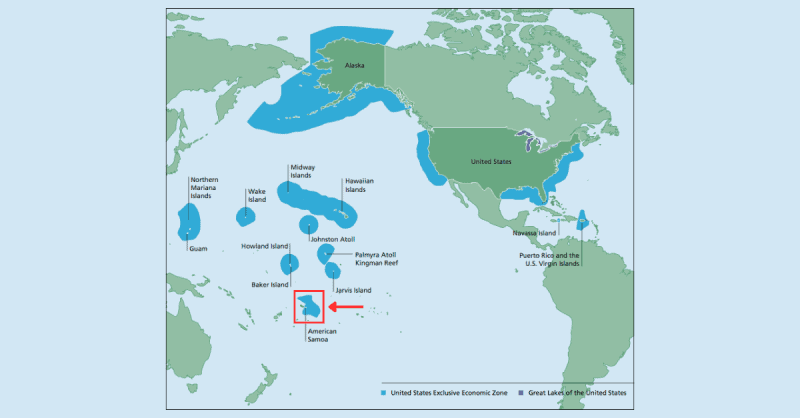
San Jose, CA – Impossible Metals, a pioneering US-based deep-sea mining company, has submitted a request to commence a leasing process for exploration and potential mining of critical minerals in the deep sea off the coast of American Samoa. Impossible Metals is the first company to request a lease of critical minerals under the Outer Continental Shelf Lands Act of 1953, which is regulated by the U.S. Bureau of Ocean Energy Management (BOEM), part of the U.S. Department of the Interior.
Impossible Metals has developed the only autonomous underwater robot (AUV) for selective harvesting. The novel underwater robot uses advanced robotics, AI, and a buoyancy engine to hover above the seabed, accurately identifying and avoiding nodules with visible life while minimizing disruption to the habitat and native biodiversity. This method will have the lowest environmental impact and cost among land and deep-sea mining approaches, setting a new standard for responsible resource collection.
The Government Accountability Office report on Offshore Wind Energy (full report attached) does a good job of summarizing the potential impacts from offshore wind development. They are categorized in the report as follows:
Marine Life and Ecosystems (see table pasted below)
Fishing Industry and Fisheries Management
Economic Development and Community Impacts
Tribal Resources, Including Sacred Sites and Established Fishing Grounds
Defense and Radar Systems
Maritime Navigation and Safety
Unfortunately, GAO’s recommendations, which focus on consultation and staffing (perennial favorites), are rather meaningless. Does GAO really think more consultation will resolve the fundamental concerns of the tribes and fishing industry? Does GAO really think increasing BOEM/BSEE staff is a solution? Wind was the signature offshore energy program of the previous Administration, and it was well resourced.
When the legislation authorizing offshore wind energy development was drafted, we envisioned energy alternatives that could complement thermal energy sources like gas, coal, and nuclear plants. Natural gas plants are particularly important to intermittent energy sources, because their power can be readily dispatched on demand.
Never did we expect attempts to ban the dispatchable energy sources on which renewable energy goals were dependent. Policies that limit gas production, transportation, and consumption don’t boost offshore wind development, they doom it.
In a rush to achieve the Administration’s energy goals, the wind leasing program brushed aside important economic, safety, national security, and environmental issues. Coastal residents, tribes, fishing interests, power customers, and other affected parties have rebelled. Their concerns won’t be smoothed over by increasing consultation.
So now the wind program is in a dark and windless place (a regulatory dunkelflaute?). Five projects are under construction or in the early stages of operation. Construction has been authorized for 6 other projects. Five more projects are in various stages of permitting. What next?
Meanwhile, we still haven’t seen a report on the ugly and embarrassing Vineyard Wind blade failure offshore Nantucket last July. Shouldn’t that report be a precursor to further offshore wind development in the US Atlantic? Also of note, that same turbine was struck by lightning 2 months ago.
Should directed suspension orders be issued pending a complete review of the wind program? If so, for which leases and for how long? Suspension of projects still in the permitting phase would be relatively painless and maybe even attractive given the current state of the wind industry. However, financial impacts for projects in the construction phase would be significant. These important next-step decisions need to be made soon. Muddling along is not a strategy.
Construction and survey activities produce underwater noise that can disturb sensitive marine species. Offshore wind projects take measures to mitigate underwater noise, including the use of bubble curtains to dampen pile driving sound and pausing operations if protected species are sighted.
Changes to marine habitat
Installation of infrastructure, such as turbine foundations and transmission cables, introduces new structures and causes changes to the ocean floor that can alter marine habitat and affect the distribution, abundance, and composition of marine life in the area. These new structures can create artificial habitat that may benefit some species while displacing others and could affect bottom-dwelling species through disturbing the seabed. Artificial habitat effects of wind turbines are well documented, but research is ongoing to monitor and understand impacts on marine life.
Hydrodynamic effects
Operation of wind turbines can affect hydrodynamics and ocean processes such as currents and wind wakes, but little is known about regional effects of widescale deployment on ecosystems.
Vessel disturbance
Vessels can disturb some species and pose strike risks to large marine animals, but the increase in offshore wind vessels is projected to be small compared to the total volume of vessel traffic. Offshore wind vessels are required to take measures such as following speed restrictions and employing protected species observers.
Entanglement risk
Structures, such as mooring cables from floating wind turbines, could snag fishing gear and other marine debris and create entanglement risk to marine animals. Wind projects employ measures to minimize entanglement (e.g., mooring systems designed to detect entanglement), but there is uncertainty about the extent of the risk from floating turbines because of limited deployment.a
Collision risk to birds and bats
Turbine blades pose a collision risk to some sea birds, but little is known about offshore collision risk to bats. Research on collision risks and mitigation measures (e.g., lighting and curtailment) is ongoing.
“The Bureau of Ocean Energy Management’s analysis reveals an additional 1.30 billion barrels of oil equivalent since 2021, bringing the total reserve estimate to 7.04 billion barrels of oil equivalent. This includes 5.77 billion barrels of oil and 7.15 trillion cubic feet of natural gas—a 22.6% increase in remaining recoverable reserves.”
Year
Number of fields
Original Reserves
Historical Cumulative Production
Reserves
Oil Bbbl
Gas Tcf
BOE Bbbl
Oil Bbbl
Gas Tcf
BOE Bbbl
Oil Bbbl
Gas Tcf
BOE Bbbl
1975
255
6.61
59.9
17.3
3.82
27.2
8.66
2.79
32.7
8.61
1980
435
8.04
88.9
23.9
4.99
48.7
13.66
3.05
40.2
10.20
1985
575
10.63
116.7
31.4
6.58
71.1
19.23
4.05
45.6
12.16
1990
782
10.64
129.9
33.8
8.11
93.8
24.80
2.53
36.1
8.95
1995
899
12.01
144.9
37.8
9.68
117.4
30.57
2.33
27.5
7.22
2000
1,050
14.93
167.3
44.7
11.93
142.7
37.32
3.00
24.6
7.38
2005
1,196
19.80
181.8
52.2
14.61
163.9
43.77
5.19
17.9
8.38
2010
1,282
21.50
191.1
55.5
17.11
179.3
49.01
4.39
11.8
6.49
2015
1,312
23.06
193.8
57.6
19.58
186.5
52.78
3.48
7.3
4.78
2016
1,315
23.73
194.6
58.4
20.16
187.5
53.58
3.57
6.8
4.79
2017
1,319
24.65
195.2
59.7
20.78
188.9
54.21
3.87
6.3
5.00
2018
1,319
24.86
195.5
59.7
21.42
189.8
55.21
3.44
5.7
4.45
2019
1,325
26.77
197.0
61.8
22.12
190.9
56.09
4.65
6.1
5.74
2023
1,336
30.43
201.2
66.2
24.66
194.0
59.19
5.77
7.2
7.04
Oil and gas reserves and cumulative production at end of year, 1975-2023, Gulf of America, Outer Continental Shelf and Slope. “Oil” includes crude oil and condensate; “gas” includes associated and non-associated gas. Reserves estimated as of December 31 each year.
This increase in reserves will not please those responsible for the current 5 Year Oil and Gas Leasing Plan. They told us that we don’t need more OCS lease sales and that our biggest concern is producing too much oil and gas for too long!
The long-term nature of OCS oil and gas development, such that production on a lease may not begin for a decade or more after lease issuance and can continue for decades, makes consideration of net-zero pathways relevant to the Secretary’s determinations on how the National OCS Program best meets the Nation’s energy needs.“
“Crude reserves are being found and developed at a much slower pace than they’ve been in the past. Specifically, she said the world has only newly identified less than half the amount of crude it’s consumed over the course of the past 10 years. Given the current trends, this means demand will exceed supply before the end of 2025.“
A bit off-topic, but Jeff Walker, a former colleague and the MMS Regional Supervisor in Alaska, had the best quip about reserve numbers. In explaining an operator’s revised reserve numbers for a producing unit which had leases with different royalty rates, Jeff noted that “oil always migrates to the lower royalty leases.”😉
In a peer reviewed paper, AI (Grok-3) debunks the man-made climate crisis narrative.
Doug Burgum: Hydraulic fracturing technology is “one of the reasons why the U.S. shale revolution is a miracle. But that miracle keeps on getting better and better. It’s the thing that has literally turned around the economy.” Posted here 15 years ago: Natural Gas Bonanza – Why Aren’t We Celebrating?
Exercising authority granted in the Congressional Review Act (Chapter 8 of Title 5 of the United States Code), Congress passed Joint Resolution 11 nullifying the Bureau of Ocean Energy Management rule titled “Protection of Marine Archaeological Resources” (Sept. 3, 2024).
Nullification of a final rule is not common. Since its Enactment in 1996, the CRA has been used to overturn only 20 rules. This is the first time an OCS energy rule has been nullified.
Enactment of a CRA resolution of disapproval is unlikely in most circumstances, because a President would be expected to veto a joint resolution disapproving a rule issued by the President’s own Administration.
There are also time limitations for nullifying a rule. The joint resolution must be introduced during a 60-days- of-continuous-session period beginning when the rule has been published in the Federal Register and been received by Congress. However, if within 60 session days after a rule is submitted, Congress adjourns its session, the periods to introduce and act on a disapproval resolution reoccur in their entirety in the next session of Congress.
It’s also noteworthy that a CRA resolution cannot be filibustered if the Senate acts on the resolution during a 60-days-of-Senate-session period beginning when the rule has been received by Congress.
Most of the 20 nullifications involved rules finalized at the end of a previous administration that were nullified at the beginning of a new administration with a majority in both chambers of Congress. That is the case for the Marine Archaeology Rule, which was published at the end of the Biden administration and nullified at the beginning of the Trump administration. .
The nullified OCS rule required operators to submit an archaeological report identifying potential archaeological resources with any exploration or development plan. The rule modified regulations that only required such a report only when a BOEM regional director had reason to believe that an archaeological resource may be present in the lease area.
Archaeological survey requirements have been somewhat contentious since they were introduced in the 1970s. There were concerns about decisions to require the protection of speculative, low probability sites that could significantly alter operating plans.
A reasonable balance and an apparent consensus was achieved by limiting the report requirements to areas where studies and other information indicated the potential for such resources. BOEM’s new rule tightened the requirement considerably, which led to opposition and ultimately nullification.