- Maximum of 11 lease sales
- Maximum of one sale (Cook Inlet) outside the Gulf of Mexico
- Maximum of one GoM sale in 2023
- Issued late Friday on 4th of July weekend
- Press release
- Details
- EIS and other information
- GoM production forecast
- highly optimistic
- inconsistent with the more realistic EIA forecast
- “forecast” for 2022 is not achievable
Posts Tagged ‘BOEM’
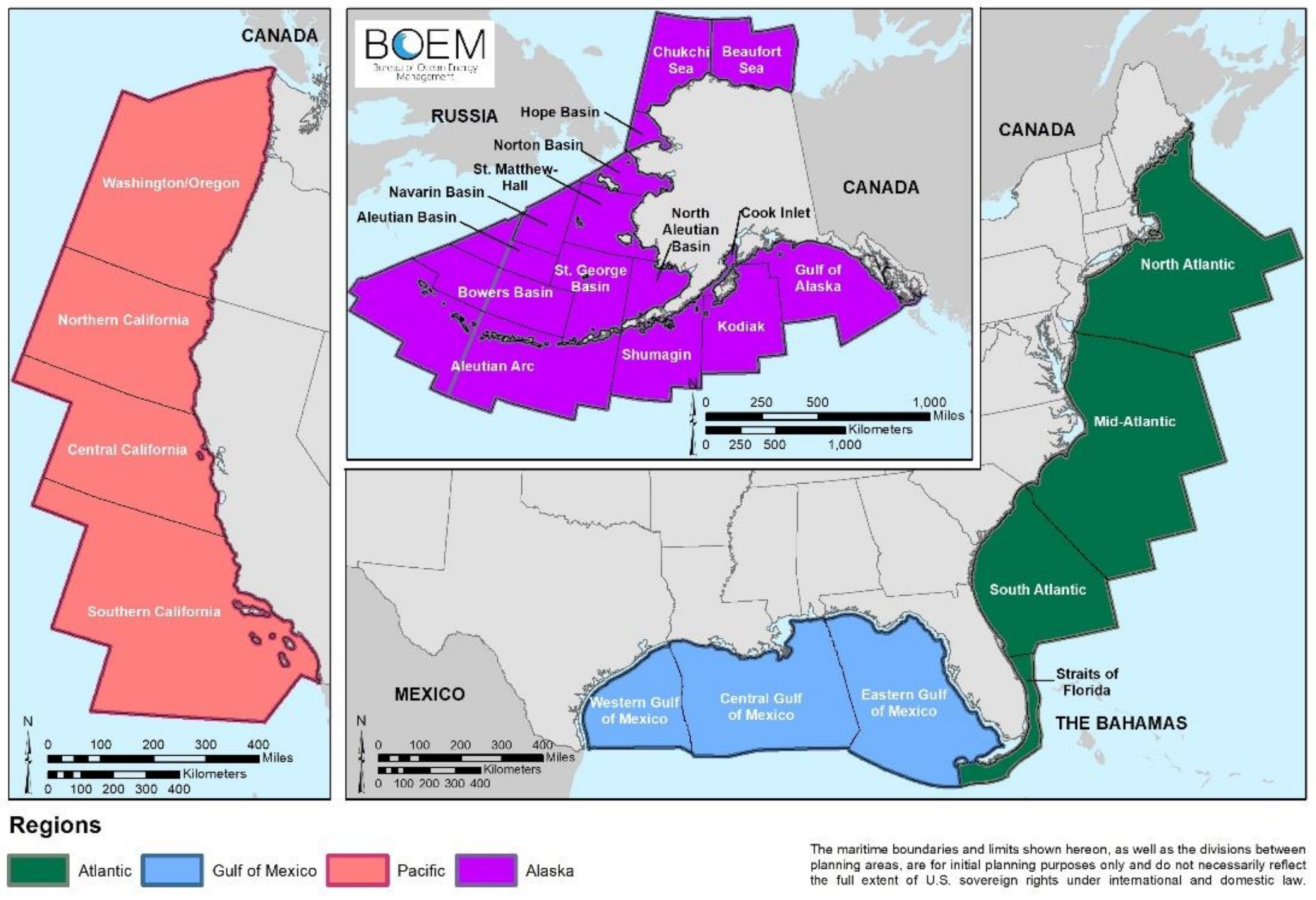
Proposed 5-Year OCS Leasing Program issued
Posted in Alaska, energy policy, Gulf of Mexico, Offshore Energy - General, tagged 5 year leasing plan, BOEM, Cook Inlet, DOI, Gulf of Mexico on July 2, 2022| Leave a Comment »
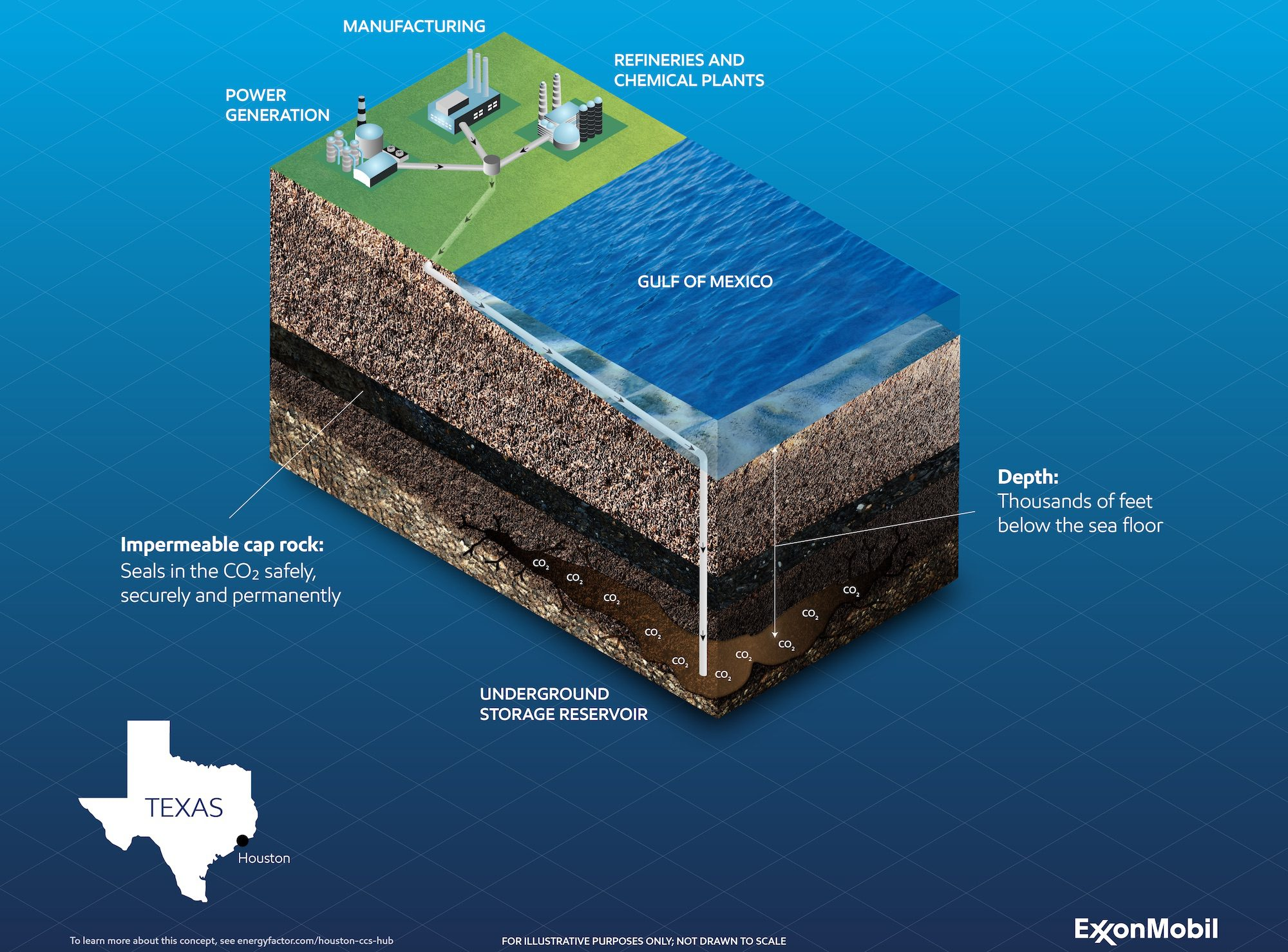
Questions about Gulf of Mexico carbon sequestration
Posted in CCS, climate, energy policy, Gulf of Mexico, pipelines, Regulation, tagged BOEM, carbon sequestration, CCS, DOI, Exxon, Gulf of Mexico, infrastructure bill, Lease Sale 257, OCS Lands Act on May 12, 2022| Leave a Comment »
Background:
- A provision in the “Infrastructure Bill” that was enacted on 11/15/2021 amended the OCS Lands Act to provide for offshore carbon sequestration.
- Because carbon disposal is arguably dumping, the legislation included an exemption from the Marine Protection, Research, and Sanctuaries (Ocean Dumping) Act of 1972.
- The bill mandated that the Secretary of the Interior (DOI) promulgate implementing regulations within one year (l.e. by 11/15/2022).
- These provisions were added to the bill without debate and their inclusion was a surprise to most observers. Presumably, DOI had the opportunity to review the text, because that is standard practice.
- The legislation also authorized $2.5 billion for commercial sequestration projects.
- 2 days after the Infrastructure Bill was signed (11/17/2022), Exxon was the only bidder (Oil and Gas Lease Sale 257) on 94 nearshore tracts off the Texas coast. The sale notice did not mention carbon sequestration; nor had DOI assessed the potential environmental impacts of sequestration as required by NEPA.
- Sale 257 was vacated by the DC Federal Court for reasons unrelated to the sequestration bids.
Questions:
- What are the costs per ton of offshore carbon sequestration including emissions collection, offshore wells and platforms, the associated pipeline infrastructure, ongoing operational and maintenance costs, and decommissioning?
- What is the timeframe given that the starting point is likely years away?
- How long would CO2 sequestration continue.
- Who pays? Polluters? Federal subsidies? Tax credits?
- Who is liable for:
- safety and environmental incidents associated with these projects?
- CO2 that escapes from reservoirs, wells, and pipelines (now and centuries from now)?
- decommissioning?
- hurricane preparedness and damage?
- For Gulf of Mexico sequestration, how much energy would be consumed per ton of CO2 injected? Power source? Emissions?
- To what extent will these operations interfere with other offshore activities?
- Relatively speaking, how important is US sequestration given:
- the steady progress that is being made via natural gas and renewables?
- the massive emissions elsewhere?
- the continued growth in worldwide coal consumption?
- What are the benefits of offshore sequestration relative to investments in other carbon reduction alternatives?
- Will BOEM conduct a proper carbon sequestration lease sale with public notice (as required by BOEM regulations) such that all interested parties can bid?
- What will be the lease terms?
- Environmental assessment?
- How will bids be evaluated?
- What happens to the Exxon bids if the Judge’s Sale 257 decision is reversed?
- What is the status of the DOI regulations mandated in the legislation with an 11/15/2022 deadline?
- When will we see an Advanced Notice or Notice of Proposed Rulemaking?
- Given that DOI has no jurisdiction over the State waters and onshore aspects of these projects, what is the status of parallel regulatory initiatives?
- Finally and most importantly, how does drilling offshore sequestration wells instead of exploration and development wells increase oil and gas production?
Thank you US Coast Guard….
Posted in Offshore Energy - General, Regulation, tagged BOEM, Brad Butman, BSEE, Conservation Division, Georges Bank Monitoring Program, Mike Bothner, MMS, Subchapter N, US Coast Guard, USGS on May 11, 2022| Leave a Comment »
….for continuing to recognize the Conservation Division of the Geological Survey (USGS) as the US offshore safety regulator, even though 40 years have passed since that was the case and there have been 3 successor bureaus. 😀
33 CFR § 140.4 Relationship to other law. (current text excerpted from Coast Guard Subchapter N regulations)
(a) Design and equipment requirements of this subchapter for OCS facilities, including mobile offshore drilling units in contact with the seabed of the OCS for exploration or exploitation of subsea resources, are in addition to the regulations and orders of the U.S. Geological Survey applicable to those facilities.
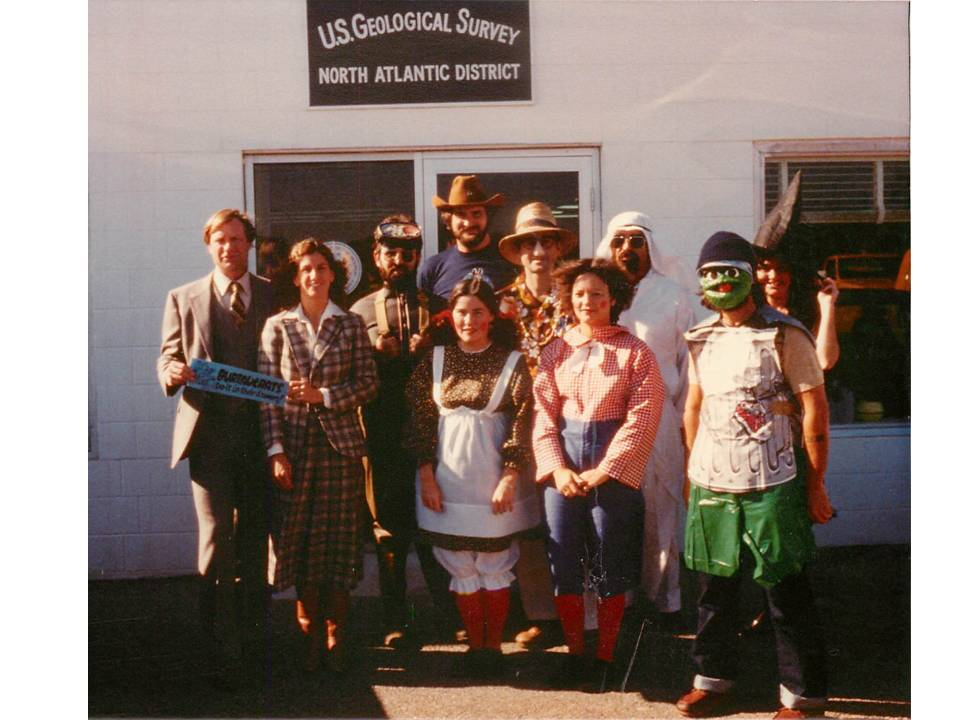
Most of us old-timers think the best regulatory framework for the offshore program was in the USGS days (pre-1982). Some of this may be nostalgia, but there are some good reasons for this thinking:
- USGS was/is an internationally acclaimed scientific organization that was always headed by a renowned geologist. The regulatory program was thus somewhat insulated from political pressures. Vince McKelvey, Bill Menard, and Dallas Peck were the Directors when I worked for USGS. Their credentials are linked. Bill and Dallas visited our Hyannis office (not at Halloween 😀) and were very supportive.
- The Conservation Division was responsible for onshore operations on Federal lands as well as offshore activity. This facilitated information sharing and offered diverse career opportunities. My first bosses in New Orleans had worked previously in the Farmington and Roswell, NM offices.
- We had excellent synergy with the other USGS divisions. The Marine Science Center in Woods Hole was an incredible resource for our Hyannis office. The Woods Hole office, particularly Mike Bothner and Brad Butman, had a critical role in the Georges Bank Monitoring Program, the best ever (in my biased opinion) environmental study of exploratory drilling operations in a frontier area.
- The USGS Conservation Division had a very small and supportive headquarter’s staff, which minimized the potential for conflict with field offices.
- Prior to the formation of the Minerals Management Service (MMS) in 1982, the Bureau of Land Management was responsible for leasing, but all regulatory functions were under USGS. This included resource evaluation/conservation, plan review and approval, permitting, inspections and enforcement, and investigations. The division of MMS responsibilities, most notably the assignment of plan approval to the leasing bureau (BOEM) rather than the regulatory bureau (BSEE), complicates the work of both bureaus and is a prescription for inefficiency, confusion, overlap, and conflict.
DC Judge rules in favor of higher oil and gas prices
Posted in climate, energy policy, Gulf of Mexico, Offshore Energy - General, tagged BOEM, DC Federal Court, energy justice, energy poverty, Lease Sale 257, oil prices on January 31, 2022| Leave a Comment »
The very disappointing 68 page ruling on Lease Sale 257 boils down to the following:
- BOEM had correctly determined that, from a GHG standpoint, US offshore production was preferable to more carbon intensive foreign production.
- The plaintiffs, who are seemingly intent on stopping all oil and gas production regardless of the economic consequences, argued that BOEM failed to consider the “positive” effect that higher prices (the logical result of lower production) would have on reducing demand.
- In particular, the plaintiffs asserted that BOEM failed to consider the effect that reduced production (and higher prices) would have on foreign consumption and the associated GHG emissions.
- The judge not only decided in favor of the plaintiffs, but ruled that BOEM’s omission was so serious that the lease sale had to be vacated.
- The judge reached this decision even though (1) the five year leasing plan expires in June leaving the timing of any future sale very much in doubt and (2) all of the sale 257 bids are now public information compromising the integrity of the leasing process at the next sale (if and when that occurs).
So, if BOEM has to consider the environmental benefits of higher oil and gas prices, shouldn’t they also have to consider the negative economic and environmental effects from the resulting price inflation and energy poverty? Are higher prices, which are most detrimental to the poor and to developing nations, “energy justice?”
If your only objective is the destruction of the US offshore oil and gas program, this was a great decision. For everyone else, this is yet another reason to be concerned about our energy future.
Another California law suit: Center for Biological Diversity sues BOEM, BSEE, NMFS for failure to protect endangered species
Posted in California, decommissioning, Offshore Energy - General, pipelines, tagged BOEM, BSEE, Center for Biological Diversity, endangered species, law suit, NMFS on January 26, 2022| Leave a Comment »
The law suit makes reference to the aging offshore facilities and the Huntington Beach pipeline spill:
Oil companies have been drilling off California for more than 50 years. The first platforms were installed in 1968 and production continues today. Much of this infrastructure has outlived its expected lifespan and is well beyond the age scientists say significantly increase the risk of oil spills.
Indeed, just months ago a pipeline connected to a platform in federal waters off Huntington Beach ruptured and spilled tens of thousands of gallons of oil into the marine environment. The spill fouled sensitive marine, beach, and wetland habitat; forced closure of fisheries; and harmed and killed birds, fish, plants, invertebrates, and marine mammals.
CBD law suit
BOEM approves 2nd North Atlantic Wind Project
Posted in Offshore Energy - General, Offshore Wind, Wind Energy, tagged BOEM, North Atlantic, Offshore Wind, RODA, South Fork Wind, Vineyard Wind I on November 29, 2021| Leave a Comment »
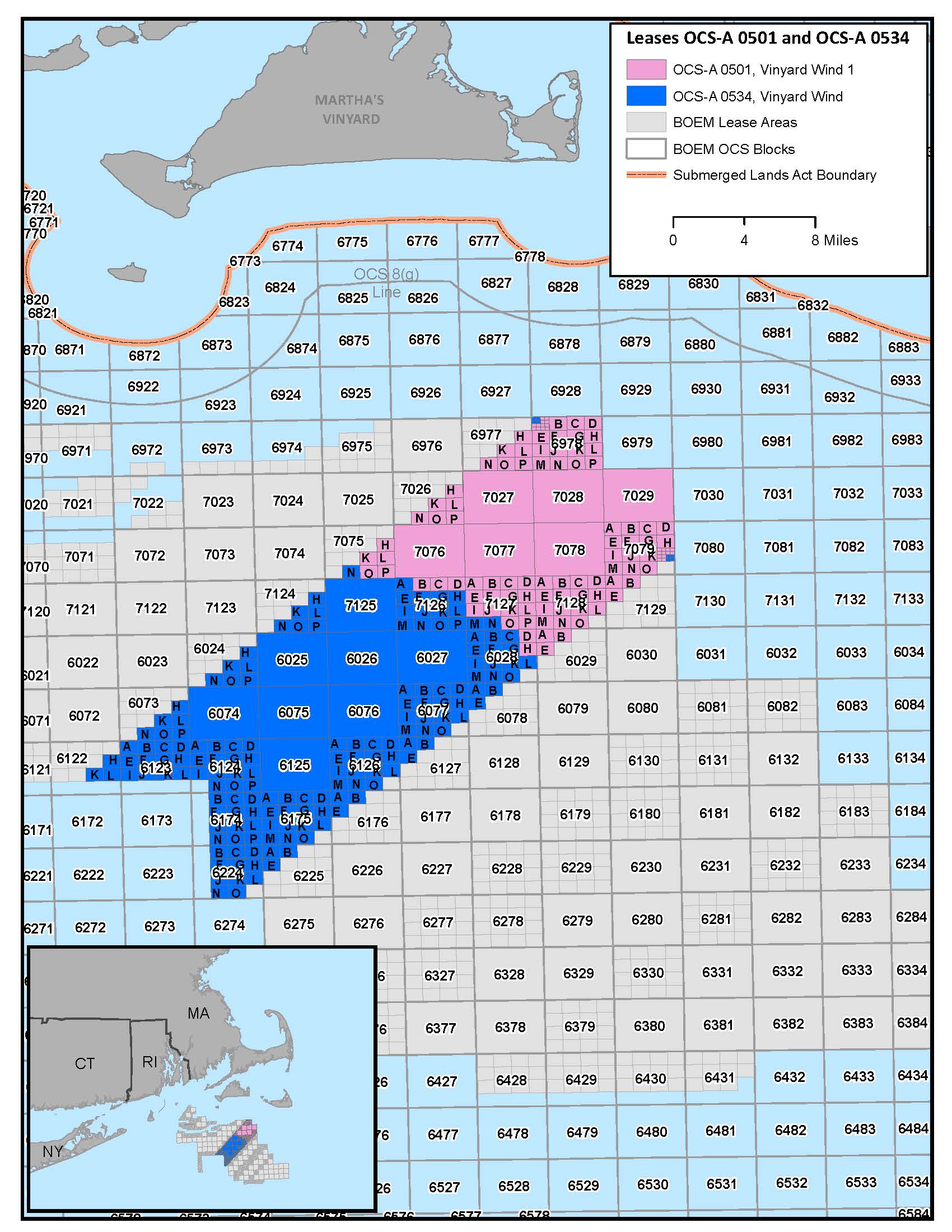
- South Fork Wind: 19 miles southeast of Block Island, Rhode Island
- 12 or fewer Siemens-Gamesa’s 11-megawatt turbines
- BOEM approved the larger (62 turbine) Vineyard Wind 1 project on July 15, 2021. Those turbines will be located approximately 15 miles south of Martha’s Vineyard and Nantucket. On Oct. 19, the Responsible Offshore Development Alliance (RODA) filed a 60-day Notice of Intent to Sue the Federal Government over violations of lease management and environmental statutes.

DOI Report on the Federal Oil and Gas Leasing Program (11/26/2021)
Posted in energy policy, Gulf of Mexico, Offshore Energy - General, Regulation, tagged BOEM, BSEE, DOI, financial assurance, leasing report, royalty on November 29, 2021| Leave a Comment »
Observations and comments on the offshore findings and recommendations in the Dept. of the Interior’s report:
- From an offshore perspective, this report is more moderate than expected. No major complaints.
- The report was issued the Friday after Thanksgiving. Was there a desire to minimize attention?
- The report does not include a recommendation on raising royalty rates. DOI will continue to study such actions (prudent decision).
- BSEE estimates current liability for “orphaned infrastructure” at only $65 million. They must be using a very narrow definition of orphaned infrastructure.
- “Financial assurance coverage should be strengthened.” (Few would argue with that statement.)
- “BSEE and BOEM will carefully consider comments on the 2020 proposed financial assurance rule.” (Deja vu? Expect a long, slow process.)
- BOEM will establish a “fitness to operate standard.” Comments: (1) This is an old concept that has proven to be difficult to execute. Hold companies accountable, make them demonstrate financial assurance, and don’t pander to bad actors (see the case of Hogan and Houchin) (2) Why is BOEM establishing this standard and not BSEE, the safety bureau? (The division of responsibilities between BOEM and BSEE has created serious overlap, inefficiency, and confusion and needs to be addressed.)
- “BOEM should consider advancing alternatives to the practice of area-wide leasing.” Tract selection makes sense in frontier areas with little operational history. It would have been perfect for the Mid- or South Atlantic or the EGoM, all of which were cynically removed from future leasing consideration by the previous President just before the 2020 election. The Central and Western Gulf of Mexico is too mature for a return to tract selection; employing that approach after 40 years of area-wide leasing is likely to generate less revenue and production.
Sale 257 and Federal funding of carbon sequestration
Posted in CCS, energy policy, Gulf of Mexico, Offshore Energy - General, tagged BOEM, CCS, infrastructure bill, Lease Sale 257 on November 24, 2021| Leave a Comment »
The text below, excerpted from the Infrastructure Bill (signed 2 days before Sale 257), requires the Federal government to provide funding for commercial CCS projects. $2.5 billion is appropriated. Given these incentives, how does BOEM possibly issue leases for CCS purposes when there was no public notice (as required by 30 CFR § 556.308) that CCS bids would be accepted at the oil and gas lease sale?
SEC. 40305.
e) Large-scale Carbon Storage Commercialization Program.--
        ``(1) In general.--The Secretary shall establish a commercialization program under which the Secretary shall provide funding for the development of new or expanded commercial large-scale carbon sequestration projects and associated carbon dioxide transport infrastructure, including funding for the feasibility,site characterization, permitting, and construction stages of project development.
(h) Authorization of Appropriations.--There is authorized to be appropriated to the Secretary to carry out this section $2,500,000,000 for the period of fiscal years 2022 through 2026.
More questions on the Sale 257 “CCS leases”
Posted in CCS, energy policy, Gulf of Mexico, Offshore Energy - General, tagged BOEM, CCS, Exxon, Lease Sale 257 on November 18, 2021| Leave a Comment »
- Should CCS leases have been offered in a separate sale as is the case for salt, sulfur, and wind operations?
- Was CCS activity considered in the environmental reviews for this sale?
- Was CCS mentioned in the Notice of Sale?
- How will these CCS bids be evaluated?
- Will the CCS bidding influence the Judge’s decision on the pending Sale 257 litigation?
 Bud's Offshore Energy (BOE)