Feeds:
Posts
Comments

New York’s looming, self-imposed electric power crisis:

Something here does not remotely add up.  If New York state succeeds by 2030 in closing its natural gas plants — the plants that account for 60% of the State’s generation capacity — that would bring our total installed capacity down from 37.5 GW to as little as 15 GW. But we need almost 60 GW to meet projected demand.  And that’s 60 GW that can be called on any time as needed to meet peak usage.  The 9 GW of projected offshore wind turbines wouldn’t make much of a dent even if they operated all the time and could be dispatched to meet peak demand, which they can’t.  Instead, they will operate only about a third of the time, and at their own whim.  At best they will provide about 3 GW on average, when what we need for this full electrification project is more like 45 GW of dispatchable power to add to our existing hydro and nuclear.   

Manhattan Contrarian

Power generation realities:

  • Assuming sufficient capacity, gas power plants respond to variable demand.
  • Wind and solar power are intermittent, such that demand must respond to variable supply (not a prescription for economic growth).
  • Power grids can function effectively with only natural gas, but not with only wind/solar.
  • Integrated wind, solar, and gas systems can reduce, but not eliminate, demand for gas-generated power.

Siemens gas turbine for the offshore industry

Offshore platforms: In some regions, there is a push to power platforms with renewable energy transported by electric cable. Currently, most platforms are efficiently powered by gas turbines which satisfy energy needs even when demand spikes during well operations like tripping out of the hole. The extent to which renewables can reliably support platform operations during these and other operations, when power interruptions are unacceptable from a safety standpoint, is a risk that must be assessed prior to committing to alternative energy sources.

The environmental benefits of powering platforms with renewable energy also have not been clearly documented. In most cases, offshore platforms produce sufficient gas to support their power demands. Should platforms be powered by imported electricity, gas that is not used for platform operations would presumably be marketed for consumption elsewhere or reinjected.

If the gas is marketed and consumed elsewhere, there is essentially no net (global) CO2 emissions reduction benefit. Gas that is reinjected is wasted unless there is an enhanced oil recovery benefit. So, the net environmental benefit from importing electric power seems questionable, and the operational risks could be significant.

Good for Guyana and good for offshore energy!

In Guyana’s inaugural offshore licensing round, Sispro Inc. stands out as the only Guyanese company among the bidders. Located in South Cummingsburg, Georgetown, this indigenous start-up is a stand-out. So, who are the locals behind it?

Founded by four women – Dr. Melissa Varswyk, Abbigale Loncke-Watson, Dr. Ayodele Dalgety Dean, and Dee George, Sispro has leadership with diverse backgrounds in finance, health, education, energy, and human rights.

OilNow, Guyana

Interesting:

Out of the 14 bids made in Guyana’s inaugural offshore licensing round, Sispro was the only individual bidder, with others bidding as groups. 

And it looks like they have assembled a capable, mostly Guyanese, team.

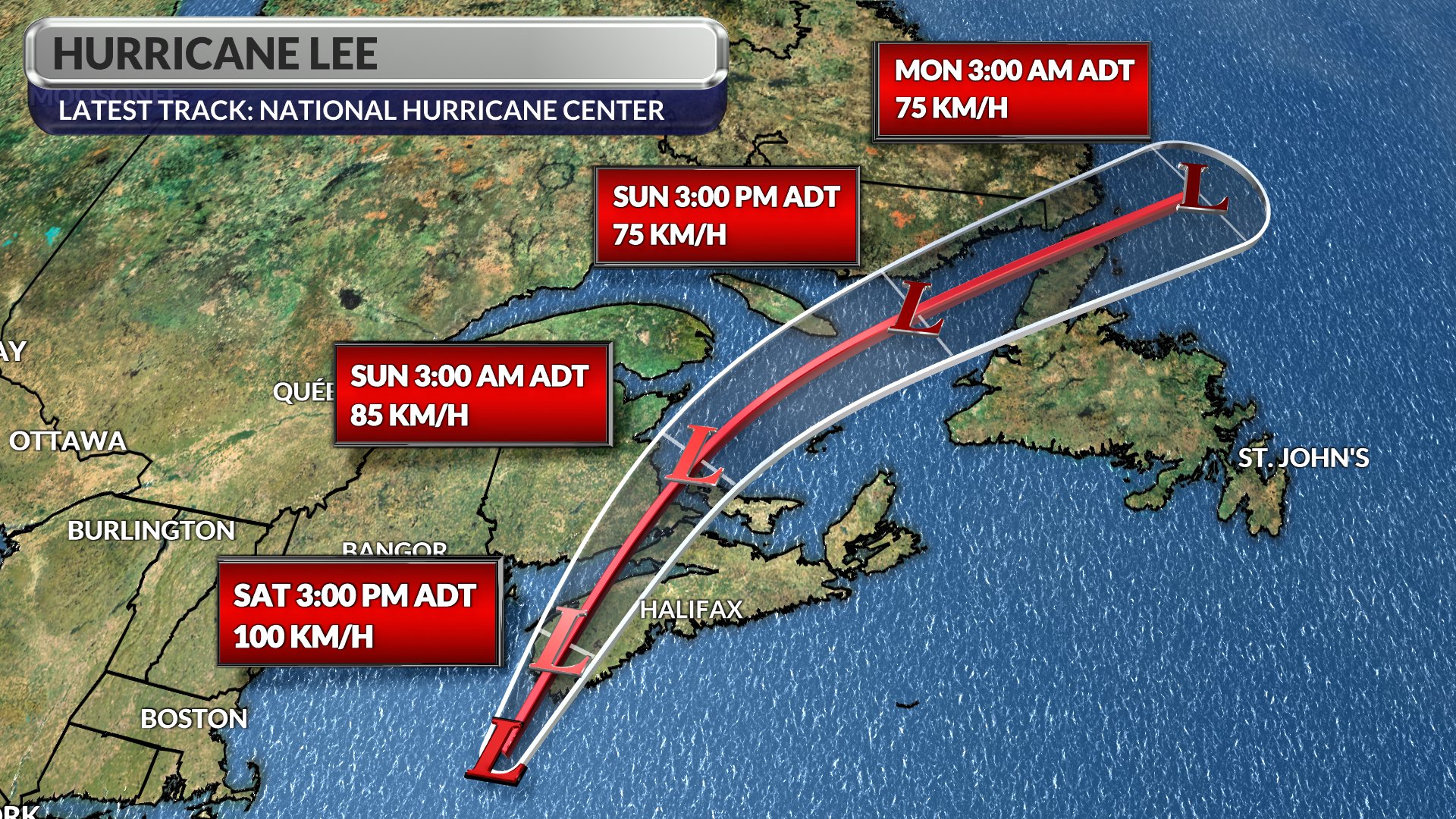
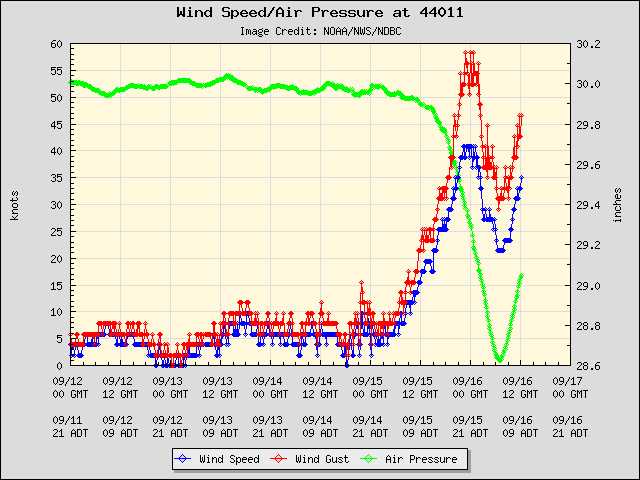
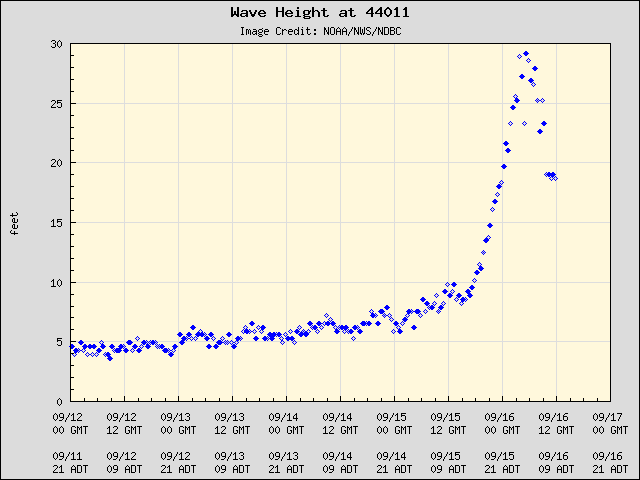
The worst conditions were relatively common by Georges Bank standards. Per the NOAA data buoy (see plots below), the wind speed peaked at 40.8 kts, gusts at 58.3 kts, and wave height at 29.2 ft.

Looking back at my Georges Bank Exploratory Drilling paper (1983), a spring storm in April 1982 generated 105 mph winds and 35 foot swells. I’ll post information on the rig performance issues during those operations at a later date.

Image

Venus is very impressive in the pre-dawn September sky and will peak in brightness over the next week days. Worth checking out!

Venus will be brightest in the morning sky around September 19, 2023, and will reach 44 degrees elongation from the sun by the end of the month. Venus will brighten from magnitude -4.6 to -4.8 during the month. 

The reason that the planet Venus is so dazzlingly bright is because it is completely enshrouded in thick clouds that reflect sunlight at us.

In ancient times, mariners looked up to the night sky for guidance, and one celestial body held a special role in their navigation: Venus. With its bright and consistent appearance, Venus served as a reliable reference point for sailors venturing across vast oceans. This article explores the significant role that Venus played in early navigation, guiding mariners safely to their destinations and paving the way for future advancements in seafaring.

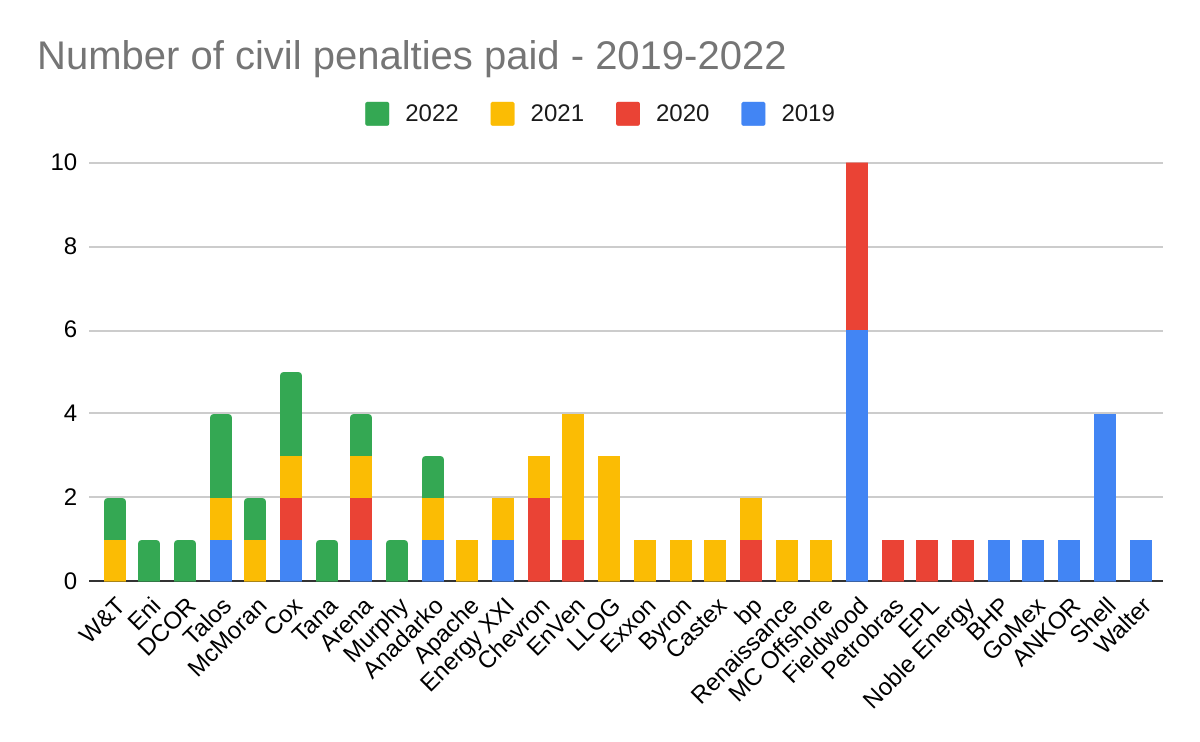
Impressively, 4 GoM operators with significant production and well activity did not incur a single civil penalty payment during the most recent 4 year period. Each of these operators also had low incident of noncompliance (INC) to inspection ratios. The companies are as follows:

Operator2022 oil production (million bbls) 2022 oil production rank2022 gas production (bcf)No. of platformsNo. of well starts (2019-2022)
Hess21.6746.535
Kosmos8.5147.8subsea tiebacks 6
Beacon7.21512.2subsea tiebacks4
Cantium4.7196.18637
  • All of these companies deserve kudos.
  • Cantium’s record is especially impressive given that most of their platforms were installed more than 40 years ago and some date back to the 1950s. They have also been a very active development well driller.
  • Hess is the 7th biggest oil producer and 5th biggest gas producer in the GoM. Hess CEO John Hess made some encouraging comments (pasted below) about the deepwater GoM at a recent energy conference.
  • While Kosmos and Beacon have somewhat lower violation and penalty exposure because their production is via subsea wells tied back to surface facilities operated by other companies, they are demonstrating that entrepreneurial deepwater independents can also be safety leaders.

“The Pickerel-1 prospect was our first (exploration well on the Mississippi Canyon 727) and we are delighted that it was an oil discovery. Black Pearl will be the next and that will hopefully be a tieback (to Tubular Bells with first oil expected mid-2024).

“Then we have a wildcat opportunity (the Vancouver exploration prospect) later in the year in the Green Canyon. With the other 80 exploratory blocks that we have in the Gulf, we will be actively drilling for the next several years,” Hess said.

OilNow

  • Per the previous civil penalties post
  • Data are on a fiscal year basis (i.e. 2022 started on 10/1/2021 and ended on 9/30/2022)
  • These data are only for civil penalties paid in that year. Data for civil penalties referrals are not publicly available.
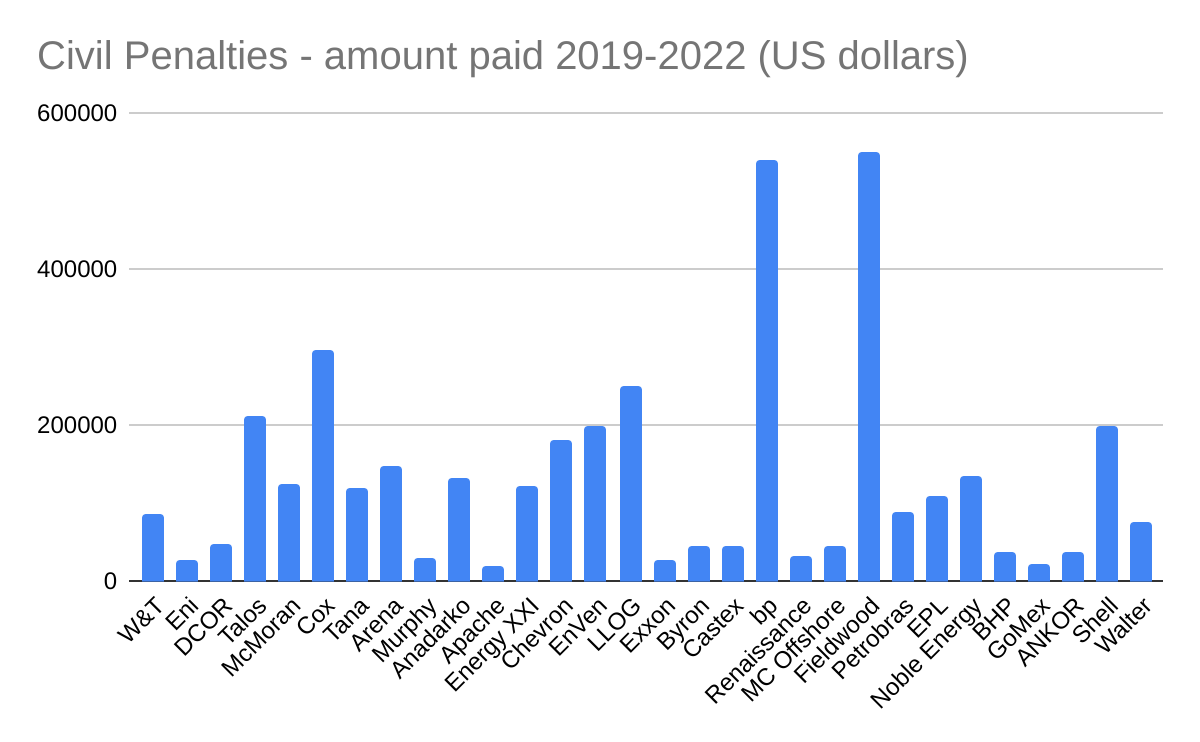
  • Nothing terribly surprising in the data. Fieldwood’s issues have been discussed at length.
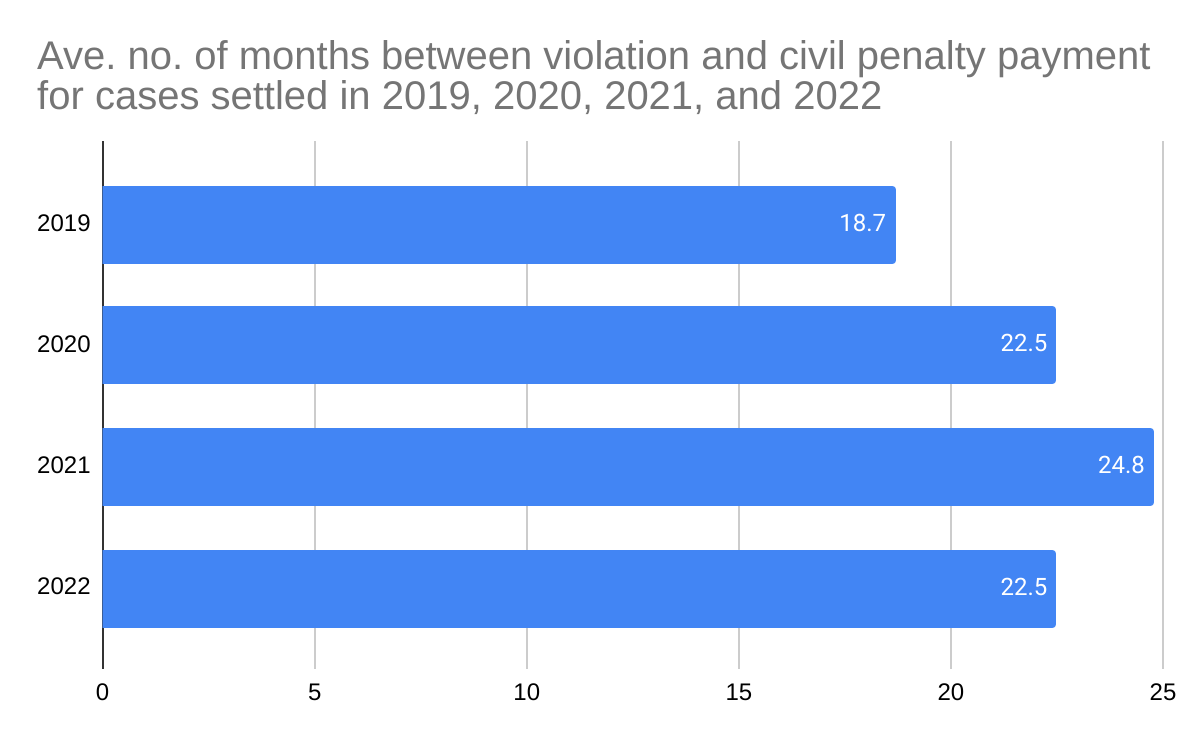
  • Note (last chart) the lag between the date violations were observed and the date penalties were paid. This lag is significant but understandable given due process considerations.
  • Fastest payment: 6 months by Shell for an open hole that was not properly barricaded ($26,750 penalty, 2018).
  • Slowest payment: 54 months by LLOG for failing to install and maintain equipment properly (three 2016 violations)
  • Largest civil penalty paid: $512,900 by bp for a high-pressure gas release caused by the use of improper seals (May 8, 2018 violation).
  • Smallest civil penalty paid: $16,300 by Arena for the release of 1000 psi gas on October 16, 2018
  • The current maximum penalty amount is $52,646 per day, per violation.
  • To learn more about the specific cases.
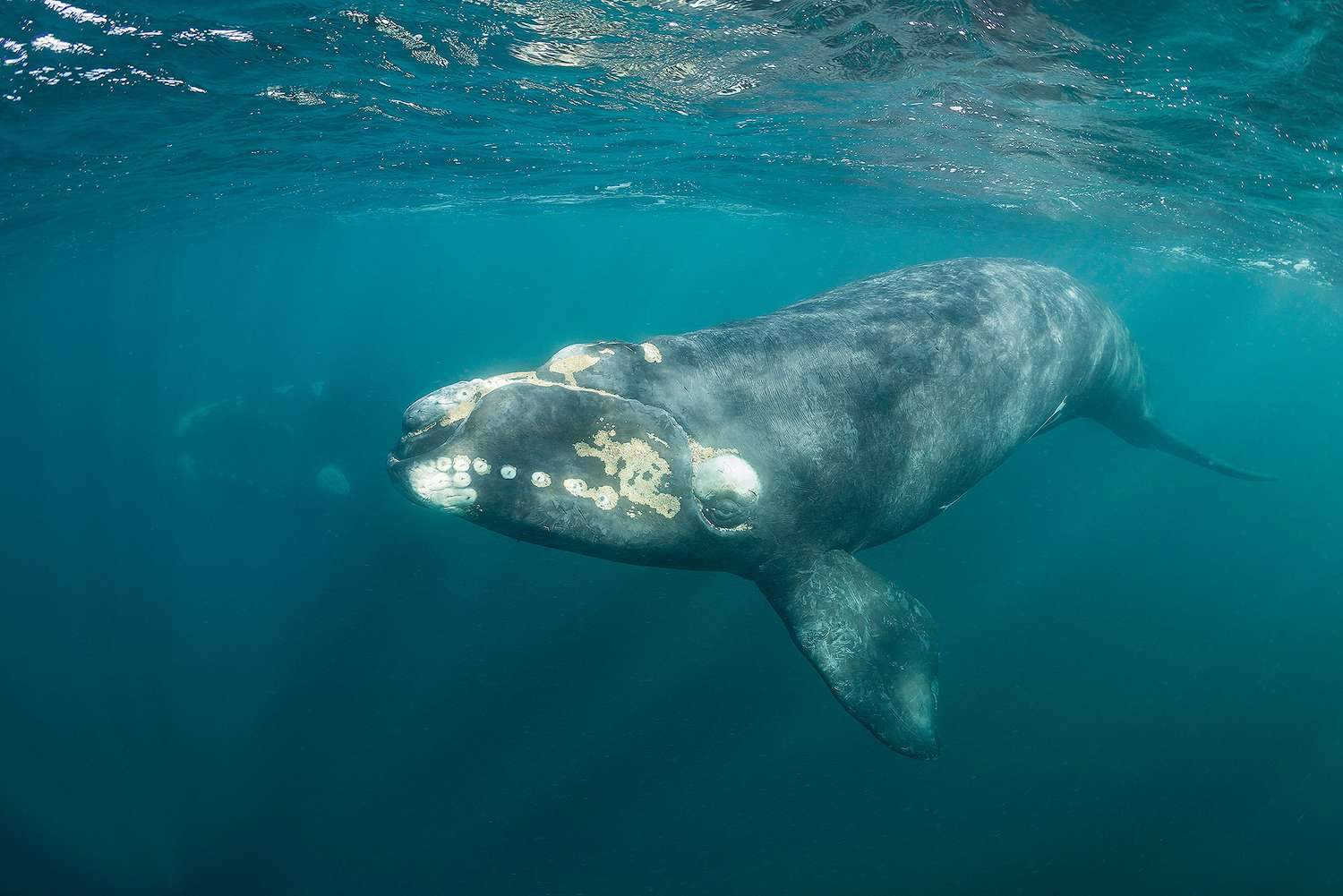
Right whale – Atlantic
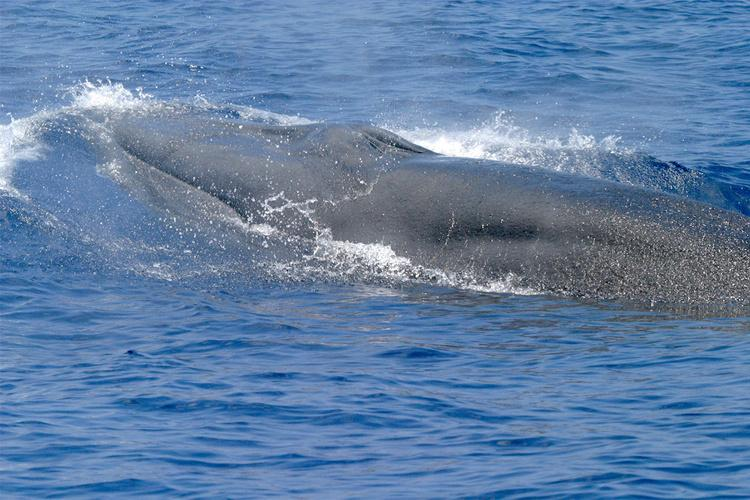
Rice’s whale – Gulf of Mexico

Both species are endangered, but the operating restrictions differ significantly:

North Atlantic wind leases: right whale restrictions GoM Lease sale 261: Rice’s whale restrictions
No leasing prohibitions or turbine-free areas have been established despite concerns raised by NOAA (see attached letter)All of the expanded Rice’s whale area is excluded from leasing (i.e. the entire area between the 100 and 400 m isobaths across the GoM)
seasonal 10 kt max speed for vessels > 65′year round 10 kt max for all vessels
vessel separation distance of 500 m for any sighted right whale or unidentified large marine mammalseparation distance of 500 m for any sighted Rice’s whale; if unsure, must assume whale is Rice’s
no visibility restrictions for vessel operationsvessels must avoid transit between dusk and dawn and other times of low visibility
no automatic identification system (AIS) requirementsvessels > 65′ must have AIS functioning at all times
no documentation requirementsmust maintain records to document compliance

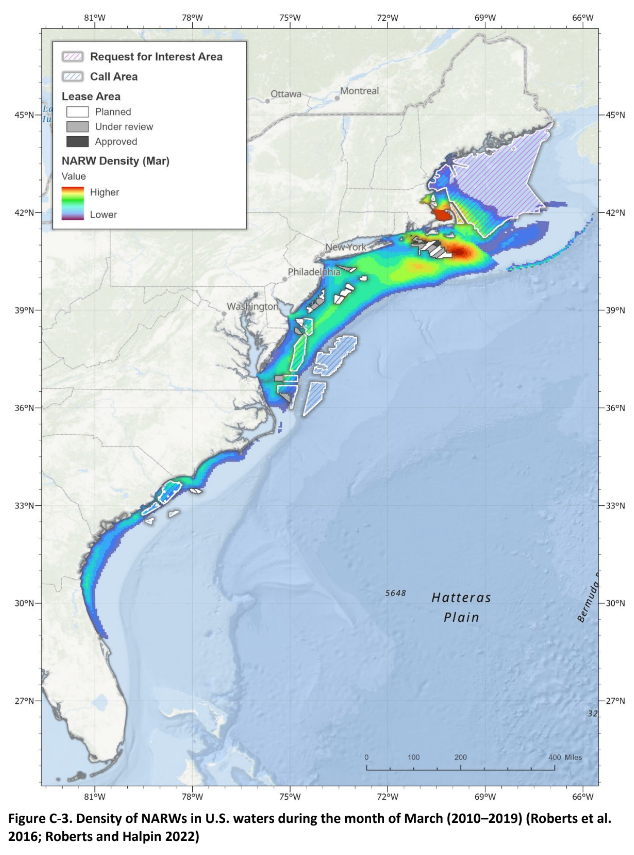
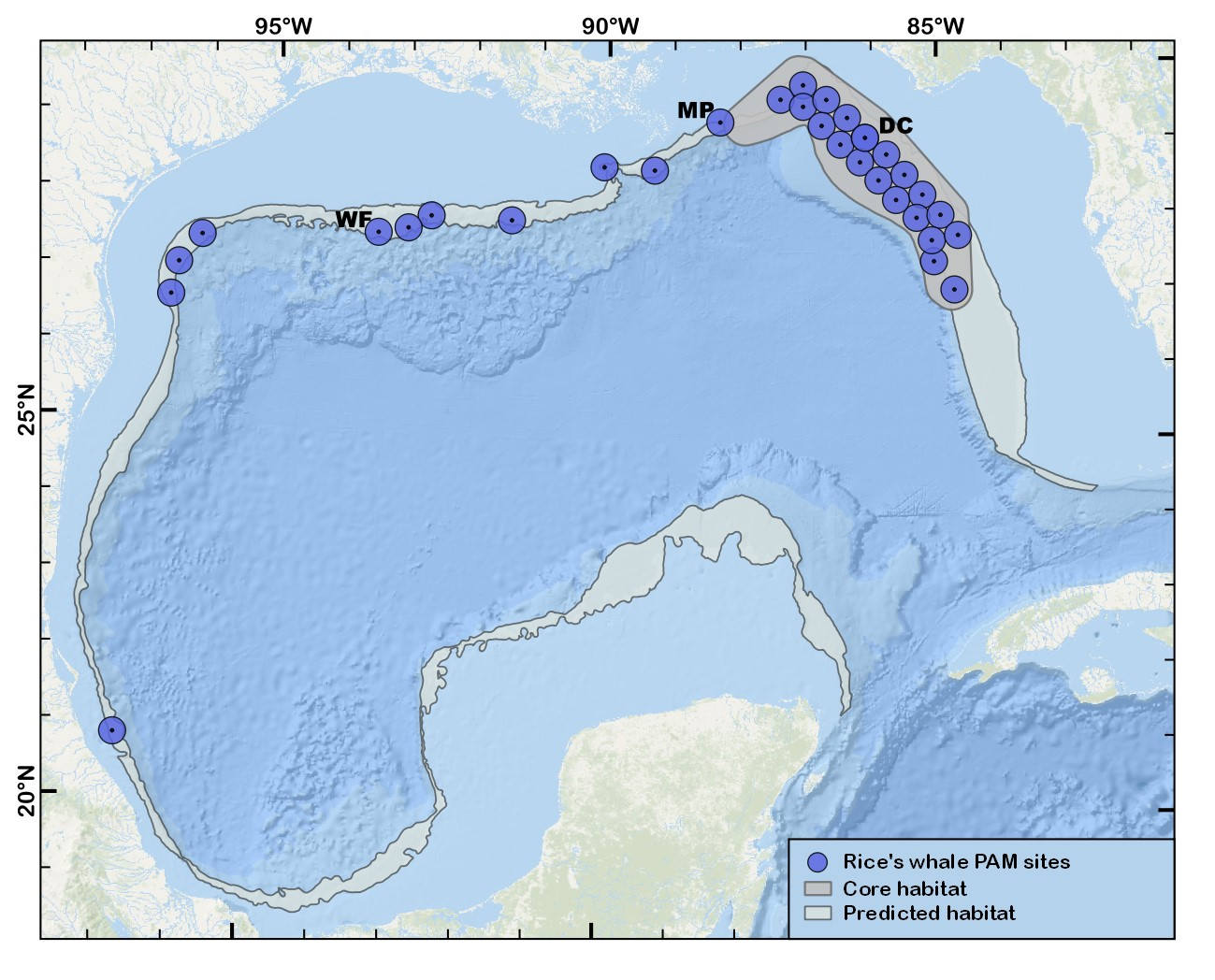
Note (below) the proximity of existing and planned wind leases to moderate to high density RIght whale areas compared to the more speculative expanded Rice’s whale area in the central and western GoM that is predicted based on passive acoustic recordings.

  • Field: Trion
  • Operator: Woodside
  • Partner: Pemex
  • Water depth: 2500 m (Mexico’s first ultra-deepwater project)
  • Distance from US maritime border: 30 km
  • Distance offshore: 180 km
  • Reserves: 324.7 million BOE proved, 478.7 million BOE probable
  • Production: Floating Production Unit with an oil production capacity of 100,000 B/D connected to an FSO vessel with a capacity of 950,000 bbl. Gas not used to power FPU will be reinjected
  • First oil: 2028
  • Only mentioned here 😉: The predicted Rice’s whale habitat extends southward between the 100 and 400 m isobaths into Mexican waters. Background.

The civil penalties provision in the 1978 OCS Lands Act (OCSLA) Amendments was flawed in that it stipulated that operators must be given time to take corrective action before a civil penalty could be assessed. The “time to take corrective action” requirement was confirmed by a 1983 Federal Court decision in Louisiana:

The Court agrees with Chevron’s construction of Section 24(b) and holds that civil penalties may only be imposed under Section 24(b) for violations which continue after the violator has been notified of the breach and has failed to correct it within a reasonable period allowed. This conclusion is based primarily upon a careful review of the pertinent statute. The first sentence sets forth the conditions of liability:

If any person fails to comply with any [provision of the Act] after notice of such failure and expiration of any reasonable period allowed for corrective action, such person shall be liable for a civil penalty of not more than $10,000 for each day of the continuance of such failure.

The court decision gutted the Minerals Management Service (MMS) civil penalties program. Civil penalties could no longer be assessed until the operators had been given time to correct their violations, even those that endangered workers and the environment.

Ironically, Congressman George Miller (D-CA), an ardent opponent of the offshore oil and gas program, proved to be an important MMS ally by adding language to the Oil Pollution Act of 1990 that amended the OCSLA civil penalties provision. The first draft of that language expanded the civil penalties authority to include violations that may constitute a threat of serious, irreparable, or immediate harm or damage to life, property, or the environment.

We were able to revise that draft by adding the words “or constituted” after “constitute” to cover situations where the threat was no longer present. For example, if an inspector found that a well had been drilled without required elements of the well control system in place, the threat may no longer be present at the time the violation was detected but it certainly was when the well was drilled.

The revived MMS civil penalties program was fair and effective, and BSEE seems to be administering the program in a similar manner. Civil penalties data for the past 4 years will be posted next week.

Congressman George Miller (CA)

For those interested in safety and compliance data, a good BSEE update for the Gulf of Mexico is attached.

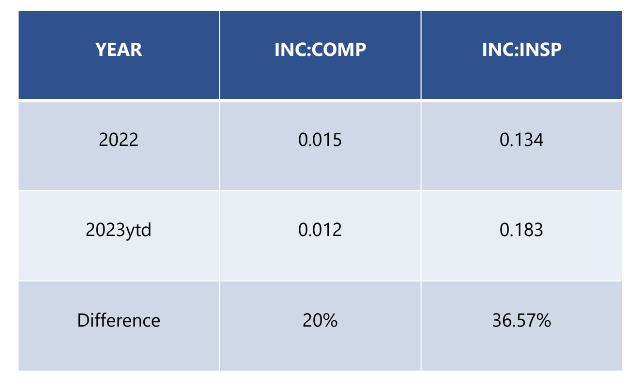
Interestingly, (slide pasted below), there were 20% fewer Incidents of Noncompliance (INCs) per component inspected but 37% more INCs/inspection. This would seem to imply high INC rates at less complex (typically older) facilities with relatively fewer components.

Posted 2023 inspection data indicate high INC/inspection rates for Cox and affiliates Energy XXI GOM and EPL that have filed for bankruptcy. Through August, these companies have accounted for 44% (635/1457) of all INCs issued in 2023. This may explain, at least in part, the divergence in the 2 compliance measures.