
Posted in California, Uncategorized | Tagged Babylon Bee, California Coastal Commission | Leave a Comment »
The Revolution Wind shutdown order is attached. The letter cites concerns about national security and interference with other offshore activities.
Excerpt from Ørsted’s response:
“Ørsted is evaluating all options to resolve the matter expeditiously. This includes engagement with relevant permitting agencies for any necessary clarification or resolution as well as through potential legal proceedings, with the aim being to proceed with continued project construction towards COD in the second half of 2026.”
Posted in energy policy, Offshore Wind, Regulation | Tagged BOEM, interference with other uses, national security, Orsted, Revolution Wind, shutdown order | Leave a Comment »
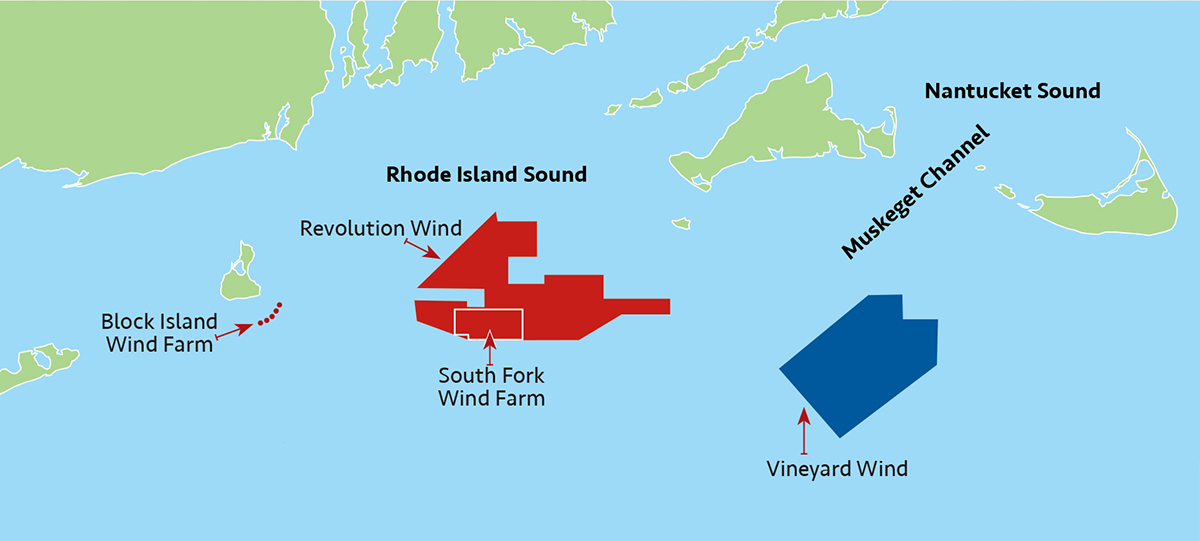
The Bureau of Ocean Energy Management (BOEM) is halting activity on the Revolution Wind project off the coast of Rhode Island and Connecticut. No details on this decision have been provided.
According to Ørsted, all of Revolution Wind’s foundations and almost 70 per cent of the turbines have been installed.
Revolution Wind is a partnership between Ørsted and Global Infrastructure Partners’ Skyborn Renewables.
Posted in energy policy, Offshore Wind, Regulation | Tagged activity halted, BOEM, Orsted, Revolution Wind | Leave a Comment »
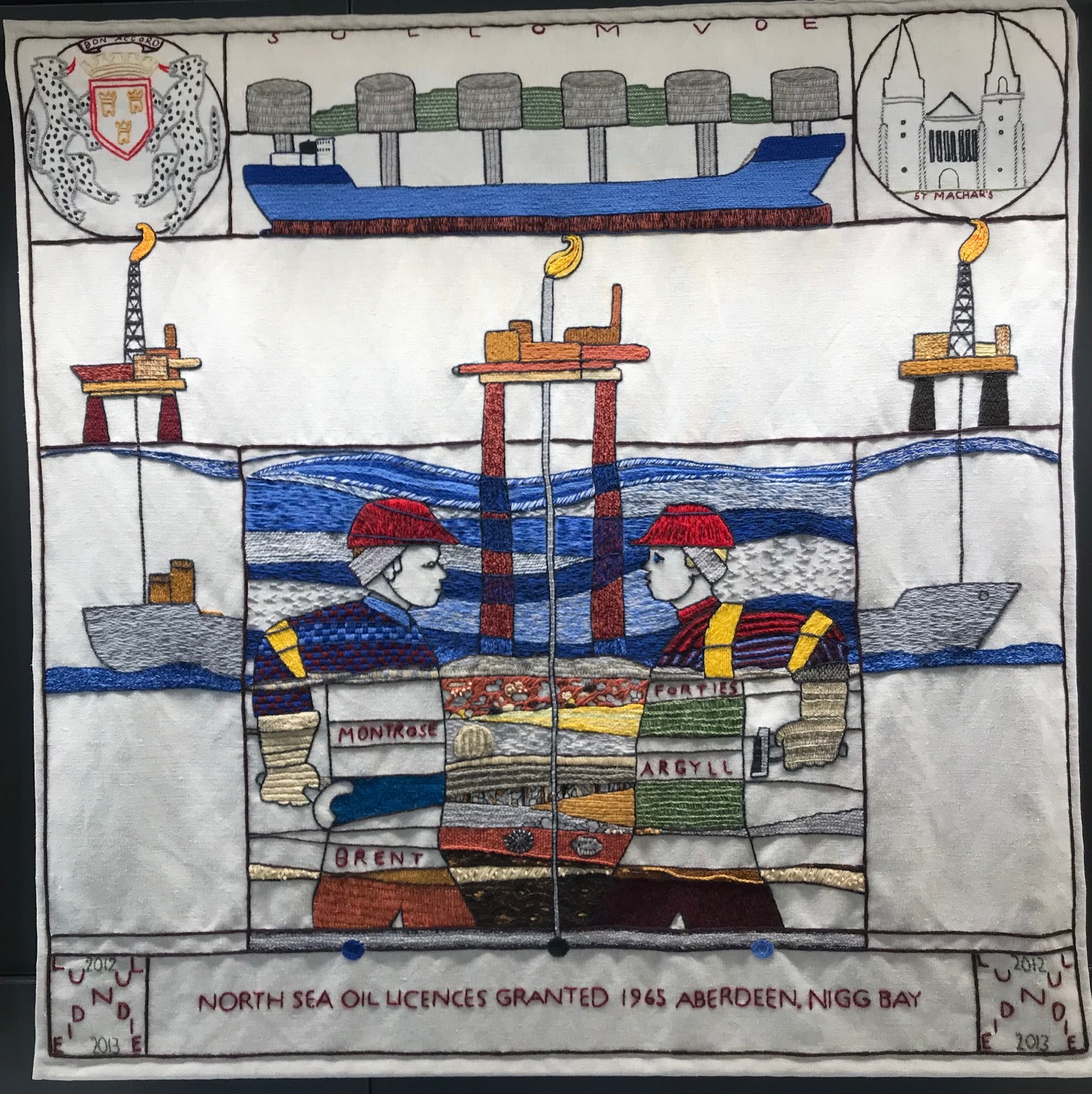
JL Daeschler, pioneering subsea engineer, artist, resident of Scotland, and BOE contributor, visited The Great Tapestry of Scotland exhibition in Galashiels. He shared this image of a tapestry tribute to North Sea workers.
JL reports that the Great Tapestry is 143 m long, and that more than 1000 people worked 50,000+ hours on the various historical panels!
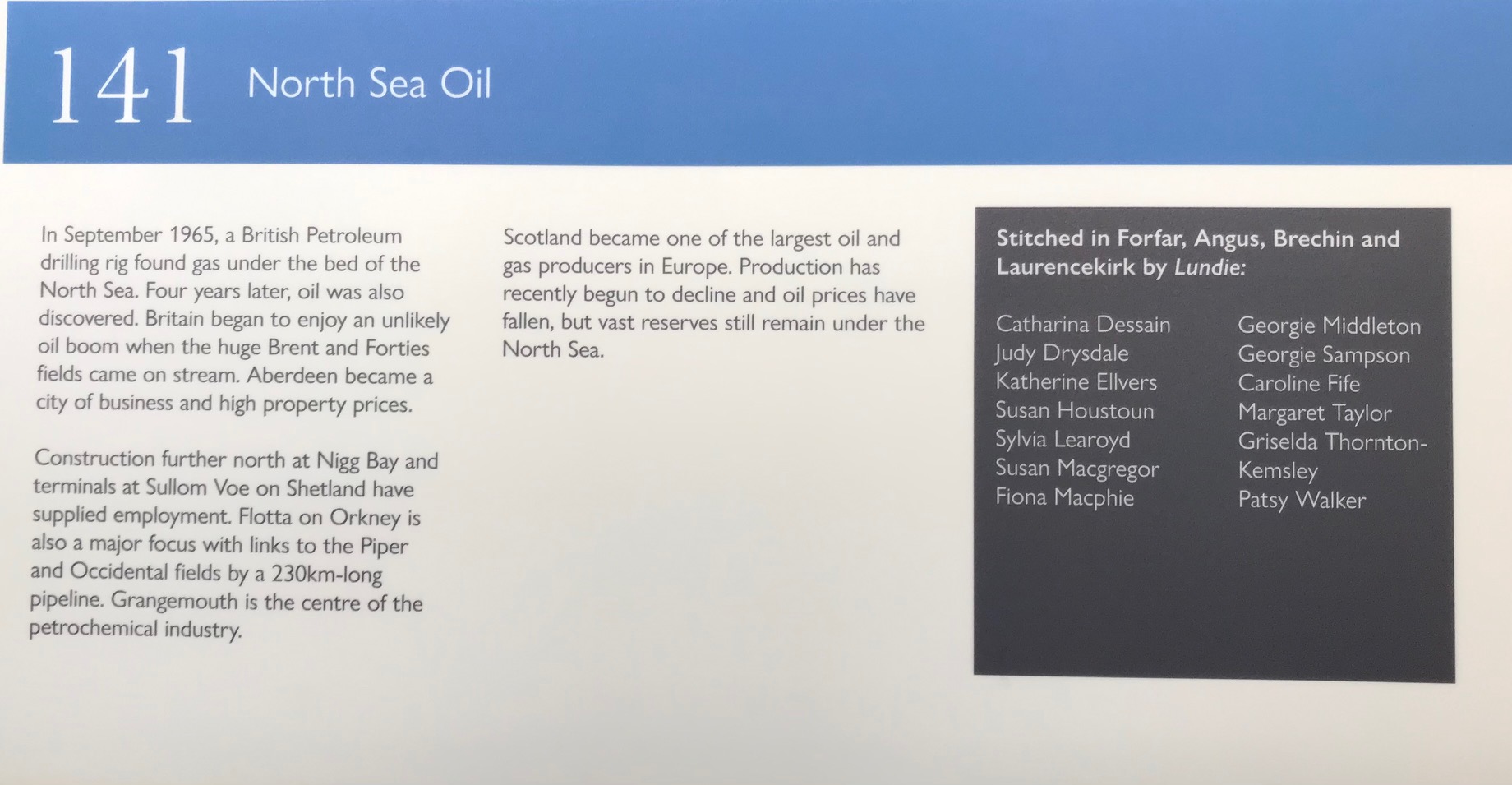
Beneath the North Sea oil panel is some historical information and the names of those who did the stitching:

Posted in Offshore Energy - General, UK, Uncategorized | Tagged Great Tapestry, history, JL Daeschler, North Sea oil and gas, Scotland | Leave a Comment »
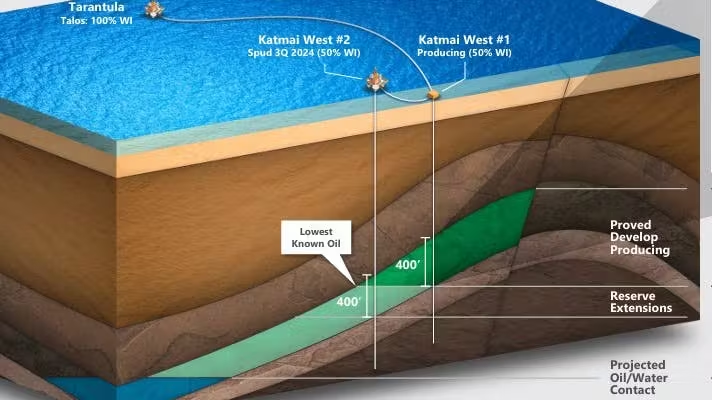
Talos announced successful drilling results at the Daenerys prospect (Katmai West #2) in the Gulf of America (Walker Ridge blocks 106, 107, 150, and 151).
Daenerys is a good example of the evolution of deepwater project ownership, which was once exclusively the domain of major international oil companies. Over the past 20 years, participation by independents increased gradually, followed by smaller independents and informed investment companies.

Impressively, the Daenerys partnership (table below) includes a tribe that has the same % ownership as a super-major, and a highly efficient investment company owned by a single person.
| Talos (operator) | large US independent | 27.0% share |
| Shell | international supermajor | 22.5% |
| Red Willow | private company owned by the Southern Ute Tribe | 22.5% |
| Houston Energy | private independent focused on deepwater energy resources | 10.0% |
| Cathexis | holding company owned by a single individual | 9.0% |
| HEQ | portfolio company focused on deepwater Gulf | 9. |
Posted in Gulf of Mexico, Offshore Energy - General | Tagged Cathexis, Daenerys, deepwater development, HEQ, Houston Energy, Red Willow, Shell, Southern Ute Tribe, Talos | Leave a Comment »
I never liked the label “slips, trips, and falls” (STFs) because the words “slips and trips” trivialize the most common cause of serious offshore casualties. Perhaps, the name of this category should be simplified to “falls,” because that is the consequence of concern.
Unfortunately, STFs persist at an unacceptably high rate. In the attached Safety Alert, BSEE informs that between May 2024 and April 2025, 22% of all injuries were attributed to STFs. Many of these injuries were classified as major.
BSEE conducted focused inspections of 19 facilities (17 different operators) to better assess the STF problem. They found common deficiencies in training, hazard identification, and other preventive measures. These deficiencies and the associated safety management recommendations are listed in the Safety Alert.
Kudos to BSEE for their excellent Safety Alert program. Unfortunately, unacceptable delays in updating their incident tables and OCS performance measures data make it difficult to assess industry wide safety performance trends. The most recent data are for 2023, and some of those data raise concerns. For example, the number of fires (152) was the highest in the history of the performance measures data set (dates back to 1996) by some margin. What happened in 2024 and the first half of 2025? These data should be readily available and posted in a timely manner. No offshore facility fire is trivial.
Posted in accidents, Gulf of Mexico, Offshore Energy - General, Regulation | Tagged BSEE Safety Alert, fires, incident tables, performance based inspections, performance data, safety management, slips trips falls | Leave a Comment »
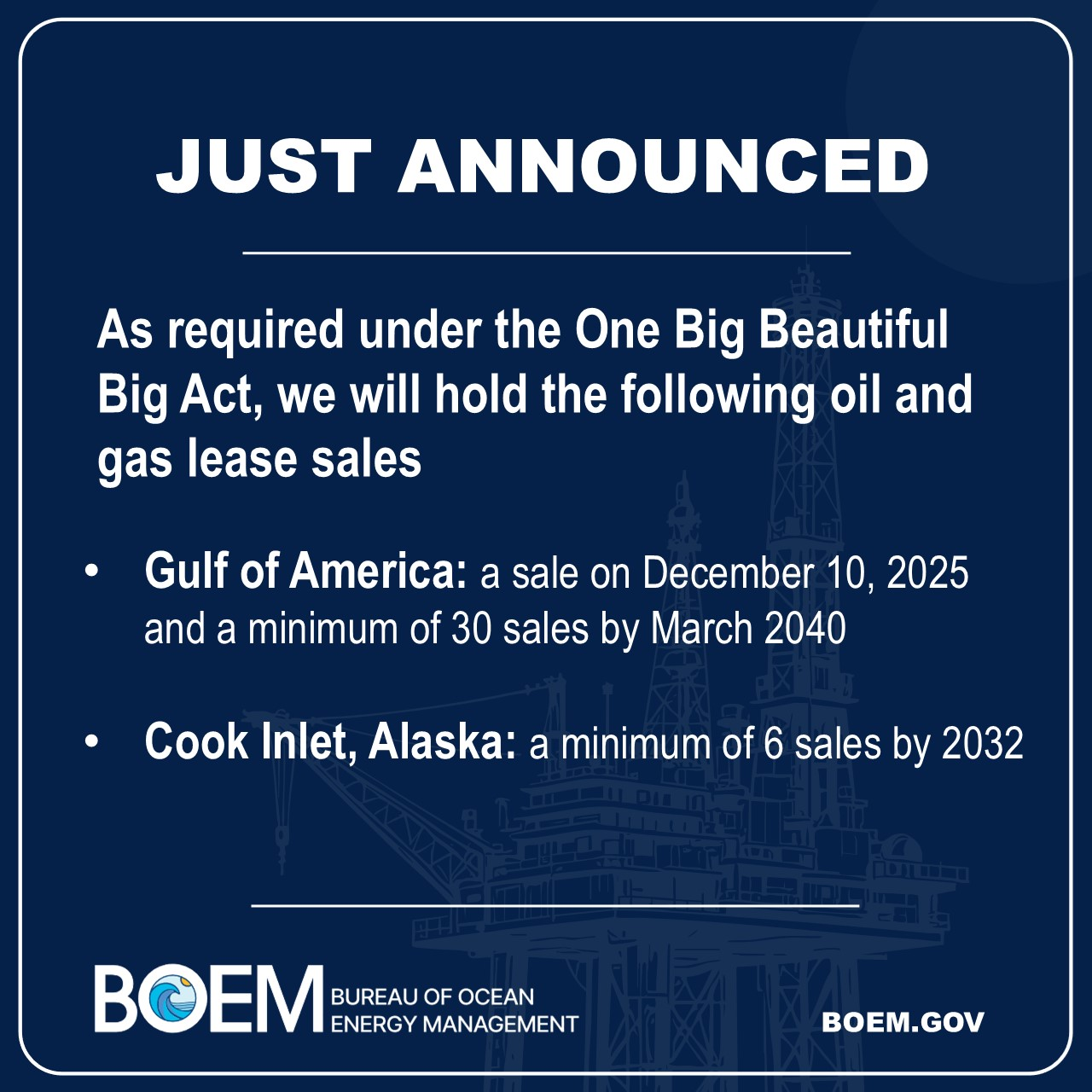
Offshore Lease Sale Schedule
| Year | Cook Inlet Sale | Gulf of America Sales |
|---|---|---|
| 2025 | — | Dec. 10 |
| 2026 | March | March, August |
| 2027 | March | March, August |
| 2028 | March | March, August |
| 2029 | — | March, August |
| 2030 | March | March, August |
| 2031 | March | March, August |
| 2032 | March | March, August |
| 2033–2039 | — | March, August |
| 2040 | — | March |
Posted in Alaska, energy policy, Gulf of Mexico, Offshore Energy - General | Tagged BOEM, Cook Inlet, Gulf of America, OCS leasing, US Dept. of the Interior | Leave a Comment »
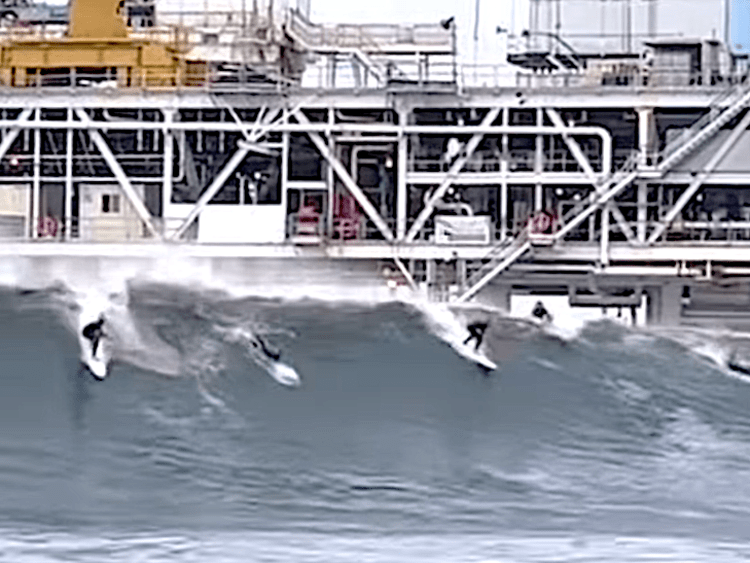
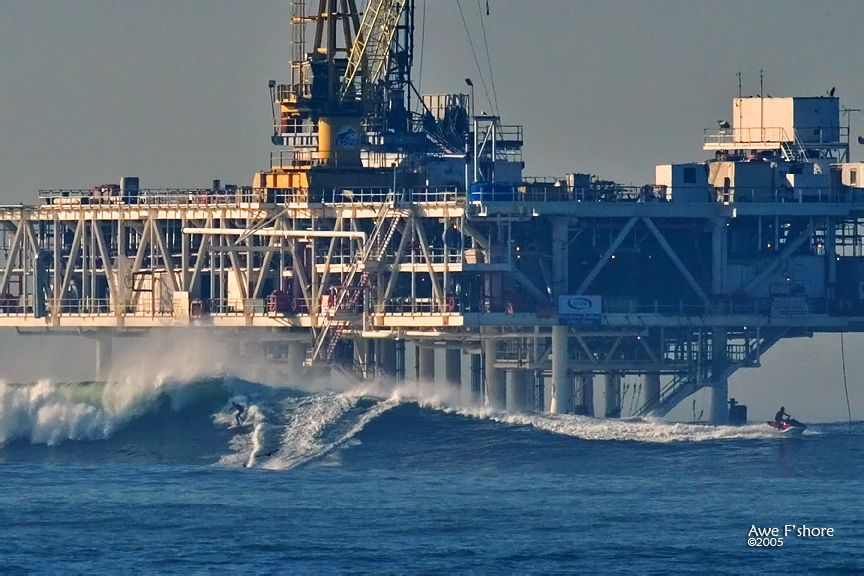
Eloquent eulogy by DCOR (platform operator) CEO Alan Templeton: “Last Sunday, August 10, I joined a small group of DCOR personnel on Platform Esther to witness her final moments of operation. At exactly 3:00 p.m., we pressed the ESD on the production deck, and one by one, the sounds of compressors and pumps faded until the platform fell silent — a profound and bittersweet moment in California’s energy history.
For over half a century, Esther stood off the coast of Orange County, first installed in the early 1960s as one of California’s iconic man-made oil islands. She blended into the horizon while quietly producing oil and gas, surviving storms, and later being rebuilt in 1985 into the platform we know today. More than just steel and pilings, Esther was a proving ground for innovation, a dependable asset, and a source of pride for the men and women who worked safely on her decks.
While she has now been permanently shut in, her legacy remains — a testament to the ingenuity, resilience, and dedication that have defined California’s offshore industry for generations.“
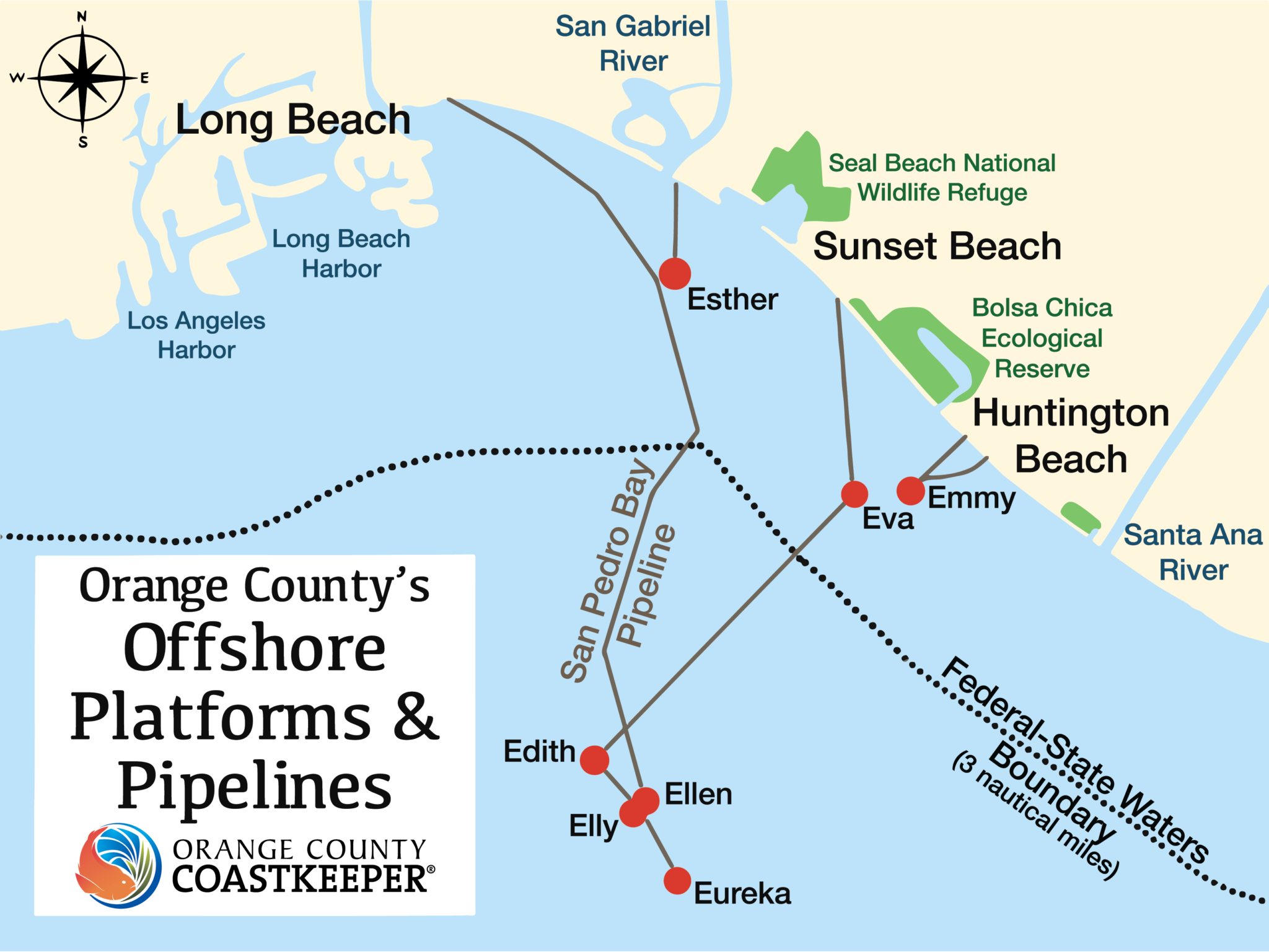
Litigation prematurely ended production at Esther, which would have had an estimated 15 more years of operative life. The attached settlement agreement, shared by John Smith, ends a dispute between the State Lands Commission and DCOR over repurposing a pipeline to transport oil from state Platform Eva to Federal Platform Edith (diagram above).
In exchange for relinquishing its mineral rights and decommissioning Platform Esther, the settlement grants DCOR a $10 million royalty credit on future oil produced from Platform Eva. This credit is significantly less than the value of remaining production from Esther.
Platform Esther, is one of three remaining oil production platforms in California state waters.
Posted in California, energy policy, Offshore Energy - General, pipelines | Tagged California State Lands Commission, DCOR, decommissioning, historic platform, Huntington Beach, platform Esther, settlement agreement, surfers | Leave a Comment »

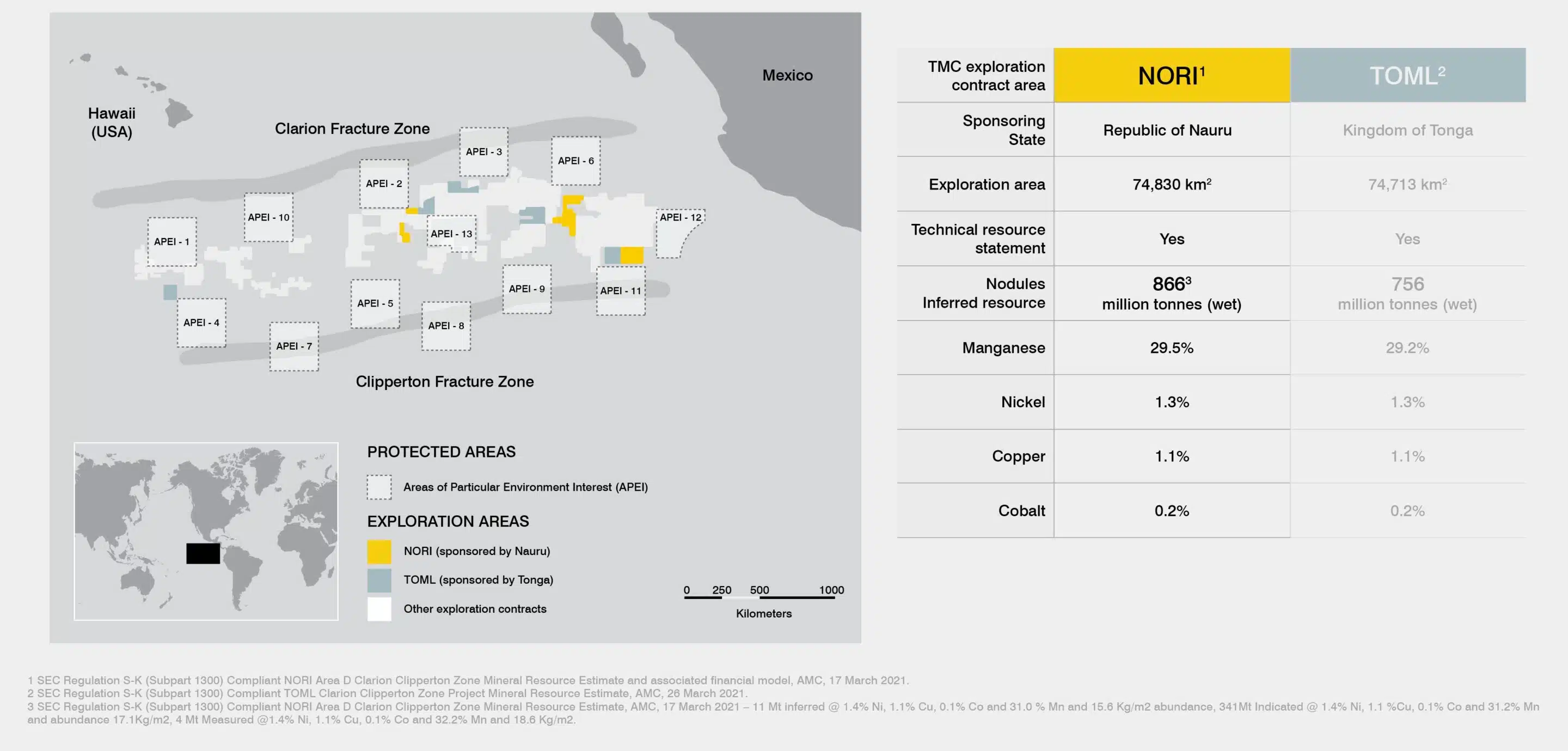
Highlights from TMC’s Q2 update:
- On August 11, 2025, TMC USA received notice of full compliance from the National Oceanic and Atmospheric Administration (NOAA) on its exploration applications, and reconfirmation that TMC USA has priority right over both exploration areas
- Both applications entered the certification stage in late July, which we expect to be approximately 100 days
- In light of recent U.S. regulatory developments, TMC expects to commence commercial production from the NORI-D Area in the fourth quarter of 2027 if we receive a commercial permit before scaling to an average annual production rate of 10.8 million tonnes of wet nodules per annum (Mtpa) at steady state (2031 through 2043) production, with an expected 18-year life of mine (LOM);
Meanwhile, after missing deadlines in 2020 and 2023, the International Seabed Authority (ISA) again failed to deliver a Mining Code as communicated in their 2023 roadmap during the second part of their 30th session in July 2025. No new roadmap or new target date for adopting the final Mining Code has been agreed. The next ISA meeting is scheduled for March 2026. (Hence the importance of direct permitting through the US/NOAA.)

Posted in deep sea mining, energy policy | Tagged deep sea mining, first production, ISA, Naura, NOAA, NORI, permitting, TMC | Leave a Comment »
 Bud's Offshore Energy (BOE)