May 6, 2011 by offshoreenergy

Surprisingly, the post-Macondo discussion about regulatory approaches has been largely devoid of value and cost-benefit assessments. While PSA has been praised for Norway’s outstanding offshore safety record, little attention has been paid to their relatively low regulatory costs.
According to data in the 2010 Annual Report, PSA has 161 employees, and had total operating expenses of NOK 202,762,689 ($US 38.1 million) for 2010. These modest cost and staffing numbers are particularly impressive when the magnitude and complexity of Norwegian offshore operations are considered. In March 2011, Norwegian oil production averaged 2.017 million barrels per day (no. 2 offshore oil producer slightly behind Brazil) and gas production averaged 11.6 billion cubic feet per day (world offshore leader). PSA is also responsible for onshore processing facilities.
PSA’s costs are relatively modest for the same reason that their regulatory program is successful. They hold companies responsible for managing their operations and conducting inspections. They don’t approve every detail of every operation, but focus on ensuring that the company management systems are effectively implemented. They identify risks and insist that industry address them. As Magne Ognedal said in his interview with BOE:
Our regulatory philosophy is indeed firmly based on the legislated expectation that those who conduct petroleum activities are responsible for complying with the requirements of our acts and regulations. Furthermore, our regulations require that they employ a management system that systematically probes and ensures such compliance at any time. The approach to achieving this should be risk-based. So, ensuring compliance with rules and regulations is the operator’s job – not ours.
Posted in Norway, Regulation | Tagged North Sea, Norway, offshore, Regulation, safety | Leave a Comment »
May 5, 2011 by offshoreenergy
…. not every project makes sense.

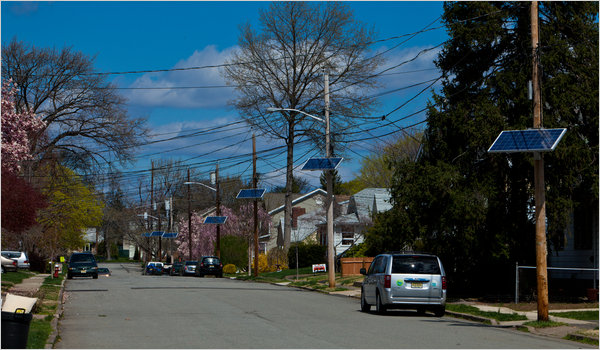
NY Times photo
Like a massive Christo project but without the advance publicity, installations have been popping up across New Jersey for about a year now, courtesy of New Jersey’s largest utility, the Public Service Electric and Gas Company. Unlike other solar projects tucked away on roofs or in industrial areas, the utility is mounting 200,000 individual panels in neighborhoods throughout its service area, covering nearly three-quarters of the state. NY Times

So what’s next, mini-turbines on every utility pole, or worse yet, geeks like this guy hooked up to the electric grid? 🙂
Posted in energy, Wind Energy | Tagged New Jersey, renewable energy, solar energy, wind turbines | Leave a Comment »
May 4, 2011 by offshoreenergy
From the Houston Chronicle:

“I didn’t have a lot of set ideas about how things should work in the energy industry,” Jahnke said. “So I thought ‘Why can’t we try a curved blade?’ like the curved hook on a Swiss Army Knife can opener.”
Since January, T-3 has been testing Jahnke’s design, slicing through just about every size of drill pipe and casing used in the Gulf.
National Oilwell Varco is showing customers its new shear rams — a pair of trident-like blades that puncture a drill pipe before cutting it to shreds. The ShearMax Low Force Casing Shear Rams are aimed at cutting through tool joints – the thickest section of a drill pipe where it screws into another section of pipe.
GE Oil & Gas’ Hydril line of blowout preventers include a hardware and software system that allows an operator to know exactly how far shear rams close within the blowout preventer.
Another new Hydril product captures the natural pressure thousands of feet underwater to help activate a shear ram.
Weatherford International has touted its new “closed-loop” drilling system, which allows for better monitoring for gas as mud comes back from a well during drilling.
Posted in Uncategorized | Tagged accidents, blowouts, BOP, Deepwater Horizon, drilling, macondo, offshore drilling, OTC, safety, well control | 1 Comment »
May 4, 2011 by offshoreenergy
From Platt’s Oilgram News: 
Canadian Prime Minister Stephen Harper turned two minority election victories since 2006 into a clear-cut majority win May 2, giving him the freedom to govern unchallenged for four years and, if he chooses, open the door to Canada’s first offshore oil and natural gas exports, climate change legislation, a national energy strategy and increased resource sector takeovers by foreign state owned companies.
Harper wasted no time telling reporters May 3 that Western Canada, whose economies rely heavily on oil, natural gas and mineral resources, can “breathe a lot easier.” He said NDP and Liberal policies calling for a ban on crude oil and LNG tankers off the northern British Columbia coast and a cap-and-trade emissions-reduction plan “were pretty seriously threatening” to Western Canada. “It’s a great thing those policies won’t be coming to fruition,” Harper promised.
Posted in Uncategorized | Tagged Canada, offshore drilling, offshore oil | Leave a Comment »
May 3, 2011 by offshoreenergy
From Platts Oilgram News:
The US has given permission for a Cuban delegation to attend a conference sponsored by the International Association of Drilling Contractors in Trinidad next month to discuss Cuba’s deepwater drilling plans, the IADC said April 29.
If the Cuban delegation, which includes a top drilling regulator, attends, it will be the first time the Cubans have discussed their deepwater drilling plans in an international forum.
The IADC had applied to the US Treasury Department for a license to allow Cubans to attend the conference and was told on April 29 the license had been granted, Brian Petty, IADC senior vice president of government affairs, said.
The session on Cuba should be quite interesting.
Posted in conferences, cuba | Tagged conference, cuba, drilling, IADC, Trinidad | Leave a Comment »
May 3, 2011 by offshoreenergy
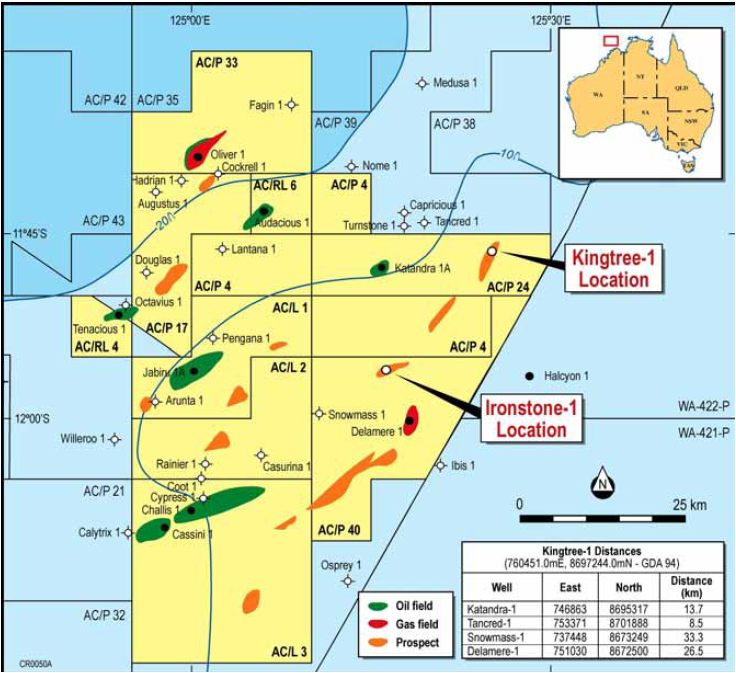
PTTEP Exploration Plan
PTTEPAA, through its responsible and proactive response to the Incident has shown its commitment to responsible environmental management.
Comment: Those who read the Montara submissions and closely followed the official inquiry are likely to question this conclusion. Perhaps PTTEP should have emphasized the lessons learned and their commitment to better performance in the future.
Posted in Uncategorized | Tagged Australia, blowouts, Montara, offshore drilling, PTTEP, safety, well control | Leave a Comment »
May 2, 2011 by offshoreenergy
Mexico, the third-largest supplier of foreign oil to the United States, could lose the capacity to export crude altogether within a decade without major new investments in exploration and production, warns a research group report released on Friday. New York Times
Posted in Uncategorized | Tagged exports, Mexico, oil production | Leave a Comment »
« Newer Posts - Older Posts »