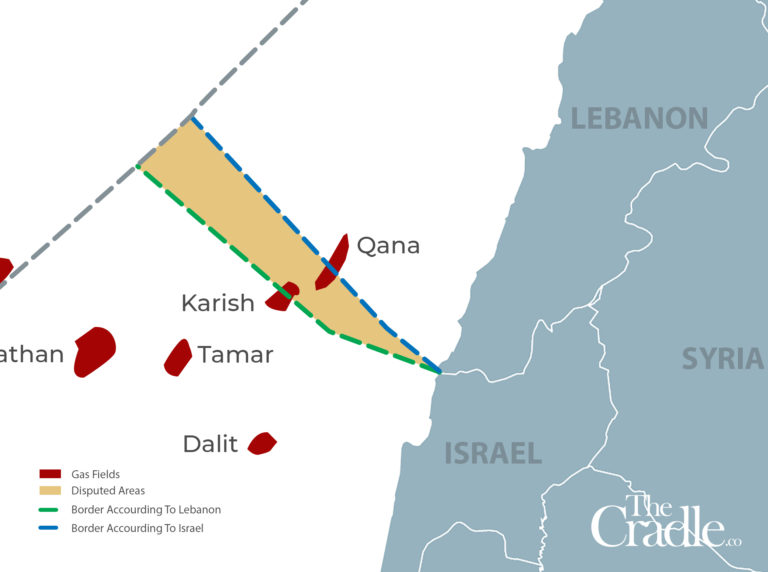
In a world where diplomacy seems to be lacking, it’s nice to learn that Israel and Lebanon have reached an agreement on their maritime boundary, and that both countries are satisfied. Based on press reports, it appears that the Qana gas field will fall under the control of Lebanon and that Israel will control the Karish field. Good for Lebanon, good for Israel, and good for energy!
Hopefully, the attached response is indicative of the quality of comments BSEE will receive on their proposed WCR revisions.
The comments, which were submitted by a retired engineer (always the best commenters 😉), express the opinion that BSEE should not remove the option for submitting failure data to BTS. While my comments will express a somewhat different opinion, I thought he made good arguments in support of his position.
“The long-term nature of OCS oil and gas development, such that production on a lease can continue for decades makes consideration of future climate pathways relevant to the Secretary’s determinations with respect to how the OCS leasing program best meets the Nation’s energy needs.“
Basing offshore leasing decisions on “future climate pathways” is a high risk strategy that may be inconsistent with the recent SCOTUS decision in West Virginia vs. EPA. A planned or phased shutdown of the offshore oil and gas program would dramatically increase economic and security risks, and has not been authorized by legislation.
“The American people have moved on. The President himself has declared ‘the Pandemic is over.’ Yet, we continue holding fast to an outdated mandate, purging hundreds of dedicated sailors, even though we struggle to meet our recruiting goals. It is now time to take a pause, reevaluate, and assess what this is costing readiness, the taxpayer, and the public perception of how we treat our people,” he wrote in the letter.
Sept 30 (Reuters) – The ruptures on the Nord Stream natural gas pipeline system under the Baltic Sea have led to what is likely the biggest single release of climate-damaging methane ever recorded, the United Nations Environment Programme said on Friday.
“This is really bad, most likely the largest emission event ever detected,” Manfredi Caltagirone, head of the IMEO for UNEP, told Reuters. “This is not helpful in a moment when we absolutely need to reduce emissions.”
Researchers at GHGSat, which uses satellites to monitor methane emissions, estimated the leak rate from one of four rupture points was 22,920 kilograms per hour. That is equivalent to burning about 630,000 pounds of coal every hour, GHGSat said in a statement.
The Nord Stream methane release, while puzzling and rather frightening given the potential for escalating international tensions, was not an environmental disaster or even a major environmental setback.
Some perspective:
estimate for the main Nord Stream leak (likely the maximum or near-maximum rate) = 22,930 kg/hr
22,930 kg/h = 550,320 kg/day = 550.320 x 10⁶g/day
total methane source forNorth American coastal waters (NASEM, Oil in the Sea, p. 63) = 4 – 20 Tg/yr
10 Tg/yr (i.e. 10 x 1012 g/yr) = 0.027 x 10¹² g/day = 27000 x 106g/day
This is ~50 times the temporary (maximum?) daily rate for the Nord Stream leak



Well Control Rule comments
October 11, 2022 by offshoreenergy
Hopefully, the attached response is indicative of the quality of comments BSEE will receive on their proposed WCR revisions.
The comments, which were submitted by a retired engineer (always the best commenters 😉), express the opinion that BSEE should not remove the option for submitting failure data to BTS. While my comments will express a somewhat different opinion, I thought he made good arguments in support of his position.
The chart below is excerpted from the SafeOCS Dashboard cited in the comment letter:
Posted in drilling, Offshore Energy - General, Regulation | Tagged BOP failure data, BSEE, comments, Well Control Rule | Leave a Comment »