Feeds:
Posts
Comments

Archive for the ‘Uncategorized’ Category

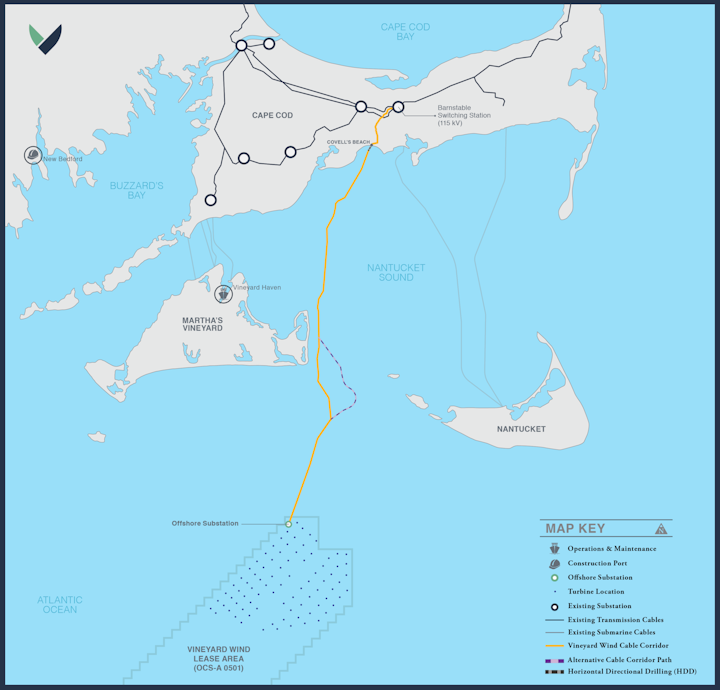
Vineyard Windmap 9 10 19 01

Washington, D.C. (9/13/2021) — Responsible Offshore Development Alliance (RODA), a broad membership-based coalition of fishing industry associations and fishing companies, filed a Petition for Review today in the First Circuit U.S. Court of Appeals regarding the Secretary of the Interior’s July 15, 2021 decision approving the Vineyard Wind 1 offshore wind energy project. This action is the culmination of many years of conscientious participation by fisheries professionals only to see their expertise and value summarily ignored by decision-makers during the leasing process.

The RODA statement is quite strong. While the new administration understandably wants to advance offshore wind development, they would have been wise to accept input from RODA and other interested parties before approving Vineyard Wind I. The fishing industry certainly has a legitimate interest in the outcome of this and other offshore wind projects.

A group of Nantucket residents had already sued BOEM over concerns about the endangered North Atlantic Right Whale. Concerns have also been expressed about the wind farm’s proximity to shore:

Fifteen miles was not OK in North Carolina or Long Island; then why is it OK for Nantucket? It’s just wrong.

David Stevenson, Caesar Rodney Institute

Read Full Post »

May be an image of monument, outdoors and text

Read Full Post »

This Canadian video was a big hit at an awards program in Houston 15 years ago. I was pleased to find it on YouTube and thought it would be a nice Labor Day feature. Kudos to the workers who produce the energy that supports our economy and our way of life. Your efforts are greatly appreciated! Happy Labor Day!

Read Full Post »

After an amazing 38 year career with MMS and BSEE, Lars Herbst has announced that he will retire at the end of 2021. Lars had important technical and managerial roles in the development of the deepwater Gulf of Mexico, the response to major hurricanes including Ivan, Katrina, and Rita, controlling the Macondo blowout and addressing the related regulatory issues, and the offshore industry’s response to the COVID-19. Lars was an active participant in the International Regulator’s Forum and is recognized worldwide for his operational and regulatory expertise. Best wishes to Lars as he transitions to the next phase of his life.

Read Full Post »

The Department of the Interior (Interior) confirmed today that the Department of Justice (DOJ) has appealed the preliminary injunction entered by the district court in Louisiana v. Biden, which enjoined Interior from implementing the pause in new federal oil and gas leasing 

DOI statement 8/16/21

The day after the fall of Kabul and 5 days after the White House urged OPEC to increase production, DOI reiterated the Administration’s support for a pause in oil and gas leasing on Federal lands (including the OCS). Given the increased risk of long-term oil supply uncertainty, rigid support for a blanket leasing pause would not seem to be a prudent policy position at this time.

DOI argues that greenhouse gas (GHG) emissions must be curtailed, but reductions in domestic production would increase the demand for imports with higher GHG intensity. Reductions in deepwater Gulf of Mexico production, which has low GHG intensity and other environmental advantages (few dispersed facilities distant from shore), would be particularly detrimental. Of course, any public policies that discourage natural gas production would also have distinct air emissions costs.

If supply restrictions increase the price of oil, net reductions in oil consumption and GHGs could be achieved. However, as evidenced by the recent appeal for increased OPEC production, higher oil prices are not consistent with Administration policy.

Read Full Post »

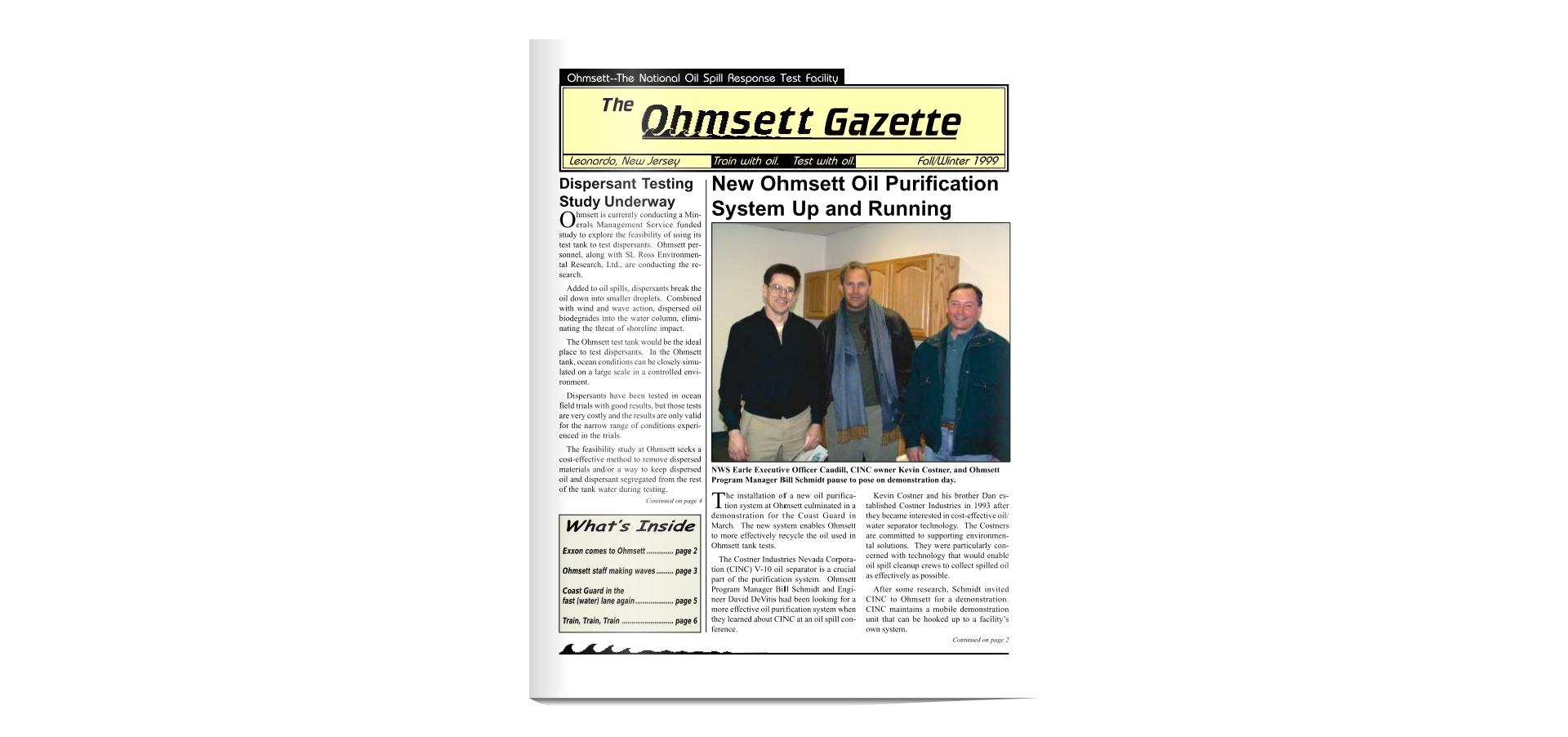
Watching Kevin Costner at the beginning of the “Field of Dreams” game in Iowa reminds me that Kevin visited the MMS Ohmsett facility in New Jersey in 1999. He and his brother had developed an oil purification system that was being tested at Ohmsett (“Tank of Dreams?”). In the picture below, Kevin is flanked by Ohmsett Manager Bill Schmidt and Engineer Dave DeVitis. Were it not for the heroic efforts of Ed Tennyson and other MMS employees, Ohmsett would have been abandoned in the 1980s. More on that in a later post.

Read Full Post »

Déjà vu?

The White House urged OPEC to boost oil production Wednesday, saying recent planned increases are insufficient as countries around the world seek to emerge from the Covid-19 pandemic.

Wall Street Journal, 8/11/2021


(Eizenstat) urged Carter to “shift the cause for inflation and energy to OPEC, to gain credibility with the American people 

Washington Post, 7/7/1979

Read Full Post »

In the early 1990’s, Department of the Interior (DOI) and Department of Energy (DOE) leadership dabbled at re-branding the OCS Oil and Gas Program by reversing the order of the words. Clever? Perhaps by Washington public relations standards. One senior manager even changed his license plate from “OCS OIL” to “MMS GAS” (not much competition for those tags 😃). Technical staff were less enthused about this simplistic marketing gimmick that misrepresented the historical and scientific facts about oil and gas production. For many years, natural gas was a byproduct of oil production that was commonly flared. (This practice continues in some regions of the world, although to a lesser extent than in the past.)

Understandably, the Oil and Gas Journal wasn’t very impressed by the change. I saved a copy of their 1/24/1994 editorial (attached) on the subject. Per the OGJ:

We at the Journal love natural gas. But that doesn’t warrant an attempt to repeal the laws of nature and ignore the weight of tradition by renaming everything “gas and oil” this and that.

John L. Kennedy, Editor, Oil and Gas Journal, 1/24/1994)

To their credit, BOEM and BSEE web pages and announcements during recent administrations (both parties) indicate a preference for the more traditional “oil and gas.” (The DOE website largely ignores the existence of either oil or natural gas.) Surprisingly, the American Petroleum Institute (API), an industry trade organization with more than 100 years of history, is now consistently using “natural gas and oil.” This rearrangement of words is not entirely consistent with the interest of API’s members. In the offshore sector, the primary interest of API members is in finding and producing oil. if you think otherwise, look at the EIA GoM gas production data. Most of the Gulf’s declining gas production is now associated with deepwater oil production, and BSEE rightfully requires that this gas be used for fuel or transported for sale. Similarly, gas is a secondary consideration for API members exploring in Alaska given that 35 trillion cu ft of North Slope gas still awaits a pipeline.

Oil companies, and those who represent them, should be proud of their current and historical role in producing oil (and gas) for our economy, security, and way of life; and of the men and women who have toiled to locate and produce petroleum resources for the benefit of society. Are there better energy alternatives? Perhaps, but issues with these alternatives remain to be resolved, and oil and gas will continue to be important. Let’s focus on producing these resources as safely, cleanly, and reliably as possible.

Read Full Post »
Jim Lane, who inspired our NMJA program many years ago, has submitted this nominee from the Texas Hill Country where he now resides. The metal stake in the picture was used to support a sapling that was planted in a county park. However, neither the employee who planted the young tree nor any of his colleagues saw fit to remove the stake. Not their job? The end result is pictured below.

Read Full Post »

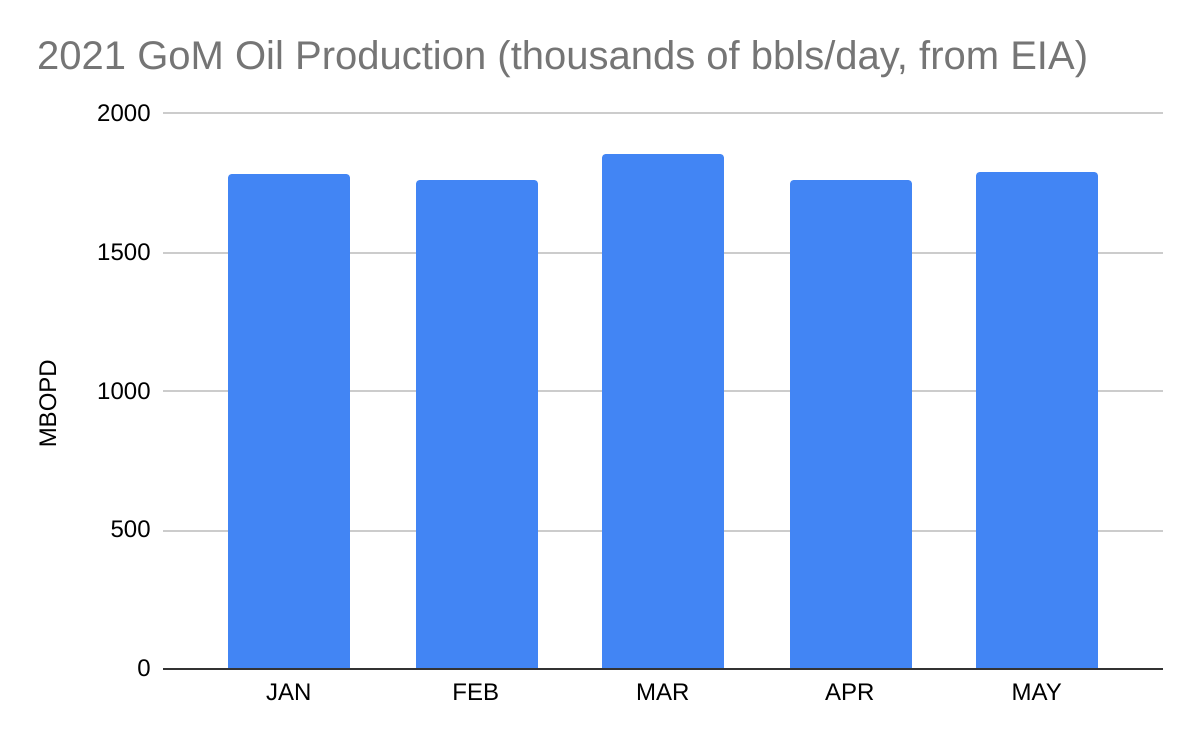
A previous BOE post estimated that current stabilized GoM oil production rates were 1.7 – 1.8 million BOPD. EIA recently announced that May production was 1.791 million BOPD, which is consistent with our estimate. Per the chart below, GoM production was essentially unchanged from the beginning of the year despite a 37% increase in the price of oil (WTI) from 1 January to 31 May. This suggests that stabilized GoM production may have peaked pending first oil from several new projects.

Key production questions:

  • Will new production from Mad Dog 2, Vito, PowerNap, Thunder Horse South 2, and the recently sanctioned Whale project offset high depletion rates elsewhere in the deepwater GoM?
  • Looking further ahead, is deepwater GoM production sustainable without increased drilling activity? Per BSEE data, only 33 deepwater wells were started in 2021 YTD, just 18 of which are classified as exploratory. Drilling is thus at historic low levels. For reference, there were 477 wells started in 2001, 149 of which were exploratory. This level of activity facilitated a 30% growth in oil production, peaking at 2 million BOPD in 2019.

Regardless of one’s views on the urgency and timing of the “energy transition,” is there any doubt that oil and gas will continue to be important to our economy and security for years to come? If not, should deepwater GoM production, with its relatively low carbon intensity, be a core element of our energy strategy? To better understand the trade-offs, I suggest that BOEM’s Environmental Studies Program conduct a peer reviewed assessment of the carbon intensity of domestic and international supply alternatives. Product transportation considerations should be included in this assessment.

Read Full Post »

« Newer Posts - Older Posts »