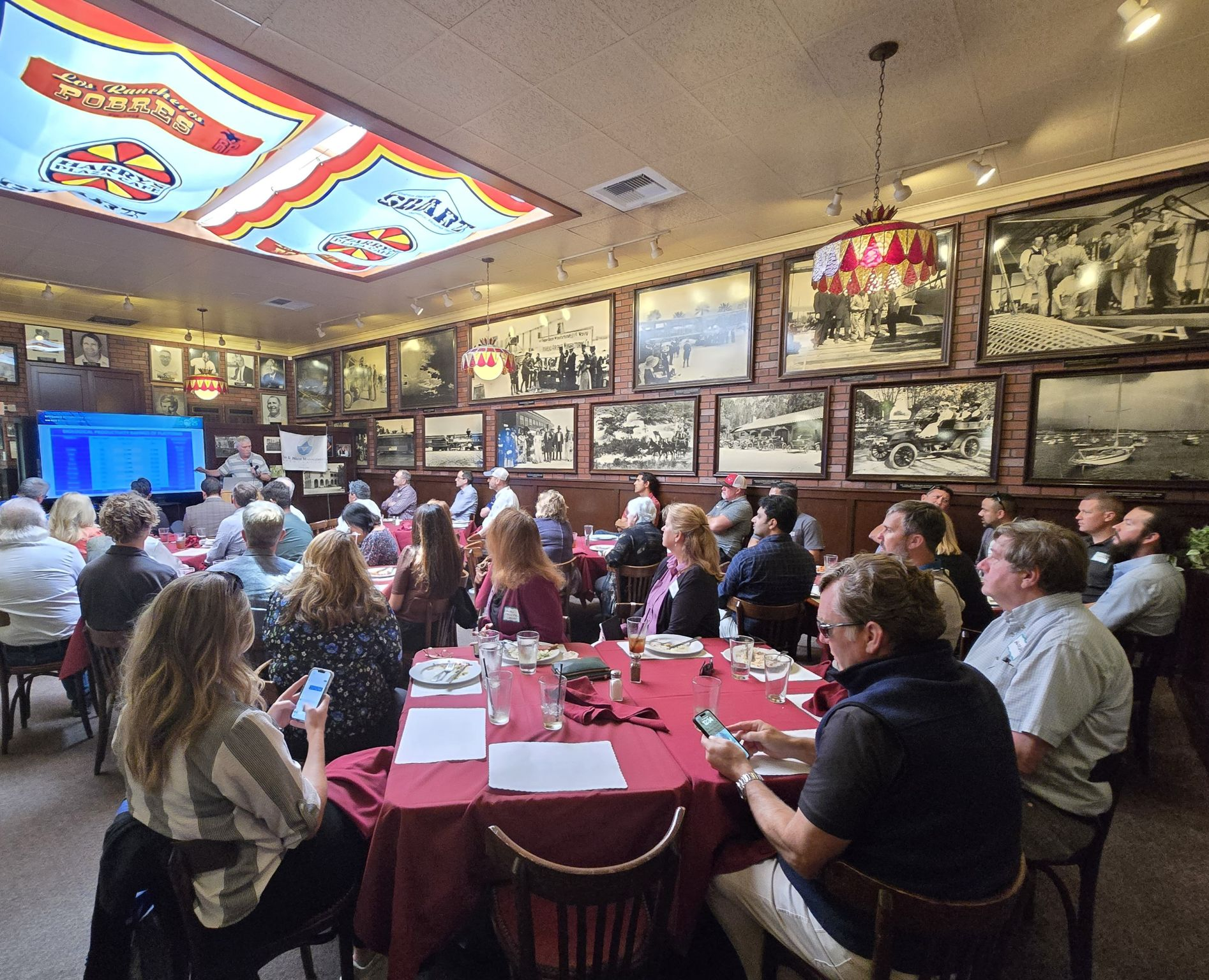
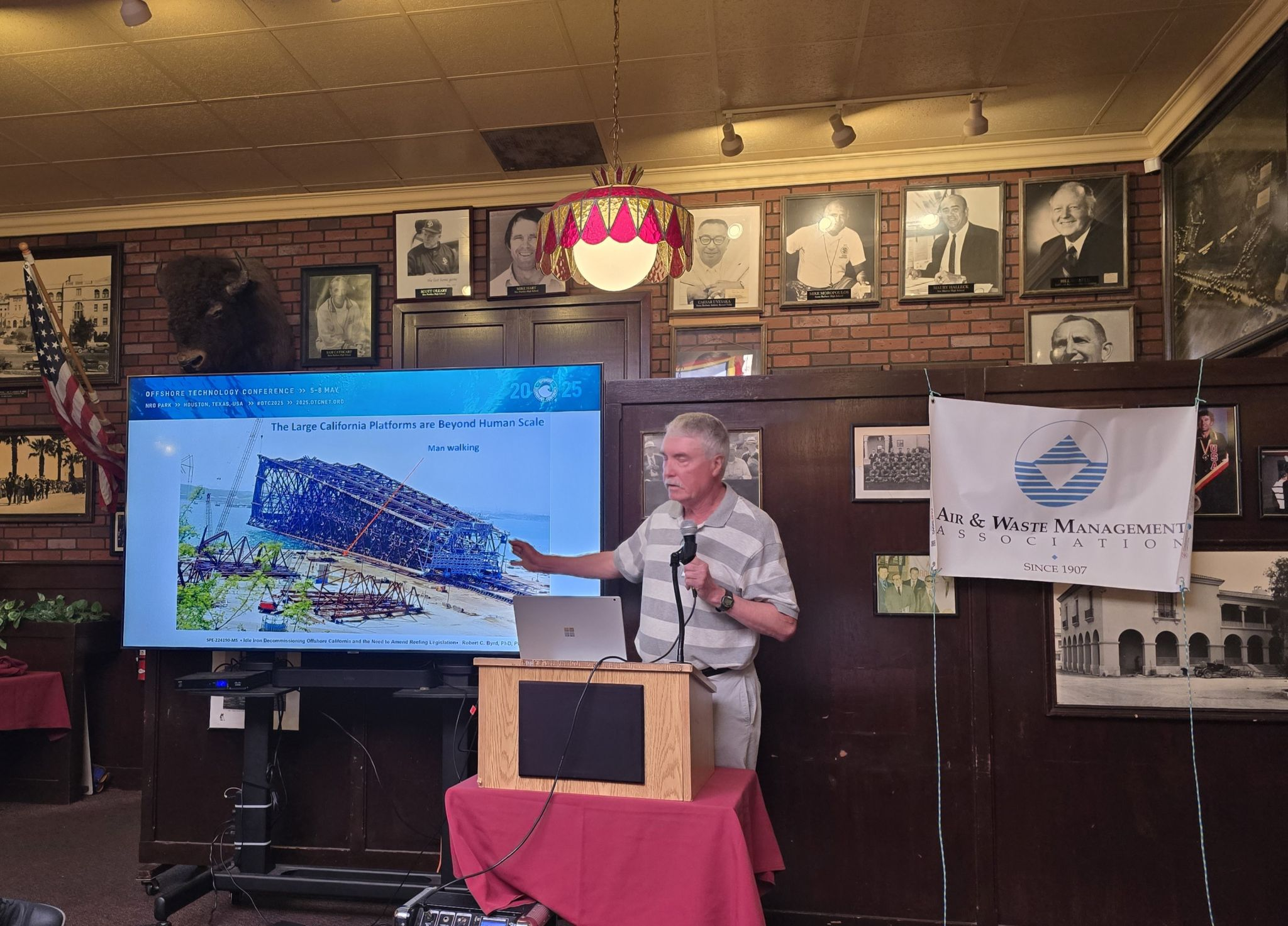
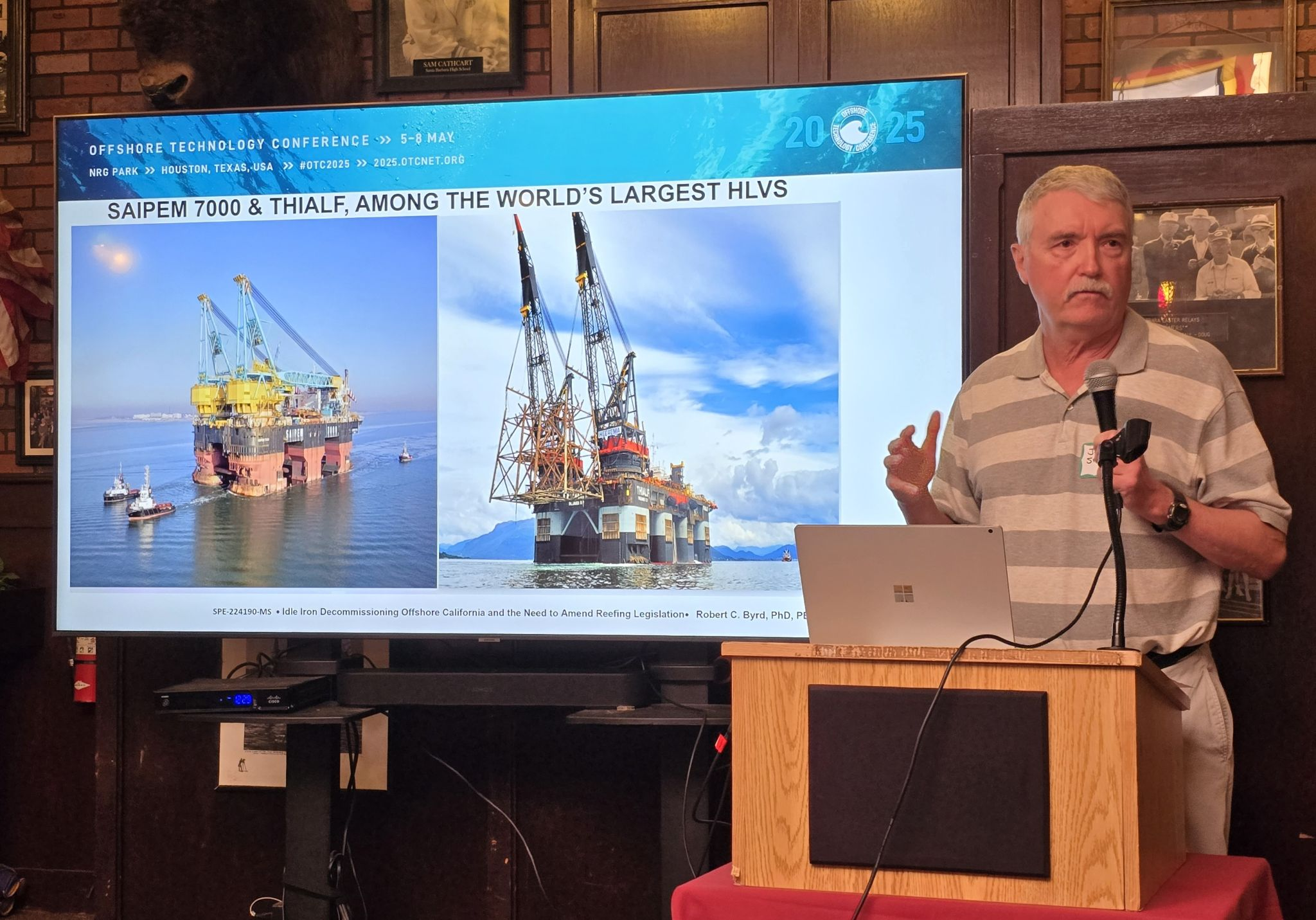
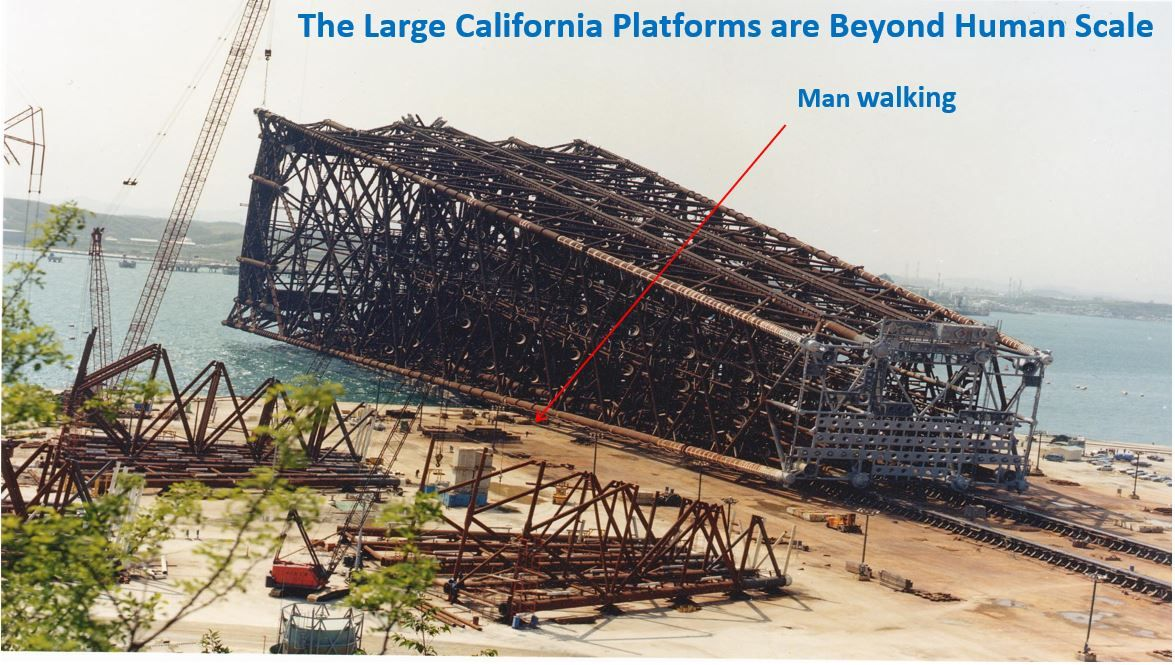
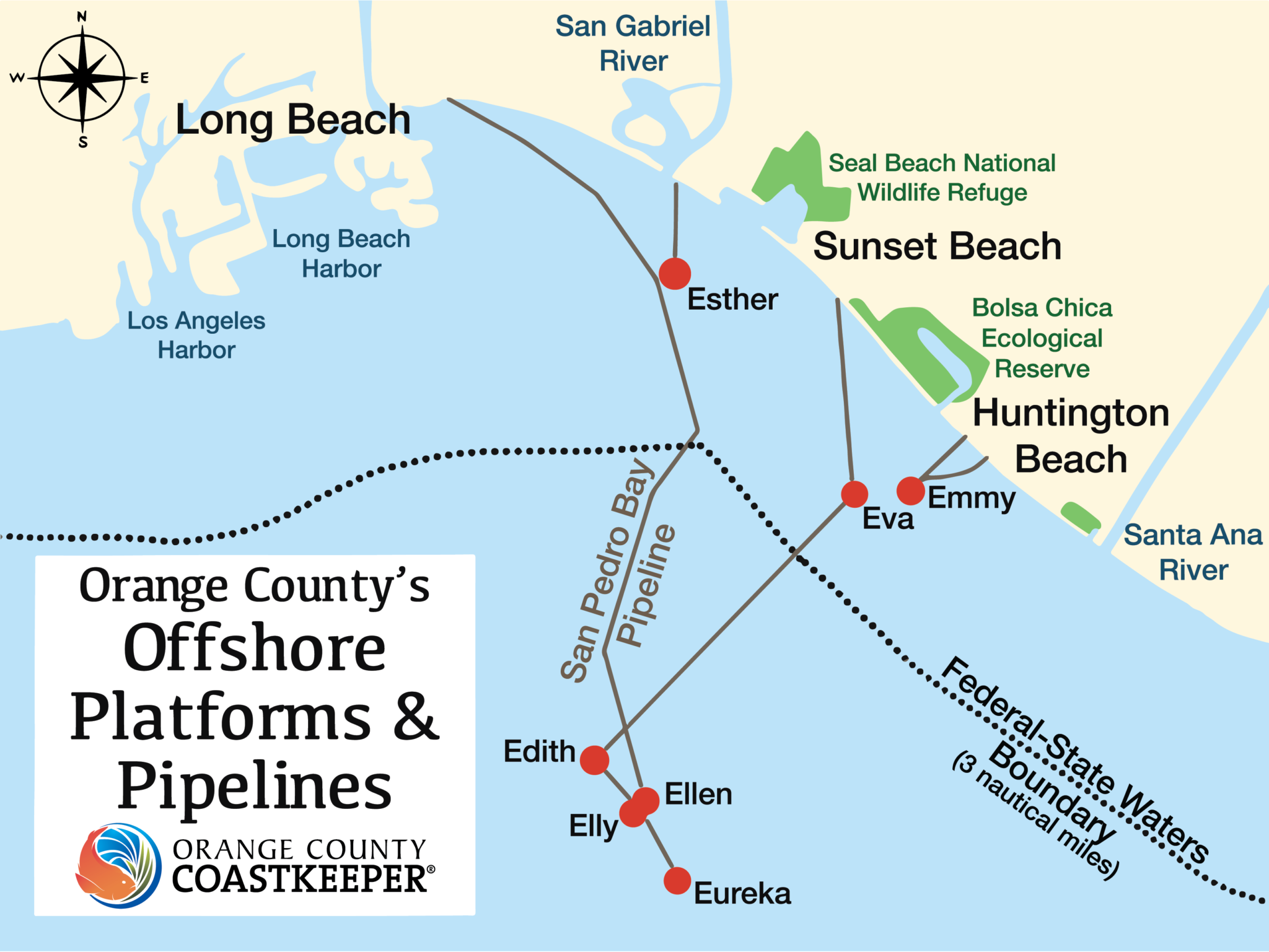
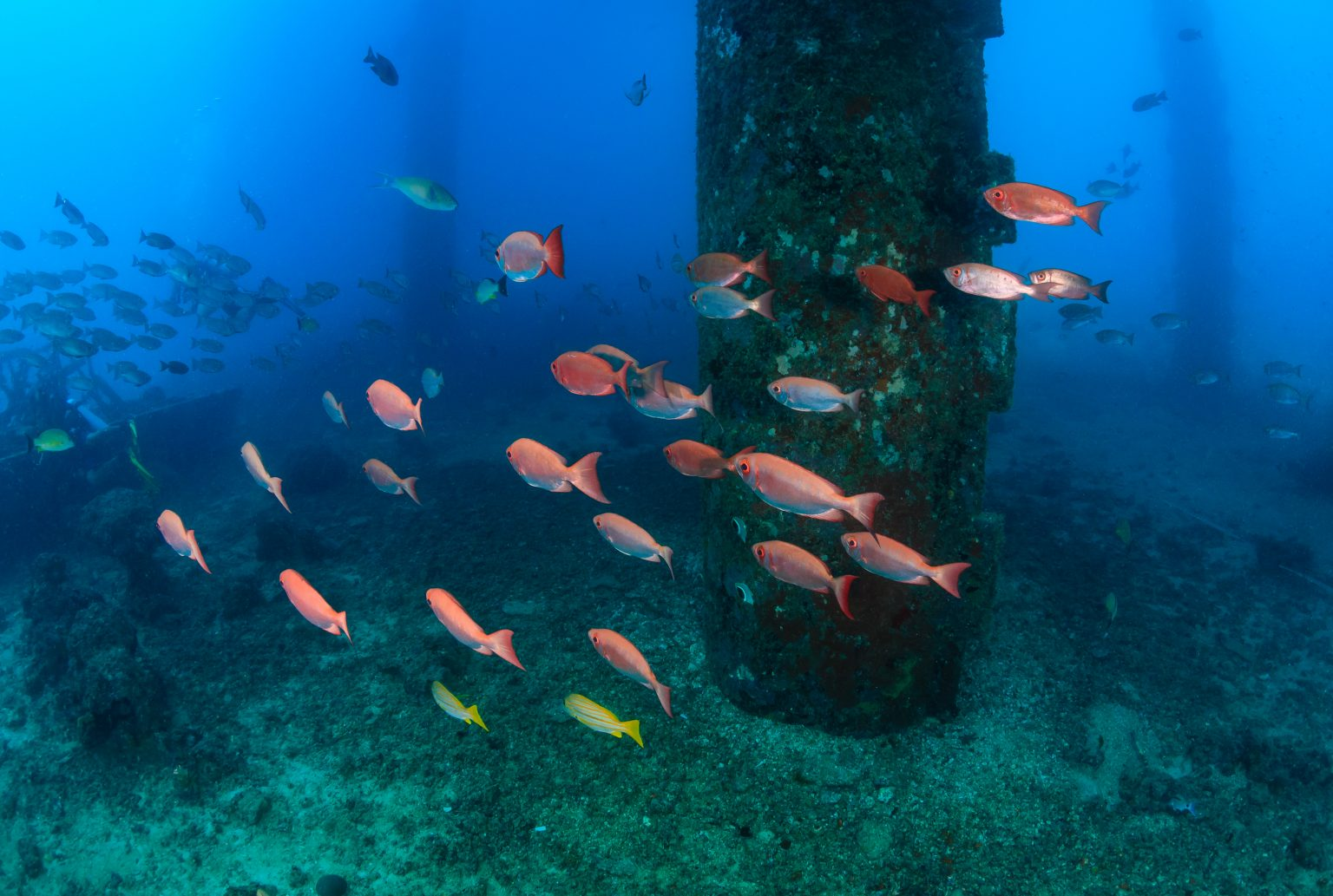
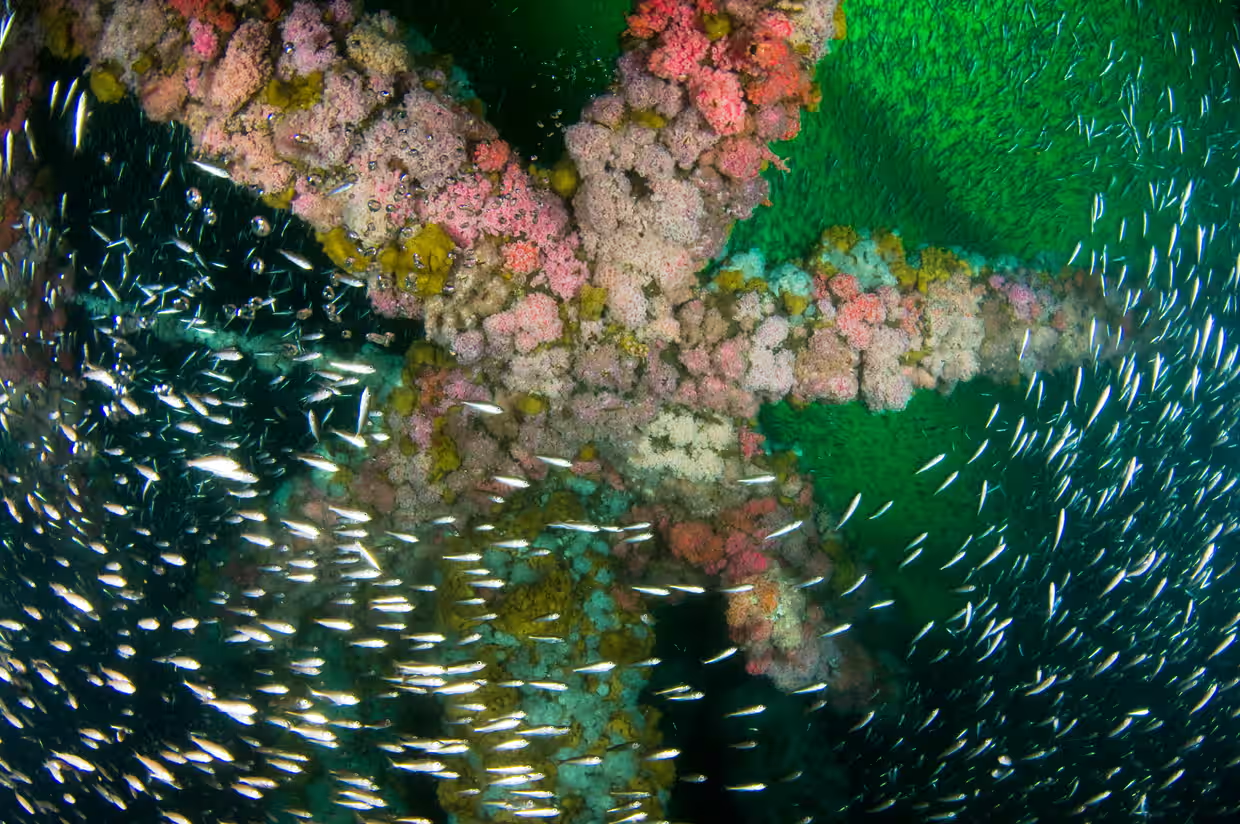
Sharing pictures from John Smith’s excellent decommissioning presentation at the Western States Petroleum Assoc. luncheon in Santa Barbara in May. You can view or download the presentation here.
Posted in California, Offshore Energy - General, rigs-to-reefs, tagged BOEM, killer whales, platform ecology, Platform Holly, rigs-to-reefs, Rigs-to-Refuge, sea lions, shelter, UCSB on May 30, 2025| Leave a Comment »

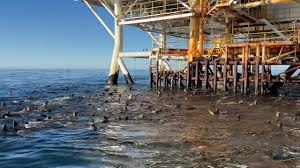
During a recent dive survey at Platform Holly off California’s coast, scientists from the University of California, Santa Barbara (UCSB) had to pause fieldwork because dozens of sea lions took shelter around the structure.
The reason? A pod of killer whales had been spotted hunting near another offshore platform in federal waters.
These real-time encounters reveal more than marine drama. They highlight the ecological role that offshore platforms can play as part of the seascape. UCSB’s work is part of our ongoing study, Understanding Biological Connectivity Among Offshore Structures and Natural Reefs, which explores how marine life moves among natural and manmade habitats.
Posted in California, decommissioning, Offshore Energy - General, rigs-to-reefs, tagged Ann Bull, California, John Smith, Milton Love, Platform Holly, rigs to reefs, Scientific American on November 22, 2024| Leave a Comment »
Attached is an excellent Scientific American article featuring BOE contributor and decommissioning specialist John Smith, former colleague and marine biologist Dr. Ann Bull, and Dr. Milton Love, the leading authority on California’s offshore platform ecosystems.
I had the pleasure of taking a highly informative boat tour around Platform Holly with Dr. Love and a group of international visitors. Holly, which is pictured at sunset in the BOE header, is among the platforms awaiting decommissioning.
Dr. Love on the total removal of California offshore platforms:
“As a biologist, I just give people facts,” he says. “But I have my own view as a citizen, which is: I just think it’s criminal to kill huge numbers of animals because they settled on a piece of steel instead of a rock.”
Posted in California, Offshore Energy - General, rigs-to-reefs, Uncategorized, tagged big swell, California, platform Esther, rigs-to-rides, surf on December 31, 2023| Leave a Comment »
Posted in Offshore Energy - General, rigs-to-reefs, Uncategorized, tagged Little Mermaid, reef effect, Thanksgiving, Under the Sea on November 23, 2023| Leave a Comment »
Posted in decommissioning, Gulf of Mexico, Offshore Energy - General, rigs-to-reefs, tagged decommissioning, Gulf of Mexico, OCS facility dashboard, rigs to reefs on November 22, 2023| Leave a Comment »
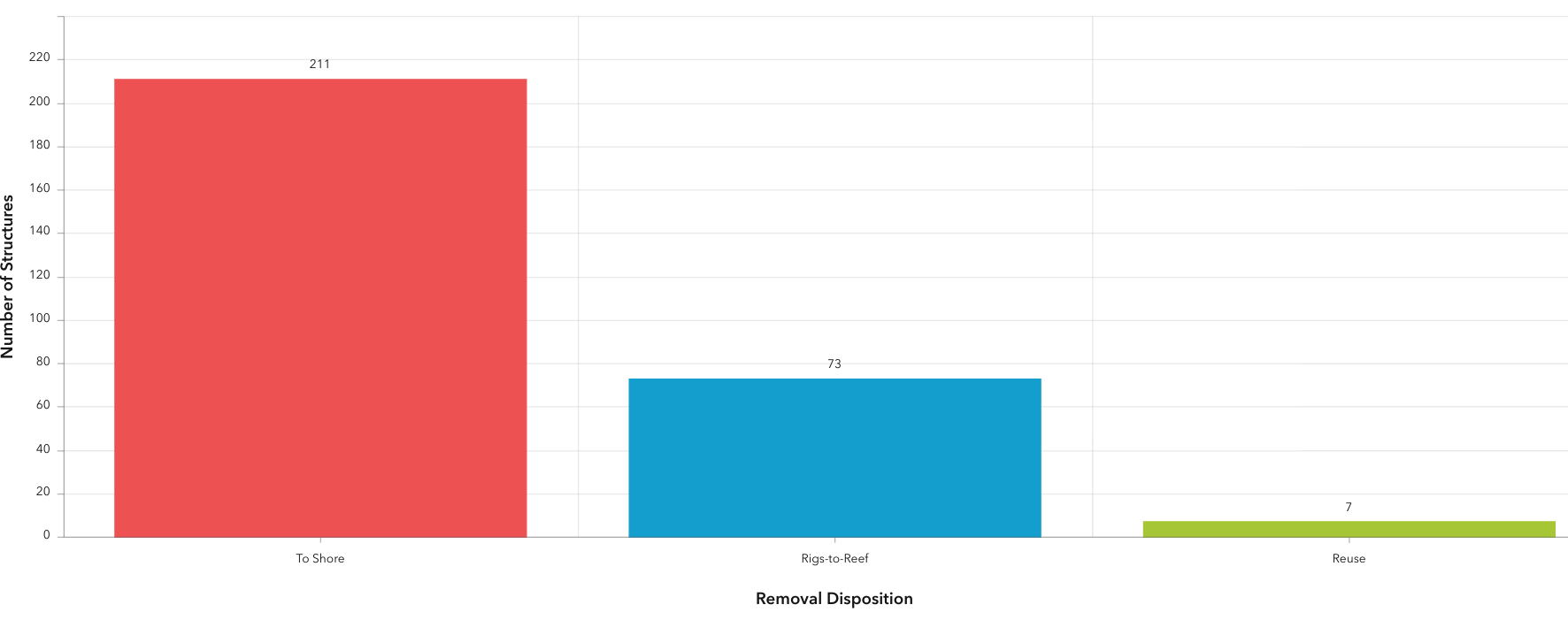
BSEE’s Facility Infrastructure Dashboard is a useful tool for tracking decommissioning activity in the Gulf of Mexico. A few numbers from the dashboard:
Planned disposition of the 291 pending removals (25% of the structures to be reefed):

Posted in California, decommissioning, rigs-to-reefs, tagged Ann Bull, California, decommissioning, marine oases, Milton Love, offshore platforms, Platform Holly, rigs to reefs, UCSB on October 16, 2023| Leave a Comment »

Excellent Guardian article featuring my former colleague Dr. Ann Bull and Dr. Milton Love from the University of California at Santa Barbara.
According to a 2014 study they (Bull and Love) co-authored, the rigs were some of the most “productive” ocean habitats in the world, a term that refers to biomass – or number of fish and how much space they take up – per unit area. The research showed the rigs to be about 27 times more productive than the natural rocky reefs in California.
Guardian
Posted in rigs-to-reefs, Uncategorized, tagged Great Carrier Reef, Pensacola, USS Oriskany on August 12, 2023| Leave a Comment »

USS Oriskany (CV-34) holds the distinction of being the final Essex-class aircraft carrier ever completed. Instead of being decommissioned and scrapped, the ship was intentionally sunk approximately 25 miles south of Pensacola, Florida. This unique decision transformed the USS Oriskany into the largest ship ever used to create an artificial reef. Due to this extraordinary use, the carrier has earned the affectionate nickname “The Great Carrier Reef.” from Military Tactics
Posted in Offshore Energy - General, Offshore Wind, rigs-to-reefs, tagged Block Island Wind, BOEM, mussels, reef effect, rotors to reefs on August 7, 2023| Leave a Comment »
Posted in climate, Gulf of Mexico, Offshore Energy - General, rigs-to-reefs, tagged artificial reefs, carbon capture, CBC, Rio Grande Valley Reef, Texas on June 1, 2023| Leave a Comment »
This CBC story, which includes excellent video interviews, was brought to my attention by Newfoundlander Howard Pike, an engineer and offshore safety leader.

We know a lot about Rigs-to-Reefs, and the importance of active and reefed platforms in providing the habitat, shelter, and food that is necessary to increase biodiversity and productivity. However, the carbon reduction potential of artificial reefs has received little attention.
The linked CBC story is particularly interesting in that it includes interviews with artificial reef researchers who are assessing the carbon capture aspects. To date the results are encouraging:
As for the impact on climate change, the researchers say they have found some evidence that an artificial reef could hold more carbon compared to a natural reef.