This CBC story, which includes excellent video interviews, was brought to my attention by Newfoundlander Howard Pike, an engineer and offshore safety leader.
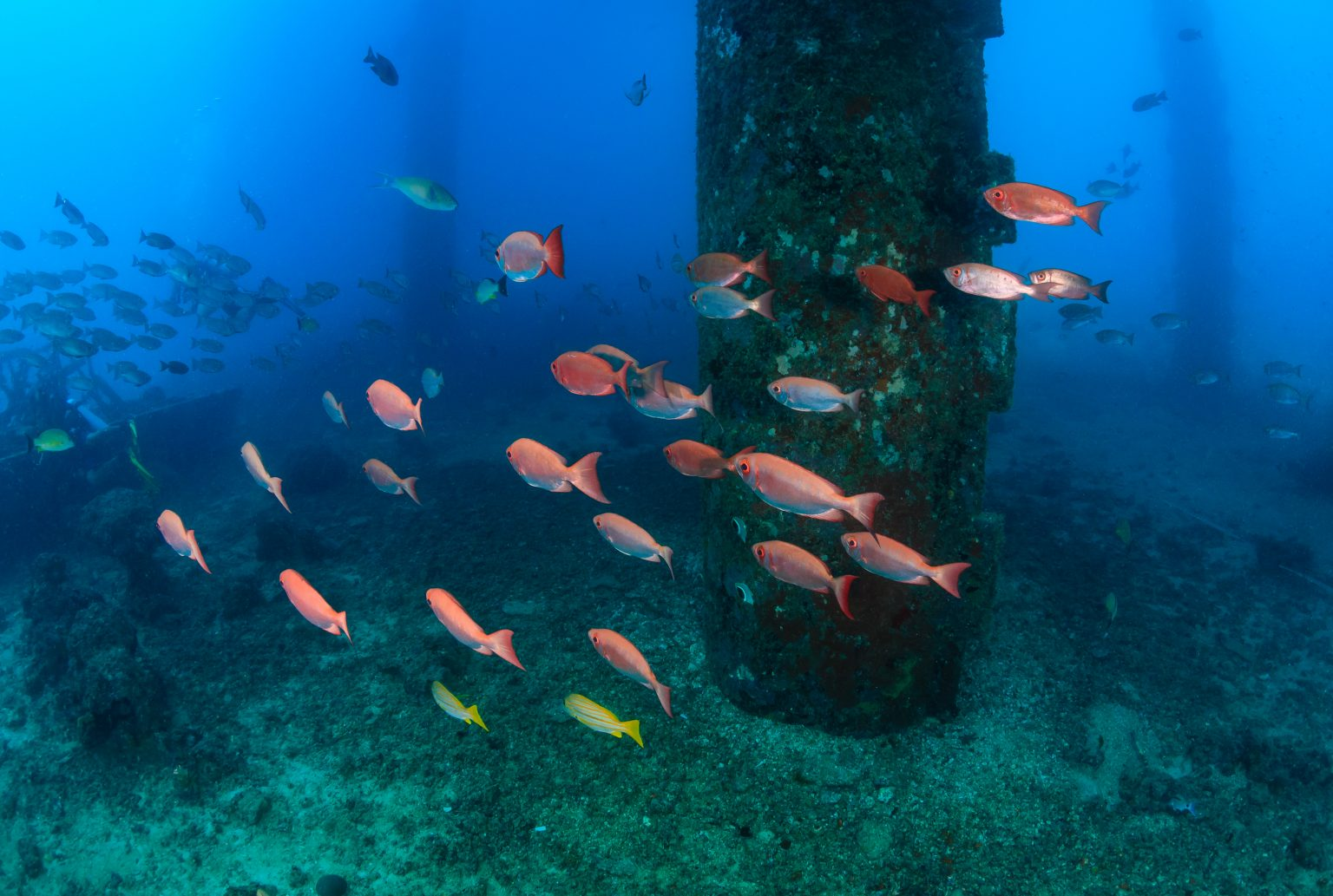
We know a lot about Rigs-to-Reefs, and the importance of active and reefed platforms in providing the habitat, shelter, and food that is necessary to increase biodiversity and productivity. However, the carbon reduction potential of artificial reefs has received little attention.
The linked CBC story is particularly interesting in that it includes interviews with artificial reef researchers who are assessing the carbon capture aspects. To date the results are encouraging:
As for the impact on climate change, the researchers say they have found some evidence that an artificial reef could hold more carbon compared to a natural reef.
The 23 platforms in Federal waters offshore California are from 33 to 55 years old. Most are no longer producing and 8 are on terminated leases. Some of the platforms are massive structures in water depths up to 1200′ (list of platforms and map below).
BOEM’s draft programmatic EIS evaluates 4 decommissioning alternatives, none of which appear to be workable for a combination of economic, environmental, and legal reasons:
Alternatives 2 and 3 evaluate prudent and environmentally responsible partial removal options. Unfortunately, partial removal and reefing are not feasible under the California Resources Legacy Act (AB 2503). This legislation holds the donating company perpetually liable for any damages associated with the reef structure. While not assuming any liability, the State nonetheless collects 80% of the savings (reefing vs. complete removal). As a result, it’s no surprise that no company has applied to participate in the State’s program.
Alternative 4 calls for leaving platforms and pipelines in place after emptying tanks and flushing pipelines. This “no action” baseline alternative violates the lease agreement and 30 CFR 250.1725, and would only be permissible if an alternate use was approved for the platforms per 30 CFR Part 585.
The EIS, with minimal discussion and no supporting data, rules out alternate uses at any of the 23 platforms. This exclusion would seem to be premature given the win-win-win opportunities for industry, government (Federal, State, and local), and academia. These include deferred decommissioning liabilities, a wide range of research opportunities, security and defense applications, weather observation and climate studies, maritime communications support, education programs, marine seismicity studies, and hydrokinetic energy projects. With proper maintenance, platforms can continue to provide social benefits long after all wells are plugged and production equipment is removed. However, once removed, replacement costs would be prohibitive.
Lastly, the EIS avoids the thorny financial responsibility issues that will complicate decommissioning decisions. Note the questions raised in the “troubling case of platforms Hogan and Houchin.”
Those wishing to comment on the draft EIS should follow the posted instructions.
GUILDFORD, UK — Alpha Petroleum Resources, Energean UK and Orsted Hornsea Project Four will consider repurposing the Wenlock gas platform in the UK southern North Sea, which is nearing the end of its productive life.
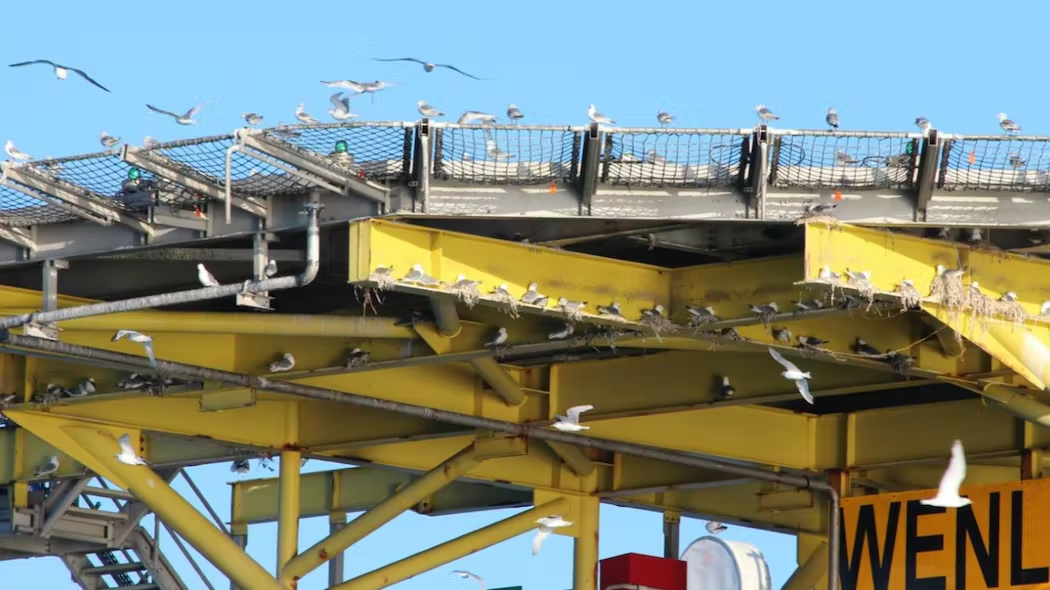
One possibility is to reuse the facility as an artificial nesting site to offset the impact on certain bird species of offshore wind developments in the area.
Black-legged kittiwakes have set up nests on various North Sea platforms, according to Orsted’s recent surveys. Repurposing an existing platform as an artificial nesting structure is seen as an alternative to building a new artificial nesting structure to support the local development of the Hornsea Four offshore wind farm.
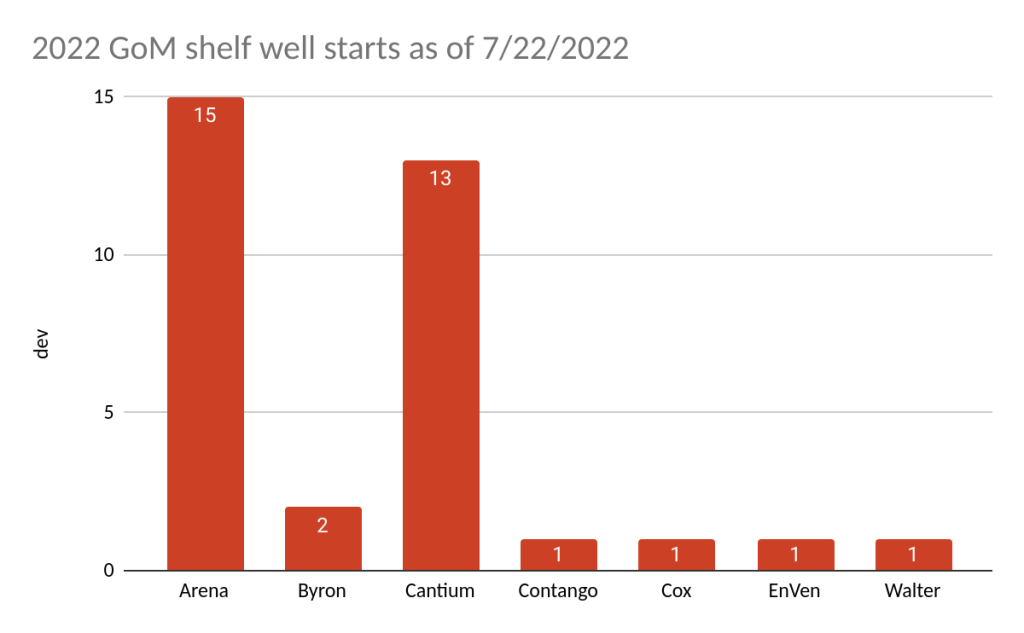
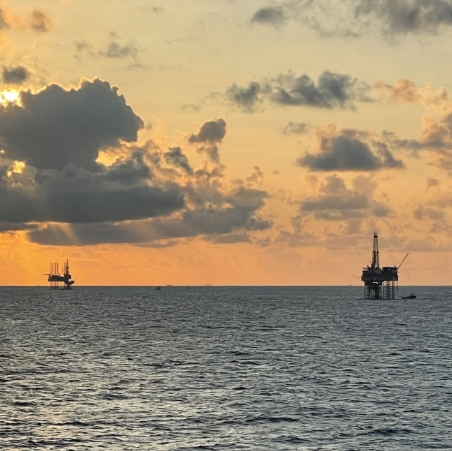
Without much hype, shelf operators continue to find and extract oil and gas from beneath the shallow waters of the GoM. The 1700 shelf platforms that remain provide energy for our economy and important hardbottom substrate for marine life. Keep it going! Only 25 more years until the 100th anniversary! 😀
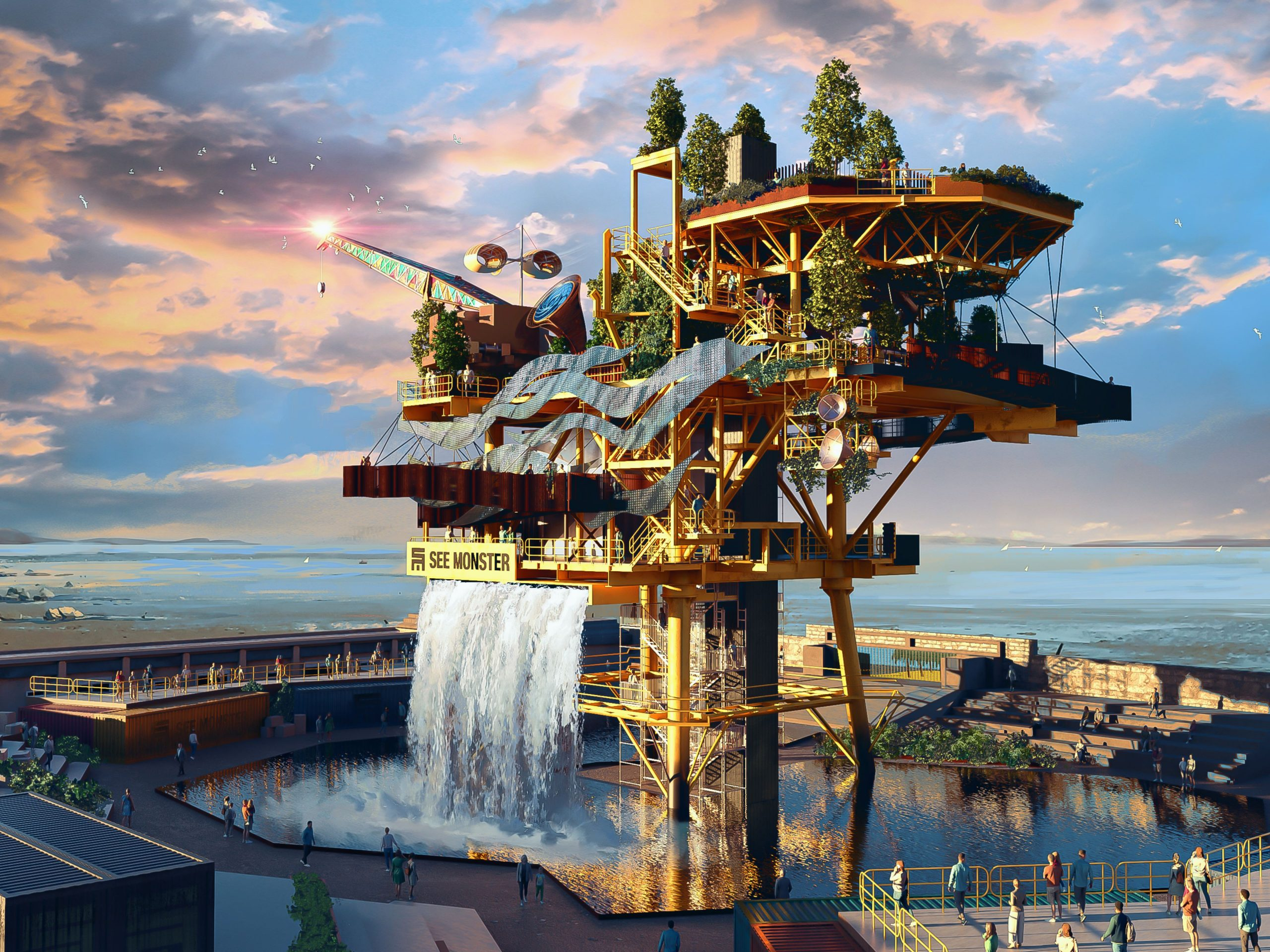
SEE MONSTER is due to arrive by sea into Weston-super-Mare on Tuesday, 12 July. The transformation of this decommissioned North Sea offshore platform is a world first that is set to become one of the UK’s largest public art installations, aiming to inspire global conversations about the repurposing of large industrial structures and design-led solutions to sustainable futures.
As is the case every 5 years or so, there is another aquaculture push within the Federal government. It looks like this will be a very process-rich endeavor (check out the list of “Scoping Information Needs“), so don’t expect much soon.
NOAA Fisheries is conducting public scoping for a programmatic environmental impact statement to consider identifying one or more AOAs in federal waters of the Gulf of Mexico. The programmatic environmental impact statement will evaluate the impacts and benefits associated with siting aquaculture in those locations, which could occur through future proposals and project level review. Public scoping is an opportunity for the public to provide input on the range of issues to be addressed in the programmatic environmental impact statement. This is a planning effort and no specific aquaculture-related activities or individual aquaculture projects are being proposed at this time.
Offshore California, the best that most facility operators and their predecessors (to the extent they continue to hold decommissioning liabilities) can hope for is a graceful exit with manageable financial losses. (The situation is a bit different for Exxon’s Santa Ynez Unit, which has been shut-in since 2015 while the company seeks to resolve oil transportation issues resulting from an onshore pipeline rupture. Here is the latest episode of that amazing saga.)
California’s Federal offshore, where 9 mobile drilling units (MODUs) were operating concurrently in the early 1980s, hasn’t seen a MODU in over 30 years. However, 23 production platforms, some of which are massive structures, remain (see the presentation below). At this point, these platforms are expensive monuments given that their combined production (per EIA) is only 7000 BOPD.
Regardless of their production status, the California offshore platforms continue to be ecologically significant. Dr. Jerry Schubel is among the many marine scientists who understand the importance of the life that has grown on and around these structures. The scientific community also sees other research, educational, and recreational uses for these platforms as per our Rigs-to-Reefs +++ page.
To their credit, State and Federal agencies, trade organizations, and interested third parties continue to discuss the issues and consider alternatives. A recent workshop was helpful in that regard. Attached is the excellent presentation by Bob Byrd and John Smith, who have been at the vanguard in addressing California decommissioning issues. Embedded below is the YouTube video of the presentations from their session. These are excellent updates for those who have an interest in decommissioning issues.
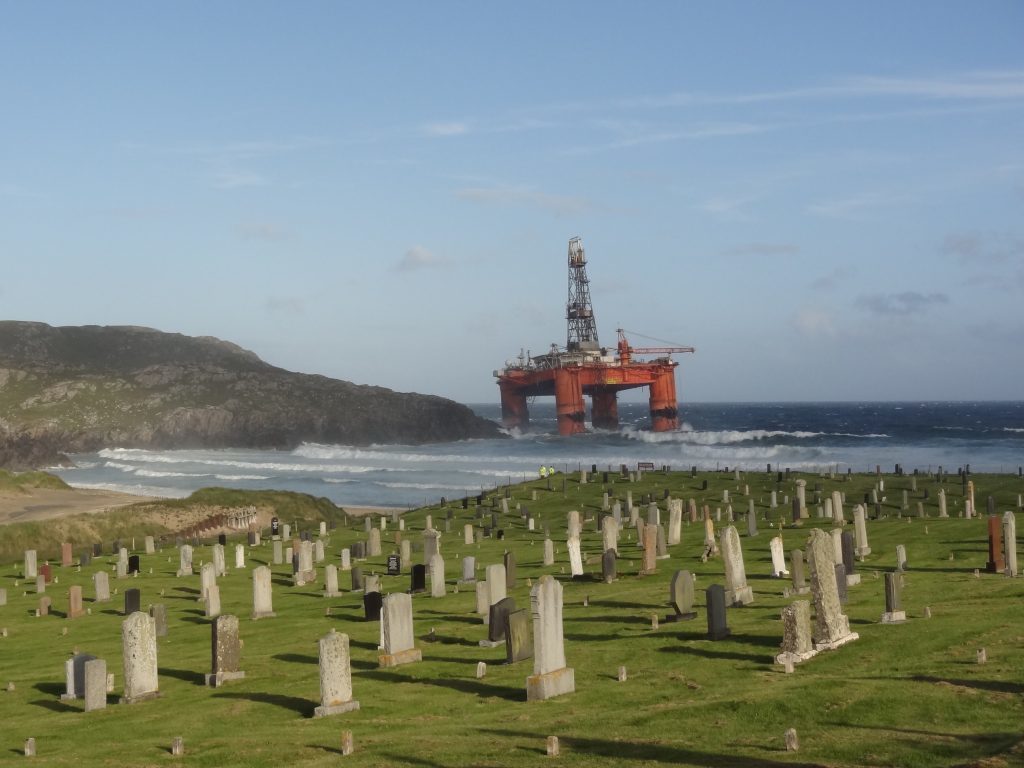
In 2016, this old Transocean semisubmersible was being towed from Norway to Malta prior to being scrapped in Turkey. The rig broke free and grounded at Dalmore, Scotland. This picture, with a Scottish cemetery in the foreground, is a fitting tribute to old rigs, the wells they drilled, the storms they endured, and the people they served.
The picture and title will be added to our world-famous Rigs-to-Reefs+++ page. Many thanks to those who have contributed to this important resource over the years.