Per Regulations.gov. BSEE received 30 comments on the proposed revisions to the Well Control Rule, 25 of which have been posted. The other comments were presumably deemed inappropriate for posting per the guidance at Regulations.gov.
Two of the responses were submitted collectively by 8 industry trade associations. Only 3 operating companies commented and their comments largely echoed the trade association responses. Only 2 drilling contractors responded independently. Four service and engineering companies commented.
Three environmental organizations, a group of Atlantic states, a government watchdog, and a law school provided comments.
Three individuals and 4 anonymous or unknown parties commented.
Below is a list of the respondents preceded by their comment identifiers. More to follow.
On Monday, the offshore world lost Mike Conner, an outstanding engineer and a major contributor to the success of the US offshore program.
Mike is the person most responsible for the Deepwater Operations Plan (DWOP), a pioneering safety-case approach to regulating deepwater oil and gas development. The DWOP program was initiated 30 years ago and facilitated deepwater production at a time when there were no deepwater-specific regulations or standards. Innovative tension leg platform, compliant tower, spar, production semisubmersible, and subsea projects would not have been possible without the DWOP program. 93% of Gulf of Mexico oil production and 76% of the gas is now attributable to deepwater production facilities. Thanks in large part to the DWOP program, these facilities have had a nearly flawless safety and environmental record.
While his obituary is no yet available, this link announces Mike’s well-deserved selection for the OTC Heritage Award in 2017, and provides good information on Mike and his career.
Comments on the proposed revisions to BSEE’s Well Control Rule are due on Monday (11/14/2022). My comments were submitted yesterday, and I have attached a copy for those who might be interested. Bud
1 well to be checked to confirm temporary abandonment
Well depths: 2359′ to 11934′
Water depths: 70′ to 477′
11 gas wells, 3 oil wells
Well completion dates: 2006-2008
Last production: 2010-2013 (Presumably, the short productive life of these wells either contributed to or was because of the lessees’ bankruptcies.)
$25,000😀 minimum to $100,000,000 maximum contract guarantee
If I was an offshore contractor, I wouldn’t touch this work without:
Ironclad liability protection after the work is completed and inspected. A contractor should not inherit the perpetual liability that the lessees knowingly and willfully accepted when they purchased the leases and conducted operations; nor is the contractor responsible for the failure of industry and government to establish a financial assurance framework that protects the taxpayer from such liabilities.
Protection against likely cost overruns related to the uncertain downhole condition of the wells.
The 23 platforms in Federal waters offshore California are from 33 to 55 years old. Most are no longer producing and 8 are on terminated leases. Some of the platforms are massive structures in water depths up to 1200′ (list of platforms and map below).
BOEM’s draft programmatic EIS evaluates 4 decommissioning alternatives, none of which appear to be workable for a combination of economic, environmental, and legal reasons:
Alternatives 2 and 3 evaluate prudent and environmentally responsible partial removal options. Unfortunately, partial removal and reefing are not feasible under the California Resources Legacy Act (AB 2503). This legislation holds the donating company perpetually liable for any damages associated with the reef structure. While not assuming any liability, the State nonetheless collects 80% of the savings (reefing vs. complete removal). As a result, it’s no surprise that no company has applied to participate in the State’s program.
Alternative 4 calls for leaving platforms and pipelines in place after emptying tanks and flushing pipelines. This “no action” baseline alternative violates the lease agreement and 30 CFR 250.1725, and would only be permissible if an alternate use was approved for the platforms per 30 CFR Part 585.
The EIS, with minimal discussion and no supporting data, rules out alternate uses at any of the 23 platforms. This exclusion would seem to be premature given the win-win-win opportunities for industry, government (Federal, State, and local), and academia. These include deferred decommissioning liabilities, a wide range of research opportunities, security and defense applications, weather observation and climate studies, maritime communications support, education programs, marine seismicity studies, and hydrokinetic energy projects. With proper maintenance, platforms can continue to provide social benefits long after all wells are plugged and production equipment is removed. However, once removed, replacement costs would be prohibitive.
Lastly, the EIS avoids the thorny financial responsibility issues that will complicate decommissioning decisions. Note the questions raised in the “troubling case of platforms Hogan and Houchin.”
Those wishing to comment on the draft EIS should follow the posted instructions.
Comments on BSEE’s proposed revisions to the Well Control Rule are due in 27 days (by Nov. 14). Given the fundamental importance of well control to offshore safety and pollution prevention, all interested parties are encouraged to comment. Although some of the proposed revisions are rather nuanced, the document is neither long nor complex.
My completely independent comments are being drafted and will be posted here after they have been submitted to Regulations.gov.
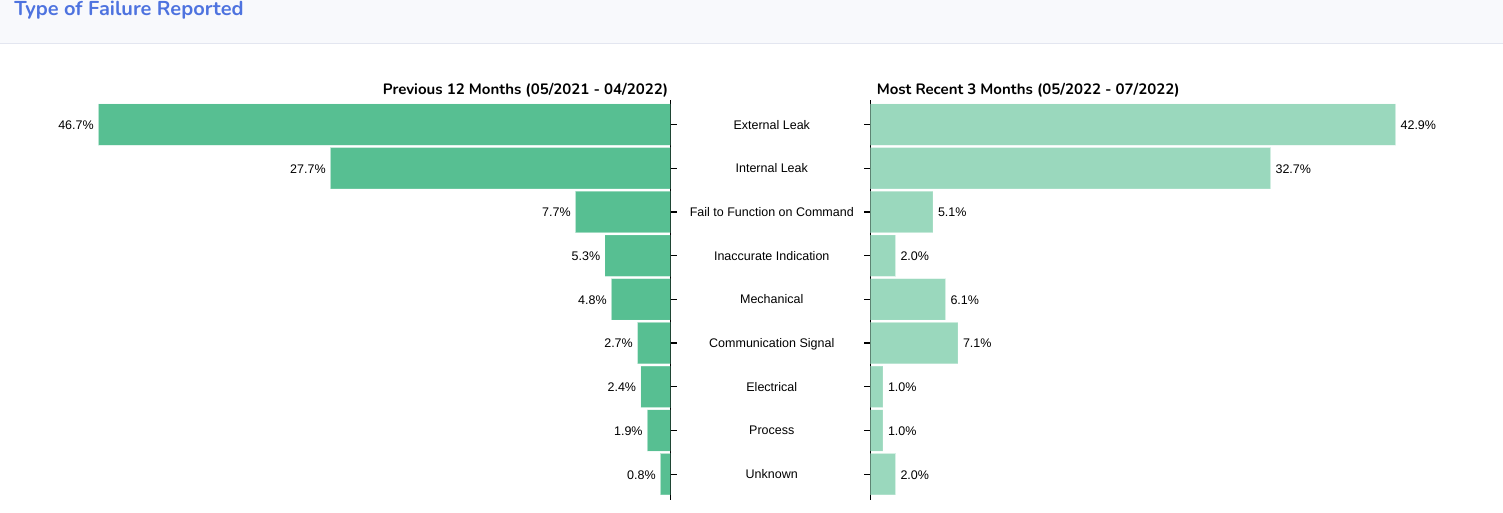
My comments will explain why the proposal may reduce the rigor of the BOP system performance standard and will address a related shear ram issue. The comments will also discuss the management of BOP equipment failure and other safety data, the use of independent third parties and standards development organizations, dual shear rams on surface BOP stacks, ROV intervention capabilities, and BOP test data reporting and management.
Hopefully, the attached response is indicative of the quality of comments BSEE will receive on their proposed WCR revisions.
The comments, which were submitted by a retired engineer (always the best commenters 😉), express the opinion that BSEE should not remove the option for submitting failure data to BTS. While my comments will express a somewhat different opinion, I thought he made good arguments in support of his position.
Contrary to some post-Macondo commentary, well control has always been the highest priority of the US offshore regulatory program. This was the case regardless of the administration, party in power, responsible bureau, or politics of the day. The first specific well control requirements were in OCS Order No. 2 (Drilling) which dates back to 1958.
Continuous improvement must always be the objective; hence the many revisions to these regulations over the years.
BSEE’s recently proposed Well Control Rule includes updates that should be reviewed by all who are interested in drilling safety and well control regulations. I will be submitting comments to the docket and will post some of those comments on this blog. I hope others take the time to review the relatively brief BSEE proposal and submit comments
Industry comments are typically consolidated which limits the technical discussion and diversity of input. Consensus industry recommendations tend to be less rigorous from a safety perspective than some companies might submit independently. There are also far fewer operating companies than there were in the past. Most of you surely remember Texaco, Gulf, Getty, Amoco, Arco, Mobil, Unocal, and other important offshore operators that have merged into even larger corporations. This further limits the diversity of input.
Of course, the operating company is fully accountable for any safety incident at an OCS facility, including well control disasters like the 1969 Santa Barbara and 2020 Macondo blowouts. This should be ample incentive for comprehensive safety management programs. Unfortunately, risk management, culture, and human/organizational factors are complex, and good intentions don’t always lead to good results.
Although the operating company is legally accountable, the regulator and industry as a whole also bear some responsibility for safety performance. What is the purpose of the regulator if not to prevent safety and environmental incidents? Also, the industry can do better in terms of assessing data, updating standards, and publicly calling out poor performance.
On a more positive note, the offshore industry has collectively had some spectacular well control successes. Perhaps most impressive is this: Prior to 2010, 25,000 wells had been drilled in US Federal waters over the previous 25 years without a single well control fatality, an offshore safety record that was unprecedented in the U.S. and internationally. That number of offshore wells over a 25 year period is by itself a feat that will never again be achieved in any offshore region worldwide. The well control safety record makes that achievement extraordinary.
More positively, the court chose not to vacate the sales or the EIS:
Moreover, vacatur would be highly disruptive for the lessees. They have paid millions of dollars to obtain their leases and have acted for some four years in reliance on them—including by investing substantial additional sums and by executing contracts with third parties. Moreover, any redo of the lease sales “would be tainted by prior publication of [the] lessees’ proprietary valuation of the leases” following the original sales.
Comments:
How many GAO reports on BSEE or MMS have not been critical of some processes or procedures? None that I can recall.
It’s unreasonable to expect BOEM to consider every GAO or other external criticism of the regulatory program in their EIS’s.
All of the GAO recommendations in the subject report were process related and were closed (implemented) several years ago.
The court exercised good judgement in declining to vacate the sale. Per the decision, the case will be remanded to BOEM for further consideration of the GAO report.



 Bud's Offshore Energy (BOE)
Well Control Rule commenters
Posted in Offshore Energy - General, Regulation, well control incidents, tagged BSEE, commenters, Well Control Rule on November 22, 2022| Leave a Comment »
Per Regulations.gov. BSEE received 30 comments on the proposed revisions to the Well Control Rule, 25 of which have been posted. The other comments were presumably deemed inappropriate for posting per the guidance at Regulations.gov.
Two of the responses were submitted collectively by 8 industry trade associations. Only 3 operating companies commented and their comments largely echoed the trade association responses. Only 2 drilling contractors responded independently. Four service and engineering companies commented.
Three environmental organizations, a group of Atlantic states, a government watchdog, and a law school provided comments.
Three individuals and 4 anonymous or unknown parties commented.
Below is a list of the respondents preceded by their comment identifiers. More to follow.
Read Full Post »